Ficus Benjamina Light Needs: Bright Indirect, Leaf Drop &
Ficus Benjamina Light Needs: Bright Indirect, Leaf Drop & Sun Limits
Ficus Benjamina Light Needs: Bright Indirect, Leaf Drop & Sun Limits
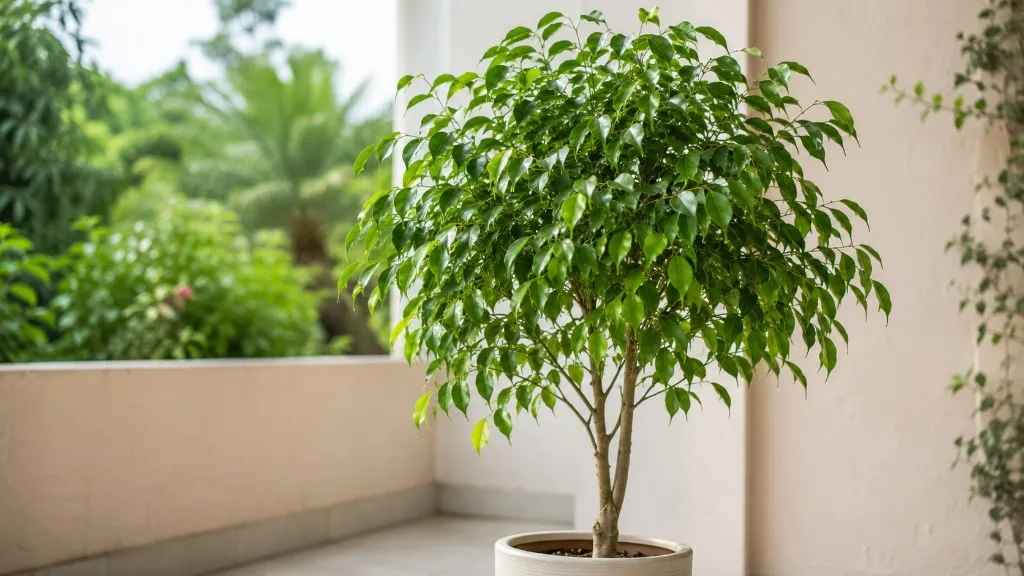
Ficus benjamina - the weeping fig - is one of the most common indoor trees in the world, and one of the most misunderstood when it comes to light. Garden centers sell it as an easy office plant, then new owners tuck it into a dim corner where it slowly sheds leaves until only a bare trunk remains. The opposite mistake is just as common: placing a weeping fig against hot south glass and calling the scorched margins “delicacy.” Neither failure is mysterious once you understand what Ficus Benjamina overview actually wants: bright indirect light for most of the day, enough intensity to sustain a dense canopy, and protection from harsh direct sun that overheats thin leaves against window glass.
This guide is built around three decisions every weeping fig owner makes: finding a bright enough spot, understanding why low light triggers leaf drop, and knowing where the line sits between gentle morning rays and damaging afternoon exposure. If you get light right - and keep it stable - watering, humidity, and feeding become much easier to calibrate. Get light wrong, and you will chase symptoms that look like watering problems when the root cause is photons.
How Much Light Ficus Benjamina Actually Needs
In its native range across tropical Asia and northern Australia, Ficus benjamina grows as an understory and edge tree where light is bright but filtered - dappled sun through taller canopy, not open desert exposure or deep forest floor shade. That ecology translates indoors to bright indirect light: the plant should see a bright sky for much of the day without direct sunbeams heating the leaf surface for hours at a time. Missouri Botanical Garden describes weeping fig as preferring bright indirect light or part-day direct sun in cultivation, which matches what most successful indoor growers observe when the plant holds a full crown of small glossy leaves. (Missouri Botanical Garden)
Quantified, UF/IFAS defines high light as roughly 500 to 1,000 foot-candles - bright areas near windows that may receive softened direct sun. Below roughly 100 foot-candles (low light), foliage trees struggle without supplemental lighting. Distance matters as much as window direction: light intensity drops sharply as you move away from glass, often halving every two to three feet, so a weeping fig “near a window” on the far side of a large living room may receive far less usable light than the same compass exposure suggests.
Most homes can satisfy weeping fig light needs with six to eight hours of bright ambient daylight reaching the canopy, whether that comes from a well-placed east window, a filtered south or west exposure, or a combination of natural light plus a grow lamp in dim seasons. The goal is not a specific compass label but a measurable outcome: firm new leaves, tight internodes on fresh shoots, and a canopy that fills in rather than thins from the bottom up.
The Practical Bright-Indirect Target
If you want a single placement rule before reading further, use this test. Stand where the pot will sit and look toward the window. If you can see sky brightness without staring into direct sun disk for more than a short morning window, you are likely in bright indirect territory. Hold your hand above the pot height: a soft, diffuse shadow means usable light; almost no shadow means too dim; a hard dark shadow at midday means direct sun is hitting that spot and you should filter or move back.
Bright indirect for Ficus benjamina is not “any room that looks fine to human eyes.” Human vision adapts to dim spaces; the plant does not. Judge by new growth over two weeks, not by whether the tree looked good the day you bought it. Compact fresh leaves in the expected green (or variegated pattern for cultivars like ‘Starlight’) confirm adequate light. Long gaps between leaves, smaller pale new foliage, or a visible lean toward the glass mean the plant is asking for more brightness - or a grow light - even if older leaves still look acceptable.
Why Ficus Benjamina Drops Leaves in Low Light
Leaf drop is the weeping fig’s signature stress response, and insufficient light is one of the most common triggers for chronic shedding that owners misattribute to watering. A ficus maintains its canopy only when incoming light supports the metabolic cost of each leaf. When photosynthetic output falls below the cost of keeping older shaded leaves alive, the plant activates abscission - the controlled separation of leaf petioles - and sheds foliage from the inside and lower canopy first, where light is weakest. This is not random spite; it is resource allocation.
In low light, several failures stack together. Canopy thinning reduces the plant’s demand for water and nutrients, which sounds adaptive but leaves an increasingly bare tree vulnerable to every other stressor. Etiolation - stretched internodes and smaller new leaves - produces weak shoots that cannot rebuild a full crown quickly. Root zone stagnation often follows because dim plants use water slowly; owners who keep watering on a bright-room schedule invite root issues, then blame the continuing leaf drop on “overwatering on Ficus Benjamina” alone when light was the original driver. The Missouri Botanical Garden and multiple extension-style guides note that weeping fig does not tolerate poorly lit locations and will drop leaves when light is inadequate. (Missouri Botanical Garden)
Low-light leaf drop tends to be gradual and directional: inner leaves yellow and fall over weeks, new growth is sparse, and the tree looks thinner each month. It rarely happens overnight unless another stressor joins the picture.
How Insufficient Light Forces Leaf Loss
Each leaf is a solar panel and a water pump. Ficus benjamina leaves are relatively small but numerous; the tree’s visual density depends on keeping a high count of actively photosynthesizing leaves. When daily light integrals fall too low - common in north-facing rooms, interior offices far from windows, or winter months with short days - the plant enters a maintenance-only mode. It stops producing robust new shoots and begins retiring leaves it cannot afford to feed.
Variegated cultivars such as ‘Starlight’ often show low-light stress earlier than solid-green forms because white or cream sections lack chlorophyll and contribute less photosynthetic capacity per leaf area. A ‘Starlight’ pushed into a dim hall may hold fewer leaves overall and revert toward greener new growth as the plant prioritizes function over display pattern. That is still a light problem, not a “reversion” mystery requiring fertilizer.
Recovery from low-light decline is possible but slow. Once you increase light - by moving closer to a bright window, opening sightlines to sky, or adding a grow lamp - expect four to eight weeks before new buds break consistently. Old bare branches may not releaf if they have hardened without active buds; light pruning of dead tips after the plant stabilizes can redirect energy to viable nodes. Patience matters more than aggressive feeding in the first month after correction.
Low Light Decline vs Sudden Relocation Shock
Not all weeping fig leaf drop means chronic low light. Sudden relocation shock can strip 20–50% of foliage within days even when the new spot is technically brighter. Greenhouse-grown trees acclimated to high humidity and steady light often arrive in homes with different air movement, temperature swings, and lower cumulative daily light. Moving from the shop to your sofa, then to the bedroom, then to the “final” window - each move resets stress hormones that trigger abscission.
The distinction matters for your response. Low-light decline improves only when you add brightness; waiting in place makes it worse. Relocation shock often stabilizes if you stop moving the plant and keep other variables boring - consistent moisture without extremes, no Ficus Benjamina repotting guide, no drafty HVAC blasts - even if the first week looks alarming. Clemson HGIC notes that weeping figs react to almost any stress by shedding leaves, including moves, and that finding one stable placement prevents repeated drop cycles.
If you recently moved the plant and leaves are falling rapidly, do not move it again hunting for a “better” spot unless the current location receives clearly inadequate light (deep shade, far from any window). Give it 14–21 days of stability, then evaluate new buds, not old fallen leaves on the floor.
Best Window Placement for Weeping Fig
Window direction is a shorthand, not a guarantee. Obstructions, overhangs, neighboring buildings, tree cover, and sheer curtains all modify the real light arriving at the pot. Still, compass exposure gives a reliable starting map for Ficus benjamina placement in most temperate-latitude homes.
East-facing windows are often ideal: gentle morning direct sun for one to three hours, then bright indirect light for the rest of the day without the heat load of afternoon rays. Clemson HGIC classifies weeping fig as a high-light houseplant suited to western or southern exposures with curtain filtering. A weeping fig within one to three feet of an unobstructed east window typically receives enough intensity for maintenance and moderate growth in spring through fall. South-facing windows supply the highest total light but require filtering or distance - place the tree three to five feet back from south glass or use a sheer curtain so leaves never sit against hot panes at solar noon. Unfiltered south sill placement is where scorch and sudden desiccation happen.
West-facing windows behave like south exposures in the afternoon: strong, hot direct sun that can crisp leaf margins within days. Treat west windows like south - filtered light or setback distance, with the canopy fully in indirect brightness rather than in the beam. North-facing windows in the Northern Hemisphere usually deliver 50–200 FC depending on latitude and outdoor obstructions - marginal for weeping fig without supplementation. A north window can work if the view is open sky and the plant sits close to glass, but most owners will need a grow light for dense foliage through winter.
East, South, West, and North Exposures Compared
East windows reward weeping figs with the best balance of intensity and safety. You may see slightly faster growth than in a filtered south spot because morning sun adds direct photons without afternoon heat stress. South windows maximize photosynthesis when managed correctly: the plant often grows fuller and may need more frequent watering because higher light increases transpiration. The failure mode is hot glass contact - never allow leaves to press against south panes in summer. West windows are workable only with diffusion; think sheer curtain plus three feet of setback as a minimum in hot climates.
North windows demand honesty. If your weeping fig has been slowly defoliating in a north room despite careful watering, light is the bottleneck. Moving it to an east or filtered south exposure will help more than misting, pebble trays, or fertilizer. Offices with atrium skylights or floor-to-ceiling north glass can exceed typical north-window FC because of large sky view - the practical test always beats compass rules.
Multi-window rooms complicate placement. The brightest wall is not always the best if heat registers, exterior doors, or frequent traffic create drafts. Ficus benjamina prefers light stability over maximum FC with environmental chaos. A slightly dimmer but stable east bay often outperforms a blazing south sill next to an HVAC vent.
Distance From the Glass and Sky View
Weeping figs are floor trees in many homes, which means their canopy height matters for light capture. Lower leaves near the pot rim receive far less light than the top of the crown. Rotate the pot quarter turns every two to three weeks so the tree does not develop a permanent lean, but understand that rotation redistributes light - it does not create light. If the top grows while the base defoliates, the lower canopy is starved; raising the plant on a stand or pruning for shape may help, but increasing ambient brightness helps more.
Sky view strongly predicts indirect intensity. A window overlooking a deep courtyard delivers less usable light than a window with open horizon, even at the same compass orientation. Light meters - handheld FC meters or reputable smartphone apps calibrated against a known source - remove guesswork. Aim for high light - roughly 500 to 1,000 foot-candles at the top of the canopy per UF/IFAS indoor light guidelines; weeping fig sits in the high-light category alongside fiddle-leaf fig and schefflera.
When space forces the tree away from windows, prioritize line of sight to bright glass over decorative placement in a dim interior. A weeping fig centered on a wall opposite a south window may receive reflected brightness sufficient for survival but not for the dense silhouette most buyers expect.
Direct Sun Tolerance and Harsh Sun Limits
Ficus benjamina can tolerate some direct sun, but the keyword is some, and acclimation is non-optional. In nature, young trees receive more direct rays at the forest edge; mature indoor specimens often arrive with leaves formed under greenhouse shade cloth. Those leaves lack the cuticle thickness and pigment loading needed for harsh midday exposure. Unfiltered afternoon direct sun - especially through west or south glass - overheats leaf tissue, disrupts chlorophyll, and produces bleached patches, brown crisp margins, and partial defoliation within days.
Direct sun failure is visually distinct from low-light drop: affected leaves show physical burn on the sun-facing side, curling during peak hours, or sudden desiccation of outer canopy tips while inner shaded leaves remain temporarily green. Hot glass amplifies damage; a leaf touching a south pane in summer can scorch even if ambient room temperature feels comfortable.
Morning Sun vs Afternoon Heat Load
Morning sun is lower in intensity and cooler in temperature than afternoon sun at the same latitude. An east window that throws one to two hours of direct morning rays on the outer canopy is usually safe for acclimated plants and may improve growth compared with purely indirect placement. Late afternoon west sun carries higher heat load per photon for leaf tissue already stressed by a full day of transpiration - avoid it unless filtered.
Seasonality shifts tolerance. Winter sun at higher latitudes is weaker; a weeping fig that needs sheer curtains in July may tolerate closer south placement in January. Re-evaluate in late spring before heat builds, pulling the plant back or adding curtain diffusion before scorch appears. Outdoor summer hardening - moving a container tree to a bright shaded patio - is possible but triggers its own leaf drop cycle; treat patio moves like any relocation and expect temporary shedding.
Acclimating Ficus Benjamina to Brighter Light
When increasing light - new window, summer sun angle, post-winter move closer to glass - use a gradual acclimation over 7 to 14 days. Day 1–3: move to the new bright location for three to four hours mid-morning, then return to the previous spot or pull back from the window. Day 4–7: extend duration to most of the day if no curling or bleaching appears on new growth. Day 8–14: leave in final position full-time if the newest leaves remain firm and normally colored.
Watch new leaves only during acclimation. Older leaves may burn if suddenly exposed; that damage is permanent, but it does not mean acclimation failed if fresh growth looks healthy. If bleaching appears on new leaves, step back 12–18 inches or add sheer diffusion and restart the timeline. Never jump from a dim interior office to a south sill in one move - that single decision accounts for a large share of “I killed my ficus” stories.
How to Move a Weeping Fig Without Triggering Mass Leaf Drop
Stability is a light strategy for weeping figs, not just a personality quirk. Once you identify a spot that meets bright indirect targets and avoids draft extremes, keep the plant there through at least one full monthly watering cycle before reassessing. If you must move - renovation, new furniture, seasonal window changes - plan the move as a project rather than an impulse.
Prepare by watering normally the day before, not soaking wet and not drought-stressed. Move during morning hours so the plant has a full day of stable light at the new location before cooler night temperatures. Avoid moving on the hottest afternoon of a heat wave or the week you also repot, prune heavily, or change fertilizer. One stress at a time is the rule ficus rewards.
After the move, expect some leaf drop even in ideal conditions. Sweep fallen leaves, do not panic-fertilize, and resist moving again because the floor looks messy. Increase humidity slightly if your home is very dry - not because humidity replaces light, but because transpiring stress is lower when leaf margins do not desiccate rapidly during recovery. Check moisture by depth in the pot; brighter new locations dry faster, dimmer ones slower. Adjust watering to the new dry-down rate, not the old calendar.
If more than 30–40% of foliage drops within a week, audit the new site: is it actually brighter or dimmer than before? Is a heat vent blowing directly on the canopy? Is the plant still adjusting to a dark corner disguised as “near a window”? Correct the environment once, then wait. Repeated moves compound abscission hormones and can leave a tree bare for months.
Grow Lights When Natural Light Falls Short
Grow lights are a legitimate part of Ficus benjamina care, not a failure badge. North rooms, winter at high latitudes, office cubicles with fluorescent ceiling glare but no sky view, and rooms blocked by exterior structures all benefit from supplemental full-spectrum LED lighting. The goal is to raise canopy light into the 500–1,000 foot-candle high-light band when natural light alone cannot.
Choose horticultural full-spectrum LEDs rated for houseplants rather than generic warm-white bulbs with poor red-blue balance. Position the fixture 12–24 inches above the top of the canopy initially, adjusting based on leaf response. Run lights 12–14 hours daily on a timer to mimic a reasonable photoperiod; continuous 24-hour lighting stresses ficus and can disrupt growth rhythms. PPFD targets for weeping fig generally fall in the 200–450 µmol/m²/s range at leaf level for maintenance and active growth, with short exposures above that risking stress if heat accumulates.
Signs you need a grow light include progressive lower leaf loss through winter despite unchanged watering, leaning strongly toward the only window, or FC readings below 300 at the canopy top. Signs the light is too close or too long include pale new growth, upward cupping, or dry leaf tips despite adequate soil moisture. Back the fixture up or reduce hours by two and reassess in ten days.
Integrate grow lights with natural windows rather than fighting them. A east window plus a modest LED panel from October through March often preserves canopy density better than either source alone in mid-latitude homes. When days lengthen, taper supplemental hours rather than shutting off abruptly.
Setup Height, Hours, and Spectrum
Start conservative: one adjustable LED panel timed for 12 hours, mounted high enough that you can hold your hand at canopy level for 30 seconds without uncomfortable heat. Weeping fig responds to consistent photoperiod more than to exotic spectrum marketing; a balanced white LED in the 4000–6500K range with documented PAR output suffices for foliage maintenance. Increase intensity by lowering the fixture two inches at a time, waiting 10–14 days between adjustments, until new leaves size matches healthy reference growth.
Pair grow lights with reflective surroundings cautiously. White walls help; mirrors create uneven hot spots. Dust leaves monthly - indoor trees accumulate a surprising film that blocks light whether natural or artificial. A damp cloth wipe improves photosynthetic efficiency without chemical leaf shine products that clog stomata.
Warning Signs Your Weeping Fig Has the Wrong Light
Light problems produce repeatable symptoms if you read the newest growth first. Old leaves carry history; new leaves carry the current environment. Spend thirty seconds each week inspecting the top bud and the youngest fully opened leaf - that habit prevents most light misdiagnoses.
Too Little Light - Sparse Canopy and Stretch
Chronic under-lighting shows as bare lower branches with foliage concentrated at the top reaching toward the window, small pale new leaves, long internodes between leaves on fresh shoots, and slow or absent bud break after repotting or pruning. Yellowing may appear on inner leaves as they are sacrificed for energy balance. Pests such as spider mites often follow because stressed, thin-canopy trees in dim corners have lower vigor and slower recovery from infestations.
If these signs match your tree, increase light before increasing fertilizer. Nutrients cannot substitute for photons. Move closer to the brightest filtered window, remove obstacles blocking sky view, or add a grow light. Re-evaluate after three weeks of improved light using new leaf size and bud activity as metrics.
Too Much Sun - Bleach, Scorch, and Crisp Edges
Overexposure produces bleached or whitened patches on sun-facing leaves, brown crisp margins that feel dry rather than soft, upward curling during midday, and sudden leaf drop on the outer canopy while inner leaves remain temporarily intact. Leaves may feel hot to the touch when sun hits directly through glass. Damage often appears within 48–72 hours of a bad placement change - faster than low-light decline.
Remedy by filtering or distance: sheer curtain, 12–24 inches farther from glass, or relocation to east exposure. Remove severely damaged leaves only if they are mostly brown; partial green tissue still photosynthesizes. Do not compensate sun stress with extra water - scorched leaves transpire less, and wet soil plus damaged roots invites rot. Wait for new growth under softer light before judging recovery.
How Light Changes Your Ficus Benjamina watering guide
Light and water are coupled variables for Ficus benjamina, even though this is a light guide. Higher light increases transpiration and root activity; the same pot dries faster in a filtered south bay than in a north corner. Owners who move a tree to a brighter window without checking soil moisture more often interpret dry leaf drop as “still too much water” and underwater a plant that actually needs more frequent drinks in its new intensity.
After any light increase, check moisture two inches deep twice weekly until you learn the new rhythm. After a light decrease - winter angle, move to dimmer room - stretch intervals and confirm the deeper mix approaches dry before watering. A moisture meter or chopstick is more reliable than “every seven days” folklore. If the pot stays wet more than ten days in winter and the tree is shedding, suspect too little light slowing uptake before you assume root rot on Ficus Benjamina.
Fertilizer follows the same logic: feed modestly only when new growth is visible under adequate light. Feeding a dim, declining tree adds salt without return. Fix light first; feeding is downstream.
Conclusion
Ficus benjamina rewards a simple, strict light contract: bright indirect exposure for most of the day, roughly 500 to 1,000 foot-candles at the canopy if you measure, protection from harsh direct afternoon sun, and stability once you find a workable spot. Low light does not merely slow growth - it forces leaf abscission until the tree matches its energy budget, leaving the bare-trunk look that gives weeping figs an unfair reputation as finicky plants. Direct sun through hot glass produces a different failure - bleach, scorch, and crisp margins - that no amount of watering corrects.
Choose east or filtered south and west windows when possible, respect distance and sky view, acclimate over 7–14 days when upgrading brightness, and use full-spectrum grow lights when natural light cannot reach maintenance thresholds. Read new growth, link watering to the new dry-down rate after every move, and change one variable at a time. Get those pieces aligned, and a weeping fig becomes a steady indoor tree - dense, glossy, and far less dramatic than its leaf-drop reputation suggests.
When to use this page vs other Ficus Benjamina guides
- Ficus Benjamina overview - Start here for whole-plant context before deep-diving this topic.
- Ficus Benjamina problems hub - Jump to symptom-specific fix guides when this care topic does not resolve the issue.
- Not Enough Light on Ficus Benjamina - Escalate here when light adjustments are not enough.
- Leggy Growth on Ficus Benjamina - Escalate here when light adjustments are not enough.
- Leaf Drop on Ficus Benjamina - Escalate here when light adjustments are not enough.
Related Ficus Benjamina guides
- Ficus Benjamina overview
- Ficus Benjamina watering
- Ficus Benjamina soil
- Ficus Benjamina propagation
- Ficus Benjamina fertilizer
- Ficus Benjamina repotting
- Not Enough Light on Ficus Benjamina
- Leggy Growth on Ficus Benjamina
- Leaf Drop on Ficus Benjamina
- Ficus Benjamina problems
Related tool
Try the Plant Problem Diagnosis Tool with ficus-benjamina pre-selected to estimate needs for your setup.