Leaf Drop on Ficus Benjamina (Weeping Fig): Causes, Checks
Quick answer
Leaf drop on Ficus Benjamina is this species' signature stress response-moves, drafts, watering swings, and low light all trigger mass shedding. First step: identify what changed in the past two weeks, check whether soil is wet or dry at the top inch, and leave the tree in one bright, draft-free spot without repotting or fertilizing.
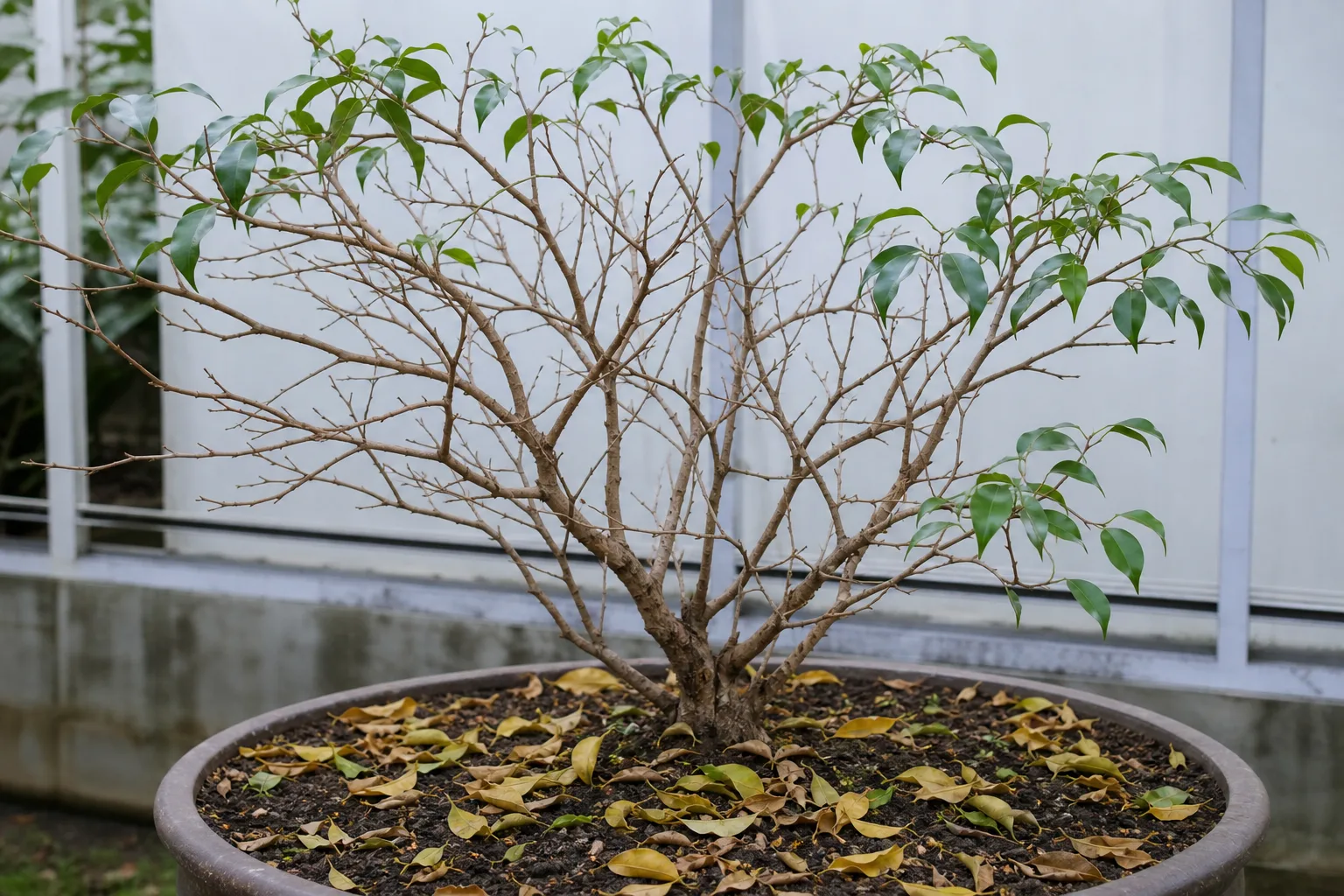
Leaf Drop on Ficus Benjamina (Weeping Fig): Causes, Checks & Fixes
This guide covers leaf drop on Ficus Benjamina. See also the general Leaf Drop guide, watering, and light pages for this plant.
Leaf Drop on Ficus Benjamina (Weeping Fig): Causes, Checks & Fixes
Quick answer
Leaf drop on Ficus Benjamina (Ficus benjamina, weeping fig) is this species’ most famous problem-and often its most alarming. Unlike many houseplants that lose a leaf here and there, a stressed weeping fig can shed dozens of green leaves within days after a move, repot, draft, watering change, or light shift. Clemson HGIC notes that weeping figs react to almost any stress by shedding leaves, which makes the first job diagnosis, not rescue watering.
First step: figure out what changed, then check whether the soil is wet or dry. Review the past two weeks-did you move, repot, rotate, or place the tree near a vent? Press your finger into the top inch of mix and lift the pot. Wet heavy soil with limp leaves points to overwatering on Ficus Benjamina; a very light pot with dry mix points to drought. If you recently relocated and moisture looks normal, stabilize placement in Ficus Benjamina light guide, block drafts, and do not repot, prune heavily, or fertilize while the canopy is in flux. New glossy leaves at branch tips within four to eight weeks mean recovery is underway.
What leaf drop looks like on weeping fig
Weeping fig carries a dense crown of small oval leaves on arching branches. When it drops foliage, the pattern tells you which stressor to fix:
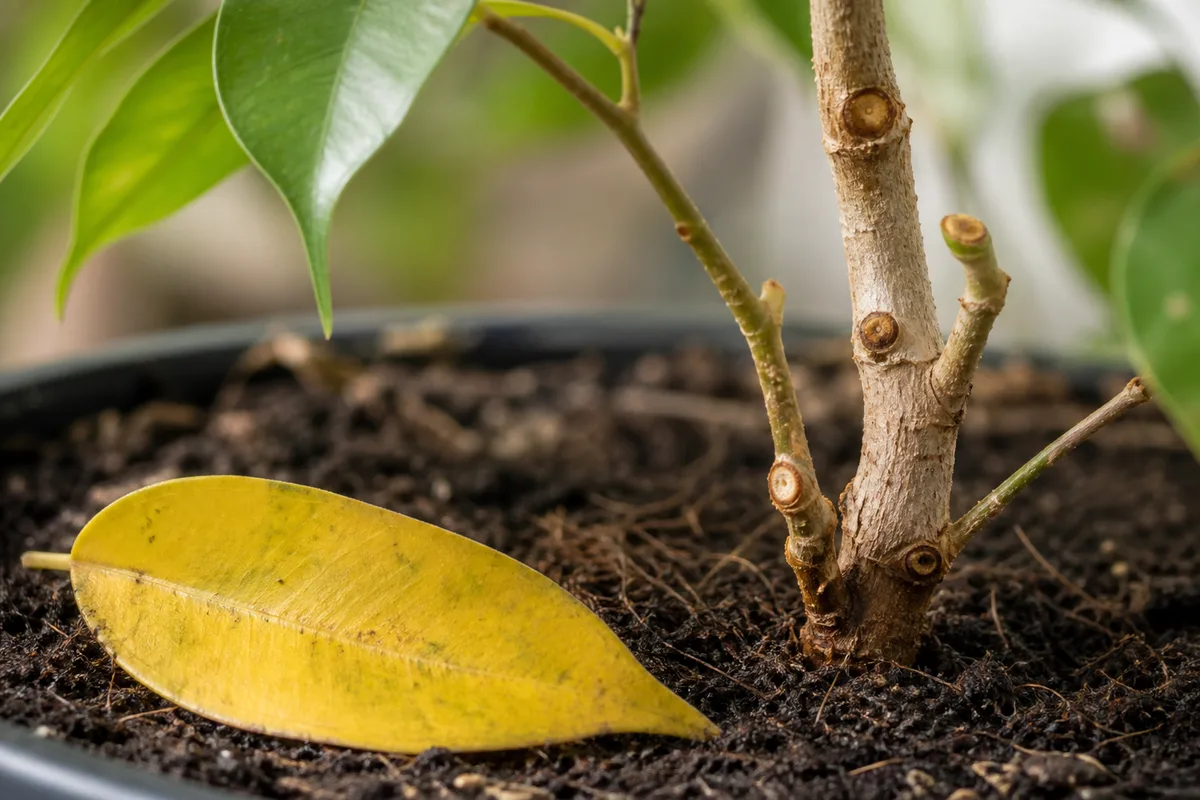
Leaf Drop symptoms on Ficus Benjamina - compare with healthy tissue on the same plant.
- Whole-canopy shed of mostly green leaves within days of a move, repot, or draft-soil moisture often normal; fallen leaves feel soft, not crispy
- Lower and interior leaves falling first over weeks in a dim corner-progressive thinning as the tree cannot support shaded inner foliage
- Mass yellow-then-drop on wet soil-lower leaves turn soft yellow before falling; pot stays heavy and cool for days
- Dry, curled leaves dropping after the root ball went too long without water-soil pulls from pot walls; pot feels feather-light
- One-sided drop on branches facing an AC vent, open door, or winter window-localized pattern, not random
- Tip stippling and dull leaves before drop-possible spider mites or aphids on new growth overlapping with stress
Interior canopy shedding has a biological logic: when light decreases or the tree is rotated, leaves that no longer pay for their upkeep are shed first. That is different from sudden shock drop, where even well-lit outer leaves may fall because the root zone or environment changed faster than the plant could adjust.
Why Ficus benjamina drops leaves
Weeping fig evolved in warm, humid forests of South and Southeast Asia. Indoors it lives in a small pot, dry air, and changing light-so it treats environmental disruption as an emergency and reduces canopy size to match what roots and current conditions can support.
Clemson HGIC lists overwatering, under-watering, drafts, lack of nitrogen, low light, and simply moving the plant as common leaf-drop causes. Missouri Botanical Garden adds that sudden changes in temperature, light, or location-plus cold drafts and watering extremes-are among the most frequent triggers on this species.
Relocation, repot, and rotation shock
This is the signature weeping fig response. Bringing a tree home from the nursery, shifting it to a new window, Ficus Benjamina repotting guide, or even rotating the pot changes the light each leaf receives. The plant sheds heavily while it recalibrates. Soil moisture can look perfect and leaves still fall-that is shock, not thirst.
Cold drafts and HVAC swings
Missouri Botanical Garden notes that cold drafts frequently cause leaf drop and that weekend shutdown of building air conditioning or winter temperature setbacks can trigger shedding even when you did nothing to the plant directly. Clemson HGIC warns that placing a weeping fig near a heat vent or draft when moving it indoors causes excessive leaf drop.
Overwatering and root stress
Chronic wet soil suffocates roots. Weeping fig responds with yellow lower leaves that drop while mix stays damp-often paired with fungus gnats or a sour smell if rot is advancing. Owners sometimes see dropped leaves and water more, worsening decline. See overwatering and root rot when the trunk base softens or soil will not dry down.
underwatering on Ficus Benjamina and drought cycles
Repeated dry spells kill fine roots; the tree sheds leaves to shrink the canopy it must hydrate. Drought-shed leaves are usually crisp at the edges and the pot is very light. One thorough soak after drought may even trigger a short additional drop as the plant catches up to prior stress. See underwatering on Ficus Benjamina.
Low light and seasonal thinning
In dim rooms, weeping fig cannot maintain the dense canopy it grew under brighter nursery conditions. Low light is a listed leaf-drop cause on this species. Interior and lower branches thin over months; variegated cultivars such as ‘Golden King’ are especially sensitive in somewhat lower light. Low light also slows soil drying, which quietly raises overwatering risk if summer watering habits continue through winter. More: not enough light.
Pests on a already-stressed tree
Spider mites, scales, mealybugs, aphids, and thrips can weaken weeping fig and contribute to drop-especially on tender new growth at branch tips. Pest drop usually comes with visible stippling, wax, honeydew, or webbing, not uniform green-leaf shedding after a move alone.
Common stressors: how to tell them apart
| Recent change | Soil at top inch | Leaf pattern | First action |
|---|---|---|---|
| Moved or repotted within 2 weeks | Normal moisture | Many green leaves falling | Stabilize placement; do not move back |
| Draft from vent, door, or window | Normal | One-sided or sudden mass drop | Block airflow; keep stable temperature |
| Summer calendar watering in winter | Wet, heavy | Lower yellow leaves first | Stop watering until top inch dries |
| Missed waterings / dry heat | Very dry, light pot | Crisp leaves throughout | Soak once thoroughly; then normal rhythm |
| Months in dim corner | Normal to wet | Slow interior / lower loss | Gradually increase bright indirect light |
| Stippling on new tips | Any | Patchy drop with webbing or wax | Confirm pests; isolate and treat lightly |
How to confirm the cause
Work through this checklist before changing multiple variables at once:
- Timeline - What changed in the last two weeks? Move, repot, new vent path, vacation watering gap, or HVAC schedule shift?
- Top-inch moisture - Dry and light = drought path. Wet and heavy days after watering = overwatering path. Normal moisture after a move = shock path.
- Pot weight - Compare to just after a thorough watering. Heavy confirms wet stress; very light confirms drought.
- Leaf texture when they fall - Soft green or soft yellow on damp soil differs from crisp brown edges on dry soil.
- Distribution - Whole canopy after a shuffle vs. lower-inner only over months vs. one branch beside a vent.
- Trunk firmness - Press bark at the soil line. Firm trunk with green buds along branches = recoverable stress in most cases. Soft or sunken base = inspect roots immediately.
- Pest check - Tap a branch over white paper; look for moving specks, webbing, or sticky residue on new growth.
If soil is wet and cool while leaves wilt, do not water to “help” a shocked tree-that pattern fits root stress, not relocation alone.
First fix for Ficus benjamina
Identify the most likely stressor from the checklist above, remove or stabilize it, and change only one major variable this week.
After a move, repot, or draft exposure: Leave the tree where it is. Provide bright indirect light, shield from vents and cold windows, and water when the top inch of mix is dry-do not increase frequency because leaves are falling. Missouri Botanical Garden recommends gradual acclimation-for example, a shaded porch stop before bringing a outdoor tree indoors for winter-to minimize drop when you must relocate.
If soil is wet and heavy: Stop watering until the top inch (or top 2 inches on large pots) dries. Empty saucers and cachepots. Do not repot while the tree is actively shedding unless the trunk is soft and roots are mushy.
If soil is dry and the pot is light: Water thoroughly until a small excess drains, discard runoff, and return to the top-inch dry rhythm. Do not water daily in small sips.
If light is dim: Move gradually to a brighter station over several days-not the same week as repotting or heavy pruning.
If pests are confirmed: Isolate, treat lightly, and keep placement stable-handling and spraying repeatedly can trigger additional shock drop on this species.
Do not fertilize, heavily prune, or repot on top of active leaf drop unless root rot forces immediate action.
Recovery timeline
Dropped leaves do not reattach. Recovery shows as stopped shedding plus new glossy leaves at branch tips and lateral buds along stems-the normal growth pattern on Ficus benjamina.
Mild single stressor (one missed watering corrected, minor draft blocked): Shedding often slows within one to two weeks; new tip leaves may open within two to four weeks once moisture and placement stabilize.
Major relocation or repot shock: Mass drop may continue briefly even after conditions are correct. Clemson HGIC notes that when growth conditions are adequate, the weeping fig will adjust to its new location, stop dropping leaves, and produce healthy new growth. Expect four to eight weeks for reliable new foliage; some trees need longer after sharp light downgrades.
Low-light thinning: Bare lower branches fill in slowly over months as brighter exposure allows new foliage.
Root rot or severe overwatering: Timeline depends on how much healthy root remains after correction-weeks to months; some trees with soft trunks do not recover.
Signs you are winning: Drop rate decreases, trunk bark stays firm, soil moisture follows a predictable wet-dry cycle, and green buds swell along branches.
Signs you are losing: Trunk base softens, sour smell from wet mix persists, buds dry and brown along bare wood, or shedding accelerates after you keep watering wet soil.
Lookalike symptoms to rule out
- [Yellow leaves without mass drop yet on Ficus Benjamina](/plants/ficus-benjamina/yellow-leaves/) - Often the stage before leaves fall; same stressors, earlier signal. Pair color with moisture checks.
- Wilting on wet soil - Roots failing, not drought. Do not soak again; see root rot.
- Crisp dry leaves on parched mix - Drought, not shock. One thorough watering, then stable placement.
- Uniform green drop after move with normal soil - Relocation shock. Moving back usually repeats the cycle.
- Stippling and webbing on tips - Mites or other pests, not placement alone.
Mistakes to avoid
- Watering more because leaves fell after a move-NYBG describes this panic cycle: owners see drop, pour water onto already-wet mix, and compound root stress.
- Moving the tree again to “fix” drop from the first move-each relocation resets acclimation.
- Stacking repot, prune, fertilize, and pesticide on the same day while the canopy is shedding-weeping fig punishes stacked disruption.
- Rotating the pot weekly for even growth-light change on inner leaves triggers interior drop. Rotate in small increments or accept asymmetry.
- Judging recovery by old leaves-watch tip buds instead.
- Leaving fallen leaves on soil in homes with pets-weeping fig is toxic to cats and dogs; pick up debris promptly and wash hands after handling.
How to prevent leaf drop next time
Prevention on weeping fig is placement permanence plus check-then-water habits, not a rigid calendar.
- Keep the tree in one bright, draft-free spot when possible-the Ficus Benjamina overview covers ideal light and humidity.
- Water when the top inch dries (top 2 to 3 inches on large pots), soak until a little drains, and discard runoff-full details in the watering guide.
- Acclimate gradually when you must move the tree; staged light transitions reduce shock per Missouri Botanical Garden guidance.
- Avoid heat vents and AC drafts when bringing plants indoors for winter.
- Reduce watering frequency in fall and winter when growth slows and pots stay wet longer.
- Scout new tip growth for mites during dry heating season.
- Repot in late winter or early spring when needed-not the same week as a major room change.
A weeping fig that stays put in bright indirect light with consistent moisture checks drops far less than one rearranged every few weeks. When shedding starts, the checklist above still delivers the fastest path to the right fix.
When to worry
Treat leaf drop as urgent when:
- The trunk base feels soft or sunken at the soil line
- Soil smells sour or musty and stays wet despite withholding water
- All buds along bare branches dry and brown with no new swelling for several weeks
- Drop continues to accelerate after you corrected obvious overwatering for two weeks
- Pets may have ingested fallen leaves-contact your veterinarian or the ASPCA Animal Poison Control Center at (888) 426-4435
Normal post-move drop on a firm trunk with green buds is stressful but usually recoverable. The line between acclimation and emergency is trunk firmness, root smell, and whether new growth points stay alive-not how many leaves are already on the floor.
When to use this page vs other Ficus Benjamina guides
- Ficus Benjamina watering guide - Use for routine moisture checks before assuming leaf drop is the main issue.
- Ficus Benjamina problems hub - Browse all 17 common issues on this species.
- Yellow Leaves on Ficus Benjamina - Different entry point when symptoms overlap with leaf drop.
- Drooping Leaves on Ficus Benjamina - Different entry point when symptoms overlap with leaf drop.
- Root Rot on Ficus Benjamina - Different entry point when symptoms overlap with leaf drop.