Best Soil for Ficus Benjamina: Mix, Drainage & Repotting
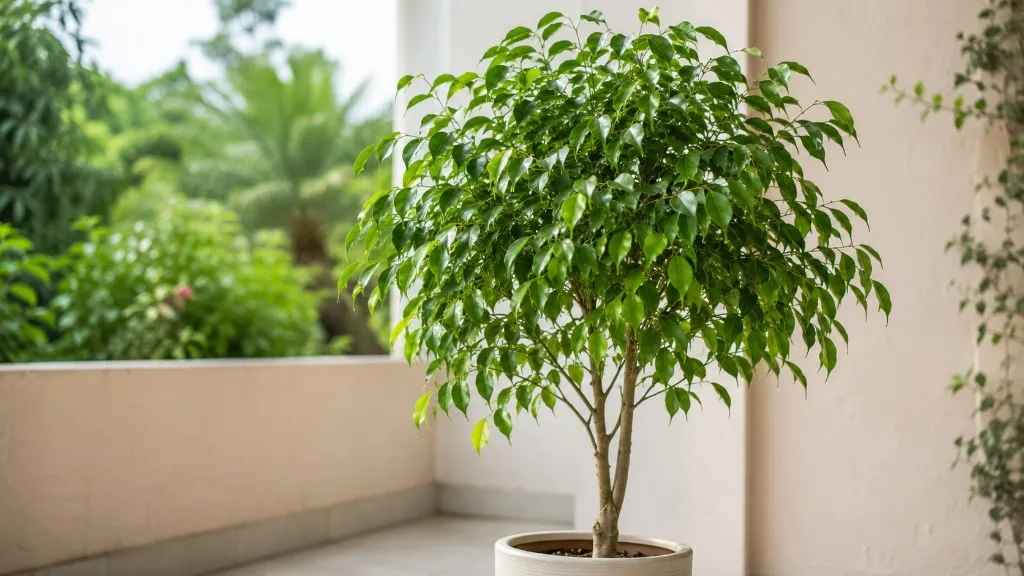
Best Soil for Ficus Benjamina: Mix, Drainage & Repotting
Best Soil for Ficus Benjamina: Mix, Drainage & Repotting
Why Soil Determines Weeping Fig Survival Indoors
Ficus benjamina - the weeping fig or Benjamin fig - is one of the most recognizable indoor trees in the world. Its arching branches, glossy pointed leaves, and upright silhouette make it a natural choice for bright living rooms, offices, and entryways. Most growers focus on Ficus Benjamina light guide, Ficus Benjamina watering guide, and the plant’s notorious habit of dropping leaves after a move. Those concerns are real, but the root zone is where watering, feeding, and environmental stability either succeed or collapse. Soil is not passive filler in a decorative pot. It controls how fast water moves through the container, how much oxygen reaches fibrous roots between waterings, how minerals accumulate over months of feeding, and how quickly a stressed tree can recover after a repot or a drafty winter window.
Ficus benjamina belongs to the Moraceae (fig) family and is native to Southeast Asia and parts of Australia, where it grows as a broadleaf evergreen in warm, humid conditions with loose, organic-rich ground that drains freely after tropical rain (Missouri Botanical Garden). Indoors, you are compressing that habitat into a container a fraction of the tree’s natural scale - often 90 cm to 1.8 m tall in a pot that holds only a few liters of media. The best soil for Ficus benjamina must hold steady, even moisture in the upper root zone without turning the lower half of the pot into an oxygen-starved swamp. That balance - moist but aerated, structured but not dense - is the single most important structural decision you make for long-term health.
If your weeping fig yellows despite careful watering, drops leaves in a stable spot, or wilts while the mix still feels damp an inch below the surface, inspect soil texture and drainage before changing light or fertilizer. A well-built mix makes every other care signal easier to read.
What Ficus benjamina Needs From Container Soil
Ficus benjamina is a tree-form houseplant that can reach 3 to 6 feet tall indoors and substantially larger in frost-free outdoor landscapes (The Spruce). It develops a fibrous, spreading root system that prefers an open medium with consistent moisture rather than heavy, airless clay or compacted peat that collapses after a year of watering. The Spruce recommends well-draining potting soil that is acidic to neutral, amended with perlite, sand, or vermiculite for improved drainage. Missouri Botanical Garden lists well-draining soil as a core requirement, and Clemson Cooperative Extension notes that benjamina prefers evenly moist compost during the growing season while allowing the top inch to dry before winter watering - a rhythm that only works when the mix drains predictably and re-wets evenly.
That combination - moist but not soggy, structured but not dense - defines container mix design for Ficus Benjamina overview. Heavy garden soil, unamended all-purpose potting mix in oversized plastic pots, and media that has decomposed after 18 months all work against a tree that already reacts sharply to change. The goal is consistently moist, well-aerated soil that dries down gradually at the surface while staying lightly damp at depth, never waterlogged at the bottom.
Rainforest Root Zone vs. Indoor Pot Reality
In its native range, Ficus benjamina roots spread through a deep profile of leaf litter, organic matter, and mineral soil that drains quickly after heavy rain while the canopy and understory humidity slow surface evaporation. Oxygen moves freely through that profile because the soil structure stays open and because the root zone is not confined to a sealed-bottom vessel. Indoors, the pot walls, saucer, and often a decorative cachepot create a closed system. Every watering decision is amplified: excess water has nowhere to go except down through the mix and out the drainage hole - or, if drainage is poor, into the lowest root zone where anaerobic conditions invite root rot on Ficus Benjamina.
Waterlogged, oxygen-poor soil provides the conditions in which Pythium and Phytophthora species - common root-rot pathogens - colonize feeder roots. By the time symptoms appear above the soil line (yellowing, wilting despite moist media, leaf drop in a stable location), the root system may already be substantially compromised. Prevention through good drainage and an open peat-perlite mix is far more reliable than trying to rescue a tree after rot has spread.
Four Jobs Your Mix Must Perform
A workable Ficus benjamina soil mix must do four things simultaneously. First, it must drain excess water within minutes of a thorough watering so the lower roots are not sitting in standing moisture. Second, it must retain enough moisture in the middle and upper root zone that the tree does not swing between bone-dry and saturated on a two-day cycle - benjamina is sensitive to inconsistent moisture and will drop leaves when the root zone dries unevenly. Third, it must stay structurally open for 12 to 24 months, resisting compaction from repeated watering and the weight of a top-heavy canopy. Fourth, it must support normal nutrient uptake at a slightly acidic to neutral pH, roughly 6.0 to 6.5, without accumulating harmful salt levels from hard water and fertilizer.
No single bagged product guarantees all four jobs in every home. That is why the standard recommendation - a peat-perlite blend built from quality components - remains the most practical starting point, with ratios adjusted after you observe how fast your specific pot dries in your specific room.
Signs Your Current Ficus Benjamina Soil Is Failing
Soil problems often masquerade as watering mistakes, draft sensitivity, or “a fussy ficus.” Before you relocate the tree again or cut back on water across the board, check whether the root zone itself is the bottleneck. Water pools on the surface for more than a few seconds after you pour, then channels down the gap between the mix and the pot wall - that usually means the media has compacted or gone hydrophobic, and water is bypassing the root ball. The top inch feels dry but the center stays wet for days, which creates a false signal to water again and accelerates rot in the lower zone.
Yellow leaves on lower branches while the soil smells sour or stagnant at the drainage hole point to anaerobic conditions - roots are drowning even if the surface looks acceptable. White crust on the soil surface or brown, crisp leaf margins on an otherwise well-watered plant suggest salt buildup in old, exhausted media rather than low humidity alone. Fungus gnats hovering around the pot often mean the upper mix stays wet too long, which ties back to poor structure or an oversized container. The pot feels heavy days after watering while new growth is sparse and internodes stretch - a classic pairing of dense, slow-draining mix with a tree that is not getting enough oxygen at the roots.
If several of these signs appear together, changing the watering schedule alone will not fix the problem. Refreshing or replacing the mix - and pairing it with a properly sized, drained container - is the structural correction the tree needs.
Best Soil Mix for Ficus Benjamina
The best soil for Ficus benjamina is a well-draining peat-perlite mix: loose, organic-rich, and aerated enough that water moves through freely while the roots still access steady moisture between waterings. You do not need a specialty “ficus soil” label on the bag. You need a blend whose texture matches what a rainforest tree root expects when confined to a pot - open, moisture-retentive in the middle, and never swampy at the bottom.
Commercial indoor potting mixes are a reasonable base because they are already pasteurized and balanced for houseplants, but most benefit from additional perlite and either peat moss or coconut coir to improve drainage and maintain structure over time. Garden soil, topsoil, and dense outdoor planting mixes are poor choices. They compact in containers, drain slowly, and introduce pathogens and weed seeds you do not want around a long-lived indoor tree.
The Quick-Answer Peat-Perlite Recipe
For most indoor weeping figs in plastic or glazed ceramic pots with drainage holes, start with this DIY Ficus benjamina soil mix:
- 2 parts high-quality indoor potting soil or loam-based compost
- 1 part perlite
- 1 part peat moss or coconut coir
Measure by volume, not weight - a scoop, a yogurt tub, or a gallon measure works fine. Mix thoroughly in a clean tub or on a tarp until the perlite is evenly distributed and the texture feels light and crumbly in your hand. When you squeeze a handful, it should hold together briefly and then fall apart; it should not form a tight, muddy ball.
This 2-1-1 ratio is widely recommended for weeping figs because it balances moisture retention in the peat or coir with the drainage and air pockets perlite creates. If your home runs warm and dry and the pot dries out in less than four days after a full watering, reduce perlite slightly - try 2 parts potting soil, ½ part perlite, 1 part peat or coir. If the pot stays wet for more than seven days in moderate light, increase perlite to 2 parts potting soil, 1½ parts perlite, 1 part peat or coir until dry-down speed improves.
Core Ingredients Explained
Understanding what each component does helps you adjust the recipe without guessing. The goal is not to memorize a single formula but to know which lever to pull when your tree’s pot dries too fast, stays wet too long, or compacts after a year.
| Ingredient | Role in Ficus benjamina mix |
|---|---|
| Peat moss or coconut coir | Holds moisture and organic structure; keeps roots from drying in one sharp cycle |
| Perlite | Creates air pockets; speeds drainage; prevents compaction |
| Quality potting soil / loam-based compost | Provides body, mineral content, and baseline nutrients |
| Pine bark or orchid bark (optional) | Adds long-term structure and air channels in larger pots |
| Worm castings or compost (optional, ≤10%) | Slow organic nutrition; use sparingly to avoid excess moisture retention |
Peat Moss or Coconut Coir
Sphagnum peat moss has been the default moisture-retention ingredient in houseplant mixes for decades because it holds water well, acidifies slightly, and creates a fine, root-friendly texture. For Ficus benjamina, which prefers pH 5.5 to 7.0 with an ideal near 6.0 to 6.5 (UF/IFAS; The Spruce), peat’s mild acidity lands comfortably in range. The trade-off is environmental: peat harvesting raises sustainability concerns, and peat-heavy mixes compact over 12 to 18 months as the fibers break down - a real issue for a tree you may not want to repot every year.
Coconut coir is the most common peat alternative. It retains moisture similarly, resists compaction slightly better, and is widely available as compressed bricks or loose bags. Coir is often near-neutral in pH, which still works for benjamina. Some coir products contain salt residues from processing; rinsing coir before mixing, or choosing a labeled “low EC” product, avoids minor salt stress on sensitive roots. For most growers, either peat or coir at one part in the 2-1-1 recipe produces excellent results; choose based on availability and preference, not because one is universally superior.
Perlite and Other Drainage Amendments
Perlite is expanded volcanic glass - lightweight, sterile, and full of tiny air pockets. It is the most important amendment in a Ficus benjamina perlite mix because benjamina roots are highly sensitive to standing water. Perlite does not hold meaningful moisture itself; it keeps the overall blend open so water drains and oxygen returns quickly after watering. Without enough perlite (or an equivalent like pumice or coarse horticultural sand), even a “well-draining” bagged mix can collapse and behave like mud in a large indoor pot.
Pine bark or orchid bark chips, added at 10 to 20 percent in larger containers, mimic the chunky organic layer rainforest ficuses grow through and extend the life of the mix before compaction. Vermiculite holds more moisture than perlite and is useful in very dry homes, but use it sparingly - rarely more than 10 percent - because excess vermiculite can tip a benjamina mix toward slow drainage. LECA (clay pebbles) at the bottom of a pot is not a substitute for perlite throughout the mix; it does not improve aeration in the root zone where it matters most.
pH, Minerals, and Fertilizer Compatibility
Ficus benjamina grows best in slightly acidic to neutral soil, with most sources citing pH 6.0 to 6.5 as ideal and a tolerant range of roughly 5.5 to 7.0 (Missouri Botanical Garden; The Spruce). Standard peat-based or loam-based potting mixes land close enough to this range that most indoor growers never need to test or adjust pH. If you build from coir and a neutral commercial base, you are still within tolerance in nearly all cases.
Where pH matters practically is in mineral and fertilizer behavior, not in chasing decimal points. Hard tap water, repeated synthetic fertilizer applications, and slow evaporation in a cachepot can raise soluble salts in the root zone over time. Symptoms include white crust on the soil surface, brown leaf tips and margins, and stunted new growth despite adequate watering. Flushing the pot with plain water until runoff runs freely - repeated two or three times - leaches some accumulated salts without Ficus Benjamina repotting guide. If crust returns within weeks or the mix is more than two years old, refreshing the soil at repot is the cleaner fix.
Feed benjamina on moist, not dry, soil during active growth, and avoid stacking a heavy fertilizer dose onto a root zone already stressed by compacted media. Salt damage and poor drainage compound each other: roots that cannot breathe also cannot regulate uptake effectively.
Drainage Speed and Moisture Retention Balance
Drainage and moisture retention are not opposites - they are partners in a healthy weeping fig soil mix. Benjamina wants the root zone to stay evenly moist during the growing season, with the top 2 to 3 cm drying before the next thorough watering (Clemson HGIC - Weeping Ficus). That rhythm only works if water penetrates the full depth of the pot, drains out the bottom within minutes, and leaves behind a uniformly damp - not saturated - profile.
After watering, excess water should exit the drainage hole within two to five minutes. If it does not, the mix is too dense, the hole is blocked, or both. If the pot dries completely in 48 hours in a moderate indoor environment, the mix may be too free-draining for a tree that dislikes sharp drought swings - add a little more peat or coir and slightly reduce perlite. The useful metric is not a calendar interval but how the pot behaves in your room: lift it when dry and after watering to learn its weight, and probe an inch or two into the surface with a finger or dry chopstick before each watering decision.
Never let a weeping fig sit in a saucer of standing water for more than an hour. Clemson HGIC warns that plants should never be waterlogged or allowed to sit with water in their saucers, which re-saturates the lower root zone and is one of the fastest paths to rot. Empty the saucer after each watering, or use a wick or riser if you cannot check it daily.
Pot Choice and Container Drainage Systems
Soil mix and pot design work as a single system. The best peat-perlite blend in a pot without drainage will still kill a Ficus benjamina over time. Drainage holes are non-negotiable for long-term indoor culture (The Spruce). One clear hole is minimum; three to four holes in a large container improve flow across the root ball base.
Pot size matters as much as hole count. Benjamina tolerates being slightly root-bound better than sitting in an oversized pot full of wet, unused mix (Clemson Extension). When repotting, move up only one pot size - typically 2 to 5 cm wider in diameter - unless you are deliberately managing a young tree’s growth rate. An oversized container holds excess moisture around roots that are not yet exploring that volume, which extends dry-down time and invites rot.
Material changes how the same mix behaves. Unglazed terracotta breathes through porous walls and dries faster - useful in dim rooms or for growers who tend to overwater. Plastic and glazed ceramic retain moisture longer, which suits dry, bright environments but demands more perlite in the mix if you see chronic sogginess. Decorative cachepots without holes are fine only as outer shells: grow the tree in a plain nursery pot with drainage, lift it out to water, and never let the inner pot sit submerged in collected runoff.
Do not add a layer of gravel or pottery shards at the bottom thinking it improves drainage. Research and practical horticulture consistently show that abrupt texture changes create a perched water table - the finer mix above holds water longer at the bottom interface, exactly where benjamina roots sit. Perlite mixed throughout the entire profile solves the problem correctly.
Commercial Potting Mixes vs. DIY Blends
Can you use regular potting soil for Ficus benjamina? Yes - as a base, if you amend it. A straight bag of all-purpose indoor mix without perlite is often too dense for a tree in a long-lived container, especially in plastic pots and moderate light. The upgrade path is simple: empty the bag into a tub, add perlite at 25 to 40 percent by volume, and optionally replace some of the base with peat or coir if the original mix feels heavy or clay-rich.
Loam-based composts such as John Innes No. 3, recommended by the RHS for ficuses with 20 to 25 percent fine bark or perlite added, provide excellent structure and weight for top-heavy indoor trees that need stability (RHS). They dry more evenly than lightweight peat mixes and suit large specimens that tip easily in fluffy media. The trade-off is weight and cost - fine for a statement tree in a permanent spot, less ideal if you move plants seasonally.
Premixed “indoor tree” or “houseplant” soils from reputable brands are acceptable when perlite is already visible in the bag and the label mentions drainage. If the mix looks uniformly fine and dark with no white particles, plan to amend. Cactus or succulent mixes alone are usually too free-draining for benjamina unless you blend them 50/50 with peat-based potting soil to restore moisture retention. Outdoor garden soil, topsoil, and seed-starting mixes are poor fits - too dense, too sterile, or too moisture-retentive respectively.
Adjusting Mix Ratios by Environment and Pot Type
The 2-1-1 peat-perlite recipe is a starting point, not a final law. Adjust after one to two weeks of observation in your actual conditions. Bright, warm, dry rooms with forced-air heat pull moisture from pots quickly; a tree under strong indirect light may need slightly less perlite or a deeper saucer check to avoid drying the root ball edge-to-edge. Cool, dim winter conditions slow evaporation; the same mix that worked in July may stay wet too long in January - water less often rather than changing the mix mid-season unless drainage is clearly failing.
Large floor specimens in 30 cm or wider pots benefit from 10 to 20 percent pine bark in addition to perlite, because bark keeps large volumes structurally open for two years or more. Small tabletop benjamina in 15 cm pots dry faster and need less bark; the basic 2-1-1 blend is usually sufficient. Self-watering pots can work for experienced growers who monitor moisture carefully, but they are a poor match for beginners with benjamina because the reservoir makes it easy to maintain a permanently wet lower zone - exactly what this species cannot tolerate.
If you inherited a weeping fig in unknown soil that stays wet for ten days, do not wait for spring symptoms to confirm rot. Repot into fresh peat-perlite mix as soon as you can do so gently, trim any mushy roots, and accept that some leaf drop after repotting is normal for this species even when the new mix is perfect.
When to Refresh or Replace Ficus Benjamina Soil
Even a good Ficus benjamina potting mix degrades. Organic components break down, perlite settles, salts accumulate, and the profile that drained beautifully in year one behaves like compacted mud in year three. Plan to refresh soil every 12 to 24 months for actively growing indoor trees, or sooner if you see drainage slowing, salt crust, or sour smell at the pot base.
Repot when roots circle the bottom, emerge from drainage holes, or the tree dries out in half its previous time despite normal watering - all signs the root ball has outgrown the available volume. Repot when the mix has collapsed - water runs straight through without wetting evenly, or the opposite, water sits on top and will not penetrate. Repot after root rot recovery, once you have trimmed damaged tissue and sanitized the container, because old infected media can harbor pathogens.
Timing matters for a change-sensitive plant. Early to mid-spring, as new growth begins, is the safest window for repotting into fresh mix. Avoid repotting during active leaf drop from a recent move, heat stress, or pest treatment unless the root zone is clearly the emergency - a rotting smell and mushy roots justify immediate action even if the tree drops more leaves short-term. Clemson Extension notes that a slightly root-bound benjamina is often easier to manage than one in an excessively large pot; do not repot “just because” if the tree is stable, growing, and the mix still drains well.
Repotting into Fresh Mix: Step-by-Step
Repotting a weeping fig is straightforward mechanically but emotionally taxing because leaf drop after repotting is common even when you do everything right. Minimize disturbance, use fresh well-draining peat-perlite mix, and keep light and watering stable afterward.
1. Choose the next pot. Select a container one size larger with clean drainage holes. Terracotta or plastic both work if the mix is adjusted for drying speed.
2. Prepare the mix. Blend 2 parts potting soil, 1 part perlite, 1 part peat or coir and moisten lightly so it is damp but not dripping.
3. Unpot gently. Tip the tree on its side, support the trunk base, and slide the root ball out. If it is stuck, run a knife around the pot edge - do not yank the trunk.
4. Inspect and trim roots. Remove loose old soil from the outer inch only; keep the core root ball intact to limit shock. Trim brown, mushy, or black roots with clean scissors. Healthy ficus roots are firm and pale tan to white.
5. Partial root pruning optional. If the tree is severely root-bound, score the outer circling roots lightly or trim the bottom quarter - conservative cuts only. Aggressive pruning plus new mix plus a new location is too many changes at once.
6. Settle into the new pot. Add mix to the bottom so the root crown sits at the same depth as before - never bury the trunk deeper than it was growing. Fill around the sides, tapping the pot to settle media without packing it tight.
7. Water once thoroughly. Water until runoff clears the holes, then empty the saucer. Do not fertilize for four to six weeks while new roots establish.
8. Hold placement steady. Keep the tree in the same bright, indirect light and avoid moving it again for several weeks. Expect some yellowing and leaf drop; new growth at the tips is the sign the root zone is recovering.
Soil Mistakes That Trigger Root Rot and Leaf Drop
Some soil errors are so common they deserve explicit warnings because they undo otherwise careful watering and placement.
Using garden soil or dense outdoor mix in a pot is the most frequent fatal mistake. It compacts, drains slowly, and often introduces pests. Oversized pots with fresh, unrooted volume keep the mix wet for weeks after each watering. Gravel layers at the bottom do not improve drainage and can worsen saturation at the root zone interface. Pots without holes - or holes blocked by roots, salt, or debris - turn the container into a reservoir.
Unamended bagged mix with no perlite works for a season, then collapses - especially dangerous because the tree looks fine until sudden yellowing and drop. Repotting into dry, dusty mix and watering lightly once leaves air pockets and dry zones that cause uneven moisture and stress. Stacking repot, relocation, and fertilizer in the same week multiplies shock for a species that reacts to change before it reacts to slow neglect.
Confusing soil problems with other stress wastes time. Leaf drop after moving the tree two meters is often placement and draft, not soil - but if the pot stays wet for ten days in the new spot, soil and pot choice are still part of the fix. Diagnose the root zone first when yellow leaves appear without a recent move, when wilting happens on moist mix, or when growth stalls in an otherwise stable bright room.
Conclusion
The right Ficus benjamina soil is a well-draining peat-perlite mix that keeps fibrous roots evenly moist, structurally aerated, and free from standing water at the bottom of the pot. Build from 2 parts quality potting soil, 1 part perlite, and 1 part peat moss or coconut coir, adjust perlite up or down after watching how your pot dries in your home, and pair the mix with a container that has clear drainage holes and a size matched to the root ball - not the canopy. Test drainage after every repot, refresh media before it collapses or loads with salts, and repot in spring with minimal simultaneous changes to light or location.
Soil will not make a weeping fig immune to drafts, low light, or inconsistent watering. It will make those problems visible earlier and give healthy roots a fair chance to recover. When the mix drains in minutes, re-wets evenly, and smells earthy rather than sour, you have built the foundation every other Ficus benjamina care decision depends on.
When to use this page vs other Ficus Benjamina guides
- Ficus Benjamina overview - Start here for whole-plant context before deep-diving this topic.
- Ficus Benjamina problems hub - Jump to symptom-specific fix guides when this care topic does not resolve the issue.
- Root Rot on Ficus Benjamina - Escalate here when soil adjustments are not enough.
- Mold on Soil on Ficus Benjamina - Escalate here when soil adjustments are not enough.
Related Ficus Benjamina guides
- Ficus Benjamina overview
- Ficus Benjamina watering
- Ficus Benjamina light
- Ficus Benjamina propagation
- Ficus Benjamina fertilizer
- Ficus Benjamina repotting
- Root Rot on Ficus Benjamina
- Mold on Soil on Ficus Benjamina
- Ficus Benjamina problems
Related tool
Try the Soil Mix Calculator with ficus-benjamina pre-selected to estimate needs for your setup.