Ficus Benjamina Repotting: When, How, and Mistakes to Avoid
Ficus Benjamina Repotting: When, How, and Mistakes to Avoid
Ficus Benjamina Repotting: When, How, and Mistakes to Avoid
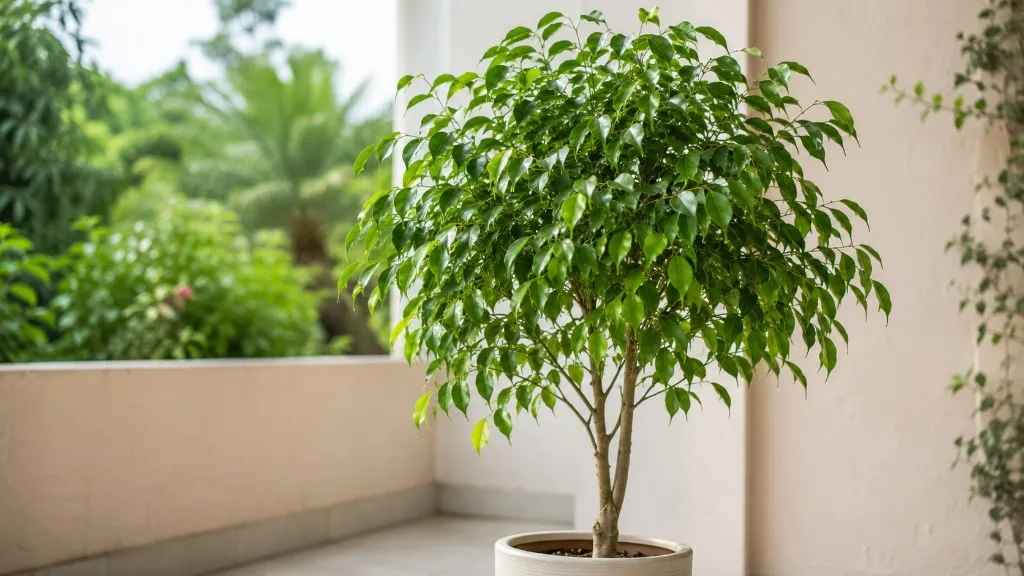
Ficus benjamina - the weeping fig - is one of the most widely grown indoor trees in the world, and also one of the most dramatic about change. A healthy specimen carries dense, glossy foliage on slender arching branches, often trained into braided trunks or kept as a compact bush. Indoors it commonly reaches 3–6 feet tall, though mature plants in generous containers can grow taller over many years. That elegant canopy sits atop a root system that prefers stability, moderate moisture, and just enough room to breathe. Repotting is the moment when you refresh depleted mix, give roots modest new space, and reset the Ficus Benjamina watering guide - but on Ficus Benjamina overview, the operation also triggers a well-known stress response: leaf drop.
Done in spring, with a one-size-up pot and a plan to minimize environmental shifts, a weeping fig repot is usually survivable and short-lived in its drama: a week or two of shedding, then new growth. Done in the wrong season, in a pot that is 30–40% larger than the old one, or followed by a move to a new window and a heavy watering hand, the same repot can strip half the canopy and leave you wondering whether the plant is dying. It probably is not - but the recovery window stretches from weeks to months. This guide walks through when to repot, how to do it step by step, and the specific choices that keep transplant shock and leaf drop within normal bounds rather than turning a routine upgrade into a long recovery project.
Why Repotting Matters for Ficus Benjamina
Repotting solves three problems that eventually show up as leaf symptoms if you ignore them long enough. First, roots slowly fill the available soil volume and begin circling the pot wall, reducing the mix’s ability to hold air and water evenly. Second, even good potting media breaks down - peat and coir compress, perlite crumbles, and the pore spaces that keep ficus roots breathing disappear over 18–36 months of regular watering. Third, salts from tap water and fertilizer accumulate at the root zone, which can scorch leaf tips and margins even when you believe you are watering conservatively.
Ficus benjamina belongs to Moraceae, the fig family, and like many tropical houseplants it is sensitive to roots sitting in stagnant, airless wet soil. Jumping to a pot that is much too large creates exactly that environment. Repotting is your chance to rebuild balance before decline shows in the canopy - but on weeping fig, the cure itself is a stressor, which is why timing and technique matter as much as the fresh soil.
What fresh soil and root room fix in weeping figs
Fresh mix restores structure: the air pockets, organic matter, and drainage speed that compacted old soil lost months ago. Extra root room - modest, not extravagant - lets new white root tips spread outward instead of spiraling tightly against the pot wall, which improves the plant’s ability to take up water and nutrients after each watering cycle. You will notice the difference in how the pot behaves. A root-bound weeping fig often dries out faster than it used to, then wilts slightly between waterings, not because you changed your habits but because the root mat is so dense that water runs through channels without wetting the whole mass evenly.
A repot also gives you the only easy moment to inspect roots for root rot on Ficus Benjamina - brown, mushy, sour-smelling tissue that needs trimming before it spreads. Catching rot during repotting is far simpler than trying to diagnose it from yellowing leaves alone, and on Ficus benjamina yellow leaves can mean half a dozen other things at once. If roots are mostly pale and firm, you are upgrading space and soil. If they are not, repotting becomes a rescue operation, and the steps below still apply with more aggressive trimming and a lighter watering hand afterward.
Why Ficus benjamina repots on a 2–3 year rhythm
Weeping fig grows at a moderate pace indoors - faster than a dracaena, slower than a pothos - which is why it does not demand annual repotting. Clemson Cooperative Extension recommends repotting in late winter or early spring when the plant becomes crowded, using a general-purpose potting soil. Most healthy indoor weeping figs benefit from a full repot every 2–3 years, with a lighter top-dressing - replacing the top few centimeters of mix without disturbing roots - in intervening springs if the soil surface has crusted or salts have built up. That interval is a check-in, not a command. A young plant in a generous nursery pot may sit comfortably for three years, while a mature tree in a 30 cm container that dries in two days may need attention sooner.
Clemson HGIC also notes that weeping figs tolerate being slightly root-bound. Tight roots are not automatically an emergency on this species. The goal is not to maximize pot volume; it is to refresh soil and add just enough diameter that roots and canopy stay in proportion. Think of the 2–3 year window as the point where mix decomposition and salt buildup usually outweigh the benefits of snug roots - not as a rigid calendar date you must hit regardless of what you see at the root ball.
Signs Your Ficus Benjamina Needs Repotting
The clearest sign is visual: roots emerging from drainage holes or circling the surface when you lift the plant partway out of its pot. Less obvious but equally reliable signals include water that runs straight through without absorbing, a plant that wilts shortly after a thorough watering despite previously stable habits, and growth that stalls even though light and feeding have not changed. When two or more of these appear together during the active growing season, repotting is usually the right move.
Do not repot simply because leaves are dropping. Leaf drop is so common on Ficus benjamina - drafts, low light, overwatering on Ficus Benjamina, underwatering on Ficus Benjamina, moving the pot six inches - that repotting in response to shedding alone often adds stress without fixing the trigger. Repot when the root zone or soil structure is clearly the bottleneck, not when the plant is already reacting to an unrelated environmental change.
Root-bound and drainage signals
Lift the pot and inspect the bottom first. Roots peeking through holes mean the plant has used the volume it was given. Slide the weeping fig out gently - if the root ball holds a perfect pot-shaped mold with little visible mix on the sides, you are looking at a classic root-bound situation. Because Ficus benjamina prefers to be a little root-bound, a tight ball is not automatically urgent, but circling roots at the bottom combined with fast drying tell you the plant has been asking for space and fresh media for a while.
Fast drainage after years of normal behavior sounds efficient until you realize water is bypassing the root mass because the center is hydrophobic or channels have opened along the pot wall. If you water thoroughly and the pot feels light again within a few hours, the mix may be spent rather than the plant thirsty. Slow drainage combined with sour smell or soft stem tissue at the soil line points to rot that requires immediate attention regardless of season. Salt crust on the soil surface or browned leaf tips despite careful watering suggest mineral buildup that a full repot or aggressive top-dressing should address.
Leaf size and growth slowdown as repot triggers
Clemson HGIC describes a specific canopy signal: when roots become too crowded, new leaves will be small and growth will slow even if you have not changed light or feeding. That pattern is easy to miss because the existing foliage still looks fine from across the room. Compare the size of the newest leaves at the branch tips to leaves from six months ago. If fresh growth is noticeably smaller and thinner, inspect the root ball before assuming the plant needs more fertilizer.
Stalled growth during spring and summer - the natural active window - is another reliable trigger. A weeping fig that pushed steady new leaves last year but has produced almost nothing since early spring despite Ficus Benjamina light guide and regular watering is often root-limited or sitting in depleted mix. Pair that observation with a drainage check: if water races through and the plant wilts anyway, repotting in the current or next spring window is reasonable. If growth stalls in winter, wait until spring before disturbing roots; dormancy slowdown is normal and does not by itself justify a repot.
Best Time of Year to Repot Ficus Benjamina
Timing matters because weeping fig recovers fastest when it is already geared for growth. Spring through early summer is the safest window for most indoor growers in temperate climates. Rising temperatures and lengthening days trigger active root and shoot development, so the plant can colonize fresh mix quickly and re-establish its watering rhythm before winter slowdown arrives. Clemson Extension specifically recommends late winter or early spring - roughly February through April in the Northern Hemisphere - when you can inspect roots and still have months of growth ahead.
Repot on a mild day when possible, and avoid extreme heat or cold snaps that add environmental stress on top of root disturbance. Morning repotting gives the plant a full day of stable indoor conditions before overnight temperature drops. You do not need greenhouse conditions - ordinary indoor warmth and bright indirect light are enough, provided you keep the plant out of direct sun for the first week after the move. The single most important post-repot rule on Ficus benjamina is stability: same room, same light angle, same distance from windows and vents. Moving the pot after repotting is a second stress event stacked on the first.
Spring and early summer windows
During active growth, weeping fig can resume pushing new leaves within two to four weeks after a well-executed repot, though leaf drop may continue in parallel for part of that period. Roots begin exploring fresh mix almost immediately if temperatures stay above roughly 18°C (65°F) and the soil remains evenly moist but not soggy. Spring is also the best time to combine repotting with light pruning of dead or damaged branches, because the plant has the energy to seal wounds cleanly after the move. Avoid heavy pruning and repotting on the same day if the plant is already stressed; pick one operation or spread them a week apart.
If you missed early spring, early summer is still workable. Avoid repotting during the hottest week of the year if your home lacks air conditioning and the plant sits near a sun-facing window. Heat plus transplant stress can produce more leaf drop than the same repot in moderate conditions. Shade the plant slightly for the first seven to ten days after a summer repot, then return it to its normal bright indirect location without rotating the pot to a different wall.
When winter repotting is still justified
Winter repotting is a backup plan, not a default. Growth slows, days are short, and a disturbed root system sits in wet mix longer because the plant is not pulling water actively. That combination increases rot risk on a species that already reacts to stress with leaf drop. Skip winter repotting if the plant is merely slightly tight but still watering normally and holding most of its foliage.
Repot in winter only when delay would clearly harm the plant: severe root-binding with repeated wilting, active root rot that requires trimming and fresh mix, a fallen or cracked pot, or a situation where the current container is clearly undersized and the plant cannot wait until spring. If you must repot then, use a modest one-size-up increase, keep indoor temperatures warm with night readings of 65 to 70°F and daytime highs of 75 to 85°F, provide bright indirect light, and water more cautiously than you would in spring - let the top 2–3 cm of mix dry slightly further between waterings until new growth appears.
Choosing the Right Pot Size for Weeping Fig
The single most important pot decision is diameter, not decoration. Weeping fig wants one step up, not a mansion. Jumping from a 25 cm pot to a 40 cm pot - a common mistake when owners want to “give the plant room to grow” - feels generous, but the unused soil volume stays wet for days while the root system catches up. That wet zone is where ficus roots struggle most, and it is the fastest route to yellow leaves, sustained leaf drop, and the kind of post-repot panic that sends people searching for emergency fixes. Stick to one pot size up.
Measure the current inner diameter and choose a new pot 2–5 cm (about 1–2 inches) wider, with drainage holes and a profile moderately deep but not excessively tall. For a weeping fig in a 20 cm pot, a 22–25 cm pot is appropriate. From 30 cm, move to 32–35 cm. Repeat the one-size-up rule each repot across the plant’s life rather than skipping sizes to save effort later. Nursery guidance consistently recommends increasing diameter by only 1–2 inches per repot for ficus and similar indoor trees.
The one-size-up rule and excess moisture risk
The one-size-up rule matches root biology. Roots grow into soil progressively; until they do, excess mix is essentially a water reservoir with limited uptake capacity. Weeping figs even perform well when slightly snug, which is why the one-size-up rule is a ceiling, not a minimum - you are refreshing soil and adding modest room, not maximizing container volume. A pot that is 30–40% larger than the previous one - a size jump owners often make when upgrading decorative containers - is strongly associated with post-repot leaf drop and overwatering problems because the root ball cannot dry the surrounding mix at the rate you are used to monitoring.
The one-size-up rule also keeps watering rhythm predictable after repotting. A modest increase in soil volume means you water slightly less often than before, but not so much less that the mix stays saturated at the bottom for a week. If you repot and find yourself waiting twelve to fourteen days before the top dries, the pot is probably too large, too deep, or filled with mix that is too heavy. All three are easier to prevent upfront than to fix after half the leaves have fallen. Every pot still needs drainage holes - decorative cache pots without holes are for display only, with the plant kept in an inner nursery pot that drains freely.
Best Soil Mix for Repotting Ficus Benjamina
Weeping fig wants well-draining potting mix with enough organic matter to hold moisture without staying soggy. Target pH 6.0–6.5 - slightly acidic - which standard peat- or coir-based indoor mixes approximate without adjustment in most homes. Clemson Extension recommends a general-purpose potting soil for repotting, which is a reasonable baseline if you verify it drains within seconds of watering rather than pooling on the surface.
A reliable DIY blend for repotting Ficus benjamina:
- 60% quality peat- or coir-based potting mix
- 25% perlite, pumice, or coarse horticultural grit
- 15% orchid bark or coarse coco chips for long-term structure
That ratio drains quickly while holding enough moisture that the weeping fig does not dry to dust between checks. Adjust upward on perlite or bark if your home is cool or you tend to water heavily; reduce chunk fraction slightly if the plant dries too fast in bright, dry air. Variegated cultivars such as ‘Variegata’ often prefer slightly lower light and may benefit from a mix that dries a touch slower - but drainage still matters more than moisture retention on any ficus.
DIY blend ratios that stay airy
Mix ingredients in a tub before you repot rather than layering them in the pot. Dry blending distributes perlite and bark evenly and prevents the “all drainage at the bottom” mistake, which does not work the way folklore suggests - water moves through the whole column according to pore structure, not separate layers. Orchid bark keeps the mix open for years as peat compresses; weeping fig benefits from that longevity because repot intervals stretch to 2–3 years.
Avoid garden soil, which compacts and introduces pathogens. Avoid pure cactus mix unless you amend it heavily with organic potting base; Ficus benjamina is not a desert succulent. Avoid heavy, all-peat blends without amendment - they work for a season, then collapse into a dense block that mimics overwatering even when you are careful. Full repot - removing the plant, loosening outer circling roots, and replacing essentially all old mix - is appropriate when roots are bound, mix is compacted or sour, or you are correcting rot. Top-dressing - scraping out the top 3–5 cm of old mix and replacing it with fresh blend without disturbing roots - is a gentler option between full repots when drainage is still acceptable but salts have built up. Top-dressing in early spring can buy another year if the plant is not yet root-bound at the bottom, but it will not solve circling roots or chronic fast-drain behavior.
Step-by-Step: How to Repot Ficus Benjamina Without Shock
Repotting weeping fig is straightforward if you prepare materials first and minimize root exposure time. Gather the new pot, pre-mixed soil, clean scissors or pruners, a chopstick or pencil, gloves to protect against irritating latex sap, and a watering can. Work at a comfortable height and clear space so branches are not crushed against walls during the process. Plan to keep the plant in exactly the same spot after repotting - same light, same orientation to the window, no rotation to “even out” growth for at least four weeks.
Step 1: Water the plant 24 hours before repotting. A lightly moist root ball holds together and slips out of the old pot more cleanly than a bone-dry or soggy one.
Step 2: Add enough fresh mix to the bottom of the new pot so the root ball will sit with the previous soil line about 2–3 cm below the rim. Do not create a thick gravel drainage layer; it does not improve drainage and can create a perched water table.
Step 3: Turn the weeping fig on its side if it is large, and slide it out while supporting the base of the trunk. If it resists - common on root-bound ficus - squeeze flexible nursery pots or run a clean knife around the inside edge of rigid pots. You may need to cut down one side of a stiff nursery container rather than yanking the trunk.
Step 4: Inspect roots. Trim brown, mushy tissue with clean scissors. Tease circling roots at the bottom and sides gently so they point outward. Avoid washing away the entire root ball unless rot forces full cleaning.
Step 5: Set the plant in the new pot so the previous soil line matches its old position. Trunks should not be buried deeper than they were growing; burying the base invites rot.
Step 6: Backfill with fresh mix, working soil between roots with a chopstick while holding the plant centered. Firm lightly - enough to remove large air gaps, not enough to compress mix into a brick.
Step 7: Water thoroughly until excess runs from drainage holes. Empty the saucer. Return the plant to the same location in bright indirect light, out of direct sun, for 7–14 days.
Step 8: Hold fertilizer for 6–8 weeks while roots settle, per standard ficus repotting guidance. Fresh mix already contains nutrients; early feeding burns tender new root tips.
Preparing the plant and loosening circling roots
The goal of root teasing is to redirect growth, not to destroy the root ball. Weeping fig relies on fine root hairs for water uptake; bare-rooting by washing every particle of old soil away strips those hairs and extends both recovery time and leaf drop. Keep most of the original root mass intact while freeing the outer circling layer. If roots are densely matted at the bottom, you may slice 1–2 cm off the bottom of the root ball with a clean knife to stimulate new white tips - a standard nursery technique adapted for houseplants. Avoid removing more than one-third of total root mass unless you are rescuing rot.
Wear gloves when handling cut stems or sap. Ficus benjamina sap can irritate skin and the ASPCA lists Ficus species as toxic to cats and dogs, with ingestion causing gastrointestinal upset. Keep fallen leaves and discarded soil out of reach while you work, especially if pets investigate repotting messes.
Placement, backfill, and first watering
Center the plant so it stands without wobbling before you finish backfilling. A wobbly repot usually means insufficient mix beneath the root ball or a pot that is too tall relative to root depth. Add mix under the ball, not just around the sides, until the plant sits firmly at its previous soil line.
The first watering settles mix and closes small air pockets. If the soil level drops noticeably, top up before roots grow into empty space. For the first two weeks, water when the top 2–3 cm feels dry - similar to pre-repot checks, but expect the interval to lengthen slightly as soil volume increases. Some leaf drop in the first week is normal on Ficus benjamina even when you do everything right; Clemson HGIC notes that weeping figs often shed leaves when repotted but will adjust if conditions remain adequate. Recoverable stress improves with a careful drink and stable light. Wilting that worsens daily despite correct moisture usually means rot, oversized pot, or buried trunk tissue - inspect accordingly rather than watering more.
Minimizing Transplant Shock and Leaf Drop After Repotting
Transplant shock on weeping fig is less a mystery than a predictable stress response. Ficus benjamina reacts to almost any environmental change by shedding leaves - Clemson HGIC lists repotting alongside moving to a new location as a common trigger. That does not mean you did the repot wrong. It means the species prioritizes dropping foliage over maintaining a canopy it cannot currently support while roots re-establish. Your job after repotting is to give it nothing else to react to.
Keep light stable. Do not move the plant to a brighter spot “to help it recover” or a darker corner “to reduce stress.” Bright indirect light at the same intensity as before is correct. Direct sun on a shocked weeping fig scorches remaining leaves and accelerates drop. Keep temperature stable with night temperatures of 65 to 70°F and day temperatures of 75 to 85°F where possible. Avoid placing the repotted plant near heating vents, air-conditioning drafts, or frequently opened doors - draft sensitivity is a major leaf-drop trigger on this species.
Keep watering conservative but consistent. Overwatering in a fresh, oversized pot is the most common post-repot mistake and the one most likely to turn normal leaf drop into root rot. Water when the top of the mix dries, not on a rigid calendar, and always empty the saucer. Underwatering is less common but still stressful; wilted leaves that do not perk up within a few hours after a thorough drink suggest root damage or rot, not mere shock.
Do not fertilize for 6–8 weeks. Do not repot again because leaves are falling - stacking disturbances is how a manageable shed becomes a bare tree. Do not prune heavily to “balance” leaf loss unless branches are clearly dead; the plant needs every remaining leaf for photosynthesis while roots recover. Do not move the pot to another room, rotate it dramatically, or bring it outdoors mid-recovery unless that was its established summer routine before the repot.
When leaf drop is normal and when to intervene
Knowing what normal recovery looks like keeps you from overcorrecting. Mild transplant shock on Ficus benjamina usually shows as yellowing lower leaves, scattered drop across the canopy, or a pause in new growth for one to two weeks. Some owners report 30% leaf loss after repot even with good technique; the plant should still have firm stems, no sour smell at soil level, and should perk up after watering. Full root re-establishment typically takes four to six weeks in warm, bright conditions - longer in winter or on large specimens. New growth is the clearest success signal: firm branches, normal leaf size, and healthy color on fresh foliage mean roots have found the new mix. Older yellow leaves will not green up again; watch the tips, not the casualties.
If leaf drop continues beyond three to four weeks, or if stems go soft and soil smells sour, investigate oversized pot, overwatering, or hidden rot rather than waiting passively. Reduce watering slightly, confirm drainage holes are open, and slide the plant out to inspect root color if needed. If the pot was too large, the fix is often another repot into a correctly sized container - painful on a species that hates change, but less painful than slow rot in wet mix.
The mistakes that most often turn normal shock into a crisis deserve explicit mention. Oversized pots top the list - more soil without more roots means chronic bottom wetness. Bare-rooting or over-washing removes fine hairs and extends recovery. Immediate fertilizing burns new root tips. Moving the plant after repotting stacks a second stress event. Repotting for the wrong reason - moving a plant that is yellowing from drafts or low light - adds disturbance without fixing the trigger. Using a pot without drainage holes turns repotting into a long-term rot trap. Changing light, water, and pot all in the same week is how healthy weeping figs become bare sticks.
Conclusion
Ficus benjamina repotting comes down to reading the roots, checking in every 2–3 years, choosing spring or early summer when you can, moving the plant one pot size up with fresh, well-draining mix, and then doing almost nothing else disruptive while roots settle. Weeping fig will probably drop some leaves - that is species biology, not necessarily failure. The difference between a two-week sulk and a two-month crisis is usually pot size, watering discipline, and whether you kept the plant in the same stable spot afterward.
Get timing, pot size, and soil right and the weeping fig rewards you with new growth within weeks. Oversize the container, bare-root without cause, fertilize too soon, or move the pot to a new window and the same plant will look punished for months. Watch roots and new tips, not just fallen leaves, and treat repotting as a targeted fix when the root zone needs it - not a reflex every time a leaf yellows. Less is more on Ficus benjamina, and that rule applies twice as strongly in the weeks after a repot.
When to use this page vs other Ficus Benjamina guides
- Ficus Benjamina overview - Start here for whole-plant context before deep-diving this topic.
- Ficus Benjamina problems hub - Jump to symptom-specific fix guides when this care topic does not resolve the issue.
- Root Rot on Ficus Benjamina - Escalate here when repotting adjustments are not enough.