Underwatering on Ficus Benjamina: Causes, Checks & Fixes
Quick answer
Underwatering on Ficus Benjamina shows up as a light pot, limp or curling leaves, and bone-dry mix below the surface. First step: soak the root ball thoroughly-one deep bottom-watering until the mix is evenly moist, then drain completely.
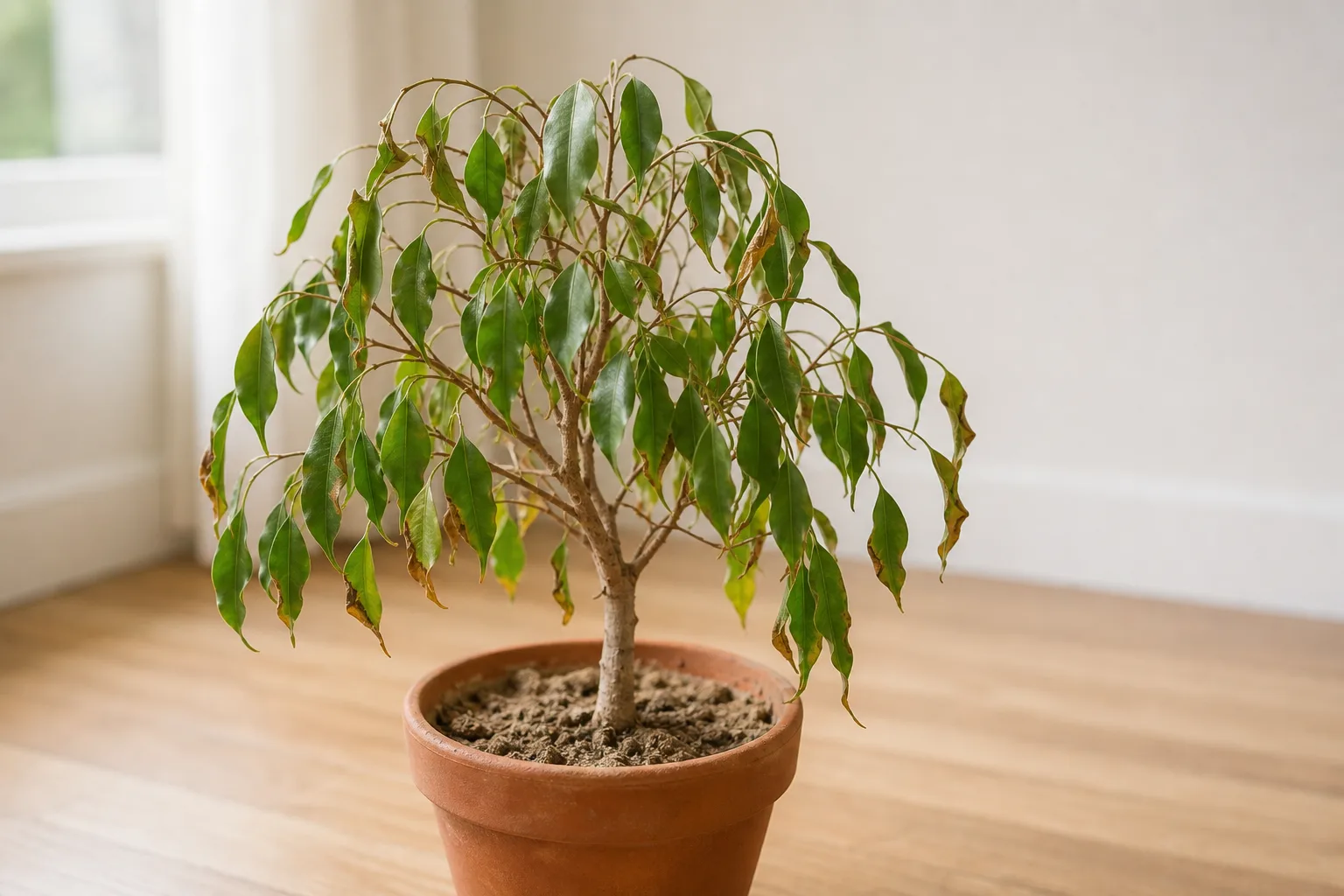
Underwatering on Ficus Benjamina: Causes, Checks & Fixes
This guide covers underwatering on Ficus Benjamina. See also the general Underwatering guide, watering, and light pages for this plant.
Underwatering on Ficus Benjamina: Causes, Checks & Fixes
Quick answer
Underwatering on Ficus Benjamina (Ficus benjamina, weeping fig) means the root zone has gone too dry for too long-roots cannot replace water lost through the plant’s dense canopy of small, glossy leaves. The pot feels light, leaves hang limp or curl inward, and the mix is dry well below the surface.
First step: rehydrate the root ball with one thorough soak. Set the pot in a sink or tray of room-temperature water until the mix wicks moisture up from the drainage holes and the surface darkens-usually 30–45 minutes-then let the pot drain fully before returning it to its spot. Do not stack Ficus Benjamina repotting guide, pruning, and fertilizer on the same day.
What underwatering looks like on Ficus Benjamina
Weeping fig carries a heavy crown of small oval leaves on arching branches. When moisture runs short, the plant shows stress quickly-but the pattern differs from its famous relocation leaf drop.
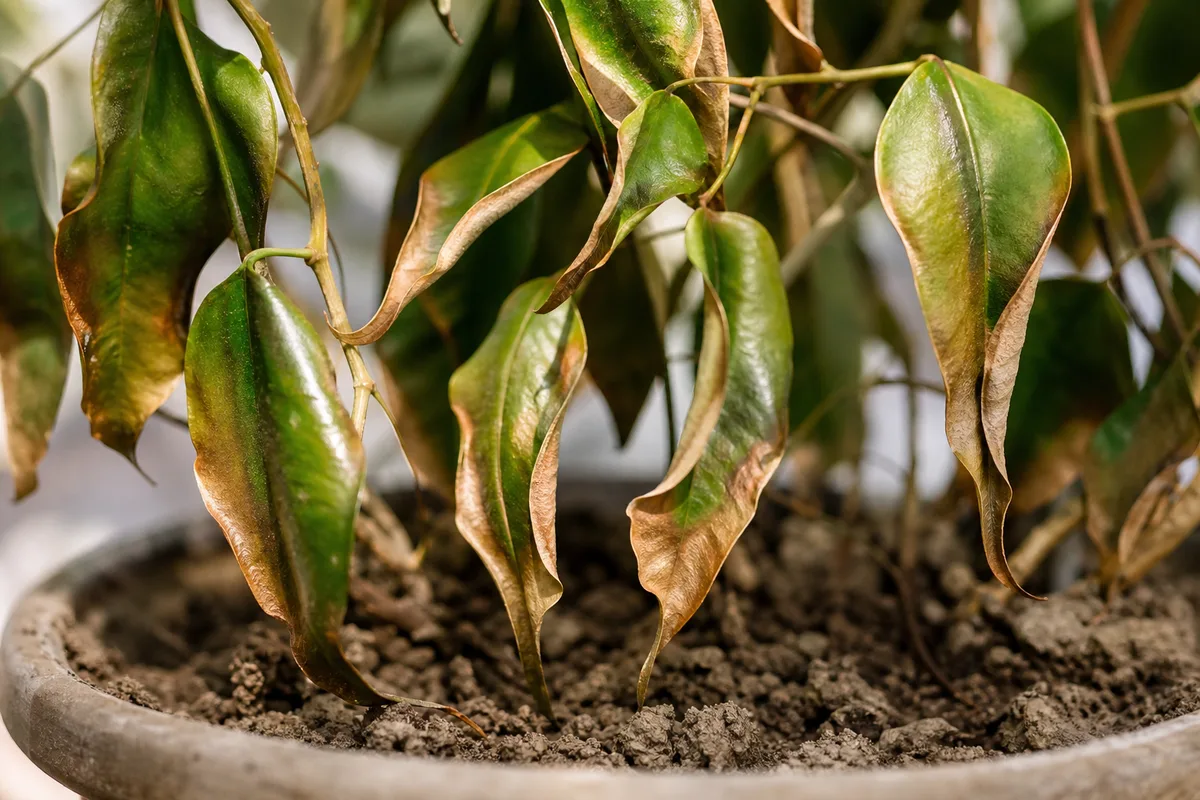
Underwatering symptoms on Ficus Benjamina - compare with healthy tissue on the same plant.
Typical underwatering signs:
- Limp or drooping foliage that feels thin and papery rather than turgid
- Dry, curled leaf edges-often brown and brittle at margins and tips first
- Soil pulled away from the pot wall, with a dusty, light-coloured surface
- A very light pot when lifted; water poured on top may run straight through
- Older leaves yellowing and dropping after repeated dry cycles
- Slowed or stalled new growth during what should be active spring or summer
On Ficus Benjamina overview, severe drought often triggers leaf shed-the plant drops leaves to shrink the canopy it must support rather than pulling water from every leaf individually. Drought-shed leaves are usually dry and curled at the edges. That differs from shock-related drop after a move or draft, where greener leaves may fall even when soil moisture is adequate.
Unlike overwatering on Ficus Benjamina, underwatered weeping figs have dry mix throughout, firm pale roots if you inspect, and no sour smell from the pot. Chronic under-watering results in wilting, leaf curling, and death when the pattern is ignored.
Why Ficus Benjamina gets underwatered
Weeping fig is widely grown indoors and tolerates drought-which makes underwatering easy to overlook until damage is visible. Several factors stack on this species in particular:
Fear of overwatering. Ficus Benjamina is sensitive to soggy roots, so many owners stretch intervals too far. Missouri Botanical Garden recommends allowing soil to dry between waterings while watering regularly in active growth-dry-down does not mean letting the entire root ball go bone dry for weeks.
Calendar watering in a changing environment. A fixed “every ten days” schedule fails when summer sun, heating vents, or air conditioning shift how fast the pot dries. Clemson Extension notes weeping figs prefer evenly moist soil during active growth and drier intervals only during low-growth winter months.
Root-bound pots. Weeping fig can stay slightly root-bound, but a crowded root ball holds less soil to store water-so the same schedule that worked last year may leave the plant dry within a few days in bright light.
Hydrophobic, peat-heavy mix. When old potting soil dries completely, it can repel water. The surface looks briefly damp after a quick pour while the centre of the root ball stays dry-classic underwatering despite “watering regularly.”
Heat and low humidity. Weeping fig prefers high humidity and warm temperatures. Dry indoor air near radiators or sunny windows increases transpiration from small leaves faster than roots in dry soil can supply water-edges crisp even when you thought you watered recently.
Reduced winter watering taken too far. Reduce watering from fall to late winter is correct, but “reduce” still means checking moisture-not abandoning the plant until spring.
How to confirm the cause
Work through these checks before treating:
- Pot weight - Compare today to just after a thorough watering. A light pot with limp leaves strongly suggests dry roots.
- Moisture at depth - Insert a finger 2–3 cm deep or use a skewer. A dry surface is not always a sign of water need; check deeper in the root zone.
- Drainage test - Pour a small amount of water slowly. If it channels out the sides immediately, suspect hydrophobic mix.
- Leaf texture and colour - Thin, curled, crispy margins with dry soil confirm drought. Yellow lower leaves on wet soil suggest overwatering instead.
- Recent care changes - Pure relocation shock can drop leaves without dry soil. If the pot is dry and leaves are crisp, underwatering is the leading cause.
- Root peek (optional) - Slide the plant partly out of the pot. Firm, pale roots in dry mix support drought. Mushy brown roots in wet mix mean rot, not thirst.
If soil is wet and cool several centimetres down while leaves wilt, stop-that pattern fits overwatering or root damage, not underwatering.
First fix for Ficus Benjamina
Soak the root ball once, thoroughly, with room-temperature water.
- Remove any decorative cache pot so drainage is open.
- Place the nursery pot in a sink or basin. Fill with water to just above the pot’s drainage holes.
- Let the plant sit 30–45 minutes until the mix darkens and the surface feels evenly moist. Bottom watering lets the soil absorb water over several hours, saturating media that top watering skipped.
- Remove the pot, let it drain until no water drips from the holes, and empty any saucer.
- Put the plant back in Ficus Benjamina light guide and wait.
Do not fertilize, repot, or prune heavily today. One rehydration tells you whether the plant can recover turgor before you change anything else.
If water ran through instantly on the first attempt, repeat the soak the same day-the mix may need a second pass to break dry pockets.
Step-by-step recovery
After the first soak:
- Wait 24 hours and reassess leaf firmness. Mild wilt often improves within a day once roots take up water.
- Resume watering by moisture, not calendar - When the top inch of mix feels dry, water until a little drains from the bottom, then discard saucer water. Match Clemson’s active-growth guidance: evenly moist, never waterlogged.
- Address hydrophobic mix - If the next two top-waterings drain too fast, switch to bottom-soaking for a few weeks or repot into fresh, well-draining mix with perlite when the plant stabilizes-not while it is still stressed.
- Trim only dead tissue - Snip fully brown, crispy leaves or stems. Leave yellowing leaves until the plant stops dropping on its own.
- Raise humidity if edges keep crisping - A pebble tray or grouping with other plants helps; misting leaves does not replace root-zone moisture.
- Hold fertilizer - Feed only after new growth looks healthy for two weeks. Salts on drought-stressed roots add stress.
If the plant was root-bound and dries again within two days, schedule repotting into a container one size larger with fresh mix-after recovery, not during the first crisis week.
Recovery timeline
Hours to 2 days: Limp leaves often regain turgor after a proper soak if roots are still healthy. Do not judge success by old crispy edges-they stay brown.
1–3 weeks: Leaf drop should slow. Watch for small new buds at stem tips-that is the best recovery signal on weeping fig.
4–8 weeks: A stable canopy and regular new leaves mean the Ficus Benjamina watering guide fits again. Plants kept too dry may not recover after prolonged drought-if no new growth appears by mid-spring in warm conditions, inspect roots for dieback.
Worsening signs: Continued limpness 48 hours after a confirmed soak, stems shrivelling, or widespread yellowing on still-dry soil-roots may be damaged beyond simple thirst.
Lookalike symptoms
- Overwatering - Limp leaves with wet, heavy soil and sometimes sour smell; roots brown and soft. Do not soak again.
- Relocation or draft shock - Green leaves drop after a move, repot, or cold draft even when soil moisture is fine. Stabilize position; maintain consistent watering without overcorrecting.
- Low humidity alone - Brown tips with otherwise moist soil and firm leaves; fix humidity and airflow, not watering frequency alone.
- Root-bound drought cycles - Wilts every few days despite soaking; pot dries unusually fast. Repotting solves the rhythm problem.
- Spider mites - Stippling and webbing on leaf undersides in dry air; shower and treat pests-water alone will not fix infestation.
What not to do
Do not drench daily after one dry spell-that swings care to overwatering and risks rot in cool rooms. Avoid cold tap water on a stressed weeping fig; room-temperature water reduces shock. Do not mist instead of soaking roots-surface humidity does not rehydrate a dry root ball.
Skip fertilizer on a wilted, dry plant. Do not repot immediately unless mix is hydrophobic and repeated soaks fail-wait until turgor returns. When trimming, wear gloves; weeping fig sap can irritate skin.
How to prevent underwatering next time
Build a check habit tied to this plant’s normal rhythm: water when the top inch of mix dries, roughly every 7 days in warm active growth and every 10–14 days in cooler winter months-adjusting for your room, not copying a calendar blindly.
- Lift the pot weekly while learning. A light pot is dry; a heavy pot is still moist.
- Match water to light - Brighter spots dry faster; dim winter corners dry slower.
- Refresh old peat mix that repels water before chronic dry pockets form.
- Keep drainage open and empty saucers after every watering.
- Stay consistent - Weeping fig reacts to sudden watering changes with leaf drop; gradual rhythm beats feast-or-famine cycles.
When to worry
Treat same-day if the entire plant is limp, soil has shrunk away from the pot, and the plant has been dry for weeks during active growth. Escalate to root inspection if leaves stay limp 48 hours after a confirmed thorough soak-fine roots may have died back.
Cosmetic crisp edges on a few older leaves after a short dry spell can wait for a schedule tweak. A bare tree with no new buds by late spring after repeated drought is unlikely to fully refill without corrective repotting or hard pruning.
Conclusion
Underwatering on Ficus Benjamina is a moisture-timing problem, not a mystery disease. Confirm it with a light pot and dry mix at depth, then soak the root ball once and drain well. Prevent it by checking the top inch of soil, respecting seasonal slowdown without abandoning winter checks, and watching for hydrophobic or root-bound pots that outpace your old schedule. Recovery belongs to new firm leaves-not to crispy edges that have already browned.
When to use this page vs other Ficus Benjamina guides
- Ficus Benjamina watering guide - Use for routine moisture checks before assuming underwatering is the main issue.
- Ficus Benjamina problems hub - Browse all 17 common issues on this species.
- Wilting on Ficus Benjamina - Different entry point when symptoms overlap with underwatering.
- Brown Tips on Ficus Benjamina - Different entry point when symptoms overlap with underwatering.
- Yellow Leaves on Ficus Benjamina - Different entry point when symptoms overlap with underwatering.
Related Ficus Benjamina guides
- Ficus Benjamina overview
- Ficus Benjamina watering
- Ficus Benjamina light
- Ficus Benjamina soil
- Wilting on Ficus Benjamina
- Brown Tips on Ficus Benjamina
- Yellow Leaves on Ficus Benjamina
- Leaf Drop on Ficus Benjamina
- Overwatering on Ficus Benjamina
- Drooping Leaves on Ficus Benjamina
- Ficus Benjamina problems