Drooping Leaves on Ficus Benjamina: Causes, Checks & Fixes
Quick answer
Drooping leaves on Ficus benjamina usually trace to a recent move, draft exposure, or a moisture mismatch-limp leaves on a light dry pot mean thirst; limp leaves on wet heavy soil mean root stress. First step: note any recent relocation, then lift the pot and check the top 2 inches of mix before watering.
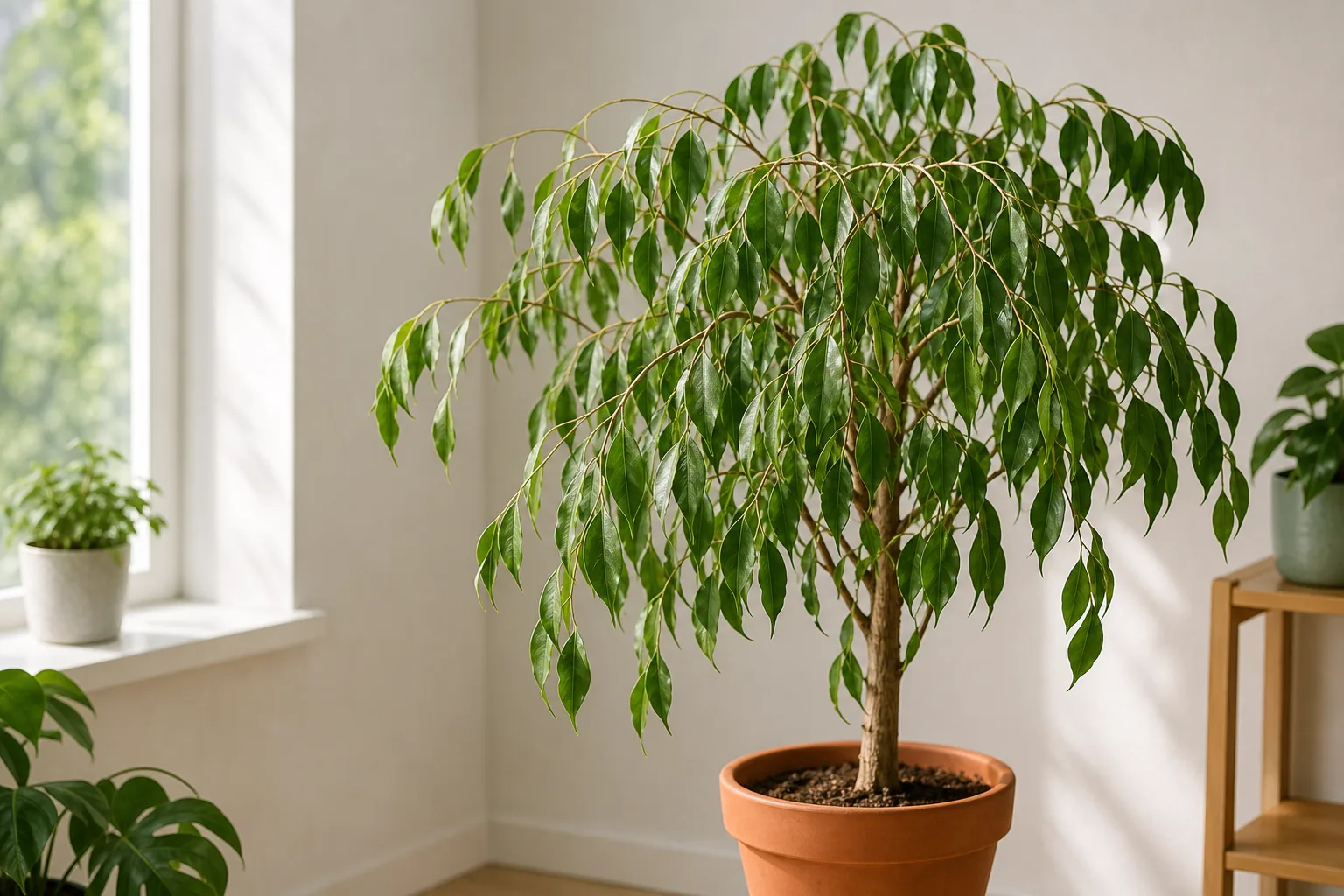
Drooping Leaves on Ficus Benjamina: Causes, Checks & Fixes
This guide covers drooping leaves on Ficus Benjamina. See also the general Drooping Leaves guide, watering, and light pages for this plant.
Drooping Leaves on Ficus Benjamina: Causes, Checks & Fixes
Quick answer
Drooping leaves on Ficus benjamina (weeping fig) mean the foliage has lost turgor pressure-the small glossy leaves hang down instead of arching crisply along the branches. On this species, droop is rarely random. Weeping figs react to almost any stress by shedding leaves, and limp foliage often appears before mass leaf drop when the plant is adjusting to a move, a draft, or a watering mistake.
The fastest diagnostic split is pot weight plus recent history. A light, dry pot with flexible limp leaves usually means underwatering. A heavy, wet pot with sagging leaves despite moisture points to root stress or overwatering-not thirst. Droop within days of a move, repot, or new HVAC season usually means relocation or draft shock even when soil moisture looks fine.
First step: note whether you moved or repotted the plant in the past two weeks, then lift the pot and press your finger into the top 2 inches of mix. Do not water until you know which branch you are on. Adding water to a wet, drooping weeping fig is one of the fastest ways to turn reversible stress into root decline.
What drooping looks like on a weeping fig
On a healthy weeping fig, small elliptic leaves sit at a slight downward angle along arching branches-that is the species’ natural weeping habit. Problem drooping looks different: leaves hang limply, feel soft or thin, and may curl slightly at the margins. The canopy loses its crisp silhouette and reads tired rather than gracefully pendulous.
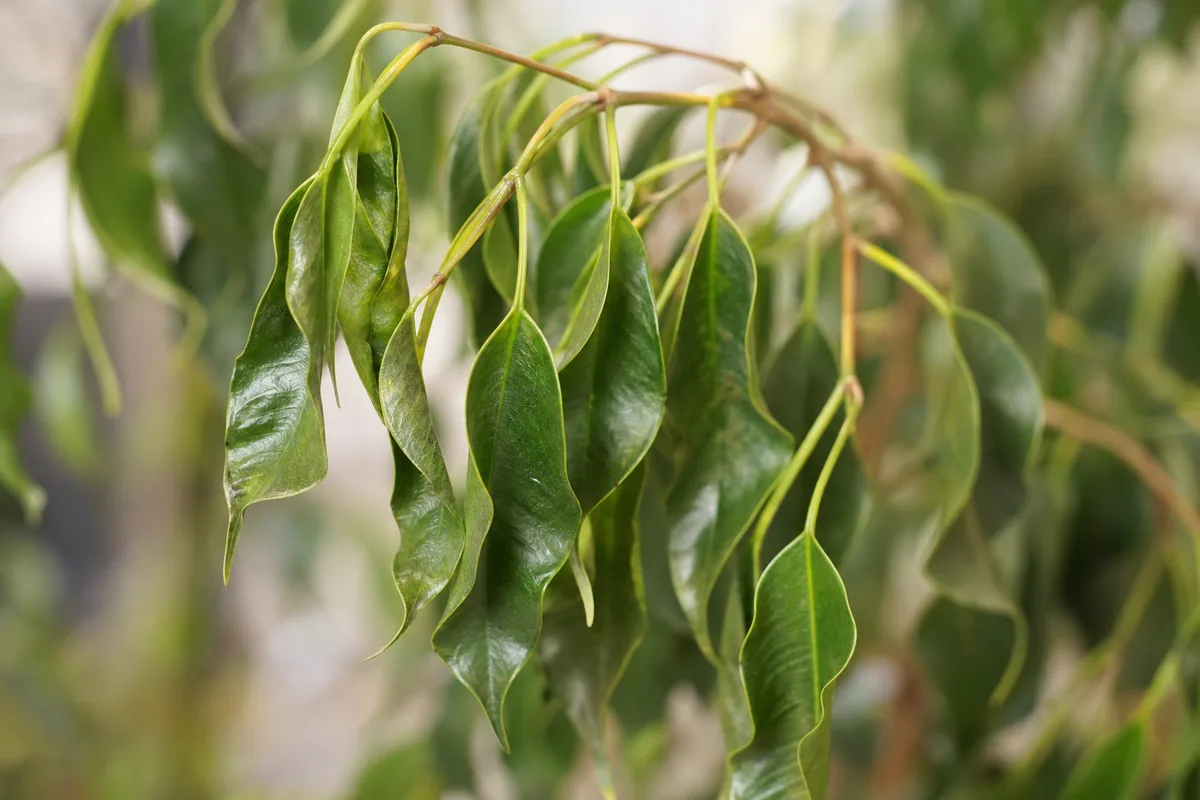
Drooping Leaves symptoms on Ficus Benjamina - compare with healthy tissue on the same plant.
Dry-pot droop shows limp outer and mid-canopy leaves on a lightweight container. The surface mix is pale, crumbly, or pulled away from the pot edge. Stems remain firm when you bend them gently. Leaves may still be fully green-drought droop does not always yellow first on weeping figs.
Wet-pot droop is the dangerous mirror image. Leaves sag while the mix stays dark, cool, and heavy. Lower leaves may yellow. You might smell a faint sour note from drain holes or see fungus gnats near the soil surface. The crown-the cluster where new leaves emerge-should still feel firm in early cases; soft stem tissue at the base means rot may be advancing.
Post-move droop often hits the whole canopy within one to three days of relocation, Ficus Benjamina repotting guide, or turning the pot toward a window. Leaves may still be green and attached while they hang; mass green leaf drop can follow over the next one to three weeks if conditions stay unstable. This pattern is so common on Ficus benjamina that owners mistake it for a watering emergency and make things worse by overwatering during shock.
Low-light droop develops more slowly-over two to six weeks. Outer stems stretch slightly, inner leaves thin out, and the remaining foliage softens even when you water on schedule. The plant is supporting more leaf area than the current light can sustain. See the not enough light guide if the canopy is thinning as well as drooping.
Cold-draft droop can appear overnight. Leaves touching cold winter glass or sitting in the path of an air-conditioning vent wilt quickly while the rest of the plant still looks normal. Sudden temperature changes frequently cause leaf drop on weeping figs, and droop is often the first visible sign before leaves fall.
Why Ficus benjamina leaves droop
Weeping figs evolved in warm, bright, stable tropical conditions. Indoors, they interpret almost any change-light intensity, air movement, watering rhythm, or pot position-as stress. Drooping is the plant reducing water loss through limp foliage while it decides whether to shed leaves it can no longer support.
Relocation and repot shock are the leading causes owners overlook. Weeping figs often shed leaves when moved to a new location or repotted even when watering is correct. Nursery-grown trees built their canopy under greenhouse light; your living room is a different photosynthetic contract. The plant droops and drops interior leaves while it acclimates.
Cold drafts and temperature swings trigger the same stress response. Placing the pot near a heat vent, exterior door, or uninsulated window in winter exposes the small leaf surface to moving air that drops turgor fast. Cold drafts will frequently cause undesirable leaf drop on weeping figs. Night temperatures below about 55°F (13°C) are especially risky.
Overwatering and root decline produce paradoxical droop: saturated mix drives out oxygen, fine roots stop functioning, and leaves wilt while soil is wet. This is common when a weeping fig sits in a dim corner but still receives a summer watering schedule, or when it lives in a cachepot that holds stale runoff.
Underwatering dries fine root hairs first. Without them, even a later deep soak cannot restore turgor instantly. Large floor trees with dense canopies in bright bay windows can go from moist to critically dry within a few days, especially when furnace heat runs in winter.
Low light weakens the stems that hold leaves upright. The plant cannot photosynthesize enough to maintain a full canopy, so foliage softens and droops gradually. Combined with slow drying in shade, this pattern often leads to accidental overwatering when owners try to “perk up” limp leaves with more water.
Recent watering after drought can trigger a final burst of leaf drop on already-stressed plants. The underlying stress period activated leaf abscission; the drink did not cause the problem, but droop and drop may worsen briefly before conditions stabilize. Correct light, stable placement, and consistent moisture going forward matter more than the single watering event.
Drooping vs wilting vs leaf drop on weeping fig
These three symptoms overlap on Ficus benjamina, but the words point to different urgency and fixes.
Drooping leaves - foliage hangs limply while still attached; may affect part of the canopy; stems usually firm; often the early or partial stress signal. Gradual droop over weeks suggests light or chronic moisture mismatch. Sudden canopy-wide droop after a move suggests shock.
Wilting - more acute loss of turgor, sometimes across the whole plant within hours; often tied to severe drought, wet-root failure, cold shock, or pest stress. See the dedicated wilting guide when the entire tree collapses quickly or soil moisture and pot weight tell opposite stories.
Leaf drop - leaves detach and fall, sometimes in large numbers, while stems may still look fine. Mass drop after environmental change is normal stress behavior on this species-not automatic proof of root death. The leaf drop guide covers the stabilization protocol when fallen leaves outnumber limp ones.
Rule of thumb: drooping with firm stems and a clear recent move means wait and stabilize. Drooping on wet heavy soil means stop watering and inspect roots. Drooping on a light dry pot means measured rehydration.
How to confirm the cause
Work through these checks in order. Each step narrows the branch before you change care.
- Recent history - Did you move, repot, rotate, or open a new heating vent path within the past 14 days? Did outdoor temperatures drop enough to move the plant indoors? Shock is the default explanation when the answer is yes and soil moisture is otherwise normal.
- Pot weight - Lift the container at the rim. Light weight plus droop strongly suggests dry soil. Heavy, cool weight plus droop suggests oversaturated mix or failing roots.
- Top-2-inch moisture - Insert a finger or dry skewer two inches deep. Allow the top 2 or 3 inches of soil to feel dry before watering again on weeping figs during normal indoor growth. Dry confirms thirst; damp or wet with limp leaves confirms root-zone problems.
- Draft exposure - Feel for moving air at the canopy from AC vents, radiators, exterior doors, or cold window glass. Even brief cold drafts can droop leaves that touch the glass.
- Light level - Is the tree in a dim corner far from windows, or did light drop sharply after a seasonal change outside? Thinning inner canopy plus gradual droop points to insufficient light rather than sudden thirst.
- Crown firmness - Press the base of main stems gently. Firm tissue with limp leaves is more recoverable. Soft, dark, or collapsing tissue on wet soil is urgent-see root rot.
- Leaf color pattern - Yellow lower leaves on wet mix suggest overwatering. Crisp yellow edges on a light pot suggest drought. Green leaves detaching en masse after a move suggest shock, not rot.
- Drainage check - Water sitting in a saucer or cachepot for days, or mix that stays wet a week after one watering, confirms a chronically wet habitat.
Confirmed dry droop: light pot, dry top 2 inches, firm crown, no recent repot damage. Confirmed wet droop: heavy pot, moist mix, possible yellow lower leaves or sour smell. Confirmed shock droop: droop began within days of a move or draft with otherwise reasonable moisture.
First fix for Ficus benjamina
List any move or repot in the past two weeks, then lift the pot and check the top 2 inches of mix. That single sequence separates opposite fixes.
If the mix is dry and the pot is light, water thoroughly until a small amount runs from the drainage holes, then empty the saucer or cachepot within 30 minutes. Keep soil evenly moist during active growth, with a slight dry-down between waterings in cooler months. Expect firmer leaves within hours to one day if roots are healthy. Do not flood repeatedly in one afternoon-one measured drink, then reassess.
If the mix is wet and leaves are drooping, stop watering immediately. Plants in waterlogged soil may die because roots cannot absorb oxygen Set the pot on folded paper towels to wick excess from drain holes. Move to Ficus Benjamina light guide if the tree sits in deep shade-slow evaporation worsens wet soil. Full wet-soil protocol is on the overwatering page.
If droop followed a recent move or repot, do not move the plant again. Pick the best permanent spot you can-bright indirect light, away from vents-and hold position for at least two to three weeks. Water when the top inch dries; do not compensate for shock with extra water unless the pot is genuinely dry at depth. New buds along stems mean recovery has started.
If cold draft is obvious, shift the pot a few feet away from the vent or glass-one correction only-and keep temperatures in the 65 to 85°F day range with nights around 65 to 70°F when possible.
Make one correction, then wait several days before stacking repotting, pruning, and fertilizer.
Step-by-step recovery by cause
Dry droop path
- Water until a little drains; discard all runoff from saucers and cachepots.
- If the plant was severely dry, check the top inch again after 24 hours before a second moderate drink.
- Keep bright indirect light while roots rehydrate-avoid hot direct afternoon sun on stressed foliage.
- Resume the normal rhythm only when the top 1 to 2 inches feel dry. Details are in the watering guide.
Wet droop / root stress path
- Stop watering until the top 2 inches dry.
- Confirm drainage holes are open and no saucer water remains.
- If droop persists after the mix dries, slide the plant out and inspect roots-firm and pale is healthy; brown mushy tissue needs trimming and repotting per the root rot guide.
- Remove only leaves that are yellow and clearly failing; keep the canopy stable while roots recover.
Relocation shock path
- Stabilize placement-no further moves, rotations, or repots during active droop.
- Water when the top inch dries; avoid both drought and soggy cycles.
- Increase humidity slightly if winter air is very dry, but do not mist so heavily that foliage stays wet overnight.
- Watch for new buds along branches. If growth conditions are adequate, the weeping fig will adjust, stop dropping leaves, and produce healthy new growth.
Low-light droop path
Move gradually to brighter indirect light-a filtered east window or a few feet back from a south or west window with a sheer curtain. Hold watering steady; dim rooms dry slowly, and extra water will not stiffen weak stems. See not enough light for placement targets.
Recovery timeline
Mild dry droop often shows firmer leaves within hours to one day after correct watering.
Wet-root stress recovery spans two to six weeks when the crown stays firm. Old limp leaves may not return to their original angle; new upright growth is the benchmark.
Relocation shock commonly includes intermittent droop and drop for two to eight weeks before the canopy stabilizes. Gradual acclimation when moving indoors or outdoors minimizes leaf drop New buds usually appear within six to twelve weeks once placement stays consistent.
Low-light recovery may take three to six weeks after light improves as stems strengthen and the plant rebuilds inner foliage.
Dropped or severely limp leaves do not reattach. Judge success by firm stems and new leaves, not by old foliage standing back up.
What not to do
Do not water a drooping weeping fig when the mix is already wet-that converts droop into rot. Do not move the plant repeatedly during shock; each move restarts the stress cycle. Do not fertilize a drooping tree to “push” new leaves before you confirm healthy roots and adequate light. Do not repot on day one unless you confirm mushy roots or failed drainage-repot shock on Moraceae plants worsens droop. Do not rotate the pot for even growth during active drop unless you accept more leaf loss.
If leaves are falling indoors and you have pets, remember that Ficus benjamina is toxic to cats and dogs-bag and discard fallen foliage promptly rather than leaving it on the floor.
How to prevent drooping leaves next time
Choose a permanent bright indirect spot away from HVAC vents and cold glass before you fine-tune watering. Weeping figs grow best in bright indirect or curtain-filtered sunlight with stable warm temperatures.
Water when the top 1 to 2 inches of mix feel dry, using pot weight as a cross-check-not a fixed calendar. Empty saucers within 30 minutes of every drink. The watering guide covers seasonal adjustments.
Acclimate before big moves-for example, place the tree on a shaded porch for one to two weeks before bringing it fully indoors for winter, or shift winter position in stages rather than one jump across the room.
Inspect weekly during heating and cooling season transitions. Catch draft paths and moisture drift while droop is still mild.
Avoid stacking changes-do not combine repotting, relocation, and watering overhauls in the same week.
When to worry
Act immediately if stems soften at the base, the mix stays wet while droop spreads upward, or roots are brown and mushy on inspection-those signs suggest advancing root decline, not simple thirst. Sudden whole-canopy collapse on wet soil within a few days is urgent even if leaves are still green.
You can wait and observe if stems are firm, you have identified a clear draft or recent move, and you have already corrected placement or moisture once. Improvement shows as new buds within two to eight weeks.
If droop continues without new growth for more than eight weeks after conditions stabilized, re-check light adequacy, root health, and whether the plant still sits in a draft-then consult the overview troubleshooting section.
Ficus benjamina care cross-check
| Check | Healthy baseline | Drooping red flag |
|---|---|---|
| Top 2 inches of mix | Dry before next drink | Wet for 7+ days while leaves sag |
| Pot weight | Light when dry, moderate after watering | Stays heavy and cool between waterings |
| Crown / stem base | Firm when pressed | Soft, dark, or collapsing on wet soil |
| Placement | Stable for weeks | Moved, repotted, or rotated within 14 days |
| Air movement | Still room air | Direct AC, heat vent, or cold glass contact |
| Light | Bright indirect; dense canopy | Dim corner with thinning inner leaves |
| Leaf pattern | Arching weeping habit | Limp attachment; mass green drop after move |
Related Ficus benjamina problems
- Wilting - acute whole-plant collapse, paradoxical wet wilt, spider mites
- Leaf drop - mass detaching leaves after environmental change
- Overwatering - wet mix, yellow lower leaves, fungus gnats
- Underwatering - light pot, dry mix, crisp drought stress
- Not enough light - gradual thinning and soft stems in dim rooms
- Root rot - soft crown, sour smell, mushy roots
- Ficus benjamina overview - full care hub and troubleshooting
When to use this page vs other Ficus Benjamina guides
- Ficus Benjamina watering guide - Use for routine moisture checks before assuming drooping leaves is the main issue.
- Ficus Benjamina problems hub - Browse all 17 common issues on this species.
- Underwatering on Ficus Benjamina - Different entry point when symptoms overlap with drooping leaves.
- Overwatering on Ficus Benjamina - Different entry point when symptoms overlap with drooping leaves.
- Root Rot on Ficus Benjamina - Different entry point when symptoms overlap with drooping leaves.