Overwatering on Ficus Benjamina: Causes, Checks & Fixes
Quick answer
Overwatering on Ficus Benjamina shows up as wet heavy soil, limp glossy leaves, and often sudden leaf drop-not thirst. First step: stop watering until the top inch dries and avoid moving the plant until soil moisture stabilizes.
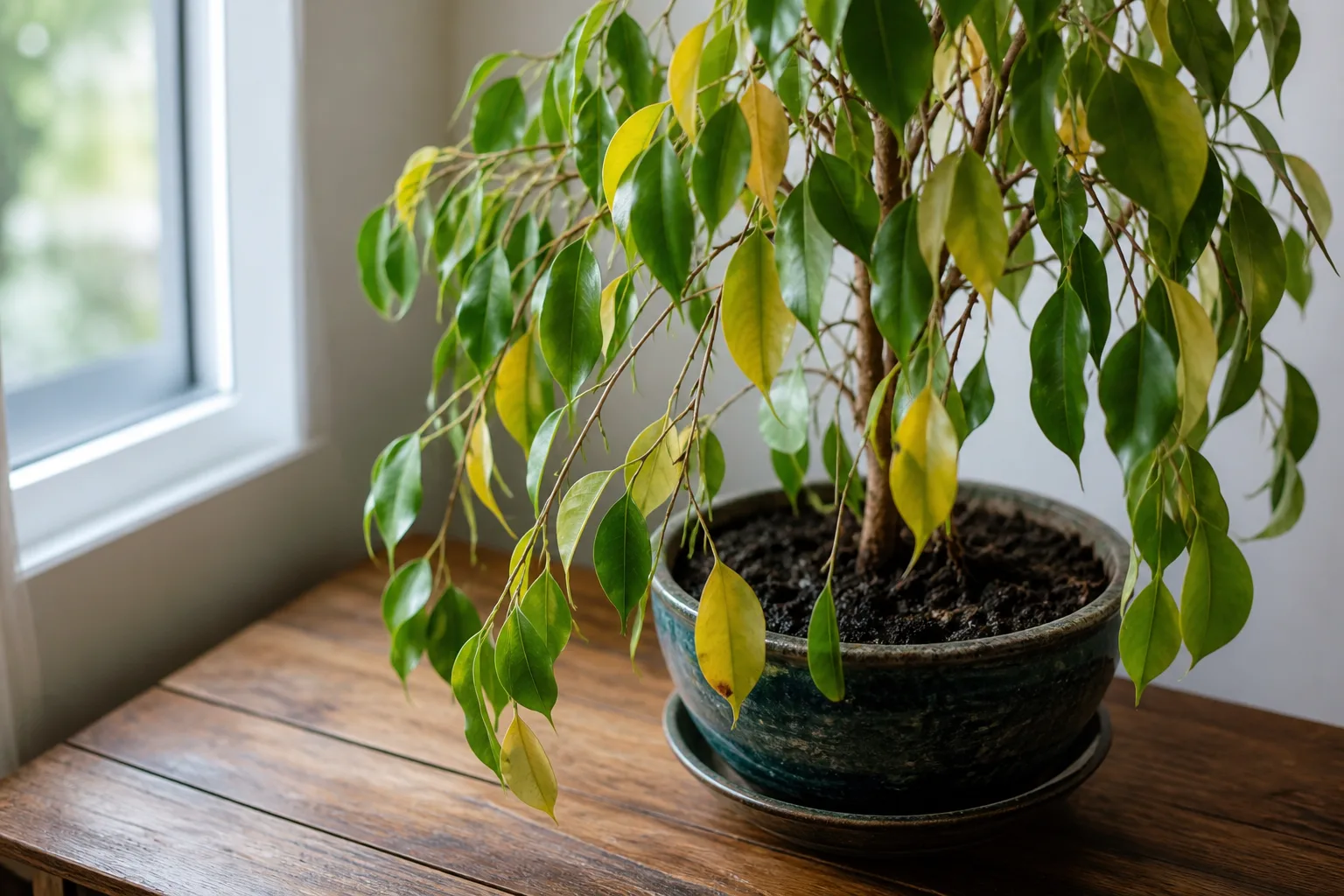
Overwatering on Ficus Benjamina: Causes, Checks & Fixes
This guide covers overwatering on Ficus Benjamina. See also the general Overwatering guide, watering, and light pages for this plant.
Overwatering on Ficus Benjamina: Causes, Checks & Fixes
Quick answer
Overwatering on Ficus Benjamina (Ficus benjamina) means the root zone stays wet too long. This weeping fig is famous for stress leaf drop, and overwatering is one of the most common triggers. Limp glossy leaves on damp, heavy soil mean stop watering-not pour more.
First step: stop watering until the top inch dries. If the pot still feels heavy and cool after several days, wait longer and check deeper moisture before watering again. Avoid moving or repotting immediately unless roots are mushy-Ficus often drops extra leaves after sudden location changes.
Overwatering vs. other Ficus Benjamina problems
Weeping fig sends overlapping signals, so diagnosis starts with moisture and pot weight, not leaf color alone.
| Pattern | Pot weight | Soil at 1 inch | Common leaf pattern | First direction |
|---|---|---|---|---|
| Overwatering | Heavy | Wet, cool | Yellow lower leaves, limp drop | Pause watering and re-check in 48h |
| Underwatering | Light | Dry | Crisp edges, dry drop | Deep soak, then reset interval |
| Draft / move shock | Often normal | On schedule | Sudden green leaf shed | Stabilize placement and drafts |
| Low light + wet mix | Heavy for too long | Damp for days | Sparse growth, gradual yellowing | Increase light and extend dry-down |
Fungus gnats on wet mix often show chronic moisture. If leaves keep dropping while soil stays wet, move to the root rot workflow.
What overwatering looks like on Ficus Benjamina
Early signs:
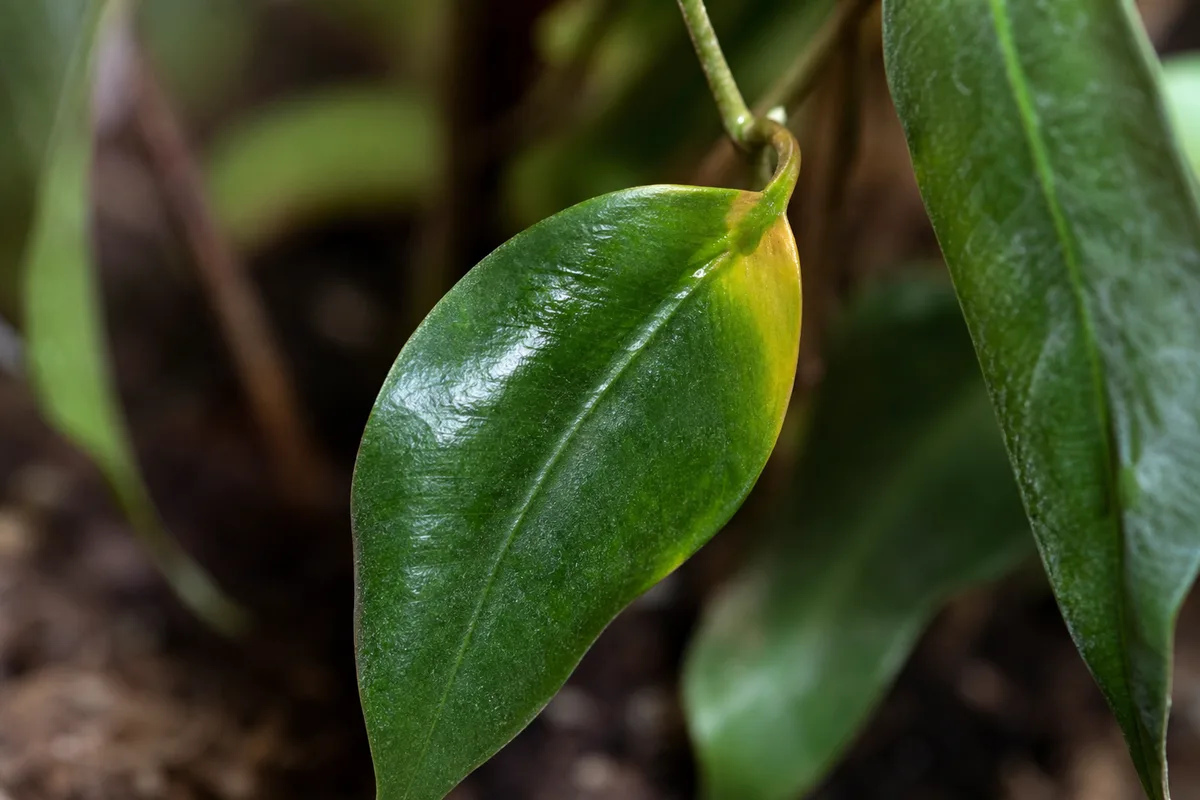
Overwatering symptoms on Ficus Benjamina - compare with healthy tissue on the same plant.
- Yellow lower leaves while soil stays damp
- Limp glossy foliage on wet mix-no perk after watering
- Heavy pot days after the last drink
- Musty or sour smell from drainage holes
- Fungus gnats near the soil surface
- Slowed new bud break along branches
Advanced signs:
- Mass leaf drop within days on soggy soil
- Soft tissue at the trunk base or aerial roots
- Brown or black roots when inspected-healthy Ficus roots are firm and white or tan
- Branch dieback starting from the bottom up
Compare with underwatering: light pot, dry mix, crisp drop. Compare with draft shock: sudden drop after moving or near vents while root-zone moisture is otherwise normal.
Why Ficus Benjamina gets overwatered
Ficus benjamina prefers bright filtered light and evenly moist, well-drained soil during active growth-but “evenly moist” is not “constantly wet.”
Calendar watering in winter. Reduced light and heat slow uptake; the same weekly schedule saturates roots.
Oversized decorative pots. Large containers hold excess wet soil around a modest root ball.
Heavy mix without aeration. Roots in saturated soil lose oxygen and function, and overwatering is a common indoor plant failure.
Cachepot trap. A nursery pot can drain well at the top yet still sit in runoff inside a decorative outer pot. Clemson notes plants should not sit with water in saucers.
Misreading wilt. Wilt on moist soil can indicate root damage, so watering again can accelerate decline.
Post-purchase overcare. New owners often water frequently after bringing a weeping fig home, compounding transplant stress with wet feet.
How to confirm the cause
- Finger test at 1 inch - Is the mix still cool and damp?
- Pot weight check - Does the pot feel heavy days after watering?
- Drainage check - Are holes blocked or saucer/cachepot holding runoff?
- Pattern check - Yellow lower leaves and limp tissue on wet mix suggest overwatering.
- Root spot-check - If decline continues, inspect roots for firm white/tan vs mushy brown.
Check soil moisture before watering again, and for larger specimens use the top 2–3 inches guideline.
First fix for Ficus Benjamina
Stop watering until the top inch dries and the pot feels lighter. Keep the tree in stable bright indirect light with no draft exposure.
If symptoms are mild (firm trunk, no sour rot smell, no mushy roots), use this sequence:
- Pause watering completely.
- Recheck moisture every 1–2 days.
- Resume with one moderate watering only after top inch is dry.
- Empty saucer/cachepot runoff within 30 minutes.
- Wait for new bud swell before increasing frequency.
If stems soften, roots are mushy, or leaf drop accelerates on wet soil:
- Unpot, rinse, trim rot to firm tissue.
- Repot into fresh airy mix in appropriately sized pot.
- Keep in bright indirect light and hold fertilizer.
- Water lightly after repot; then wait until top 2 inches dry before next watering.
- Follow the full rescue protocol in root rot on Ficus benjamina if decline continues.
Do not fertilize a waterlogged plant. Do not repot into a larger container.
Recovery timeline
Minor overwatering: leaf drop may slow within one to two weeks after dry-down; new leaves emerge over three to six weeks.
Moderate to severe root damage: two to three months before canopy density improves. Recovery is measured by stable new growth, not old damaged leaves re-greening.
What not to do
Do not move the plant repeatedly while sorting overwatering from shock. Do not fertilize to force leaf return. Do not prune heavily during root recovery unless branches are dead. Do not mistake every droop for thirst.
When to worry
Escalate from dry-down to urgent root inspection within days if any of these appear:
- Softening at the trunk base
- Black, mushy roots on partial unpot
- Persistent wilt while soil remains wet
- Rapid canopy collapse over one week
If over half the root mass is mushy and trunk tissue is soft below the soil line, prognosis is poor; salvage cuttings may be more realistic than full-plant recovery.
How to prevent overwatering next time
Water when the top inch dries, reduce frequency in winter, use well-drained mix, and empty saucers promptly. Clemson also notes weeping figs should dry slightly between waterings during low-growth periods.
Use the related guides to separate overlapping symptoms:
- Leaf drop for relocation and draft triggers
- Underwatering for dry-pot wilt patterns
- Wilting for broader wilt differential
- Yellow leaves for nutrient/light lookalikes
- Ficus benjamina watering for seasonal rhythm
Related Ficus benjamina guides
- Ficus benjamina overview - weeping fig biology and care hub
- Watering Ficus benjamina - seasonal dry-down rhythm
- Leaf drop on Ficus benjamina - relocation and draft triggers
- Root rot on Ficus benjamina - when wet soil has already damaged roots