Yellow Leaves on Ficus Benjamina: Causes, Checks & Fixes
Quick answer
Yellow leaves on Ficus Benjamina usually trace to watering imbalance, low light, or environmental shock from a recent move or draft-not a nutrient shortage. First step: press your finger into the top inch of mix and lift the pot-wet heavy soil with soft yellow lower leaves means stop watering; a light dry pot with crisp yellow edges means soak thoroughly, then stabilize placement.
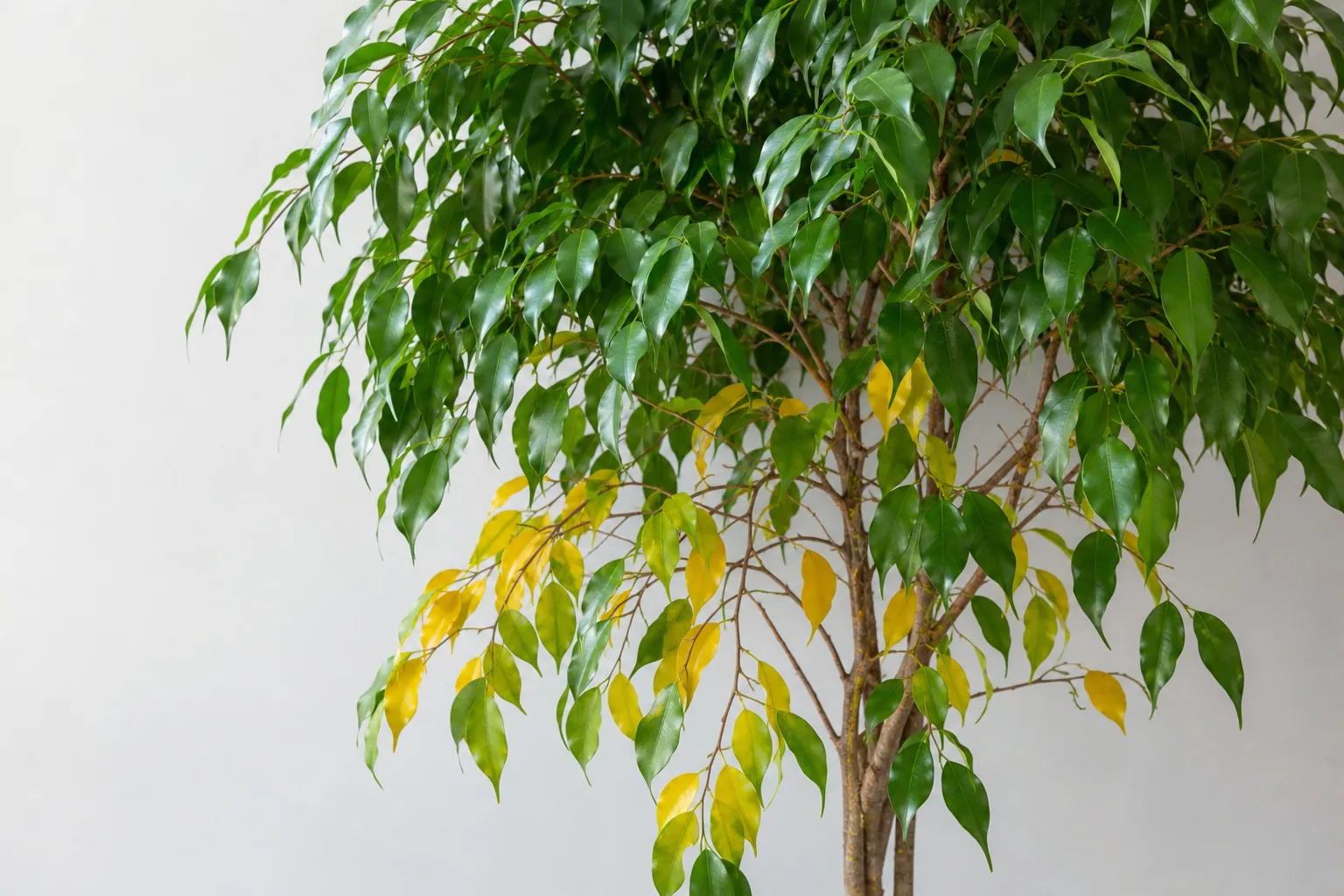
Yellow Leaves on Ficus Benjamina: Causes, Checks & Fixes
This guide covers yellow leaves on Ficus Benjamina. See also the general Yellow Leaves guide, watering, and light pages for this plant.
Yellow Leaves on Ficus Benjamina: Causes, Checks & Fixes
Quick answer
Yellow leaves on Ficus Benjamina (Ficus benjamina, weeping fig) are a symptom, not a single diagnosis. This species yellows and drops foliage in response to watering mistakes, dim light, cold drafts, and-most distinctively-any recent change in placement, light, or pot. A healthy tree can shed half its canopy after a move while the trunk stays firm and green buds wait along the branches.
First step: check whether the soil is wet or dry before you change anything else. Press your finger into the top inch of mix and lift the pot. Wet, heavy soil with soft yellow lower leaves points to overwatering on Ficus Benjamina and possible root stress-stop watering until the upper profile dries. A very light pot with crisp yellow leaf edges points to drought-water thoroughly once, then return to the top-inch dry rhythm. If you moved or repotted the tree within the past two weeks and soil moisture looks normal, stabilize placement first; do not repot, prune, or fertilize on top of shock.
Why Ficus benjamina leaves turn yellow
Weeping fig is an evergreen tree with small glossy leaves on arching branches-not a rosette plant. When something goes wrong, it often sheds lower and interior canopy leaves first, because those leaves receive the least light and are the cheapest for the plant to sacrifice. Clemson HGIC lists overwatering, underwatering, drafts, low light, and relocation as the leading leaf-drop causes on this species; yellowing is usually the stage before leaves fall.
Overwatering and poor drainage
Chronic wet soil deprives roots of oxygen. On weeping fig, the early pattern is soft yellow lower leaves on mix that stays damp for days, often paired with a heavy pot and limp stems despite moisture. The tree may still look full from the outside while inner leaves yellow first. Left unchecked, this progresses to root rot-trunk softening at the soil line, sour smell, and rapid mass drop. Overwatering is especially common in winter when the same summer watering schedule meets shorter days and slower uptake.
Underwatering and extreme dry-down
Weeping figs prefer steady moisture with a dry-down between drinks, not bone-dry root balls for weeks. Chronic drought desiccates fine roots; the plant sheds leaves to reduce water demand. Drought yellowing shows crisp, dry edges on leaves, soil pulling away from pot walls, and a pot that feels feather-light. One thorough soak may trigger a short leaf-drop wave on a drought-stressed tree-that is the plant catching up to prior stress, not proof that watering was wrong. See underwatering on Ficus Benjamina when the pot is dry and leaves feel papery.
Low light and interior canopy drop
In dim corners, weeping fig cannot support the dense canopy it grew under brighter nursery light. Clemson HGIC notes low light as a common leaf-drop cause on this species. Over months, interior and lower leaves yellow and drop while outer leaves stay green and stems stretch toward the window. Variegated cultivars such as ‘Golden King’ are especially prone to fading and yellowing margins in somewhat lower light. Low light also slows soil drying, which quietly raises overwatering risk if you keep a bright-season watering calendar year-round. More context: not enough light and the Ficus Benjamina overview.
Environmental shock (move, draft, repot)
This is the signature weeping fig trigger other houseplants handle more gracefully. Missouri Botanical Garden notes that sudden changes in temperature, light, or location frequently cause leaf drop-and yellowing often appears days before leaves fall. Bringing a tree home from the nursery, moving it across the room, Ficus Benjamina repotting guide, or parking it beside a heating vent or AC draft can produce mass yellowing on green leaves even when soil moisture is fine. NYBG Plant Talk describes a common panic cycle: owners see yellow leaves after a move, water repeatedly, and worsen decline. Stabilize placement and moisture; let the tree acclimate. Related: leaf drop on Ficus Benjamina.
Spider mites on stressed trees
Dry indoor air plus a stressed canopy invites spider mites-among the common pests on weeping fig-to the tender new growth at branch tips. Mite damage shows stippling, fine webbing, and dull yellow-gray patches-not uniform soft yellowing from wet soil. Mites often follow or overlap with drought or draft stress; fix placement and moisture before aggressive spraying on a tree already shedding leaves.
Natural aging on lower canopy leaves
A firm weeping fig with one or two yellow leaves on the lowest arching branches every few weeks is often normal senescence-especially on older interior wood shaded by newer growth. The trunk feels solid, soil moisture is appropriate, and green buds remain along branch tips. Remove spent leaves to keep debris off the soil surface; wear gloves because weeping fig is toxic to cats and dogs and sap can irritate skin.
What yellow leaves look like on weeping fig
On Ficus benjamina, yellowing usually follows these visual patterns:
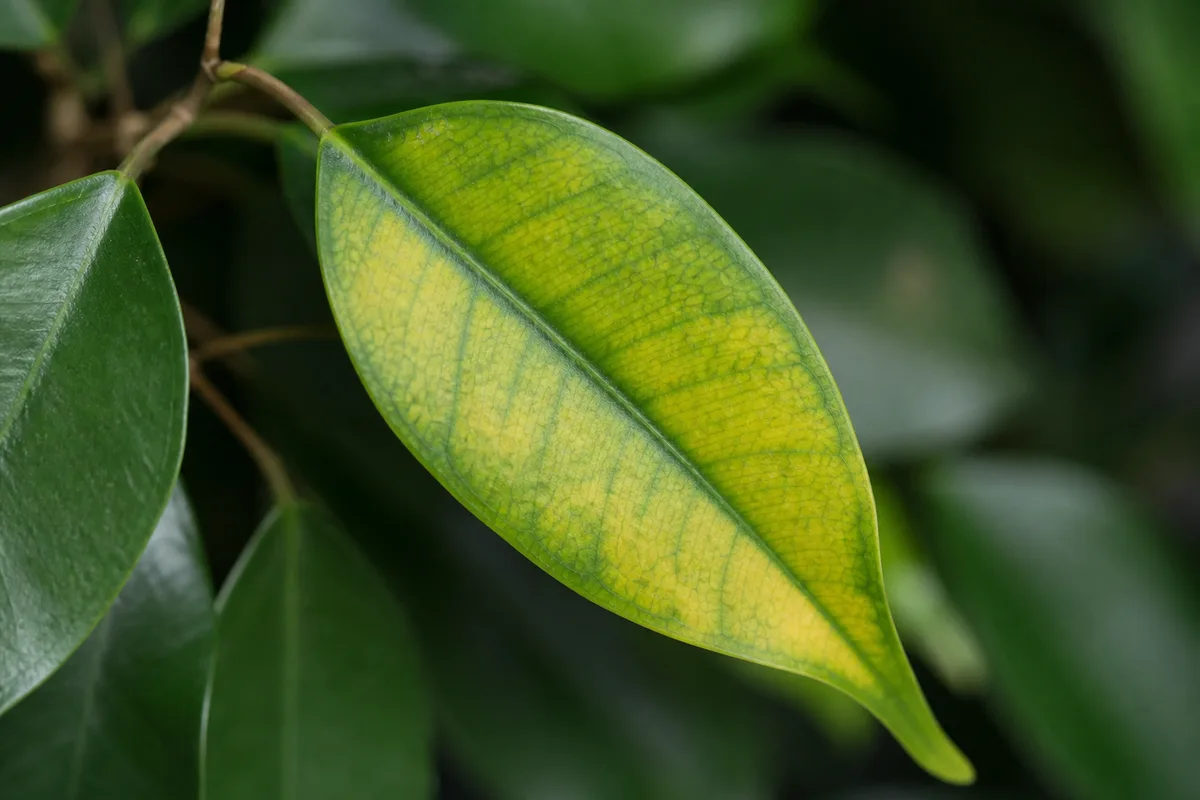
Yellow Leaves symptoms on Ficus Benjamina - compare with healthy tissue on the same plant.
- Soft, pale yellow on lower and inner leaves with wet heavy soil - overwatering or early root stress
- Crisp yellow or brown edges on outer leaves with very dry, light soil - underwatering
- Even green leaves turning yellow then dropping days after a move, repot, or draft exposure - environmental shock
- Progressive thinning over months with small pale new leaves and long bare lower branches - low light
- Stippled yellow-gray patches with webbing on new tip growth - spider mites
- Scattered yellow on lowest branches only, slow pace, firm trunk - normal lower-canopy aging
Texture matters. Soft, limp yellow leaves on damp mix differ from dry, crackly yellow edges on a parched pot. Pattern matters too: shock yellowing often hits many leaves at once across the canopy, while overwatering usually starts low and climbs if roots keep suffocating.
How to confirm the cause
Work through this checklist in order-do not skip to fertilizer or repotting:
- Recent change - Did you move, repot, rotate, or relocate the tree within the past two weeks? Draft from a door, window, or HVAC vent? If yes, suspect environmental shock until soil and roots prove otherwise.
- Top-inch moisture - Dry top inch on a light pot = drought path. Wet top inch on a heavy cool pot days after watering = overwatering path. Align with the watering guide: top inch dry on most indoor pots; top 2 to 3 inches on large containers before the next drink.
- Pot weight - Lift the container. Heavy and slow-drying confirms wet stress; very light confirms drought.
- Leaf distribution - Lower-inner only, slow = aging or low light. Lower-first climbing upward on wet soil = root stress. Whole-canopy yellow after a move = shock. Tip stippling = mites.
- Trunk firmness - Press the lowest inch of bark. Firm = recoverable stress in most cases. Soft or sunken = possible root rot; stop watering and inspect roots.
- Light level - Bright indirect for most of the day is the target. Leggy stems and pale small new leaves mean the tree wants more light, not more water.
- Pest check - Hold a white paper under a branch and tap. Specks that move, plus stippling on new leaves, point to mites.
Lookalike symptoms
| What you see | Soil / pot | Trunk | Likely cause |
|---|---|---|---|
| Soft yellow lower leaves | Wet, heavy | Firm (early) | Overwatering |
| Crisp yellow edges, wilt | Very dry, light | Firm | Underwatering |
| Mass yellow on green leaves | Normal moisture | Firm | Move, draft, or repot shock |
| Slow interior yellow, bare lower branches | Normal | Firm | Low light |
| Stippling + webbing on tips | Any | Firm | Spider mites |
| Yellow + soft base + sour smell | Wet | Soft | Root rot |
| One to two lowest leaves, months apart | Normal | Firm | Natural aging |
First fixes by cause
Apply one primary fix based on what the checklist confirmed-stacking repot, prune, move, and fertilize on a yellowing weeping fig usually triggers more drop.
If soil is wet and heavy: Stop watering until the top inch (or top 2 inches on large pots) dries. Empty saucers and cachepots so the root zone is not re-wicking standing water. Do not move the tree while correcting moisture. If yellowing spreads quickly with a soft trunk base, follow the overwatering guide and inspect roots before repotting.
If soil is dry and the pot is light: Water thoroughly until a small excess drains, discard runoff, and wait for the top inch to dry before the next drink. Do not water daily in small sips-that wets only the surface. Keep the tree in the same spot for at least two weeks.
If you recently moved or repotted: Leave the tree where it is. Provide Ficus Benjamina light guide, shield from drafts, and water only when the top inch is dry-do not increase frequency because leaves are yellow. Healthy new growth at branch tips is the goal, not saving every old leaf.
If light is dim: Move gradually to a brighter station-east window or a few feet back from a filtered south or west exposure. Expect some additional yellowing during acclimation; avoid combining a big light jump with repotting the same week.
If mites are confirmed: Isolate the tree, rinse or dab reachable colonies, and treat lightly-this species sheds heavily when handled repeatedly. See spider mites on Ficus Benjamina.
If only a few lowest leaves yellow slowly: Remove spent foliage (wear gloves; bag leaves away from pets). No other treatment is needed when moisture, light, and trunk firmness are normal.
Recovery timeline for weeping fig
Fully yellow leaves do not re-green-they drop, and the plant replaces them from branch tips and lateral buds along stems, not from a central crown. That is normal tree growth on Ficus benjamina.
- Single-cause watering fix: Leaf drop often slows within one to two weeks; new tip leaves may open within two to four weeks after moisture stabilizes.
- Environmental shock after a move: Missouri Botanical Garden and extension sources note acclimation can take several weeks; mass yellowing may continue briefly even after placement is correct. Firm green buds along branches mean the tree is alive.
- Low-light thinning: Recovery requires brighter exposure over months as new foliage fills bare lower branches.
- Root rot: on Ficus Benjamina Timeline depends on how much healthy root remains after trim and repot-weeks to months; some severely rotted trees do not recover.
Signs you are winning: yellowing stops spreading, the trunk stays firm, leaf drop decreases, and new glossy leaves open at branch tips. Signs you are losing: soft trunk base, sour wet soil despite dry-down attempts, or all buds drying along bare branches.
What not to do
- Do not fertilize a yellowing weeping fig before confirming moisture and light. Salt buildup from overfeeding also yellows and browns leaf margins.
- Do not increase watering on a wet pot because leaves look tired-NYBG describes this panic cycle after relocation shock.
- Do not repot, prune heavily, or move again while the tree is actively yellowing from shock; stabilize first.
- Do not assume yellow leaves always need nitrogen. Draft, light, and water errors are far more common on this species.
- Do not judge recovery by old leaf color. Watch tip buds and lateral backbudding instead.
- Do not leave fallen yellow leaves on the soil where they hold moisture and decay-pick them up promptly, especially in homes with pets.
How to prevent yellow leaves on Ficus benjamina
Prevention on weeping fig is mostly stable placement plus moisture checks, not a rigid calendar.
- Water when the top inch dries (deeper on large pots), then soak and discard runoff-see the watering guide.
- Keep bright indirect light for most of the day; dim rooms cause slow interior yellowing and raise overwatering risk.
- Avoid drafts from doors, windows, AC, and heat vents-drafts and heat vents cause excessive leaf drop on weeping fig.
- Acclimate gradually when you must move the tree; staged light transitions reduce shock on this species.
- Reduce watering frequency in winter when growth slows and pots dry more slowly.
- Scout for mites on new tip growth during dry heating season.
- Remove spent lower leaves before they mat on the soil surface.
A weeping fig that stays in one bright, draft-free spot with consistent check-then-water habits yellows far less than one that is rearranged monthly. When yellowing appears, the moisture-and-placement check above is still the fastest path to the right fix.
When to use this page vs other Ficus Benjamina guides
- Ficus Benjamina watering guide - Use for routine moisture checks before assuming yellow leaves is the main issue.
- Ficus Benjamina problems hub - Browse all 17 common issues on this species.
- Overwatering on Ficus Benjamina - Different entry point when symptoms overlap with yellow leaves.
- Underwatering on Ficus Benjamina - Different entry point when symptoms overlap with yellow leaves.
- Not Enough Light on Ficus Benjamina - Different entry point when symptoms overlap with yellow leaves.