Spider Mites on Ficus Benjamina: Causes, Checks & Fixes
Quick answer
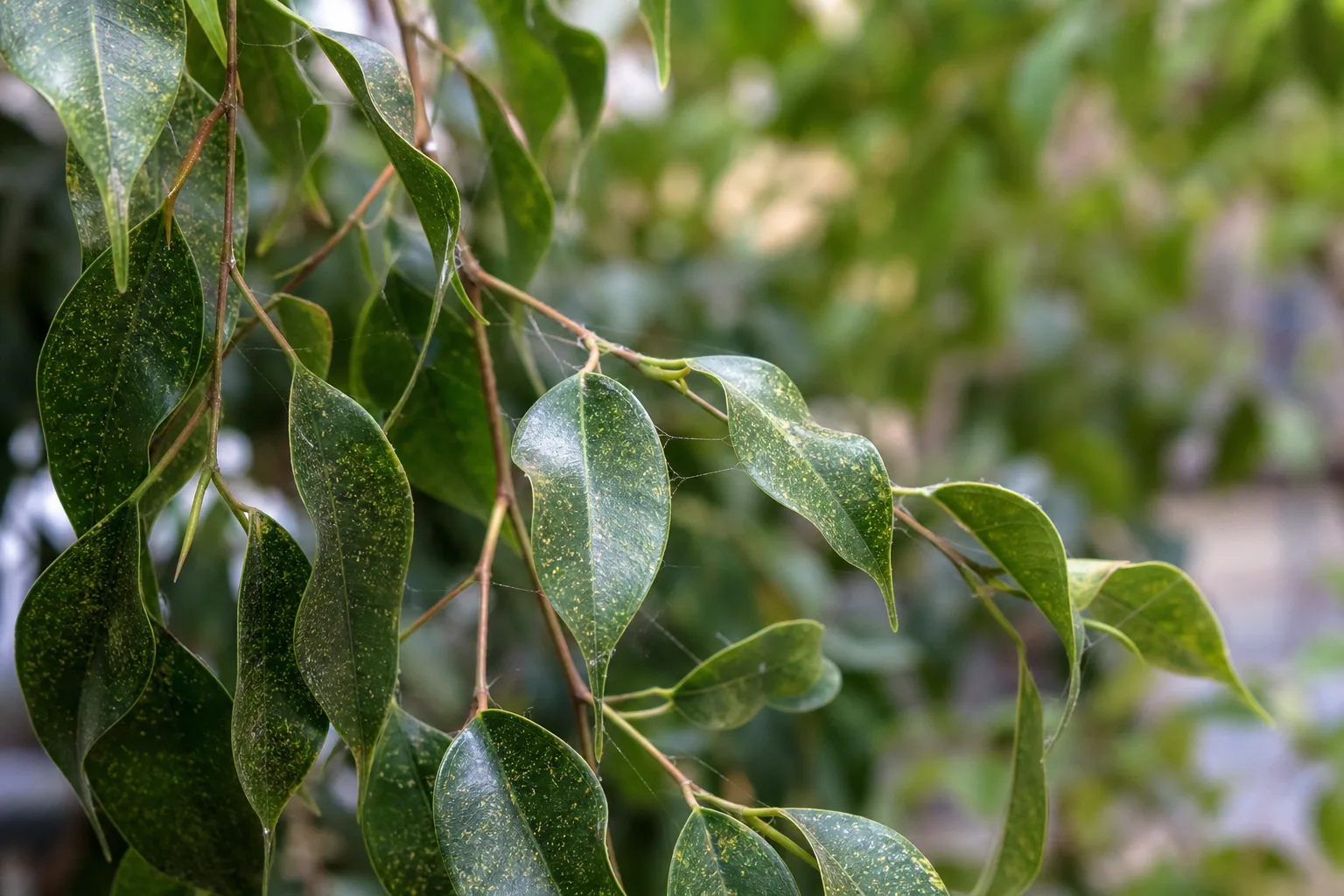
Spider mites on Ficus benjamina show as fine stippling and webbing on small elliptic leaves, often in dry winter air trapped inside the weeping canopy. First step: isolate neighboring plants and rinse reachable leaf undersides in place with lukewarm water-avoid moving the tree to a shower unless necessary, because weeping figs shed heavily when relocated.
Spider Mites on Ficus Benjamina: Causes, Checks & Fixes
This guide covers spider mites on Ficus Benjamina. See also the general Spider Mites guide, watering, and light pages for this plant.
Spider Mites on Ficus Benjamina: Causes, Checks & Fixes
Quick answer
Spider mites are microscopic sap-feeders that reproduce fastest in warm, dry indoor air. On Ficus benjamina (weeping fig), they pierce the small 2- to 4-inch elliptic leaves and leave pale yellow stippling that is easy to miss until bronzing spreads across the arching canopy. Clemson HGIC lists spider mites and scales as frequent pests of weeping fig, and dry winter air in dense indoor canopies is where mites gain a foothold on this species.
First step: isolate neighboring plants and rinse reachable leaf undersides in place with lukewarm water. Weeping figs shed leaves when moved to a shower or new room-treatment stress can look like failed pest control if you relocate the tree on day one. Only after you confirm live pests should you add insecticidal soap or horticultural oil on a repeat schedule.
Why weeping fig gets spider mites in winter rooms
Weeping fig is not the thinnest-leaved houseplant mites target, but its dense, layered canopy creates a microclimate that works against you in heated homes. Outer leaves intercept light; inner stems sit in still, dry air where mites reproduce undisturbed. The Ficus benjamina overview already notes that canopy stagnation plus dry air below about 30% humidity invites spider mites on small leaves-this problem page is where you confirm and treat that pattern.
Several indoor placement habits explain most outbreaks on this species:
South-facing windows plus winter heating. The twospotted spider mite-the most important mite species on houseplants-reproduces fastest when temperatures are warm and humidity is low. A weeping fig in a bright bay window runs leaf surfaces hot while the furnace dries the room. Mites colonize outer and inner leaves before stippling is obvious on the glossy upper side.
Drafts and heat registers. Weeping fig reacts sharply to moving air. A pot beside a radiator or AC vent loses leaf moisture quickly, which stresses the tree and favors spider mite buildup on foliage that is already working hard to stay hydrated.
Stress from recent moves. Mites often appear on trees already shedding from nursery transport or a room change. Draft-stressed leaves look dull and yellow-gray-similar to early mite feeding-so confirm pests before treating a plant that is mid–leaf drop.
Small leaf size hides early damage. Stippling on a 3-inch elliptic leaf reads as a faint dusting until bronzing joins the dots. Variegated cultivars such as ‘Golden King’ can mask pale feeding marks until the colony is established.
What mite damage looks like on small elliptic leaves
Weeping fig leaves are smooth, glossy, and pointed-nothing like the fuzzy foliage warnings copied from other houseplant templates. Mite damage shows up differently here than on large rubber-plant panels:
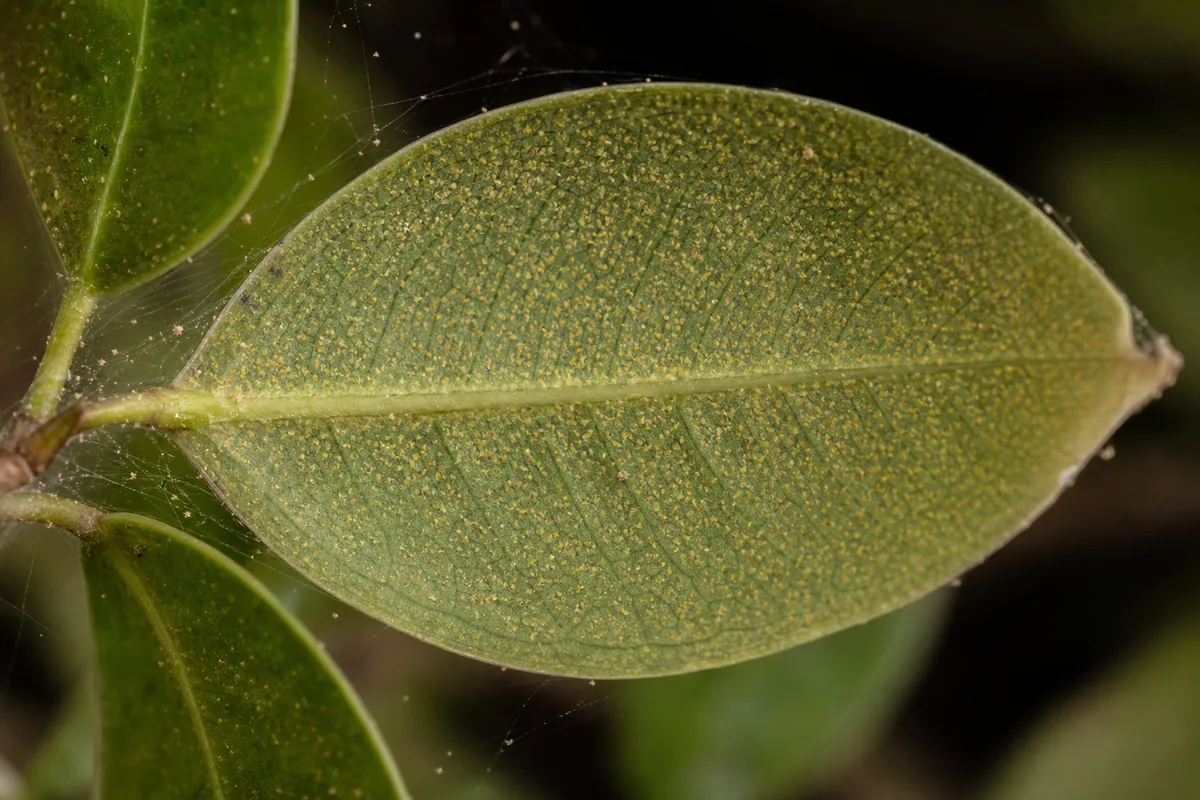
Spider Mites symptoms on Ficus Benjamina - compare with healthy tissue on the same plant.
- Fine yellow or white stippling scattered across the upper leaf surface, often starting on outer canopy leaves closest to the window
- A dull, washed-out green or bronze cast as feeding continues-healthy tissue between dots stays darker at first
- Tiny moving specks on undersides-red, brown, green, or nearly transparent when viewed with a hand lens
- Fine silk webbing at the base of arching branches, in inner stem axils, or where two small leaves meet-webbing is a late sign the colony was already established
- Premature yellowing and drop of outer leaves when feeding is heavy, overlapping with this species’ normal stress shedding
Because leaves are small and numerous, mite damage rarely curls individual leaf edges the way it might on thin-leaved species. Instead, whole sections of the weeping canopy look tired and speckled while the trunk stays firm.
Spider mites vs. low humidity, overwatering on Ficus Benjamina, thrips, and stress leaf drop
Several weeping fig problems mimic mite stippling. Work through this matrix before you spray.
| What you see | Likely cause | Quick check |
|---|---|---|
| Dry, crisp leaf tips and margins; no moving specks | Low humidity or draft stress | Paper tap test clean; no webbing at stem joints |
| Soft yellow lower leaves; wet, heavy soil for days | Overwatering | Uniform yellowing, not speckled dots; sour smell if rot advances |
| Mass yellow-green leaves falling after a move; soil moisture normal | Relocation leaf drop | No stippling pattern; drop follows handling within days |
| Silvery scarring without cobweb-style threads | Thrips | Shake stem over paper-larger, elongated insects; see extension thrips notes on houseplants |
| White cottony clusters in axils | Mealybugs | Clemson lists mealybugs alongside spider mites on weeping fig-check for both |
| Scattered pale dots plus webbing plus moving specks | Spider mites | Paper tap test positive; silk at inner canopy joints |
If leaves look pale but the paper test is clean and no webbing exists, fix placement and humidity before launching a multi-week mite treatment cycle.
How to confirm spider mites (six-step checklist)
- Paper tap test - Hold a suspect leaf over white paper and tap the petiole sharply. Spider mites fall as tiny moving specks. Static dust or dried water spots do not move.
- Inner canopy inspection - Part the arching branches and examine undersides along inner stems with a hand lens or phone macro mode. Mites, cast skins, and webbing concentrate where branches droop downward and air is still.
- Pattern vs. watering - Overwatering yellows weeping fig leaves more uniformly, often with soft stems and soggy soil. Mite stippling is speckled and patchy, with healthy green tissue between dots.
- Location check - Is the pot against a heat vent, in a sun-baked window bay, or in a room that runs dry all winter? Mites cluster in those spots first on this species.
- Neighbor plants - Scan other houseplants on the same shelf or windowsill. Mites crawl short distances and drift on silk threads to nearby pots.
- Recent handling - Did the tree drop leaves after a move or repot within the past two weeks? Confirm pests before blaming treatment failure for shedding that is actually move shock.
If you see moving specks and stippling together, you have an active infestation. If symptoms match low humidity only, raise ambient moisture and re-check in a week.
First fix: isolate neighbors, rinse in place, and treat on a schedule
Move other plants away-not necessarily the weeping fig itself-then rinse every reachable leaf underside with lukewarm water while the pot stays put.
This matches what Colorado State Extension recommends for houseplant mite control: hose or rinse small plants to physically remove mites and break up webbing. For a tall weeping fig that will shed if you haul it to the shower, wipe each accessible underside with a soft damp cloth, working from top to bottom so dislodged mites fall away from clean tissue. If you must use a shower, accept temporary leaf drop and return the tree to the same bright spot afterward-do not combine relocation with Ficus Benjamina repotting guide or heavy pruning on day one.
Cover the pot soil with plastic wrap during rinsing so you do not waterlog the root ball. Wear gloves-weeping fig sap irritates skin and the plant is toxic to cats and dogs; keep wet leaves and debris away from pets during treatment.
Do not spray insecticide on day one if you have not confirmed mites. Do not repot, prune heavily, or fertilize during the first rinse.
Step-by-step recovery
After the initial isolation and in-place rinse:
- Repeat water removal every three to five days for two weeks. Mite eggs survive a single rinse; repeated applications at short intervals are essential because soap and water sprays have no residual activity.
- Apply insecticidal soap or horticultural oil if live mites remain after several rinses. Clemson HGIC recommends spraying sturdy plants forcefully with water first, then using insecticidal soap for spider mites. Coat undersides completely; mites must be wet with the product to die.
- Repeat chemical treatments every five to seven days for at least three cycles-longer in warm rooms where the mite life cycle completes in about a week. Colorado State Extension advises reapplying at one- to two-week intervals while populations persist; in heated indoor conditions, the shorter end of that range is safer.
- Prune only heavily webbed leaves that are mostly bronze and no longer photosynthesizing. Bag and discard cuttings; sap exposure during pruning warrants gloves and pet-safe cleanup.
- Treat or inspect every plant within reach on the same shelf, windowsill, or room. Partial treatment leaves a reservoir for reinfestation.
- Shift the pot out of the hottest dry microclimate once rinsing is done-move it a few feet from the heat register or add a pebble tray for ambient humidity without soaking the inner crown overnight.
Hold fertilizer until new growth emerges clean and mite counts stay low for two weeks. Feeding a pest-stressed weeping fig pushes soft tissue mites prefer.
Recovery timeline and what “clean new growth” looks like
Expect fewer live mites within three to five days of the first thorough rinse if coverage reached inner canopy leaves. A full treatment cycle-rinse plus three soap or oil applications on schedule-typically runs three to four weeks before you can call the plant clear.
Stippled leaves will not return to uniform deep green; judge recovery by new leaves at branch tips. A firm, unwebbed emerging leaf is the best sign the colony is broken. Some outer leaves may drop during treatment-that is common on this stress-sensitive species and does not always mean mites are winning. Missouri Botanical Garden notes that sudden environmental change frequently causes leaf drop on weeping fig even when watering is correct; distinguish pest-driven bronzing from shock shedding by whether stippling and webbing stop spreading on new tissue.
If webbing reappears on fresh growth after four weeks of consistent treatment, the population was not fully knocked down or a nearby plant is reinfecting this one. Re-isolate and restart the full cycle.
What not to do
Do not stop after one rinse because stippling looks lighter-eggs hatch within days in warm rooms.
Do not spray only the glossy upper leaf surface. Mites live on undersides of those small elliptic leaves and in sheltered inner axils.
Do not use household dish soap as a default spray. Nebraska Extension warns that homemade soap sprays carry higher phytotoxicity risk than ready-to-use insecticidal soap labeled for plants.
Do not assume chemical pesticides labeled for insects will kill mites-mites need miticides, horticultural oil, or insecticidal soap labeled for mite control.
Do not move the tree repeatedly between rooms during treatment. Each relocation can trigger mass leaf drop on weeping fig, and handling spreads mites on cloths and surfaces.
Do not saturate the dense inner crown and let it stay wet overnight. Smooth glossy leaves tolerate gentle rinsing, but stagnant moisture in a layered weeping canopy invites fungal spotting when air circulation is poor.
Do not ignore pet safety during indoor sprays. Weeping fig is toxic to cats and dogs; ventilate the room and keep animals away from treated foliage until sprays dry.
Prevention: humidity, scouting, and quarantine
Inspect inner canopy undersides weekly from autumn through spring, when indoor heating dries the air most. Two or three leaves per check builds the habit without examining every elliptic leaf each time.
Quarantine new houseplants for seven to fourteen days before placing them beside your weeping fig. Mites hitchhike on nursery stock and spread before symptoms show.
Avoid placing the pot directly on a radiator ledge or in a sun-scorched window corner where leaf temperature spikes. Shift position seasonally if a winter sun bay becomes a summer hot spot.
Run a humidifier or pebble tray in the room if humidity routinely drops below 40%. Dry conditions greatly favor spider mite reproduction while the weeping canopy still traps heat near inner stems.
Keep watering consistent-see the watering guide-so drought stress does not overlap with mite damage on outer leaves.
When to escalate or call it quits
Escalate immediately if webbing spans multiple arching branches, new tip leaves emerge distorted or fail to open, or yellowing leaves drop in clusters within a week. A mature weeping fig with a firm trunk can recover from heavy mite feeding if roots stay sound, but a small recently purchased tree with thin new growth may decline fast.
Consider discarding a severely defoliated plant in a shared indoor collection rather than fighting endless reinfestation-heavily infested plants serve as a source for neighboring pots. That is especially true when several susceptible species share one warm, dry room.
A few stippled dots on one lower leaf with no webbing and a clean paper test is worth monitoring, not panicking. Confirm movement before launching a month-long treatment program.
Conclusion
Spider mites on Ficus benjamina hide in the inner weeping canopy until stippling and fine webbing show on small elliptic leaves. Isolate neighbors first, rinse undersides in place when you can, and repeat water or soap treatments on a schedule that matches warm indoor conditions-not a single spray. Expect some leaf drop during handling on this stress-sensitive tree; clean new growth at the tips tells you the fix worked. Build inner-canopy checks into weekly care from heating season through spring, and keep the tree out of the hottest driest corners of the room to stop the next outbreak before silk appears at the arching branch bases.
When to use this page vs other Ficus Benjamina guides
- Ficus Benjamina watering guide - Use for routine moisture checks before assuming spider mites is the main issue.
- Ficus Benjamina problems hub - Browse all 17 common issues on this species.
- Low Humidity on Ficus Benjamina - Different entry point when symptoms overlap with spider mites.
- Leaf Drop on Ficus Benjamina - Different entry point when symptoms overlap with spider mites.
- Slow Growth on Ficus Benjamina - Different entry point when symptoms overlap with spider mites.