Slow Growth on Ficus Benjamina: Causes, Checks & Fixes
Quick answer
Slow growth on Ficus benjamina usually means relocation shock, winter rest, root-bound roots, or light below what this high-light tree needs-not a fertilizer shortage. First step: confirm the tree has not moved in the past two weeks; if it has, stabilize placement and wait. If placement is stable, test light at canopy height and check whether roots circle the pot.
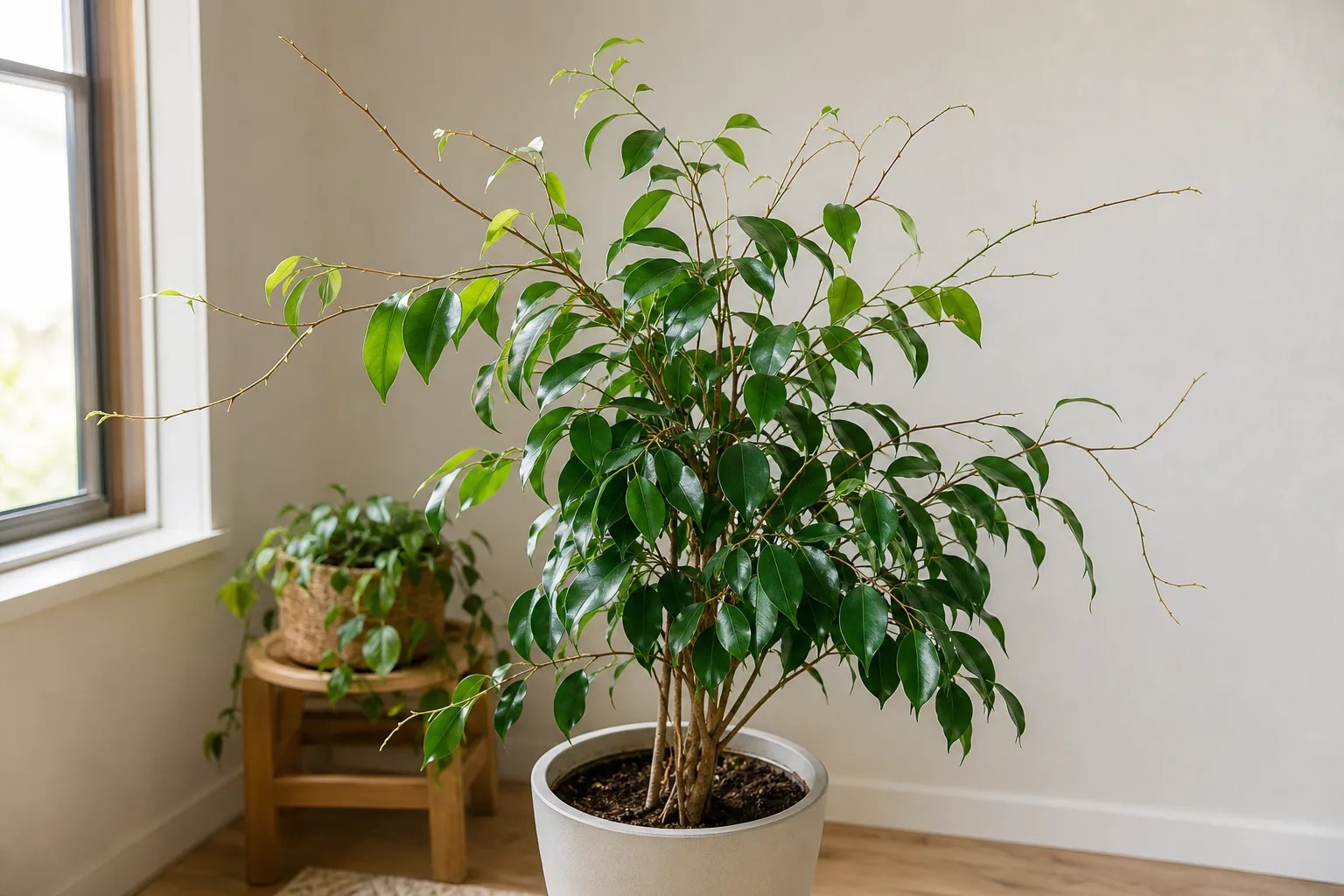
Slow Growth on Ficus Benjamina: Causes, Checks & Fixes
This guide covers slow growth on Ficus Benjamina. See also the general Slow Growth guide, watering, and light pages for this plant.
Slow Growth on Ficus Benjamina: Causes, Checks & Fixes
Quick answer
Ficus benjamina - the weeping fig - grows at a moderate, steady pace when light, roots, and placement stay stable. A healthy indoor tree in bright indirect light often adds a new leaf set every two to four weeks during spring and summer along actively growing branches. When growth stalls-long gaps between new leaves, smaller foliage than older baseline leaves, or a canopy that has not expanded in months-the limiter is usually relocation shock, winter rest, root-bound pots, insufficient light, or spider mite stress-not missing fertilizer.
First step: confirm whether the tree moved, was repotted, or sat near a new draft in the past two weeks. If yes, stabilize placement and wait before changing watering, light, or feed. If placement has been stable for a month or more, run the hand-shadow light test at canopy height and slide the root ball from the pot to see whether roots circle densely. Full species context: Ficus benjamina overview.
What slow growth looks like on Ficus Benjamina
Slow growth on a weeping fig is a canopy-level stall, not always a dramatic wilt. Read newest tissue first-old glossy leaves can look fine while the plant adds almost nothing new.
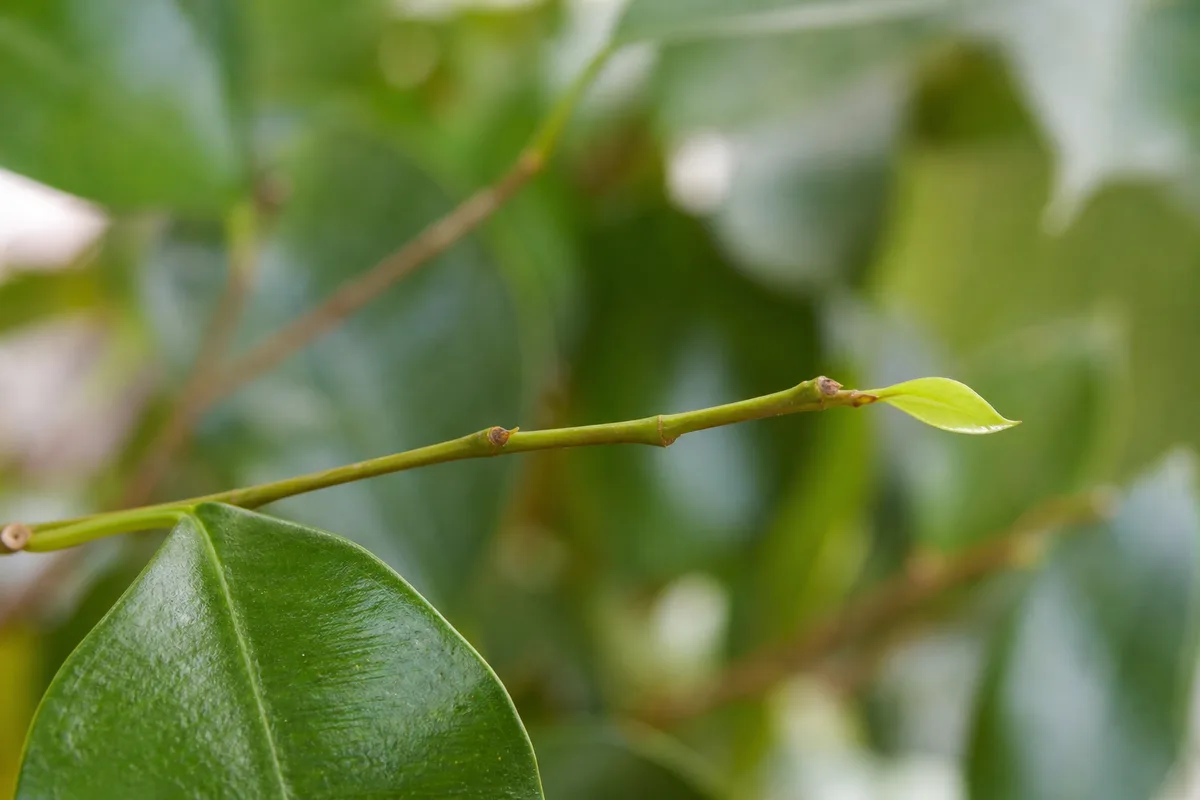
Slow Growth symptoms on Ficus Benjamina - compare with healthy tissue on the same plant.
Sparse new leaves with long gaps between sets:
- No fresh leaves along branch tips for four or more weeks during warm months while stems stay firm and green
- Smaller new leaves than mature foliage on the same branch-half-size blades are a classic root-bound signal
- Bare lower branches without the long internodes and lean toward glass that define leggy stretch
- Canopy height and spread unchanged for months despite otherwise healthy-looking older foliage
Post-move or post-repot quiet period:
- Tree shed green leaves after nursery pickup, furniture shuffle, or Ficus Benjamina repotting guide, then sits visually static
- Soil moisture may look normal while the plant communicates stress through abscission rather than wilting
- New buds delayed two to eight weeks even when you water correctly
Seasonal winter pause (normal, not failure):
- Few or no new leaves from late fall through early spring when daylight shortens and rooms cool
- Existing foliage stays firm; soil dries at a slower but steady pace
- Growth resumes when days lengthen-no emergency fix needed if stems are woody and green
Variegated cultivar slowdown:
- ‘Starlight’ and similar variegated forms may add leaves more slowly than solid-green trees in the same room
- White or cream sections photosynthesize less; dim corners stall variegated growth before green types show stress
Not slow growth: Mass yellowing on wet soil, soft stems at the base, or heavy stippling and webbing on undersides-these need root rot on Ficus Benjamina or pest diagnosis, not patience alone. See leaf drop when the whole canopy sheds after a move, and spider mites when fine silk accompanies stalled shoots.
Why Ficus Benjamina grows slowly
Weeping fig is widely sold as a flexible office tree, but its biology makes environmental stability the price of active growth. The same Moraceae leaf-drop habit that alarms new owners also pauses shoot elongation when conditions shift.
Relocation shock and environmental change
Weeping figs often shed leaves when moved to a new location or repotted even when watering is correct. Nursery-grown canopies were built under greenhouse light; your living room is a different photosynthetic contract. The plant redirects energy from new shoot tips to surviving the transition-growth looks static for weeks while interior leaves fall.
Drafts, new HVAC seasons, and even rotating the pot can trigger the same pause. Anxious owners often overwater during acclimation, which deepens the stall. If you moved the tree recently, slow growth is frequently expected shock, not a mystery deficiency.
Low light below species needs
Ficus benjamina is a high-light foliage tree that wants bright indirect or curtain-filtered sunlight. UF/IFAS defines high light as roughly 500 to 1,000 foot-candles near windows-well above what a dim interior hallway provides.
Below adequate brightness, the plant enters maintenance mode: it sheds leaves it cannot afford to feed and produces few new shoots. Dim corners also slow transpiration, so soil stays wet longer and roots work less efficiently-a compound stall. When light is the limiter but the tree still reaches for brightness, you may see leggy stretch alongside slow overall canopy fill; see not enough light and leggy growth for that overlap.
Root-bound pots restricting uptake
Clemson HGIC notes that weeping figs tolerate being slightly root bound, but when plants become too crowded, new leaves stay small and growth slows. Dense root mats channel water through outer rings; the pot may dry within a day after watering while the canopy adds little new tissue.
overwatering on Ficus Benjamina and weak roots in dim corners
Low light is a common cause of leaf drop partly because reduced photosynthesis slows water use. Owners who keep a summer watering rhythm in a darker winter corner leave roots in soggy mix. Energy goes to survival, not new leaves. Slow growth with yellowing on persistently wet soil points to root stress-see watering guidance at Ficus benjamina watering.
Cool temperatures and winter rest
Weeping fig prefers night temperatures of 65 to 70°F and days of 75 to 85°F during active growth. Metabolism and shoot elongation naturally slow when light hours shorten and rooms cool below about 65°F. That seasonal pause is healthy if wood stays firm-do not fertilize or repot hoping to force winter leaves.
Spider mite stress on stalled tissue
Dry indoor air and heat vents stress the small glossy leaves weeping figs carry. Spider mites thrive on weakened houseplants in warm, dry conditions. Low-level feeding drains vigor before webbing becomes obvious. Inspect undersides when growth stalls near sunny glass or heater drafts.
Recent repotting pause
Repotting triggers the same stress response as relocation. Expect six to eight weeks of quiet growth after a spring repot while roots settle-longer if the new pot is oversized or watering stays heavy. New buds within two to four weeks signal normal recovery; continued heavy drop with sour soil needs rot diagnosis.
Depleted soil after years without refresh
Compacted, salt-heavy mix after two or three years limits nitrogen and micronutrient uptake even when you feed on schedule. Growth stalls while older leaves hold color. Refreshing mix during a planned spring repot often restores pace once light and roots align.
How this differs from leggy growth, not enough light, and leaf drop
These four problem pages overlap on weeping fig, but the primary intent differs:
| Pattern | Primary signal | Growth character | Best first move |
|---|---|---|---|
| Slow growth (this page) | Long gaps between small new leaf sets; canopy size static | Stems may stay compact-not always reaching toward glass | Stabilize placement; test light and roots |
| Leggy growth | Long internodes, lean toward window, sparse nodes | Vine-like stretch on branches | Brighten light; optional prune after new buds |
| Not enough light | Inner/lower leaf loss, pale small new leaves | Thinning canopy over weeks | Move to bright indirect or add grow light |
| Leaf drop | Mass green leaves on floor within days of move | Growth may pause during shock | Leave plant alone; match watering to new spot |
Slow growth can coexist with mild stretch in dim rooms, but sudden widespread drop after any environmental change is relocation communication first-growth rate second.
How to confirm the cause
Work through these checks in order. One stable placement month beats guessing from a single yellow leaf.
- Relocation timing - Did the tree move, repot, or sit near a new vent within the past fourteen days? Recent change explains stall without further fixes.
- Hand-shadow test at canopy height - On a bright day, hold your hand where top leaves sit. Soft shadow = usable indirect light; faint shadow = likely bottleneck. Target roughly 400+ foot-candles for maintenance and brighter for active flush-see Ficus benjamina light.
- New leaf frequency - Mark a branch tip and check weekly. Zero movement for six or more weeks in warm months with stable placement points to light, roots, or pests-not winter rest.
- Root inspection - Slide the plant from the pot. Dense circling roots, little visible mix, or roots at drainage holes mean repotting is due. Small new leaves plus ultra-fast drying strongly support root-bound stress.
- Soil moisture rhythm - Wet mix for ten-plus days while growth stalls suggests dim placement or overwatering. Dust-dry pot weight with firm wilted tips suggests underwatering on Ficus Benjamina-different fix.
- Season and temperature - Late fall through early spring stall with firm wood often fits normal rest. Growth should resume by mid-spring in the northern hemisphere.
- Pest scan - Check leaf undersides and stem joints for stippling, webbing, or scale. Mites on weeping fig are common near dry heat.
If brighter stable light for two weeks produces new buds, light was a major limiter. If roots are dense and light already passes the hand test, schedule a one-size-up spring repot before fertilizing.
First fix for Ficus Benjamina
If the tree moved or was repotted within the past two weeks: leave it in one spot, match watering to the new dry-down rate, and wait at least fourteen days before any other change.
Do not hunt for a perfect window by shifting weekly-each move retriggers abscission. Do not fertilize, prune heavily, or repot again during acclimation. Judge progress by new buds along firm branches, not by leaves already dropped.
If placement has been stable for a month or more: move the tree to bright indirect light within one to three feet of an east window or a filtered south or west exposure-or add a full-spectrum grow light above the canopy-then check roots.
Light drives photosynthesis for this high-light species. Fertilizer on a dark, crowded tree produces weak shoots and salt buildup without solving the stall. After the light upgrade, wait two weeks for the first response before repotting or feeding.
Do not jump from a dim interior to unfiltered south glass in one step. Acclimate over seven to fourteen days when increasing exposure sharply.
Step-by-step recovery
After the first fix above, address remaining bottlenecks in this order:
- Wait two to four weeks - Weeping fig responds slowly. New leaf sets appear before canopy spread looks dramatic.
- Repot if roots crowd the pot - Choose a container only one to two inches wider with drainage holes. Repot in late winter or early spring when possible. Gently loosen circling roots. Hold fertilizer six to eight weeks after repotting until new growth returns.
- Stabilize watering - Water when the top one to two inches of mix feel dry; empty the saucer. Brighter spots dry faster-adjust rhythm after any light change. Details: watering guide.
- Feed only after new growth resumes - Once buds break consistently, use balanced houseplant food at label rates during active season. See fertilizer guide. Do not feed a shocked or stagnant tree hoping to force leaves.
- Treat spider mites if confirmed - Rinse undersides, isolate, and follow extension-backed controls if stippling and webbing are present.
- Light prune dead tips after stabilization - Remove only crisp, bare stems once new buds prove conditions are right. Heavy shaping during shock deepens the pause.
Skip repotting if you repotted within the past six weeks unless roots are mushy or sour-smelling.
Recovery timeline
Relocation or repot shock: Growth may stay quiet two to eight weeks; new buds commonly appear within six to twelve weeks once placement stays consistent. Healthy ficus often releafs within about a month in bright stable light after a single disruptive move.
Light upgrade: First new leaf set within two to four weeks during active season if light was the main limiter.
After root-bound repot: Expect six to eight weeks before vine-like lengthening resumes; canopy fill may take a full growing season.
Winter stall: Growth may not resume until March or April even after corrections-judge by spring bud activity, not January expectations.
Variegated cultivars: ‘Starlight’ may need a full season in brighter light before new leaves match older size and pattern.
Signs of success: regular new leaf sets, new blades matching or approaching mature size, firm glossy foliage, and canopy spread you can measure month over month-not repair of old static leaves.
What not to do
Do not fertilize a stressed weeping fig before checking roots and light-salt stress on weak roots worsens stall.
Do not stack repotting, relocation, pruning, and pesticide in the same week. Change one variable, observe, then adjust.
Do not repot into an oversized container hoping to force growth. Excess wet soil around a small root ball invites rot and prolonged leaf drop.
Do not confuse winter rest with care failure and overwater or overfeed in December hoping to wake the tree.
Do not move the plant weekly hunting for perfection-weeping figs punish instability with months of quiet growth.
Do not ignore root crowding while only chasing brighter windows. A bright but severely root-bound tree may still add leaves slowly.
Pet households: weeping fig is toxic to cats and dogs. Stress from relocation near pet traffic can compound leaf drop-keep pots out of reach during acclimation.
How to prevent slow growth next time
Place Ficus benjamina where bright indirect light is realistic year-round-not only where the braided trunk looks decorative. Supplement with a grow light in winter if window intensity drops.
Repot every two to three years or when roots emerge from drainage holes-before new leaves shrink to half size.
Water when the top inch dries; let excess drain fully. Match rhythm to season and light, not a fixed calendar.
Accept slower winter metabolism without stacking fixes. Reduce watering frequency when growth naturally pauses.
Plan one relocation when you must move furniture, then leave the tree alone for a full month. Avoid rotating the pot during acclimation unless you accept temporary drop.
Inspect leaf undersides monthly in dry heated rooms to catch mites before they sap vigor.
When to worry
Slow growth alone is low urgency. Escalate when:
- Yellow leaves spread on Ficus Benjamina while soil stays wet for days-suspect root rot, not seasonal rest
- Stems soften at the soil line or the pot smells sour
- Spider mite colonies cover undersides despite rinsing
- No new growth through an entire warm growing season after light and repotting fixes
- Continued heavy leaf drop beyond four weeks after a single stable relocation
A firm, green, static weeping fig in January is usually fine. A wilting, yellowing, or smelly tree needs root and moisture diagnosis immediately.
Conclusion
Ficus benjamina should add noticeable new leaves when light, roots, season, and placement align. Start by confirming whether recent relocation explains the pause; if not, brighten stable exposure and inspect roots before reaching for fertilizer. Most stalled weeping figs respond within weeks once the real bottleneck-usually shock, light, or crowding-is removed. Track new leaf frequency through spring rather than expecting overnight canopy expansion, and accept winter quiet as part of this tropical tree’s indoor rhythm.
Related guides: Overview · Light · Watering · Fertilizer · Not enough light · Leggy growth · Leaf drop · Spider mites
When to use this page vs other Ficus Benjamina guides
- Ficus Benjamina watering guide - Use for routine moisture checks before assuming slow growth is the main issue.
- Ficus Benjamina problems hub - Browse all 17 common issues on this species.
- Not Enough Light on Ficus Benjamina - Different entry point when symptoms overlap with slow growth.
- Leggy Growth on Ficus Benjamina - Different entry point when symptoms overlap with slow growth.
- Yellow Leaves on Ficus Benjamina - Different entry point when symptoms overlap with slow growth.