Low Humidity on Ficus Benjamina: Causes, Checks & Fixes
Quick answer
Ficus benjamina performs best at 50–60% relative humidity, but forced-air heating can drop indoor air below 30% and crisp small leaves before the rest of the canopy looks stressed. First step: place a hygrometer near the canopy and move the tree away from radiators, AC vents, and drafty windows before adding a humidifier or pebble tray.
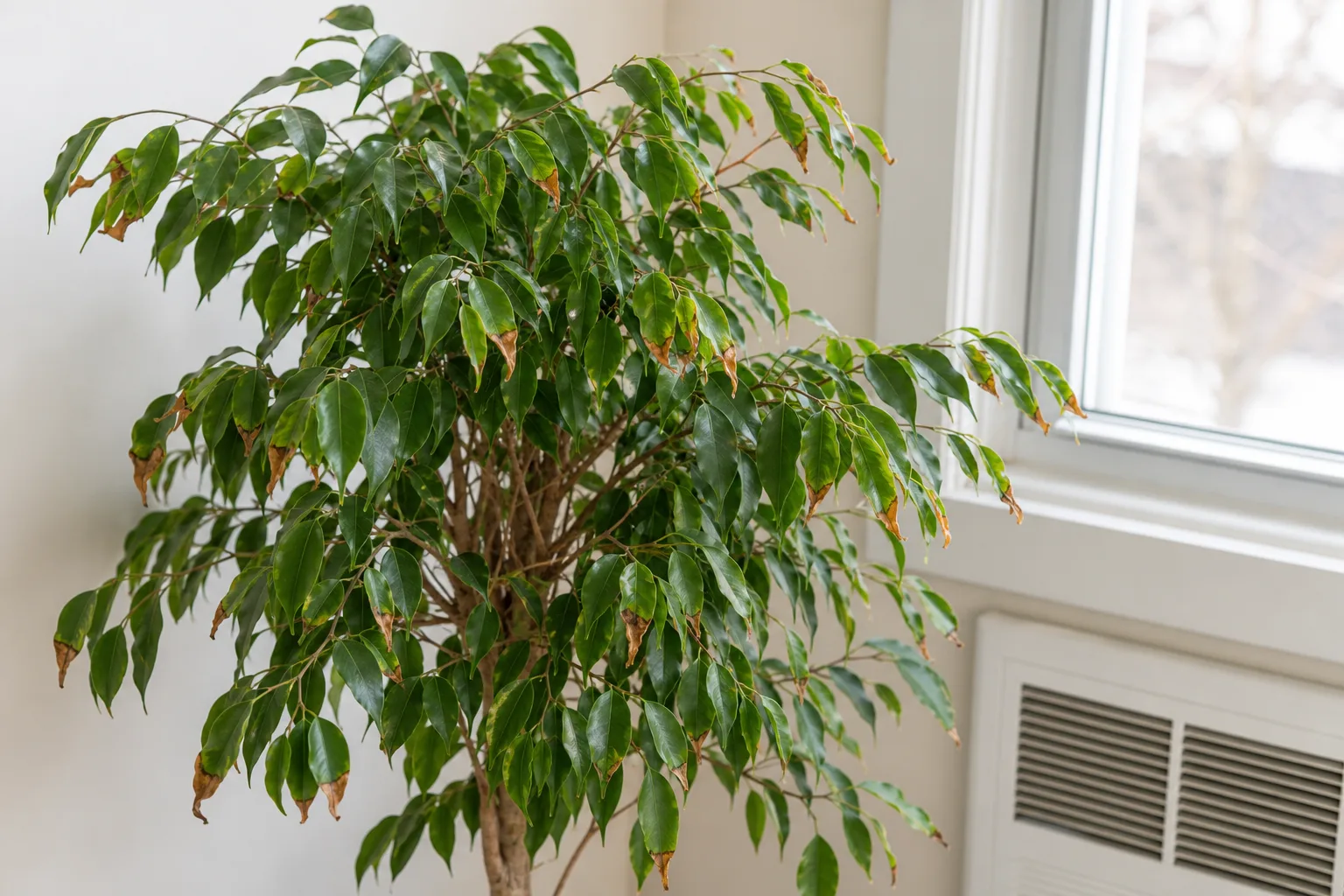
Low Humidity on Ficus Benjamina: Causes, Checks & Fixes
This guide covers low humidity on Ficus Benjamina. See also the general Low Humidity guide, watering, and light pages for this plant.
Low Humidity on Ficus Benjamina: Causes, Checks & Fixes
Quick answer
Ficus benjamina (weeping fig) evolved in warm, humid tropical forest understory. Indoors it carries a dense crown of small, glossy, elliptic leaves-typically 2 to 4 inches long-on arching branches that lose moisture quickly when air stays dry. Clemson HGIC notes weeping figs prefer high humidity levels and suffer near heat vents and drafts even when watering is correct.
Aim for 50–60% relative humidity for best performance-cooperative extension guidance suggests roughly 50–70% for healthy weeping figs. Average homes at 40–50% often work in bright, stable conditions, but forced-air heating from late fall through early spring can drop RH to 20–30%, producing brown tips, crisp leaf margins, dull foliage, and increased spider mite pressure in dry indoor air. Full species context: Ficus benjamina overview.
First step: place a hygrometer near the canopy and move the pot away from radiators, AC vents, and drafty windows. You need a real reading at plant level-not a guess from how the room feels-before buying a humidifier or changing your Ficus Benjamina watering guide. If RH is below 40% and outer leaves crisp while soil moisture is normal, humidity is the problem. If the pot is light and mix is dusty dry, fix watering first-see underwatering on Ficus benjamina.
What low humidity looks like on Ficus benjamina
Weeping fig does not announce dry air with one dramatic symptom. The pattern builds on small leaves with high surface-area-to-volume ratio, so perimeter foliage near dry microclimates fails before the interior canopy looks stressed.
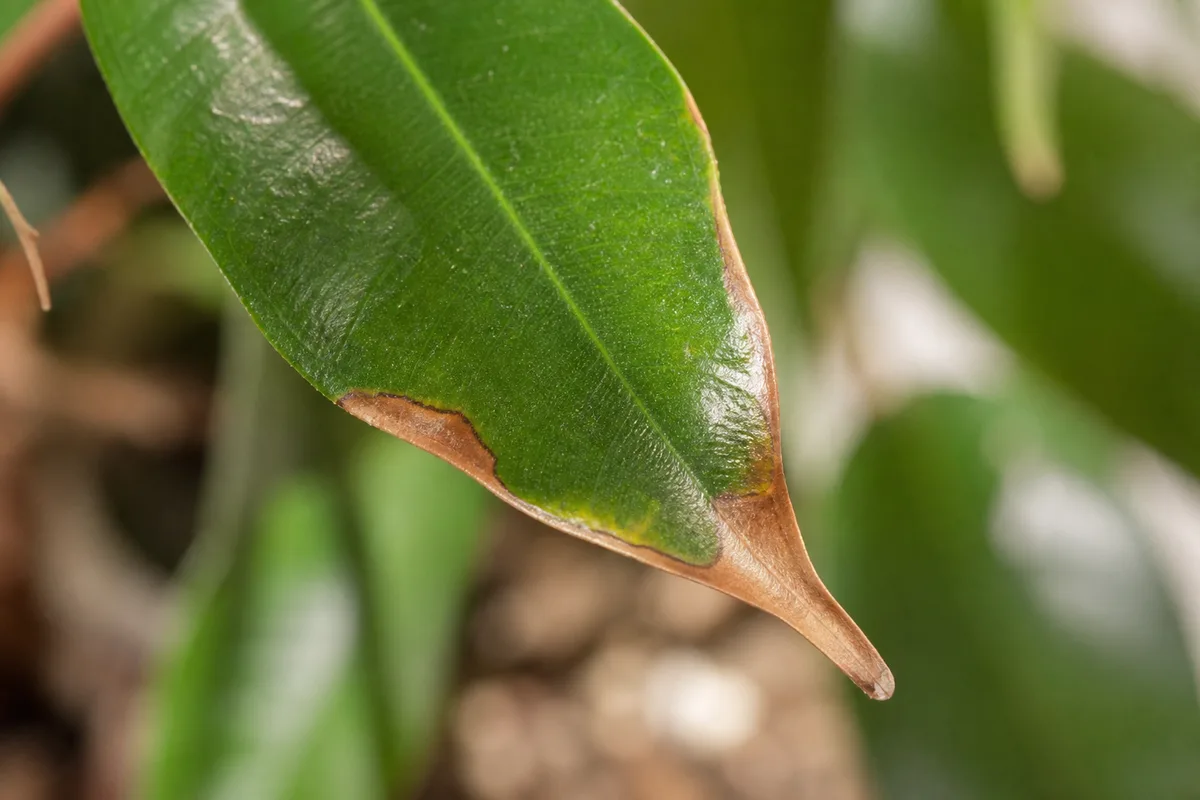
Low Humidity symptoms on Ficus Benjamina - compare with healthy tissue on the same plant.
Brown tips and crisp leaf edges (most common):
- Narrow tan-to-brown band at the leaf point, sometimes creeping slightly down the margin
- Papery, dry texture on an otherwise firm, glossy green leaf
- Often worse on outer leaves nearest radiators, forced-air vents, single-pane winter windows, or frequently opened exterior doors
- Interior canopy may stay green while perimeter foliage crisps first
Dull, slightly curled foliage without mass drop:
- Leaves lose their glossy sheen and feel thinner
- Margins may curl downward as turgor drops
- New leaves may emerge smaller when chronic dry air persists through a heating season
Dry air and spider mite risk:
- Spider mites thrive in dry, warm conditions on houseplants stressed by low humidity and heat
- Weeping fig near sunny glass or heater drafts loses leaf moisture faster, which favors mite colonies on undersides
- Humidity stress alone shows crispy tips without stippling or webbing; spider mites are a major pest of weeping fig and add fine yellow speckles and delicate silk-see spider mites on Ficus benjamina
Unlike location-shock leaf drop, low-humidity damage usually develops gradually over weeks of heating season and concentrates on leaves in the driest air paths. Unlike underwatering, tip burn often appears when soil moisture is normal and stems stay firm.
For localized tip necrosis only-without whole-canopy dryness-see the dedicated brown tips guide.
Why Ficus benjamina is sensitive to dry indoor air
Weeping fig is widely sold as a flexible indoor tree, but its biology makes humidity more consequential than for many houseplants.
Small leaves and fast transpiration. Each leaf is a thin photosynthetic panel with limited internal water storage. When RH drops, water moves from leaf tissue into dry air faster than roots replace it-especially at tips and margins where vascular supply tapers. A dense, layered canopy multiplies that loss across hundreds of small blades.
Draft sensitivity compounds dry air. Clemson HGIC warns that placing a weeping fig near a heat vent or draft causes excessive leaf drop. Moving air strips moisture from leaf surfaces within hours. A plant in a 45% room can sit in a 25% microclimate directly above a register or beside a leaky winter window.
Winter heating dries faster than summer AC. Central and forced-air furnaces replace humid outdoor air with heated, low-RH indoor air from late fall through early spring. The same watering rhythm that worked in September can leave foliage crisp by January even when you water correctly-because the stress is atmospheric, not root-zone.
Location shock mimics humidity stress. Weeping figs react to almost any stress by shedding leaves-moves, repots, watering changes, drafts, and low light all trigger drop. Dry air is a real cause, but mass green leaf fall days after relocation usually points to placement shock from abrupt light or temperature changes, not RH alone. See leaf drop on Ficus benjamina when the whole canopy sheds after a move.
How to confirm low humidity (not something else)
Work through these checks in order. One hygrometer reading at canopy height beats guessing from symptom photos.
- Hygrometer at canopy height - Place a digital hygrometer within 12 inches of the top leaves, not on the opposite wall. Readings below 40% in winter with crisp outer margins strongly support low humidity when watering is stable.
- Draft and heat-source map - Note distance to radiators, forced-air vents, fireplaces, and exterior doors. Weeping fig reacts sharply to moving cold or dry air across its leaves.
- Soil moisture cross-check - Push your finger 1–2 inches into the mix. Evenly moist soil with firm stems and only margin tip burn confirms air humidity as the primary stressor. Dry, light soil means address water before humidity hardware.
- Which tissue failed - Damage limited to outer leaf tips and margins with healthy interior growth fits humidity. Whole green leaves falling within days of a move fits location shock more than RH deficiency.
- Pest inspection - Hold white paper under a suspect leaf and tap. Moving specks plus stippling mean treat spider mites even while you raise humidity.
- Seasonal timing - Gradual tip crisping weeks after heating season starts, with no recent repot or relocation, increases humidity probability. Sudden mass drop right after a furniture shuffle points to stability issues first.
You have confirmed low humidity when RH near the canopy stays below 40%, soil moisture is appropriate, stems are firm, and browning concentrates on perimeter leaves without pest signs or a recent move.
Lookalike comparison
| Pattern | Likely cause | First direction |
|---|---|---|
| Crispy tips on outer leaves; firm stems; normal soil moisture | Low humidity | Hygrometer + humidifier or pebble tray |
| Crispy tips; light pot; dry soil several inches down | Underwatering | Thorough soak; then reassess RH |
| Soft yellow leaves; heavy wet pot | overwatering on Ficus Benjamina | Stop watering; check drainage |
| Whole green leaves dropping days after move | Location shock | Stabilize placement; see leaf drop |
| Fine stippling + webbing on undersides | Spider mites | Rinse + treat; raise humidity as prevention |
| Tips worsen after heavy feeding; white soil crust | Salt / mineral burn | See brown tips |
First fixes for Ficus benjamina
After you have a hygrometer reading and removed obvious heat drafts, apply one humidity upgrade at a time so you can judge whether new leaves emerge with clean edges over the next two to three weeks.
Move away from heaters, AC vents, and drafty windows
Relocate the pot before you buy hardware. Pull the tree at least 3–4 feet from forced-air registers, radiators, and fireplace heat. In winter, move it inward from single-pane glass that leaks cold air at night. Clemson HGIC emphasizes that drafts cause excessive leaf drop independent of watering-fixing placement alone sometimes stops margin crisping within one to two weeks.
Do not move the tree repeatedly while troubleshooting. Weeping fig sheds leaves when shuffled; pick one better spot and leave it there while RH improves.
Raise ambient RH (humidifier, pebble tray, grouping)
Humidifier (most reliable): A small ultrasonic or evaporative humidifier in the same room, run several hours daily, is the best sustained fix for a floor tree. Aim the mist into the room air, not directly onto foliage. Target 50–60% RH at canopy height; creeping above 65% in a closed room risks mold on walls and condensation on cold windows.
Pebble tray (modest boost): Fill a wide tray with rinsed gravel, add water to just below the stone surface, and set the pot on top-never in standing water. Refill every few days as water evaporates. Expect a localized bump, not whole-room RH correction.
Plant grouping: Placing several houseplants within 18 inches creates a shared transpiration zone that raises humidity slightly. Useful as a supplement, not a sole fix for a large weeping fig in a dry living room.
What not to rely on: Occasional misting raises RH for minutes and wets leaf surfaces that weeping fig keeps glossy. Low humidity is a common cause of brown leaf tips on houseplants, but misting does not sustain the ambient moisture this species needs through a heating season.
Recovery timeline
Margin and tip damage is permanent. Brown or crispy tissue does not re-green. Judge recovery by new leaves opening with clean edges and stopped spread to previously healthy foliage-not by old leaves repairing themselves.
- After draft removal: Perimeter crisping often stabilizes within one to two weeks if RH was borderline and placement was the main issue.
- After humidifier or pebble-tray use: Expect visible improvement on new growth within two to four weeks once canopy-level RH holds near 50%.
- If spider mites appeared in dry heat: Stippling may stop spreading within one to two weeks of treatment plus humidity correction, but heavily damaged leaves rarely look pristine again.
If new tips stay clean for three weeks and leaf drop settles to occasional lower-leaf senescence, consider the humidity problem controlled. Continue monitoring through the rest of heating season.
What not to do
- Do not increase watering to fix dry-air brown tips. Roots may already be adequately moist; extra water on a heavy pot worsens root stress and triggers more leaf drop on this species.
- Do not assume misting replaces a humidifier for a large weeping fig in a dry winter room.
- Do not move the tree repeatedly while raising humidity-each shuffle can shed leaves that mimic humidity damage.
- Do not fertilize a stressed tree before RH and placement stabilize. Resume feeding at half strength only when new growth emerges firm and glossy.
- Do not stack Ficus Benjamina repotting guide, heavy pruning, and pesticide on the same day as a humidity overhaul. Weeping fig tolerates one care correction at a time.
How to prevent low humidity problems next time
- Run a hygrometer through heating season and act when canopy-level RH drops below 40%.
- Keep a permanent placement away from vents and draft paths once the tree acclimates-see overview humidity guidance for draft protection detail.
- Start humidifier or pebble-tray habits in late fall before tips crisp, not after half the canopy shows margin burn.
- Inspect leaf undersides weekly in dry winter air so spider mites are caught before webbing spreads.
- Wash leaves occasionally with plain warm water when you inspect-Clemson HGIC notes this helps leaves breathe and improves appearance while forcing a close look at early tip damage.
Stable light, consistent watering when the top inch dries, and sustained ambient humidity let weeping fig hold its glossy canopy through winter without the dramatic thin-out many growers blame on “the plant being dramatic.”
Conclusion
Low humidity on Ficus benjamina is a real, fixable problem-not a mystery disease. Small leaves and draft sensitivity make dry winter air show up as brown tips and crisp margins before the whole tree fails, and very dry heat invites spider mites on top of environmental stress. Measure RH at the canopy, move away from vents and cold glass, then add a humidifier or pebble tray for sustained moisture. Recovery appears on new growth, not repaired old leaves-stay patient with placement while humidity climbs, and distinguish gradual tip burn from mass leaf drop after a move before you change watering or repot.
When to use this page vs other Ficus Benjamina guides
- Ficus Benjamina watering guide - Use for routine moisture checks before assuming low humidity is the main issue.
- Ficus Benjamina problems hub - Browse all 17 common issues on this species.
- Brown Tips on Ficus Benjamina - Different entry point when symptoms overlap with low humidity.
- Leaf Drop on Ficus Benjamina - Different entry point when symptoms overlap with low humidity.