Ficus Audrey Care: Light, Water & Humidity
Ficus benghalensis
Ficus Audrey is more forgiving than fiddle leaf fig. Needs bright indirect light. Water when top inch dries. Wipe velvety leaves monthly. Toxic to pets.
Ficus Audrey Care: Light, Water & Humidity
Start with wateringThe most common care mistake for Ficus AudreyWatering guide →Ficus Audrey care essentials
Light
bright indirect light, medium indirect light
Water
Water when top 2–3 cm of soil dries. Every 7–10 days in summer; every 14–21 days in winter.
Soil
Well-draining standard potting mix with perlite.
Humidity
Moderate humidity (50–60%)
Temperature
18°C to 30°C (65–86°F)
Fertilizer
Feed lightly during active growth. Use monthly during spring and summer..
About Ficus Audrey
Ficus Audrey has a upright growth habit.
| Detail | Information |
|---|---|
| Growth habit | Upright |
| Scientific name | Ficus benghalensis |
Ficus Audrey Care: Light, Water & Humidity
What Is Ficus Audrey?
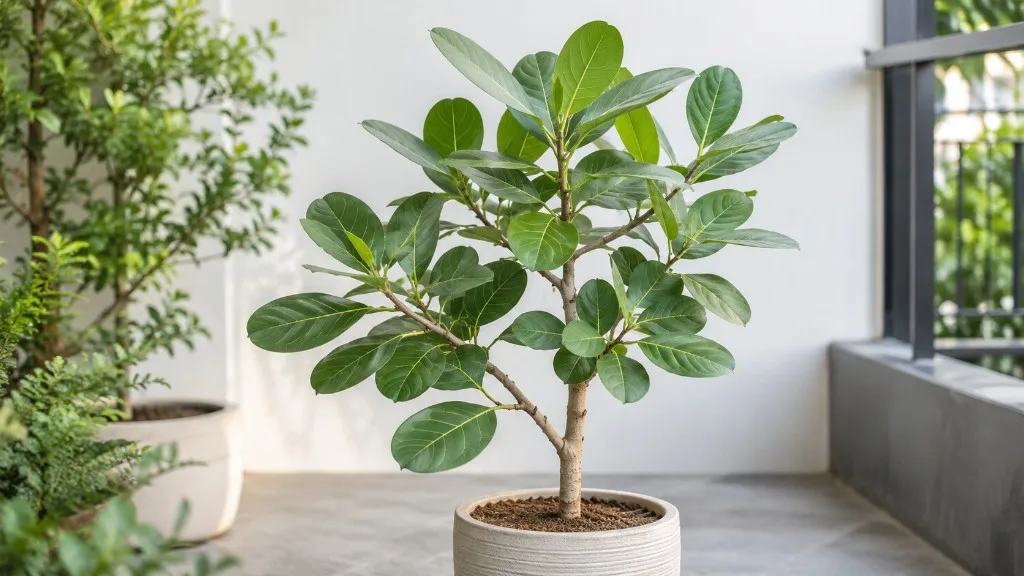
Ficus Audrey is the houseplant trade name for Ficus benghalensis, a species best known in the wild as the banyan tree - the national tree of India and one of the largest canopy-forming figs on Earth. Indoors, it becomes something quite different: a moderate-growing upright tree with gray-green, oval leaves that feel soft and fuzzy to the touch, especially on the undersides. The cultivar sold widely as ‘Audrey’ is selected for manageable indoor proportions, but the species identity matters because care follows the biology of a warm-climate fig, not a generic foliage plant.
In a typical home, Ficus Audrey reaches 6 to 10 feet (1.8 to 3 m) tall over several years, with a single light-colored trunk and a clean, architectural silhouette that reads well in bright living rooms, offices, and entryways. Growth is moderate when light and watering are aligned - faster in warm, bright summers and noticeably slower in dim or cool winters. The plant is often marketed as a fiddle leaf fig alternative, and that comparison is fair: both are large indoor ficuses with bold presence, but Audrey is widely regarded as more forgiving of moderate light, inconsistent watering, and the occasional relocation than Ficus lyrata.
If you are deciding whether Ficus Audrey overview fits your home, the honest summary is this: Ficus Audrey rewards Ficus Audrey light guide, even moisture with real dry-down between waterings, and stable placement - and it punishes chronic overwatering on Ficus Audrey, cold drafts, and repeated upheaval. It is easier than a fiddle leaf fig for most growers and harder than a pothos or ZZ plant. The payoff is a statement tree with velvety texture you will not find on many other large houseplants. One critical caveat for pet owners: Ficus Audrey is toxic to cats and dogs because of milky latex sap, which the ASPCA lists across the Ficus genus.
Botanical Background and Native Range
Ficus Audrey belongs to the family Moraceae - the fig family - which tells you several practical things before you ever pick up a watering can. Moraceae plants generally prefer warm temperatures, good drainage, and steady conditions. They produce latex sap when cut or damaged, and many species react to environmental change with temporary leaf drop while they adjust. Ficus benghalensis is native to the Indian subcontinent and surrounding regions, including India, Bangladesh, Nepal, Sri Lanka, and the Andaman Islands, according to the NC State Extension Gardener Plant Toolbox.
In its native range, the banyan is a massive strangler fig that begins life as an epiphyte and sends down aerial roots that can engulf host trees and spread into multi-trunk groves covering acres. Your potted Audrey will never behave at that scale indoors, but the same evolutionary pressures shaped its tolerances: periods of drought between monsoon rains, high ambient humidity, and intense filtered light under a forest canopy or open tropical sky. Mirror that rhythm at home - bright light, thorough watering followed by partial dry-down, and protection from cold - and the plant usually cooperates.
Commercial labels may read Ficus benghalensis ‘Audrey’, Bengal fig, Indian banyan, or simply Audrey ficus. The botanical name Ficus benghalensis is the anchor; common names vary by nursery. Do not confuse this plant with Ficus benjamina (weeping fig) or Ficus elastica (rubber plant), which share the genus and similar sap toxicity but differ in leaf shape, growth habit, and indoor behavior. When troubleshooting or comparing care guides, match the species name on your tag rather than relying on “ficus” alone.
Fuzzy Leaves and Why the Texture Matters
The first thing most people notice about Ficus Audrey is the leaf surface. Leaves are oval to elliptical, typically 3 to 6 inches (8 to 15 cm) long indoors, with a matte gray-green upper surface and lighter, velvety pubescence - fine hairs - on the undersides. Costa Farms horticulturist Justin Hancock describes Audrey as loved for “beautiful gray-green leaves that are fuzzy on the undersides,” and that texture is not cosmetic trivia. It changes how you maintain the plant.
Fuzzy leaves accumulate dust faster than glossy foliage because the surface traps particles in the fine hairs. Dust blocks light and can harbor spider mites in dry homes. Clean leaves monthly with a soft, damp microfiber cloth or a cloth lightly moistened with water and a drop of mild dish soap - then wipe with plain water. Do not use commercial leaf shine products. Leaf shine clogs the leaf surface, damages the specialized texture, and leaves a residue that interferes with normal gas exchange. Think of Audrey’s leaves as fabric, not glass: gentle wiping, no polish.
The fuzzy texture also makes sap exposure more likely during pruning or Ficus Audrey repotting guide because damaged hairs release latex alongside cut stems. Wear gloves if you have sensitive skin, and keep tools clean. Healthy Audrey leaves feel firm and slightly leathery despite the softness; floppy, dull, or heavily curled new leaves usually mean light or water is out of range, not that the fuzz itself is failing.
Best Growing Conditions for Ficus Audrey
Ficus Audrey does best when your space approximates the warm, bright, moderately humid rhythm of its native range. The four variables that decide almost every outcome are light, water, soil, and temperature. Get those aligned and feeding, repotting, and occasional pruning become routine. Get one badly wrong - especially water or cold - and the plant communicates with yellow leaves, brown edges, or a sudden shed of older foliage.
Light Requirements
Ficus Audrey needs bright, indirect light for most of the day. Justin Hancock of Costa Farms recommends placing the plant within about 3 feet of a south-, west-, or east-facing window, or an equivalent spot supplemented with grow lights. An east-facing window is often ideal: gentle direct morning sun, then bright indirect exposure the rest of the day. A few feet back from a south- or west-facing window also works when harsh afternoon sun is filtered by a sheer curtain - unfiltered midday summer sun can scorch leaves even on a plant that tolerates some direct rays.
Audrey accepts moderate indirect light better than a fiddle leaf fig, which is one reason it earns a reputation as the easier large ficus. In a north-facing room with genuinely bright ambient daylight, it may grow slowly but remain stable. In genuinely dim corners, growth stalls, internodes stretch, and the plant becomes more vulnerable to overwatering because it is not using moisture at the rate your summer schedule assumes. The diagnostic that matters is new growth: compact, firm leaves with good gray-green color mean the plant is probably happy. Long, sparse stems with small pale leaves mean it wants more light. Bleached patches, brown scorch on sun-facing leaves, or midday curling mean it wants less direct exposure or slower acclimation.
Acclimate gradually over one to two weeks when moving from a dim shop shelf to a bright window. Leaves formed in low light burn easily if you jump straight into strong afternoon sun. Rotate the pot every few weeks so growth stays even rather than leaning hard toward the glass.
If natural light is weak in winter, a full-spectrum grow light on a 10–12 hour timer, positioned 12–24 inches above the canopy, prevents the stretched, leaf-dropping look common on ficuses in northern latitudes between November and February.
Temperature and Humidity
Ficus Audrey prefers stable indoor temperatures between 65 and 80°F (18 and 27°C) during active growth. It tolerates brief excursions slightly outside that band, but sustained exposure below about 55°F (13°C) stresses the plant and can trigger leaf drop. Watch problem spots that houseplants experience even when the thermostat reads fine: directly under an AC vent, on a cold window ledge in winter, and above a hot radiator. Ficus species react to repeated hot or cold drafts faster than slow temperature drift in an otherwise stable room.
Humidity in the 50 to 80% range is the practical target. Audrey is more adaptable to average home humidity than many tropical foliage plants, but very dry winter air - below about 30% - encourages brown leaf edges and spider mites. If your home runs dry, a humidifier near the plant is the most reliable fix. Pebble trays and grouping plants raise local humidity modestly. Misting is optional and brief; it does not substitute for a humidifier and wet foliage in stagnant air can invite fungal spotting. Aim for consistent moderate humidity rather than dramatic swings.
Soil and Drainage
Use a well-draining standard potting mix amended with perlite - roughly two parts quality houseplant mix to one part perlite, adjusting toward more perlite if your home is hot and bright or if you tend to water generously. The principle matters more than a branded recipe: the mix should hold moisture in the root zone without staying waterlogged for days, and it should retain enough air space that roots can breathe. Heavy, compacted peat mixes that break down into mud are a common path to root rot on Ficus Audrey on ficuses.
Target a slightly acidic to neutral pH; hobbyists rarely need to meter pH for Audrey. The bigger practical issues are compaction, salt buildup from fertilizer and hard tap water, and pots without drainage holes. Always plant in a container with a drainage hole, and empty runoff from saucers after every watering. Decorative cachepots are fine only if you lift the nursery pot out to water and discard excess water rather than letting the roots sit in a puddle.
How to Water Ficus Audrey
The general rule for Ficus Audrey is water thoroughly when the top 2 to 3 inches (5 to 7.5 cm) of soil have dried. Hancock advises watering when the top 25 to 50 percent of the potting mix has dried to the touch - a slightly deeper threshold that suits larger pots and prevents the chronic surface-wet, center-soggy pattern that kills ficuses. Stick your finger, a wooden skewer, or a moisture probe into the mix before every drink. If the deeper soil is still damp, wait. If it is dry at depth and the pot feels noticeably lighter, water until a small amount runs from the drainage hole, then empty the saucer.
In warm, bright conditions, that often works out to roughly every 7 to 10 days in summer and every 14 to 21 days in winter for a medium indoor pot - but your calendar should be a reminder to check, not a rule to follow blindly. A tree in a bright south window in a small pot may dry faster; the same plant in a dim office in a large pot may need half the frequency. Light changes watering more reliably than the day of the week.
Ficus Audrey watering guide During Active Growth
During the warm, bright months when new leaves are expanding, Audrey uses water steadily. The goal is even moisture with real dry-down between sessions - not bone-dry for weeks, and not constantly wet. Water thoroughly so the entire root zone receives moisture, not just the surface. Tiny daily sips are one of the worst habits on ficuses because they keep the center wet while the top looks acceptable, eventually suffocating roots.
If you just bought the plant, expect a short adjustment period. Nursery ficuses often arrive in peat-heavy mix with roots accustomed to greenhouse humidity. Do not compensate for transplant shock by watering more frequently unless the pot is genuinely dry; stabilize light and placement first, then fine-tune the interval based on how fast your specific container dries.
Seasonal Adjustments
In cooler, dimmer months, growth slows and the pot dries more slowly. Stretch the interval between waterings and reduce or pause fertilizer until new growth resumes in spring. The most common winter failure mode is continuing a midsummer watering schedule in lower light, which keeps the mix waterlogged and leads to yellow lower leaves, fungus gnats, and root rot. Resume your active-season rhythm only when you see clear new tip growth and the pot is drying on a normal timeline again.
Common Watering Mistakes
The single most damaging mistake is watering on a fixed schedule without checking the pot. The second is letting the plant sit in a full saucer or cachepot, which suffocates roots within days even if the top of the mix looks fine. The third is misreading leaf drop as thirst and adding water to an already wet root ball - ficuses drop leaves from overwatering as readily as from drought.
People also confuse Audrey’s relative forgiveness with immunity. It tolerates an occasional missed check better than a fiddle leaf fig, but repeated overwatering still causes root rot. Always pair wilt or yellowing with a moisture check at depth before changing your rhythm. If stems are soft at the base and the mix smells sour, stop watering, inspect roots, trim brown mushy tissue, and repot into fresh mix rather than hoping the next drink fixes the problem.
How to Feed Ficus Audrey
Ficus Audrey is a moderate feeder during active growth, not a heavy one. A balanced water-soluble houseplant fertilizer - for example 10-10-10 or 20-20-20 - diluted to one-quarter to one-half of the label rate is sufficient for most indoor specimens. Apply to already-moist soil every four to six weeks from spring through early fall, or monthly at half strength if growth is vigorous and light is strong. If your potting mix contains a slow-release starter charge, hold off on supplemental feeding for the first month after purchase or repotting.
Hold fertilizer entirely during the cool, low-light months, after a major repot until new growth appears, and while the plant is recovering from root rot or pest damage. Overfeeding produces salt buildup and brown leaf margins that look like drought stress but persist even when watering is correct. If margins crisp despite good moisture, flush the pot with plain water at two to three times the pot volume and pause feeding for six to eight weeks.
Organic options - diluted liquid seaweed or worm-castings tea - work at low strength if you prefer, but the same rule applies: feed only when the plant is actively growing and the root zone is healthy, not as a rescue tonic for a failing specimen.
Repotting and Root Health
Repot Ficus Audrey roughly every one to two years, or whenever roots circle drainage holes, the plant dries out within a day or two of watering, or water runs straight through without soaking in. The best timing is early spring as active growth resumes, which gives the plant a full warm season to fill the new root zone. Choose a pot only one size larger than the current root ball - typically 1 to 2 inches (2.5 to 5 cm) wider. Oversized pots hold excess wet mix around roots that cannot use it, which is the most common trigger for rot after repotting.
Use fresh, well-draining mix, plant at the same depth as before, and water lightly for the first week while cut roots heal. Keep the plant in bright indirect light and avoid fertilizer until you see new tip growth. Expect some leaf drop after repotting - normal ficus behavior - but repeated shedding weeks later means moisture or light is still wrong.
Signs It Is Time to Repot
Physical signs include roots emerging from drainage holes, a top-heavy plant that wilts despite recent watering, or mix that has broken down into fine, water-retentive mud. Performance signs include stalled growth for months during warm weather despite adequate light, or chronic edge burn that persists after you have corrected watering - sometimes indicating mineral-loaded old mix rather than current care errors.
Do not repot a plant that is actively collapsing from overwatering until you have inspected roots and trimmed rot. Moving a failing root ball into fresh mix without fixing the underlying moisture problem rarely saves a ficus.
Ficus Audrey vs Fiddle Leaf Fig
Both Ficus Audrey (Ficus benghalensis) and the fiddle leaf fig (Ficus lyrata) are large indoor trees with architectural presence, and both want bright light and well-draining soil. The differences show up in forgiveness, leaf form, and stress response - which is why Audrey has become the go-to alternative for growers who love the look of a big ficus but not the drama.
Leaf shape and texture: Fiddle leaf figs carry large, glossy, violin-shaped leaves up to 12–18 inches long with a leathery shine. Audrey’s leaves are smaller, oval, matte gray-green, and fuzzy, with lighter veining and a softer visual texture. Audrey reads subtler in minimalist rooms; the fiddle reads bolder and more sculptural.
Light tolerance: Both prefer bright indirect light, but Audrey accepts moderate light and adapts to modest changes without catastrophic protest. Fiddle leaf figs punish low light with leggy growth and react sharply to relocation or light shifts, often dropping multiple leaves through an ethylene-driven abscission response within days of a move. Audrey may drop a few older leaves when conditions change but typically recovers faster once placement stabilizes.
Watering sensitivity: Fiddle leaf figs are notoriously prone to root rot when overwatered and show stress quickly from inconsistent moisture. Audrey still needs proper watering - it is not a succulent - but growers widely report more tolerance for occasional checks that miss the ideal window. Neither plant wants to sit in wet soil; Audrey just gives you slightly more room to correct before half the canopy falls.
Maintenance: Audrey’s fuzzy leaves need regular dusting without leaf shine; fiddle leaves benefit from wiping too but show dust less dramatically on glossy surfaces. Audrey’s lighter trunk and smaller canopy suit tighter rooms; mature fiddles dominate space with fewer but massive leaves.
Difficulty framing: Extension and nursery sources commonly rate Audrey as moderate difficulty and fiddle leaf fig as advanced - a gap that reflects real biology, not marketing. If you have a bright spot and steady habits, either can thrive. If you rearrange furniture often, travel frequently, or have only moderate light, Audrey is the safer bet.
Common Ficus Audrey Problems
Most Ficus Audrey problems are environmental, not mysterious diseases. The plant communicates through leaf color, drop timing, and edge condition long before the entire specimen collapses. The useful habit is to check light, moisture, and drafts in that order before reaching for pesticide or extra fertilizer.
Yellow Leaves, Brown Tips, and Pests
Yellow leaves can mean overwatering, underwatering on Ficus Audrey, low light, natural aging of older leaves, sudden relocation, nutrient issues, or pests. If yellow leaves are soft and the mix is wet, suspect overwatering and inspect roots for brown mushy tissue. If yellow leaves are crisp and the pot is light, drought stress is more likely. A single yellow lower leaf on an otherwise healthy tree is often normal senescence - remove it and watch new growth rather than overcorrecting every variable at once. Sudden mass yellowing after a move usually means adjustment stress combined with unchanged watering; stabilize placement and verify moisture before reacting.
Brown leaf tips and edges usually point to low humidity, drought stress, salt buildup from over-fertilizing, or fluoride/chlorine in tap water in dry winter homes. Flush the pot with plain water if salts are suspected, and review whether the watering rhythm matches how fast the plant actually dries in its current light. Tips that are already brown will not turn green again; judge success by undamaged new leaves after two to three weeks.
Leaf drop is the signature ficus stress response. A few older leaves after repotting or moving is common. Repeated drop weeks later means light, drafts, watering, or roots are still unstable. Do not chase leaf drop by watering more unless the pot is genuinely dry at depth - that reflex worsens rot.
Watch for spider mites in dry indoor air - fine webbing and stippled leaves are the tell, especially on fuzzy undersides. Mealybugs hide in leaf axils as white cottony clusters. Scale appears as immobile bumps along stems and the trunk. Fungus gnats indicate overly wet surface mix; let the top layer dry slightly between waterings. Catch pests early with weekly inspection. A strong shower, manual removal, and insecticidal soap applied per label directions handle most infestations if you act before the population spreads.
Sap stains on floors or furniture after pruning mean you cut without protecting surfaces - latex drips permanently on some finishes. Prune over a tarp, wipe sap immediately, and wear gloves if you are sap-sensitive.
Is Ficus Audrey Safe for Pets?
Ficus Audrey is toxic to cats and dogs, and the sap can irritate human skin. The ASPCA lists plants in the Ficus genus as toxic to pets, with irritation of the mouth and gastrointestinal tract following ingestion. The NC State Extension Gardener Plant Toolbox notes that Ficus benghalensis has low severity poison characteristics for humans and pets, with toxic principles including proteolytic enzyme and psoralen in the sap and leaves. The Pet Poison Helpline reports similar signs across Ficus species: decreased appetite, drooling, vomiting, diarrhea, and skin irritation if sap contacts fur or paws.
The mechanism is the milky latex sap present throughout the plant - in leaves, stems, and roots - which contains irritating compounds including ficin commonly cited across ficus species. Toxic does not always mean fatal in small nibbles, but cats and dogs lack reliable self-restraint around houseplants, and repeat exposure worsens irritation. Do not rely on “my pet never chews plants” as a safety plan. Place pots on sturdy stands out of jump range, use hanging placement only if the trailing form suits the species (Audrey is upright, so height matters more), or choose confirmed non-toxic alternatives if you have a determined chewer.
Wear gloves when pruning or repotting if you have latex sensitivity; contact dermatitis is documented on Ficus benghalensis sap. Wash sap off skin promptly and keep it away from eyes.
If you suspect your pet ingested any part of the plant, contact your veterinarian or the ASPCA Animal Poison Control Center at (888) 426-4435 (a consultation fee may apply). Bring a photo of the plant tag or a leaf sample to help identification. This is general information, not veterinary advice - when symptoms are severe or persistent, professional care is the right move.
For households with curious pets, Ficus Audrey belongs in the same caution category as fiddle leaf fig, rubber plant, and weeping fig: beautiful at elevation, poor choice at nose level.
Conclusion
Ficus Audrey (Ficus benghalensis) is a warm-climate banyan relative adapted to indoor life as a moderate-growing tree with velvety gray-green leaves and a cleaner silhouette than its fiddle leaf cousin. Give it bright indirect light - ideally near an east window or filtered south or west exposure - thorough watering when the top 2 to 3 inches of soil dry, well-draining mix in a pot with drainage, stable temperatures between 65 and 80°F, and humidity near 50 to 80%, and it will reward you with steady growth and far less drama than Ficus lyrata. Wipe fuzzy leaves monthly with a damp cloth, skip leaf shine, and acclimate slowly when you move it.
When something looks wrong, read the plant in context: leggy pale stems mean more light; scorched sun-facing leaves mean less direct sun or slower acclimation; yellow soft leaves on wet mix mean overwatering; crisp yellow leaves on a light pot mean drought; a few dropped older leaves after a move often means patience, not panic. Fix placement and moisture before escalating to fertilizer or pesticides. Repot on a modest schedule, feed lightly during active growth, and keep the plant away from pets that chew foliage. Do that, and Ficus Audrey earns its reputation as one of the most manageable large ficuses you can grow indoors - statement presence without the fiddle leaf fig’s reputation for retaliation.
When to use this page vs other Ficus Audrey guides
- Ficus Audrey overview - Canonical hub for this species - care topics and problems branch from here.
- Ficus Audrey problems - Symptom-first path when you already know something is wrong.
Related Ficus Audrey guides
How to care for Ficus Audrey?
How much light does Ficus Audrey need?
bright indirect light, medium indirect light
- bright indirect light, medium indirect light - bright indirect light, medium indirect light.
When should you water Ficus Audrey?
Water when top 2–3 cm of soil dries. Every 7–10 days in summer; every 14–21 days in winter.
- Check top 2 inches - Water when top 2–3 cm of soil dries.
- Drain excess water - Water when top 2–3 cm of soil dries.
What soil works best for Ficus Audrey?
Well-draining standard potting mix with perlite.
- Well-draining mix - Well-draining standard potting mix with perlite.
Grower notes for Ficus Audrey
What matters most with Ficus Audrey
Ficus Audrey often reacts to change before it reacts to bad care. Leaf drop after a move is common, but repeated drop means light, drafts, watering, or root conditions are still unstable. In practice, the care checkpoint is simple: bright indirect light, medium indirect light. Pair that with well-draining standard potting mix with perlite, and avoid changing water, pot size, and placement all at once.
Best placement in a real home
Ficus Audrey belongs where bright indirect light, medium indirect light is realistic for most of the day, not only where the pot looks good. Water when top 2–3 cm of soil dries. Every 7–10 days in summer; every 14–21 days in winter. If the pot stays wet longer than expected, move the plant into better light or reassess the mix before watering again. Humidity target: Moderate humidity (50–60%).. Temperature comfort zone: 18°C to 30°C (65–86°F).
Before you buy this plant
Choose Ficus Audrey with firm new growth, clean leaf undersides, and soil that does not smell sour or feel compacted. Be cautious if you see yellow-leaves, sticky residue, collapsed crowns, or a pot that is wet in poor light. Cosmetic old-leaf damage is less worrying than weak roots or active pests.
First month after bringing it home
Do not repot Ficus Audrey on day one unless the mix is failing or pests are obvious. Quarantine it, learn how fast the pot dries, and keep care boring while it adjusts. Watch especially for yellow-leaves, brown spots, and leaf-drop. If problems appear, correct the condition first rather than stacking fertilizer, repotting, and pruning together.
Safety note for Ficus Audrey
Ficus Audrey is not a plant to keep within reach of pets or children. Treat it as an inaccessible display plant. Use gloves if sap or plant tissue is irritating, and pick a pet-safe alternative for floor pots or low shelves.
How to tell Ficus Audrey is settling in
If you plan to multiply it later, common methods include Stem cuttings and Air layering. If brown spots shows up early, inspect light, watering, and roots before assuming the plant is permanently weak.
Is it pet safe?
Ficus Audrey is toxic to cats and dogs.
Toxic to cats and dogs; sap is a skin irritant.
Watering Ficus Audrey
Water when top 2–3 cm of soil dries. Every 7–10 days in summer; every 14–21 days in winter.
Soil & potting for Ficus Audrey
Well-draining standard potting mix with perlite.
Humidity & temperature for Ficus Audrey
Ficus Audrey prefers moderate humidity (50–60%), though normal home humidity is usually fine. Keep temperatures around 18°C to 30°C (65–86°F).
| Detail | Information |
|---|---|
| Humidity | Moderate humidity (50–60%) - normal home humidity is fine. |
| Ideal temperature | 18°C to 30°C (65–86°F) |
Fertilizer & pruning for Ficus Audrey
Use feed lightly during active growth. Use monthly during spring and summer.. for Ficus Audrey.
| Detail | Information |
|---|---|
| Fertilizer type | Feed lightly during active growth. Use monthly during spring and summer.. |
Common problems on Ficus Audrey
Yellow Leaves
MediumLikely cause: Yellow leaves typically indicate overwatering - the most common Ficus care mistake
Quick fix: Allow soil to dry more between waterings; check drainage holes are clear
Full fix guide →Leaf Drop
LowLikely cause: Ficus audrey drops leaves when stressed by being moved or cold drafts but recovers more readily than fiddle leaf fig
Quick fix: Stabilise position; avoid cold air; maintain consistent watering
Full fix guide →Brown Tips
MediumLikely cause: Common on this plant type; confirm with recent watering, light, and root checks.
Quick fix: Inspect the plant and correct the most likely care stressor before stacking treatments.
Full fix guide →Root Rot
MediumLikely cause: Common on this plant type; confirm with recent watering, light, and root checks.
Quick fix: Inspect the plant and correct the most likely care stressor before stacking treatments.
Full fix guide →Overwatering
MediumLikely cause: Common on this plant type; confirm with recent watering, light, and root checks.
Quick fix: Inspect the plant and correct the most likely care stressor before stacking treatments.
Full fix guide →Underwatering
MediumLikely cause: Common on this plant type; confirm with recent watering, light, and root checks.
Quick fix: Inspect the plant and correct the most likely care stressor before stacking treatments.
Full fix guide →Spider Mites
MediumLikely cause: Common on this plant type; confirm with recent watering, light, and root checks.
Quick fix: Inspect the plant and correct the most likely care stressor before stacking treatments.
Full fix guide →Mealybugs
MediumLikely cause: Common on this plant type; confirm with recent watering, light, and root checks.
Quick fix: Inspect the plant and correct the most likely care stressor before stacking treatments.
Full fix guide →Aphids
MediumLikely cause: Common on this plant type; confirm with recent watering, light, and root checks.
Quick fix: Inspect the plant and correct the most likely care stressor before stacking treatments.
Full fix guide →Leggy Growth
MediumLikely cause: Common on this plant type; confirm with recent watering, light, and root checks.
Quick fix: Inspect the plant and correct the most likely care stressor before stacking treatments.
Full fix guide →Slow Growth
MediumLikely cause: Common on this plant type; confirm with recent watering, light, and root checks.
Quick fix: Inspect the plant and correct the most likely care stressor before stacking treatments.
Full fix guide →Wilting
MediumLikely cause: Common on this plant type; confirm with recent watering, light, and root checks.
Quick fix: Inspect the plant and correct the most likely care stressor before stacking treatments.
Full fix guide →Drooping Leaves
MediumLikely cause: Common on this plant type; confirm with recent watering, light, and root checks.
Quick fix: Inspect the plant and correct the most likely care stressor before stacking treatments.
Full fix guide →Low Humidity
MediumLikely cause: Common on this plant type; confirm with recent watering, light, and root checks.
Quick fix: Inspect the plant and correct the most likely care stressor before stacking treatments.
Full fix guide →Not Enough Light
MediumLikely cause: Common on this plant type; confirm with recent watering, light, and root checks.
Quick fix: Inspect the plant and correct the most likely care stressor before stacking treatments.
Full fix guide →Fungus Gnats
MediumLikely cause: Common on this plant type; confirm with recent watering, light, and root checks.
Quick fix: Inspect the plant and correct the most likely care stressor before stacking treatments.
Full fix guide →Mold on Soil
MediumLikely cause: Common on this plant type; confirm with recent watering, light, and root checks.
Quick fix: Inspect the plant and correct the most likely care stressor before stacking treatments.
Full fix guide →