Brown Tips on Ficus Audrey: Causes, Checks & Fixes
Quick answer
Brown tips on Ficus Audrey usually follow dry winter air on velvety leaves, fertilizer salt necrosis, hard tap water, sun scorch on window-facing margins, or drought crisp edges-not a mystery disease. First step: check soil moisture 2 inches down and humidity near the canopy before trimming or feeding.
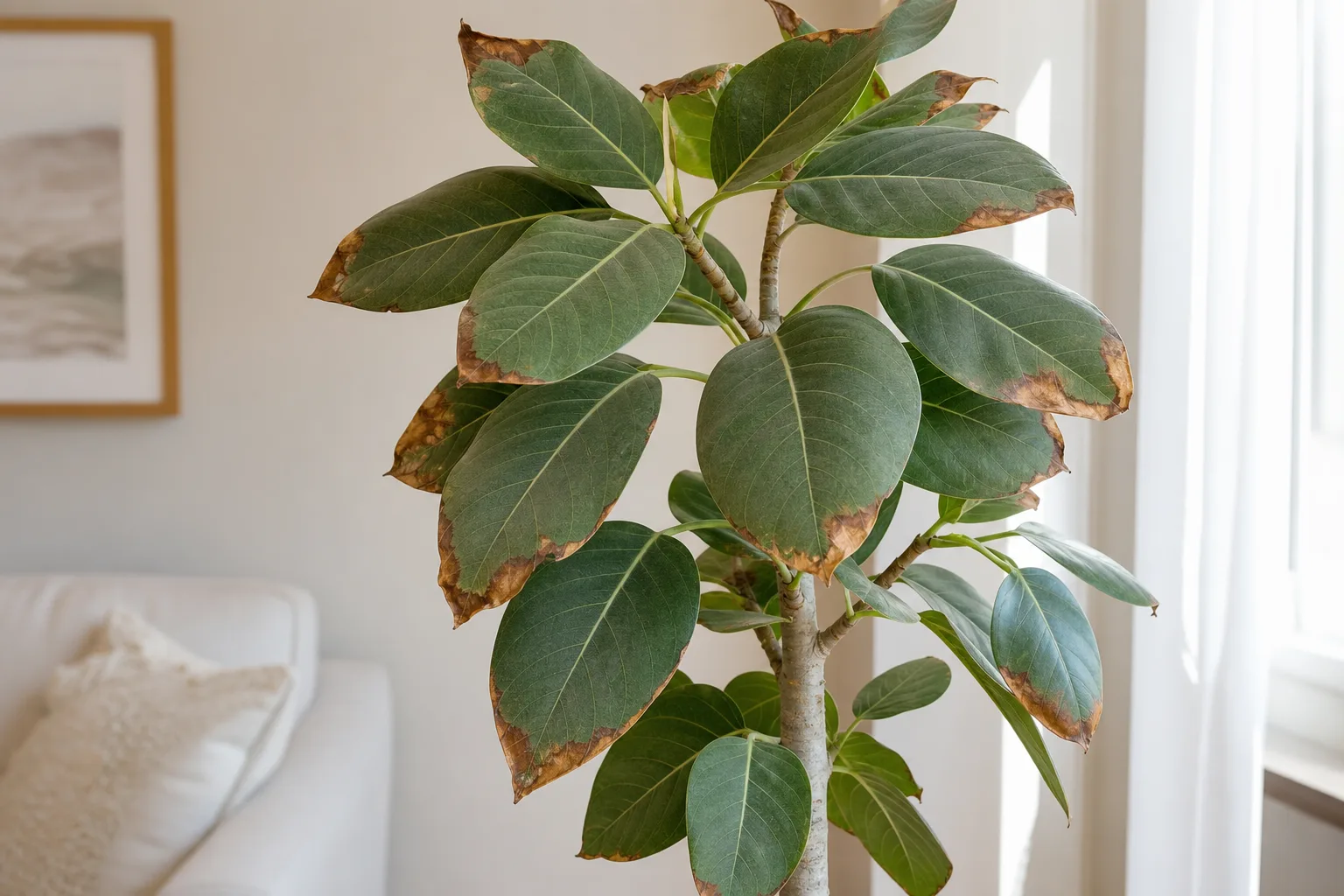
Brown Tips on Ficus Audrey: Causes, Checks & Fixes
This guide covers brown tips on Ficus Audrey. See also the general Brown Tips guide, watering, and light pages for this plant.
Brown Tips on Ficus Audrey: Causes, Checks & Fixes
Quick answer
Brown tips on Ficus Audrey (Ficus benghalensis) are almost always environmental stress on the leaf margin, not a leaf disease. The species carries oval, gray-green leaves with velvety pubescence on the undersides - margin tissue is the farthest point from the roots, so it desiccates first when humidity drops, salts accumulate, sun scorches pane-facing tissue, or drought limits water delivery.
NC State Extension recommends 50 to 80% humidity for Bengal fig houseplants and notes that cracked leaves can occur if humidity is too low, while dry, light brown spots result from underwatering. Winter heating often pushes rooms below 30% RH - well under what fuzzy tropical foliage tolerates long-term.
First step: check soil moisture 2 inches down and humidity near the canopy. Insert your finger into the mix, lift the pot to feel its weight, and note whether the browned side faces a west window or heating vent. Stabilize water and air moisture before you trim brown tissue, flush salts, or add fertilizer. Our Ficus Audrey watering guide explains the top 2–3 inch dry-down rule that pairs with humidity fixes.
What brown tips look like on Ficus Audrey
Ficus Audrey leaves are elliptical to ovate, typically 3 to 6 inches (8 to 15 cm) long indoors, with a matte gray-green upper surface and lighter, fuzzy hairs on the undersides. Tip damage usually falls into one of four patterns - each points to a different first fix.
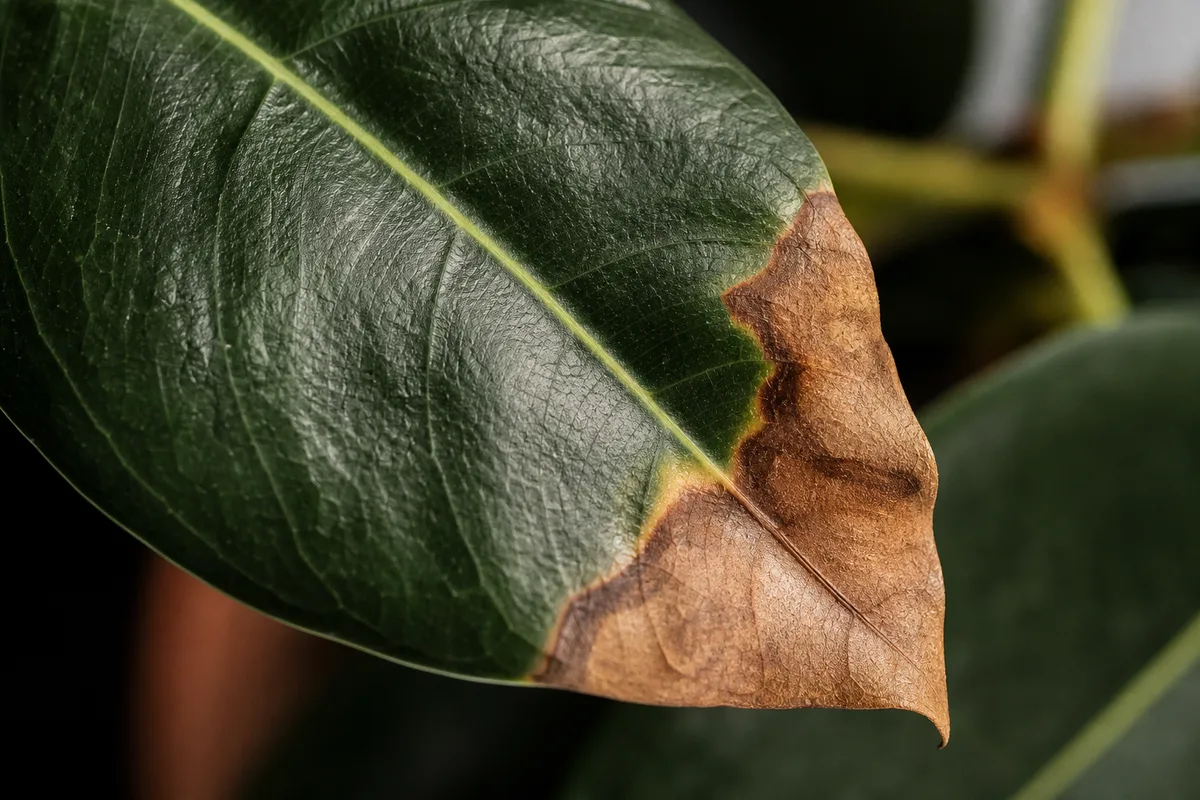
Brown Tips symptoms on Ficus Audrey - compare with healthy tissue on the same plant.
Dry crisp tips on lower mature leaves
- Narrow tan-to-brown band at the very point, sometimes creeping slightly along the margin
- Papery, dry texture; rest of the blade stays firm and gray-green
- Often worst on older leaves nearest radiators, forced-air vents, or single-pane winter glass
- Soil moisture at 2 inches is normal - pot weight feels moderate, not bone-dry
- Common when indoor RH drops during heating season while watering rhythm stayed on a summer schedule
Brown margins on newest growth (salt or fertilizer burn)
- Youngest unfurling leaves show burnt edges or marginal necrosis while older canopy leaves look fine
- White or yellowish salt crust on soil surface or inside the pot rim
- Often follows winter feeding, full-strength fertilizer, or hard tap water plus modest liquid feed
- Soil may feel moist; damage still spreads on new tissue because roots cannot absorb water effectively under high soluble salts
Sun-facing tan or brown patches (light scorch)
- Bleached, bronze, or crisp brown zones on the pane-facing side of upper leaves
- Appears within days after moving closer to unfiltered south or west glass
- May look like tip burn but damage is one-sided and tied to afternoon beam contact
- Lower shaded leaves often stay clean while window-side tissue fails
Even margin necrosis after drought or hard water
- Crispy edges on multiple leaves after the pot went very light and soil pulled from the rim
- Can follow travel neglect or a strict calendar that ignored winter slow-down
- Hard tap water minerals concentrate at margins over months, producing tip burn even when watering looks “correct”
- Virginia Cooperative Extension notes that when humidity is too low, brown tips and margins may appear on tropical plant leaves, and salt accumulation shows as crust on soil or pot rims
Unlike pest damage, clean tip necrosis has no stippling, webbing, or cottony clusters. Spider mites thrive in dry air and may follow margin burn, but the primary crispy-tip pattern is environmental.
Brown tips vs. yellow leaves vs. low humidity - when to use this page
Use this brown-tips page when damage is localized to tips and margins while the leaf center stays green and firm - especially on fuzzy oval leaves in dry winter rooms, after feeding, or on sun-facing window sides.
Use our low-humidity guide when a hygrometer reads below about 40% RH at canopy height, multiple leaves show widespread margin crisping, and soil moisture is adequate - the primary problem is air moisture, not a single dry edge.
Use our underwatering guide when the pot is very light, soil is dry 2–3 inches down (or deeper), and leaves wilt or feel limp before margins crisp - drought is driving the symptom.
Use our yellow-leaves guide when whole leaves turn soft yellow on wet soil, lower foliage fails in clusters, or stems soften - that pattern points to overwatering or root stress more than cosmetic tip burn.
Why Ficus Audrey gets brown tips
Ficus Audrey evolved in the warm, humid Indian subcontinent as a banyan fig. Indoors it becomes a moderate-growing tree with fuzzy foliage that shows margin stress before center tissue fails - the velvety texture makes desiccation visible early. Five pathways cover almost every indoor case.
Winter humidity desiccation is the most common trigger. NC State Extension lists 50 to 80% humidity as the target range; central heating often drops whole rooms into the 20–30% band. Low humidity is a common cause of brown leaf tips on houseplants. Fuzzy leaves lose moisture through wide surfaces; tips dry first while roots still deliver adequate soil water.
Fertilizer salt necrosis concentrates at leaf edges when unused nutrients accumulate - especially from winter feeding when growth slows. University of Maryland Extension links excessive fertilizer to brown leaf tips and marginal necrosis as soluble salts reduce water uptake. Ficus Audrey fed on a summer schedule through December is a classic salt-burn setup.
Hard tap water plus modest fertilizer creates a double mineral load in container mix. Each watering deposits calcium and other ions; each feed adds more salts. Margins burn even when you never overfed on purpose - see our fertilizer guide for flush timing.
Sun scorch on pane-facing margins appears when harsh afternoon rays hit leaves formed in moderate indoor light. NC State Extension recommends bright indirect sunlight indoors; unfiltered west or south glass in summer can bleach and crisp sun-facing tissue within days. Our light guide covers acclimation and sheer-curtain fixes.
Drought crisp edges follow long dry intervals. NC State Extension notes dry, light brown spots from underwatering on Bengal fig. Audrey tolerates occasional missed checks better than a fiddle leaf fig, but repeated deep drought still crisps margins on lower leaves first.
Compound stress - bright west window plus dry heating air - produces tip burn that looks like sun scorch but needs humidifier correction, not relocation alone. Dust on fuzzy undersides also blocks light and can worsen dry-margin appearance; wipe monthly with a damp cloth, never leaf shine.
How to confirm the cause
Work through these checks in order before you trim, repot, or fertilize:
- Soil moisture at 2 inches - Push your finger into the mix. Dry and dusty with a light pot confirms drought. Cool, damp, or soggy for days suggests overwatering - tip burn may be secondary to root stress.
- Pot weight - Lift the container. Light pot plus crispy tips = underwatering path. Heavy pot plus soft yellowing leaves = wet-root path, not humidity.
- Humidity and season - Note proximity to radiators, vents, and winter glass. Use a hygrometer at canopy height; readings below 40% in heating season support dry-air diagnosis when soil moisture is normal.
- Salt crust audit - White film on soil or pot rim, especially after recent feeding, points to flush-and-pause-fertilizer before more water fixes.
- Light direction - Identify which leaf side browned. One-sided bleaching on upper window-facing leaves after a move suggests scorch per our light guide.
- New growth condition - Burn on emerging leaves means the current environment is still wrong. Only older tips browned while new leaves stay clean often means past stress or normal ageing.
- Water quality history - Very hard tap water plus regular feeding raises mineral burn risk even with correct watering rhythm.
| Symptom pattern | Soil at 2 inches | Season / context | Likely cause | First fix |
|---|---|---|---|---|
| Crispy tips, firm gray-green center | Moist, moderate pot weight | Winter heating on | Low humidity | Humidifier toward 50–60% RH |
| Burnt edges on newest leaves | Moist; white crust present | After recent feed | Salt / fertilizer burn | Flush pot; pause feed 4–6 weeks |
| One-sided tan patches on upper leaves | Normal | After window move | Sun scorch | Filter afternoon sun; acclimate |
| Crispy margins, very light pot | Dry throughout | After travel / neglect | Underwatering | Thorough soak; resume 2-inch rule |
| Tips plus soft yellow lower leaves | Wet for days | Any season | Overwatering overlap | Stop watering; see yellow leaves |
First fix for Ficus Audrey
If soil is dry 2 inches down and the pot feels light, water thoroughly until a little runs from the drainage hole - then empty the saucer.
This single step addresses the most common misread: adding humidity or fertilizer to a plant that is genuinely drought-stressed, or adding water to a pot that is already wet. Water until runoff, drain completely, and do not water again until the top 2–3 inches dry - the rhythm our watering guide uses year-round.
If soil moisture is normal and tips are crispy in dry winter air, run a cool-mist humidifier near the canopy targeting roughly 50–60% RH at leaf height. That is the next most common path when the pot is not light and no salt crust is visible.
Do not trim all brown tips on day one. Do not fertilize a stressed plant. Do not repot unless roots are mushy. Confirm water and air moisture first; salt flush and light moves follow from the table above.
Step-by-step recovery by cause
After the initial watering-or-humidity check:
- Low humidity / winter dry air - Run a humidifier; group plants modestly; keep the tree off radiator ledges and hot window glass. Virginia Cooperative Extension recommends humidifiers or gravel trays to raise relative humidity near containers - with the pot base above standing water.
- Salt or fertilizer burn - Flush the pot with plain room-temperature water two to three times at full drainage between passes. Pause all fertilizer for four to six weeks. Resume at half strength only when spring growth returns - details in our fertilizer guide.
- Sun scorch - Pull back from hot glass or add a sheer curtain on south/west windows. Acclimate over 10–14 days when increasing light. Rotate weekly for even growth.
- Drought - One thorough watering, then resume the top 2–3 inch dry-down check - not a fixed calendar. Do not compensate with daily sips.
- Hard water sensitivity - If margins persist after humidity and watering stabilize, try filtered or rested tap water for four to six weeks and compare new growth.
- Trim cosmetic damage last - Once new leaves emerge clean, snip dead tip tissue with clean scissors, following the leaf curve. Leave a thin brown edge. Wear gloves; Ficus species produce irritating latex sap when cut.
If soil stayed wet, stems softened, or roots smell sour, treat as overwatering first - not a humidity or salt fix.
Recovery timeline
Drought-related crisp tips often stop spreading within days of one thorough, well-drained watering. Humidity improvements show on new fuzzy leaves over one to three weeks - existing brown tissue will not re-green. Salt-flush benefits appear on the next flush of spring growth. Sun scorch stops once exposure is corrected, but scorched patches remain until you trim or the leaf is replaced.
Judge success by undamaged new leaves after two to four weeks, not by old blades returning to perfect form.
Lookalike symptoms to rule out
Whole-leaf yellowing with wet soil is overwatering or root rot - see yellow leaves and overwatering, not this tip-only page.
Widespread margin crisping with RH below 40% overlaps heavily with low humidity - use that guide when the primary fix is a humidifier, not a watering change.
Spider mite stippling shows pale dots and fine webbing on fuzzy undersides - environmental tip burn lacks that pattern unless mites follow dry air stress.
Normal lower-leaf ageing - a single older leaf with a dry tip while new growth stays firm may need stable care only, not aggressive treatment.
Leaf drop after a move reflects ficus adjustment stress; stabilize placement and moisture before assuming tip burn needs fertilizer.
Mistakes to avoid
Do not increase fertilizer to “green up” browned tips - salt burn makes margins worse. Do not mist heavily as your only humidity strategy; brief misting does not substitute for a humidifier in heated winter rooms. Do not cut deep into healthy green tissue when trimming; you wound live cells and expose latex sap. Do not place the plant in unfiltered afternoon sun hoping brighter light fixes tips. Do not water on a calendar if the pot is still heavy from the last drink. Do not flush and feed in the same week - pick one correction and read the response.
Ficus Audrey care cross-check
Stable Audrey combines bright indirect light, even moisture with real dry-down, and moderate humidity. Cross-link your routine:
| Factor | Tip-burn risk when wrong |
|---|---|
| Humidity | Winter heat below 40% RH at canopy |
| Water | Calendar watering ignoring 2-inch dry rule |
| Light | Hot afternoon sun on pane-facing fuzzy leaves |
| Feed | Winter fertilizer on slow-growing roots |
| Water quality | Hard tap plus regular feed without flushing |
See overview for species biology and 50–80% humidity targets; watering for seasonal rhythm; light for window placement; fertilizer for salt management.
How to prevent brown tips next time
Water when the top 2–3 inches of soil dry, not on a fixed weekday. Empty saucers after every watering. Keep the tree in bright filtered light - east window or filtered south/west - without hot afternoon beams on the canopy. Run a humidifier in dry heating months targeting 50–60% at leaf height. Feed at half strength during active growth only; pause in winter. Flush salts once or twice a year in spring. Wipe fuzzy leaves monthly to clear dust. Avoid relocating the pot and changing watering volume in the same week.
When to worry
Treat as urgent when brown tips are soft and spreading with yellow leaves, several leaves fail within days, soil smells sour, or stems soften at the base - those signs suggest root failure, not cosmetic dryness.
Lower urgency applies when a few older fuzzy leaves show crispy points in dry winter air while new growth stays firm and gray-green. Monitor two weeks after correcting water and humidity; if new tips stay clean, the plant is recovering.
Wear gloves when trimming damaged leaves if pets or children are nearby - Ficus species are toxic to cats and dogs when ingested.
Conclusion
Brown tips on Ficus Audrey look alarming on velvety gray-green leaves, but the diagnostic path is straightforward. Read soil moisture and pot weight first, then match the fix to humidity, salts, sun, drought, or hard water. Trim old damage only after new leaves prove conditions are stable. That sequence stops most fuzzy-leaf margin burn without the repotting, feeding, and pruning pile-ups that stressed Ficus benghalensis tolerate poorly.
Related Ficus Audrey problems
- Low humidity - widespread margin crisping when RH is below 40% with moist soil
- Underwatering - light pot and dry mix with limp or crisp foliage
- Yellow leaves - soft yellowing on wet soil, not tip-only necrosis
- Not enough light - leggy growth that slows recovery after tip-burn fixes
- Ficus Audrey overview - fuzzy-leaf biology, humidity targets, and baseline care