Ficus Audrey Soil: Peat-Perlite Mix and Drainage
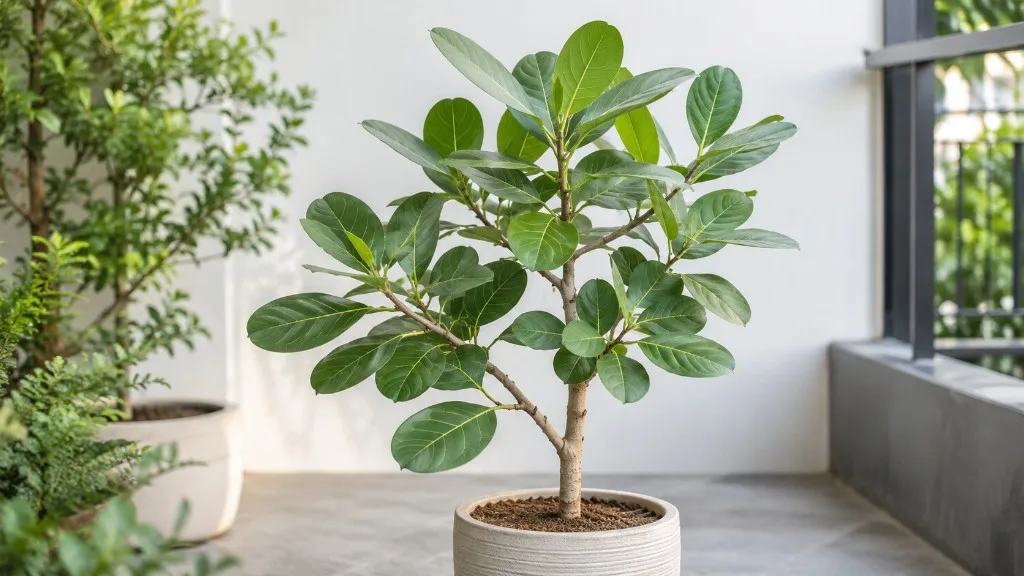
Ficus Audrey Soil: Peat-Perlite Mix and Drainage
Ficus Audrey Soil: Peat-Perlite Mix and Drainage
Ficus Audrey soil is the part of care most people underestimate until leaves start dropping. Ficus benghalensis - the banyan fig sold as Ficus Audrey - wants something that sounds contradictory at first: steady moisture in the root zone and fast drainage through the pot. The roots should never sit in stagnant water, but they also should not dry out hard between every watering the way a succulent or rubber plant might tolerate. Get that balance wrong and you get yellow leaves, brown spots, and the sudden leaf drop Ficus species are famous for, often long before you realize the mix - not your watering calendar - is the real problem.
The practical answer for most indoor growers is a well-draining peat-perlite mix: a base of quality potting soil or peat moss (or coco coir) blended with 25–30% perlite by volume, optionally lightened further with coarse bark or sand and enriched with a small amount of worm castings. Pair that mix with a container that has drainage holes, sized only 1–2 inches wider than the root ball, and empty the saucer after every thorough watering. That combination gives Ficus Audrey the open, oxygenated root zone it needs while holding enough moisture to bridge a normal watering interval in a bright room.
This guide covers why soil structure matters for this tree, the exact mix recipe, how to set up container drainage correctly, when to repot, and the soil mistakes that cause more damage than a missed watering ever would.
Why Soil Matters for Ficus Audrey
Ficus Audrey is not a generic “water when dry” houseplant. NC State Extension notes that Ficus benghalensis is a large tropical tree in its native range across India and Pakistan, adapted to warm climates with seasonal rainfall and soils with good drainage. Indoors, you are asking a tree with substantial root mass to live in a fraction of the soil volume it would occupy outdoors. Every watering decision passes through that small pot. The mix determines how long water stays available, how much air reaches the roots, and how quickly excess water exits the container.
Soil is also the buffer between your watering habits and the plant’s tolerance. A heavy, compacted peat mix in a deep decorative pot can stay saturated at the bottom even when the top inch feels dry - a classic setup for root rot on Ficus Audrey on a plant that already dislikes wet feet. A mix that drains too freely in a small pot under strong grow lights may dry out faster than you expect, triggering leaf drop from drought stress. Ficus Audrey reacts to change before it reacts to slow decline, so unstable moisture in the root zone shows up as dropped leaves within days, not weeks.
Think of soil as the operating system for roots: it sets the rules for oxygen, moisture, and recovery time after each watering. Light and temperature matter, but if the mix compacts, smells sour, or holds water like a sponge with no exit path, no amount of “perfect” watering on a schedule will save the plant.
What Ficus Audrey Needs From Its Root Zone
The root zone for Ficus Audrey needs three things working together: available moisture, continuous aeration, and stable structure that does not collapse after six months of watering. Unlike desert-adapted Ficus such as the rubber plant, Audrey leans toward consistent moisture - but “consistent moisture” does not mean “wet.” It means the mix holds water in the pore spaces roots can reach while still allowing oxygen to diffuse through the medium between waterings.
Moisture Retention Without Waterlogging
Ficus Audrey uses more water than many other Ficus houseplants. Growers often describe it as preferring soil that stays evenly moist rather than cycling between bone-dry and flooded. That preference comes from its native habitat: tropical trees with access to deep soil moisture and regular rain, not from a desire to sit in standing water at the bottom of a pot.
The goal is a mix that releases excess water within minutes of a thorough watering while retaining enough moisture that the top 2–3 cm dries on a normal indoor rhythm - roughly every 7–10 days in active growth for a moderate-sized pot in Ficus Audrey light guide, longer in winter. Peat moss or coco coir provides that retention. Perlite, pumice, or coarse bark provides the escape routes. Without both halves, you get either a desert (too much perlite, too little organic matter) or a swamp (too much peat, too little aeration).
Aeration and Oxygen Around Roots
Roots breathe. When soil compacts - especially peat-heavy indoor mixes that break down over 12–18 months - oxygen diffusion slows and anaerobic conditions develop. Ficus roots in low-oxygen soil become vulnerable to root rot pathogens even if you water “correctly” by the calendar. Perlite creates stable air pockets that do not collapse when the mix gets wet. Coarse orchid bark or pumice adds larger voids that improve drainage in deeper pots where the bottom third can otherwise stay saturated.
A simple test after mixing: grab a handful of your blend, squeeze it, and release. It should hold together briefly, then crumble apart. If it forms a tight ball that stays solid, add more perlite or bark before potting.
Best Soil Mix for Ficus Audrey
The best soil for Ficus Audrey is a well-draining peat-perlite blend with enough organic matter to hold moisture for several days and enough mineral amendment to keep the structure open after repeated watering. Pre-made “houseplant” or “indoor tropical” mixes can work as a starting base, but many retail blends skew too dense for Ficus Audrey unless you amend them.
The Core Peat-Perlite Formula
A reliable starting recipe by volume:
- 40–50% quality potting soil or peat moss (or fine coco coir as a peat substitute)
- 25–30% perlite
- 10–15% coarse sand, pumice, or orchid bark for extra drainage in deep pots
- 5–10% worm castings or screened compost for slow nutrients and microbial activity
That works out to roughly 2 parts base + 1 part perlite + optional light amendments - easy to scale for any repot batch. If you are starting from a bag of standard houseplant mix, the fastest upgrade is adding one part perlite for every three parts mix, then testing drainage before committing the whole plant.
Peat moss and coco coir both work. Peat is slightly more acidic and holds moisture well; coco coir is more sustainable for some growers and rewets more easily if the mix has dried out completely. Either pairs well with perlite. Avoid vermiculite as the primary aeration amendment here - it holds more water than perlite and can push a Ficus mix toward the soggy end unless you are deliberately compensating for a very dry environment.
| Component | Role | Typical proportion |
|---|---|---|
| Peat moss or coco coir | Moisture retention, organic structure | 40–50% |
| Perlite | Aeration, drainage, prevents compaction | 25–30% |
| Coarse sand, pumice, or bark | Extra drainage in deep containers | 10–15% |
| Worm castings or compost | Nutrients, biology | 5–10% |
Optional Amendments That Improve Structure
Orchid bark (medium grade) is worth adding if your Ficus Audrey lives in a pot deeper than 25 cm. Bark creates large pores that resist compaction and mimic the chunky organic matter tree roots encounter in nature. Pumice performs a similar role with more weight, which helps top-heavy plants stay stable. Charcoal in small amounts (5% or less) is optional; some growers add it for odor control in closed rooms, though evidence for root-health benefits in container mixes is limited.
Worm castings at 5–10% provide gentle nutrition without the salt spike of synthetic fertilizer mixed into fresh soil. Do not exceed 10% - too much compost or castings in a container mix can hold excess moisture and attract fungus gnats if the surface stays damp.
Skip garden soil, topsoil, and “moisture control” mixes with water-absorbing gel crystals unless you understand how those gels behave in your specific pot size. Garden soil compacts in containers and introduces pests and pathogens. Gel crystals can hold water unpredictably and make it harder to judge when the root zone is actually dry.
How to Mix Ficus Audrey Soil Step by Step
Mixing your own Ficus Audrey potting mix takes ten minutes and saves you from guessing whether a store blend is too heavy.
Start with a clean bucket or tarp. Measure by volume using the same scoop for each ingredient - a yogurt container or nursery pot works fine. Pour the peat or potting base, then the perlite, then sand or bark if using, then worm castings. Mix dry first until the perlite is evenly distributed; white specks should appear throughout, not clustered at the bottom. Add water sparingly only if dust is a problem - the mix should be slightly damp, not wet, when you fill the pot.
Before Ficus Audrey repotting guide, run a drainage test: fill a small nursery pot with your mix, water until runoff flows from the bottom, and time how long water sits on the surface. On a well-blended Ficus Audrey mix, surface pooling should clear within 30–60 seconds and the pot should feel noticeably lighter within a day or two in normal room conditions. If water sits on top for several minutes, add more perlite and remix.
When repotting, place a single layer of mesh or a coffee filter over the drainage hole if your mix is fine-textured and escapes through large holes - not a layer of gravel. Penn State Extension confirms that gravel at the bottom does not improve drainage; it reduces the volume of functional soil and can raise the perched water table closer to the roots. A mesh patch keeps mix in while letting water out.
Tease apart circling roots gently, remove only clearly dead or mushy tissue, and set the plant so the root crown sits at the same depth it was before. Backfill with fresh mix, firm lightly to eliminate large air gaps, water thoroughly once, and discard saucer runoff. Do not feed for four to six weeks after repotting unless the plant was already on a regular fertilizer schedule and looks actively growing - fresh worm castings and new roots need time to settle.
Container Drainage: Pots, Holes, and Saucers
Even perfect Ficus Audrey soil fails in a container that traps water. Container drainage is not a detail - it is half the system.
Choosing the Right Pot Size and Material
Repot Ficus Audrey into a container only 2.5–5 cm (1–2 inches) wider than the current root ball unless the plant is a vigorous young specimen outgrowing a starter pot quickly. Oversized pots hold excess mix that stays wet around roots that are not yet using it. That unused wet zone is where root rot starts on Ficus, which drop leaves aggressively when roots fail.
Terra cotta breathes through the walls and dries the mix slightly faster - useful in dim rooms or if you tend to overwater. Glazed ceramic and plastic retain moisture longer, which suits Audrey in bright, warm rooms where the pot dries on a normal rhythm. Deep pots suit the tree-like habit but increase the risk of bottom saturation; compensate with extra perlite or bark in the lower third of the mix, not with stones at the bottom.
Match pot depth to root mass, not leaf spread. A tall Ficus Audrey in a wide shallow bowl looks dramatic but the root zone may not reach the edges, leaving wet mix unused and stagnant.
Drainage Holes and Cachepot Pitfalls
Yes - Ficus Audrey needs a drainage hole. Every thorough watering should allow excess water to exit the pot. Without a hole, salts accumulate, oxygen drops, and you cannot flush the mix when fertilizer buildup or hard water deposits appear. Decorative cachepots are fine only if the nursery pot inside has holes and you remove it to water, or you water in the sink and return the plant only after runoff stops.
Watch for these drainage failures:
- Sealed decorative pots with no hole and no inner nursery pot
- Clogged holes blocked by roots, compacted mix, or mineral crust - clear them at repotting
- Saucers left full after watering, which wicks water back into the root zone
- Pebbles in the saucer that keep the pot base submerged
- Tight-fitting cachepots with no air gap at the bottom
After watering, wait 15–30 minutes, then empty the saucer completely. If you use a cachepot, lift the inner pot and check that no water pooled at the bottom. A Ficus sitting in 2 cm of stale runoff for days is effectively in a waterlogged pot regardless of mix quality.
pH, Minerals, and Salt Buildup in the Mix
Ficus Audrey prefers a slightly acidic to neutral pH between 6.0 and 8.0. Standard peat-perlite houseplant mixes usually fall in that range without adjustment. Coco coir tends toward neutral; a peat-heavy blend may sit closer to 5.5–6.5, which Ficus tolerate well. Hobbyists rarely need to test pH unless leaves show persistent interveinal yellowing despite correct watering and light - and even then, pH is usually lower on the diagnostic list than overwatering on Ficus Audrey or low light.
Salt buildup is the more common mineral problem indoors. Tap water, fertilizer, and slow decomposition of organic matter leave soluble salts in the mix. Signs include white crust on the pot rim or soil surface, brown leaf tips despite adequate moisture, and stunted new growth. Flush the mix every few months by watering slowly with plain water until roughly twice the pot volume runs from the drainage holes, letting it drain fully afterward. If crust returns quickly or the mix is more than two years old, repot into fresh blend rather than chasing the problem with more fertilizer.
Hard water areas may need filtered or distilled water for occasional flushing if leaf tip burn persists. That is a water-quality issue as much as a soil issue, but the salts accumulate in the mix itself.
Pet note: The ASPCA lists Ficus species as toxic to cats and dogs, with ingestion causing oral irritation, vomiting, and diarrhea. NC State Extension notes that Bengal fig sap can irritate skin and recommends protective gloves when handling the plant. Keep repotting mess and discarded soil away from pets.
When to Repot and Refresh Ficus Audrey Soil
Repot Ficus Audrey every two to three years in typical indoor conditions, or sooner when roots circle heavily inside the pot, growth slows despite good light, or water runs straight down the sides without wetting the root ball (a sign of compacted, shrunken peat). Spring and early summer - when the plant is entering active growth - is the safest window. Avoid repotting during a leaf-drop episode caused by a recent move unless the roots are clearly rotting and the mix smells sour.
Signs the Mix Is Breaking Down
Peat-based mixes decompose. When they do, particles collapse, pore space shrinks, and drainage slows even if you have not changed your watering. Refresh the mix when you notice:
- Water sits on the surface longer than it used to
- The pot feels unusually heavy days after watering
- A sour or swampy smell from the drainage hole
- Roots visible on the surface or escaping through holes
- White fungal growth on the soil surface in consistently damp conditions
- The plant dries out unevenly - wet at the bottom, dry at the top in a deep pot
Repotting should solve a root-zone problem - compaction, exhaustion, crowding - not every yellow leaf. Ficus Audrey drops older leaves normally and drops many leaves after environmental change. If the mix drains well, the pot is appropriately sized, and roots are white and firm, look to light stability and Ficus Audrey watering guide before tearing the plant out of its pot.
Diagnosing Soil Problems Before Leaves Show Damage
Leaves lie. Roots tell the truth first. Learn to read the mix before foliage symptoms become severe.
Surface crust and algae usually mean the top of the mix stays wet too long - often from low light, overwatering, or a mix with too little perlite. Scrape the crust, adjust watering, and add perlite at the next repot.
Mushy stems at the soil line indicate advanced root or crown rot from chronic overwatering or poor drainage. Remove the plant from the pot, trim black mushy roots with clean shears, repot into fresh dry mix in a smaller pot if needed, and withhold water until the plant stabilizes - only then resume cautious watering.
Fungus gnats hover when the surface stays damp for days. They rarely kill a healthy Ficus alone, but they signal excess moisture. Let the top 3–4 cm dry between waterings, reduce organic matter if castings exceed 10%, and consider a top layer of coarse sand temporarily while you adjust habits.
Rapid leaf drop after repotting often means root damage, wrong pot size, or repotting during stress - not necessarily wrong ingredients. Keep the plant in stable bright indirect light, avoid fertilizing, and let it recover before changing anything else.
| Symptom | Likely soil cause | First action |
|---|---|---|
| Yellow leaves, wet mix | Overwatering + poor drainage | Check holes, empty saucer, add perlite at repot |
| Crispy edges, light pot | Mix too fast-draining or pot too small | Increase organic base slightly, repot up one size |
| Leaf drop, sour smell | Root rot from stagnant mix | Inspect roots, trim rot, fresh mix, smaller pot if needed |
| White crust on soil | Salt buildup | Flush with plain water; repot if severe |
| Water runs down sides | Compact, shrunken peat | Break up or repot with fresh peat-perlite blend |
Adjusting the Mix for Your Home Environment
The core peat-perlite recipe is a starting point, not a law. Adjust based on how your room behaves.
Bright, warm, dry rooms with strong indirect light or supplemental grow lights dry pots faster. You can use slightly more peat or coco coir (toward 50% base) and slightly less perlite (toward 25%) so the plant is not dry by day three. Still keep perlite above 20% - Ficus Audrey is not a cactus.
Cool, dim winter conditions slow evaporation. Reduce watering interval before changing the mix, but if the pot stays wet for ten days or more, increase perlite toward 30–35% at the next repot and confirm the saucer is emptied after every water.
Large floor specimens in deep containers benefit from an extra 10% bark or pumice through the full depth of the mix, not just at the bottom. Some growers lightly water less volume more often on deep pots rather than flooding once - the goal is even moisture without a saturated basement layer.
Humid bathrooms or kitchens slow drying slightly; the mix formula matters less than avoiding oversized pots and checking moisture with a finger or chopstick before watering.
Document one repot cycle: note how many days until the top 2–3 cm dries in your home. That interval tells you whether your blend is too heavy or too light faster than any online recipe can.
Common Ficus Audrey Soil Mistakes
Using straight cactus or succulent mix is the most common recipe error in the other direction. Cactus mix drains extremely fast and often lacks the organic matter Ficus Audrey needs to stay evenly moist. The plant may survive but will drop leaves from drought stress or demand watering so frequently that salts build up from constant small feeds. Amend cactus mix with peat or potting soil until you reach the 2:1 base-to-perlite ratio, or start from a tropical houseplant base instead.
Adding rocks or gravel at the bottom of the pot does not create a “drainage layer.” Penn State Extension notes that coarse material at the container bottom hinders rather than helps water movement. Use mesh over the hole if needed; use perlite in the mix for drainage.
Repotting into a huge decorative pot “so it can grow” floods unused soil with every watering. Size up one step at a time.
Reusing old compacted mix because it “still looks fine” on top while the bottom has turned to mud is a slow root rot setup. Replace decomposed peat at repotting.
Changing soil, pot, location, and watering all at once after purchase triggers Ficus Audrey’s famous leaf drop. Quarantine new plants in their nursery mix for a few weeks, learn the drying rhythm, then repot into your peat-perlite blend during active growth if needed - one change at a time.
Relying on moisture meters without calibration can misread chunky bark mixes. A finger or dry chopstick to the second knuckle remains more reliable for Ficus Audrey overview.
How Soil Connects to Watering and Light
Soil does not exist in isolation. The same peat-perlite mix dries in three days under a south-facing sheer curtain and in ten days in a north bedroom. Light drives water use. Brighter conditions pull moisture through leaves faster; roots pull more water from the mix. Before blaming the recipe, confirm Ficus Audrey sits in bright indirect light for most of the day - not direct hot sun, not a dim corner.
Water when the top 2–3 cm of mix is dry and the pot feels moderately lighter. Water thoroughly until runoff exits the drainage holes, then discard the saucer water. In winter, stretch the interval; the mix should not stay wet for two weeks straight unless the pot is very large and the plant is dormant in cool conditions.
If you fix the mix and drainage but the plant still yellows with wet soil, check whether cold drafts or AC blasts hit the pot - cool roots absorb water more slowly. If the mix dries in two days and leaves crisp, the plant may want more base material or a slightly larger pot, not more water on a timer.
Soil, light, and watering form a triangle. Change one leg without the others and Ficus Audrey responds with dropped leaves. Stabilize all three before fertilizing or pruning heavily.
Conclusion
Ficus Audrey soil succeeds when a well-draining peat-perlite mix meets a properly drained container sized to the root ball. Aim for roughly 40–50% peat or quality potting base, 25–30% perlite, and optional bark, sand, or worm castings for structure and gentle nutrition. Pair that with drainage holes, saucers emptied after watering, and repotting every two to three years before the peat collapses.
The plant wants steady moisture, not wet feet - an open mix makes that possible indoors. Adjust perlite up or down based on how fast your pot dries in your light, run a drainage test before repotting, and treat sour smells or persistent sogginess as root emergencies, not leaf problems to ignore. Get the soil system right and Ficus Audrey becomes far less mysterious: fewer surprise leaf drops, healthier white roots, and a tree that can focus on new growth instead of recovering from a waterlogged root zone.
When to use this page vs other Ficus Audrey guides
- Ficus Audrey overview - Start here for whole-plant context before deep-diving this topic.
- Ficus Audrey problems hub - Jump to symptom-specific fix guides when this care topic does not resolve the issue.
- Root Rot on Ficus Audrey - Escalate here when soil adjustments are not enough.
- Mold on Soil on Ficus Audrey - Escalate here when soil adjustments are not enough.
Related Ficus Audrey guides
- Ficus Audrey overview
- Ficus Audrey watering
- Ficus Audrey light
- Ficus Audrey propagation
- Ficus Audrey fertilizer
- Ficus Audrey repotting
- Root Rot on Ficus Audrey
- Mold on Soil on Ficus Audrey
- Ficus Audrey problems
Related tool
Try the Soil Mix Calculator with ficus-audrey pre-selected to estimate needs for your setup.