Ficus Audrey Light Needs: Bright Indirect and Sun Protection
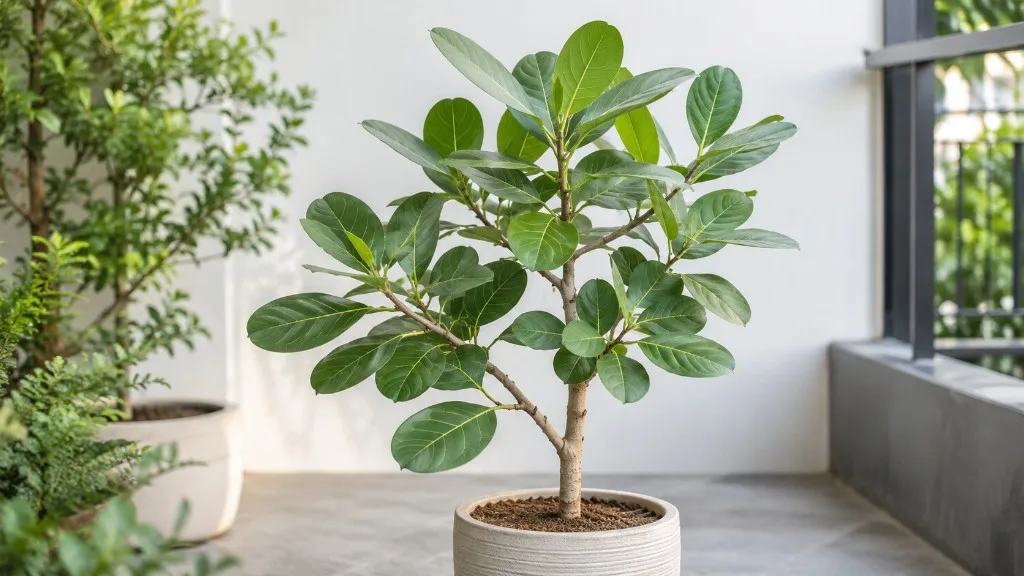
Ficus Audrey Light Needs: Bright Indirect and Sun Protection
Ficus Audrey Light Needs: Bright Indirect and Sun Protection
Ficus Audrey has become the statement-tree choice for growers who want fiddle-leaf drama without fiddle-leaf fragility - but light is still the variable that decides whether your Ficus benghalensis looks architectural or exhausted. Audrey is not a low-light plant, and it is not a full-sun patio tree indoors. It wants bright indirect light as the default, will tolerate moderate indirect light for a while without immediate collapse, and will punish harsh direct sun on its leaves with bleach, scorch, and the sudden leaf drop that makes every Ficus owner panic.
The practical goal is not finding a spot that looks bright to your eyes. It is placing the plant where new growth stays compact, deep green, and firm - and where you can change exposure gradually enough that the tree does not interpret a window shuffle as an emergency. Light also sets the pace for everything else: a brighter Audrey drinks faster, branches more willingly after pruning, and recovers from stress quicker. A dimmer one stretches, sheds lower leaves, and sits in wet soil long enough to invite root trouble even when your watering calendar has not changed.
This guide covers how much light Ficus Audrey actually needs, what bright indirect and moderate light mean in real rooms, where to place the pot by window direction, how much direct sun is safe, when grow lights are worth the investment, and how to read warning signs before scorch or legginess becomes the plant’s new normal.
How Much Light Ficus Audrey Actually Needs
Ficus Audrey is a tropical fig native to the Indian subcontinent, where wild Ficus benghalensis grows into the famous banyan form with aerial roots and vast canopies. Indoors, you are growing a young tree in a pot, but the light logic still comes from a plant that evolved under bright, filtered canopy edges - strong ambient brightness with direct rays broken by taller trees, not all-day desert sun and not deep forest floor shade.
For home cultivation, the target is bright, indirect light for most of the day. NC State Extension recommends bright indirect sunlight for Bengal fig houseplants, with tolerance for partial shade - direct sun only part of the day outdoors. That phrasing matters: Audrey is not a shade houseplant, and it is not a succulent. It needs real photon flux on the leaf surface without the leaf-temperature spike of unfiltered midday rays.
Outdoors, NC State lists Ficus benghalensis cultural light as full sun to partial shade - six or more hours of direct sun, or two to six hours of direct sun part of the day. Indoors, translate that as strong ambient brightness with filtered or morning direct rays, not all-day hot glass. If you do not own a light meter, judge placement by new growth: firm, correctly sized leaves mean the spot is working; stretching or bleaching mean adjust.
Audrey also tolerates moderate indirect light - the dimmer side of “bright room” placement, often two to four feet back from a south window or on an unobstructed east window in a deep room. In moderate light, the plant usually survives rather than thrives: internodes lengthen slightly, new leaves may be smaller, and growth slows enough that watering mistakes become more dangerous. Moderate light is a temporary compromise, not the long-term design target, unless you supplement with a grow light.
The Short Answer for Busy Growers
If you only remember four rules, use these. Default placement: within one to three feet (30 to 90 cm) of an east window, or a south/west window softened by a sheer curtain - bright indirect, not hot direct rays on the canopy for hours. Direct sun rule: gentle morning sun is often fine when acclimated; avoid harsh afternoon direct sun on leaves, especially through hot summer glass. Moderate light is the floor, not the goal: Audrey may hold on in moderate indirect light, but legginess, leaf drop, and overwatering on Ficus Audrey risk rise quickly. Judge by new growth: firm, correctly sized, deep green new leaves mean the current light works; stretching, pale small leaves, or bleached patches mean adjust before changing water or fertilizer.
Give any placement change 10 to 14 days before deciding it failed. Ficus species react to instability before they react to mediocre care, and old damaged leaves will not tell you whether the new spot is working - only the newest foliage will.
Bright Indirect vs Moderate Light - What Ficus Audrey Tolerates
“Bright indirect” and “moderate light” are not marketing labels. They describe how much usable light reaches the leaf surface across the day, and Ficus Audrey responds differently to each band even though both might look like a “well-lit living room” to human eyes adapted to indoor dimness.
Bright indirect light means the plant receives strong ambient illumination close to a bright window without sustained direct beams heating the leaves for hours. In this band, Audrey produces the upright foliage that justifies the floor space: moderate internode length, healthy lamina size, and steady seasonal growth without constant emergency leaf drop.
Moderate indirect light is the next step back: still visibly daytime-bright to you, but farther from the glass. Audrey can tolerate moderate light for stretches - especially if it was grown there from youth - but you should expect slower growth, thinner new leaves, and a higher chance of lower-leaf yellowing as the tree reallocates resources.
The critical mistake is assuming tolerance equals preference. A plant that tolerates moderate light is still light-starved relative to its potential, the same way a person can tolerate a poor night’s sleep but will not perform at their best indefinitely.
Reading the Difference Between Thriving and Surviving
You do not need instruments to separate bright indirect success from moderate-light compromise if you read new growth consistently. A thriving Audrey in bright indirect light pushes firm, waxy leaves on short to moderate internodes, holds lower foliage longer, and recovers from minor stress without shedding half the canopy. A surviving Audrey in moderate light often shows visible lean toward the glass, smaller new leaves that look slightly pale or thin, and bare lower stems as the tree abandons leaves it cannot afford to maintain.
Watering behavior reinforces the diagnosis. In bright indirect light, the pot dries on a predictable rhythm and the plant uses water actively. In moderate light, the same Ficus Audrey watering guide leaves soil wet longer, roots breathe less, and yellow leaves get blamed on “overwatering” when the underlying issue is insufficient light slowing metabolism. If you must keep Audrey in moderate light for room-design reasons, reduce water frequency to match actual dry-down - but recognize you are managing a compromise, not optimizing health.
When moderate light is your only option without a lamp, choose the brightest available microclimate: directly beside the largest window, rotated weekly, with no sheer curtain unless summer heat demands it. Even a half-step improvement from moderate toward bright indirect often stops stretching within one growth cycle.
Why Ficus Audrey Craves Stable, Filtered Brightness
Ficus trees are famous for reacting to change before they react to gradual imperfection. Audrey is more forgiving than Ficus lyrata (fiddle leaf fig) in many homes, but it still shares the genus habit of shedding leaves when light, temperature, or root conditions shift abruptly. Understanding why helps you stop interpreting normal adjustment as catastrophe.
Light stability matters because leaves are expensive structures. A large Ficus leaf photosynthesizes efficiently only when light delivery is predictable enough for the plant to invest in thick cuticle, robust vascular tissue, and the root support needed to sustain canopy mass. Wild Ficus benghalensis establishes in forest-edge and grove openings where light is bright but filtered - not the open savanna, not the closed understory. That ecology predicts indoor behavior: enough brightness to fuel growth, not so much direct radiation that leaf temperature exceeds what the tissue can dissipate without damage.
Filtered brightness also protects the water-light balance. High light increases transpiration and carbon fixation; low light reduces both. When you move Audrey without acclimation, the plant may drop leaves to rebalance a canopy it can no longer support at the new transpiration and photosynthesis rates. The drop is ugly, but it is often physics, not mysterious blight.
Forest-Edge Origins and Indoor Translation
In its native range across India and surrounding regions, banyan figs begin life epiphytically or in bright openings, then extend roots and canopy into increasingly complex light environments. Indoor Audrey is essentially a juvenile tree held in perpetual opening-stage light: it never gets the vast self-shading canopy a mature banyan creates, so your window is the entire sky.
Translate forest-edge ecology into room terms as follows. Canopy-level brightness means light hits the top leaves, not just the pot on the floor. Filtered rays mean sheer curtains, morning sun, or placement just outside direct beam paths. Stable day length means avoiding monthly relocations between rooms; if you must move for winter, do it once and leave the plant alone to adjust.
Audrey’s tolerance for some direct sun - especially morning exposure - also fits the native pattern. Low-angle early sun delivers high photon flux with lower leaf-heating load than afternoon rays through west glass. That is why east windows are the most forgiving training ground for Ficus light management.
Best Window and Room Placement for Ficus Audrey
Compass direction is a starting guess, not a verdict. A labeled “south window” blocked by a porch roof may deliver less usable light than an open east window. Audrey placement succeeds when canopy-level foot-candles stay in the bright indirect band for enough hours daily - typically most of the daylight period in active growth months.
Indoors, prioritize proximity: a plant three meters from a large south window may receive “bright room” ambience but only moderate flux at the leaves. Move the pot within 30 to 90 cm (1 to 3 feet) of the glass on the best available exposure, then adjust for heat and direct-beam duration. Rotate a quarter turn every week or two so growth does not hard-lean into a single pane.
Avoid placing Audrey where HVAC vents, fireplace drafts, or winter window chill compound light stress. A bright window with a cold draft produces leaf drop that looks like light failure but is actually temperature shock at the lamina margin.
East, South, West, and North Windows Compared
An east-facing window is the best default for Ficus Audrey in most homes. Morning sun provides one to three hours of gentler direct rays that many acclimated plants use efficiently, followed by bright indirect light the rest of the day. East glass rarely builds the afternoon heat load that scorches leaves through west panes. If you are unsure which window is safest, start east.
A south-facing window delivers the strongest winter sun in the northern hemisphere and is excellent for Audrey from fall through spring when rays are lower and shorter. In summer, south glass can magnify heat; use a sheer curtain or pull the plant back slightly when bleaching appears on the sun-facing leaf sides. South works well when you want maximum natural brightness without moving the tree seasonally.
A west-facing window supplies strong afternoon rays - the highest scorch risk for Audrey’s leaves if unfiltered. West can work in cool seasons or when a sheer curtain cuts peak intensity, but treat harsh direct afternoon sun on leaves as off-limits unless you are deliberately acclimating a sun-trained plant and watching daily for bleach. If west is your only bright option, diffuse peak hours and favor placement where direct beams hit walls, not lamina.
A north-facing window rarely sustains bright indirect light for Ficus long-term without supplementation. North may maintain moderate-light survival in summer at higher latitudes, but expect stretching, smaller new leaves, and lower-leaf loss over months. Treat north as grow-light territory if you want Audrey to remain a statement tree rather than a sparse silhouette.
Distance From Glass and the New-Growth Test
Distance changes foot-candles faster than direction. Light intensity drops sharply as you move away from the window plane; the difference between 30 cm and 120 cm from the same pane can separate thriving from merely tolerating.
Use the new-growth test every time you adjust distance. After two weeks in a new position, inspect the youngest fully opened leaf and the node above it. Healthy bright-indirect placement produces leaves at least as large as the previous pair, with normal internode length for your plant’s age and no pale veining. If new leaves shrink or stems elongate, move closer to the glass or add diffusion rather than fertilizer.
Also watch one-sided stress: leaves touching hot glass scorch even when the room feels acceptable. Keep lamina off the pane in summer, especially on south and west exposures. A two-inch air gap prevents conductive heat damage that indirect-light advice alone will not mention.
Direct Sun - What Audrey Can Handle and What Burns Leaves
Ficus Audrey handles more direct sun than many tropical foliage plants, and more than its fussy cousin the fiddle leaf fig - but “more tolerant” is not “immune.” The safe band is gentle, short-duration direct exposure, usually morning or very late evening, on leaves that developed under similar or brighter conditions. The failure band is harsh direct afternoon sun on leaves, particularly through west or south glass in summer, which produces photobleaching and crisp necrosis fast.
NC State Extension lists outdoor cultural light for Ficus Audrey overview as full sun to partial shade - direct sun for part of the day is tolerable when acclimated, but unfiltered afternoon intensity through hot glass can scorch indoor leaves.
Acclimation is non-optional for direct sun upgrades. Leaves formed in moderate indoor light have thinner photoprotective capacity than leaves grown in brighter exposure. Jumping from a dim corner to a west windowsill without transition is how experienced growers accidentally cook otherwise healthy plants.
Morning Sun vs Harsh Afternoon Rays
Morning sun works because angle and air temperature are lower. East exposure gives Audrey high-intensity photons without the combined heat + glare that west windows deliver between 2 and 5 p.m. Many growers keep Audrey one to two feet from an east pane year-round with excellent results, including one to three hours where direct beams cross the canopy.
Afternoon sun through clear glass is the main scorch vector. West and south panes can push direct sun readings into the thousands of foot-candles on leaf surfaces, far beyond what indoor Ficus leaves evolved to dissipate when roots are confined in pots. Symptoms appear within days: bleached white or tan patches on the sun-facing side, crisp brown margins, and sometimes upward curling during peak hours as the plant reduces exposed surface area.
If you want afternoon brightness without direct leaf damage, use sheer diffusion so leaves receive strong reflected brightness without sustained beam contact. Another approach is placing Audrey beside - not in - the direct beam path so it receives reflected brightness without sustained beam contact.
Outdoor summer patios are possible in cool climates for acclimated plants, but porch concrete, dark pots, and reflected heat multiply stress. Indoor growers should assume harsh direct sun on leaves is the primary light mistake until proven otherwise by clean new growth.
Low-Light Limits and Why Moderate Is the Floor
Ficus Audrey is sometimes sold as an easier Ficus, which leads buyers to tuck it into low-light corners where a snake plant would thrive. That is a category error. Audrey may linger in moderate indirect light, but low light - far from windows, obstructed shelves, or dim north rooms without lamps - produces a different plant: leggy stems, sparse lower canopy, small pale leaves, and chronic vulnerability to overwatering because the roots simply are not pulling moisture at the rate your schedule assumes.
Low light and moderate light are not the same. Moderate light still provides enough flux for slow but recognizable growth if water is adjusted. Low light forces etiolation - elongated internodes as the plant reaches for a brighter source that never arrives indoors without help. Once stems stretch, rehab requires better light plus selective pruning, not patience alone.
If your brightest spot is still objectively dim, skip the debate and install a full-spectrum LED. Audrey in low light without supplementation is a slow decline masked by occasional new leaves that look fine until you notice the tree is twice as tall and half as full as when you bought it.
Honest expectation-setting helps: Audrey is not a good fit for windowless offices, guest rooms with one north vent, or “it looked fine for the photoshoot” placements. Choose a different plant or add a lamp. Moderate light is the practical floor for passive window growing; below that, technology or relocation is required.
Grow Lights When Natural Windows Fall Short
When windows cannot keep Audrey in the bright indirect band - winter at high latitude, urban light wells, or a beautiful room with small openings - a full-spectrum LED grow light is the most reliable fix. Audrey responds well to supplemental light because its native ecology already includes bright days; you are not fighting a shade-forest adaptation.
Choose a horticultural full-spectrum white LED, not a standard room bulb optimized for human lumens. Position lights about 12 inches (30 cm) above the canopy, targeting roughly 12 to 16 hours daily when natural light is weak, or 10 to 12 hours when a bright window already contributes. Monitor for leggy sparse growth as the signal to increase intensity or duration, and for bleached or curled new leaves as the signal to raise the fixture or reduce hours.
Height, Hours, and Spectrum for Indoor Trees
A workable starting setup for potted Audrey:
- Hang or shelf-mount the fixture 12 to 18 inches (30 to 45 cm) above the top of the canopy for a medium tree; larger specimens may need a taller floor unit rather than a small desk lamp that only lights one side.
- Run 12 to 14 hours daily on a timer during winter or in rooms without adequate window flux; combine with window light when possible so growth is multidirectional, not a single-sided lean toward the bulb.
- Select 5000 to 6500 K white full-spectrum LEDs. Avoid “bloom-only” red-heavy spectra for foliage maintenance.
- Increase intensity gradually over one to two weeks when adding a lamp to a dim plant - the same acclimation logic applies to artificial upgrades.
Adjust using new-growth signals, not guesswork. After two weeks, if internodes still elongate and new leaves pale, lower the fixture two inches or add one hour to the timer - not both simultaneously. If only the leaves directly under the lamp bleach, raise the fixture or angle the light to cover the canopy evenly. Enclosed cabinets can overheat even with LEDs; place your hand at leaf height at midday lamp-on to check.
For cuttings and rehab plants, the same light rules apply at smaller scale: bright indirect or supplemented moderate brightness produces roots and leaves together; dim holding bays produce weak stems that fail after potting up.
Seasonal Light Adjustments for Ficus Audrey
Natural light is not static. Season changes angle, duration, and heat at the window - and Audrey notices even when your watering calendar stays on autopilot.
In winter, lower sun angle often helps south windows deliver excellent brightness without summer heat. However, shorter photoperiod and cloudy stretches can drop total daily light below what the plant received in summer. If new growth slows and lower leaves yellow despite correct watering, move Audrey closer to the brightest pane or add supplemental LED hours rather than fertilizing a plant that is simply light-limited.
In summer, the risk flips toward excess direct intensity even as day length rises. South and west glass can scorch leaves that were perfect in March. Add sheer diffusion, increase air gap from the pane, or shift slightly into reflected bright indirect. Do not interpret summer leaf drop only as underwatering on Ficus Audrey - check whether afternoon beams now hit leaves that spent winter in indirect brightness only.
Rotate weekly year-round, but especially in winter when one-sided low-angle sun can hard-train growth toward the glass. Rotation does not fix insufficient total light, but it prevents permanent asymmetry while you solve the flux problem.
Track dry-down rate seasonally. A plant that needed water every ten days in dim winter may need every seven in bright summer near the same window because light, not just temperature, drives water use. Light seasonality is water seasonality.
Moving Your Ficus Audrey Safely Between Light Levels
The most common Audrey light mistake is not wrong final placement - it is how the plant got there. Ficus trees treat sudden jumps as instability events. Leaf drop after a move is so common that growers often water more or repot simultaneously, compounding stress.
When increasing light, acclimate over 10 to 14 days. Move the pot closer to the window by increments - or add one hour of direct morning exposure every few days - while watching new leaves for bleach. When decreasing light, expect some lower-leaf shedding as the canopy rebalances; reduce water to match slower metabolism rather than chasing yellow leaves with fertilizer.
Never stack light change + repot + feeding in the same week unless the plant is in obvious crisis with a single clear cause. Change light first, wait for a clean new leaf, then address other variables if needed.
If Audrey dropped leaves after a move but stems remain firm and new buds are visible, hold the position and keep care boring. Panic relocation resets the clock. If scorch is active - bleaching spreading on sun-facing tissue - reduce intensity immediately without waiting out the acclimation calendar.
Large floor trees are awkward to shuttle daily. Use sheer curtains or temporary shade cloth as a dimmer switch instead of hauling pots between rooms when possible.
How Light Changes Your Watering and Care Rhythm
Light is the throttle for Audrey’s entire care system. Photosynthesis and transpiration rise with brightness; both fall in moderate or low light. A watering rhythm copied from a bright-window plant will overwater the same specimen after you move it to a dimmer corner, even if your calendar says Wednesday.
In bright indirect light, expect faster dry-down, more frequent watering checks in warm months, and higher nutrient demand during active growth - though fertilizer should still follow growth signals, not light upgrades alone. In moderate light, stretch the interval between waterings and accept slower top growth; pushing feed on a light-starved plant produces soft tissue that scorches easily if you later brighten exposure.
Humidity and temperature interact with light at the leaf surface. A bright west window with dry winter heating air may show crisp margins that look like sunburn but are partly desiccation stress. Fix diffusion and airflow before assuming disease.
The practical pairing rule: every time you change light, change how often you check soil moisture for two weeks before trusting the old schedule again. Finger or chopstick the top two to three centimeters of mix and read the plant’s weight. Light changed; the pot’s drying curve changed with it.
Warning Signs Your Ficus Audrey Has the Wrong Light
Audrey reports light problems on new tissue first. Old scorched or yellow leaves will not revert; watch the youngest leaves and the next node after pruning. Make one light change, then wait 10 to 14 days before also changing water, fertilizer, or pot size.
Too little light shows as long internodes and visible stretching toward the window or bulb, smaller thinner new leaves compared with older canopy foliage, hard lean to one side without rotation, slow or absent budding after pruning, lower-leaf yellowing on moist soil in cool dim rooms, and persistent leaf drop despite stable watering - especially after the plant has been pushed into moderate or low light for months.
Too much light shows as bleached white or tan patches on sun-facing zones, crisp brown margins appearing suddenly after a move closer to glass, upward curling or folding during peak sun hours, one-sided damage only on the pane-facing leaves, and wilting on moist soil at midday when root-zone heat in dark containers amplifies leaf stress.
Fixes for insufficient light: move closer to glass, remove obstructions, shift from north to east or filtered south, add or lower a grow light, extend photoperiod on the timer, and rotate weekly. Fixes for excess light: pull back from the pane, add sheer diffusion, end harsh direct afternoon sun on leaves, acclimate more slowly if upgrading exposure, and avoid dark pots on hot window ledges that cook roots while leaves bleach.
Conclusion
Ficus Audrey light needs boil down to a simple contract with a demanding genus: give bright indirect light as the default, accept moderate indirect light only as a tolerated compromise with slower growth and higher care risk, and avoid harsh direct sun on leaves - especially hot afternoon rays through west or south glass. East windows and filtered bright exposures are the safest everyday placements; north and deep interior spots need supplemental LEDs to keep the tree worth the floor space it occupies.
Read new leaves, not nostalgia for older foliage. Move exposure in steps over 10 to 14 days, pair every light change with a moisture-check reset, and use 12 to 14 hours of full-spectrum LED when winter or room geometry cannot deliver enough natural flux. Audrey rewards stable, filtered brightness with firm glossy growth and punishes sudden jumps with leaf drop that looks catastrophic but is often reversible once light stabilizes. Get the band right and Audrey earns its reputation as the manageable statement Ficus; miss it and even perfect soil and patience produce a leggy, sparse tree that never matches the showroom photo you remember.
When to use this page vs other Ficus Audrey guides
- Ficus Audrey overview - Start here for whole-plant context before deep-diving this topic.
- Ficus Audrey problems hub - Jump to symptom-specific fix guides when this care topic does not resolve the issue.
- Not Enough Light on Ficus Audrey - Escalate here when light adjustments are not enough.
- Leggy Growth on Ficus Audrey - Escalate here when light adjustments are not enough.
- Leaf Drop on Ficus Audrey - Escalate here when light adjustments are not enough.
Related Ficus Audrey guides
- Ficus Audrey overview
- Ficus Audrey watering
- Ficus Audrey soil
- Ficus Audrey propagation
- Ficus Audrey fertilizer
- Ficus Audrey repotting
- Not Enough Light on Ficus Audrey
- Leggy Growth on Ficus Audrey
- Leaf Drop on Ficus Audrey
- Ficus Audrey problems
Related tool
Try the Plant Problem Diagnosis Tool with ficus-audrey pre-selected to estimate needs for your setup.