Leaf Drop on Ficus Audrey: Causes, Checks & Fixes
Quick answer
Ficus Audrey often drops older lower leaves after a move, cold draft, or watering change-but it usually recovers faster than a fiddle leaf fig if you stabilize placement and moisture. First step: lift the pot and check whether the top 2 to 3 inches of soil are wet or dry before you water again or repot.
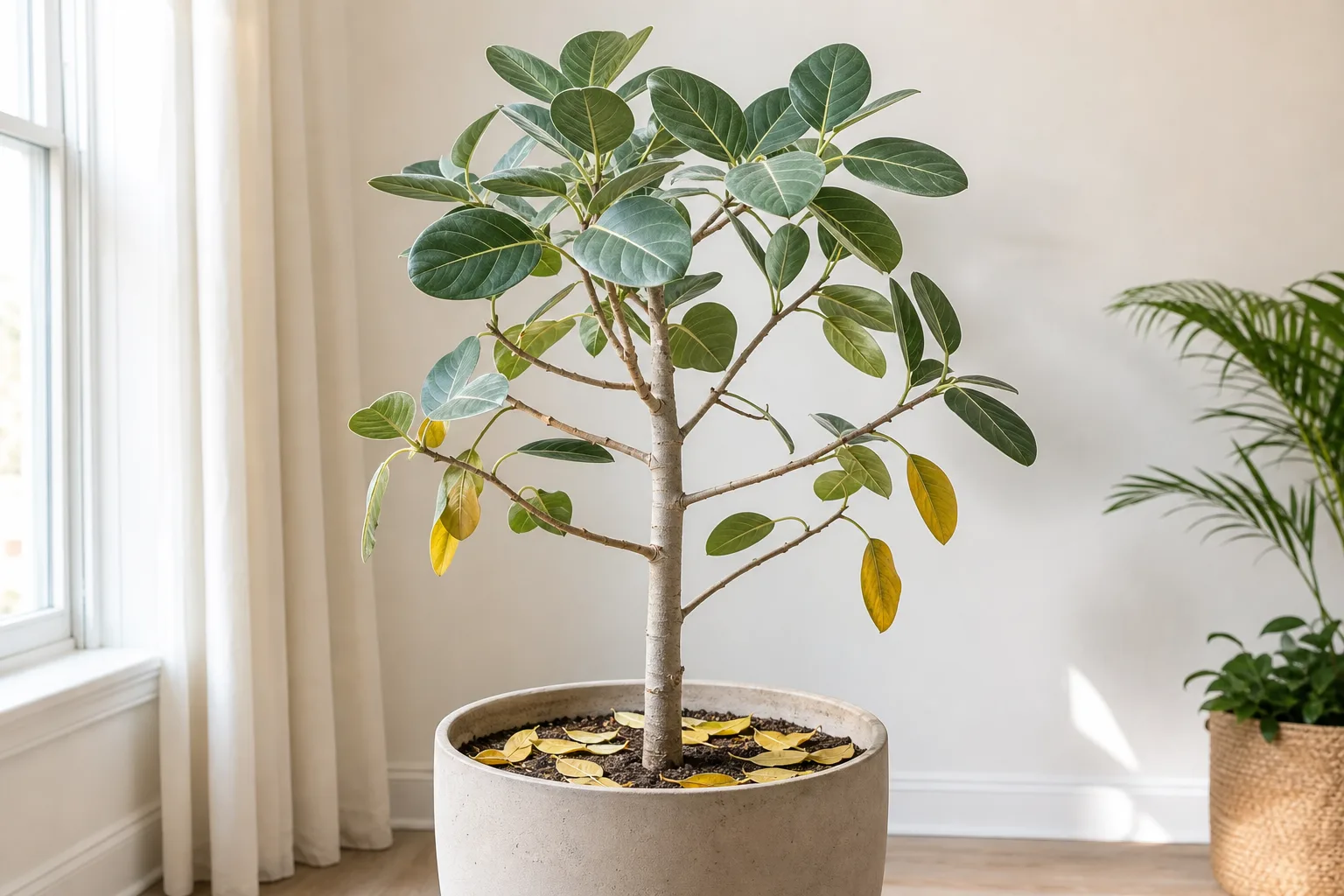
Leaf Drop on Ficus Audrey: Causes, Checks & Fixes
This guide covers leaf drop on Ficus Audrey. See also the general Leaf Drop guide, watering, and light pages for this plant.
Leaf Drop on Ficus Audrey: Causes, Checks & Fixes
Quick answer
Ficus Audrey (Ficus benghalensis) drops leaves when something in its environment shifts-relocation, cold drafts, overwatering, underwatering, low light, post-repot adjustment, or the normal aging of older lower leaves on the trunk. Moraceae ficuses treat leaf shedding as a stress signal, and Audrey is no exception, though it recovers more readily than a fiddle leaf fig when you stop stacking changes.
First step: lift the pot and probe the top 2 to 3 inches of soil. A heavy wet pot with yellow lower leaves that detach points to overwatering or root stress-not thirst. A light dry pot with crisp, drooping blades points to drought. Several green or yellow leaves falling within days of a move with otherwise normal moisture usually means relocation shock. One lower leaf detaching slowly on a firm tree with healthy crown tips is often harmless senescence. Full species context: Ficus Audrey overview.
What leaf drop looks like on Ficus Audrey
Healthy Ficus Audrey holds oval, gray-green leaves with velvety undersides clustered at branch tips on a smooth pale trunk. Leaf drop shows up in distinct patterns depending on the cause.
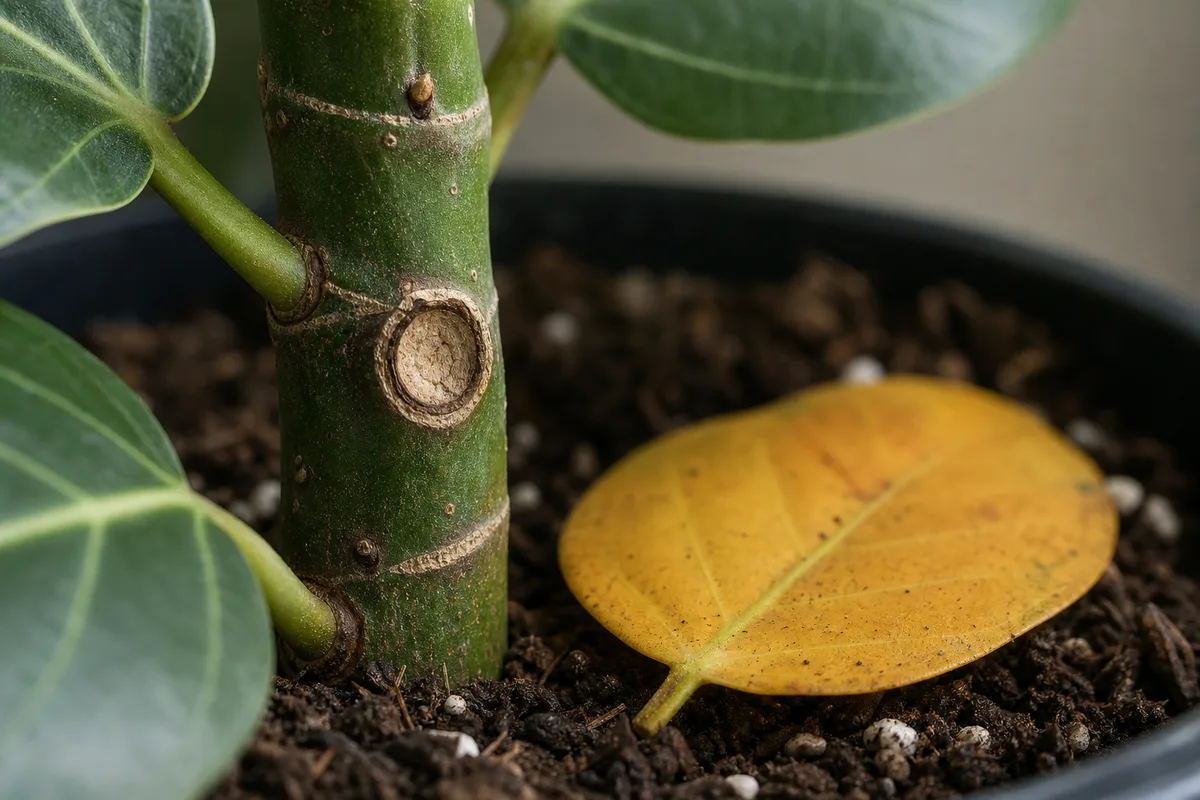
Leaf Drop symptoms on Ficus Audrey - compare with healthy tissue on the same plant.
One or two lower leaves only (normal aging)
- One or two oldest leaves on the lower trunk yellow, then detach cleanly over weeks or months
- Crown tips and upper branch terminals stay firm gray-green with steady new leaf expansion
- Pot weight and soil moisture match your normal rhythm
- Petioles release spent blades without a sour smell from the mix
On an upright banyan fig, lower-leaf senescence is normal as the canopy extends upward-not a crisis if the rest of the tree looks vigorous.
Mass drop days after a move, repot, or window shuffle (relocation shock)
- Several leaves-sometimes still green-fall within days to two weeks of environmental change
- Timing matches the move, furniture shuffle, or spring repot, not a gradual seasonal fade
- Soil moisture may have been appropriate before the event
- Crown tips may pause briefly, then resume once placement stabilizes
- Ficus species often lose foliage when moved to a different environment
This is the most common panic trigger for new Audrey owners-and usually reversible if you stop relocating and hold watering steady.
Rapid yellow-then-drop after cold draft or window chill
- Multiple leaves yellow and fall within days of a temperature swing
- Plant sits near a winter window ledge, AC vent, frequently opened door, or hot radiator blast
- Soil moisture unchanged; stems may still feel firm
- Prefers temperatures between 65 and 80°F and needs protection from cold drafts; sustained chill below about 55°F (13°C) stresses foliage
See wilting on Ficus Audrey when blades hang limp before they detach.
Soft lower leaves on a wet heavy pot (overwatering / root stress)
- Lower leaves yellow, soften, and drop while soil stays damp for days
- Pot feels noticeably heavy; saucer may hold standing water
- Root rot can occur from overwatering; fungus gnats may hover over a surface that never dries
- Crown tips may stay green early-lower canopy fails first on a tree-shaped ficus
- Mix may smell sour if roots are failing
See overwatering on Ficus Audrey and yellow leaves when color change precedes drop.
Crisp leaves on a light dry pot (underwatering)
- Blades feel dry and papery before petioles release them
- Pot lifts light; top 2 to 3 inches of mix are fully dry
- Dry, light brown spots can accompany drought stress on leathery foliage
- Drop may accelerate after you finally water-a shock response that panics owners into daily watering
See underwatering on Ficus Audrey when drought is confirmed.
Gradual thinning in a dim corner (low light)
- Lower and inner leaves drop over months while upper stems stretch toward the brightest window
- Growth has been slow; internodes lengthen between fuzzy blades
- Soil stays wet longer than expected because the plant is not using water at summer rates
- Bright indirect sunlight supports firm foliage; dim corners produce weak growth before steady shedding
See not enough light on Ficus Audrey when stretch pairs with thinning.
Leaf drop vs. other Ficus Audrey problems
| Pattern | Timing | Pot weight | Soil at 2–3 inches | Stem / crown | Likely cause |
|---|---|---|---|---|---|
| Normal aging | Weeks to months | Normal | On schedule | Firm gray-green tips | Lower-leaf senescence |
| Relocation shock | Days after move | Normal | Often unchanged | Firm; tips may pause | Environmental change |
| Cold draft | Days after chill | Normal | Unchanged | Firm unless severe | Temperature stress |
| Overwatering | Ongoing | Heavy | Wet, clings | Tips green early; base may soften | Saturated roots |
| Underwatering | After dry spell | Light | Dry, crumbly | Firm; blades crisp first | Drought |
| Low light | Months in dim spot | Medium-heavy | Stays damp longer | Stretched upper stems | Weak photosynthesis |
| Advancing rot | Ongoing | Heavy | Wet, sour smell | Soft crown with wet soil | Root failure - see root rot |
Yellow leaves often precede drop on Audrey-especially overwatering and draft stress. Drooping leaves may arrive before petioles release blades. Read pot weight before you treat shedding alone.
Why Ficus Audrey drops leaves
Ficus Audrey leaves are leathery, elliptical to ovate, and clustered at branch tips-large enough that any disruption in root uptake or photosynthesis shows quickly. Shedding is how Moraceae ficuses reallocate resources when conditions change faster than roots and crown can adjust.
Relocation and repot shock. Ficus species react sharply to environmental change. Moving from a nursery bench to a living room, shifting a heavy pot to a new window, or Ficus Audrey repotting guide in spring triggers temporary leaf drop while the plant recalibrates water use and light exposure. Audrey tolerates this better than a fiddle leaf fig, but stacking repot, prune, and relocate in one week still produces heavy defoliation.
Cold and draft stress. Tropical banyan relatives expect stable warmth. Repeated hot or cold air across fuzzy leaves triggers yellow-and-drop even when watering has not changed. Winter window ledges and AC vents are common culprits.
Overwatering and root stress. The reflex to water more when leaves fall is dangerous on ficuses. Chronically wet mix suffocates roots; lower leaves fail first while the tree still tries to push tips. Roots in waterlogged soil cannot absorb oxygen even when the surface looks acceptable.
Underwatering. Repeated dry cycles stress fine roots. Severe drought strips lower foliage; rehydration can trigger additional drop as cells re-equilibrate.
Low light. In genuinely dim offices, Audrey stretches and sheds inner leaves that no longer receive enough light for the tree to sustain.
Normal senescence. A mature upright trunk naturally loses its oldest lower leaves as the canopy extends. One fading leaf over months with firm tips elsewhere is not a crisis.
Pests (less common first guess). Monitor for spider mites, mealybugs, and scale insects on velvety undersides. Stippling, webbing, or honeydew with localized drop points away from pure water mismatch.
How to confirm the cause
Work through this checklist before you repot, fertilize, or stack multiple fixes:
- Note timing - Drop started days after a move, repot, or draft exposure, or has been gradual over months?
- Count the leaves - One or two lower blades vs. widespread canopy shedding?
- Lift the pot - Heavy and wet, light and dry, or normal weight for your rhythm?
- Probe 2 to 3 inches deep - Wet clinging soil, dry crumbly mix, or damp center with dry surface?
- Feel stem firmness - Trunk and crown tips firm gray-green, or soft/mushy at the base with sour smell?
- Review placement - Winter ledge, AC vent, hot radiator, or recent furniture shuffle in the last two weeks?
- Check temperature risk - Night temps below the 65 to 80°F preferred range near the pot?
- Scan fuzzy undersides - Webbing, bumps, or sticky residue?
- Judge new growth - Healthy unfolding leaves at branch terminals mean the tree is still viable.
If wet soil, heavy pot, and soft lower shedding align, treat as overwatering first. If dry soil and light pot align, see underwatering. If drop followed a recent move with normal moisture, stabilize placement for two to three weeks before major interventions.
First fix for Ficus Audrey
Lift the pot and check moisture at 2 to 3 inches depth before any other action. Leaf drop is a symptom; the first fix depends on what the pot and timeline tell you.
If drop followed a recent move or repot
Leave the tree in one place for at least two to three weeks. Match watering to actual dry-down at depth-not panic. Avoid fertilizer, heavy pruning, and repeated relocations while it adjusts. Ficus Audrey light guide and stable temperature matter more than extra water.
If the plant sits in a cold draft
Move it away from the chill source-winter window glass, AC vent, or door draft-to a stable spot with bright indirect light. Hold watering changes until temperatures stabilize for a week. Do not compensate for fallen leaves by watering more unless the pot is genuinely dry at depth.
If soil is wet and the crown is still firm
Stop watering until the top half of the mix dries. Empty standing water from saucers and cachepots. Do not fertilize or repot while roots recover. Resume only when a probe at depth reads dry-often one to two weeks in cool dim conditions.
If soil is dry and the pot is light
Water thoroughly once until a small amount runs from the drainage hole, then empty the saucer. One deep drink-not repeated sips-rehydrates a dry root ball. Expect some continued drop after rehydration; watch whether new tips stay firm within two weeks.
If the crown is soft or mix smells sour
Treat as advancing root failure-see root rot on Ficus Audrey. Stop watering, unpot, inspect roots, and trim mushy tissue before repotting into fresh airy mix. Soft crown tissue with wet soil is not thirst.
If only lower leaves detach slowly over months
Remove spent blades and continue normal care. One lower senescent leaf on a firm tree with healthy crown tips requires no moisture overhaul.
Recovery timeline and signs of improvement
Fallen leaves will not reattach-recovery is measured by new gray-green leaves at branch terminals and stopped shedding across the canopy.
- Relocation or draft corrected: Drop often slows within one to two weeks after conditions stabilize; new firm tips commonly resume in three to four weeks.
- Thirst corrected: Shedding usually halts within days once roots rehydrate; tips stay firm within one to two weeks.
- Overwatering corrected: Lower drop usually stops after the mix dries; clean new tips may take two to four weeks once roots regain function.
- Low light corrected: New firm foliage appears over several weeks; inner losses may continue until the canopy reshapes.
Ficus Audrey vs. fiddle leaf fig: Both are large indoor ficuses that shed after relocation, but Audrey’s wider tolerance window means most growers see meaningful new growth in weeks where a fiddle leaf fig may need two to three months to look settled after the same move. Do not compare bare branches on day ten-compare crown tip firmness and the next unfolding leaf pair.
Worsening signs: Shedding climbing the trunk while soil stays wet, soft crown tissue, sour smell, or every new tip emerging small and pale-escalate to root rot assessment.
Ficuses can continue dropping for a short period after you fix the trigger-stress hormones and root adjustment lag behind your corrected care. One stable week often matters more than a fourth relocation “to find a happier spot.”
What not to do
Do not increase watering because leaves fell on a heavy wet pot-damaged roots cannot absorb water even when soil stays wet.
Do not fertilize a shedding Ficus Audrey before you confirm moisture, light, and root health-forced growth on stressed roots worsens drop.
Do not repot, prune heavily, and move in the same week during active shedding; Moraceae ficuses punish stacked change.
Do not relocate repeatedly while the tree adjusts-stability is part of the fix.
Do not assume every fallen lower leaf means rot-check pot weight and crown firmness first.
Do not leave fallen leaves on the floor if you have pets-see pet safety below.
How to prevent leaf drop next time
- Probe before every drink - Water when the top 2 to 3 inches of soil feel dry; stretch intervals in winter when growth slows in dimmer light.
- Draft-free placement - Keep the trunk away from winter glass, AC blasts, and hot radiators; aim for stable 65 to 80°F near the canopy.
- Acclimate moves slowly - Shift light and placement in steps over one to two weeks when possible; hold watering steady after repotting.
- Bright indirect light year-round - Prevents dim-room thinning and soggy-mix mismatches.
- One change at a time - Repot OR prune OR relocate per week during active growth, not all three.
- Remove spent lower leaves - Clarifies whether new shedding is stress vs. aging; reduces pest hiding spots on fuzzy undersides.
- Empty saucers after watering - Standing water suffocates roots within days.
Prevention aligns with the Ficus Audrey overview and watering guide-this page covers diagnosis; those guides own daily rhythm.
Pet safety
Ficus Audrey is toxic to cats and dogs because of milky latex sap. Ingestion can cause drooling, vomiting, diarrhea, and loss of appetite; sap can irritate skin on contact. During active leaf drop, pick up fallen blades promptly if pets chew foliage. Keep the tree out of reach when possible. If ingestion is suspected, contact your veterinarian or the ASPCA Animal Poison Control Center at (888) 426-4435.
Related Ficus Audrey problems
- Ficus Audrey overview - species biology, toxicity, and care hub
- Ficus Audrey watering - top 2–3 inch dry-down and seasonal rhythm
- Overwatering - early wet-soil triage before roots fail
- Underwatering - drought patterns on velvety foliage
- Yellow leaves - color change before drop
- Wilting - limp blades before petioles release
- Root rot - mushy roots and soft crown escalation
- Drooping leaves - wilt paradox and moisture checks
- Not enough light - gradual thinning in dim corners
Conclusion
Leaf drop on Ficus Audrey demands context, not panic. Lift the pot, probe the top 2 to 3 inches of soil, and match the pattern-recent move, cold draft, wet heavy pot, light dry pot, dim thinning, or a single aging lower leaf on a firm trunk. Fix one confirmed cause before you fertilize, repot, or relocate again. Recovery shows in clean new gray-green leaves at branch tips, not in blades already on the floor. Audrey usually forgives shock faster than a fiddle leaf fig when placement and moisture stay stable-give it two to three weeks of consistent care before you declare the tree a lost cause.
When to use this page vs other Ficus Audrey guides
- Ficus Audrey watering guide - Use for routine moisture checks before assuming leaf drop is the main issue.
- Ficus Audrey problems hub - Browse all 17 common issues on this species.
- Yellow Leaves on Ficus Audrey - Different entry point when symptoms overlap with leaf drop.
- Drooping Leaves on Ficus Audrey - Different entry point when symptoms overlap with leaf drop.
- Root Rot on Ficus Audrey - Different entry point when symptoms overlap with leaf drop.