Wilting on Ficus Audrey: Causes, Checks & Fixes
Quick answer
Wilting on Ficus Audrey usually means a water-pathway problem-dry mix, waterlogged failing roots, cold drafts, or relocation shock-not simply 'needs water.' First step: probe the top 2–3 inches of mix and lift the pot; water thoroughly if dry and light, stop watering and inspect roots if wet and heavy.
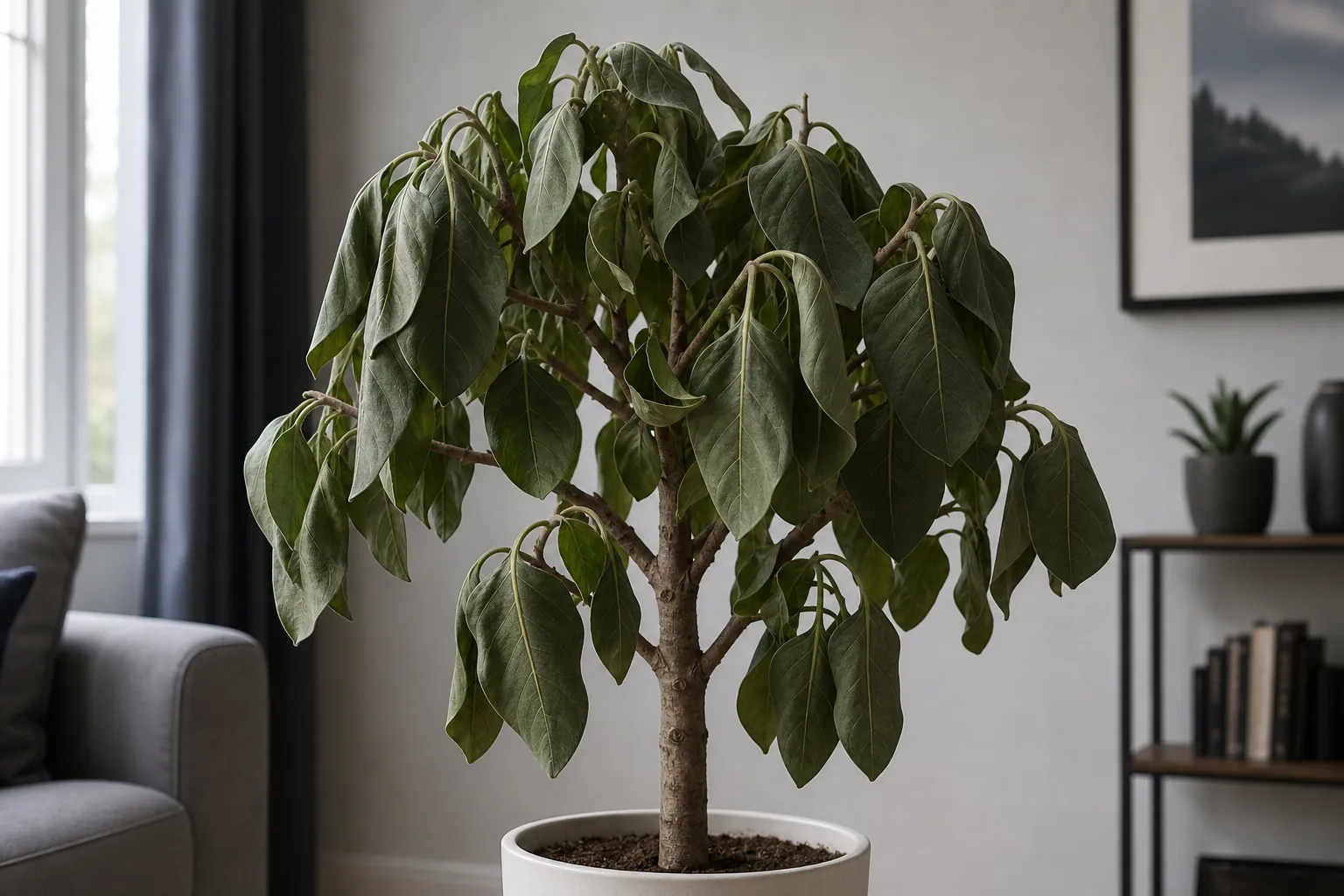
Wilting on Ficus Audrey: Causes, Checks & Fixes
This guide covers wilting on Ficus Audrey. See also the general Wilting guide, watering, and light pages for this plant.
Wilting on Ficus Audrey: Causes, Checks & Fixes
Quick answer
Wilting on Ficus Audrey (Ficus benghalensis) means the plant cannot hold normal leaf turgor-fuzzy gray-green leaves and branches hang limp instead of firm. The same collapse can come from opposite problems: bone-dry mix, waterlogged rotting roots, cold drafts near glass, or relocation shock after a move.
First step: probe the top 2–3 inches of mix and lift the pot before you add water. Dry at that depth with a light container → underwatering is likely; water thoroughly until drainage runs free. Wet at that depth with a heavy pot and limp leaves → stop watering and inspect roots-damaged roots cannot transport water upward, so another drink worsens collapse.
Ficus Audrey is more forgiving than a fiddle leaf fig, but ficus species react quickly to moisture extremes and environmental change. The moisture-and-weight check separates thirst from root failure in under a minute.
What wilting looks like on Ficus Audrey
Healthy Audrey leaves feel firm and slightly leathery despite their soft fuzzy undersides. They hold a clean oval shape on upright branches. Wilting removes that stiffness.
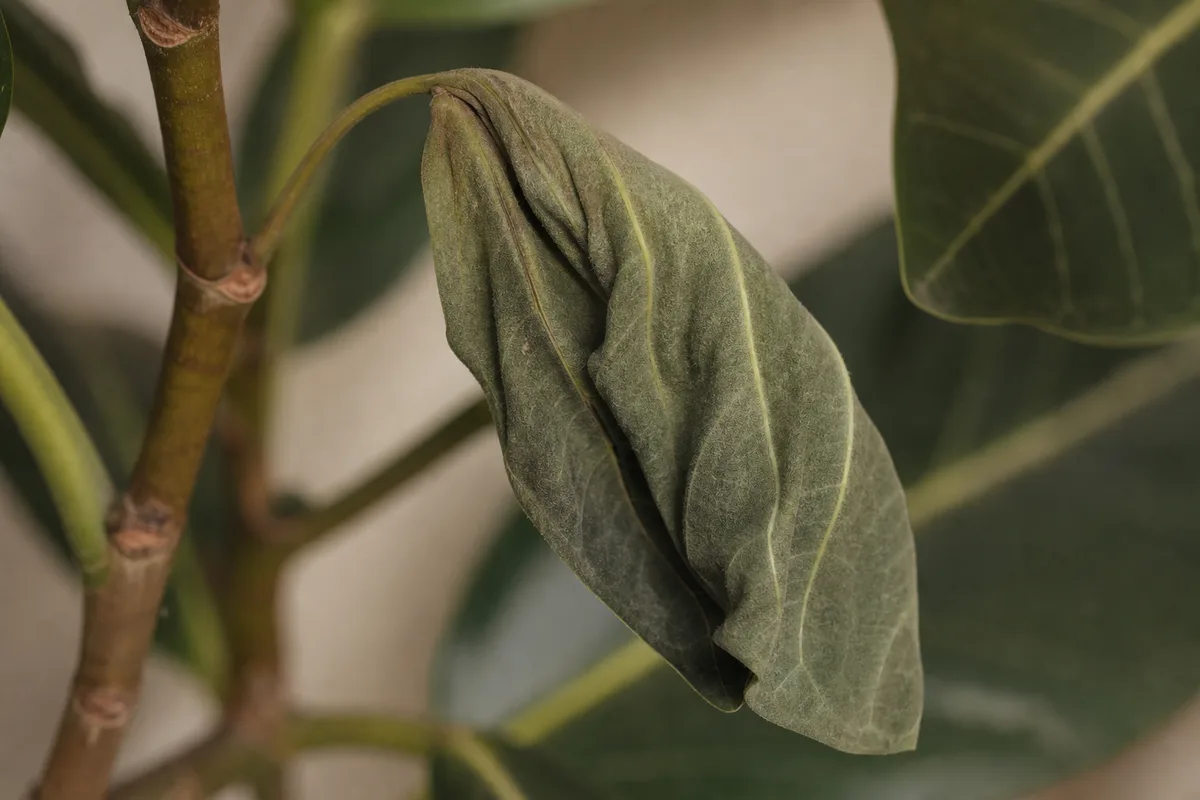
Wilting symptoms on Ficus Audrey - compare with healthy tissue on the same plant.
Dry-soil wilt (underwatering):
- Fuzzy gray-green leaves curl slightly inward or feel thinner; edges may crisp on advanced drought
- Mix is dry 2–3 inches down; pot feels noticeably light when lifted
- Lower leaves may yellow before the whole canopy collapses on a large indoor tree
- Branches often perk within hours after a thorough drink if roots are still healthy
Wet-soil wilt (overwatering / root failure):
- Leaves limp and dull despite moist or soggy mix; yellow lowers often appear first
- Pot stays heavy for days; surface may look acceptable while the center stays wet
- Sour or musty smell when you disturb the mix or slide the plant out of its pot
- Stems may soften at the soil line on advanced cases-the paradox: plant looks thirsty while soil is wet
Cold-draft wilt:
- Rapid limpness on a plant sitting on a winter window ledge, above a vent, or in an AC blast
- Often paired with sudden leaf drop on lower branches within days
- Mix may still be moist; roots chilled on wet soil wilt faster than on evenly dry mix
Relocation or repot shock:
- Whole-tree wilt within a week of nursery delivery, room change, or spring repotting
- Firm trunk with limp foliage and no sour smell points to adjustment, not rot
- Usually stabilizes when light and watering stay consistent-see leaf drop when shedding accompanies wilt
Low-light wilt:
- Chronic limpness in a dim corner even after normal watering
- Long internodes, pale new leaves, and slow dry-down-calendar watering keeps mix wet too long
- Overlaps with not enough light and overwatering patterns
Wilting vs. drooping on Ficus Audrey
Use this page when leaves and branches lose turgor quickly-a limp, collapsed feel across the canopy. Use the drooping leaves guide when foliage angles downward but tissue still feels fairly firm, often from gradual light stress or heavy branch weight on an indoor tree. Acute wilt needs a moisture-direction check first; gradual droop may need light and support review.
Why Ficus Audrey wilts
Ficus Audrey evolved as a warm-climate banyan fig. Indoors it tolerates moderate inconsistency better than Ficus lyrata, but it still punishes chronic overwatering, cold drafts, and repeated relocation with wilt and leaf drop.
Underwatering deflates leaf cells when the root ball dries too long-common on large floor trees in bright summer rooms where the top 2–3 inches dry fast but owners assume the deep mix is still moist. Prolonged drought damages fine roots and wilt persists even after one shallow sprinkle.
Overwatering and root rot produce the same visible wilt through a different mechanism. Saturated mix drives out oxygen; roots decline and cannot supply water. NC State Extension notes Ficus benghalensis prefers evenly moist, well-drained soil-not constant sogginess. Owners see limp fuzzy leaves and water again, accelerating rot. Full detail lives on the overwatering and root rot pages.
Cold and draft stress hits ficuses faster than slow temperature drift. Sustained exposure below about 55°F (13°C) stresses the plant and can trigger wilt and leaf drop. Problem spots include cold window sills in winter, AC vents in summer, and hot radiator blasts that desiccate leaves while roots stay wet.
Relocation shock temporarily reduces root function after nursery transport or a room move. Ficus species react to environmental change with temporary leaf drop; wilt often appears before yellowing. Stabilize placement and resist compensating with extra water unless the pot is genuinely dry.
Winter calendar watering in dim rooms is a common hidden cause: growth slows, the pot dries slowly, but a midsummer schedule keeps mix waterlogged-presenting as limp leaves on wet soil without an obvious “overwatering” event.
Lookalike symptoms to rule out
| Pattern | Pot weight | Crown / stem | Likely cause | Where to read next |
|---|---|---|---|---|
| Limp fuzzy leaves, yellow lowers, damp depth | Heavy | Firm for now | Overwatering / root decline | Overwatering |
| Limp leaves, dry 2–3 inches, light pot | Light | Firm | Underwatering | Underwatering |
| Limp on wet soil, soft base, sour smell | Heavy | Mushy | Root rot | Root rot |
| Leaves angle down, tissue fairly firm | Variable | Firm | Drooping (posture) | Drooping leaves |
| Yellow without acute collapse | Often heavy | Firm | Chronic moisture or light stress | Yellow leaves |
| Wilt after move, some shed, no sour smell | Variable | Firm trunk | Relocation shock | Leaf drop |
How to confirm the cause
Work through these checks in order:
- Moisture at 2–3 inches depth - Finger, skewer, or meter at root depth, not surface alone. Water when the top 2–3 inches have dried on Audrey; dry = suspect drought, wet = suspect root failure or winter overwatering in low light.
- Pot weight - Lift the container. Light with limp leaves fits underwatering. Heavy with limp leaves fits waterlogging or rot.
- Stem firmness - Press the trunk at the soil line. Firm with dry soil points to thirst. Soft, darkening base on wet soil points to rot-see root rot.
- Smell and drainage - Sour odor, blocked holes, or standing saucer water support chronic saturation.
- Placement history - Cold window, recent move, repot within two weeks, or AC vent narrows cause quickly.
- Root spot-check if mismatch persists - Slide the plant out. Healthy Audrey roots are firm and pale tan. Brown mush confirms rot; dry brittle roots in dusty mix confirm drought damage.
Wilting is not always a call for water. Root injury from too much water decreases uptake; watering wet, wilted Audrey accelerates decline.
First fix for Ficus Audrey
Probe the top 2–3 inches of mix and lift the pot-then act on what you find.
- If dry and light: Water thoroughly until water runs from drainage holes. Empty the saucer within 30 minutes. One deep drink rewets the root ball; repeated shallow sprinkles leave the center dry while leaves stay limp.
- If wet and heavy: Do not water. Move to bright indirect light to speed safe dry-down, empty saucer water, and unpot if the trunk base softens or the mix smells sour.
That single diagnostic step prevents the most common mistake: watering a rotting Ficus Audrey because fuzzy leaves look thirsty.
Do not fertilize, repot, or prune heavily on day one unless you have confirmed mushy roots or a clearly hydrophobic dry core. Stacking fixes on a stressed tree adds salt and disturbance without solving the water pathway.
Step-by-step recovery by cause
If underwatering is confirmed
- Water deeply once; for very dry peat-heavy mix, water, wait 30 minutes, water again, then drain fully.
- Trim only leaves that stay crispy and brown after 48 hours; green limp fuzzy tissue often recovers turgor.
- Adjust schedule: water when the top 2–3 inches dry, not on a calendar-details on the watering guide.
- If the tree was in harsh sun, confirm bright indirect light-recovery is faster without extra heat load.
If overwatering or root rot is confirmed
- Stop watering immediately.
- Unpot, rinse roots, and trim brown mushy tissue back to firm pale roots.
- Repot into airy, well-drained mix with perlite in a pot only one size larger with open drainage.
- Withhold water for about a week unless the remaining root mass is very small-then one light drink.
- Remove yellow leaves that continue to soften; they will not re-firm.
- Follow the full root rot guide if most roots are compromised.
If cold-draft wilt is confirmed
- Move the plant away from cold glass, AC vents, and heating blasts-stable 65–80°F (18–27°C) suits active growth.
- Ensure soil moisture is even-not bone dry, not soggy.
- Expect partial leaf drop; do not overwater wet mix “to comfort” the plant.
- Recovery often takes one to three weeks once placement stabilizes.
If relocation or repot shock is confirmed
- Keep bright indirect light and consistent watering when the top 2–3 inches dry-no extra drinks on wet mix.
- Avoid moving again for at least four weeks.
- Hold fertilizer until new tip growth looks firm and gray-green.
- Some lower leaf drop is normal; panic repotting usually makes wilt worse.
Recovery timeline
Underwatering: Noticeable perk within 2–12 hours after a thorough drink on healthy roots; severely dehydrated large trees may need 24–48 hours for full turgor.
Overwatering / early rot: Days to weeks. Judge by firm new leaves at the tip, not old yellow foliage.
Cold draft or relocation: One to three weeks for stability; new growth confirms success.
Repotting wilt: Two to four weeks on a large indoor tree; hold fertilizer until new leaves expand normally.
Collapsed fuzzy leaves rarely become fully firm again-they drop or stay limp while new growth tells you recovery is real.
What not to do
Do not water every wilt without checking soil at depth-wet-soil wilt needs drying and root inspection, not another drink; watering a wilted plant with rotting roots makes the problem worse.
Do not leave saucers full or let cachepots hold standing water. Anaerobic roots mimic drought from above.
Do not move a wilted tree into direct sun hoping to dry it out. Scorched fuzzy leaves add stress on already failing roots.
Do not fertilize collapsed foliage. Salt stress on damaged roots slows recovery.
Do not repot healthy dry wilt on day one-a deep watering usually fixes simple thirst.
Do not stack repot, prune, and pesticide on the same day on a stressed Audrey.
Ficus Audrey care cross-check
Wilting often exposes a mismatch between routine and environment:
- Light - Bright indirect light uses more water than a dim office corner. Dim rooms need longer dry intervals, not the same summer schedule. See the light guide.
- Mix and pot - Heavy peat in an oversized pot stays wet at the center; root-bound pots in small containers wilt between drinks. See soil and repotting.
- Season - Short winter days slow growth; calendar watering in January causes wet-soil wilt in cool rooms.
- Placement - Drafts and vents stress leaves while soil stays wet-a dual pattern on many office ficuses.
Cross-check baseline biology on the Ficus Audrey overview when multiple symptoms overlap.
How to prevent wilting on Ficus Audrey
Water when the top 2–3 inches of mix are dry, using finger, weight, or a meter at root depth-not the day of the week.
Use pots with drainage holes and empty saucers after every watering.
Keep the tree away from cold window ledges, AC vents, and radiator blasts in winter.
Match watering frequency to light-bright rooms dry faster; dim rooms need patience before assuming thirst.
After purchase or repot, stabilize placement for several weeks before judging long-term health.
Inspect weekly while problems are still small; limp lower leaves on an otherwise firm tree are easier to fix than whole-canopy collapse.
When to worry
Treat as urgent when:
- Leaves wilt on soggy soil with sour smell or soft trunk tissue at the soil line
- Wilt spreads across the canopy while mix stays wet for more than a week after you stopped watering
- The plant does not perk within 24 hours after confirmed dry-soil watering on a medium pot
- More than half the roots are mushy on inspection
Less urgent but worth fixing soon: mild wilt on a dry pot after travel, afternoon limpness that resolves after moving off a cold sill, or temporary wilt right after repotting with firm trunk and no rot smell.
Related Ficus Audrey problems
- Ficus Audrey overview - hub care, fuzzy leaf biology, and watering rhythm
- Overwatering - limp leaves on wet soil and heavy pots
- Underwatering - light pot and dry-depth wilt
- Root rot - soft crown and sour mix escalation
- Drooping leaves - gradual posture change vs. acute turgor loss
- Yellow leaves - chronic moisture and light stress
- Leaf drop - relocation and draft shedding
When to use this page vs other Ficus Audrey guides
- Ficus Audrey watering guide - Use for routine moisture checks before assuming wilting is the main issue.
- Ficus Audrey problems hub - Browse all 17 common issues on this species.
- Underwatering on Ficus Audrey - Different entry point when symptoms overlap with wilting.
- Overwatering on Ficus Audrey - Different entry point when symptoms overlap with wilting.
- Root Rot on Ficus Audrey - Different entry point when symptoms overlap with wilting.