Ficus Audrey Repotting: Spring Timing and Pot Size
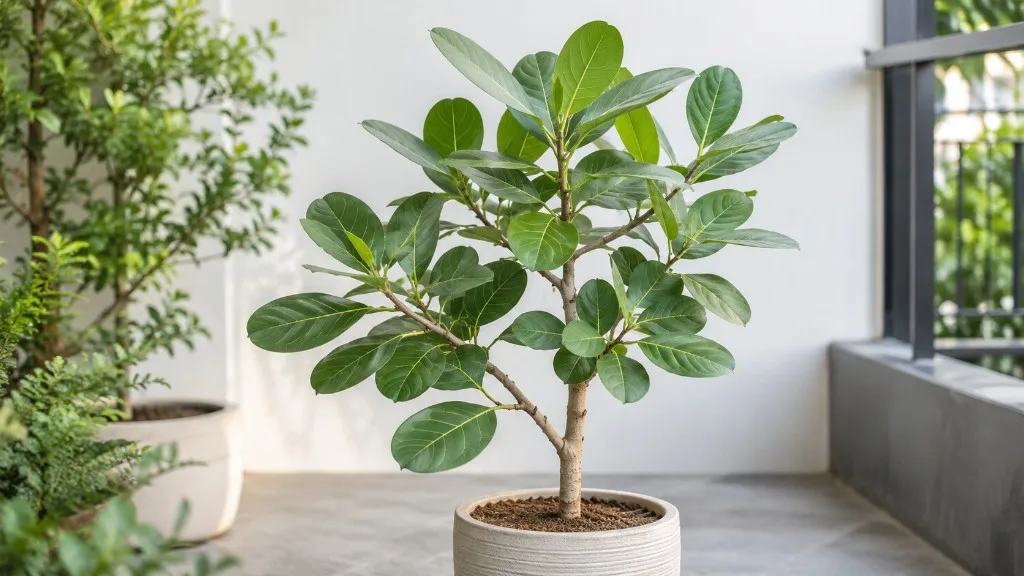
Ficus Audrey Repotting: Spring Timing and Pot Size
Ficus Audrey Repotting: Spring Timing and Pot Size
Why Repotting Matters for Ficus Audrey
Ficus Audrey repotting is root-zone maintenance for a tree whose glossy leaves and upright silhouette depend on a root system you rarely inspect until watering gets weird. Ficus benghalensis - the species behind the popular ‘Audrey’ cultivar - is a member of the Moraceae family and a close relative of the massive banyan figs of the Indian subcontinent. Indoors, it grows as a compact tree rather than a spreading strangler, but it still behaves like a ficus: it wants stable conditions, dislikes unnecessary disturbance, and punishes sloppy pot upgrades with leaf drop that can look alarming even when the plant is fundamentally healthy.
NC State Extension notes that Bengal fig houseplants thrive in Ficus Audrey light guide with moist, well-drained potting mix - and that cultivars like ‘Audrey’ are popular indoor specimens. That tolerance is useful. Many growers repot ficus plants on a rigid annual schedule because they assume tight roots are always bad. For Ficus Audrey, the opposite mistake is common: repotting too early into an oversized container and creating a wet, oxygen-poor zone around a root ball that never asked for that much soil. Repotting matters when the root zone is exhausted, overcrowded, or failing - not because another season passed on the calendar.
Done well, repotting frees circling roots, replaces exhausted mix, and resets salt buildup. Done poorly - oversized pot, winter timing, bare-rooting, immediate fertilizer - it triggers transplant shock. The sections below focus on the three decisions that prevent most failures: spring timing, the one-size-up rule, and knowing when the plant is genuinely root-bound rather than merely snug.
When to Repot Ficus Audrey
The right time to repot Ficus Audrey is when the root system - not the date on your phone - needs fresher soil or modestly more space. Healthy specimens often go two to three years between full repots. Fast growers in bright rooms with consistent feeding may need attention sooner. Slow growers in moderate light may stretch longer, especially if you refresh the top layer of soil periodically. Two categories help: routine maintenance repotting and repotting driven by clear root-bound or soil-failure signals.
Routine Repotting Every 2 to 3 Years
Routine repotting applies to a plant that looks generally healthy but has lived in the same container long enough that soil structure has declined. Peat- and coir-based indoor mixes break down over time. They lose air spaces, hold water unevenly, and develop a dense outer root mat that resists rewetting even when you water thoroughly. Penn State Extension recommends repotting houseplants when roots grow through drainage holes or the mix breaks down - typically every two to three years for many indoor trees.
Routine repotting should feel preventive, not dramatic. You are not rescuing a dying tree; you are resetting the substrate before chronic problems appear. Even during routine work, you do not always need a larger pot. If the plant still fits its container by visual proportion and stability but the mix is tired, you can return it to the same pot after gently loosening the outer root layer, trimming only dead or clearly circling roots, and replacing most of the old soil. That is a same-size refresh, not a true upsize. It solves mix exhaustion without encouraging the plant to pour energy into filling a bigger soil volume.
Top-dressing - removing the top inch or two of old mix and replacing it with fresh soil - can bridge one growing season if the plant is not yet root-bound at the bottom of the pot. Top-dressing refreshes the upper root zone where many feeder roots live, but it does not fix a dense, circling mass at the drainage layer. If water races through the pot while the center stays dry, top-dressing alone will not fix the problem. You need a full repot with root inspection.
Signs Your Ficus Audrey Is Root-Bound
Root-bound means the root system has filled the container and begun circling inward because it has nowhere else to go. Ficus Audrey tolerates slight snugness better than many fast-growing houseplants, so one visible root at a drainage hole is not automatically an emergency. Look for a pattern of signals:
- Roots emerging from multiple drainage holes or wrapping visibly around the soil surface
- Water running straight through the pot in seconds while the root ball center stays dry
- Soil drying out much faster than it used to despite the same pot size and room conditions
- New leaf growth stalling for a full growing season despite adequate light and regular feeding
- A dense mat of white roots visible when you brush away the top inch of soil
- The plant becoming top-heavy and wobbly because the root ball is small relative to the canopy
- Foliage looking pale or hungry even after fertilizing, suggesting salt-choked or exhausted mix
One sign alone may justify waiting until spring if the plant otherwise looks vigorous. Two or three signs together - especially water channeling plus stalled growth plus roots at the drainage holes - mean plan a repot in the next active growth window. Emergency repotting outside spring is reserved for severe root rot on Ficus Audrey (sour smell, mushy roots, wet mix that never dries), a pot so crowded that normal watering is impossible, or a container cracking under root pressure. Those situations cannot always wait for ideal timing, but they still require conservative pot sizing and careful aftercare.
Best Season and Timing: Why Spring Wins
Spring is the best season to repot Ficus Audrey in most homes. As daylight lengthens and room temperatures stabilize, the plant enters active growth and can rebuild feeder roots quickly in fresh mix. Early spring through early summer is the primary window. NC State Extension recommends fertilizing during the active growing season from spring through summer - the same window when repotting recovery is fastest.
Repot after you see new growth - a fresh leaf, brighter stem tips, or faster drying compared to winter. Early summer is a solid backup. Fall is second-choice; winter repotting should be avoided unless the plant has root rot, impossible watering, or a failing container. If you must repot in winter, skip fertilizer, keep bright indirect light stable, and accept that new growth may wait until spring.
Repot when the root ball is lightly moist, not bone dry or soaking wet. Avoid stacking stresses - do not repot the same day you moved the plant, turned up aggressive heating, or found pests. Ficus Audrey recovers faster when conditions stay consistent for two to three weeks after the move.
Choosing the Right Pot Size
Pot choice is where many Ficus Audrey repotting jobs succeed or fail. This species does not want a mansion. It wants a modest upgrade that matches the current root mass and leaves room for one season of outward growth - not three seasons of empty, wet soil.
The One-Pot-Size-Up Rule
Move up only one pot size: roughly 1 to 2 inches (2 to 5 cm) wider in diameter than the current container. Penn State Extension notes that oversized containers hold excess wet mix around roots and can lead to disease problems - the same risk Ficus Audrey shows as yellow leaves and root rot after an aggressive upsize. A much larger pot holds a much larger volume of soil. After repotting, the root system occupies only a fraction of that volume. Every thorough watering wets soil the roots cannot yet access. That soil stays wet for days. Ficus roots sitting in chronically wet mix lose oxygen, fine feeder roots die back, and the plant responds with yellow leaves - the same symptom growers often misread as underwatering on Ficus Audrey.
The one-size-up rule is not a suggestion for cautious beginners only. It is the correct default for healthy plants of all sizes. A 6-inch pot goes to 8 inches, not 10 or 12. A 10-inch pot goes to 12 inches, not 14. If you want a bigger visual statement faster, patience beats pot oversizing. Let the plant fill the modest upgrade, then repot again in two or three years. Two properly sized repots produce a healthier tree than one jump into an oversized container.
Choose a pot deep enough to seat the root ball with an inch of fresh mix below, but avoid tall narrow pots that leave a small root mass swimming in unused soil. A slightly wider base improves stability for top-heavy specimens.
Drainage Holes and Pot Material Choices
Drainage holes are non-negotiable for long-term Ficus Audrey care. Penn State Extension requires a container with drainage holes so excess water can exit and the mix does not become waterlogged. A decorative pot without holes is a cachepot only. Plant directly in a container with drainage, or use a nursery pot inside a cachepot and empty runoff every time you water. Ficus roots tolerate drying between waterings better than they tolerate sitting in pooled water at the pot bottom.
Terracotta dries faster; glazed ceramic and plastic retain moisture longer. Either works if you adjust watering accordingly. Mesh over drainage holes is fine; a gravel layer at the bottom is not - Penn State Extension confirms coarse material at the container bottom hinders rather than helps drainage.
Best Soil Mix for Ficus Audrey Repotting
Fresh soil is half the point of repotting. Ficus Audrey wants a well-draining indoor potting mix that retains enough moisture for roots to drink between waterings without staying wet for days. NC State Extension recommends a good-quality potting mix with perlite and neutral pH for Bengal fig houseplants. A practical home recipe:
- 60–70% quality indoor potting mix (peat- or coir-based)
- 20–30% perlite, pumice, or coarse horticultural sand for drainage and air
- Optional 10% orchid bark or fine pine bark for long-term structure in mixes that compact quickly
The exact ratio matters less than the behavior test. When you water thoroughly, excess water should exit the drainage holes within seconds and the mix should feel evenly damp, not muddy. A finger inserted two inches down two days after watering should find the mix approaching dry in a bright, warm room during active growth. If it stays wet five days later in a modest pot, the mix is too heavy or the pot is too large.
Do not reuse old soil. Spent mix loses structure, may harbor pathogens, and often carries accumulated salts that burn leaf margins. Do not use garden soil or heavy outdoor topsoil. Those compact in containers, restrict oxygen, and introduce pests. Pre-moisten new mix slightly before potting so dry peat pulls moisture away from roots after transplant.
If your plant arrived in a dense nursery plug, repot into a more open blend rather than copying that mix exactly.
Tools, Safety, and Supplies Before You Start
Gather supplies before you remove the plant. Ficus Audrey bleeds milky latex sap when roots and stems are cut or bruised. NC State Extension lists Ficus benghalensis as having low-severity poison characteristics if ingested, with toxic principles including proteolytic enzyme and psoralen in the sap and leaves, and notes that sap causes contact dermatitis. The ASPCA classifies many Ficus species as toxic to cats and dogs, causing oral irritation, vomiting, and gastrointestinal upset if chewed. Wear gloves during repotting, work on a washable surface, and keep pets and children away from fallen leaves and soil debris until cleanup is complete.
Basic supplies:
- New pot 1–2 inches wider with drainage holes (or same pot for refresh)
- Fresh well-draining potting mix as described above
- Hand trowel or scoop
- Sharp, clean scissors or pruning shears sterilized with rubbing alcohol
- Chopstick or pencil for settling soil around roots
- Gloves and a damp cloth for sap
- Optional: old sheet or tarp to contain soil
Sterilize cutting tools before and after trimming roots. Mushy root sections should be cut back to firm, healthy tissue. If you encounter extensive rot, treat the repot as an emergency rescue: trim aggressively, consider a same-size or only slightly larger pot, and adjust expectations for recovery time. A plant with major root loss does not belong in a bigger container.
Step-by-Step: How to Repot Ficus Audrey
Work calmly and keep the root ball exposed for as little time as possible. Ficus Audrey is not a delicate seedling, but it is also not a hardy outdoor shrub. The goal is enough root disturbance to free circling growth and refresh soil - not a complete demolition of the root system.
Pre-Watering, Removal, and Root Inspection
Water the plant 24 hours before repotting. Penn State Extension recommends watering the plant in its original container and letting it rest for one hour before repotting to reduce transplant shock. The soil should be lightly moist, not saturated. A hydrated root ball holds together when you tip the pot, while dry peat crumbles and tears fine roots.
To remove the plant, tip the pot on its side and support the base of the trunk, not a thin upper stem. Slide the root ball out with gentle pressure on the pot sides. If the plant resists, run a chopstick around the inner pot wall to loosen the root mat. Never yank the trunk. Ficus bark and the trunk-root junction are stress points.
Inspect the root ball under bright light. Healthy roots are firm, pliable, and white to tan. Dead or rotting roots are mushy, brown or black, and may smell sour. Gently tease circling roots at the bottom and outer edges with your fingers. Loosen them so they point outward into the new mix rather than continuing the spiral. You do not need to remove every old soil particle. Keeping some original soil around the core reduces shock.
Trim only what is clearly dead or severely circling at the bottom. Avoid bare-rooting the entire plant. Stripping all soil and fine root hairs forces Ficus Audrey to rebuild its absorption system from scratch and extends recovery by weeks. If fewer than one-third of roots need trimming, proceed. If you removed more than that due to rot, downshift aftercare expectations and avoid upsizing the pot at all.
Planting at the Correct Depth
Add an inch or two of fresh mix to the new pot bottom. Set the root ball so the original soil line sits slightly below the new pot rim - typically one-half to one inch of headspace for watering. Planting too deep buries trunk tissue that should remain above soil level and invites stem rot. Planting too shallow leaves roots exposed and dries the root crown too fast.
Hold the trunk vertical and backfill around the sides with fresh mix. Use a chopstick to work mix into gaps without packing it concrete-hard. Firm gently with your fingers. The plant should stand stable without rocking. If it wobbles, the pot is too large for the root mass or the mix under the root ball is uneven.
Water lightly to settle the mix - enough to moisten new soil, not a full soak into an oversized pot. After a rot rescue with major root removal, wait longer and water sparingly.
Repot vs. Top-Dress vs. Same-Size Refresh
Not every soil problem requires a bigger pot. Choosing the wrong type of refresh causes more damage than delaying a week into spring.
Top-dressing suits a plant with healthy lower roots but tired upper mix. Remove the top 1–2 inches of soil, replace with fresh mix, and resume normal care. It helps with minor salt crust on the surface and gives upper feeder roots new territory. It does not fix circling roots at the pot bottom or water channeling through a dense root plug.
Same-size refresh suits a plant that has filled its pot acceptably but needs new mix - or a grower who wants to control final tree size. Remove the plant, trim circling bottom roots modestly, shake or brush away old outer mix, and return to the same container with fresh soil. You gain renewed drainage without encouraging a growth surge into a larger soil volume.
One-size-up repot suits a genuinely root-bound plant that needs more room for the next two to three years of growth. Use the signals in the root-bound section above. If you are upsizing only because you want a bigger decorative pot on the shelf, the plant may not be ready. Upsizing without root pressure is the most common preventable mistake in Ficus Audrey repotting.
When in doubt between top-dress and full repot, lift the plant slightly from the pot rim and look at the root density at the bottom. A solid white wall of roots means full repot. Mostly soil with scattered roots means top-dress or wait until spring.
Aftercare After Repotting Ficus Audrey
The two weeks after repotting matter as much as the technique. Ficus Audrey recovers best when light, temperature, and watering stay boring.
Return the plant to the same bright, indirect light it had before - not harsher sun. Avoid cold drafts and room-hopping for the first month. Hold fertilizer for at least four weeks, longer if leaf drop was heavy. Water when the top 2–3 cm of mix approaches dry; do not overwater to compensate for dropped leaves. Skip heavy pruning until new growth appears.
Recovery Timeline and Normal Transplant Stress
Mild transplant stress on Ficus Audrey is normal. Some leaf yellowing and drop during the first one to two weeks after repotting is common, especially if you loosened a dense root ball or repotted during peak summer heat. Ficus species communicate stress by shedding leaves. It looks alarming on a tree you just tried to help, but partial defoliation does not automatically mean failure.
Normal stress looks like this: a few older lower leaves yellow and fall; the remaining leaves may look slightly dull; growth pauses briefly; the plant otherwise maintains turgor on healthy leaves; no widespread mushy stems; soil does not smell sour after conservative watering. Full root re-establishment typically takes four to six weeks during active growth. New leaves emerging at the stem tips - correct size, glossy green, not stunted - are the clearest recovery signal.
Abnormal stress persists beyond three weeks: widespread yellowing, wilting on previously healthy leaves, soft stems, or sour wet mix. Those patterns point to overwatering on Ficus Audrey, an oversized pot, buried trunk tissue, or unresolved root rot. Damaged leaves do not revert to green - judge recovery by new foliage, not old leaves.
Common Ficus Audrey Repotting Mistakes
Most repotting failures trace to a short list of errors. Avoid these and your odds of a smooth recovery rise sharply.
Jumping more than one pot size. The single most damaging mistake. Excess wet soil around a modest root system causes rot and yellowing that looks like underwatering. Stick to 1–2 inches wider.
Repotting in winter without an emergency. Cold-season disturbance on a ficus already adjusting to low light produces disproportionate leaf drop. Wait for spring when possible.
Bare-rooting or shredding the root ball. Removing all soil and tearing fine roots forces a long rebuild. Tease circling roots; keep the core intact.
Fertilizing too soon. Roots in fresh mix do not need feed in the first month. Premature fertilizer burns roots and pushes weak top growth.
Repotting an already-stressed plant. If Ficus Audrey is actively dropping leaves from a recent move, pest attack, severe underwatering, or cold shock, fix that problem first. Repotting a stressed ficus stacks insults. Wait until you see two consecutive sets of healthy new leaves, then schedule spring repotting.
Planting too deep or using a pot without drainage. Both invite stem and root rot. Match the old soil line and use holes.
Troubleshooting Problems After Repotting
Moderate leaf drop in week one is often normal. Hold fertilizer, verify pot size, and water only when the mix surface dries. If more than one-third of leaves fall within ten days, check for wet mix at the pot bottom.
Wilting two weeks in usually means overwatering in an oversized pot or root damage. Check moisture deep in the mix before watering again.
Sour smell from the mix signals root rot. Unpot, trim mushy roots, repot into fresh open mix in a same-size or smaller pot, and water sparingly.
No new growth by six weeks in spring or summer - confirm bright indirect light, appropriate pot size, and stable temperatures away from cold windows.
Conclusion
Ficus Audrey repotting comes down to three decisions done well: repot in spring when the plant is actively growing, move up only one pot size so fresh mix does not stay wet around a modest root ball, and act when the plant is genuinely root-bound - not merely because another year passed. Routine refresh every two to three years keeps mix airy and roots healthy. Top-dressing and same-size refreshes solve narrower problems without forcing a growth surge. Wear gloves for latex sap, water the day before you work, tease circling roots without bare-rooting, and hold fertilizer until new leaves prove the roots have settled.
A Ficus Audrey that drops a few leaves after repotting is often telling you it noticed the disturbance, not that you failed. Stable light, conservative watering, and patience through a four-to-six-week root rebuild window beat reactive overcorrection every time. When the next spring arrives and the pot dries faster than it used to, or roots peek through the drainage holes again, you will know exactly how to respond.
When to use this page vs other Ficus Audrey guides
- Ficus Audrey overview - Start here for whole-plant context before deep-diving this topic.
- Ficus Audrey problems hub - Jump to symptom-specific fix guides when this care topic does not resolve the issue.
- Root Rot on Ficus Audrey - Escalate here when repotting adjustments are not enough.
Related Ficus Audrey guides
- Ficus Audrey overview
- Ficus Audrey watering
- Ficus Audrey light
- Ficus Audrey soil
- Ficus Audrey propagation
- Ficus Audrey fertilizer
- Root Rot on Ficus Audrey
- Ficus Audrey problems
Related tool
Try the Pot Size Calculator with ficus-audrey pre-selected to estimate needs for your setup.