Ficus Audrey Watering: Schedule, Soil Checks & Root Rot
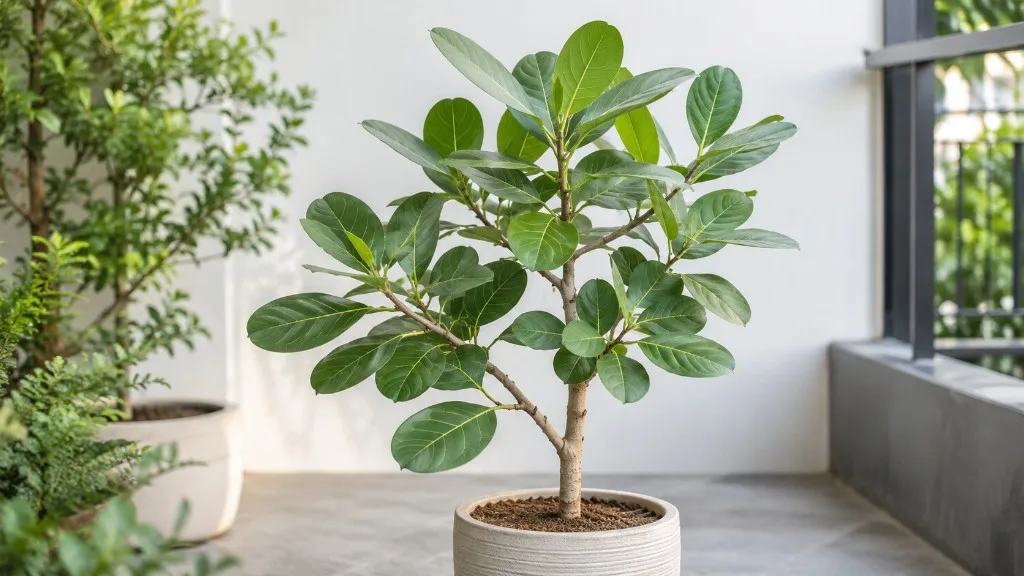
Ficus Audrey Watering: Schedule, Soil Checks & Root Rot Prevention
Ficus Audrey Watering: Schedule, Soil Checks & Root Rot Prevention
What Ficus Audrey Actually Needs From Water
Ficus Audrey (Ficus benghalensis) is a tree-form fig that evolved in a climate with distinct wet and dry seasons. In its native range across India and parts of South Asia, monsoon rains arrive in heavy pulses, then the soil dries down for weeks under strong sun. Indoor growers often misread that biology and assume the plant wants a little moisture all the time. It does not. Ficus Audrey wants a full drink followed by a real dry-down - and it wants you to check the soil before you reach for the watering can.
NC State Extension recommends watering Bengal fig houseplants when the top 2 to 3 inches of soil feel dry, with good drainage and excess water emptied from the tray - and notes that root rot on Ficus Audrey can occur from overwatering on Ficus Audrey. That warning matters more than almost any other care note on the label, because Ficus Audrey fails indoors far more often from soggy roots than from a missed watering. The plant’s thick, fibrous root system stores water efficiently, which gives it tolerance for brief dryness. Those same roots suffocate quickly when soil stays wet and airless for days.
Your watering goal is not to keep the pot damp. Your goal is to run a predictable wet-dry cycle: let the top of the mix dry to the right depth, water thoroughly so the entire root ball rewets, let excess drain away, and then wait until the soil reaches that dry point again. Get that rhythm right and Ficus Audrey stays firm, pushes new leaves in spring, and handles normal household ups and downs without drama.
Why Ficus Audrey Roots Need Oxygen Between Drinks
Roots do two jobs at once: they absorb water and they breathe. When soil pores fill with water and stay full, oxygen gets pushed out. Fine root tips die first. Then larger roots turn soft and brown. By the time you see yellow leaves or a musty smell at the surface, damage underground is often well underway.
Ficus Audrey is not a bog plant. It is a tree. Tree roots expect drainage, air, and alternating moisture - not a swamp. Heavy peat mixes, pots without holes, and decorative outer pots that trap runoff all create the same problem: water enters faster than it leaves, and the lower half of the root ball becomes a stagnant zone. Prevention is almost always cheaper than recovery, and prevention starts with letting soil dry to the correct depth before the next watering.
This is also why “consistent moisture” confuses so many growers. Consistent does not mean constantly wet. It means a steady rhythm where the plant never sits in saturation and never endures long drought either. During active growth, you water on a repeating schedule only after the soil check confirms readiness - not because Wednesday arrived on the calendar.
The Top 2 Inches Dry Rule Explained
The most reliable trigger for watering Ficus Audrey is simple: water when the top 2 inches of soil are dry. Stick your finger into the mix up to the second knuckle. If the soil feels cool, clingy, or damp at that depth, wait. If it feels dry and crumbly, it is time to water. On metric measurements, that is roughly the top 5 centimeters - the same zone most care guides reference for Ficus Audrey overview.
The 2-inch rule works because the surface dries faster than the root zone. Checking only the top quarter-inch leads to premature watering. Checking the full pot depth with a finger in a large container is awkward and unnecessary for routine care. Two inches is the practical sweet spot: deep enough to reflect real root-zone drying, shallow enough to test in seconds.
In a 10-inch pot during bright spring growth, that dry-down might take seven to ten days. In a cool winter room with shorter days, the same pot might need two to three weeks. The depth rule stays constant even when the calendar changes. That is the whole point - one stable signal, many different intervals.
How Often to Water Ficus Audrey Indoors
How often should you water Ficus Audrey? In most homes, expect roughly every 7–10 days during spring and summer active growth, and roughly every 14–21 days in fall and winter when growth slows. Those ranges are starting points, not rules. A plant under a skylight in a warm room will outpace a plant in a north-facing office every time. Pot material, mix composition, humidity, and air movement all shift the interval.
Treat frequency as the answer you discover after the soil check - not the reason you water. If someone tells you “water Ficus Audrey once a week” without seeing your pot, they are guessing. Your finger, a skewer, or the weight of the pot in your hands will always beat a generic schedule.
Summer and Winter Starting Frequencies
During the growing season - typically late spring through early fall - Ficus Audrey produces new leaves, extends stems, and uses water at its fastest rate. Many indoor plants in Ficus Audrey light guide need watering about once a week, sometimes a little sooner in heat waves or when air conditioning dries the room aggressively. Use the 7–10 day range as a reminder to check the soil, not as permission to water regardless of moisture.
In fall and winter, day length drops, temperatures cool, and growth slows. The same plant that drank weekly in July may need only half as much water by December. Stretch your checks to a 14–21 day window, and still confirm the top 2 inches are dry before pouring. Some growers in cool, dim apartments water only every three weeks in winter and still overwater because the mix never dries - which is why the soil check matters more than the season label.
After Ficus Audrey repotting guide, expect slower drying for several weeks. Fresh mix around an established root ball holds moisture differently until roots explore the new space. After moving the plant to a new room, expect leaf drop and erratic drying while the plant adjusts. Do not compensate with extra water; compensate with patience and consistent checks.
Why Your Calendar Should Not Decide
Calendar watering feels responsible. It is also how root rot starts. The same “every Sunday” habit overwaters a plant in October, underwateres it in a heat wave, and completely misses a cachepot holding an inch of stale runoff. Soil moisture is a local, real-time variable. Your calendar is not.
Build a habit instead of a schedule: pick two or three days a week to check the plant, and water only when the 2-inch test and pot weight agree. Over time you will learn how fast your specific container dries in each season. That learned rhythm is what experienced growers mean by “consistent moisture” - not a fixed day, but a reliable pattern you can trust.
Keeping Consistent Moisture During the Growing Season
“Consistent moisture during the growing season” sounds like the plant should never dry out. For Ficus Audrey, the better reading is consistent cycle: each watering fully saturates the root ball, each dry-down reaches the top 2 inches before the next drink, and the time between those events stays relatively stable week to week in summer. You are stabilizing the pattern, not eliminating dryness.
During active growth, letting the plant swing between bone-dry and flooded is stressful. So is keeping the soil faintly damp at the surface while the center stays wet for weeks. The middle path is what works: thorough watering when dry at depth, complete drainage afterward, then enough time for air to return to the mix before the next soak. New growth should look firm and evenly colored when this rhythm is right. Soft new tips combined with wet soil are a warning, not a success.
If summer growth is strong and the pot dries in six days every week, you have found your season rhythm. Keep it. If growth is strong but the pot still feels heavy at ten days, your light or mix may be holding moisture longer than you expect - adjust by checking more carefully, not by forcing a weekly pour. Consistency is about matching the plant’s actual use, not forcing the plant to match a number you read online.
How to Tell If Your Ficus Audrey Needs Water
Relying on leaf droop alone is a trap. Ficus Audrey can droop when overwatered and when underwatering on Ficus Audrey. It can drop leaves after a move even when soil moisture is fine. The reliable signals live in the pot, not only in the foliage. Learn three checks - finger, skewer, and weight - and use at least two before you water.
Finger Test, Skewer Test, and Pot Weight
The finger test is the fastest daily tool. Press into the mix at several spots near the trunk and near the pot edge. Edge soil often dries first; center soil can lag. If the top 2 inches are dry in both zones, proceed. If the edge is dry but the center still feels cool and dense, give it another day.
The skewer test helps when you are unsure or when the plant is in a deep pot. Push a dry wooden skewer or chopstick to the bottom, wait thirty seconds, pull it out. Moisture on the stick means wait. Clean and dry means water. Over time you will correlate skewer readings with how heavy the pot feels.
The pot weight test is the skill that separates guesswork from confidence. Lift the pot right after a thorough watering and notice the heft. Lift it every few days. When the pot feels noticeably lighter and the 2-inch test reads dry, water. A plant that looks slightly tired but still feels heavy almost always means wait - not pour.
A moisture meter can help in very large pots if you place the probe midway between rim and bottom. Treat low readings as a clue to confirm with your finger, not as an automatic command. Meters misread chunky bark mixes and can lag behind surface drying.
How to Water Ficus Audrey the Right Way
When the soil is dry at depth, water slowly and evenly across the surface until water runs freely from the drainage hole. That full pass rewets the entire root ball - the goal every time. A shallow sip that only wets the top inch trains roots upward and leaves the lower soil chronically dry or chronically stale, depending on your habits.
Stop when water exits the bottom. Let the pot drain for fifteen to thirty minutes, then empty the saucer or cachepot completely. Never let Ficus Audrey sit in standing water overnight. If you use a decorative outer pot, lift the nursery pot out to drain, or water at the sink and return the plant only after dripping stops.
Avoid showering the foliage as your main watering method. Wet leaves in dim corners invite fungal spotting, and overhead splashing tells you nothing about whether the root ball actually drank. A long-spouted watering can aimed at the soil surface gives control and keeps the crown drier. Bottom watering - setting the pot in a tray of water for twenty to thirty minutes - can help a very dry, hydrophobic mix absorb moisture, but still finish with a top pass or a weight check so you know the soil rewetted fully.
After watering, note the date casually if you like, but let the next decision come from the soil. Ficus Audrey rewards thorough drinks and punishes frequent shallow ones.
Water Type and Temperature for Ficus Audrey
Ficus Audrey is not as finicky as some calatheas, but it still prefers room-temperature water over a cold shock from the tap. Very cold water can slow root activity and stress a plant already reacting to drafts or relocation. Let the watering can sit out for an hour if your tap runs ice-cold in winter.
For most households, tap water is fine. If your water is very hard or heavily chlorinated and you see chronic brown leaf margins unrelated to dryness, try filtered water or rainwater for a month and compare new growth. Salt and fluoride sensitivity exists in some ficuses, but watering mistakes and low humidity cause similar tip burn - fix the obvious variables first.
Do not use water softener discharge on houseplants; sodium buildup damages roots over time. If you collect rainwater, fine. If you use tap, fine. Temperature and thorough drainage matter more than boutique water sourcing for most growers.
Pot, Soil, and Drainage Basics
Watering technique cannot fix the wrong container. Ficus Audrey needs a drainage hole - full stop. A sealed decorative pot without a hole turns every careful watering into a root bath. If you want a cachepot, keep the plant in an inner plastic or terracotta grow pot that lifts out easily. Penn State Extension notes that pebbles at the pot bottom do not improve drainage - ensure the container has a drainage hole and empty saucers after watering.
Terracotta dries faster and forgives slightly heavy hands. Glazed ceramic holds moisture longer - helpful in dry, hot rooms, risky in dim winter corners. Plastic sits in the middle and is perfectly fine when drainage is real and the mix is airy. Match pot choice to how fast your environment pulls moisture, not to aesthetics alone.
Soil is the other half. Use a well-draining houseplant mix amended with perlite - roughly 20–30% perlite by volume is a solid starting point for most indoor setups. The mix should hold moisture briefly, then release it. If water sits on the surface and pools, the mix is too compacted or too peat-heavy. If water races through instantly and the pot weighs nothing two days later, add a little fine bark or coco coir for structure.
Avoid oversized pots. A container much wider than the root ball holds a ring of wet, unused soil that cannot dry at the same rate as the center. Growers often upsize “to give room” and accidentally create a root-rot incubator. Size up one inch at repotting time, not three.
Signs Your Ficus Audrey Is Overwatered
Overwatering is the leading cause of Ficus Audrey decline indoors. Symptoms often overlap with stress from relocation, so check soil moisture before you diagnose.
Watch for these patterns together:
- Yellow leaves, often starting on lower, older foliage while the soil stays damp
- Soft, dark stems at the soil line
- Soil that stays wet more than ten days after a watering in an average indoor room
- Musty or sour smell from the pot
- White fungus gnats hovering near the surface - a sign of persistent moisture (NC State Extension lists fungus gnats among common problems)
- Leaf drop in clusters while the pot still feels heavy
- Edema or brown spots on leaves when roots cannot take up water properly despite wet soil
A single yellow leaf is not a crisis. Several symptoms plus wet soil is. If you see that combination, stop watering immediately and inspect further.
Signs Your Ficus Audrey Is Underwatered
Underwatering is less common but easier to fix if you catch it early. The plant may wilt slightly, then perk up within hours after a thorough drink - a useful clue that you waited too long but have not yet caused permanent damage.
Typical underwatering signs include:
- Drooping leaves on Ficus Audrey on a very light pot with dry soil at depth
- Dry, cracked soil pulling away from the pot wall
- Brown, crispy leaf edges on older leaves - NC State Extension notes dry, light brown spots can result from underwatering
- Slow growth or smaller new leaves in summer despite good light
- Premature leaf drop on a dry, lightweight container after travel or neglect
Repeated drought cycles stress fine roots and can make the plant drop leaves when water finally returns - a shock response. If you forgot for two weeks, rehydrate thoroughly once, drain well, and resume normal checks. Do not compensate with daily splashes; that pattern alternates drought and partial wetness without fully rewetting the root ball.
How to Prevent Root Rot in Ficus Audrey
Root rot in Ficus Audrey is almost always a drainage and frequency problem, not a mystery disease. NC State Extension notes that root rot can occur from overwatering on Bengal fig houseplants. Pathogens like Pythium and Phytophthora thrive in waterlogged, oxygen-poor soil. Remove the conditions and you remove most of the risk.
Prevention rests on four pillars: let the top 2 inches dry before every watering; use fast-draining mix in a pot with a hole; empty saucers and cachepots after every drink; and reduce frequency automatically in low-light or cool seasons. None of these is optional if you want a long-lived tree indoors.
Watch for hidden moisture traps: pebble trays that keep the pot base wet, outer pots without clearance, and heavy soil that looks dry on top while the center stays saturated. Push your skewer to the bottom occasionally in winter to confirm the lower soil is not stewing while the surface looks acceptable.
A Practical Root Rot Prevention Checklist
Run through this list before you change light, fertilizer, or pot size - most “mystery” decline is here:
- Drainage hole present and unobstructed - no rocks blocking the exit
- Top 2 inches dry confirmed by finger or skewer before every watering
- Saucer and cachepot empty fifteen minutes after watering
- Mix drains within seconds of pouring, not pooling on the surface
- Pot size matched to roots - not dramatically oversized
- Winter frequency reduced when growth slows, but soil still checked
- Plant not sitting in a cold draft above a heat vent while soil stays wet longer than usual
- Repotting done into dry, fresh mix - not into a sodden root ball left unchanged
If all eight are true and the plant still declines, then inspect for pests, sudden light loss, or physical root damage. Until then, assume water first.
How to Save an Overwatered Ficus Audrey
Recovery depends on how long the roots were wet and how much tissue is already mushy. Early cases - yellow lower leaves, heavy pot, musty smell, but stems still firm - often recover with corrected habits alone. Stop watering, move the plant to bright indirect light with good air movement, and let the mix dry down fully before the next cautious drink.
If stems soften at the base or many leaves yellow while soil stays wet, unpot the plant. Healthy roots are firm and whitish or tan. Rotten roots are brown, black, or gray and dissolve when touched. Trim all soft tissue with clean scissors. If you remove more than half the root mass, prune top growth proportionally so the remaining roots can support the canopy.
Repot into fresh, dry, well-draining mix in a clean pot with a drainage hole. Do not water immediately if roots were severely damaged - wait twenty-four to forty-eight hours, then give a modest thorough watering and drain completely. Hold fertilizer until new growth appears. Expect some leaf drop while the plant reallocates energy; stability matters more than quick cosmetic recovery.
Severe rot through the lower trunk may not be salvageable. Honest assessment saves you weeks of nursing a plant with no viable root system left. When in doubt after trimming, err on less water for the first month, not more.
Seasonal Watering Adjustments
Spring arrival means faster drying, new leaves, and a return to the shorter end of your frequency range. As light strengthens, check soil every five to seven days even if winter habits linger in your memory. Summer heat can dry the surface quickly while the center retains moisture - trust the 2-inch depth, not the cracked top crust alone.
Early fall is the transition window. When night temperatures drop and growth slows, extend the interval before each watering. Many growers overwater in October because summer muscle memory persists. Reduce checks to every ten to fourteen days, still using the dry-depth rule.
Winter is the danger season for patient, kind overwaterers. Low light plus cool rooms means slow evaporation. A pot that felt perfect on a weekly rhythm in August may need two to three weeks in January. Shorter days also mean less photosynthetic demand for water. If new growth pauses, water less - do not feed, do not mist aggressively, and do not assume droop means thirst.
Returning to spring, increase checks gradually as days lengthen. The plant will tell you when the cycle speeds up by drying faster at the same depth. Match that change and you will carry consistent moisture through the whole year without ever keeping the soil soggy.
Conclusion
Ficus Audrey watering comes down to one repeatable decision: check whether the top 2 inches of soil are dry, then water thoroughly and let the pot drain. During the growing season, aim for a steady wet-dry rhythm - not constantly damp soil - roughly every seven to ten days in many bright homes, slowing to fourteen to twenty-one days in cooler months. Your calendar reminds you to look; the soil tells you when to pour.
Root rot is preventable when drainage is real, saucers stay empty, and oversized pots are avoided. Overwatering shows up as yellow leaves on a heavy, wet container; underwatering shows up as a light pot and dry mix with temporary wilt. Learn pot weight alongside the finger test and you will rarely confuse the two.
Get the cycle right and Ficus Audrey rewards you with firm leaves, steady growth, and far less of the leaf-drop panic that follows guesswork. Check the soil, drink the roots deeply when dry, and give the mix time to breathe between rounds - that is the whole job, done well.
When to use this page vs other Ficus Audrey guides
- Ficus Audrey overview - Start here for whole-plant context before deep-diving this topic.
- Ficus Audrey problems hub - Jump to symptom-specific fix guides when this care topic does not resolve the issue.
- Overwatering on Ficus Audrey - Escalate here when watering adjustments are not enough.
- Underwatering on Ficus Audrey - Escalate here when watering adjustments are not enough.
- Root Rot on Ficus Audrey - Escalate here when watering adjustments are not enough.
Related Ficus Audrey guides
- Ficus Audrey overview
- Ficus Audrey light
- Ficus Audrey soil
- Ficus Audrey propagation
- Ficus Audrey fertilizer
- Ficus Audrey repotting
- Overwatering on Ficus Audrey
- Underwatering on Ficus Audrey
- Root Rot on Ficus Audrey
- Wilting on Ficus Audrey
- Drooping Leaves on Ficus Audrey
- Mold on Soil on Ficus Audrey
Related tool
Try the Plant Watering Calculator with ficus-audrey pre-selected to estimate needs for your setup.