Mold on Soil on Ficus Audrey: Causes, Checks & Fixes
Quick answer
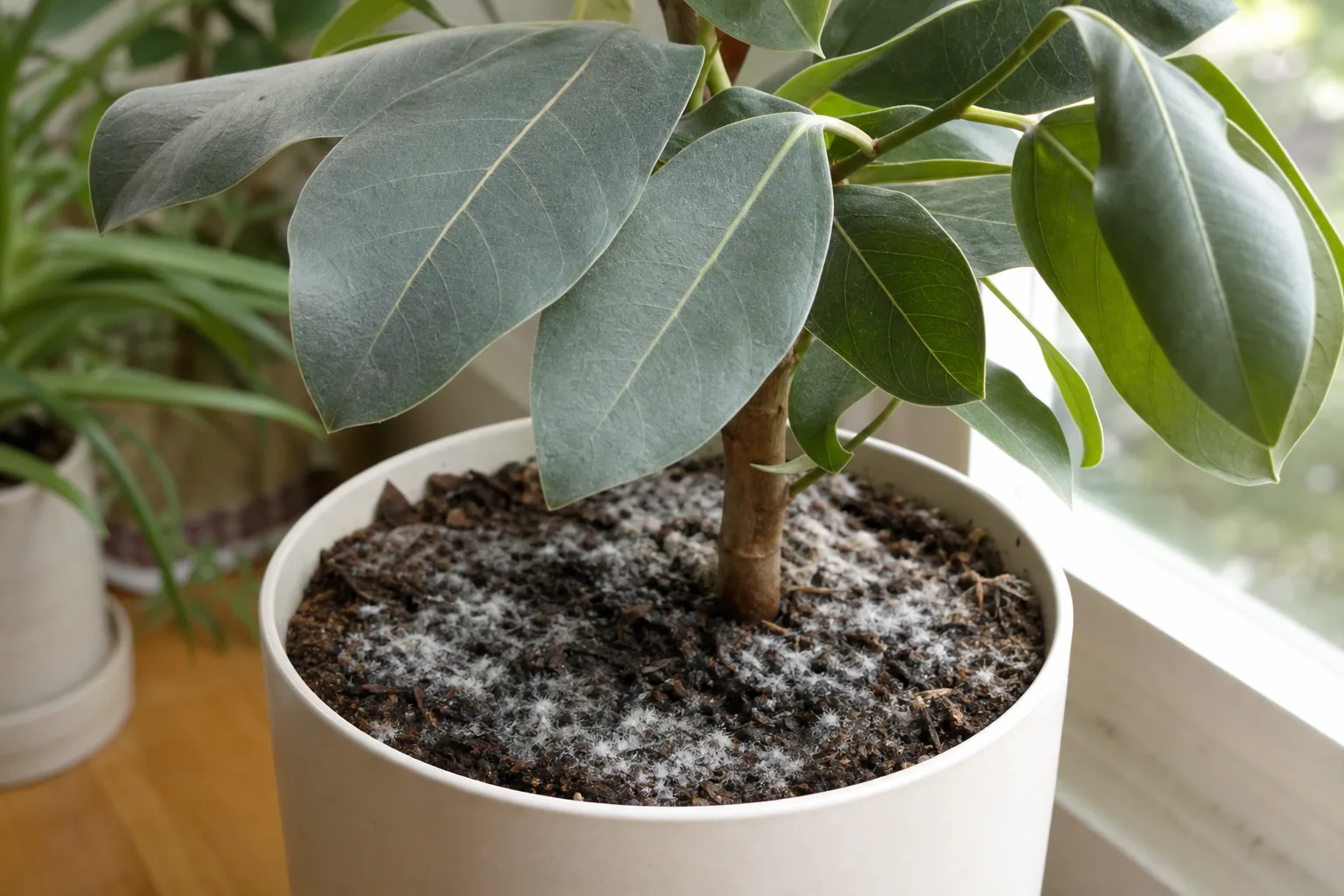
White or gray fuzz on Ficus Audrey's soil is usually harmless saprophytic mold feeding on wet organic matter-not a leaf disease. Scrape the top layer, let the surface dry before the next watering, and remove fallen leaves from the pot.
Mold on Soil on Ficus Audrey: Causes, Checks & Fixes
This guide covers mold on soil on Ficus Audrey. See also the general Mold on Soil guide, watering, and light pages for this plant.
Mold on Soil on Ficus Audrey: Causes, Checks & Fixes
Quick answer
White or gray fuzz on Ficus Audrey (Ficus benghalensis) potting mix is almost always saprophytic surface mold-a fungus feeding on decaying organic matter in soil that stays damp too long. It is unsightly, but it is not the same as a leaf or stem infection when the plant above soil still looks firm.
First step: scrape off the top 1–2 cm of moldy mix and let the surface dry before you water again. That single action removes active spores and breaks the wet surface habit that keeps mold returning. Do not reach for fungicide, repot, or change your whole watering routine until you have confirmed whether the roots are still healthy.
What mold on soil looks like on Ficus Audrey
On Ficus Audrey, mold usually appears as white, gray, or occasionally greenish fuzzy patches on the topsoil, sometimes spreading to the pot rim or visible through drainage holes. The growth can look cottony or thread-like. A faint musty smell near the pot is common when the surface has been wet for days.
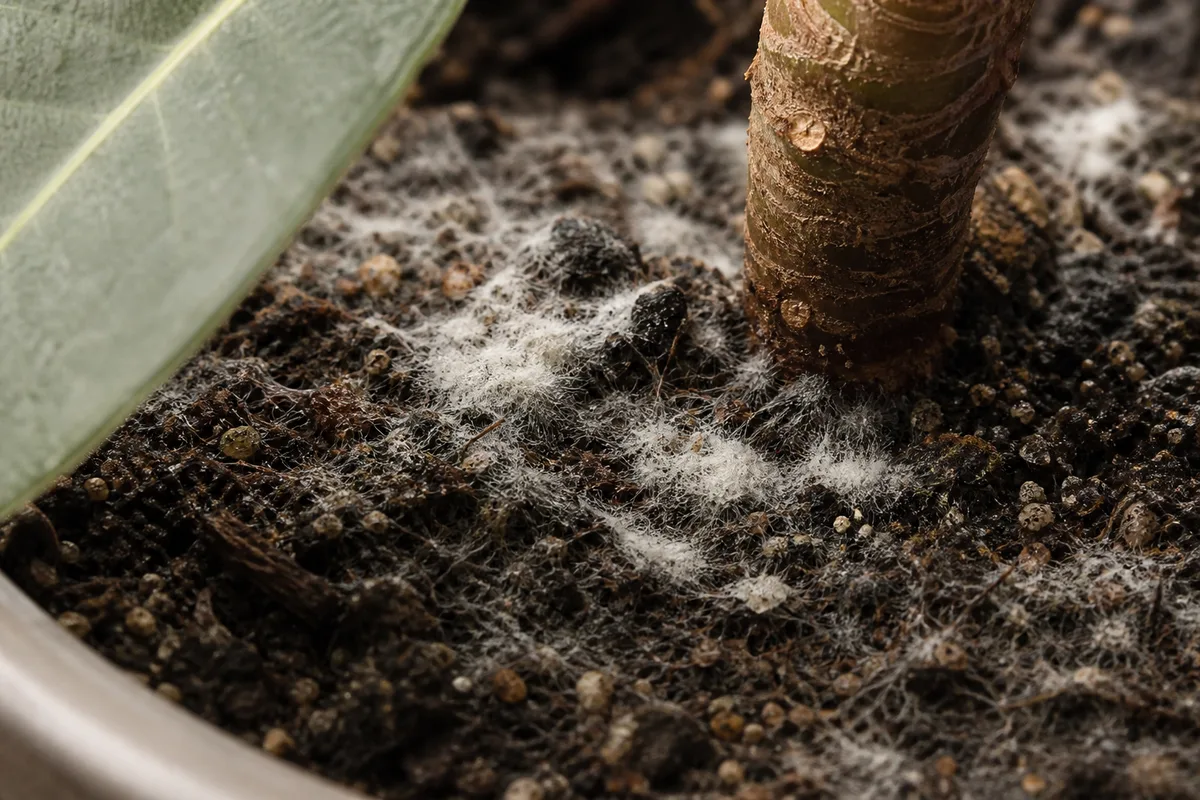
Mold on Soil symptoms on Ficus Audrey - compare with healthy tissue on the same plant.
Early on, the plant itself may look fine. Velvety green leaves stay upright, new tips may still be firm, and stems feel solid at the soil line. That contrast matters: mold on the mix with a healthy crown is usually a moisture signal, not an emergency.
Watch for these paired clues that change the picture:
- Fungus gnats hovering when you tap the pot or water from the top
- Topsoil that stays dark and cool three or more days after a drink
- Shed Ficus Audrey leaves sitting on the surface, breaking down into mush
- Yellowing lower leaves while the mix below still feels wet
Those combinations suggest the wet conditions behind mold are also stressing roots-not that the fuzzy layer itself is killing the plant.
Why Ficus Audrey gets mold on soil
Ficus Audrey is a tree-form fig that wants a full soak followed by a real dry-down at the surface. In most homes that means watering when the top 2–3 cm of mix feels dry-roughly every 7–10 days in warm active growth and every 14–21 days in cooler months. When that rhythm slips, the surface stays moist and fungi colonize organic particles in the mix.
Several Ficus Audrey-specific habits make surface mold more likely:
Overwatering on a calendar. Ficus are notorious for staying wet too long indoors. Yellow lower leaves are often the first leaf clue, but white mold can show up earlier on the surface while roots are still intact. Watering because a week passed-not because the mix dried-keeps the top layer fungus-friendly.
Low light slowing evaporation. Ficus Audrey needs bright indirect light. In a dim corner, the plant uses less water, the pot dries slowly, and the surface stays damp even if you water less than summer frequency suggests.
Velvety leaves shedding onto soil. Ficus Audrey drops older leaves during moves, drafts, or care changes. Those thick leaves decay on the pot surface and give saprophytic fungi a food source. Mold on debris-heavy topsoil is common even when watering is only slightly heavy.
Dense or oversized pots. Standard peat-based mix with only a little perlite holds moisture at the surface. An oversized container with a modest root ball leaves a wide ring of wet, underused soil that molds before the plant can drink it.
Poor airflow. Grouped plants, tight shelves, or decorative pot covers trap humidity around the soil line and slow surface drying-especially in rooms held at 50–60% humidity, which Ficus Audrey tolerates well but which can keep pots damp if air does not move.
The mold itself is typically a saprophyte breaking down dead organic matter. Their growth isn’t usually detrimental to plants. The real risk is what chronic wetness does next: reduced root oxygen, fungus gnat larvae, and eventual root decline if the pattern continues.
How to confirm the cause
Work through these checks before stacking fixes:
- Stem firmness at the soil line - Press the base gently. Firm, woody tissue with fuzzy soil only on top supports a surface-mold diagnosis. Soft, dented, or darkening stems mean inspect roots.
- Surface vs. deep moisture - Dry top 2–3 cm with a firm stem points to recent overwatering you can correct. Wet surface and wet mix deep down after many days confirms chronic saturation.
- Leaf pattern - Healthy foliage with mold alone is reassuring. Yellow lower leaves, limp stems, or widespread drop while soil is wet suggests overwatering or rot overlapping with mold.
- Debris on soil - Fallen leaves, old top-dressing, or compost-rich surface layers feed mold. Note whether scraping would remove both fuzz and decaying litter.
- Gnats and smell - Small flies plus musty odor mean the wet habitat is established. Mild white fuzz without gnats or sour smell is often an early, easier fix.
- Pot and drainage - Drainage holes open? Saucer emptied within 30 minutes? Cachepot holding standing water? Oversized pot for the root mass?
If the plant is firm, leaves are stable, and only the surface is fuzzy, treat as cosmetic mold with a moisture correction. If stems are soft or leaves keep yellowing on wet mix, unpot and inspect roots before assuming scraping is enough.
First fix for Ficus Audrey
Scrape off the top 1–2 cm of moldy soil and discard it.
Use a spoon or small trowel, work carefully around the stem base, and bag the removed mix rather than composting it indoors. You are lowering the active spore load and removing decaying organic material the fungus feeds on.
Then stop watering until the surface dries between waterings and the top 2–3 cm of remaining mix feels dry. On Ficus Audrey that often means waiting several extra days beyond your normal schedule-especially in winter or low light. Lift the pot: if it still feels heavy and the surface looks dark, wait longer.
Do not repot, fertilize, spray fungicide, or drench with cinnamon on day one. One clear surface reset plus a dry-down is the right first move when the plant above soil is still healthy.
Step-by-step recovery
After the first scrape and dry-down, work in this order if mold persists or gnats appear:
- Remove surface debris - Remove debris on the soil surface. Pick off fallen Ficus Audrey leaves and any old mulch on the pot. Debris is both food and a moisture trap.
- Refresh the top layer - Once the scraped area is dry, add a thin layer of fresh, dry potting mix with perlite to match your normal Ficus Audrey blend. Do not pack it down.
- Adjust watering - Resume only when the top 2–3 cm is dry. Water thoroughly until excess drains, then empty the saucer. In cool months or dim rooms, stretch the interval toward the longer end of the 14–21 day winter range.
- Improve airflow and light - Move the pot where it gets brighter indirect light and air can circulate-not a hot window draft, but enough brightness that the surface dries between drinks. A small fan in the room helps grouped plant shelves.
- Consider bottom-watering - After the surface has dried post-scrape, set the pot in a tray of water for 15–30 minutes so roots drink from below while the top stays drier. This reduces repeat mold and discourages gnat egg-laying.
- Address fungus gnats if present - Let the top 1–2 inches of soil dry completely before watering again, use yellow sticky traps for adults, and apply a Bacillus thuringiensis israelensis (BTI) drench for larvae if flies keep returning. Gnats and mold share the same wet-soil cause; drying fixes both.
- Repot only if mold keeps returning - If fuzz reappears within a week after corrected watering, the mix may be too water-retentive or the pot too large. Repot in spring into well-draining standard mix with extra perlite and a container only slightly larger than the root ball.
Skip chemical fungicides for harmless surface mold on a healthy Ficus Audrey. They do not fix the wet conditions that caused the problem and add unnecessary stress.
Recovery timeline
Surface mold should not return within one to two weeks once the top layer stays dry between waterings and debris is gone. The white fuzz itself does not spread onto Ficus Audrey leaves; disappearance of the patch is your first win.
Plant recovery is judged by the crown, not the old soil surface. Existing leaves do not change because mold is cleared. Look for:
- No new fuzzy growth after scraping
- Stable or emerging leaf tips over the next few weeks
- Pot weight dropping predictably before each watering
- Fewer or no fungus gnats within two weeks of drier surface conditions
If yellow leaves appeared from overlapping overwatering, lower foliage may drop once roots stabilize-that is normal shedding, not mold damage. New growth after four to eight weeks in warm bright conditions means the wet spell is behind you.
Worsening signs: mold returns within days, stems soften, sour smell intensifies, or leaves yellow and wilt while mix stays wet. Those mean escalate to a root inspection-not more scraping alone.
Lookalike symptoms
- Green algae on soil - Slimy green film in constant moisture and low light, often on the same wet pots. Fix is the same: dry the surface, brighten indirect light, adjust watering.
- Fungus gnats without visible mold - Damp organic mix can host larvae before fuzz is obvious. Dry the top layer and treat gnats; the underlying cause is still moisture.
- Powdery mildew on leaves - White coating on foliage, not soil. Wipe and improve airflow; do not confuse with harmless potting mix mold.
- Root rot - Mushy roots, soft stem base, wilt with wet soil. Mold may be present too, but rot requires unpotting, trimming decay, and dry repot-not surface scraping only.
- Mineral crust on dry soil - Hard whitish crust when water evaporates from dry mix is salt buildup, not fungal fuzz. Flush or repot if crusty; mold stays soft and cottony on damp soil.
Mistakes to avoid
Do not keep watering on schedule while mold is visible-the surface needs a dry period first. Avoid fungicide or heavy cinnamon as a first response; they mask symptoms without fixing wet culture.
Do not assume mold is harmless and ignore it for months. Chronic damp soil eventually stresses Ficus roots and invites gnats. Do not repot into a larger pot to “help drying”-extra wet volume worsens the problem.
Do not leave shed velvety leaves on the soil; they decay quickly and feed new mold. Avoid decorative pot covers that trap humidity around the drainage zone.
When scraping mold, wear gloves if you have sensitive skin-Ficus sap can irritate, and the plant is toxic to pets if leaves are chewed. Wash hands after handling soil and debris.
Ficus Audrey care cross-check
Mold is a checkpoint that your normal routine is leaving the surface wet too long. Revisit the basics:
- Light - Bright indirect light most of the day so the plant uses water and the mix cycles properly.
- Water - Top 2–3 cm dry before each drink; lighter pot weight confirms readiness.
- Mix - Well-draining standard potting soil with perlite; not straight heavy peat or garden soil.
- Container - Drainage holes open; saucer emptied after every watering.
- Season - Slow winter drying means longer intervals, not the same summer volume on a calendar.
- Stability - After a move, expect some leaf drop, but do not compensate with extra water while the surface stays damp.
Getting that rhythm right usually clears mold without heroic intervention.
How to prevent mold on soil next time
Let the top 2–3 cm of mix dry between waterings year-round, adjusting for season and light. Remove fallen leaves within a day or two. Keep pots slightly spaced for airflow and avoid letting cachepots hold standing water.
Bottom-water after the surface has dried if top watering repeatedly wets the fuzz-prone layer. Refresh the top inch of mix when old peat has broken down into a sponge-like mat. Repot every one to two years-or when soil structure collapses-so organic matter does not hold surface moisture indefinitely.
Watch for early warnings: a single white patch, one or two gnats, or topsoil that never lightens in color between drinks. Correct moisture then and Ficus Audrey rarely needs mold rescue twice.
When to worry
Treat surface mold as urgent when scraping plus a dry-down fails within a week, stems soften at the base, the pot smells sour, or yellowing leaves and wilting continue on wet mix. Unpot and inspect roots-soft brown roots mean rot treatment, not another surface refresh.
A small fuzzy spot on an otherwise firm Ficus Audrey in a bright room can wait for a measured care tweak. A spreading mat with gnats, odor, and declining foliage cannot.
Conclusion
Mold on Ficus Audrey soil is a moisture and hygiene problem more than a mysterious plant disease. Confirm firm stems and stable leaves, scrape the affected top layer, and let the surface dry before the next watering. Fix debris, airflow, and watering rhythm if fuzz returns. Judge success by a dry topsoil cycle and healthy new growth-not by whether old leaves change. Catch wet soil early and Ficus Audrey stays far easier to manage than fighting root decline later.
Related Ficus Audrey guides
- Ficus Audrey overview - Bengal fig biology and care hub
- Watering Ficus Audrey - top 2–3 cm dry-down rhythm
- Fungus gnats on Ficus Audrey - co-symptom of chronically wet mix
- Overwatering on Ficus Audrey - root stress beyond surface mold
- Root rot on Ficus Audrey - when wet soil has already damaged roots