Underwatering on Ficus Audrey: Causes, Checks & Fixes
Quick answer
Underwatering on Ficus Audrey shows up as a very light pot, dry mix 2 inches down, and limp or crisp-edged leaves. Many owners overcorrect after root-rot fear and wait too long-first step: water thoroughly until it drains, then resume checks when the top 2 inches dry again.
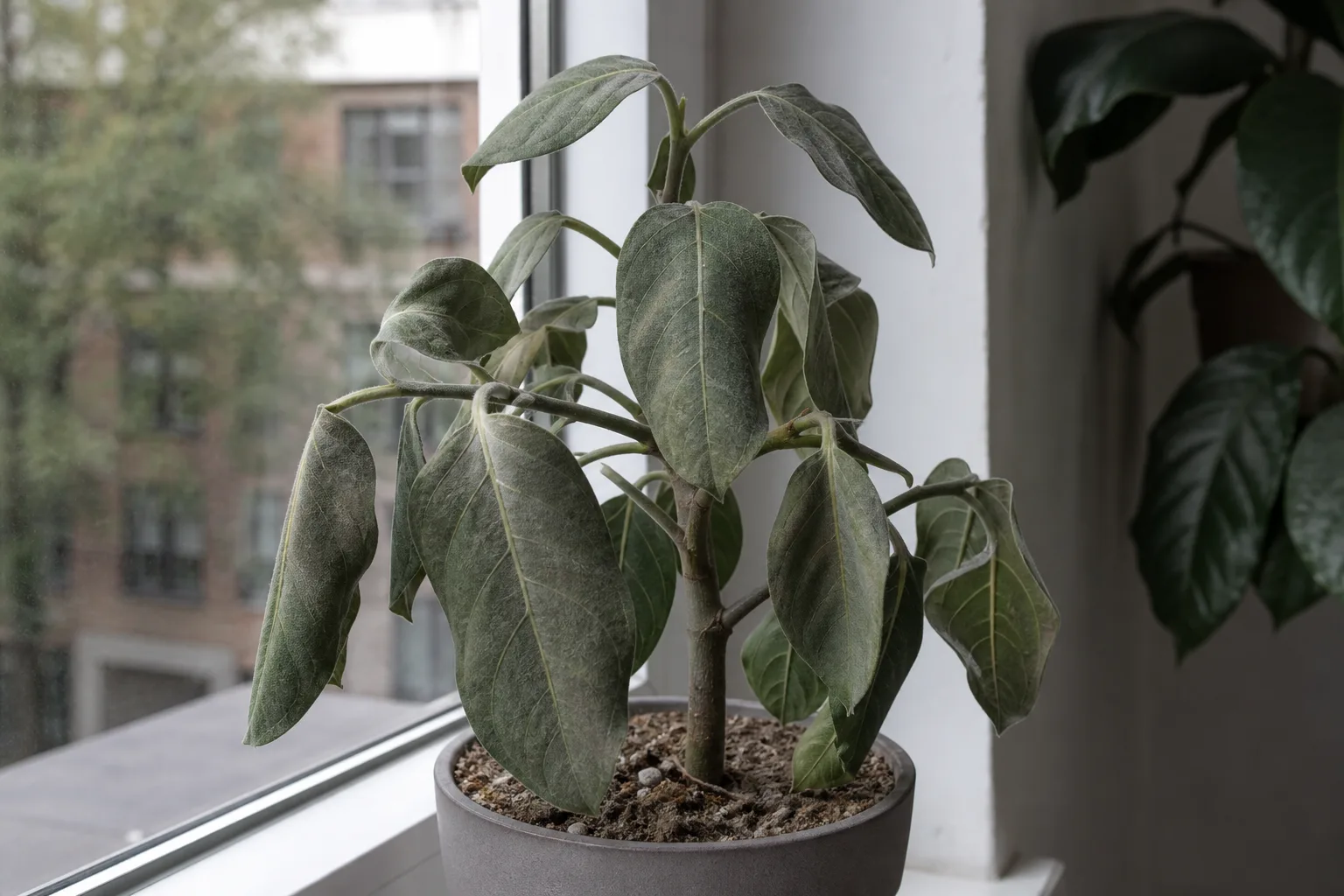
Underwatering on Ficus Audrey: Causes, Checks & Fixes
This guide covers underwatering on Ficus Audrey. See also the general Underwatering guide, watering, and light pages for this plant.
Underwatering on Ficus Audrey: Causes, Checks & Fixes
Quick answer
Underwatering on Ficus Audrey (Ficus benghalensis, Bengal fig) means the root zone stayed dry too long for this tree-form fig to replace the water it loses through its large, velvety leaves. The pot feels light, the top 2 inches of mix are dry, and foliage goes limp or develops dry, light brown spots.
Many owners underwater after reading that ficuses hate wet feet-yellow leaves and drop are often tied to soggy soil, so they wait too long between drinks. Ficus Audrey does want the surface to dry, but it does not want the entire root ball bone dry for weeks during active growth. For the full wet-dry rhythm, start with our Ficus Audrey watering guide.
First step: give one thorough watering until water runs freely from the drainage hole, then let the pot drain completely. Do not mist the leaves, do not fertilize, and do not pour daily sips-roots need a full rewet when drought is confirmed. Resume normal checks and water again only when the top 2 to 3 inches feel dry.
What underwatering looks like on Ficus Audrey
Early drought on Ficus Audrey is easy to miss because the plant tolerates brief dryness better than constant sogginess. By the time leaves look obviously tired, the mix has often been dry at depth for days.
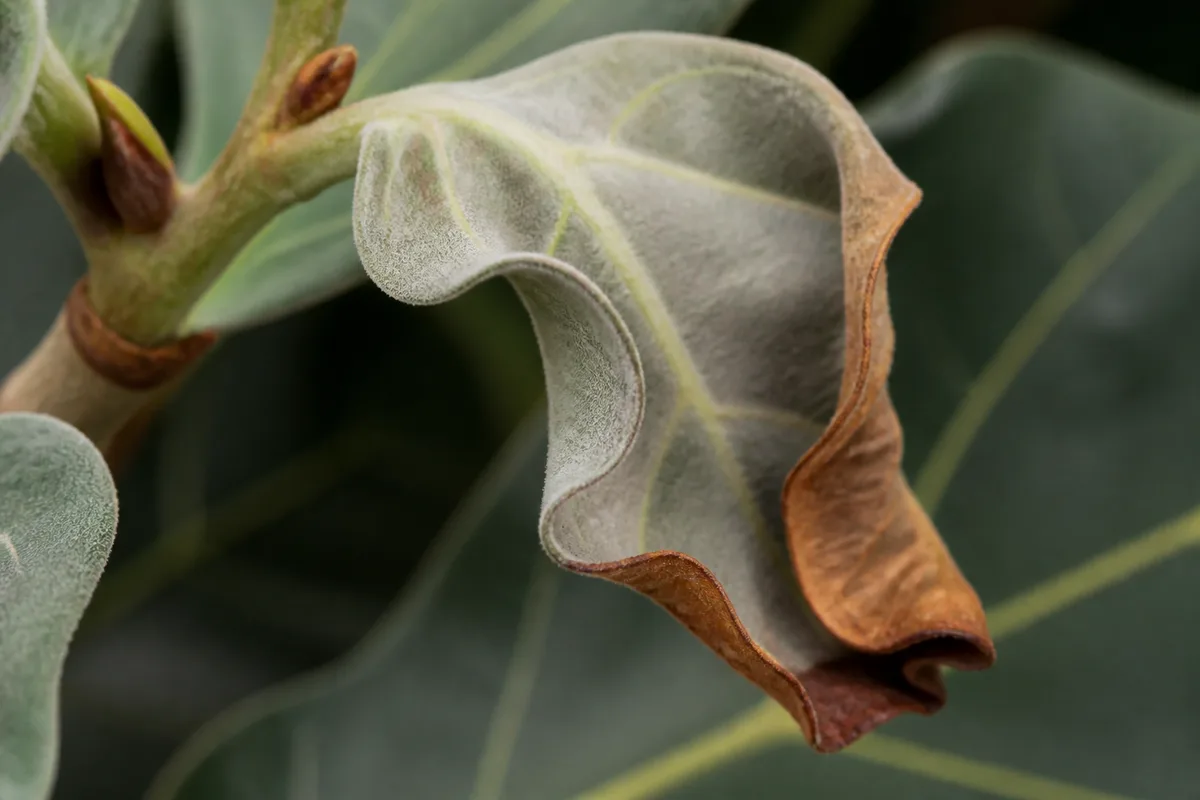
Underwatering symptoms on Ficus Audrey - compare with healthy tissue on the same plant.
Typical signs include:
- Limp, drooping leaves on a lightweight pot-stems stay firm, unlike soft rot at the base
- Dry, light brown spots on foliage, especially older leaves near the lower canopy-NC State Extension notes these spots result from underwatering on Bengal fig houseplants
- Crispy brown margins on leaf edges while the center still looks green
- Soil pulling away from the inside of the pot wall, sometimes with a dusty, pale surface
- Slow or stalled growth in summer despite good light-a dry Audrey stops pushing new leaves
- Premature leaf drop after you finally water, which can look like you made things worse
Ficus Audrey leaves are glossy green with prominent pale veins and a slightly fuzzy texture underneath. Under drought stress they lose turgor first-you will see the blade hang rather than hold its usual upright posture. Severe underwatering can make newer leaves look smaller or slightly curled upward as the plant conserves moisture.
What underwatering does not look like: yellow lower leaves on soil that stays wet for a week, a musty smell from the pot, fungus gnats hovering at the surface, or soft dark tissue at the soil line. Those patterns point to overwatering or root rot until a soil check proves otherwise.
Why Ficus Audrey gets underwatered
Ficus Audrey evolved in monsoon climates with heavy rain followed by real dry-down. Indoors, growers often overcorrect after reading that ficuses hate wet feet-and swing too far toward neglect. Underwatering is less common than overwatering on this species, but it still happens when care habits do not match how fast the pot actually dries.
Fear of root rot is the leading trigger. Because root rot can occur from overwatering on Bengal fig, many owners wait too long between drinks. Ficus Audrey does want the top of the mix to dry, but it does not want the entire root ball to stay bone dry for weeks during active growth.
Calendar watering in the wrong season causes the opposite miss: sticking to a sparse winter schedule while the plant sits in a hot, bright window that dries the pot in four or five days. Light, heat, and air movement change evaporation more than the month on the calendar.
Other Ficus Audrey-specific causes:
- Small or root-bound pots that lose moisture in days during spring and summer growth
- Terracotta or high airflow near heating vents or AC-surface dries fast while you assume the center is still moist
- Hydrophobic old mix after long neglect; water runs down the pot wall without rewetting the root ball
- Relocation stress masked as thirst-a recently moved Audrey may droop even with adequate moisture, but a dry finger test at 2 inches still separates true drought from leaf drop after a move
- Travel or busy periods when a large canopy drinks faster than expected
During cool winter rest with shorter days, Ficus Audrey uses less water and may need only every two to three weeks between drinks in many homes. Underwatering in winter is less common-but still possible if the plant sits in dry forced air or a sunny sill that bakes the mix.
How to confirm the cause
Ficus Audrey droops when overwatered and when underwatered-plants can wilt when soil is too dry or too wet-so foliage alone is not enough. Work through these checks before you pour:
- Top 2-inch finger test - Press into the mix near the trunk and at the pot edge. Virginia Cooperative Extension recommends testing to the second knuckle before watering. Dry and crumbly at that depth supports underwatering. Cool, clingy soil means wait, even if leaves look tired.
- Pot weight - Lift the container. A very light pot plus dry soil at depth confirms drought. A heavy pot with limp leaves suggests damaged roots or overwatering, not thirst.
- Soil gap test - Look for dry mix separated from the pot wall-a classic sign the root ball has shrunk from moisture loss.
- Stem base - Firm, pale tan stems at the soil line fit drought. Soft, dark, or mushy tissue at the base does not.
- Smell - No sour or swampy odor from the pot. Mustiness with wet soil rules out simple underwatering.
- Recent care - Did you skip several expected checks during a heat wave, vacation, or after repotting into very airy mix? Context matters.
If the top inch looks dry but the center still feels cool and dense, you may be seeing surface crust only-give it another day before watering. If water races through instantly and the pot weighs almost nothing two days after a drink, suspect hydrophobic soil rather than a normal dry cycle.
Underwatering vs. overwatering on Ficus Audrey
Because Ficus Audrey wilts in both directions, use pot signals-not leaf droop alone-to choose the right fix.
| Signal | Underwatering (dry soil) | Overwatering (wet soil) |
|---|---|---|
| Pot weight | Feather-light; lifts easily | Heavy days after watering |
| Top 2-inch soil | Dry, crumbly | Cool, clingy, or soggy |
| Leaf color pattern | Crispy brown edges; dry light brown spots on older leaves | Yellow lower leaves; dull green canopy |
| Stem base | Firm, pale tan | Soft, dark, or mushy at soil line |
| Smell | Neutral or dusty dry soil | Musty, sour, or swampy |
| Pests at surface | Uncommon | Fungus gnats often present |
| After thorough watering | Turgor returns in 24–48 hours if roots are healthy | Wilting may return within hours on a still-heavy pot |
When the right column matches your checks, read overwatering on Ficus Audrey and drooping leaves before assuming thirst. When the left column matches, proceed with the soak below.
First fix for Ficus Audrey
Water thoroughly once drought is confirmed at the 2-inch depth.
Set the pot in a sink or tub. Use a long-spouted can and water slowly across the entire soil surface until water runs steadily from the drainage hole. That single pass should rewet the full root ball-not just the top inch. Let the pot drain for fifteen to thirty minutes, then empty the saucer or cachepot completely.
This is the whole first fix. Do not add fertilizer, do not repot, and do not prune heavily on day one. Ficus Audrey recovers fastest when roots get one complete drink and then stable follow-up checks.
If the mix is extremely dry or repels water
When soil has pulled away from the pot or water channels straight through without soaking in, hydrophobic potting mix resists re-wetting and may need deliberate soaking:
- Bottom-water - Set the nursery pot in a tray of room-temperature water for twenty to sixty minutes until the surface darkens, then lift and drain fully.
- Repeat once if needed - Very dry peat-heavy mix sometimes needs two passes the same day.
- Confirm with weight - The pot should feel substantially heavier than before; if it still feels hollow-light, the center may not have rewet.
Avoid leaving the plant submerged for days. Ficus Audrey needs drainage and air between drinks-bottom-watering is a rewetting tool, not a new lifestyle.
Recovery timeline and what to expect
Mild underwatering - Leaves often regain turgor within 24 to 48 hours after a proper soak if stems are still firm and roots are healthy. You should see the canopy lift before new growth appears.
Moderate drought - Brown-tipped or spotted older leaves will not green up again. That tissue is dead. Success looks like stable existing leaves, no further drop, and firm new buds opening over the next two to four weeks during active growth.
Repeated dry cycles - Chronic underwatering stresses fine roots and can trigger leaf drop when water finally returns-a shock response that panics owners into daily watering, which swings the plant toward rot. Hold steady: one thorough drink, drain well, then wait until the top 2 inches dry again.
Documented recovery pattern: A floor-tree Audrey neglected for twelve days beside a bright west window in late July-soil gapped from the pot wall, canopy fully limp-regained turgor within forty-eight hours after one sink soak and bottom-water pass on hydrophobic peat. Old brown margins stayed brown; new leaf buds at branch tips opened normally the following week.
Signs recovery is working:
- Pot weight stays moderate between scheduled checks
- New leaves emerge full-sized and firm
- Drooping stops spreading to the newest growth tips
- Soil no longer gaps away from the pot wall after each cycle
Signs the problem is worsening:
- Stems softening at the base despite dry soil-unlikely to be drought alone; inspect roots
- Continued widespread drop after two proper soaks a week apart
- New leaves aborting or staying small while the mix alternates wet surface and dry core from shallow sips
- Wilting that returns within hours of watering on a heavy pot-root damage, not thirst
Most healthy Ficus Audrey plants recover fully from a single missed watering. Recovery from weeks of neglect depends on how much fine root tissue survived.
Lookalike symptoms to rule out
Overwatering - Yellow lower leaves, heavy wet pot, musty smell, fungus gnats, soft stems. Wilt with wet soil means roots may not be taking up water even though you watered recently.
Low humidity - Cracked or split leaves on an otherwise well-watered plant, especially near heat vents. Soil moisture will read normal at the 2-inch depth; see our low-humidity guide for the pattern that precedes margin burn without drought.
Relocation or draft stress - Ficus Audrey drops leaves when moved, even with correct moisture. If the pot is appropriately heavy and the 2-inch test reads moist, stabilize placement for two weeks before assuming drought.
Spider mites - Stippling, webbing, and dull leaves can mimic drought stress. Check leaf undersides and confirm soil dryness separately; spider mites need isolation and treatment, not just water.
Root-bound dry-out - A crowded root ball can dry in a day or two in summer. Underwatering signs appear quickly, but the fix eventually includes repotting one size up with fresh draining mix-not only more frequent drinks. When the pot dries every two days despite thorough soaks, inspect roots and follow our repotting guide after the plant stabilizes.
Mistakes to avoid
- Misting instead of watering - Velvety leaves appreciate moderate 50 to 80% humidity, but mist does not rehydrate dry roots.
- Daily shallow sips after one bad dry spell - Keeps the surface damp while the center stays drought-stressed or alternates poorly with air pockets.
- Assuming droop always means thirst - Pouring on wet soil worsens root decline.
- Cold water shock - Room-temperature water is gentler on roots already stressed from drought.
- Fertilizing a dry plant - Rehydrate first; salts on drought-stressed roots can burn fine tips.
- Compensating with an oversized pot - Solves nothing and invites rot once you start watering heavily.
How to prevent underwatering on Ficus Audrey
Prevention is a check habit, not a rigid calendar. Ficus Audrey wants the top 2 inches of soil dry between thorough drinks-a cycle that might mean every seven to ten days in bright summer growth and every fourteen to twenty-one days in cooler winter months in many homes. Your interval depends on pot size, mix, light, and humidity.
| Season / placement | Typical check interval | When to water |
|---|---|---|
| Bright summer active growth | Check twice weekly | Top 2 inches dry |
| Cool winter, lower light | Check weekly | Top 2 inches dry |
| Heat wave or skylight placement | Check every 3–4 days | Top 2 inches dry-may outpace calendar |
| After repotting | Check more often first 2 weeks | Mix dries unevenly until roots explore |
Build a practical routine:
- Check soil twice weekly in active growth; weekly in winter
- Learn your pot’s weight after watering versus when the 2-inch zone is dry
- Adjust for season and placement - A plant under a skylight in July outpaces the same plant in a north room in January
- Refresh hydrophobic mix when water always runs through without soaking
- Size pots appropriately - One inch up at repot time, not a dramatic jump that holds unused wet soil
If you travel, use a trusted sitter with explicit instructions to check the 2-inch depth-not to water on fixed days. Self-watering systems can help only when calibrated to your plant’s actual use rate.
When to worry
Underwatering is usually fixable, but not always harmless. Act the same day if the entire plant is collapsed, soil is dry throughout, and the pot is feather-light after heat exposure or prolonged neglect.
Inspect roots if two thorough waterings a week apart fail to restore turgor, or if leaf drop accelerates after rehydration. Healthy Ficus Audrey roots are firm and pale tan. Extensive brown, brittle root loss from long drought may limit recovery even after you correct watering-follow root rot guidance if mushy tissue is present.
Honest limit: a plant that has lost most of its root mass to repeated dry cycles may not support its canopy again without major pruning and months of stable care. Early correction-one full soak when the 2-inch test confirms dryness-avoids that outcome in nearly every case.
Related Ficus Audrey guides
- Ficus Audrey overview - Bengal fig biology and care hub
- Watering Ficus Audrey - monsoon wet-dry rhythm drought breaks
- Overwatering on Ficus Audrey - wet-soil wilt lookalike
- Drooping leaves on Ficus Audrey - when wilt is not thirst
- Wilting on Ficus Audrey - urgency and escalation paths
- Root rot on Ficus Audrey - when two soaks fail to restore turgor