Ficus Audrey Pruning: When, How, and Mistakes to Avoid
Ficus Audrey Pruning: When, How, and Mistakes to Avoid
Ficus Audrey Pruning: When, How, and Mistakes to Avoid
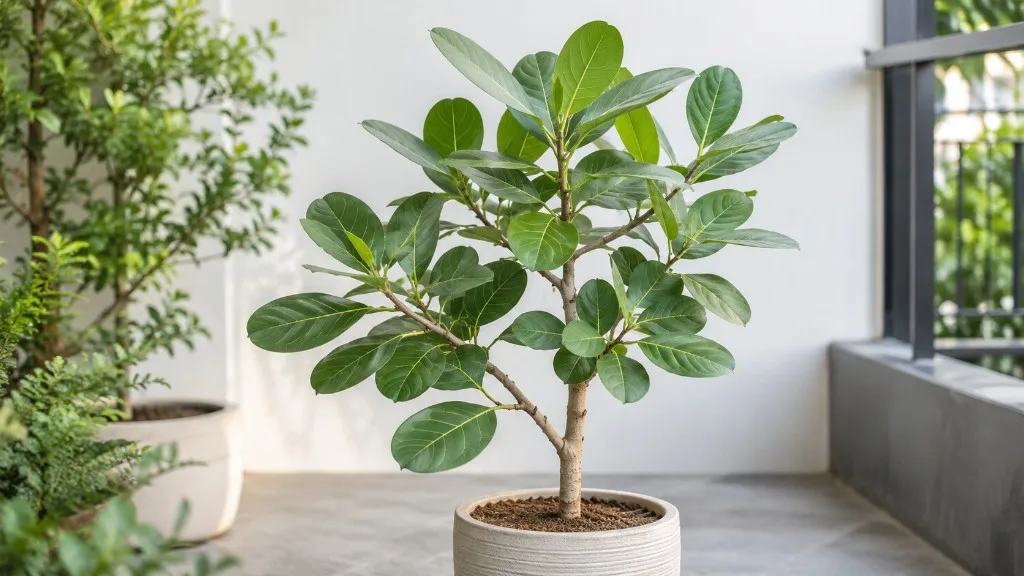
Ficus Audrey pruning starts with one inspection step: remove only leaves and stems that are clearly dead, diseased, or pest-damaged before you touch the growing tip. Ficus benghalensis - the banyan fig sold as Audrey - grows as an upright indoor tree with a single dominant leader and velvety green leaves. Without intervention it often stretches toward the ceiling, sheds older lower foliage, and leaves a bare trunk with a leafy crown at the top. Once failing tissue is cleared, you can decide whether to top the apical tip above a node to redirect growth into side branches.
NC State Extension describes banyan fig as a large tropical tree that can grow up to 100 feet tall with a wide spreading crown; container-grown specimens stay smaller but still show strong apical dominance - the terminal bud at the stem tip suppresses lateral buds until you remove it. The same source notes milky sap and sensitivity to environmental change; Audrey drops leaves after moves, repots, and hard prunes more readily than some ficuses, so plan structural cuts when conditions will stay stable for several weeks.
Quick Answer - Start With Dead and Damaged Leaves Only
Before any shaping cut, pull or snip leaves that are fully brown, shriveled, or hanging by a thread. Cut back stems that are blackened, mushy, or clearly broken. This cleanup costs the plant almost nothing and lets you see the live structure - leader length, node spacing, and where new buds might break.
Do not top the main stem, thin multiple branches, and repot on the same day. Audrey reacts to stacked change with widespread leaf drop. One category of work per week is safer than a full makeover.
What Pruning Does for Ficus Audrey
Pruning on Ficus Audrey overview serves three distinct jobs:
- Height and spread control when the leader hits the ceiling or window frame
- Branch activation by removing the terminal bud so lateral nodes below the cut can grow out
- Hygiene - removing failing leaves and stems so the plant does not maintain dying tissue
Pruning does not fix chronic overwatering on Ficus Audrey, cold drafts, or low light. Yellow leaves from soggy roots or a dark corner will return if you trim them without correcting the underlying stress.
Unlike weeping fig (Ficus benjamina), Audrey is often sold as a single-stem tree form. That makes topping the primary tool for bushiness rather than interior thinning of a multi-branched canopy.
What to Check Before You Cut
Read the leader, nodes, and bare trunk
Trace the main stem from soil to tip. Note where leaves attach - each attachment point is a node with dormant buds capable of breaking after a topping cut. Measure how much bare trunk sits below the lowest live leaf; Audrey rarely sprouts new foliage from old scarred bark indoors, so height reduction must happen at or just below existing foliage, not halfway down a naked trunk.
Check whether new growth at the tip looks firm and green. Soft, wrinkled top leaves suggest root or water stress - stabilize care before structural pruning.
Confirm care is stable
Audrey’s grower pattern is consistent: it reacts to change before it reacts to bad care. Avoid pruning during the first two to three weeks after purchase, during active leaf drop from a recent move, or the same week as Ficus Audrey repotting guide. Ficus Audrey light guide, stable temperature, and a predictable Ficus Audrey watering guide should be in place before you remove the apical tip.
When to Prune Ficus Audrey
Best window: late spring through early summer, when sap flow is active and new buds typically break within two to four weeks. Clemson HGIC rubber plant guidance on spring rejuvenation applies broadly to indoor Ficus species including Audrey.
Anytime: dead or clearly dying leaves and stems.
Avoid: heavy reshaping in late fall and winter, when light is low and regrowth may stall for months. Also skip major cuts during heat stress, active pest outbreaks, or while the plant is dropping leaves from a recent environmental change.
Wait until Audrey has been in its current spot with stable care for at least two to three weeks before structural work.
Tools, Sap, and Pet Safety
Use sharp bypass pruners for stems up to finger thickness; loppers are rarely needed on indoor specimens. Sterilize blades with 70% isopropyl alcohol between plants and after cuts on diseased tissue.
Nitrile gloves are mandatory. Ficus benghalensis bleeds milky latex sap from every cut. The sap irritates skin and the ASPCA lists fig (Ficus) as toxic to cats and dogs. Lay down a cloth or newspaper, dab dripping sap with a damp rag, and keep cuttings out of pet reach. Do not use wound sealant - it traps moisture and does not help ficus healing.
The First Cut to Make
After dead and damaged tissue is removed, the first structural cut - if you need one - is a single topping cut on the main leader at your target height. Choose a node at or slightly below the height you want the new canopy to start. Do not remove multiple branches in the same session unless they are dead.
If Audrey is already branched and only one long shoot extends past the others, shorten that shoot alone rather than cutting every branch tip at once.
Where to Cut - Node Placement for Branching
Identify the slight swelling where a leaf petiole meets the stem. Position your blade 5–10 mm above that node at roughly a 45° angle, with the high side of the cut on the side opposite the bud you want to activate. One clean stroke - crushed stems die back below the cut and bleed sap longer.
Removing the terminal bud releases apical dominance. During active growth, two or more shoots often emerge from nodes directly below the cut within two to four weeks. Choose a node that still has healthy leaves attached below it; those leaves feed the bud break.
Shaping Height and Encouraging Side Branches
For a single-stem Audrey that has reached the ceiling, one topping cut in late spring is usually enough to start a Y-shaped branch structure. Let the new shoots harden for three to four weeks before shortening them again.
If the plant already has two or three main branches, shorten the longest one to match the others - always cutting above an outward-facing node so the canopy stays open rather than tangled in the center.
Audrey will not reliably backbud on bare trunk wood indoors. If lower leaves have fallen and exposed bark, pruning cannot restore foliage to that zone without air layering a rooted section higher on the stem. Accept the tree-form silhouette or plan layering before removing upper branches.
How Much You Can Safely Remove
Follow the one-third rule: remove no more than one-third of healthy foliage in a single session. For a tall single leader, that often means one topping cut rather than stripping leaves along the trunk.
Stage larger reshapes across multiple cuts spaced three to four weeks apart during active growth. Emergency removal of dead or diseased wood does not count toward the limit.
Removing too much at once triggers heavy leaf drop, prolonged sap bleeding, and slow bud break - especially in autumn or after recent stress.
What Not to Cut
- Bare trunk below the lowest live leaf - cuts here rarely produce new branches indoors
- Every branch tip in one session - stagger tip pruning on multi-branched plants
- Soft new growth that has not hardened - wait until leaves mature and stems firm up
- More tissue while the plant is actively dropping leaves from a move or repot - stabilize first
Do not strip all leaves hoping to force flush growth. Audrey needs foliar surface to recover.
Pruning Yellow, Brown, and Pest-Damaged Leaves
Remove a yellow or brown leaf at the base of its petiole once it is more than half discolored. If yellowing is spreading up the plant, pause pruning and check watering, drainage, and light - mass yellowing is a care signal, not a trimming project.
For pest-damaged leaves with stippling or webbing, remove the worst leaves, treat the infestation, then prune additional damaged tissue after new growth appears. Sterilize tools after contact with mealybug or scale residue.
Using Pruning Cuttings
Healthy stem tips removed during spring pruning can root as stem cuttings in water or moist perlite, similar to fiddle leaf fig. Choose sections with at least one node, strip lower leaves, and keep humidity high. Air layering works for larger sections if you want a new plant before removing a tall leader.
Cuttings are optional - discard sap-bleeding trimmings safely if you do not plan to propagate.
Aftercare and Recovery Timeline
After pruning, keep Audrey in bright indirect light - it needs stronger light than many rubber plants for compact internodes. Water when the top 2–3 cm of soil dries; avoid letting the pot sit in soggy mix while the plant has open wounds.
Hold fertilizer for two to three weeks post-prune. Do not move the pot until new buds appear. Expect temporary shedding of older inner leaves after a topping cut; this is normal on a change-sensitive ficus if new shoots emerge at the cut within two to four weeks in spring.
Winter cuts may show little visible response until light increases in spring - that is not failure, but it is why timing matters.
Signs Pruning Worked - or Went Too Far
Success looks like: fresh buds swelling at nodes below the cut within two to four weeks during the growing season; firm new leaves unfurling; sap flow slowing within a day or two.
Too much or badly timed pruning looks like: widespread leaf drop continuing for weeks; no bud break by midsummer after a spring cut; soft dieback spreading below a crushed stem; persistent wilting despite stable watering.
If bud break fails on an otherwise healthy plant, check whether the cut was too far below the nearest active node or whether light dropped after pruning.
Mistakes to Avoid
- Pruning during acclimation - maximizes defoliation on a plant that already drops leaves when moved
- Dull blades - crush stems and extend sap drip
- Topping in winter - months without visible response
- Ignoring sap on floors and furniture - stains and pet hazard
- Expecting the lower trunk to re-leaf after removing all lower branches
- Pruning to fix overwatering yellowing - roots must recover first
Conclusion
Ficus Audrey pruning begins with dead and damaged tissue, then - when the plant is stable and actively growing - tops the leader 5–10 mm above a node to release apical dominance and encourage side branches. Respect milky sap, pet toxicity, and Audrey’s tendency to drop leaves after change. Stage large reductions across spring cuts, keep light and water steady after trimming, and treat temporary shedding as normal when new growth confirms the cut worked. Done with restraint, Audrey becomes a fuller small tree instead of a single spindly column against the ceiling.
When to use this page vs other Ficus Audrey guides
- Ficus Audrey overview - Start here for whole-plant context before deep-diving this topic.
- Ficus Audrey problems hub - Jump to symptom-specific fix guides when this care topic does not resolve the issue.
- Leggy Growth on Ficus Audrey - Escalate here when pruning adjustments are not enough.
- Slow Growth on Ficus Audrey - Escalate here when pruning adjustments are not enough.
- Brown Tips on Ficus Audrey - Escalate here when pruning adjustments are not enough.