Slow Growth on Ficus Audrey: Causes, Checks & Fixes
Quick answer
Ficus Audrey is a naturally slow-to-moderate grower-roughly 6 to 12 inches per year in good light, with a clear winter pause. First step: check whether new leaves are flushing at the tip this season, then confirm bright indirect light and top 2–3 inches of soil drying before you water again.
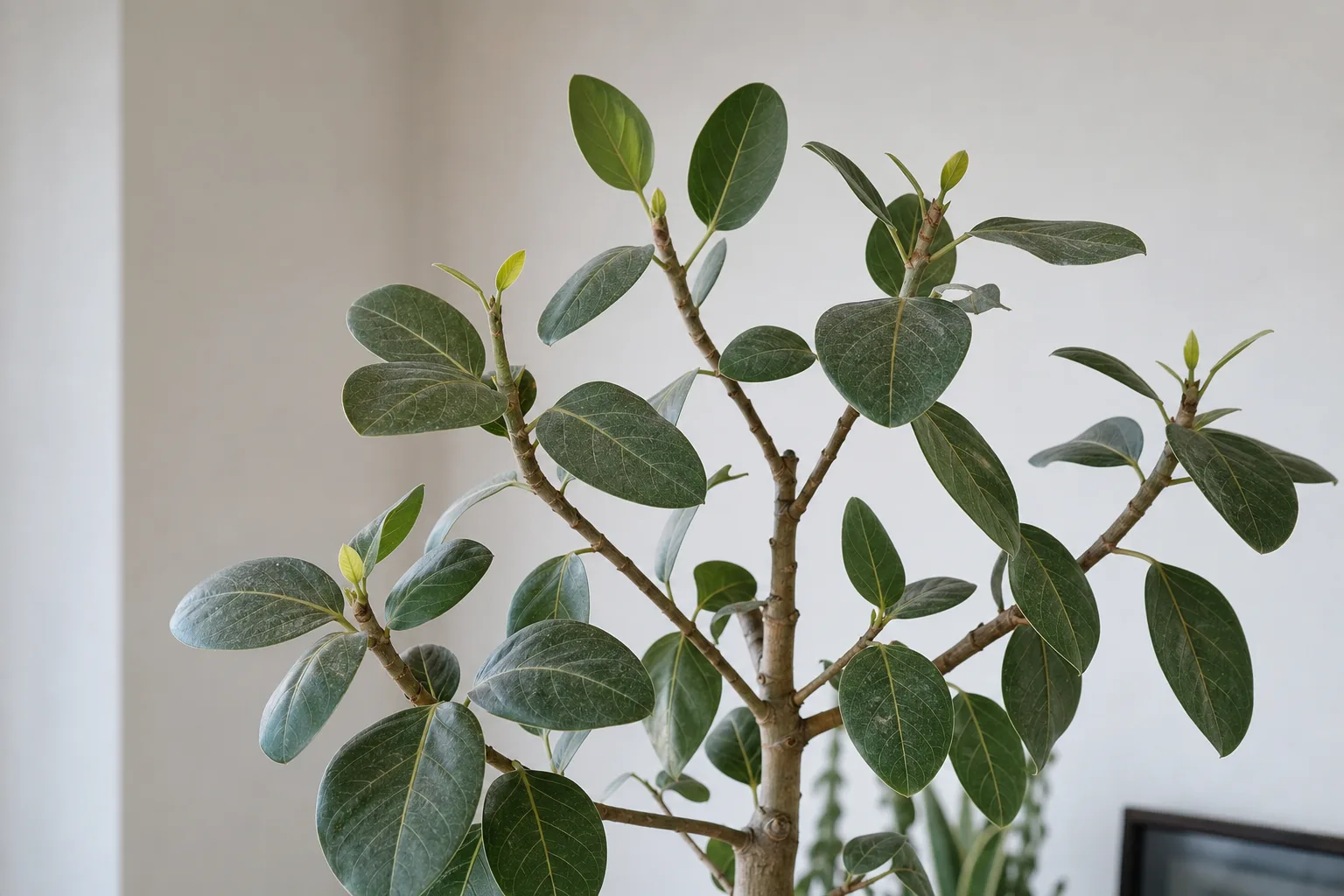
Slow Growth on Ficus Audrey: Causes, Checks & Fixes
This guide covers slow growth on Ficus Audrey. See also the general Slow Growth guide, watering, and light pages for this plant.
Slow Growth on Ficus Audrey: Causes, Checks & Fixes
Quick answer
Slow growth on Ficus Audrey (Ficus benghalensis ‘Audrey’) is not always a care failure. This warm-climate banyan cultivar is a medium-paced grower by nature-slower than pothos, steadier than many fast tropical vines, and often quieter through short winter days even when older foliage stays firm and gray-green. Indoors in bright indirect light, many specimens add roughly 6 to 12 inches of height per year and push a new leaf pair every few weeks through spring and summer.
When growth stalls abnormally, insufficient light at the canopy is the usual limiter-not fertilizer, not humidity alone, and not impatience during a normal winter pause. Audrey tolerates moderate indirect light better than a fiddle leaf fig, but plants in dim rooms grow more slowly and use less water-a combination that makes wet soil and stalled tips look like unrelated problems.
First step: look at the growing tip for new leaves and note the calendar. A firm tree with no tip flush in December is expected. No new leaves for eight or more weeks during a bright warm summer is a stall. After the season check, confirm bright indirect light at the canopy and whether the top 2 to 3 inches of soil dry before the next watering per our watering guide. Do not repot, fertilize, or prune heavily on the same day you diagnose-fix light and seasonal rhythm first.
Why Ficus Audrey grows slowly (and when that is normal)
Ficus Audrey evolved as a large tropical fig under bright filtered light and monsoon-dry cycles-not as a low-light foliage plant. Indoors it tolerates less light than it prefers, but tolerance shows up as fewer new leaf pairs, smaller blades, and longer gaps between flushes rather than obvious collapse. That makes slow growth easy to misread as “fine” until a whole warm season passes with no tip activity.
Normal slow periods include:
- Winter quiet. Shorter days, cooler rooms, and reduced watering rhythm from the watering guide mean little or no tip flush for weeks while older foliage stays firm. Do not confuse that pause with a problem requiring fertilizer.
- Recent repotting. After upsizing, Audrey often redirects energy into roots for two to three weeks before pushing a new leaf pair. That pause is normal, not failure-see repotting for spring timing.
- Species pace indoors. Even in good light, container F. benghalensis grows more slowly than the same species in frost-free ground. The ‘Audrey’ cultivar is selected for manageable indoor proportions, not rapid juvenile sprinting.
Abnormal slow growth-the kind this page addresses-means no meaningful tip leaves through an entire spring and summer while the plant sits in moderate or dim light, chronically wet soil, cold drafts, or an aggressively root-bound pot. That pattern differs from a winter rest, a two-week post-repot pause, or the visible stretch covered on our leggy growth page.
What slow growth looks like on Ficus Audrey
On Ficus Audrey, slow growth has a recognizable signature at the apex, where new oval leaves emerge from a red-brown sheath:
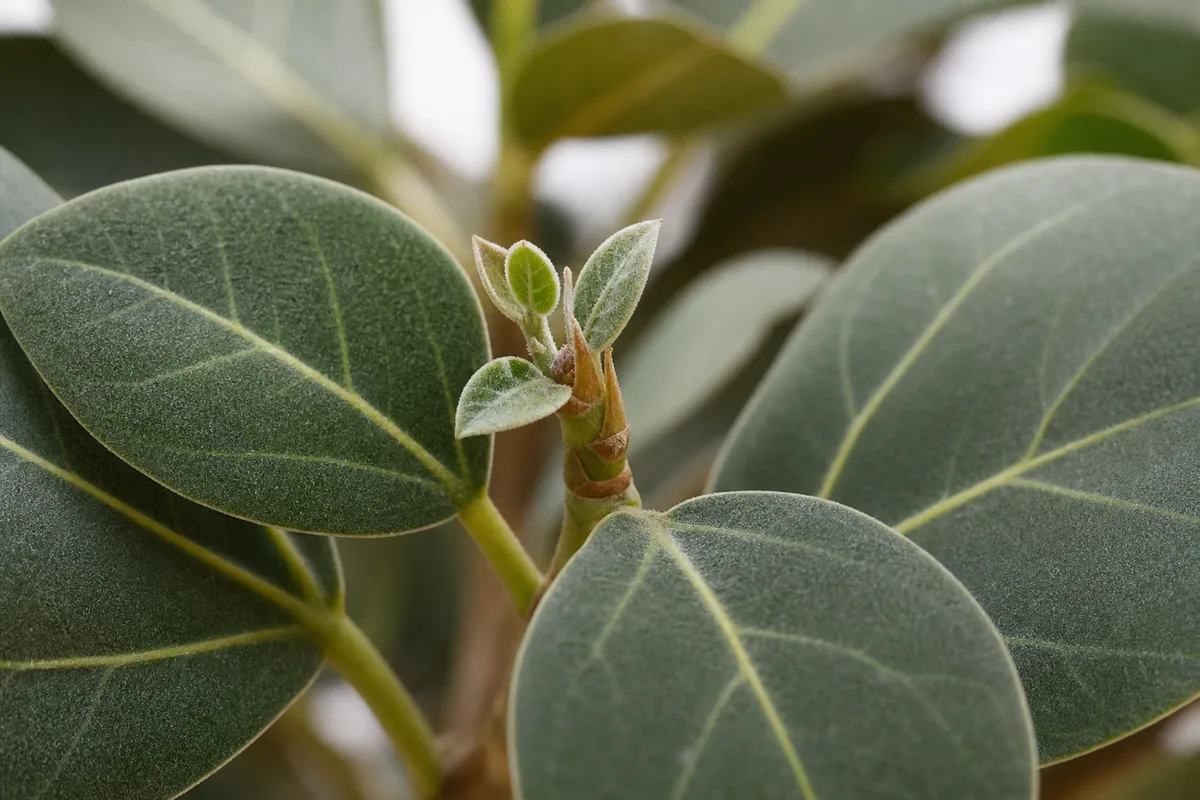
Slow Growth symptoms on Ficus Audrey - compare with healthy tissue on the same plant.
- No new leaf pair for many weeks despite firm, upright existing foliage
- Only one or two new leaf pairs per warm season in a dim room-far below what the same plant produces near a bright east or filtered south window
- Smaller or slower-opening new leaves compared with older leaves from brighter months-without the long naked internodes that define etiolation
- Stable pot weight and predictable dry-down when the issue is light alone; heavy wet pot when overwatering in dim conditions compounds the stall
- Static canopy height while the plant looks green and “healthy”-no lean or dramatic stretch during true winter dormancy in an already-bright window; the tree simply waits for longer days
This differs from decline: yellowing lower leaves with sour soil, soft stem bases, or wilting with damp mix point to overwatering or root rot, not species-normal pace. It also differs from leggy growth, where long internodes, window lean, and bare lower trunk dominate-even though insufficient light is often the root cause of both slow and leggy patterns indoors.
Ficus Audrey vs. fiddle leaf fig growth expectations
Mixing up Audrey and Ficus lyrata leads to false alarms about slow growth.
Ficus benghalensis ‘Audrey’ typically reaches 6 to 10 feet indoors over several years as an upright single-trunk tree with fuzzy gray-green leaves roughly 3 to 6 inches long. In strong bright indirect light, a mature specimen may produce several new leaf pairs per warm season-sometimes one every few weeks at peak summer. In a dim interior spot, zero to one new leaf pair per year is common even when the plant looks green.
Ficus lyrata (fiddle leaf fig) can surge faster in peak summer light but is less forgiving of placement changes and watering mistakes. Audrey’s moderate pace is a feature, not a defect-comparing weekly inch gains to a peak-season fiddle leaf will always make Audrey look “slow.”
Neither species is a low-light tree. Both need the bright placement described in our overview-Audrey simply spends its energy on steady upright architecture rather than dramatic leaf size jumps.
How this differs from related problems
| Pattern | Likely issue | Where to read next |
|---|---|---|
| Long internodes, window lean, bare lower trunk | Etiolation / stretch | Leggy growth |
| No new leaves, firm plant, dim room, winter months | Normal dormancy or light limit | This page + light guide |
| No new leaves, wet heavy pot, yellow lower leaves | Overwatering / root stress | Overwatering |
| No new leaves after spring repot, slight pause | Transplant recovery | Repotting guide |
| Sudden leaf drop days after a move | Relocation shock | Leaf drop |
| Pale tiny new leaves in bright window, no feed in years | Under-fertilization in active season | Fertilizer guide |
| Uniform stippling on leaf undersides | Spider mites | Spider mites |
Slow growth owns the baseline question: “Is my Audrey pace normal?” Leggy growth owns the stretch pattern-long gaps between leaves reaching toward glass-even when both pages share the same first fix of more usable light. If internodes are lengthening and the canopy leans, read leggy growth for etiolation-specific recovery; return here when the issue is months without tip flush rather than visible stretch.
Why Ficus Audrey growth stalls abnormally
Insufficient light slowing metabolism
Audrey needs bright indirect light most of the day-appropriate light supports healthy foliage growth indoors. In genuinely dim locations growth nearly stops and the plant becomes overwatering-prone because metabolism drops and transpiration falls. Photosynthesis fuels growth; fertilizer cannot replace photons. See not enough light for window-direction detail.
Overwatering in low light
Warm-climate figs prefer thorough watering followed by partial dry-down. NC State Extension recommends watering when the top 2 to 3 inches of soil feel dry. Wet roots in shade lose function before obvious rot. A stalled Audrey in a north hallway with damp mix needs less water and more light, not more feeding.
Root-bound pot after two to three years
Dense circling roots limit uptake even when surface care looks correct. Check drainage holes and lift the root ball if tip growth stopped despite good light. Audrey prefers to be slightly snug but severe binding-water running straight through a dense root ball-stalls new tissue until repotting.
Relocation and environmental stress
Ficus species react to moves with temporary leaf drop while hormones adjust. Owners see bare branches and assume slow growth from watering errors. Hold placement and moisture steady in bright indirect light for four to six weeks after a move before repotting or feeding-overlap with leaf drop.
Cold drafts and temperatures below comfort range
NC State lists preferred houseplant temperatures between 65 and 80°F with protection from cold drafts. Sustained chill below about 55°F (13°C) stalls metabolism and can yellow older leaves even when light is otherwise adequate. Keep root zones off cold window ledges in winter.
Nutrient depletion in old mix
Pale small new leaves on a plant that has not been fed in years may need dilute active-season fertilizer-but only after light is adequate and roots are healthy. See fertilizer. Skip feed entirely in winter on a dormant plant.
Dust on fuzzy leaves blocking light
Audrey’s velvety leaf undersides trap dust faster than glossy foliage. Grime blocks photosynthesis on a plant already in marginal brightness-wipe monthly with a damp cloth; do not use leaf shine products.
How to confirm the cause
Work through these checks in order:
- Season and tip timeline - When did the last leaf pair unfurl? Winter silence is normal; summer silence is not.
- Shadow test at canopy - Bright indirect light produces a clear soft shadow at the top leaves without scorching midday sunbeams. Light intensity drops rapidly with distance from the window.
- Internode and leaf size - Long gaps with small pale new leaves and window lean point to leggy etiolation; compact firm gray-green tips with no stretch mean adequate photons but possibly another limiter.
- Soil moisture at depth - Top 2 to 3 inches should dry between waterings; perpetual dampness in dim rooms pairs stall with root risk.
- Recent move - Leaf drop within two weeks of relocation suggests shock; hold steady before major interventions.
- Root-bound signs - Circling roots at holes or slow water uptake despite correct schedule.
- Pest scan - Dusty fuzzy leaves attract spider mites in dry air; stippling slows vigor secondary to pests.
If the plant is firm, pest-free, and stable with no new leaves only in winter or for two to three weeks after repotting, slow growth is likely expected behavior. If zero warm-season tip flushes appear in moderate light, light correction is the first hypothesis.
First fix for Ficus Audrey
If no tip growth has appeared for months during warm weather and soil is not waterlogged: move the tree within about three feet of an east window or filtered south or west exposure.
East-facing placement is often ideal-gentle morning sun, then bright indirect day. Add a full-spectrum grow light 12 to 14 hours daily in winter if natural light is weak-supplement for no more than 16 hours total light per day. Rotate the pot every few weeks for even canopy development.
Hold everything else steady while you test the move:
- Do not repot on the same day.
- Do not fertilize a stressed or stalled plant.
- If the pot stays wet in the current dim spot, allow the top 2 to 3 inches to dry before the next watering per watering guidance.
If roots clearly circle the pot and light is already good, repot one size up in spring with well-draining mix-never oversize the container expecting faster growth.
Make this one change, wait three to six weeks through the active season, then reassess tip flush before stacking other treatments.
Step-by-step recovery
After the initial correction:
- Hold placement stable for four weeks-repeated moves restart ficus stress cycles.
- Match watering to dry-down in the brighter spot; light increases water use.
- Wipe fuzzy leaves monthly so dust does not block light to the leaf surface.
- Feed once lightly after the first strong summer flush if the plant has not been fertilized in a year.
- Repot if root-bound in early spring; water once to settle and wait two weeks before judging tip growth.
- Move off cold ledges and keep room temperatures roughly 65 to 80°F (18 to 27°C) during active months per species preference.
- Treat mites if stippling appears on undersides.
Change one variable at a time so the next leaf pair tells you whether the fix worked.
Recovery timeline
Two to four weeks after a light upgrade in spring or summer: The next emerging leaf pair should unfurl more confidently; new leaves should look firmer than the most recent pale flushes from dim conditions.
Three to six weeks: Many specimens in corrected light produce a second new leaf pair where they previously added one per season-or resume a every-few-weeks pace at peak summer in a bright east window.
One full growing season: Judge success by total new leaf pair count and leaf size versus the prior year, not by old leaves enlarging. Existing foliage does not grow significantly faster after care improves.
Winter: Expect little to no new growth even after a successful light fix. That pause is normal; do not force growth with fertilizer or extra water.
Post-repot: Mild transplant pause of two to three weeks is common before roots re-anchor.
Relocation: Leaf drop can pause tip flush for four to six weeks while the tree stabilizes.
Worsening signs: Yellowing with wet soil, soft stems, or leaves dropping in waves mean escalate to root inspection-not more light alone.
Lookalike symptoms
Normal winter pause. No tip flush for weeks but firm canopy and appropriate reduced watering in cool short days. Resume normal spring care when days lengthen.
Leggy stretch. Long internodes with small leaves reaching toward glass; primary symptom is architecture, not absence of growth. See leggy growth-this page covers pace, that page covers stretch.
Relocation leaf drop. Sudden shed after a move without mushy roots; hold stable care in bright indirect light.
Root rot. Soft stems, sour soil, yellow waves despite corrections. Inspect before fertilizing.
Fiddle leaf fig expectations. Audrey is intentionally slower and more forgiving; do not compare weekly inch gains to Ficus lyrata peak growth.
What not to do
Do not fertilize heavily in dim corners to force speed-that burns stressed roots. Do not increase winter watering because tip growth paused-wet cool soil stalls roots further.
Do not repot into an oversized pot expecting a growth spurt. Do not move the tree repeatedly while diagnosing; ficus stress extends stall timelines.
Do not ignore dust on fuzzy leaves-blocked light reduces photosynthesis on a plant already in marginal brightness. Do not treat every slow month as legginess-if internodes stay normal but flushes are infrequent, the issue is pace or environment, not etiolation.
How to prevent slow growth next time
Place new Audrey trees where the canopy receives strong indirect light most of the day. Repot every two to three years before aggressive root circling. Feed lightly in summer only. Accept winter quiet without cultural panic.
Photograph the tip monthly during growing season-a new leaf pair every few weeks in bright conditions means alignment. Silence through a bright summer is the early warning.
Track new leaf pair count per warm season rather than day-to-day changes. A stable Audrey that adds several leaf pairs in a sunny window is doing what the species does indoors; zero tip flushes through summer in moderate light is the signal to fix placement first.
When to worry
Slow growth alone is low severity for Ficus Audrey when foliage is firm and gray-green. Escalate if:
- No tip growth appears for three or more months through spring and summer in improved light with correct watering
- Soil stays wet and sour while growth is zero-possible root decline
- Soft stem bases or widespread yellowing accompanies the stall
- Mass leaf drop continues more than six weeks after a move despite stable bright care
Winter pause with firm gray-green foliage is low urgency. Pale tiny new leaves on long internodes in a dim room need light correction within weeks-see leggy growth if stretch dominates.
Ficus Audrey care cross-check
Steady tip growth combines bright indirect light, top 2–3 inch dry-down watering, and stable placement. Before adding treatments, align the basics from our cluster guides:
- Overview - species rhythm, fuzzy-leaf care, fiddle leaf comparison
- Light - window targets, grow lights, acclimation
- Watering - dry-down trigger, winter reduction
- Fertilizer - active-season feed only
- Repotting - one-size-up timing
A warm-climate fig in a dim wet corner will stall every season until photons and moisture match how F. benghalensis metabolizes indoors. Get the window right, match water to the new metabolism, and judge every fix by new firm leaves at the apex-not by whether older foliage suddenly enlarges.
Conclusion
Ficus Audrey slow growth is often normal moderate pace or winter pause, not failure. Check the apex for new leaves, separate seasonal slowdown from summer stall, and fix light at the canopy or wet roots in dim corners first. Cross-check leggy growth if internodes stretch and the canopy leans; cross-check leaf drop after moves. Judge recovery by the next firm leaf pair at the tip-not by comparing Audrey to faster houseplants or expecting old leaves to surge.
When to use this page vs other Ficus Audrey guides
- Ficus Audrey watering guide - Use for routine moisture checks before assuming slow growth is the main issue.
- Ficus Audrey problems hub - Browse all 17 common issues on this species.
- Not Enough Light on Ficus Audrey - Different entry point when symptoms overlap with slow growth.
- Leggy Growth on Ficus Audrey - Different entry point when symptoms overlap with slow growth.
- Yellow Leaves on Ficus Audrey - Different entry point when symptoms overlap with slow growth.