Aphids on Ficus Benjamina: Causes, Checks & Fixes
Quick answer
Aphids on Ficus Benjamina cluster on tender new shoots and leaf tips. First step: isolate the plant and rinse stems and leaf undersides with lukewarm water in a shower or sink before any spray.
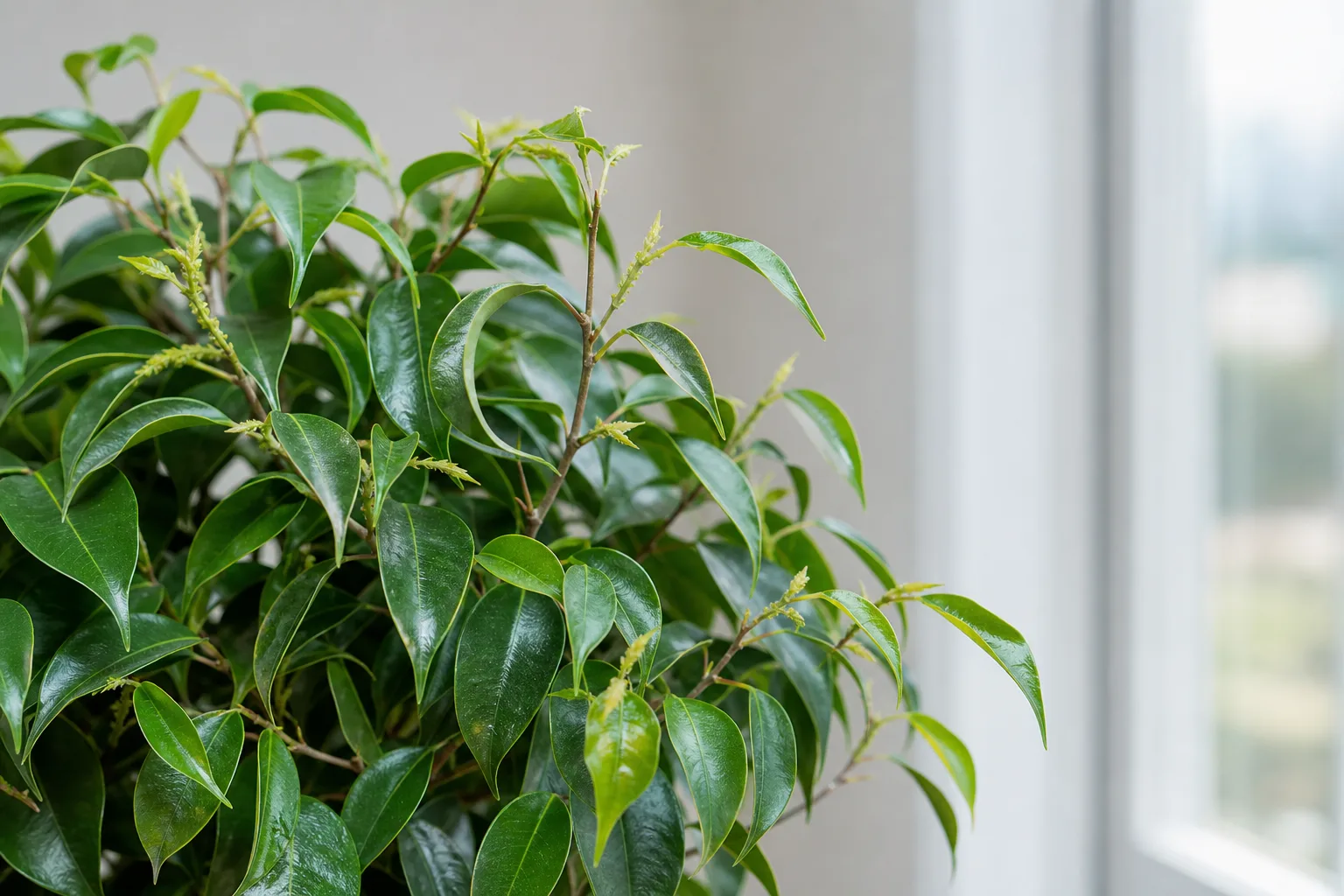
Aphids on Ficus Benjamina: Causes, Checks & Fixes
This guide covers aphids on Ficus Benjamina. See also the general Aphids guide, watering, and light pages for this plant.
Aphids on Ficus Benjamina: Causes, Checks & Fixes
Quick answer
Aphids on Ficus Benjamina (Ficus benjamina, weeping fig) are small sap-sucking insects that settle on the softest new growth-unfolding leaf tips, young side shoots, and tender stem joints. They are common on indoor ficuses because the plant pushes frequent flushes of leaves when light and water are steady, and aphids reproduce quickly on that tender tissue.
First step: isolate the tree and rinse it. Move it away from other houseplants, then wash stems and leaf undersides with a lukewarm shower or sink spray strong enough to knock insects loose but not so forceful that branches snap. Confirm live aphids before reaching for soap or oil-many weeping fig problems look like pest damage but trace to draft stress or overwatering on Ficus Benjamina instead.
What aphids look like on Ficus Benjamina
On weeping fig, aphids usually show up as clusters on the newest leaves and branch tips, not scattered evenly across older glossy foliage. Individual insects are tiny-roughly 1/16 to 1/8 inch-pear-shaped, with visible legs and antennae. Most are green, but colonies can also look yellowish, brown, or black depending on species.
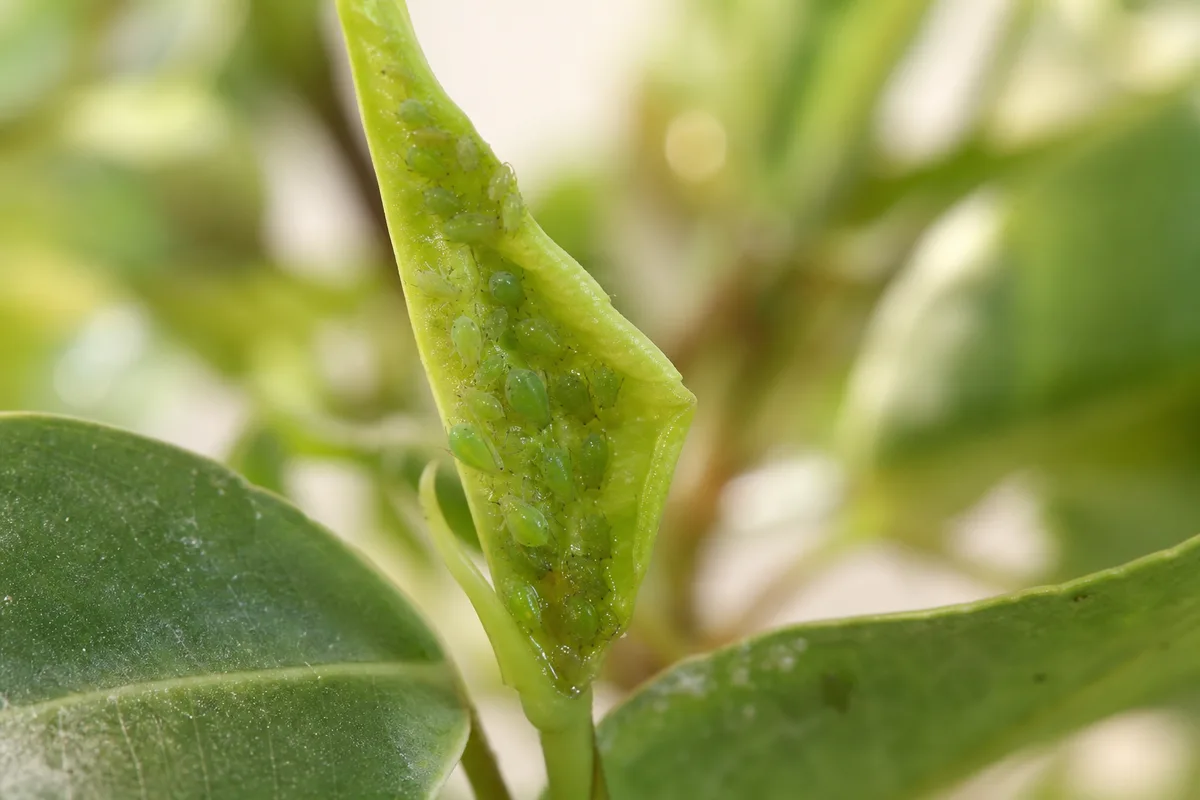
Aphids symptoms on Ficus Benjamina - compare with healthy tissue on the same plant.
Typical signs on Ficus Benjamina overview include:
- Sticky, shiny honeydew on leaf surfaces or on the floor beneath the canopy
- Black sooty mold growing on that honeydew, especially visible on the fig’s glossy leaves
- Curled or puckered young leaves at the growing tips while older leaves still look normal
- Ants climbing the trunk or pot-often a clue that aphids are feeding above
- Whitish shed skins stuck near colonies; these are old molted exoskeletons, not live insects
Weeping fig already drops leaves when moved, chilled, or overwatered. Aphid damage adds localized curling at the tips and stickiness that stress-related drop alone does not produce. If the whole tree is shedding and the soil is wet, check watering before assuming pests.
Why Ficus Benjamina gets aphids
Weeping fig is a fast-growing indoor tree when it has Ficus Benjamina light guide and consistent moisture. Each spring-and often again after a light fertilizer application-it sends out soft new shoots. Aphids prefer tender new growth: high sap flow, thin cell walls, and little protective wax.
Common introduction and flare-up routes on this species:
- New nursery stock brought home without quarantine-aphids hide under young leaves near the grower’s stake
- Open windows or outdoor summer stays that let winged aphids drift in
- Spread from infested neighbors such as hibiscus, pepper plants, or other soft-leaved houseplants
- Lush nitrogen-heavy growth after feeding; tender shoots attract colonies faster than slower, balanced growth
- Dusty or stagnant air around a large canopy, which weakens leaves and makes routine inspection easy to skip on a tall tree
Ficus Benjamina does not need high pest pressure to look unhappy-any extra stress can trigger leaf drop. An aphid colony on new growth plus a recent move or draft can produce a dramatic shed that feels worse than the insect count alone would suggest. Treat the pests, but keep light, temperature, and watering stable while the tree recovers.
How to confirm the cause
Work through these checks in order before spraying anything:
- Target the tips - Bend down the newest leaves at the top of each branch. Aphids cluster there first; if tips are clean, look at the undersides of the next youngest leaves.
- Disturb the colony - Touch the insects with a cotton swab. Aphids move slowly. If they are hard, immobile bumps that scrape off like shells, you are dealing with scale, not aphids.
- Check for honeydew - Run a finger along a leaf below a suspect shoot. Sticky residue that glints under light confirms sap feeding. Dry dust or water spots wipe off without tackiness.
- Look for ants - Ants farming honeydew on the pot rim or trunk strongly point to aphids (or scale/mealybugs) somewhere in the canopy above.
- Rule out lookalikes - Mealybugs form white cottony clumps in leaf axils. Thrips leave silvery scrape marks, not round clusters. Spider mites cause fine stippling and webbing in dry air-common on weeping fig but a different pattern from aphid clusters.
- Separate pest curl from stress drop - If only tip leaves curl while the rest of the tree is stable, aphids fit. If the entire canopy yellows and drops after a move or watering change, stabilize care first and re-check tips in a week.
Confirmed diagnosis requires live insects on tender tissue plus at least one secondary sign-honeydew, ants, or tip distortion-not sticky dust alone.
Lookalike symptoms on weeping fig
| What you see | More likely cause | Quick check |
|---|---|---|
| Sticky leaves, no visible insects | Scale or mealybugs higher in the canopy | Inspect leaf axils and midribs with a lens |
| Tip curl on one branch only | Aphids on that shoot | Clusters at the curled leaf base |
| Whole-tree leaf drop after Ficus Benjamina repotting guide | Transplant or draft stress | No insects; soil and placement changed recently |
| Fine speckling, webbing in dry heat | Spider mites | Tap leaf over white paper; specks move |
| Yellow leaves, wet soil, no insects | Overwatering/root stress | Pot heavy; top inch never dries |
First fix for Ficus Benjamina
Isolate the plant and rinse aphids off with lukewarm water.
Move the weeping fig away from other plants-aphids crawl and winged adults can spread. Wrap the pot in a plastic bag taped at the trunk base so soil stays contained, then place the tree in a shower or large sink. Spray lukewarm water across stems, leaf undersides, and growing tips for several minutes. Use enough pressure to dislodge insects but not so much that flexible branches whip and crack.
Let the foliage air-dry in bright indirect light, not direct sun through a window. Inspect tips again in two to three days. Aphids that dropped onto the pot rim or saucer can climb back; a second rinse catches stragglers and newly hatched nymphs.
Only after two rinses still show live colonies should you add insecticidal soap or horticultural oil labeled for houseplants, sprayed to wet all surfaces including undersides. Repeat every five to seven days until tips stay clean for two consecutive checks. Test one leaf first if the tree was recently stressed or recently moved-weeping fig can react badly to product buildup on heat-stressed foliage.
Do not start with systemic drenches, heavy pruning, repotting, or extra fertilizer on day one. Each of those adds stress to a species that already drops leaves when disturbed.
Step-by-step recovery if rinsing is not enough
After the first rinse cycle:
- Prune only heavily infested tip shoots you cannot reach with spray-single stems covered in insects and honeydew. Sterilize pruners between cuts. Wear gloves; weeping fig sap can irritate skin.
- Apply insecticidal soap or neem in a well-ventilated room, covering undersides and stem joints where new leaves emerge. Bag the pot if spraying indoors to limit drift.
- Wipe sooty mold off glossy leaves with a damp cloth once aphids are gone; the mold itself does not kill the plant but blocks light on lower leaves.
- Control ants on the pot exterior with soapy water on the saucer and stand legs-ants protect aphids from predators. Do not pour insecticide into the soil unless a product label explicitly allows it for your situation.
- Hold fertilizer until new growth emerges clean and the tree stops reacting with extra leaf drop. Resume at half strength when active growth is obvious.
For large floor trees you cannot move, use a handheld sprayer and repeated passes on reachable tips rather than skipping treatment because the whole canopy is inaccessible. Focus on the top third where aphids concentrate.
Recovery timeline
Expect visible aphid numbers to drop within one to two rinse cycles when the infestation is still localized to new growth. Soap or oil follow-ups usually take two to three weekly applications before tips stay clear, because nymphs hatch on a short cycle and missed pockets restart the colony.
Old curled leaves rarely flatten. Judge success by:
- No live insects on tips during weekly checks
- New leaves opening without curl or stickiness
- Honeydew and ant activity stopping on the pot and floor
- Leaf drop settling to normal levels-not zero drop, because weeping fig may still shed a few leaves after treatment stress
If tips stay clean for three weeks and fresh growth looks normal, consider the infestation controlled. Continue monthly tip checks through the growing season.
When to worry
Escalate treatment or consider discarding a severely weakened tree if:
- Colonies cover most branch tips and rinsing plus three spray cycles fail
- Sooty mold coats large sections of the canopy and new growth stays stunted for more than a month
- Multiple plants in the room show ants and honeydew at once
- The tree keeps dropping leaves while soil smells sour or roots feel mushy-pests plus root rot on Ficus Benjamina together are harder to reverse
- Winged aphids appear repeatedly after you return a summered-outdoor fig indoors; full canopy treatment and isolation are required
A small cluster on one spring shoot is manageable. A sticky, ant-traveled infestation across a collection is urgent.
Mistakes to avoid
- Spraying oil or soap on a heat-stressed or wilted tree sitting in direct sun-test one leaf and treat in indirect light
- Assuming one treatment finished the job; aphid nymphs hatch continuously indoors
- Repotting or moving the fig during active treatment, which mimics and worsens pest-related leaf drop
- Using dish soap mixes not labeled for plants; they can strip the waxy cuticle on weeping fig leaves
- Over-fertilizing after cleanup, which pushes another wave of soft shoots aphids prefer
- Ignoring ants-until ants are disrupted, aphid numbers often rebound even after good spray coverage
How to prevent aphids next time
- Quarantine new plants for at least two weeks and inspect growing tips before placing them near your weeping fig
- Check branch tips weekly during spring and summer growth; early colonies rinse off in minutes
- Fertilize lightly when the tree is actively growing; avoid nitrogen spikes that produce soft, aphid-friendly shoots
- Wash dust from leaves occasionally so you are forced to look at undersides on a regular schedule
- Inspect before and after any outdoor summer placement; rinse the canopy before bringing it back inside
- Keep neighboring soft-leaved plants clean-aphids often appear on a smaller plant first, then spread to the ficus
Stable placement and consistent watering help weeping fig tolerate occasional pests without catastrophic leaf drop. Prevention is mostly early tip inspection, not constant spraying.
Conclusion
Aphids on Ficus Benjamina are a common, treatable problem when you catch them on new growth before honeydew, ants, and stress-driven leaf drop pile up. Isolate the tree, rinse tips and undersides thoroughly, confirm the insects are gone, then use labeled soap or oil only if needed. Recovery shows up in clean new leaves, not repaired old ones-stay patient with this change-sensitive species while keeping its light and watering steady.
When to use this page vs other Ficus Benjamina guides
- Ficus Benjamina watering guide - Use for routine moisture checks before assuming aphids is the main issue.
- Ficus Benjamina problems hub - Browse all 17 common issues on this species.
- Mealybugs on Ficus Benjamina - Different entry point when symptoms overlap with aphids.
- Spider Mites on Ficus Benjamina - Different entry point when symptoms overlap with aphids.
- Yellow Leaves on Ficus Benjamina - Different entry point when symptoms overlap with aphids.