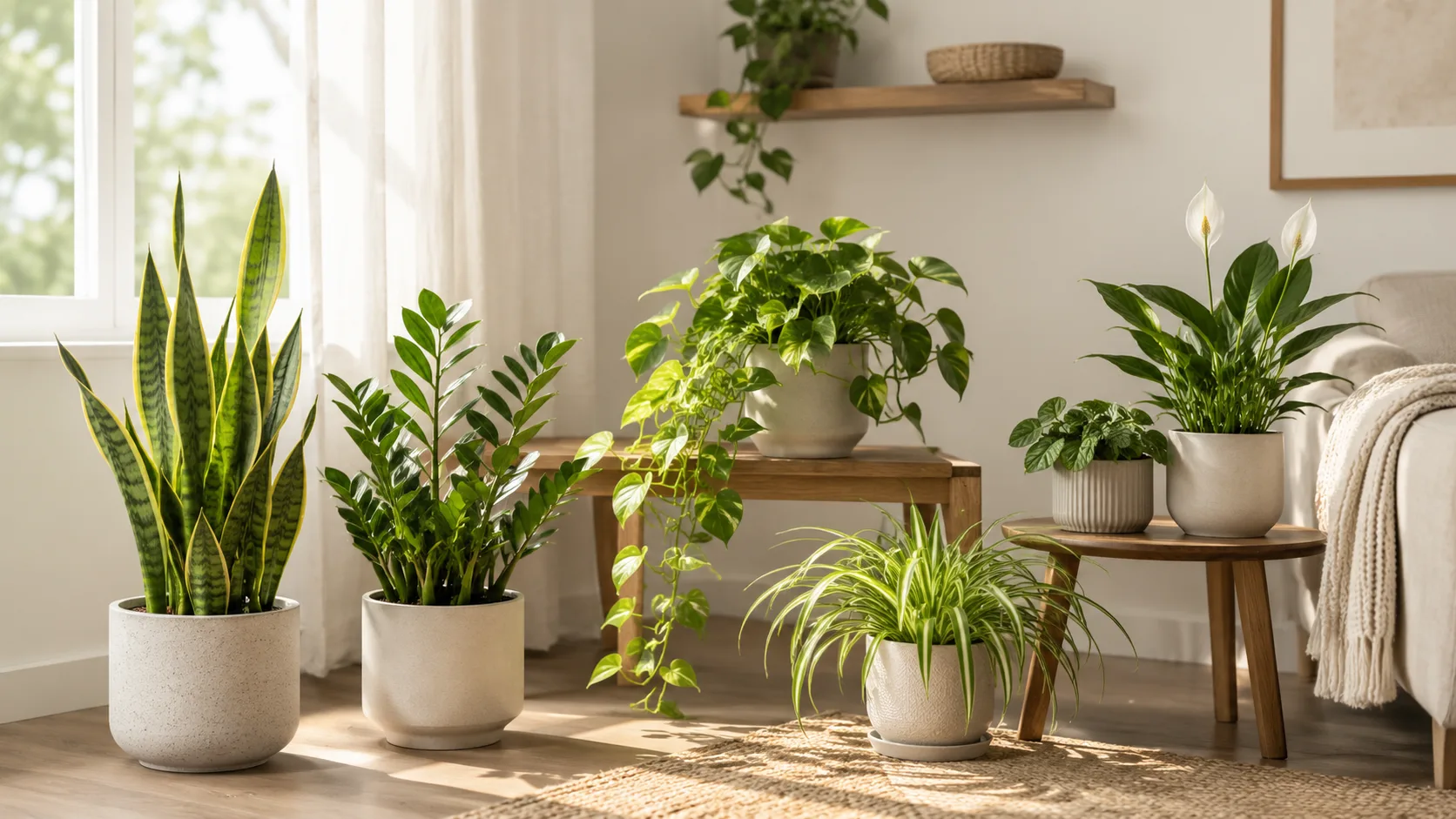
Your first houseplant should build confidence, not anxiety. The best beginner plants forgive late watering, tolerate the dim corners real apartments actually have, and send visible signals before they collapse. They are not magic—no drainage, no light, and daily soaking will kill even the hardiest species—but they give you room to learn without punishing every mistake.
If you want a filterable quick list from LeafyPixels plant metadata, start with Low-Maintenance Indoor Plants. This guide goes deeper: Quick Pick routing by room and habit, honest trade-offs per species, pet-safety notes with ASPCA anchors, and links to full watering, light, and problem guides on LeafyPixels.
The 7 best beginner houseplants for most homes are snake plant, pothos, ZZ plant, spider plant, aglaonema, parlor palm, and tulsi. They are all widely sold and well documented, but they suit different windows, watering styles, and households.
One claim worth clearing up early: beginner plants are sometimes marketed as air purifiers. NASA’s chamber research on VOC removal does not translate to meaningful air-quality improvement in normal homes at realistic plant numbers. Grow houseplants because you enjoy caring for them and they improve a room visually—not as a substitute for ventilation. (NASA Technical Reports Server)
Quick Pick: Best Beginner Plant for Your Situation
For the most forgiving all-rounder when you forget to water, choose snake plant or ZZ plant. Both store water in thick tissue and rhizomes, tolerate low light better than most foliage plants, and recover from occasional drought. Snake plant grows upright in tight spaces; ZZ plant has glossy leaves and a sculptural habit for desks and entry tables.
For fast visible growth and easy propagation, choose pothos. A single stem cutting in water roots within weeks, which helps beginners understand that plants respond to care. Pothos trails from shelves and handles office fluorescent light better than many tropicals.
For pet-aware homes where cats or dogs chew leaves, start with spider plant or parlor palm. The ASPCA lists both as non-toxic to dogs and cats. “Non-toxic” does not mean a pet should eat the plant freely—any foliage can upset a stomach—but they are safer floor and shelf choices than pothos or snake plant. If a pet ingests any houseplant and shows symptoms, contact your veterinarian or ASPCA Animal Poison Control at 888-426-4435.
For soft color without high-maintenance drama, choose aglaonema. Chinese evergreen tolerates lower light than many colorful houseplants and adds pink, silver, or red patterning to dim rooms. It needs more consistent moisture than snake plant but is still easier than calathea or ferns for most beginners.
For a kitchen windowsill or sunny desk—especially in Indian homes where holy basil is familiar—choose tulsi. Tulsi grows fast, rewards harvesting with bushy regrowth, and teaches daily observation because it wilts visibly when dry. It is less forgiving of dark corners than snake plant or ZZ plant.
How to Choose Your First Houseplant
Buying your first plant is different from adding to an established collection. You do not yet know how fast your pots dry, which window is brightest at noon, or whether you tend to overwater from enthusiasm. Judge candidates against four practical factors: light, watering habit, space, and safety.
University extension guidance on houseplants consistently points to light, water, temperature, humidity, nutrition, and soil as the core success factors. Indoors, light is usually the first limit—plants in dim rooms use water slowly, which makes overwatering more likely even when you water “correctly” on a calendar. (University of Florida IFAS)
Match the Plant to Your Brightest Realistic Spot
Most beginner tropicals prefer bright indirect light: enough daylight to read comfortably without leaves sitting in harsh afternoon sun for hours. “Low light tolerant” means the plant may survive, not that it will grow quickly or stay full.
Use the shadow test. During the brightest part of the day, hold your hand near the spot. A soft but clear shadow suggests bright indirect light suitable for pothos, spider plant, and aglaonema. Barely any shadow means prioritize snake plant, ZZ plant, or parlor palm—or add a grow light. See Grow lights complete guide for indoor plants for placement basics. (University of Maryland Extension)
Choose a Watering Style You Can Keep
Beginners fail more often from loving a plant to death than from neglect. Drought-tolerant species (snake plant, ZZ plant) suit people who travel or forget. Moisture-loving species (tulsi, parlor palm) suit people who enjoy checking plants daily. Pothos and spider plant sit in the middle—water when the top inch or two of soil dries.
Do not water on a fixed weekly schedule without checking soil. IFAS recommends watering when soil is dry to the touch for most houseplants, which may be less often than beginners expect. (University of Florida IFAS)
Factor in Pets, Kids, and Reach
The safest beginner choices for chewing pets are spider plant and parlor palm, both ASPCA-listed non-toxic. Snake plant, pothos, ZZ plant, and aglaonema contain compounds that can irritate mouth and digestive tissue if ingested. Elevate pots, use hanging baskets, or choose pet-safe species for floor placement. For a full filterable list, see Pet-Safe Indoor Plants.
How We Selected These Seven
These seven were chosen for forgiveness, nursery availability, distinct use cases, and deep LeafyPixels care coverage—not because they are the only easy houseplants worth growing.
We prioritized species that recover from the mistakes beginners actually make: irregular watering, dim corners, repotting too early, and moving pots every week. Peace lily, rubber plant, and dracaena are excellent beginners too—they appear on Low-Maintenance Indoor Plants—but this guide focuses on seven profiles with the strongest combination of forgiveness and editorial follow-up care on LeafyPixels today.
Tulsi is included because it teaches a different beginner skill: harvesting and regrowth rather than passive display. It suits readers who want an interactive kitchen plant, not only a corner filler.
The 7 Best Beginner Houseplants
1. Snake Plant
Best for: forgetful waterers, low-light corners, bedrooms, entry tables.
Difficulty: Easy
Light: Low to bright indirect
Water: When soil is fully dry—often every 2–4 weeks indoors
Best placement: Floor pot in a dim corner, bedside table, office
Pet safety: Toxic to cats and dogs per ASPCA—keep out of reach
Typical indoor size: 1–3 ft tall; upright sword-shaped leaves
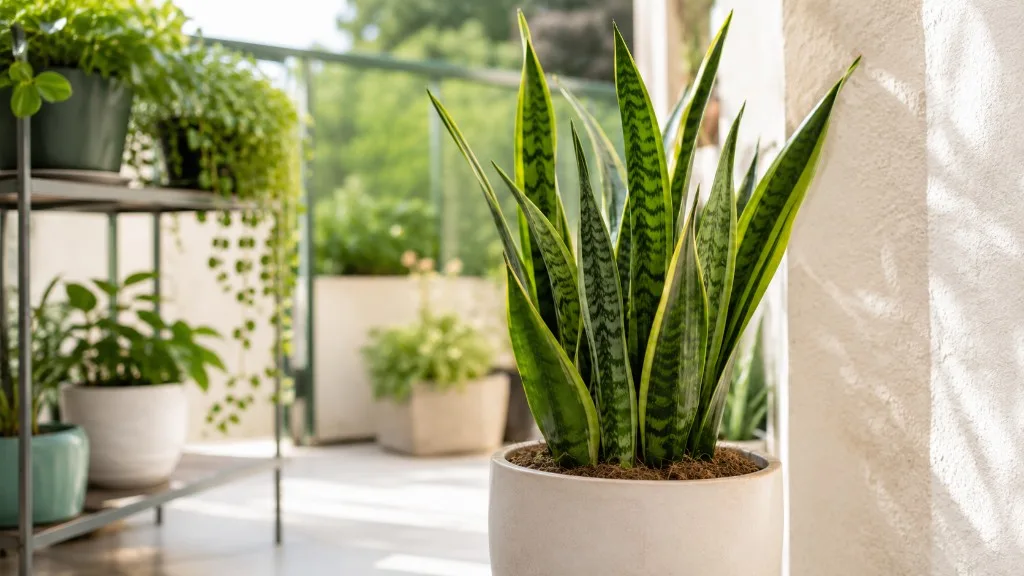
Snake plant (Dracaena trifasciata, formerly Sansevieria) is the classic hard-to-kill plant for good reason. It stores water in thick leaves, tolerates low light and dry air, and needs watering far less often than beginners expect. It grows slowly, which is an advantage in small spaces—you will not wake up to a plant that outgrew its shelf overnight.
The main trade-off is pet safety. The ASPCA lists snake plant as toxic to cats and dogs. It also prefers neglect over attention: frequent watering in a dim room is the fastest way to rot roots.
Why it works: Extreme drought tolerance with upright form for tight spaces.
Care tip: Use a pot with drainage; let soil go bone dry before watering.
Common mistake: Watering on a weekly schedule because the pot “looks dry” on top while the core stays wet.
Avoid this plant if: Pets chew leaves at floor level—you need a hanging or elevated alternative.
Useful care guides:
2. Pothos
Best for: trailing shelves, first propagation projects, offices with fluorescent light.
Difficulty: Easy
Light: Medium to bright indirect; tolerates low light
Water: When top 1–2 inches of soil dry
Best placement: Hanging basket, bookshelf, cubicle
Pet safety: Toxic to cats and dogs per ASPCA
Typical indoor size: Trailing vines 6–10 ft over time; easily trimmed
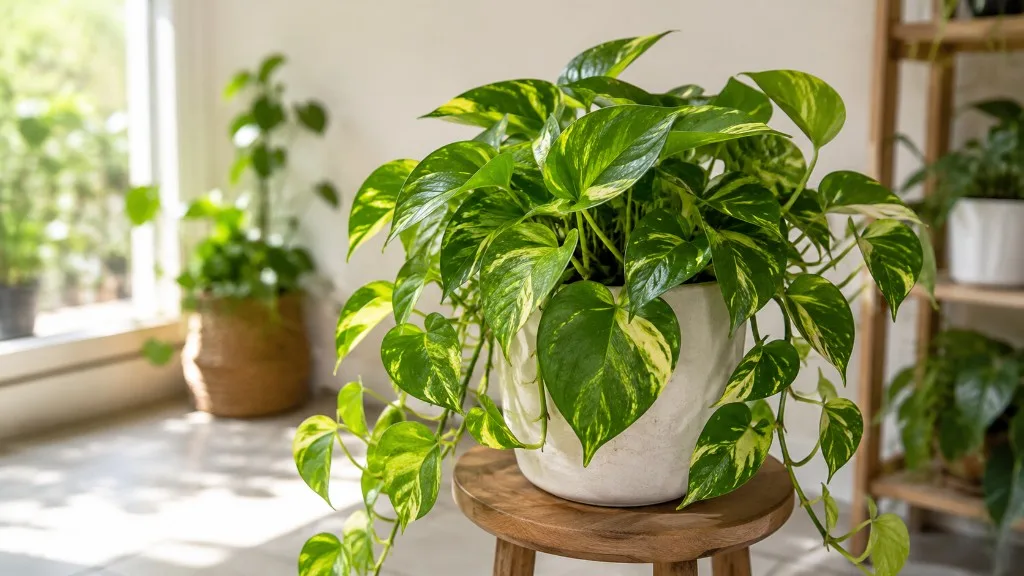
Pothos (Epipremnum aureum) is often the plant that converts skeptics into collectors. It grows visibly in good light, roots readily from stem cuttings in water, and tolerates the inconsistent care of a busy household. Golden, marble queen, and jade cultivars give different looks without different care.
The trade-off is vining habit and toxicity. In low light, stems stretch and leaves shrink—a sign to move the plant brighter or prune and propagate. Pothos is toxic to pets, so keep trailing vines above reach.
Why it works: Fast feedback loop—new leaves and roots show that care is working.
Care tip: Prune leggy vines to encourage bushier growth near the pot.
Common mistake: Leaving the plant in a dark hallway and wondering why leaves are small and sparse.
Avoid this plant if: Cats bat at hanging vines within jumping range.
Useful care guides:
3. ZZ Plant
Best for: offices, low-light living rooms, travelers, modern minimalist decor.
Difficulty: Easy
Light: Low to bright indirect
Water: When soil is fully dry—often every 2–4 weeks
Best placement: Desk, console table, dim corner
Pet safety: Toxic to cats and dogs per ASPCA
Typical indoor size: 2–3 ft tall; glossy leaflets on arching stems
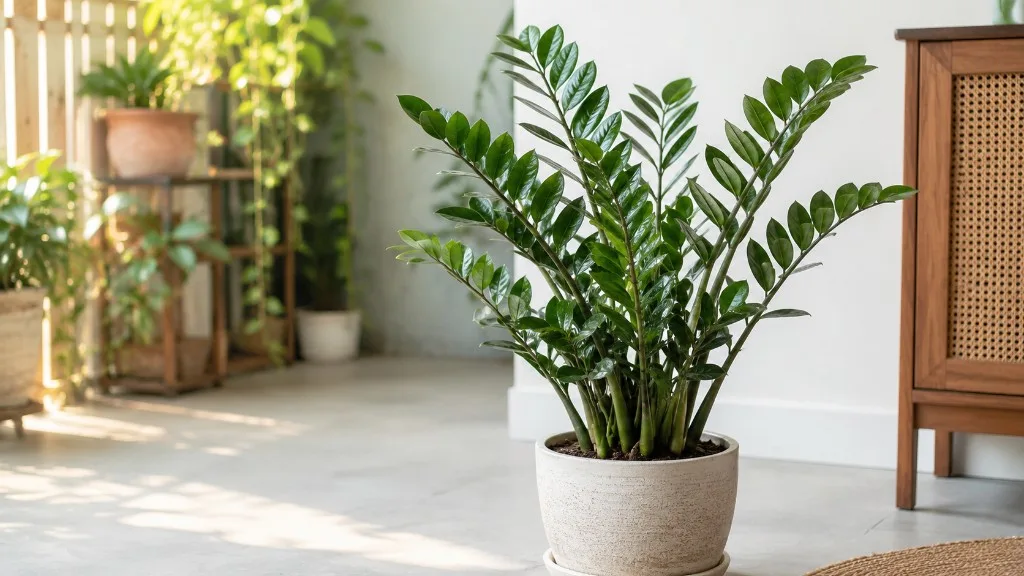
The ZZ plant (Zamioculcas zamiifolia) stores water in underground rhizomes, making it one of the most drought-tolerant common houseplants. Its waxy leaves look polished even in air-conditioned rooms with low humidity. It handles fluorescent office light better than most tropical foliage.
The trade-off is slow growth and pet toxicity. A ZZ in a dark corner may barely change for months—which beginners sometimes misread as failure when the plant is simply idle. Overwatering causes yellow stems and mushy rhizomes.
Why it works: Maximum forgiveness per square foot for dim, dry rooms.
Care tip: Terracotta or a well-draining mix helps rhizomes dry between waterings.
Common mistake: Repotting into a much larger pot “to help it grow,” which holds excess moisture.
Avoid this plant if: You want fast trailing growth—pothos or spider plant will show progress sooner.
Useful care guides:
4. Spider Plant
Best for: pet-aware homes, hanging baskets, bright bathrooms, propagation beginners.
Difficulty: Easy
Light: Bright indirect; tolerates some direct morning sun
Water: When top 1–2 inches of soil dry
Best placement: Hanging planter, shelf edge, windowsill with filtered light
Pet safety: ASPCA-listed non-toxic to cats and dogs
Typical indoor size: 1–2 ft tall; arching leaves with plantlets on runners
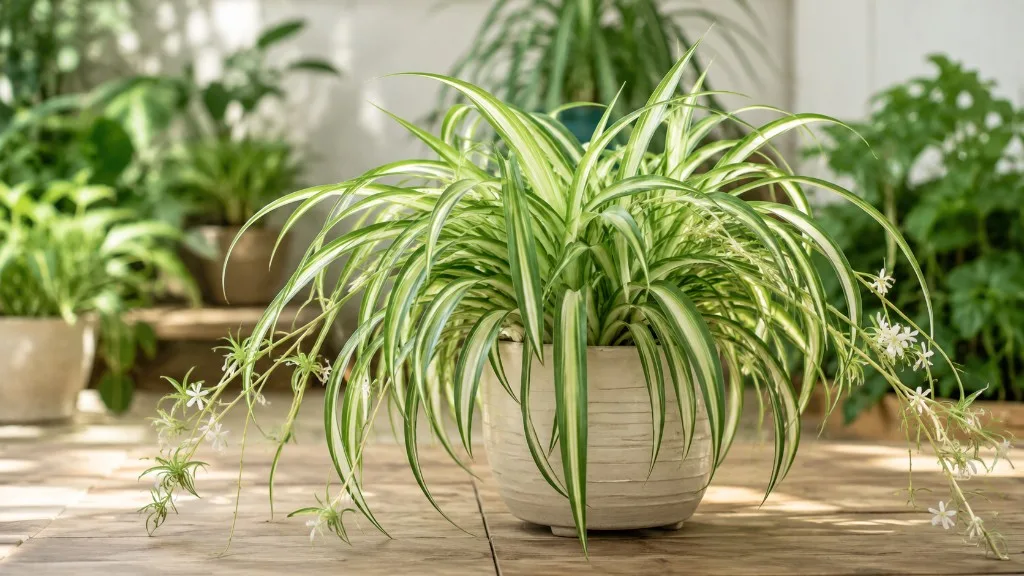
Spider plant (Chlorophytum comosum) is one of the best beginner plants for homes with pets. The ASPCA lists it as non-toxic to cats and dogs. It produces baby plantlets on long stems, which makes propagation as simple as pinning a plantlet into moist soil.
The trade-off is moisture and light balance. Spider plants in dark corners develop pale, weak foliage. Letting soil stay soggy causes brown tips and root issues. Fluoride and chlorine in tap water can also brown leaf tips in some regions—rainwater or filtered water helps if tips persist despite good watering.
Why it works: Pet-safe, prolific, and visually rewarding when hung where light is bright.
Care tip: Snip brown tips for aesthetics; fix the underlying watering or water quality issue.
Common mistake: Treating brown tips as a mystery disease when the pot has been wet for weeks.
Avoid this plant if: You only have a very dark room—ZZ plant or snake plant tolerate dimmer conditions.
Useful care guides:
5. Aglaonema
Best for: low-to-medium light rooms, color without calathea-level fuss, desks and side tables.
Difficulty: Easy to medium
Light: Low to medium indirect; brighter light intensifies color
Water: When top inch of soil dries—more often than snake plant
Best placement: Living room corner, bedroom, office away from harsh sun
Pet safety: Toxic to cats and dogs per ASPCA
Typical indoor size: 1–2 ft tall; bushy clumping habit
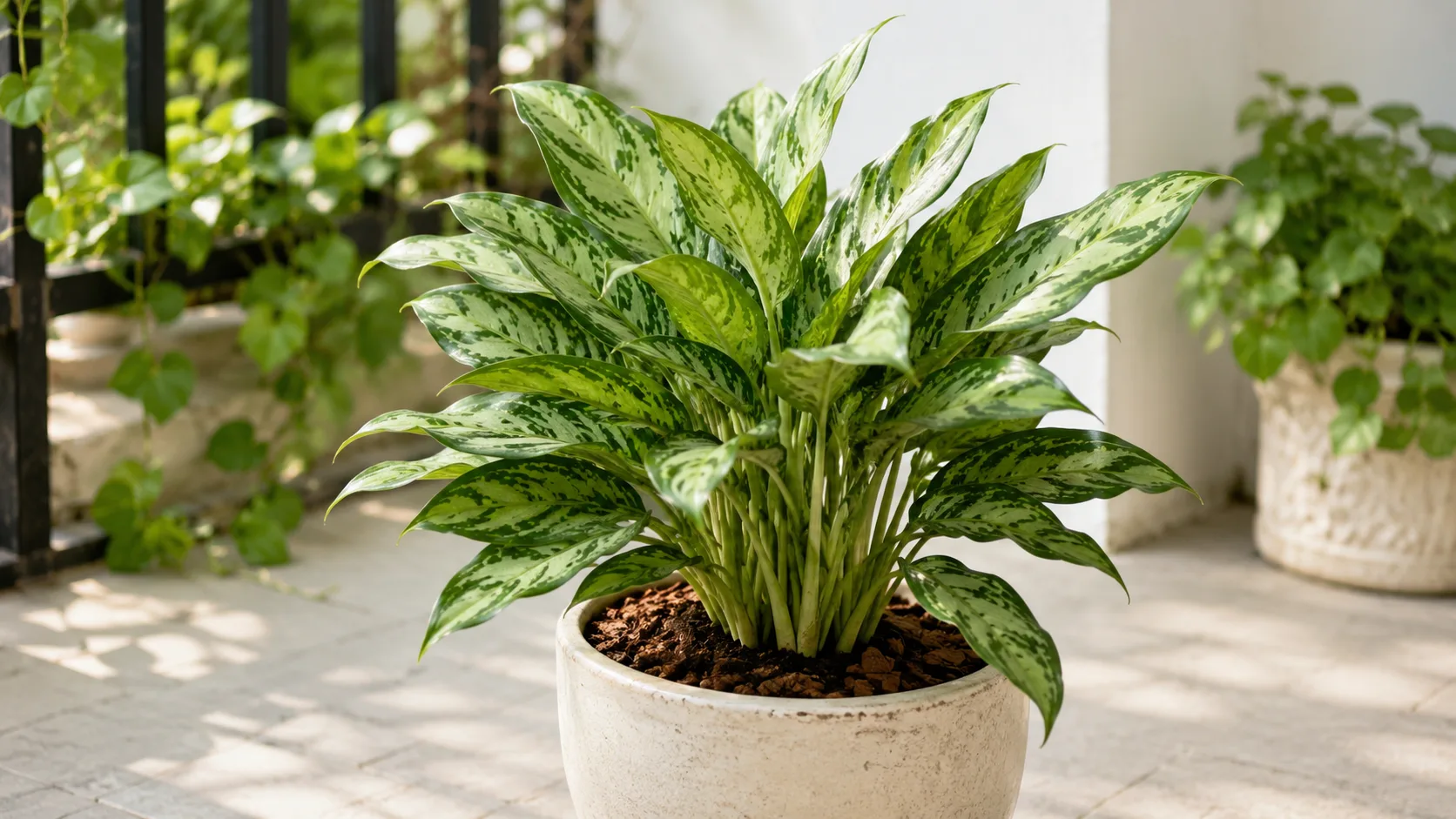
Aglaonema (Chinese evergreen) brings silver, pink, and red patterning to rooms that are too dim for croton or too dry for ferns. It tolerates lower light than pothos while still looking intentional—useful when you want decor impact without a sunny window.
The trade-off is cold sensitivity and pet toxicity. Aglaonema dislikes drafts below about 15°C (60°F) and droops when overwatered in low light. It is more forgiving than calathea but less drought-tolerant than snake plant or ZZ plant.
Why it works: Colorful foliage for average indoor light without extreme humidity demands.
Care tip: Wipe leaves monthly—dust blocks light on patterned surfaces.
Common mistake: Placing in a hot afternoon sun window, which bleaches leaves.
Avoid this plant if: Pets chew low foliage—choose spider plant or parlor palm instead.
Useful care guides:
6. Parlor Palm
Best for: pet-aware homes, soft tropical texture, medium-light living rooms.
Difficulty: Easy to medium
Light: Medium to bright indirect
Water: When top inch of soil dries; steady moisture, not soggy soil
Best placement: Living room corner, bedroom with good window light
Pet safety: ASPCA-listed non-toxic to cats and dogs
Typical indoor size: 3–6 ft over years; slow, elegant fronds
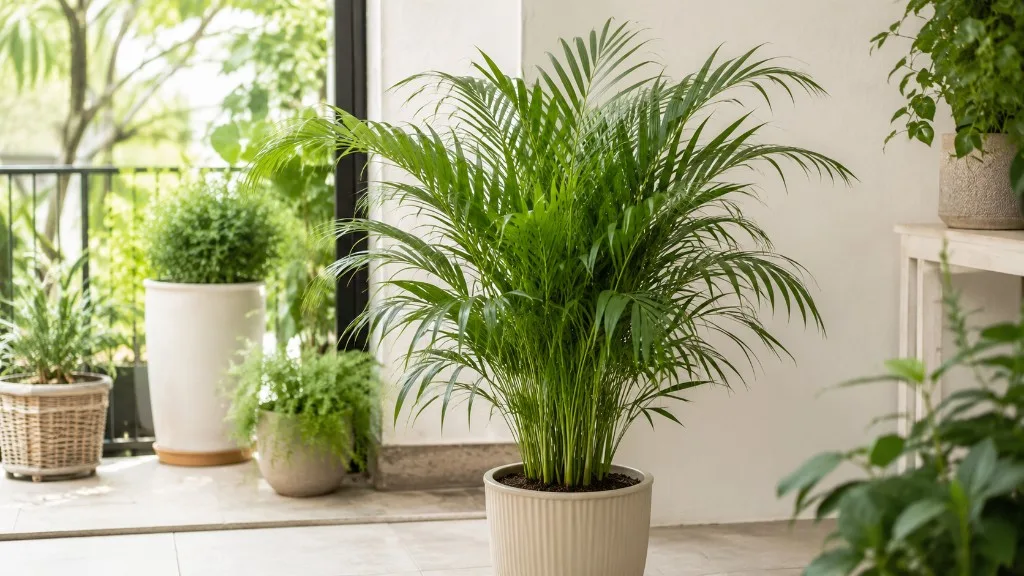
Parlor palm (Chamaedorea elegans) has been a living-room staple since Victorian parlors because it handles indoor conditions with grace. The ASPCA lists it as non-toxic to cats and dogs, making it one of the few palm-shaped beginners safe near curious pets.
The trade-off is pace and thirst. Parlor palm grows slowly and dislikes bone-dry soil or hot, dry furnace air. Brown tips often trace to inconsistent watering or airflow from vents—not necessarily “low humidity” alone.
Why it works: Pet-safe tropical look without the collapse rate of majesty palm indoors.
Care tip: Water when the top inch dries; empty the saucer after watering.
Common mistake: Confusing it with areca palm, which needs brighter light and more space.
Avoid this plant if: You want a plant you can ignore for a month—snake plant fits that habit better.
Useful care guides:
7. Tulsi
Best for: sunny windowsills, kitchen gardens, Indian homes, growers who want to harvest.
Difficulty: Easy to medium
Light: Bright indirect to several hours of direct sun
Water: When top inch dries—more frequent than succulent-type beginners
Best placement: South- or west-facing kitchen window, balcony door, herb shelf
Pet safety: Grown as an edible herb for people; keep away from grazing pets
Typical indoor size: 1–2 ft; bushy aromatic herb
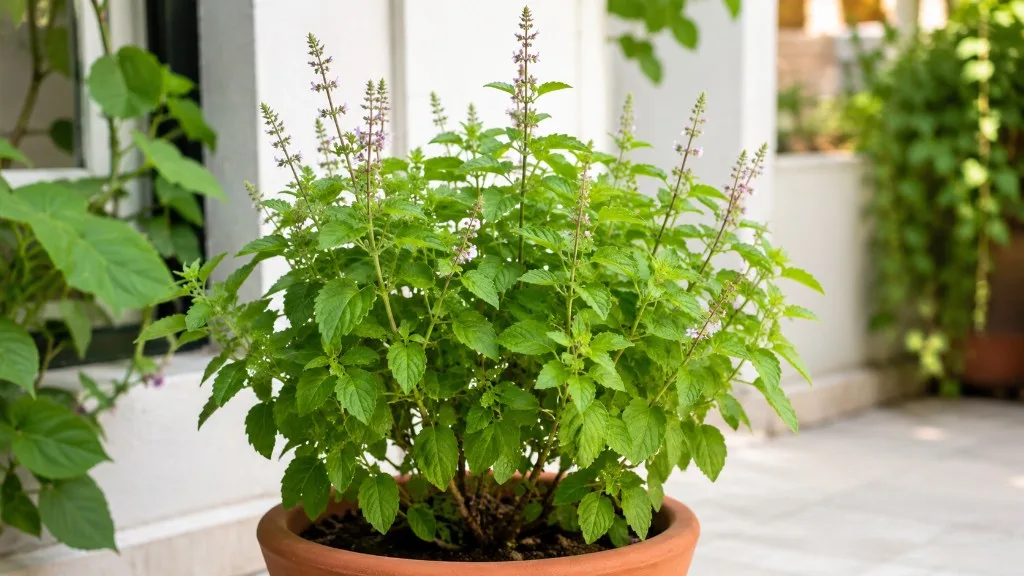
Tulsi (Ocimum tenuiflorum, holy basil) teaches a different beginner lesson: plants respond quickly when you harvest and water. It wilts visibly when dry—then perks up within hours after watering—so you learn to read soil moisture faster than with slow-growing snake plant.
The trade-off is light and turnover. Tulsi needs brighter conditions than ZZ plant or snake plant and grows fast, which means leggy stems if light is weak. Many growers restart from cuttings or fresh seedlings when plants become woody. It suits beginners who want interaction, not only decoration.
Why it works: Fast growth and harvest reward build daily observation habits.
Care tip: Pinch flower buds to keep leaves tender and bushy longer.
Common mistake: Treating tulsi like a low-light foliage plant in a dim bedroom corner.
Avoid this plant if: Your brightest spot is a north-facing wall—choose pothos or aglaonema instead.
Useful care guides:
Beginner Houseplant Comparison Table
Use this table as a shortlist tool. If you forget to water, snake plant and ZZ plant rise to the top. If pets chew leaves, spider plant and parlor palm move up. If you want fast growth and cuttings, pothos wins. If you have a bright kitchen window, tulsi adds a harvest you can taste.
Common Beginner Mistakes (and How to Avoid Them)
Most first plants die from a small set of repeatable errors—not from mysterious “black thumbs.”
Overwatering Because You Care Too Much
Enthusiasm kills more houseplants than neglect. Soil that stays wet in a dim room suffocates roots. Check moisture with your finger or a skewer before watering. Drought-tolerant plants like snake plant and ZZ plant need far less water than beginners assume. See How to Water Indoor Plants the Right Way before setting a routine.
Buying for the Nursery, Not the Room
A lush pothos in a greenhouse will not stay lush in a hallway with no usable daylight. Match the plant to the brightest spot you can offer, or add a grow light. Moving a struggling plant to a better window beats buying fertilizer to “fix” weak growth.
Repotting the Day You Bring It Home
New plants need time to adjust. Repot only if the soil is clearly failing, roots are circling tightly, or pests are present. Otherwise, learn the pot’s drying rhythm for two to four weeks first.
No Drainage Hole
Decorative cachepots without exit holes trap water at the root zone. Either plant in a nursery pot with drainage that lifts out of the cachepot, or drill an exit hole. Every species on this list needs drainage—even drought-tolerant snake plant.
Ignoring Pet Reach
Toxic plants on low coffee tables fail in homes with kittens and puppies. Elevate pots, use hanging baskets, or choose ASPCA-listed non-toxic species from the start. When in doubt, check Plants Safe for Cats or Plants Safe for Dogs.
Changing Everything at Once
If a plant looks unhappy, fix one variable—usually light or watering—before repotting, fertilizing, and moving it simultaneously. You need to know which change helped.
Where to Go Next
Open the next page based on what you picked:
Species deep care
Related lists and guides
Conclusion
Start with conditions you cannot change: light, then watering habit, then pet reach. A dim apartment favors snake plant, ZZ plant, or aglaonema; a bright kitchen favors tulsi or spider plant; a home with chewing pets should prioritize spider plant and parlor palm. Buy one plant, place it where you will notice it daily, and learn how its pot dries before expanding your collection. The best beginner houseplant is the one that matches your actual room—not the one that looked easiest in the nursery.