Cabomba (Fanwort) Care: Light, CO2, Water & Planting
Cabomba caroliniana
Cabomba is a cautious reptile-specific aquatic candidate in current tortoise-focused references, not a blanket safe-plant approval. Use clean, pesticide-free material and keep it as part of a varied diet.
Cabomba (Fanwort) Care: Light, CO2, Water & Planting
Start with wateringThe most common care mistake for CabombaCheck pet-safe plants →Cabomba care essentials
Light
Bright aquarium or pond light with stable clean water; avoid dim tanks where stems shed quickly.
Water
Keep fully aquatic in clean, dechlorinated water; refresh water quality before the plant declines.
Soil
Aquatic setup with no ordinary potting mix in the turtle tank; anchor or float according to the species.
Humidity
Aquatic or constantly humid surface conditions
Temperature
18-28 C (64-82 F)
Fertilizer
Usually unnecessary in turtle tanks with normal nutrients. Aquarium-safe fertilizer only if needed, used outside the turtle tank when possible
About Cabomba
Cabomba is native to Freshwater habitats of the Americas; invasive in some regions, typically reaches 30-80 cm fine submerged stems indoors, with fast in bright, clean water growth. Cabomba has a herbaceous growth habit and part of the Cabombaceae family. It is also known as Fanwort and Carolina Fanwort.
| Detail | Information |
|---|---|
| Also known as | Fanwort, Carolina Fanwort |
| Native region | Freshwater habitats of the Americas; invasive in some regions |
| Mature size | 30-80 cm fine submerged stems |
| Growth rate | Fast in bright, clean water |
| Growth habit | Herbaceous |
| Scientific name | Cabomba caroliniana |
| Family | Cabombaceae |
Cabomba (Fanwort) Care: Light, CO2, Water & Planting
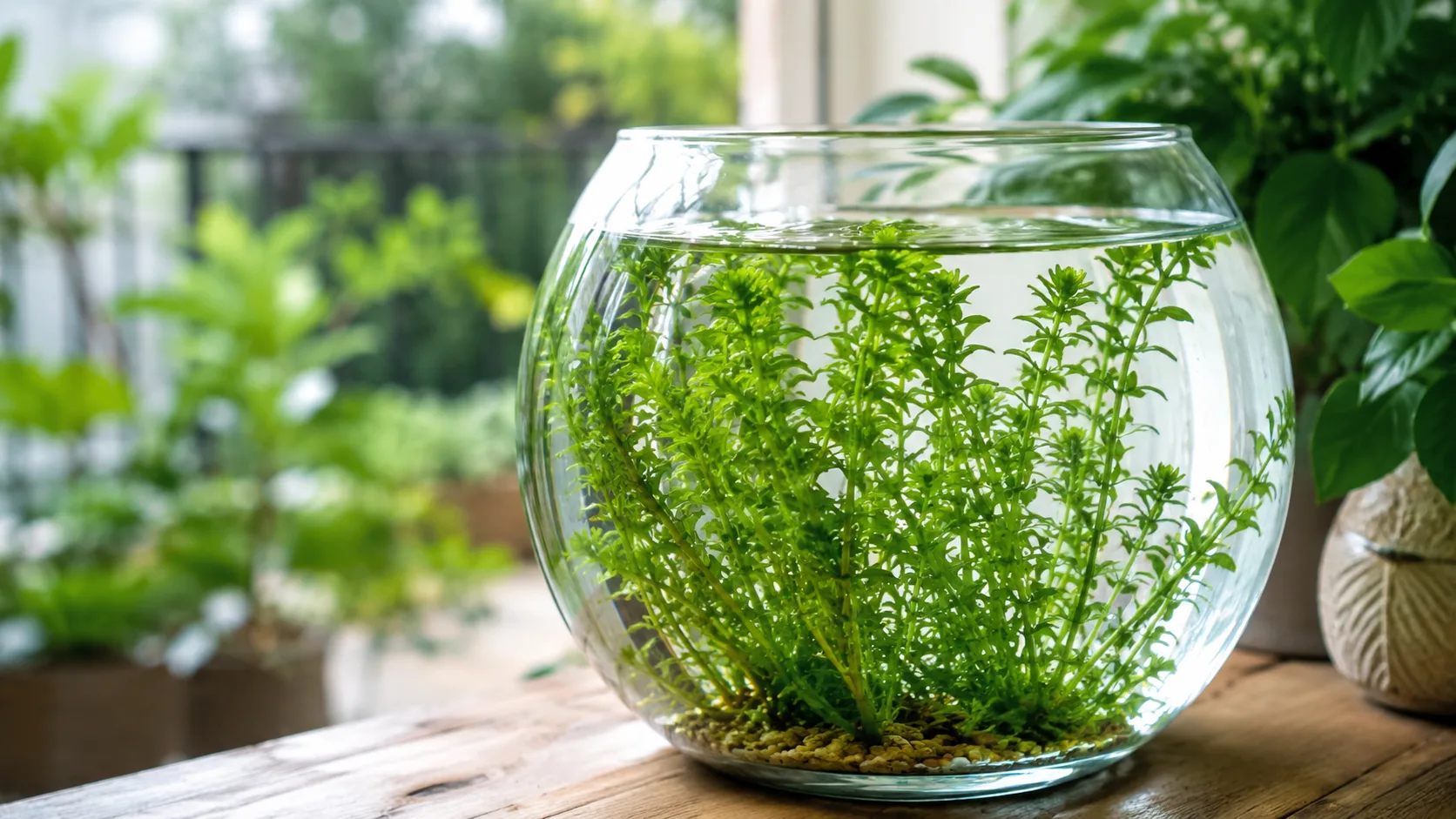
Cabomba is one of the most recognizable plants in the aquarium trade - and one of the most commonly mis-cared-for. The feathery, fan-shaped leaves look delicate because they are, and the plant responds to wrong conditions faster than almost any other stem in a beginner tank. If you have ever bought a lush green bunch, planted it on Monday, and watched it shed into a cloud of floating needles by Friday, you are not alone. The difference between a tank with swaying fanwort thickets and a tank full of decaying stems comes down to a handful of aquarium-specific decisions: light intensity, water clarity, CO2, planting depth, and whether you bought green Cabomba or red. This guide covers all of that - for a fully submerged freshwater plant, not a houseplant.
What Cabomba Actually Is
Botanical background and the Cabombaceae family
Cabomba is the common trade name for species in the genus Cabomba, a group of fully submersed freshwater plants in the Cabombaceae family. The family is small and distinctive: members produce finely divided, fan-shaped submerged leaves arranged in opposite pairs along a slender stem, and they can also develop floating leaves and flowers when stems reach the surface. Unlike terrestrial houseplants, Cabomba never grows in potting soil, never needs misting, and never tolerates drying out. Its entire life cycle - photosynthesis, nutrient uptake, propagation - happens underwater.
The leaves are the plant’s signature. Each submerged leaf is pinnately divided into narrow segments, giving it the appearance of a small green fan or an open hand. That fine texture creates beautiful movement in current and strong visual contrast against broad-leaf plants like Anubias or sword plants. It also makes Cabomba mechanically fragile. Rough handling, strong herbivores, and decaying lower sections can shred leaves into fine debris that clogs filters and fouls water quality.
In commerce, “Cabomba” usually refers to one of two species. Cabomba caroliniana - green fanwort, Carolina fanwort, fish grass - is the green form sold in most fish stores. Cabomba furcata - red cabomba, sometimes listed as Cabomba piauhyensis - is the reddish-brown form with significantly higher demands. Both are stem plants that root at nodes and propagate vegetatively from fragments, which is exactly why they spread so aggressively in the wild.
Green Cabomba vs. Red Cabomba: two species, two difficulty levels
Treat these as two different plants with overlapping names, not as color variants of the same easy stem.
Green Cabomba (Cabomba caroliniana) is native to lakes, ponds, and slow rivers in the southeastern United States and parts of South America. In the aquarium trade it is moderately demanding: it needs medium to high light and clean, well-filtered water, but it can grow without CO2 injection if light and nutrients are adequate. Flowgrow’s database lists an optimum temperature of 20–25°C (68–77°F), pH 5.0–7.0, and tolerated carbonate hardness up to 14°dKH. CO2 in the range of 10–40 mg/L boosts growth but is not strictly required. When conditions are good, stems push toward the surface quickly and form a soft green background. When light is too low or water is dirty, stems etiolate - they stretch, thin, and shed lower leaves until only a tuft remains at the top.
Red Cabomba (Cabomba furcata) is native to warm, soft-water habitats in Central and South America. It is a high-demand plant by any standard. The 2Hr Aquarist and multiple nursery databases place its light requirement at 100+ µmol PAR and above for compact growth and red coloration; without that intensity, the plant turns greenish with long internodes. It prefers soft, slightly acidic water (pH roughly 5.0–6.8, low carbonate hardness), CO2 injection, iron-rich fertilization, and temperatures around 22–28°C (72–82°F). Red Cabomba is not a beginner plant. In sub-optimal tanks it decomposes within weeks rather than months.
If you are setting up your first planted tank or running a low-tech community aquarium with a standard LED hood, start with green Cabomba and treat red Cabomba as an advanced project for a high-light, CO2-injected scape.
Why Cabomba Belongs in a Freshwater Tank
Submerged growth, shelter, and visual contrast
Cabomba earns its place in aquascapes through texture and function, not through ease of care. A healthy stand of fanwort creates a flowing, three-dimensional background that softens hardscape edges and hides equipment - heaters, filter intakes, and airline tubing disappear behind a feathery wall. The fine leaf structure catches light differently from broad-leaf plants, which is why Dutch-style and nature-style layouts use Cabomba as a contrast plant even when simpler stems would be easier to maintain.
Functionally, Cabomba behaves as a water-column feeder. It absorbs nitrate, ammonia, phosphate, and micronutrients directly through leaves and stems, pulling dissolved nutrients away from algae. Under strong light, healthy Cabomba pearls - releases visible oxygen bubbles from leaf surfaces during photosynthesis - which raises dissolved oxygen during the photoperiod. The dense leaf lattice also provides cover for fry, shrimp, and small schooling fish that need refuge from larger tankmates.
The trade-off is maintenance. Cabomba grows fast in good conditions and requires regular trimming to prevent shading of plants below it. Decaying fine leaves are harder to remove than chunky Anacharis fragments and can accumulate in filter sponges. That is not a reason to avoid the plant, but it is a reason to plan for weekly observation and monthly trimming in high-light setups.
Light Requirements for Dense, Healthy Stems
Light is the single non-negotiable input for Cabomba. More than CO2, more than substrate type, more than fertilizer brand - if light is insufficient, the plant fails.
For green Cabomba (C. caroliniana), aim for medium to high light: roughly 50–80 PAR at the substrate from a full-spectrum LED in the 6500K range, or equivalent T5 fluorescent intensity. A photoperiod of 8–10 hours per day is standard. The plant has a low light compensation point compared to red species, which is why it survives in tanks where red Cabomba would collapse - but “survives” and “looks good” are different outcomes. In dim tanks, Cabomba stretches toward the surface, internodes lengthen, lower leaves drop, and the stem looks like a bare wire with a green tuft on top.
For red Cabomba (C. furcata), treat light as the primary limiting factor. Nursery and aquascaping references consistently recommend high to very high intensity - 80–100+ PAR at substrate, often 100+ µmol at the leaf level - for compact growth and red-to-pink coloration. Without it, the plant greens out and elongates. Extending photoperiod beyond 10–12 hours does not substitute for intensity; it usually worsens algae without fixing Cabomba.
Practical signs to read. Compact, bushy new growth with short internodes means light is adequate. Long bare stem sections with a small crown of leaves at the top mean the plant wants more light or needs topping and replanting. Pale or translucent upper leaves can mean too much light without matching CO2 and nutrients, or a sudden parameter shift. In tanks deeper than 18 inches, the lower portions of tall stems receive less light than the tops; trim and replant tops regularly so light reaches the full stand.
Water Parameters That Keep Cabomba Stable
Temperature, pH, GH, and KH ranges that work
Cabomba is a tropical to subtropical plant, but green Cabomba tolerates a wider temperature band than most aquarists expect. Flowgrow lists a tolerance of 4–27°C for C. caroliniana, with an optimum of 20–25°C (68–77°F). Red Cabomba prefers warmer water: 22–28°C (72–82°F) is the comfort range cited across nursery databases.
pH is less critical for green Cabomba than for red. Green fanwort grows across pH 5.0–7.5 in practice, with slightly acidic to neutral water matching its native low-pH habitats. Red Cabomba leans toward pH 5.0–6.8 and struggles in hard, alkaline water where iron becomes less available and carbonate buffering is high.
General hardness (GH) and carbonate hardness (KH) matter more for red Cabomba than green. Green Cabomba tolerates soft to moderately hard water (GH and KH ranges are flexible in hobbyist tanks). Red Cabomba prefers soft water with low KH - high carbonate hardness often correlates with poor color and weak growth in fine-leaved red stems. If your tap water is liquid rock, red Cabomba is probably not the plant to start with.
The biggest parameter mistake is not choosing a slightly wrong number; it is changing numbers suddenly. Cabomba adapts to stable conditions but sheds leaves after large temperature swings, pH crashes, or aggressive water changes with unmatched source water. When introducing new stems, match tank temperature within 2–3°F of the transport bag and float stems for 30 minutes to an hour while slowly mixing tank water into the bag.
Water clarity and flow deserve equal billing with chemistry. Fine-leaved Cabomba collects detritus on leaf surfaces and decays faster in stagnant, debris-heavy water. Gentle to moderate flow keeps leaves clean without tearing them. A canister or hang-on-back filter with mechanical filtration you clean regularly is part of Cabomba care, not an optional extra.
CO2: optional for green Cabomba, near-essential for red
Green Cabomba does not require CO2 injection. In a bright, well-maintained tank with adequate nutrients, it uses dissolved CO2 and bicarbonates from the water column and grows at a moderate to fast pace. Adding CO2 in the range of 10–30 ppm accelerates growth, produces thicker stems, and helps the plant stay compact under high light - but many successful low-tech tanks grow green fanwort without a CO2 system.
Red Cabomba effectively requires CO2 for long-term success. Without injection, the plant rarely maintains red coloration or compact form, even under strong light. Pressurized CO2 targeting 20–40 ppm (with appropriate surface agitation to avoid livestock stress) is the standard recommendation in nursery and aquascaping literature. Liquid-carbon products (glutaraldehyde-based, sold as “Excel” and similar) can help green Cabomba in low-tech setups but are a poor substitute for pressurized CO2 when trying to keep red Cabomba red.
If you add CO2, ramp gradually. A sudden jump from ambient to 30 ppm can shock both plants and fish. Start low, watch plant response and livestock behavior, and adjust based on pH drop and pearling intensity rather than a fixed bubble count alone.
Substrate Planting, Floating, and Aquarium Placement
Cabomba works both planted in substrate and left floating near the surface. The right method depends on your tank layout and goals.
For substrate planting - the usual choice for background placement - remove rubber bands, foam, or lead weights from store bunches and separate stems. Trim the bottom 1–2 inches of leaves off each stem so bare nodes contact the substrate. Using planting tweezers, insert the bare stem 1–2 inches deep into fine gravel, sand, or aquasoil. Space stems 2–3 inches apart so light penetrates the lower portions. Cabomba roots at buried nodes within a week or two, but it remains primarily a column feeder; substrate type matters for anchoring more than for nutrition.
Planting depth is critical. Bury the stem too deep and the buried portion rots, lifting the whole plant. Bury too shallow and current or fish uproot it. The sweet spot is one to two inches of bare stem underground with the first leaf whorl just above the substrate line.
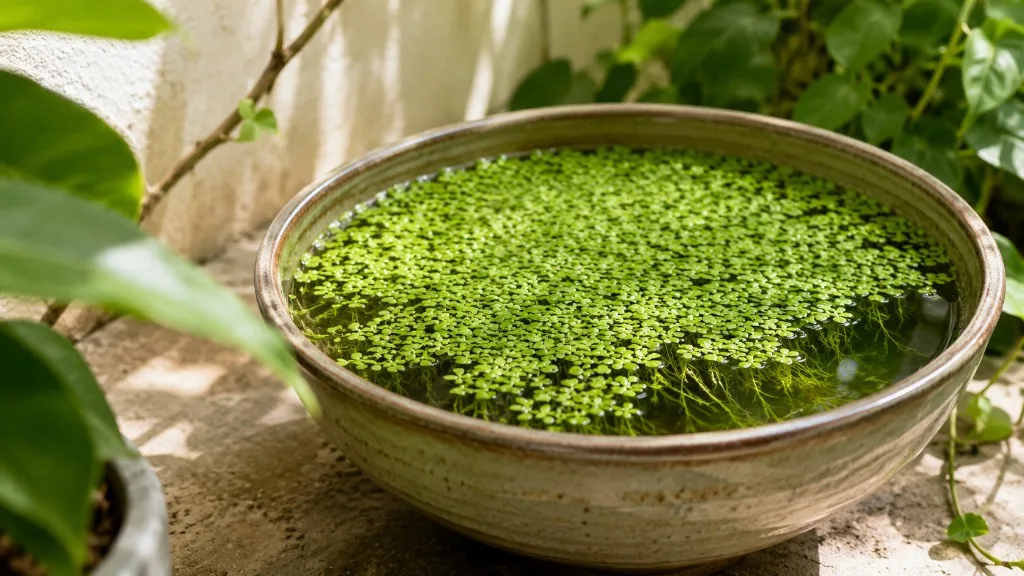
For floating, drop trimmed stems on the water surface. They develop trailing roots within days and grow rapidly because leaves sit directly under the strongest light and have easy access to atmospheric CO2 at the surface film. Floating works well in quarantine tanks, bare-bottom breeding setups, turtle tubs, and low-substrate displays. The trade-off is aesthetics - floating fanwort forms a tangled mat rather than a vertical background - and the risk of shading everything below if you let it cover the entire surface.
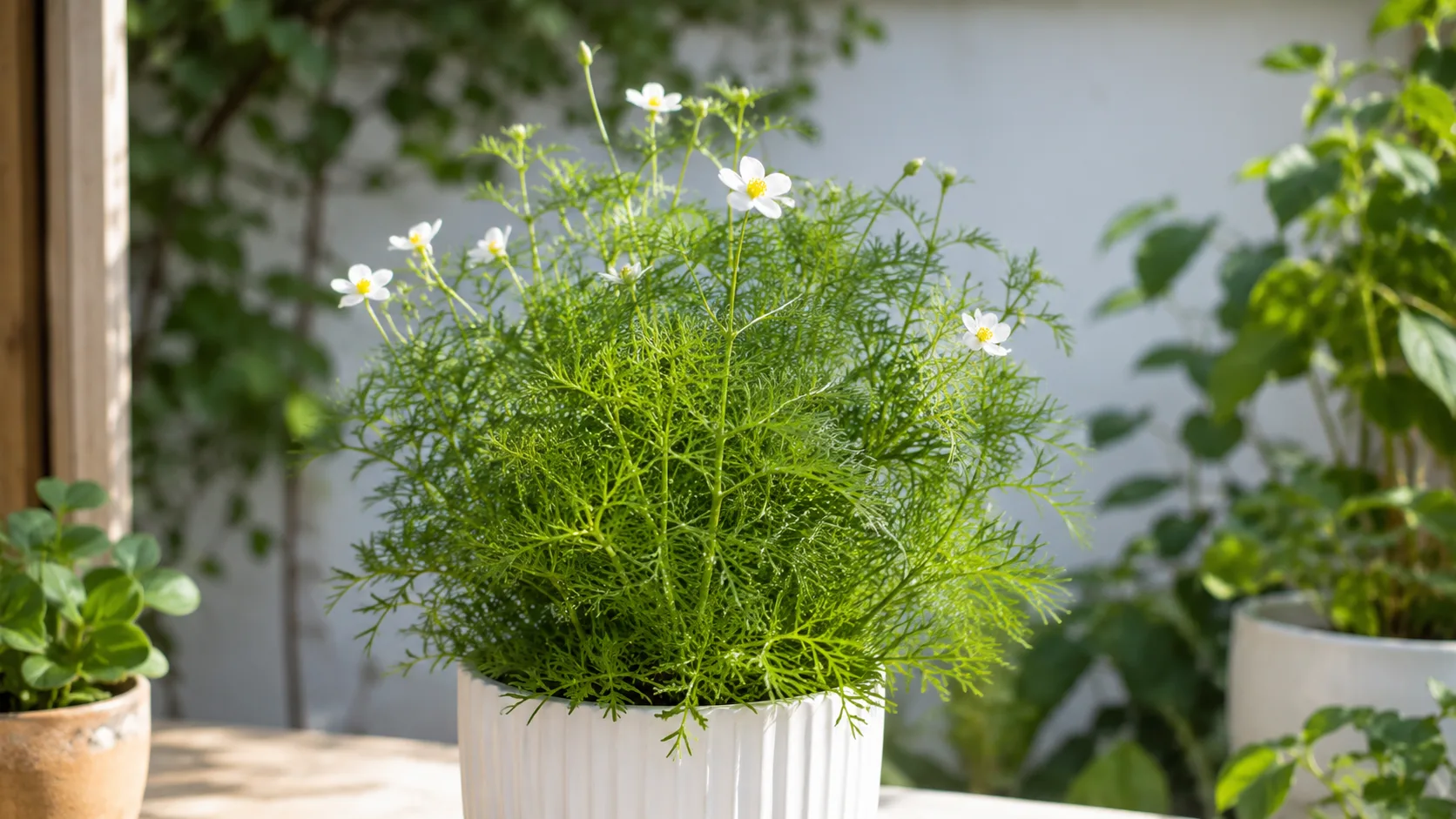
Aquarium placement follows from growth habit. Cabomba belongs in the background or midground of aquascapes, grouped in clusters of five or more stems for visual density. In tanks under 20 gallons, a single bunch can dominate the layout quickly; trim aggressively or choose a smaller stem plant instead. In tall tanks, expect stems to reach the surface within weeks under good light; either trim below the waterline or allow floating leaves to develop - green Cabomba can produce diamond-shaped floating leaves and white flowers at the surface when conditions are right, though flowering indoors is inconsistent.
Avoid placing Cabomba directly in front of slow-growing foreground carpets. Its fast vertical growth shades lower plants within days if you skip trimming.
Fertilization and Nutrient Needs
Iron, micronutrients, and column vs. root feeding
Cabomba pulls most of its nutrition from the water column, not from roots. That makes it a candidate for liquid fertilization even when rooted in inert gravel or sand. A complete aquarium fertilizer dosed per label instructions - adjusted downward in low-tech tanks - covers macronutrients (nitrogen, phosphorus, potassium) and micronutrients (iron, manganese, boron) that fine-leaved stems need for dense growth.
Iron matters especially for red Cabomba. Iron deficiency shows as pale or chlorotic new growth while older leaves remain relatively green. Iron-rich liquid doses or a nutrient-rich aquasoil substrate help, but iron without adequate light and CO2 will not turn a struggling plant red. For green Cabomba, iron is beneficial but rarely the limiting factor; light and water clarity come first.
Flowgrow’s reference ranges for C. caroliniana suggest nitrate 10–50 mg/L, phosphate 0.1–3 mg/L, potassium 5–30 mg/L, and iron 0.01–0.5 mg/L in high-growth systems. Hobbyist community tanks rarely need to chase those numbers precisely, but they illustrate the point: Cabomba in bright, CO2-enriched tanks is a heavy feeder relative to Anubias or Java fern. Under low light without CO2, heavy dosing often feeds algae instead of the plant.
Root tabs help anchoring in inert substrate but are secondary to column feeding for Cabomba. If you use aquasoil, reduce liquid dosing for the first few months to avoid algae outbreaks from the soil’s nutrient release.
Propagation: Stem Cuttings and Replanting Tops
Cabomba propagates only vegetatively in aquariums - stem cuttings and fragmentation. There are no runners, no daughter plants, and no seeds under typical indoor conditions.
The reliable method mirrors other stem plants but with Cabomba-specific timing. Choose a healthy stem with compact upper growth, not a melting lower section. Cut a 4–8 inch top section just above a leaf node using sharp, clean scissors. Strip leaves from the bottom 1–2 inches of the cutting. Replant the bare stem in substrate or float it until roots appear, then anchor. New growth from the cut end of the parent stem is slow in green Cabomba - lateral shoots are uncommon compared to Anacharis - so most propagation is top-and-replant rather than waiting for the stump to branch.
In high-light tanks, the maintenance rhythm becomes: cut the top, replant the top, discard or compost the lower bare stem. That sounds wasteful, but it is how aquascapers keep red Cabomba compact and how green Cabomba avoids the “telephone pole with a tuft” look. Expect to repeat every 2–4 weeks in fast-growth conditions.
Cuttings shorter than about 3 inches often fail to establish. Aim for 4–8 inches with several leaf whorls and you will rarely fail.
Common Problems and How to Read Them
Stem shedding, melting, and weak lower growth
The most common Cabomba complaint is stem shedding - fine leaf segments detach and cloud the water, leaving bare stem sections behind. In nearly every case the cause is environmental, not disease.
Low light is the primary driver for green Cabomba. The plant allocates energy to reaching the surface, abandons shaded lower leaves, and the stem looks naked. Fix: increase light intensity (not just photoperiod), top the stem, and replant the healthy upper portion.
Transition shock affects store-bought plants grown emersed (out of water) at farms. Emersed leaves are structurally different from submerged leaves; when placed underwater, the plant sheds old growth and produces new submerged foliage. Trim mushy or translucent sections so they do not foul the water, acclimate temperature slowly, and expect new growth in 1–2 weeks from healthy stem tissue.
Buried stem rot happens when stems are planted too deep or when decaying lower sections are left in place. The rot travels upward. Fix: pull the plant, trim all soft tissue, and replant only firm stem with bare lower nodes.
Poor water clarity - high detritus, infrequent filter maintenance, or decaying plant matter left in the tank - coats fine Cabomba leaves and accelerates die-off. Increase mechanical filtration cleaning frequency and remove shed leaves promptly.
Cabomba is sensitive to copper, present in many ich medications and some algaecides. Always check medication labels before treating a planted tank.
Algae, herbivorous fish, and water clarity
Algae on Cabomba leaves is a symptom of imbalance: too much light relative to plant uptake, excess nutrients without CO2, or photoperiods beyond 10–12 hours. Because the leaves are fine and numerous, manual removal is tedious. Fix the balance - reduce photoperiod, match CO2 to light, dial back overdosing - and healthy Cabomba usually outgrows the algae on new leaves.
Herbivorous fish treat Cabomba as salad. Goldfish, silver dollars, larger cichlids, and many plecos shred fine leaves faster than the plant regrows in moderate light. Cabomba can work in herbivore tanks only if light and nutrients are high enough for the plant to outpace grazing - a bar most low-tech setups do not clear. For display tanks with plant-eaters, hornwort or Anacharis tolerates grazing better.
Filter clogging from decaying Cabomba debris is a practical maintenance issue. Check pre-filter sponges weekly in tanks with fanwort, especially after trimming sessions.
Compatibility with Fish, Shrimp, and Turtles
Cabomba is compatible with most community fish and shrimp in planted tanks where the fish are not dedicated herbivores. Small tetras, rasboras, Corydoras, and Neocaridina shrimp use dense Cabomba as cover without damaging it. Betta fish often rest in soft Cabomba thickets. Avoid pairing with species known for plant destruction unless you accept the plant as expendable food.
For turtles, The Tortoise Table lists Cabomba as safe for feeding when sourced clean and pesticide-free. Many turtle keepers float Cabomba in turtle tubs as grazing fodder. Rinse store-bought plants thoroughly, quarantine if possible, and avoid plants treated with copper or pesticides. Confirm with a current authoritative source such as ASPCA for other pets before placing plants within reach.
Cabomba does not tolerate salt at brackish concentrations; keep it in freshwater setups only.
Legality and Invasive Status
This section matters as much as light and water parameters. Cabomba caroliniana is native to the southeastern United States but is invasive in many regions where the aquarium trade introduced it. The USGS Nonindigenous Aquatic Species database and EDDMapS track established populations across North America, Europe, Asia, and Australia. In Australia, Cabomba is listed as a Weed of National Significance because fragments root easily and form dense stands that clog waterways and displace native vegetation.
In the United States, regulation is primarily state-level. According to the International Waterlily & Water Gardening Society and EDDMapS state lists, Cabomba caroliniana is regulated, restricted, or prohibited in multiple jurisdictions, including California, Connecticut, Idaho, Massachusetts, Maine, Michigan, Minnesota, New Hampshire, New York, Vermont, Washington, and Wisconsin, among others. Wisconsin, Michigan, and New York list it as prohibited; Minnesota allows possession and sale but prohibits release into the environment. Status changes - always verify with your state’s Department of Natural Resources or invasive species council before purchasing, especially online.
What this means practically. Check your state’s aquatic invasive species list before buying. Reputable online sellers often block shipping to restricted states. Never release Cabomba trimmings, aquarium water, or pond plants into local lakes, streams, or storm drains - even in states where the species is not yet regulated. Fragmentation is the primary spread mechanism, and a single stem can establish a population.
Dispose of unwanted Cabomba by drying completely and discarding in trash, or composting only after the plant is fully dead and cannot reach water. Some invasive-plant guides recommend burning; the critical point is that live fragments must not enter waterways.
Conclusion
Cabomba rewards aquarists who treat it as what it is: a fully submerged, fine-leaved stem plant that needs bright light, clean water, and regular trimming - not a houseplant that happens to live underwater. Green Cabomba (C. caroliniana) is the realistic choice for most freshwater tanks; red Cabomba (C. furcata) belongs in high-light, CO2-enriched setups where you are willing to replant tops every few weeks. Get light into the medium-to-high range, keep parameters stable, plant stems shallow with bare nodes buried, and remove decay before it fouls the filter. When stems shed, read the signal: usually too little light, too much buried stem, or a transition shock - not a mystery disease.
The legal layer is part of responsible Cabomba care. Buy only where allowed, keep the plant contained in your tank or tub, and never release trimmings into the wild. The same fragmentation that makes propagation easy in your aquarium makes Cabomba one of the world’s most problematic aquatic invaders outside its native range. The plant does not change; where it grows is your responsibility.
When to use this page vs other Cabomba guides
- Cabomba overview - Canonical hub for this species - care topics and problems branch from here.
- Cabomba problems - Symptom-first path when you already know something is wrong.
Related Cabomba guides
How to care for Cabomba?
How much light does Cabomba need?
Bright aquarium or pond light with stable clean water; avoid dim tanks where stems shed quickly.. Low-tech aquarium light. Filtered outdoor pond light
- Bright aquarium or pond light with stable clean water - Bright aquarium or pond light with stable clean water; avoid dim tanks where stems shed quickly..
- avoid dim tanks where stems shed quickly - Bright aquarium or pond light with stable clean water; avoid dim tanks where stems shed quickly..
- Low-tech aquarium light - Low-tech aquarium light.
- Filtered outdoor pond light - Filtered outdoor pond light.
When should you water Cabomba?
Keep fully aquatic in clean, dechlorinated water; refresh water quality before the plant declines.
- Check water clarity - Keep fully aquatic in clean, dechlorinated water; refresh water quality before the plant declines.
- temperature
- flow
- and leaf color rather than watering by a calendar - Keep fully aquatic in clean, dechlorinated water; refresh water quality before the plant declines.
- Drain excess water - Keep fully aquatic in clean, dechlorinated water; refresh water quality before the plant declines.
What soil works best for Cabomba?
Aquatic setup with no ordinary potting mix in the turtle tank; anchor or float according to the species.
- Aquarium-safe sand or gravel if rooted - Aquatic setup with no ordinary potting mix in the turtle tank; anchor or float according to the species.
- No fertilizer-rich potting soil in turtle tanks - Aquatic setup with no ordinary potting mix in the turtle tank; anchor or float according to the species.
- Attach rhizome plants to rock or driftwood - Aquatic setup with no ordinary potting mix in the turtle tank; anchor or float according to the species.
How to propagate Cabomba?
Propagate from healthy divisions or cuttings taken from clean, untreated stock.
- Division - Propagate from healthy divisions or cuttings taken from clean, untreated stock.
- Stem cuttings - Propagate from healthy divisions or cuttings taken from clean, untreated stock.
- Runner separation
Cabomba pet safety
Cabomba appears lower-risk in current tortoise-focused references, but LeafyPixels keeps the reptile classification conservative. Use moderation and remove shredded leftovers from the tank.
Verified safe for turtles by The Tortoise Table. Use clean sourcing and moderation because delicate stems can foul water if shredded.
Watering Cabomba
For Cabomba, check water clarity, temperature, flow, and leaf color rather than watering by a calendar. and water always submerged or floating in clean water; maintain tank or pond water changes. Growth slows in cool water or short winter light; thin excess growth and keep filtration steady.
| Detail | Information |
|---|---|
| How often | Always submerged or floating in clean water; maintain tank or pond water changes |
| How to check | Check water clarity, temperature, flow, and leaf color rather than watering by a calendar. |
| Seasonal changes | Growth slows in cool water or short winter light; thin excess growth and keep filtration steady. |
Signs of overwatering
- melting stems
- yellowing leaves
- rotting crowns
- foul water smell
Signs of underwatering
- dry floating mats
- crispy leaves
- shrinking growth
- plant breaking apart
Soil & potting for Cabomba
Use a mix of Aquarium-safe sand or gravel if rooted, No fertilizer-rich potting soil in turtle tanks, Attach rhizome plants to rock or driftwood for Cabomba. Not applicable for submerged aquatic culture; prioritize clean, oxygenated water. Target soil pH around About 6.5-7.8 for most community turtle aquariums. Repot thin or reposition growth as needed rather than repotting on a schedule, ideally in warm active growth.
| Detail | Information |
|---|---|
| Recommended mix | Aquarium-safe sand or gravel if rooted, No fertilizer-rich potting soil in turtle tanks, Attach rhizome plants to rock or driftwood |
| Drainage | Not applicable for submerged aquatic culture; prioritize clean, oxygenated water. |
| Soil pH | About 6.5-7.8 for most community turtle aquariums |
| Repotting frequency | Thin or reposition growth as needed rather than repotting on a schedule |
| Best season to repot | Warm active growth |
Signs it needs repotting
- overcrowded tank surface
- plants clogging filter intake
- root mats trapping debris
Humidity & temperature for Cabomba
Cabomba prefers aquatic or constantly humid surface conditions. Keep temperatures around 18-28 C (64-82 F). Avoid letting Cabomba sit below Protect from freezing unless grown as an outdoor seasonal pond plant. Match the plant to the turtle species temperature range and quarantine new plants before use.
| Detail | Information |
|---|---|
| Humidity | Aquatic or constantly humid surface conditions |
| Ideal temperature | 18-28 C (64-82 F) |
| Minimum temperature | Protect from freezing unless grown as an outdoor seasonal pond plant |
| Temperature notes | Match the plant to the turtle species temperature range and quarantine new plants before use. |
Humidity tips
- Keep exposed roots and floating leaves from drying out
- Use a covered aquarium only if ventilation remains adequate
Fertilizer & pruning for Cabomba
Feed Cabomba usually unnecessary in turtle tanks with normal nutrients using aquarium-safe fertilizer only if needed, used outside the turtle tank when possible. The best feeding window is active growth only. Copper, pesticide residues, strong pond chemicals, and terrestrial fertilizers in turtle water.
| Detail | Information |
|---|---|
| Fertilizer schedule | Usually unnecessary in turtle tanks with normal nutrients |
| Best season | Active growth only |
| Fertilizer type | Aquarium-safe fertilizer only if needed, used outside the turtle tank when possible |
| What to avoid | Copper, pesticide residues, strong pond chemicals, and terrestrial fertilizers in turtle water |
Pruning
Thin old, melting, or excess growth before it fouls turtle water. Remove uneaten plant debris promptly.
Common problems on Cabomba
Yellow Leaves
MediumLikely cause: Low nutrients, poor light, dirty water, or acclimation melt after moving tanks
Quick fix: Remove melting growth, improve water changes, and adjust light gradually.
Full fix guide →Slow Growth
LowLikely cause: Weak light, cold water, or nutrient imbalance in a low-tech setup
Quick fix: Stabilize temperature and use moderate aquarium lighting before adding fertilizer.
Full fix guide →Brown Tips
MediumLikely cause: Common on this plant type; confirm with recent watering, light, and root checks.
Quick fix: Inspect the plant and correct the most likely care stressor before stacking treatments.
Full fix guide →Root Rot
MediumLikely cause: Common on this plant type; confirm with recent watering, light, and root checks.
Quick fix: Inspect the plant and correct the most likely care stressor before stacking treatments.
Full fix guide →Overwatering
MediumLikely cause: Common on this plant type; confirm with recent watering, light, and root checks.
Quick fix: Inspect the plant and correct the most likely care stressor before stacking treatments.
Full fix guide →Underwatering
MediumLikely cause: Common on this plant type; confirm with recent watering, light, and root checks.
Quick fix: Inspect the plant and correct the most likely care stressor before stacking treatments.
Full fix guide →Spider Mites
MediumLikely cause: Common on this plant type; confirm with recent watering, light, and root checks.
Quick fix: Inspect the plant and correct the most likely care stressor before stacking treatments.
Full fix guide →Mealybugs
MediumLikely cause: Common on this plant type; confirm with recent watering, light, and root checks.
Quick fix: Inspect the plant and correct the most likely care stressor before stacking treatments.
Full fix guide →Aphids
MediumLikely cause: Common on this plant type; confirm with recent watering, light, and root checks.
Quick fix: Inspect the plant and correct the most likely care stressor before stacking treatments.
Full fix guide →Leggy Growth
MediumLikely cause: Common on this plant type; confirm with recent watering, light, and root checks.
Quick fix: Inspect the plant and correct the most likely care stressor before stacking treatments.
Full fix guide →Wilting
MediumLikely cause: Common on this plant type; confirm with recent watering, light, and root checks.
Quick fix: Inspect the plant and correct the most likely care stressor before stacking treatments.
Full fix guide →Drooping Leaves
MediumLikely cause: Common on this plant type; confirm with recent watering, light, and root checks.
Quick fix: Inspect the plant and correct the most likely care stressor before stacking treatments.
Full fix guide →Low Humidity
MediumLikely cause: Common on this plant type; confirm with recent watering, light, and root checks.
Quick fix: Inspect the plant and correct the most likely care stressor before stacking treatments.
Full fix guide →Not Enough Light
MediumLikely cause: Common on this plant type; confirm with recent watering, light, and root checks.
Quick fix: Inspect the plant and correct the most likely care stressor before stacking treatments.
Full fix guide →Fungus Gnats
MediumLikely cause: Common on this plant type; confirm with recent watering, light, and root checks.
Quick fix: Inspect the plant and correct the most likely care stressor before stacking treatments.
Full fix guide →Mold on Soil
MediumLikely cause: Common on this plant type; confirm with recent watering, light, and root checks.
Quick fix: Inspect the plant and correct the most likely care stressor before stacking treatments.
Full fix guide →