Underwatering on Cabomba: Causes, Checks & Fixes
Quick answer
Cabomba is fully aquatic; underwatering means stems or floating portions dried out, or tank water quality dropped from evaporation and skipped changes. First step: re-submerge every stem in clean, temperature-matched water and trim crispy tissue before it fouls the tank.
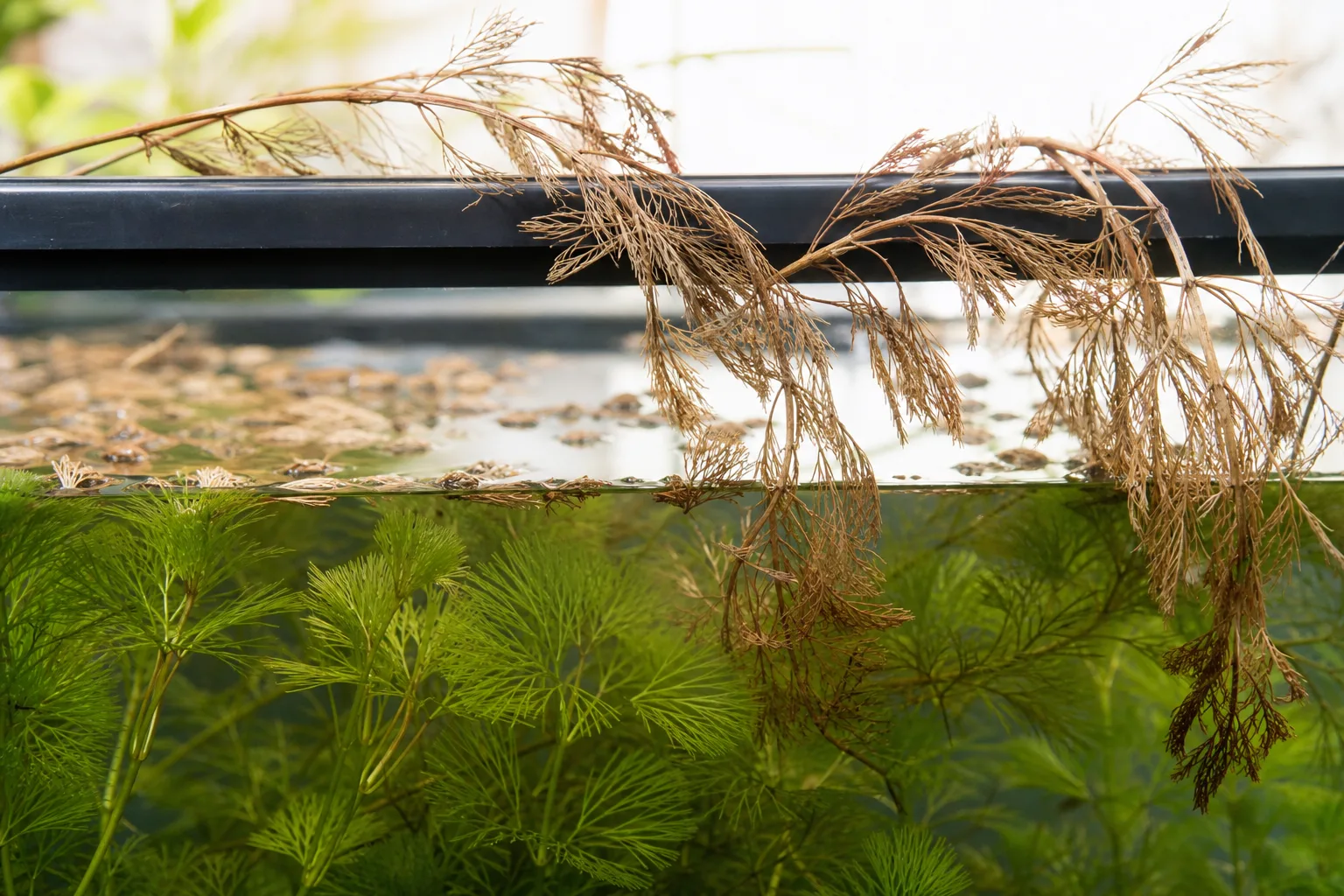
Underwatering on Cabomba: Causes, Checks & Fixes
This guide covers underwatering on Cabomba. See also the general Underwatering guide, watering, and light pages for this plant.
Underwatering on Cabomba: Causes, Checks & Fixes
Quick answer
Cabomba does not live in potting mix. It is a rooted, submersed stem plant whose fan-shaped leaves take in nutrients from the water around them. Underwatering on Cabomba means the plant lost reliable contact with clean, oxygenated water-not that soil went dry.
The usual triggers are a tank level that fell from evaporation, stems draped onto a dry turtle basking dock, filter spray that keeps portions out of the water, or stems left on a counter during quarantine or shipping. The tell is crispy, brittle needles and shrinking clumps, not soggy rot.
First step: re-submerge every stem in dechlorinated water matched to tank temperature, then trim away dry or tan tissue. Do not reach for houseplant watering tricks like bottom-watering a pot. Fix water coverage and quality first.
Why Cabomba gets underwatered
Cabomba is sensitive to drying out and needs permanent shallow water to stay viable. That requirement is easy to miss because the same symptom word-underwatering-means something different for terrestrial houseplants.
Several aquarium-specific situations cause chronic dehydration:
Evaporation and low tank level. Open-top tanks and warm turtle setups lose water steadily. When the level drops several inches, upper stems and any floating portions sit in air. Cabomba’s fine leaves desiccate within hours in dry room air.
Handling outside the tank. Stems bundled for quarantine, divided for propagation, or rinsed on a counter lose moisture fast. Emersed-grown store stock can also arrive with leaves adapted to air; once submerged, old tissue may melt-but stems that dry completely before planting do not recover the same way.
Turtle and pond disturbance. Turtles push stems onto basking platforms, shred floating mats, or uproot weighted bundles. Fragments left above the waterline become dry floating mats that crisp and break apart, fouling water if not removed.
Strong surface flow. Cabomba evolved in slow-moving freshwater. Heavy filter output near the surface can push delicate stems partially out of the water or batter leaves until they lose turgor, mimicking underwatering even when the tank is full.
Neglected water changes. Cabomba is a water column feeder that depends on dissolved nutrients and stable chemistry in the water itself. Skipping changes for weeks does not dry the stems, but waste buildup and depleted conditions stress the plant until lower leaves thin and upper growth shrinks-patterns that overlap with dehydration stress in a neglected tank.
What underwatering looks like on Cabomba
Separate dehydration from melt caused by light or parameter shock:
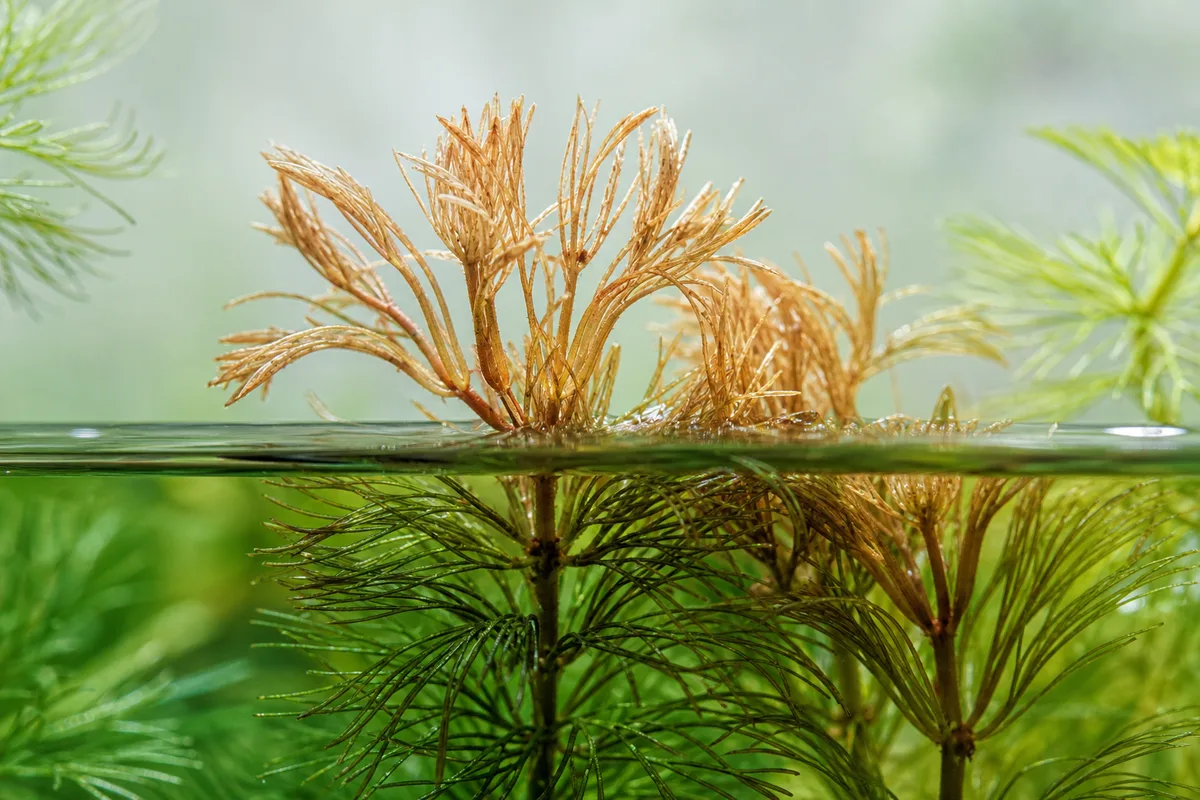
Tan papery crispy needle clusters on Cabomba tissue that dried above the waterline - re-submerge firm green nodes below; desiccated tissue will not green up again.
Typical underwatering signs:
- Tan, brittle, or papery needle clusters on stem sections that were exposed to air
- Dry floating mats at the surface with curled, crispy edges
- Stems breaking apart where tissue dried and became fragile
- Shrinking overall mass-fewer whorls per inch and shorter visible growth
- No foul anaerobic smell; dried tissue feels crunchy, not slimy
Patterns that suggest a different problem:
- Transparent or mushy lower leaves with the tank full → often hard water, high pH, or insufficient light-not dry stems (alkaline water can cause leaf loss)
- Soft brown rot at the substrate with cloudy water → dirty or stagnant conditions, closer to overwatering on Cabomba stress in aquatic terms
- Sudden melt after a large water change → parameter or temperature shock, not chronic dehydration
- Uniform yellowing with long internodes → low light or nutrient shortage while still submerged
Crispy margins on submerged green leaves in an otherwise full tank usually trace to flow or chemistry, not classic underwatering. Start by confirming which stem sections were actually dry.
How to confirm the cause
Work through these checks before changing fertilizer or lighting:
- Water level history - Compare today’s level to your usual fill line. A drop of 2–3 inches in a small tank can leave Cabomba stems exposed for days.
- Exposure map - Trace each stem from substrate or weight to tip. Note any section sitting on glass, wood, or a basking platform above the waterline.
- Texture test - Pinch suspected tissue. Dry underwatering damage feels brittle and breaks cleanly. Rot feels soft and slimy.
- Smell and clarity - Dehydrated plant debris smells grassy or neutral when dry; rotting submerged stems make the tank smell sour.
- Recent handling - Did stems sit on a towel, in a dry bag, or in a shallow tray during the last 24–48 hours? That timeline matters.
- Flow check - Watch filter output. Stems pushed sideways or splashed at the surface may dry at the tips even in a full tank.
- Tank mates - Turtles, large cichlids, or goldfish often rearrange plants onto dry surfaces.
If every stem has stayed fully submerged, water is clear, and tissue is mushy rather than crispy, look at dirty-water stress, root rot on Cabomba, or light deficiency instead.
First fix for Cabomba
Re-submerge all stems in clean, dechlorinated water that matches tank temperature within about 2°F, then remove every dry or tan whorl.
That single action stops further desiccation and keeps brittle fragments from decaying in the tank. Use a bucket or spare container with an airstone if you need a holding area while you top off the main tank.
Steps in order:
- Turn off strong filter spray or redirect the outlet so stems are not beaten against the surface.
- Fill the tank to your normal operating level with treated water at matched temperature.
- Replant or reweight stems so at least the lower third is anchored below the surface; floating fragments belong fully on the water, not draped over rims.
- Trim crispy whorls back to firm green tissue with sharp aquascaping scissors. Sterilize blades between cuts if rot is also present.
- Net out loose dry needles from the surface-they will not recover and can clog filters.
- After trimming, perform a 25–30 percent water change if debris clouded the tank.
Do not dose fertilizer on the same day as major trimming. Give the plant stable water for several days first.
Step-by-step recovery
Once stems are submerged and dry tissue is removed:
Days 1–3: Leave lighting and parameters stable. Expect trimmed stems to look bare. Small side shoots may appear at nodes within a week if the stem core stayed green and firm.
Week 1–2: Watch for new whorls opening on upper nodes. Gently siphon debris without uprooting freshly anchored stems. Resume your normal partial water-change schedule.
Week 2–4: If new growth is pale or sparse, then evaluate light intensity and liquid fertilizer-only after confirming the plant has stayed fully underwater. Replant top cuttings from healthy stems to fill gaps rather than leaving dried crowns in place.
When to discard stems: A stem that is brown and hollow when squeezed, or that sheds all whorls without new buds after three weeks submerged, is unlikely to recover. Replace with healthy cuttings from another bunch.
Recovery timeline
Mild tip drying on an otherwise submerged plant often shows new needles within 7–10 days after trimming and stable water. Stems that were fully exposed for more than a day may need two to three weeks to push side shoots. Severely desiccated crowns with no green tissue at nodes rarely come back-propagate from any healthy sections above the damage instead.
Judge success by new firm whorls and stopped shedding, not by old crispy needles regreening. Those leaves are dead tissue.
Lookalike symptoms
| What you see | More likely cause | Quick check |
|---|---|---|
| Crispy tips on stems above waterline | Underwatering | Raise water level; trim dry whorls |
| Bottom-up transparent melt, tank full | Low light or hard/alkaline water | Test GH and pH; increase light gradually |
| Mushy stems at substrate, foul smell | Rot from stagnant or dirty water | Trim rot, increase water changes |
| Sudden melt after purchase | Emersed-to-submersed transition | Keep stable; trim melting leaves |
| Shredded stems in turtle tank | Mechanical damage | Anchor lower, remove dry fragments |
Mistakes to avoid
- Bottom-watering a pot or waiting for soil to dry - Cabomba is not potted in houseplant mix in most aquariums.
- Leaving trimmed dry leaves in the tank - They decay quickly and spike ammonia.
- Filling with cold tap water after dehydration - Temperature shock compounds stress; match the tank.
- Dosing heavy fertilizer immediately - Stressed stems need stable water first.
- Assuming drooping always means too much water - Exposed stems wilt from dryness too.
- Moving stems repeatedly while they re-root - Pick an anchor point and leave it for two weeks.
Cabomba care cross-check
After fixing dehydration, align with Cabomba overview’s baseline needs: bright aquarium light, gentle flow, soft to moderately hard water, and regular partial water changes. Cabomba grows in slow-moving freshwater in nature and takes most nutrients from the water column rather than substrate alone.
In turtle tanks, keep sourcing pesticide-free, moderate feeding of shredded material, and remove leftovers before they decay. Exposed roots and floating leaves should never dry out between water changes.
How to prevent underwatering next time
- Top off evaporation on a set day each week rather than waiting for visible stem exposure.
- Mark a fill line on glass with tape so low water is obvious at a glance.
- Diffuse filter output with a spray bar or lily pipe; aim current away from Cabomba stems.
- Quarantine new bunches submerged in a container-not on wet paper that dries out.
- Anchor stems with plant weights or fine gravel so turtles cannot easily pull crowns onto basking docks.
- Trim and remove dry fragments during weekly maintenance before they sink and rot.
When to worry
Treat same-day dehydration as urgent when crowns sat above water, when dry stems are already breaking apart in the tank, or when an entire bunch was out of water during shipping. If every stem is hollow after three weeks of stable submersion with no new whorls, replace the plant rather than continuing to chase recovery on dead tissue.
When to use this page vs other Cabomba guides
- Cabomba watering guide - Use for routine moisture checks before assuming underwatering is the main issue.
- Cabomba problems hub - Browse all 16 common issues on this species.
- Wilting on Cabomba - Different entry point when symptoms overlap with underwatering.
- Brown Tips on Cabomba - Different entry point when symptoms overlap with underwatering.
- Yellow Leaves on Cabomba - Different entry point when symptoms overlap with underwatering.