Cabomba Light Requirements: PAR, Photoperiod, and Algae
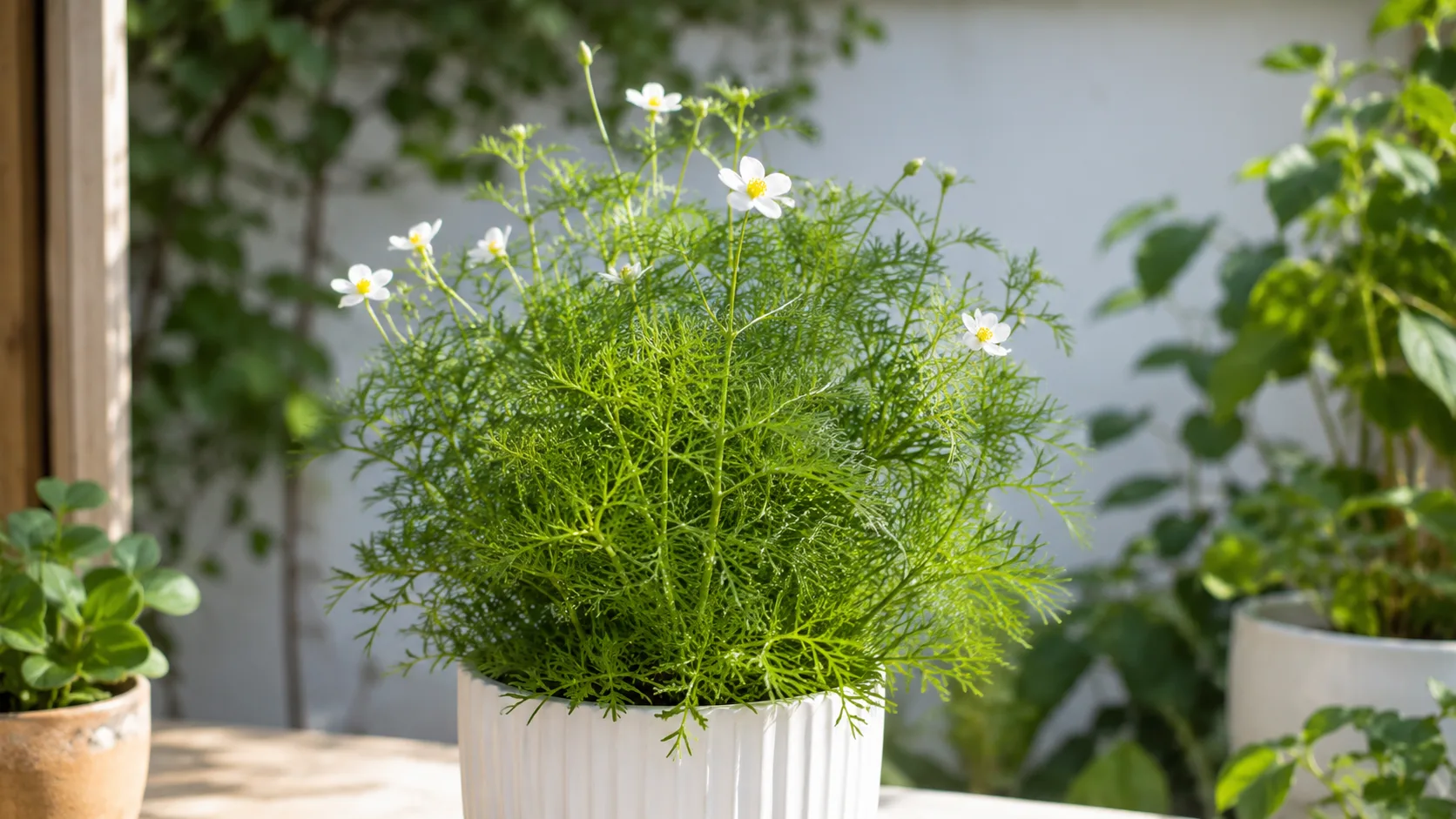
Cabomba Light Requirements: PAR, Photoperiod, and Algae Balance
Cabomba Light Requirements: PAR, Photoperiod, and Algae Balance
Cabomba is one of the most visually striking background plants in freshwater aquascaping - and one of the most commonly returned. A stem that looks lush in a supplier’s grow tank will shed lower leaves, stretch toward the surface, and melt within two weeks in a dim community tank with a stock LED hood. This page is the lighting deep-dive for the Cabomba care cluster. For species biology, CO₂, legality, and floating vs planted placement, start with our Cabomba overview. Here we cover submerged PAR by species, photoperiod, fixture selection, and the melt patterns that trace back to light.
Before you plant a background wall of fanwort: Cabomba caroliniana is regulated or prohibited in multiple U.S. states. Check your state rules on the overview legality section and never release trimmings or aquarium water into ponds, streams, or storm drains.
Quick Reference: PAR, Photoperiod, and CO₂ by Species
Measure PAR at stem height (where lower leaves attach), not at gravel level, unless noted. Green Cabomba can survive at lower intensity than the overview’s “looks good” substrate targets - both numbers are correct at different measurement points and growth goals.
| Species | Survives (stem height) | Thrives (stem / substrate) | Photoperiod | CO₂ |
|---|---|---|---|---|
| C. caroliniana (green) | 30–40 PAR | 40–80 PAR / 50–80 at substrate per overview | 8–10 h | Beneficial |
| C. aquatica (giant) | 35–40 PAR | 50–90 PAR | 8–10 h | Recommended |
| C. furcata (red) | 50–60 PAR | 80–150+ PAR | 8–9 h | Essential at high PAR |
If you only remember one number for green Cabomba, remember 40 PAR at stem height - achievable with most mid-tier planted LEDs on tanks up to 50 cm deep (Canton Aquatics).
Why Aquarium Lighting, Not Window Light, Controls Cabomba Growth
Cabomba is a fully submerged aquatic plant. In nature it grows rooted in slow-moving water with photosynthetic tissue entirely below the surface. Light is filtered, scattered, and attenuated with depth. A stem 40 cm below the surface receives a fraction of the photons at the water column top; Cabomba builds dense crowns when submerged light is strong and etiolates when it drops below the compensation point.
Room light through a window does not fix this. Glass reflects and refracts unpredictably, depth cuts intensity sharply, and photoperiod shifts with weather. Cabomba at the bottom of a 50 cm tank under window light alone rarely reaches 30–40 µmol m⁻² s⁻¹ at stem height. Dedicated aquarium lighting is required. Flowgrow lists light as the single most important factor for C. caroliniana - if temperature is too high or light too low, the plant etiolates regardless of pH or hardness.
Floating stems (common in quarantine or breeding setups on the overview) receive far more usable light near the surface. The PAR bands in this guide still apply, but floating Cabomba often succeeds where the same stems planted deep would melt - Aquarium Breeder recommends floating when fixture output is marginal.
The PAR Sweet Spot for Cabomba Species
Photosynthetically active radiation (PAR), in µmol m⁻² s⁻¹, is the metric that predicts whether Cabomba keeps feathery lower leaves. Watts, lumens, and Kelvin do not. The three species most commonly traded - Cabomba caroliniana, C. aquatica, and Cabomba furcata - need different targets.
| Species | Common name | Minimum at stem height | Target for dense growth | CO₂ |
|---|---|---|---|---|
| C. caroliniana | Green Cabomba | 30–40 | 40–80 | Beneficial, not required |
| C. aquatica | Giant Cabomba | 35–40 | 50–90 | Recommended |
| C. furcata | Red Cabomba | 50–60 | 80–150+ | Essential at high PAR |
Below 30 PAR at the lower stem, expect survival with leggy growth and progressive lower-leaf drop. Above 80 PAR without matching CO₂ and fertilization, algae on feathery leaves usually arrives before the plant peaks.
Green Cabomba (C. caroliniana) PAR Targets
Cabomba caroliniana is the most forgiving Cabomba - relative to red fanwort, not relative to Anubias. Canton Aquatics recommends at least 40 PAR for compact, bushy form and notes insufficient light as the number-one struggle. Aquarium Breeder sets 30–40 PAR minimum for green species, with leggy growth common without CO₂ even at medium light.
In low-tech tanks without injected CO₂, the practical ceiling is roughly 30–50 PAR at stem height. Past 50 PAR without CO₂, excess photons tend to fuel algae. With CO₂ at 20–30 ppm, green Cabomba uses 60–80 PAR comfortably (Flowgrow).
Red and Purple Cabomba (C. furcata) Need Higher PAR
Cabomba furcata is a different difficulty tier. The 2Hr Aquarist cultivates it under T5 at roughly 200 µmol m⁻² s⁻¹ at substrate level and lists 100+ µmol PAR as required for good coloration and short internodes. Inadequate light greens the crown and elongates internodes. Aquarium Breeder recommends 40–50 PAR minimum for red variants, but CO₂ is essential above moderate intensity and nitrate limitation under strong light deepens color.
Do not attempt red Cabomba in a low-tech tank unless you have verified 60+ PAR at stem height and pressurized CO₂. Budget for high-output LED or T5, CO₂, and daily fertilizer from day one.
Why This Page and the Cabomba Overview Quote Different PAR Numbers
Our Cabomba overview FAQ lists green Cabomba at 50–80 PAR at the substrate for medium-to-high light - the range where stems look bushy in display tanks. This light guide lists 30–40 PAR minimum at stem height - the lower bound where green Cabomba can hold some lower leaves without looking good.
Both are correct when you separate survives from thrives and measurement height from substrate:
- Substrate PAR in a 45–50 cm tank is often 10–20 µmol lower than PAR 10–15 cm above gravel where Cabomba lower whorls attach (Aquarium Lesson on deep-tank attenuation).
- 30–40 PAR at stem height ≈ survival with possible legginess; 50–80 PAR at substrate ≈ the overview’s “dense, compact background” target (Canton Aquatics 40–80+ PAR range).
- When in doubt, measure at the lowest healthy whorl and aim for 40+ in low-tech tanks or 50–80 if you run CO₂ and want showcase density.
Reading PAR at Stem Height Without a Meter
Most home aquarists lack a quantum sensor. Reasonable proxies:
Photone app: Estimates PAR from a smartphone camera. Treat readings as approximate - phone model, screen brightness, angle to the fixture, and tank lid glass all shift results. Hold the phone parallel to the water surface at stem height, use the same spot each time, and compare relative zones rather than chasing a single absolute digit.
Lumens per liter: Roughly 30–50 lm/L maps to medium-to-high range for green Cabomba; 50–80 lm/L approaches red Cabomba territory (Aquarium Lesson PAR ranges).
Published PAR maps: Prefer fixture charts at your tank depth over box wattage. The 2Hr Aquarist notes that visual brightness poorly predicts PAR - especially with household or kit LEDs.
Tank depth matters: a fixture delivering 80 PAR at the surface may deliver only 25–35 at stem height in a tall tank. For green Cabomba in a 40–45 cm tank, 0.75–1.0 W per gallon of quality LED is a workable starting estimate - verify at stem height.
Case Study: 45 cm Tank, 38 PAR at Stem Height
Setup: 45 cm (18 in) long community tank, 40 cm water depth, single mid-tier full-spectrum planted LED mounted 12 cm above the glass, no CO₂, weekly liquid fertilizer after water changes per our watering guide.
Measurement: Photone in PAR mode, iPhone held level at 14 cm above substrate (first lower whorl height) in the back-right planting zone: 38 µmol m⁻² s⁻¹. Front-left corner at the same height: 26 µmol m⁻² s⁻¹ - uneven beam spread from a narrow strip fixture.
Outcome: Green C. caroliniana in the back-right cluster held lower whorls through week three after a 6-hour acclimation photoperiod ramped to 8 hours. Front-left stems lost basal leaves by day twelve and developed 8 cm bare sections with a crown tuft - classic under-lighting plus self-shading. Fix: lowered fixture 3 cm, trimmed canopy tops weekly per our pruning guide, and replanted healthy tips via propagation. No photoperiod extension - that would have fueled algae without fixing depth intensity.
Labeled symptom reference (what to match in your tank):
- Adequate light: Internodes under 1 cm, feathery whorls attached within the lower 5 cm of stem, new tips finely divided.
- Chronic under-lighting: Bare stem segments 8–12 cm long, crown tuft at the top, lower leaves yellowed and detached.
Photoperiod: The Daily Light Window That Keeps Algae in Check
Photoperiod is how long lights stay on daily - the second-most important variable after intensity. Plants store photosynthetic energy as carbohydrates and consume them in dark periods. If CO₂ and dissolved nutrients cannot match energy influx, surplus feeds algae. Cabomba’s feathery leaves present enormous algae attachment surface relative to biomass.
8–10 hours per day is the practical sweet spot (Canton Aquatics; Aquarium Breeder). Extending beyond 10 hours when PAR is already 50+ is a reliable algae trigger. Use a plug-in timer; dimmable LEDs with 30-minute ramps reduce acclimation stress.
New tanks or fresh Cabomba: start 6 hours, add 30–60 minutes per week until you reach 8–10 hours.
The Algae Balance Triangle: Light, CO₂, and Nutrients
Light never acts alone. Increase any vertex of the light – CO₂ – nutrients triangle without adjusting the others and algae often wins. Cabomba is especially vulnerable because hair algae, staghorn, and green spot colonize feathery surfaces faster than the plant outgrows them when light exceeds available CO₂ and fertilizer.
Green Cabomba grows without injected CO₂ at 30–40 PAR with weekly liquid dosing - acceptable but slow. At 60–80 PAR with 20–30 ppm CO₂ and daily macros, you get competition-grade thickets (Flowgrow: CO₂ optional but boosts growth).
Red Cabomba at coloration PAR requires CO₂ - without it, algae colonizes leaves while stems green out. Nutrients complete the triangle: nitrate limitation can deepen color under strong light (Flowgrow), but only after light-CO₂-fertilizer balance is stable.
What Too Little Light Looks Like in Cabomba
Cabomba does not adapt to low submerged light like Anubias or Java fern. Symptoms appear in sequence:
- Lower-leaf drop - feathery whorls near substrate yellow and detach.
- Internode elongation - stems lean toward the strongest light.
- Crown thinning - tip leaves smaller and less divided.
All three together mean PAR at the lower stem is below 25–30. Fix intensity (lower fixture, upgrade LED, float tops), not photoperiod alone. Trim bare sections and replant healthy tops.
What Too Much Light Does to Cabomba and Your Tank
Excess light damage is almost never photons alone - it is photons arriving faster than metabolism allows, with surplus captured by algae. Classic symptom: green or brown fuzz on mid-stem leaves days after a sudden intensity jump.
Shorten photoperiod to 6–8 hours, verify CO₂, increase fertilizer, and gently remove algae during water changes. Tissue-cultured Cabomba moved from dim shipping cups to high-PAR tanks can bleach regardless of CO₂ - gradual acclimation fixes this, not permanent dimming.
Spectrum and Kelvin: Choosing the Right LED Color Temperature
Cabomba is less spectrum-sensitive than red-leaf stems like Ludwigia, but spectrum still affects efficiency. Photosynthesis peaks in blue (430–470 nm) and red (640–680 nm). Full-spectrum 5000K–7000K daylight LEDs suit all Cabomba species (Canton Aquatics; Aquarium Breeder). 6500K renders lime-green C. caroliniana accurately and keeps C. furcata reds from looking muddy.
LED Fixture Specs That Actually Deliver Enough PAR
Many “planted tank” LEDs deliver 15–20 PAR at substrate in a 50 cm tank. Cabomba exposes that gap within days. Ignore box wattage; evaluate:
- Published PAR at your depth - 50+ for green, 70+ for red at stem height.
- Beam angle and coverage - 90–120° optics or multi-strip arrays for tanks wider than 45 cm.
- Dimming - essential above 50 PAR for acclimation and algae rollback.
- Color temperature - 5000K–7000K full spectrum.
Mounting Height, Tank Depth, and Even Coverage
Measure PAR where lower leaves attach - typically 10–20 cm above substrate. Intensity drops with distance; doubling fixture-to-plant distance can reduce PAR by roughly 75% in open air - an approximate inverse-square relationship. In real tanks, reflectors, lids, and water surface ripple modify that curve, so verify with a meter or Photone at multiple back-row points rather than trusting geometry alone (Aquarium Lesson on depth and spread).
Green Cabomba in a 40 cm tank: mount LED 10–15 cm above water on open-top tanks when the manufacturer allows. Tanks 50 cm+ deep: hanging kits, higher-output models, verify back-left, back-center, and back-right at stem height - spreads differing by 15+ PAR produce visibly uneven stands within two weeks.
LED vs T5 HO for Cabomba Background Stems
Modern planted tanks favor LEDs for efficiency, dimming, low heat, and spectrum control. A premium LED delivers 50–80 PAR at stem height while drawing 30–50 W - roughly half the energy of equivalent T5 HO. Cabomba prefers 20–25°C and weakens above 27°C (Flowgrow optimum 20–25°C); cooler-running LEDs help.
T5 HO remains credible for tanks 45 cm deep or shallower. The 2Hr Aquarist grows C. furcata under T5 at ~200 µmol at substrate. Downsides: heat, energy cost, bulb replacement every 12–18 months. New builds: LED with verified PAR map is the default.
Acclimating Cabomba to Brighter Aquarium Light
Store-bought Cabomba is often grown emersed on farms then submerged in your tank. Emersed leaves shed as submerged forms regenerate. A sudden light jump on top of that transition compounds melt.
Standard acclimation:
- Float sealed bag 15–20 minutes for temperature match.
- Open bag; add small cup of tank water every 10 minutes for ~1 hour.
- Plant stems in clusters with 2–3 cm bare stem below substrate.
- Run 6 hours photoperiod week one even if target is 8–10 hours.
- Set LED to 50–70% output two weeks; increase 10% every five days.
- Trim melted or transparent leaves promptly.
- New submerged tips in 7–14 days confirm success.
Moving established Cabomba to a brighter tank: same ramp - 6 hours, 60% output, climb over 2–3 weeks.
Photoperiod Schedules for Low-Tech and High-Tech Tanks
Low-tech, no CO₂, green Cabomba, 30–45 PAR at stem height: 8 hours on (e.g., 11:00–19:00). Weekly water change + liquid fertilizer. Trim when stems hit the surface.
High-tech, CO₂ 20–30 ppm, 60–100+ PAR: 8–9 hours with 30-minute ramp. CO₂ on one hour before lights, off one hour before lights-off. Daily fertilizer. Weekly pruning.
Adjust ±30 minutes based on algae observation; keep schedule consistent day to day.
Common Light Mistakes That Cause Cabomba to Melt
- Stock kit LED - often 10–20 PAR at stem height; lower leaves drop by day five.
- Extending photoperiod beyond 10 hours to compensate for low PAR - fuels algae, does not restore basal leaves.
- Single strip on a 60 cm deep tank - back corners below 20 PAR; add output or plant shorter.
- 100% intensity day one - bleaches tissue-cultured stems; ramp over two weeks.
- No timer - inconsistent photoperiod favors algae.
- Dosing iron when stems are elongated and bare at the base - that pattern is light deficiency, not micronutrient hunger.
- Red Cabomba without CO₂ at high PAR - greens out; switch species or add CO₂.
- Ignoring canopy density - trim top 8–12 cm weekly; thick stands shade themselves in 2–3 weeks.
Step-by-Step: Dialing In Cabomba Lighting From Day One
- Choose LED with PAR map showing 40+ µmol at your depth for green, 70+ for red.
- Timer to 6 hours week one; fixture at 60% if dimmable.
- Plant back-corner clusters; start CO₂ if high-tech; dose fertilizer after water changes per watering rhythm.
- Weeks 2–4: add one hour photoperiod and 10–15% output weekly until 8–10 hours and target PAR.
- Read new growth: compact divided tips = success; elongated internodes = more PAR; algae on leaves = balance adjustment.
Diagnosing Light Problems Through Weekly Observation
Two-minute weekly check:
- Tips: Finely divided leaves, internodes under 1 cm = adequate light.
- Mid-stem: Attached feathery whorls = good; bare segments 3 cm+ at base = insufficient PAR at depth or self-shading.
- Algae on leaves while tips grow well: Shorten photoperiod one hour; verify CO₂ before cutting PAR.
Tips stretching → add PAR or thin canopy. Base bare, tips healthy → self-shading; trim and replant.
When to use this page vs other Cabomba guides
- Cabomba overview - Start here for whole-plant context before deep-diving this topic.
- Cabomba problems hub - Jump to symptom-specific fix guides when this care topic does not resolve the issue.
- Not Enough Light on Cabomba - Escalate here when light adjustments are not enough.
- Leggy Growth on Cabomba - Escalate here when light adjustments are not enough.
Related Cabomba guides
- Cabomba overview
- Cabomba watering
- Cabomba soil
- Cabomba propagation
- Cabomba fertilizer
- Cabomba repotting
- Not Enough Light on Cabomba
- Leggy Growth on Cabomba
- Cabomba problems
How We Wrote and Verified This Guide
By Sai Ananth · Reviewer: LeafyPixels Review Board (aquatic plants & planted aquaria) · Last reviewed: 2026-06-15
PAR bands were cross-checked against Flowgrow C. caroliniana, Canton Aquatics Cabomba guide, The 2Hr Aquarist C. furcata, Aquarium Breeder Cabomba care, Aquarium Lesson PAR explained, UF/IFAS C. caroliniana, USGS nonindigenous species fact sheet, and Penn State Sea Grant fanwort fact sheet. The 45 cm tank case study reflects editorial PAR spot-checks with Photone; smartphone PAR remains an estimate, not a lab measurement. Green Cabomba 30–40 vs 50–80 PAR framing was reconciled with our overview FAQ as survives-at-stem-height vs thrives-at-substrate.
Conclusion
Cabomba fails in dim community tanks because depth attenuation and canopy shading steal photons from the lower stem - not because fanwort is impossible. For green C. caroliniana in low-tech setups, target 40+ PAR at stem height, 8 hours on a timer, and a 5000K–7000K LED mounted close enough to reach the background. With CO₂, 60–80 PAR produces the dense thickets worth the effort. Red C. furcata needs a higher tier: 80–150+ PAR, CO₂, daily nutrients, and gradual acclimation. Window light is not a substitute. Before planting widely, confirm state legality and dispose of trimmings responsibly. For water chemistry, nutrients, and propagation after your light is dialed in, continue with the Cabomba overview and sibling guides linked above.