Cabomba Fertilizer Guide: Liquid, Root Tabs, and CO2
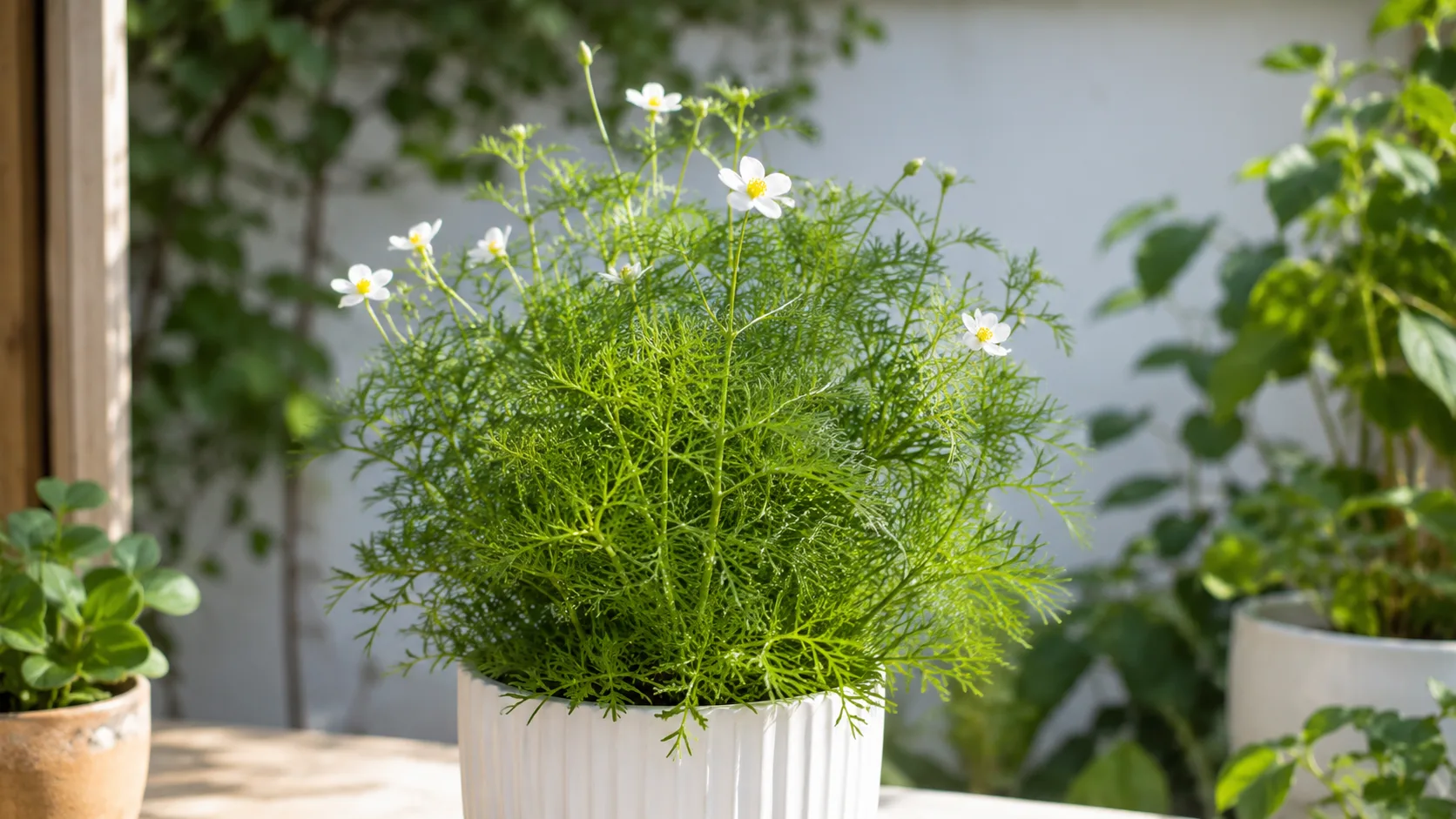
Cabomba Fertilizer Guide: Liquid, Root Tabs, and CO2
Cabomba Fertilizer Guide: Liquid, Root Tabs, and CO2
Cabomba is one of the most visually striking stem plants in the freshwater hobby - feathery, fan-shaped whorls that fill a background with soft green or wine-red texture. It is also commonly misunderstood when it comes to feeding. The water column, not the substrate, is its primary nutrient source. Get the fertilizer logic right and Cabomba caroliniana grows 2 to 4 inches a week under moderate light, or faster with CO₂. Get it wrong and you get melting stems, pale yellow new growth, or algae coating those fine leaves - even when you are dosing faithfully every week.
This guide covers liquid fertilizers, root tab use, CO₂ interaction, and how to read deficiency symptoms on Cabomba in a planted aquarium. If your stems are melting after a water change rather than yellowing from the tips, start with our Cabomba watering guide for GH, pH, and acclimation context before you add more fertilizer.
If symptoms persist, see the Yellow Leaves on Cabomba guide.
Why Cabomba Fertilization Works Differently Than Houseplants
A houseplant in a pot absorbs most of its nitrogen and potassium through a dense root mass sitting in moist soil. Cabomba is built differently. Botanically, Cabomba caroliniana - the green fanwort sold in nearly every fish-store plant section - is a fully submerged aquatic stem plant in the family Cabombaceae. It evolved in lakes, ponds, and slow rivers across the Americas, filtering nutrients from flowing water with its finely divided leaves. Those leaves have an enormous surface-area-to-volume ratio, which makes them efficient at pulling dissolved nutrients directly from the surrounding water.
That single anatomical fact is the reason most generic houseplant fertilizer advice fails Cabomba. A 10-10-10 granule pushed into gravel is essentially invisible to the plant. A liquid fertilizer poured into the water column reaches every leaf whorl in seconds. Once you flip the mental model - leaves first, substrate second - every fertilizer decision gets easier: pick a liquid product, dose into the water, and only consider root tabs if you also keep heavy root-feeders in the same tank or you are running a nutrient-rich aquasoil.
Cabomba is also a moderate to heavy feeder relative to many beginner stem plants. The Flowgrow database lists target ranges for Cabomba caroliniana that reflect its appetite: nitrate at 10 to 50 mg/l, phosphate at 0.1 to 3 mg/l, potassium at 5 to 30 mg/l, and iron at 0.01 to 0.5 mg/l. Those numbers are not a mandate to chase exact ppm values with a test kit every week, but they tell you something important about the plant’s metabolism. Cabomba grows fast, and fast growth burns through dissolved nutrients quickly - especially in high-light, CO₂-injected tanks where photosynthesis is running at full throttle.
How Cabomba Absorbs Nutrients: Water Column vs. Substrate
The water-column-first feeding style is well documented for submerged aquatics. To plan a fertilizer routine that actually works for Cabomba, you need the breakdown for this specific genus.
The Water Column Comes First
Cabomba leaves absorb nitrogen, phosphorus, potassium, iron, and a long list of micronutrients directly from the water they sit in. The mechanism is passive diffusion across the leaf cuticle plus active uptake through leaf-surface transporters. Either way, the practical takeaway is the same: a comprehensive liquid fertilizer dosed into the water column reaches the plant immediately, whether the stem is planted in sand, weighted in gravel, or floating at the surface.
This is the basis of every working Cabomba fertilization plan. If you take only one thing from this guide, take this: dose a liquid fertilizer into the water on a regular schedule, sized to your stocking level and light intensity, and treat root tabs as a secondary tool at best.
Cabomba’s fine, feathery leaf structure also means it responds quickly to nutrient changes - both good and bad. When nutrients are in range, new whorls come in tight and bright. When something is missing, the newest growth at the stem tips shows it within days. When something is in excess, algae often colonizes the leaf surfaces before you notice a color change on the plant itself. Gentle flow matters here: nutrients delivered only to one side of a dense Cabomba wall can produce localized pale growth even when the bulk water tests fine - a point we return to in the mistakes section.
What Cabomba Roots Actually Do
Cabomba does produce roots - thin, white, hair-like structures that emerge from nodes on the lower portion of the stem and anchor into the substrate. In nutrient-rich planted substrates like aquasoil, those roots can pick up some iron and potassium near the base. In inert sand or plain gravel, root feeding contributes very little to overall plant health.
That is why root tabs are a low-priority tool for Cabomba-only tanks. They can still earn a place if you share a tank with root-feeding species like Amazon swords, Cryptocoryne, or Vallisneria, in which case a root tab near those plants is a useful indirect feed that does very little for the Cabomba stems sitting above. Some keepers also report modest benefit from root tabs when Cabomba is planted in plain gravel with no other nutrient source, but a weekly liquid dose still does the heavy lifting.
Green vs. Red Cabomba: Different Fertilizer and CO2 Needs
Not every Cabomba bundle at the fish store is the same species. Treating red fanwort like green fanwort - same light, same iron dose, no CO₂ - is the most common variety mistake in the hobby.
Green Cabomba caroliniana Baseline
Green Cabomba caroliniana is the forgiving entry point. In a low-tech setup with moderate light (roughly 30 to 50 PAR on the substrate), it reliably grows 1 to 2 inches per week by pulling carbon from dissolved CO₂ in the water and from fish respiration. According to Flowgrow, additional CO₂ is not required for survival, though it will boost growth further when supplied. Micronutrients are beneficial and make the plant more robust; a weekly trace or comprehensive liquid dose after your water change is usually enough in a moderately stocked community tank.
Red Cabomba furcata: Iron, CO2, and Color
Red and purple Cabomba - usually sold as Cabomba furcata or red fanwort - is a different commitment. Flowgrow lists C. furcata with higher light demand (0.8 watts per liter or more for stable color), softer water preference (pH 5 to 6.8, lower KH than green Cabomba), and an optimal CO₂ range of 20 to 40 mg/l. The same database shows identical macro and iron appetite ranges as green Cabomba, but red varieties will not display deep wine-red color without strong light, consistent micronutrient dosing including iron, and usually injected CO₂.
When red Cabomba fades to washed-out pink or bronze despite fertilizer in the water, the problem is rarely “not enough iron alone.” It is usually the full stack: light below what the variety needs, no CO₂, or hard alkaline water locking iron out of solution - covered in our light guide and the hard-water section below. Plan iron as part of a comprehensive liquid, not as a single-nutrient bandage on a tank that is otherwise low-tech.
| Factor | Green C. caroliniana | Red C. furcata |
|---|---|---|
| CO₂ injection | Optional; boosts growth | Usually required for stable color |
| Iron dosing | Standard trace weekly | Higher demand; watch new whorls |
| Light (PAR) | Moderate (30–50+) | High (80+ on upper stems) |
| Optimal pH (Flowgrow) | 5–7 | 5–6.8 |
| Weekly liquid | Flourish or Tropica Premium in stocked tanks | Tropica Specialised or full macro + traces |
How Often to Fertilize Cabomba (and When to Skip)
Frequency is where most beginners either overshoot or undershoot. Cabomba is a fast grower, and “fast grower” gets misread as “needs heavy feeding every day.” The reality is more nuanced: Cabomba needs consistent access to nutrients, but overdosing does not produce more growth - it feeds algae, especially on those fine leaves where green spot and staghorn algae love to attach.
A practical weekly cadence, sized to your tank type:
- Lightly stocked community tank with fish, moderate light, no CO₂: dose a comprehensive liquid fertilizer at half to full label strength once a week, right after your regular water change. Cabomba in these tanks already gets a meaningful nitrogen boost from fish waste, so the fertilizer’s job is often to round out micronutrients - iron, manganese, magnesium - that fish waste does not supply much of.
- Shrimp-only or sparsely planted tank: dose the same fertilizer at full label strength weekly, because there is no fish waste to lean on. Watch for pale new growth at the stem tips, the classic early sign of iron deficiency on Cabomba.
- High-tech planted tank with CO₂ and strong lighting (40+ PAR): push to a full Estimative Index (EI) routine if you want - dosing macronutrients three times a week and micronutrients on alternate days - because the CO₂ is unlocking much higher growth rates that pull nutrients out of the water fast enough to avoid overdosing. Cabomba in these setups can grow 3 to 4 inches per week or more.
There are also times to skip fertilizer entirely. The first is the first one to two weeks after you introduce new Cabomba. Most Cabomba sold at fish stores or online is grown emersed (out of water) on a farm, and the existing leaves will often melt as the plant transitions to fully submerged growth in your tank. Yellowing and stem collapse during this window is almost always transition stress, not a deficiency. The plant is regenerating leaves adapted to your water, light, and flow. Fertilizer at this stage does not prevent the melt and can fuel an algae bloom on the dying tissue. Wait until you see new, healthy, fully submerged growth before you start a regular dose schedule - and use our propagation guide to float healthy tips near the light during recovery if lower stems are bare.
The second time to pause is during a fishless treatment cycle, a heavy medication cycle, or any period when your tank’s biological balance is in flux. Most liquid fertilizers are safe for fish, shrimp, and beneficial bacteria, but if you are running copper-based medications, hold the fertilizer to avoid compounding the trace copper load.
Liquid Fertilizers: Product Guide and Dosing Table
Liquid fertilizers are the workhorse of any Cabomba plan. The trick is that “comprehensive” means different things on different labels. Some products supply a full macronutrient profile (N, P, K) plus trace elements. Others supply only trace elements and assume you will cover N and P separately. Still others target a single nutrient (usually iron). The right pick depends on your stocking level, your light, and whether you are running CO₂.
Seachem Flourish and Trace-Element Baselines
Seachem Flourish is the most widely used trace-element supplement in the freshwater planted hobby. According to Seachem’s official dosing instructions, Flourish supplies iron, manganese, calcium, magnesium, potassium, and other micronutrients, but does not contain significant levels of nitrogen or phosphorus. The label dose is 1 capful (5 mL) per 250 L (about 60 US gallons), once or twice a week.
Flourish is not a stand-alone fertilizer for a sterile or shrimp-only tank. It fills the gap between what fish waste supplies (mostly N and P) and what plants also need. In a stocked community tank with moderate light and no CO₂, Flourish once a week after a water change is often enough to keep Cabomba green. In a shrimp-only or low-stock tank, pair it with Seachem Flourish Nitrogen or an all-in-one like NilocG Thrive or Aquarium Co-Op Easy Green.
Tropica Specialised vs. Premium
Tropica’s two-liquid lineup is designed around stocking level rather than around “more is better.” The decision is essentially about whether your tank is heavy on plants or heavy on fish.
Tropica Specialised Nutrition contains nitrogen, phosphorus, potassium, and the full trace package. Tropica recommends 6 mL per 50 L per week for aquariums with many and fast-growing plants. It is the right pick for densely planted tanks, shrimp-only setups, and high-tech CO₂ tanks where you want to push Cabomba growth.
Tropica Premium Nutrition contains no nitrogen and no phosphorus - only potassium, magnesium, sulfur, and traces. Tropica markets it for aquariums with many fish, where adding more N and P would fuel algae. The dose is the same: 6 mL per 50 L per week. In a well-stocked community tank, Premium is the more disciplined choice. If your tank has more than roughly an inch of fish per gallon, default to Premium. If you are running light stocking or CO₂, switch to Specialised.
| Tank size | Seachem Flourish (weekly) | Tropica Specialised / Premium (weekly) |
|---|---|---|
| 5 gal (19 L) | ~0.4 mL | ~2.3 mL |
| 10 gal (38 L) | ~0.8 mL | ~4.6 mL |
| 20 gal (75 L) | ~1.5 mL | ~9 mL |
| 29 gal (110 L) | ~2.2 mL | ~13 mL |
Worked example: a 20-gallon shrimp tank on Tropica Specialised - 6 mL per 50 L scales to 75 L ÷ 50 L × 6 mL ≈ 9 mL per week dosed in one shot after the water change.
Green Cabomba caroliniana needs iron like any fast-growing stem plant, but red varieties are noticeably hungrier for it. Iron is immobile in the plant - it is not translocated from older leaves to feed new growth - so deficiency shows first on the youngest whorls while older leaves stay green. UF/IFAS iron nutrition guidance confirms the same pattern: chlorosis appears on young leaves first when iron is limiting.
Warning - Flourish Excel and liquid carbon: Seachem notes that Anacharis is sensitive to Flourish Excel, and hobby reports extend that caution to other fine-leaf stem plants including Cabomba. Glutaraldehyde-based liquid carbon can melt delicate foliage within days at standard doses. If you want supplemental carbon in a Cabomba tank, pressurized CO₂ is the safer path. If you want to keep dosing simple, skip liquid carbon entirely and accept the slower growth rate of a low-tech setup.
Root Tabs: When They Help and When They Don’t
Root tabs are slow-release fertilizer pellets that you push into the substrate near a plant’s root zone. Popular products include Seachem Flourish Tabs, API Root Tabs, and Tropica Nutrition Capsules. They are excellent for heavy root-feeders like Amazon swords, Cryptocoryne, and Vallisneria, where a pellet near the crown gives the plant a long-term localized source of iron, potassium, and trace nutrients.
For Cabomba, root tabs are largely a secondary tool if Cabomba is your only plant. The roots anchor more than they feed. The leaves do the work. Dose the water column with a liquid fertilizer and do not rely on root tabs to keep Cabomba healthy.
The exceptions: shared tanks with heavy root-feeders (treat the tab as a feeder for the sword or crypt, not the Cabomba), inert substrates with no liquid fertilizer (a modest localized boost at best), and nutrient-rich aquasoils where root tabs are usually redundant because the soil already leaches nutrients into the water column.
Letting Fish Waste Do the Work
One of the underrated fertilizer strategies for Cabomba is to step back and let biology do the work. Fish excrete ammonia through their gills, and the nitrogen cycle converts that ammonia first to nitrite and then to nitrate. Cabomba, like most fast-growing stem plants, is good at pulling nitrate out of the water and converting it into plant tissue. A well-stocked community tank can run Cabomba on fish waste alone for a while, especially in mid-light setups without CO₂.
A rough rule of thumb: in a tank with more than 1 inch of fish per gallon of water and moderate lighting, you can often get away with a trace-only liquid fertilizer like Seachem Flourish once a week and still see steady Cabomba growth. Below that stocking level - shrimp-only tanks, betta-only tanks, nano setups with minimal bioload - you need a comprehensive liquid fertilizer that includes macronutrients as a default.
The flip side is that overstocked tanks, or tanks fed heavily with high-protein foods, can have so much nitrogen that Cabomba can no longer keep up with the excess, and algae takes over the fine leaf surfaces. Excess nitrate is more a water-quality problem than a plant problem in that case. Do regular water changes, reduce feeding, and let the plant do what it can. Adding more fertilizer to an already nitrogen-heavy tank makes the imbalance worse, not better.
CO2 Supplementation and Fertilizer Interaction
CO₂ is the single most powerful growth lever in a planted tank, and Cabomba responds to it as well as almost any stem plant in the hobby. It is also completely optional for green varieties - but the fertilizer plan changes depending on which path you choose.
In a low-tech setup without CO₂ injection, Cabomba caroliniana reliably grows 1 to 2 inches per week under moderate light. The plant pulls the carbon it needs from the carbon dioxide that naturally equilibrates into the water from the air and from fish respiration. This is enough carbon for steady growth and acceptable color in green varieties, though internodes may stretch and lower whorls may drop if light is insufficient.
In a high-tech setup with pressurized CO₂ injection, growth rates of 3 to 4 inches per week are common in the same plant. Stems thicken, internodes shorten, and the color deepens to a richer emerald in green varieties or a vivid red-purple in colored forms. The Flowgrow database lists an optimal CO₂ range of 10 to 40 mg/l for Cabomba caroliniana. A safe target for a planted community tank is 20 to 30 ppm. Above about 30 ppm, dissolved CO₂ can stress fish as pH drops and oxygen availability shifts - use a drop checker with 4 dKH reference solution that turns from blue to green over the photoperiod as your primary safety check, and reduce bubble rate if fish gasp at the surface.
When you add CO₂, you also need to add more fertilizer. CO₂ unlocks faster photosynthesis, which means the plant burns through nitrogen, potassium, iron, and everything else faster. Running CO₂ without increasing your liquid fertilizer dose is one of the most common reasons Cabomba looks pale and leggy in high-tech tanks despite “having CO₂.”
Light, CO₂, and nutrients are three legs of a stool. Removing any one of them caps growth at the lowest of the three. Cranking one leg without the others does not accelerate growth; it just feeds algae - and Cabomba’s fine, feathery leaves are a prime algae substrate when the balance is off.
Reading Deficiency Symptoms on Cabomba
Cabomba is expressive for an aquarium plant, which is helpful: when something is off in the nutrient balance, the leaves tell you. The trick is learning to read the position of the symptom, because new growth and old growth tell different stories.
Iron deficiency - pale new growth. If the newest whorls at the tips of your stems are emerging pale yellow, almost white, but the veins of those leaves remain dark green, the plant is short on iron. Because iron is immobile in the plant, the plant cannot pull iron out of older leaves to feed new growth. New growth suffers first. This is the textbook iron-deficiency pattern on fine-leaf stem plants. The fix is a targeted iron supplement or a comprehensive liquid that already includes iron. Within 7 to 14 days of consistent dosing, new growth should come in fully green - if it does not, check light intensity in our Cabomba light guide because iron is unusable if photosynthesis cannot run.
Nitrogen deficiency - yellow old whorls. If the oldest whorls at the bottom of the stem are turning yellow starting at the tips and working inward, and the new growth at the top is normal green, the plant is short on nitrogen. Cabomba pulls nitrogen out of older leaves to fund new growth, so the bottom leaves show the damage first. A tell-tale sign is yellowing that starts at the leaf tip and moves toward the base, often paired with leaves that become translucent or glassy before they detach entirely. Add a comprehensive fertilizer that lists N on the label, or rely on fish waste if your tank is well-stocked.
Potassium deficiency shows up in high-tech tanks as pinholes in older leaves with yellow margins. Phosphorus deficiency is rarer - watch for yellowing old leaves with soggy brown patches, especially if you run phosphate-removing filter media.
If you have just received new Cabomba, yellowing and stem melting in the first one to two weeks are almost always transition melt, not a deficiency. Hold off on extra fertilizer until new submersed growth appears.
Hard Water, Melt, and When Fertilizer Cannot Fix Yellowing
This is the Cabomba-specific trap that generic stem-plant fertilizer guides miss. You can dose iron every week, run strong lights, and still watch fanwort melt if your water chemistry is wrong - because micronutrients precipitate out of solution in hard, alkaline water before Cabomba’s leaves can absorb them.
Cabomba evolved in soft to moderately hard freshwater. Our watering guide documents the practical range: GH of 3 to 8 dGH is ideal, with visible decline above 10 dGH regardless of fertilizer dose. In alkaline water above pH 7.5, iron and manganese become less available in the column, and interveinal yellowing on new whorls appears even when you are dosing faithfully - the same mechanism UF/IFAS describes for iron chlorosis in terrestrial plants at high pH.
If your GH test reads above 10 dGH and Cabomba keeps melting from the base up with no algae on the leaves, stop increasing fertilizer. Test GH and KH, blend RO or distilled water with tap water to bring GH into the 4 to 8 dGH target, and acclimate stems slowly. Fertilizer fixes nutrient hunger; it does not fix osmotic stress from water your Cabomba was never built to live in. For species background and invasive-species disposal cautions, see the Cabomba overview.
Common Fertilizing Mistakes With Cabomba
A handful of recurring mistakes account for most of the bad outcomes people see with Cabomba. Skipping these pitfalls gets you most of the way to a healthy tank.
Dosing on the label, not on the tank. Comprehensive liquid fertilizers are dosed for the plant mass, not the water volume alone. A lightly planted 20-gallon tank needs less than a heavily planted 20-gallon tank. Start at half the label dose and titrate up based on plant response. More is rarely better, and Cabomba’s fine leaves collect algae quickly when nutrients outpace what the plant can use.
Overcorrecting with iron. When you see pale new growth, it is tempting to dose three times the recommended amount of iron. Iron toxicity is rare but real, and excess iron is one of algae’s favorite foods. Stay close to the recommended dose and give the plant 10 to 14 days to respond before re-dosing.
Running high light with low CO₂ and no fertilizer. This is the algae bloom recipe on fine-leaf plants. Either dial the light down, or add CO₂ and a comprehensive fertilizer so the plants can use the light you are giving them. Cabomba under strong light without matching CO₂ and nutrients often looks good for a week and then melts from the bottom up.
Using liquid carbon on Cabomba. As noted above, glutaraldehyde-based products can melt sensitive fine-leaf stems. Use pressurized CO₂ or skip carbon entirely.
Pushing root tabs on a stem-plant tank. A bottle of root tabs sitting near your Cabomba is doing almost nothing for the Cabomba. If you want a single fertilizer product to focus on, make it a comprehensive liquid.
Fertilizing during the transition melt. The yellowing and stem collapse you see on freshly delivered Cabomba is not a deficiency. Hold the fertilizer, do normal water changes, trim melted portions, and let the plant regrow its submersed leaves.
Ignoring flow dead zones. Cabomba needs gentle but consistent water movement to deliver nutrients to all sides of its feathery leaves. A small powerhead or filter output aimed along the plant bed often fixes mysterious pale growth on one side of the tank.
Expecting red Cabomba to thrive on the same plan as green. Red varieties need more iron, stronger light, and usually CO₂ to hold their color. Treating them like green Cabomba caroliniana and wondering why they fade to pink is one of the most common variety-specific mistakes.
Conclusion
Cabomba is a rewarding plant when you feed it the way an aquatic stem plant actually eats - through the water column, not the substrate. Pick a comprehensive liquid fertilizer matched to your bioload, dose weekly after a water change, and size the product to whether your tank is plant-heavy or fish-heavy. Skip root tabs unless you also keep heavy root-feeders, treat CO₂ as a powerful but optional accelerator for green Cabomba caroliniana, and plan on CO₂ plus iron for red Cabomba furcata.
Read the leaves before you read the bottle: pale new growth with green veins means iron (if water chemistry allows uptake), yellow old whorls with glassy tips means nitrogen, and yellowing on a freshly delivered plant almost always means transition melt - not a call for more fertilizer. When melt persists despite good dosing, test GH and pH before you escalate nutrients. For light, water chemistry, and propagation context, see our Cabomba overview, watering, light, and propagation guides. Run the routine consistently, trim leggy stems, and your Cabomba will fill the background with dense, feathery growth that outcompetes algae and keeps your water column cleaner than any filter pad alone.
When to use this page vs other Cabomba guides
- Cabomba overview - Start here for whole-plant context before deep-diving this topic.
- Cabomba problems hub - Jump to symptom-specific fix guides when this care topic does not resolve the issue.