Drooping Leaves on Cabomba: Causes, Checks & Fixes
Quick answer
Drooping Cabomba usually means insufficient PAR reaching lower stems, buried stem rot, or emersed-to-submersed transition melt-not houseplant watering problems. First step: pinch the lowest firm stem section, measure PAR at whorl height, and trim any mushy tissue before replanting only the healthy top.
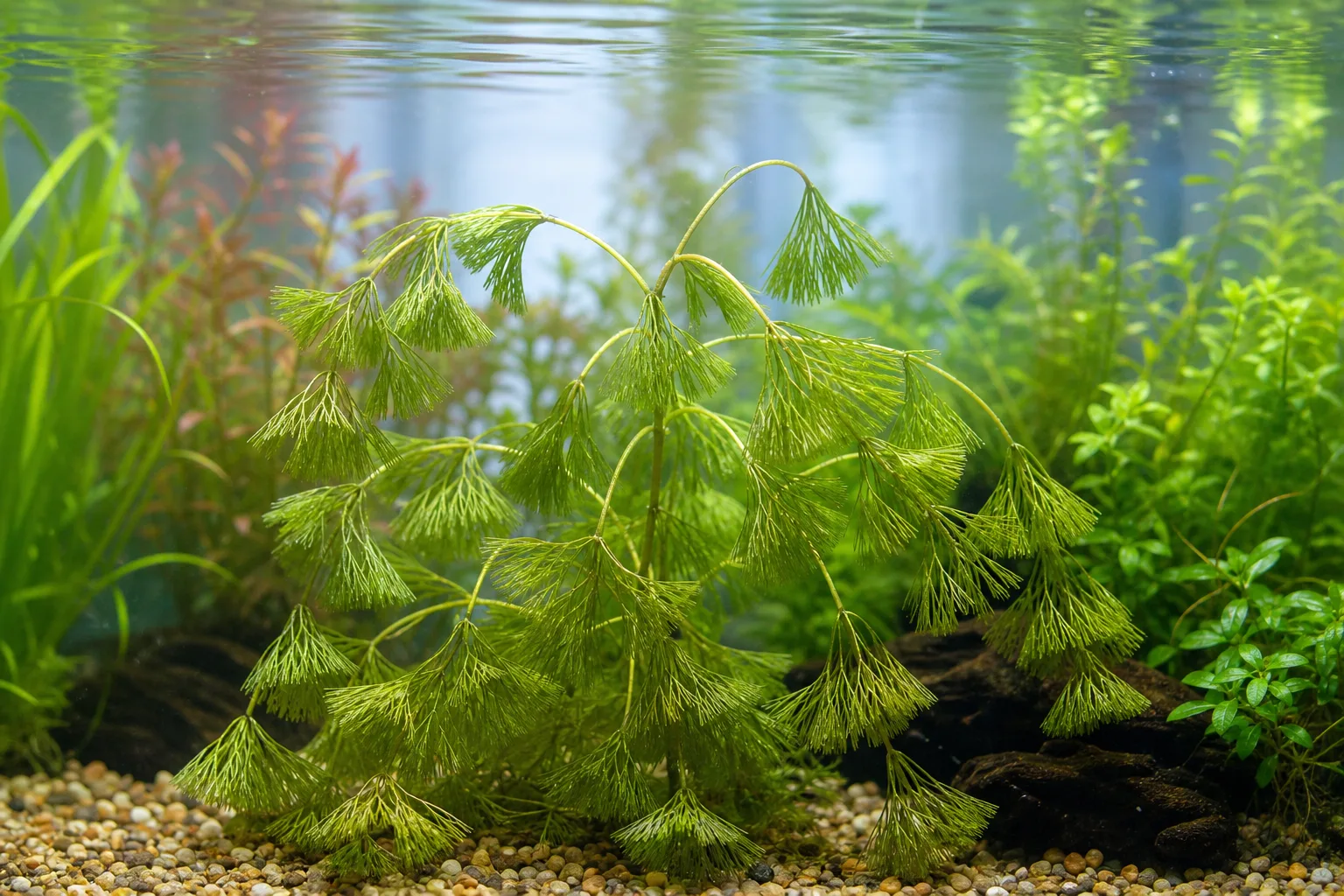
Drooping Leaves on Cabomba: Causes, Checks & Fixes
This guide covers drooping leaves on Cabomba. See also the general Drooping Leaves guide, watering, and light pages for this plant.
Drooping Leaves on Cabomba: Causes, Checks & Fixes
Quick answer
Drooping leaves on Cabomba (fanwort) in an aquarium almost always trace to too little light reaching lower stems, buried stem rot, transition melt after purchase, or water-column stress from hard water, poor clarity, or copper medications-not soil moisture or pot drainage. Cabomba is a fully submersed freshwater stem plant with pinnately divided fan-shaped leaves that shed quickly when tank conditions slip.
First step: pinch the lowest stem section above the substrate. Firm green tissue with drooping lower whorls points to light deficiency or self-shading. Mushy, brown, or translucent tissue means stem rot-trim it off before it spreads. Then measure PAR at the height where lower leaves attach (typically 10–15 cm above substrate), not at the gravel surface.
What drooping looks like on Cabomba
Cabomba “drooping” in tanks usually appears in one of two patterns, and the distinction drives diagnosis.
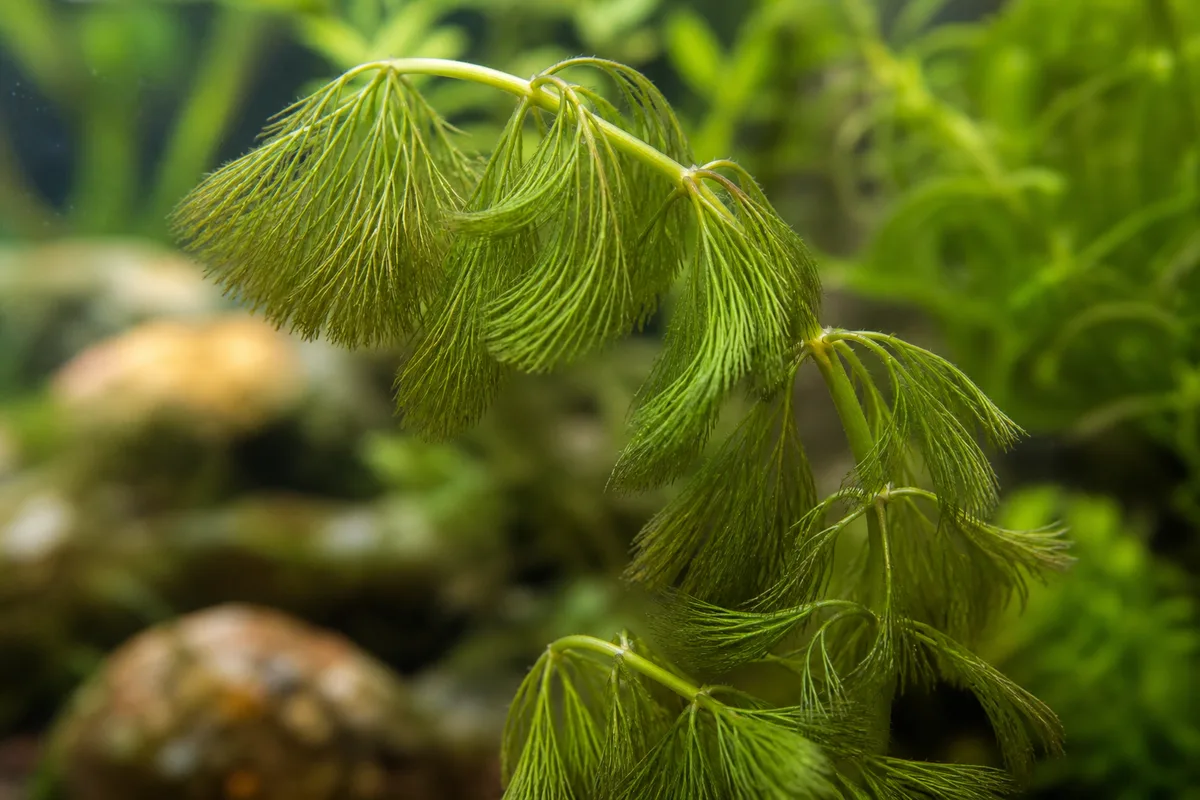
Drooping Leaves symptoms on Cabomba - compare with healthy tissue on the same plant.
Lower-stem shedding with a healthy crown. Feathery whorls near the substrate yellow, detach, and drift as fine needles. The stem below the crown goes bare for several centimeters while upper leaves stay green and open. Internodes stretch and the plant leans toward the brightest zone. This is etiolation plus lower-leaf abandonment-the most common pattern in low-tech community tanks.
Whole-stem limp collapse. The entire stem hangs horizontally, whorls look wilted rather than merely dropped, and tissue turns translucent or brown from the base upward. This overlaps with rapid melt and often follows planting too deep, a cold water change, or copper-based ich treatment.
Fine leaf structure makes droop look worse than on broad-leaf stems like Anacharis. A few shed whorls cloud the water and clog filter sponges within days. That debris is a symptom, not the cause-removing needles without fixing light or stem health does not stop the decline.
Green Cabomba (C. caroliniana) tolerates moderate mistakes longer than red Cabomba (C. furcata), but both species shed lower leaves when PAR at depth falls below their needs. Red forms droop and lose color faster under the same low-tech conditions.
Why Cabomba stems droop in aquariums
Insufficient PAR and self-shading
Light is the primary driver. Cabomba is a water-column feeder that allocates energy upward when lower leaves receive too little photosynthetically active radiation. Research on C. caroliniana shows measurable growth across a wide PAR range, but aquarium keepers consistently report lower-leaf drop when substrate-level PAR falls below roughly 30–40 µmol m⁻² s⁻¹ for green Cabomba and 50+ for red.
Self-shading accelerates the problem. A dense stand intercepts light before it reaches the base. Within two to three weeks of unchecked vertical growth, lower stems go bare even when the fixture was initially adequate. See the Cabomba light guide for PAR targets by species.
Low CO₂ and nutrient stress
Without enough dissolved carbon and macronutrients, Cabomba cannot use strong light efficiently. Green Cabomba survives without CO₂ injection in bright, clean low-tech tanks, but stems grow leggy and shed lower leaves when light exceeds what ambient CO₂ and fertilization support. Red Cabomba effectively requires CO₂ at the PAR levels needed to prevent droop.
Nitrogen or iron deficiency shows as pale new growth and weak stems that sag under their own weight, sometimes without the bare-base pattern of pure light stress. Column feeding matters because roots anchor more than they feed.
Buried stem rot
Cabomba roots at buried nodes but rots when stems are planted too deep or when decaying lower sections stay in the substrate. The rot zone feels mushy, produces a foul smell, and travels upward. Drooping whorls above firm tissue can still indicate rot starting below the visible green zone.
Correct planting depth is 1–2 inches of bare stem with the first whorl just above the substrate line. Burying leaf whorls or more than 2 inches of stem is a common cause of collapse within the first week.
Emersed-to-submersed transition melt
Nursery-grown Cabomba is often produced emersed. Emersed leaves differ structurally from submerged leaves; after planting, the plant sheds old growth while regenerating underwater foliage. Some lower-leaf drop in the first 5–10 days is normal acclimation-not a long-term care failure unless melt keeps climbing the stem.
Water clarity, flow, and parameter mismatch
Fine leaves collect detritus in stagnant or high-flow zones. Debris blocks light to lower whorls and creates anaerobic pockets that rot tissue. USGS ecology notes that Cabomba can grow in turbid water but loses vigor in hard, alkaline conditions-in more alkaline waters it tends to lose leaves. Sudden temperature or GH shifts after large water changes produce droop within 48 hours.
Copper medications and herbivore damage
Cabomba is sensitive to copper in ich treatments and some algaecides. Copper exposure causes rapid wilting and needle drop across the whole stem, not gradual lower shedding. Goldfish, silver dollars, and large cichlids shred fine leaves faster than the plant regrows in moderate light.
Lookalike symptoms to rule out
| What you see | Likely cause | Key check |
|---|---|---|
| Bare lower stem, bushy green top, long internodes | Low PAR or self-shading | PAR at whorl height; canopy density |
| Mushy brown base, foul smell, collapse from substrate up | Buried stem rot | Stem firmness pinch test; planting depth |
| Translucent whole-stem melt 3–10 days after purchase | Transition shock | Recent planting date; trim and wait for tip growth |
| Drooping within 48 hours of water change | Temperature or GH shock | Match change water within 2°F; test GH |
| Rapid die-off after medication | Copper or chemical damage | Medication label; remove dead tissue |
| Ragged leaf edges, missing whorls | Herbivore browsing | Fish species; damage pattern on multiple stems |
| Pale new growth, weak sagging stems | Nutrient deficiency | Nitrate, iron; dosing history |
Gradual lower shedding differs from not enough light as a dedicated diagnosis page, but the fix path overlaps-both require raising PAR at stem height. Sudden whole-stem collapse aligns more closely with wilting and demands faster trimming action.
How to confirm the cause
Work through this aquarium checklist in order:
- Stem firmness - Pinch the lowest green section. Mushy = rot (trim and replant tops only). Firm with bare lower stem = light or shading.
- PAR at whorl height - Measure at 10–15 cm above substrate in the background zone. Below 30–40 for green Cabomba or below 50–60 for red confirms light-related droop.
- Water clarity - Can you see the back glass clearly? Brown tint or suspended debris reduces light to lower leaves.
- Planting depth - First leaf whorl should sit just above substrate; no buried green leaves.
- Purchase timeline - New within 10 days? Expect some shedding; abnormal if melt climbs past the bottom third after day 10.
- Recent water change - Large or cold changes within 48 hours? Test GH and temperature match.
- Medication history - Copper-based ich treatment in the last week?
- Flow direction - Filter outlet blasting stems? Detritus lodged on one side only?
- Species ID - Red Cabomba (C. furcata) droops sooner than green (C. caroliniana) under identical low-tech conditions.
- Canopy density - Thick upper growth shading lower stems? Trim tops before raising light.
One confirmed finding is enough to start the matching fix. Do not dose fertilizer, add CO₂, and replant simultaneously-you will not know which change helped.
First fix for Cabomba
If the stem base is mushy: Pull the bunch, trim all soft tissue, and replant or float only the firm upper 4–8 inches with 1–2 inches of bare stem buried. Discard rotted sections in sealed trash-never release trimmings to waterways; Cabomba is invasive in many regions.
If the stem is firm but lower whorls are bare or drooping: Trim the bottom 5–10 cm of bare stem, then either increase PAR at whorl height (raise fixture output, reduce mounting height, or upgrade LED) or float stems near the surface until lighting improves. This is the most common successful first fix in low-tech tanks.
If the plant was purchased within the last two weeks and tips show new submerged growth: Trim melted sections only; do not replant repeatedly. Stable temperature and matched water parameters matter more than fertilizer this week.
If drooping followed a water change: Pause large changes; match temperature within 2°F on the next 25–30 percent change and verify GH is in the 3–8 dGH comfort range for Cabomba.
Do not add fertilizer as the first response to drooping stems without confirming light and stem health. Stressed Cabomba in dim tanks rarely benefits from extra nutrients and may fuel algae on feathery leaves.
Step-by-step recovery
Once you have identified the primary cause:
- Remove shed needles and mushy leaves from the tank so they do not ammonia-spike or clog filtration.
- Trim bare or rotted lower stem to firm green tissue.
- Apply the first fix above (light upgrade, float, or rot trim-and-replant).
- Run 8–10 hour photoperiod on a timer; avoid extending hours to compensate for low PAR.
- Dose liquid fertilizer per label only after light correction if new growth looks pale.
- If running CO₂, verify 10–30 ppm for green Cabomba before pushing PAR above 60.
- Replant tops 2–3 inches apart so light penetrates the stand.
- Check filter pre-sponge after 48 hours; clean if Cabomba debris accumulated.
For green Cabomba in a corrected low-tech tank, expect new compact whorls from trimmed tips within 5–10 days. Transition melt recovery takes 1–2 weeks if firm stem remains. Stem rot recovery depends on how much firm tissue is left-sometimes only floating tops survive.
Red Cabomba may not regain red color or compact form without CO₂ even after PAR increases; be realistic about replacing the bunch in low-tech setups.
Recovery timeline
| Cause | First visible improvement | Full background fill |
|---|---|---|
| Low PAR corrected | 5–10 days (new tip whorls) | 2–4 weeks with weekly trim-and-replant |
| Transition melt | 7–14 days (submerged leaf regeneration) | 2–3 weeks |
| Stem rot (firm top remaining) | 3–7 days after trim-and-replant | 2–4 weeks |
| Water-change shock | 3–5 days if parameters stabilized | 1–2 weeks |
| Copper damage | Unlikely recovery; replace bunch | N/A |
Damaged lower whorls do not reattach. Judge success by new compact growth at stem tips, firm stem tissue at the base, and stopped needle shedding-not by old bare stem sections filling in. Lateral branching is slow in Cabomba compared to Anacharis; top-and-replant is the normal maintenance rhythm.
What not to do
- Do not check soil moisture or repot into houseplant mix. Cabomba lives fully submerged.
- Do not bury stems deeper to stop floating. Deep planting causes rot.
- Do not extend photoperiod beyond 10 hours to fix low PAR. That fuels algae without restoring lower leaves.
- Do not stack fertilizer, CO₂, and replanting on the same day. Change one variable and observe for a week.
- Do not treat with copper-based ich medication in a planted Cabomba tank without accepting plant loss.
- Do not release trimmings to ponds or storm drains. Fragmentation spreads invasive fanwort populations.
- Do not assume drooping means “overwatering on Cabomba” the aquarium. Water volume is not the issue; clarity, parameters, light, and stem health are.
How to prevent drooping leaves next time
Match everyday care to Cabomba’s biology as a fine-leaf stem plant:
- Light: Maintain 40–80 PAR at whorl height for green Cabomba; 80+ with CO₂ for red. See light requirements.
- Trim rhythm: Top and replant every 2–4 weeks in fast growth so lower stems never self-shade.
- Planting: 1–2 inches bare stem buried; first whorl above substrate.
- Water: Stable 72–82°F, pH 6.0–7.5, GH 3–8 dGH; 25–30 percent weekly changes with matched temperature. Details in water parameters.
- Fertilizer: Column dosing for submerged uptake; see fertilizer guide.
- Flow: Gentle circulation; diffuse filter output away from background stems.
- Acclimation: Float bag to equalize temperature; drip-acclimate before planting new bunches.
- Disposal: Dry trimmings completely before trash disposal.
Weekly observation takes two minutes: tip internode length, lower stem bareness, and detritus on leaves catch problems before full collapse.
When to trim, float, or replace the bunch
Trim and replant when upper 4–8 inches are firm and green but lower stem is bare-standard propagation maintenance.
Float temporarily when you cannot raise PAR this week but want to save genetics; stems root at the surface within days.
Replace the bunch when mushy rot reaches the crown, copper damage affects all stems, or red Cabomba stays leggy and colorless after 3–4 weeks in your confirmed low-tech parameters. Green Cabomba is inexpensive to replace; fighting a dead stem wastes tank stability.
Green vs. red Cabomba: different recovery expectations
Green Cabomba (C. caroliniana) is the realistic choice for low-tech tanks. It can recover from lower-stem droop with PAR in the 40–80 range, clean soft water, and optional liquid fertilizer-CO₂ helps but is not mandatory for rescue.
Red Cabomba (C. furcata) droops and greens out quickly when PAR or CO₂ is insufficient. Recovery without injected CO₂ is uncommon. If you bought red Cabomba for a standard community LED hood, lower-stem shedding within two weeks is an equipment mismatch, not a care mistake you can fix with water changes alone.
Conclusion
Drooping Cabomba is an aquarium diagnostics problem: read bare lower stems as a light or shading signal, mushy bases as rot, and whole-stem translucency as shock or chemical damage. The first fix is almost always trim firm tops, remove decay, and get adequate PAR to whorl height-or float until you can. Align with the Cabomba overview care baseline, dispose of trimmings responsibly, and use weekly tip checks to prevent the telephone-pole look before it starts.
When to use this page vs other Cabomba guides
- Cabomba watering guide - Use for routine moisture checks before assuming drooping leaves is the main issue.
- Cabomba problems hub - Browse all 16 common issues on this species.
- Underwatering on Cabomba - Different entry point when symptoms overlap with drooping leaves.
- Overwatering on Cabomba - Different entry point when symptoms overlap with drooping leaves.
- Root Rot on Cabomba - Different entry point when symptoms overlap with drooping leaves.