Fungus Gnats Near Cabomba Tanks: Rare Causes & Fixes
Quick answer
Fully submerged Cabomba is not normal fungus gnat habitat. If flies hover near the tank, first inspect nearby wet houseplant media, emersed trays, or exposed substrate above the waterline before treating the aquarium.
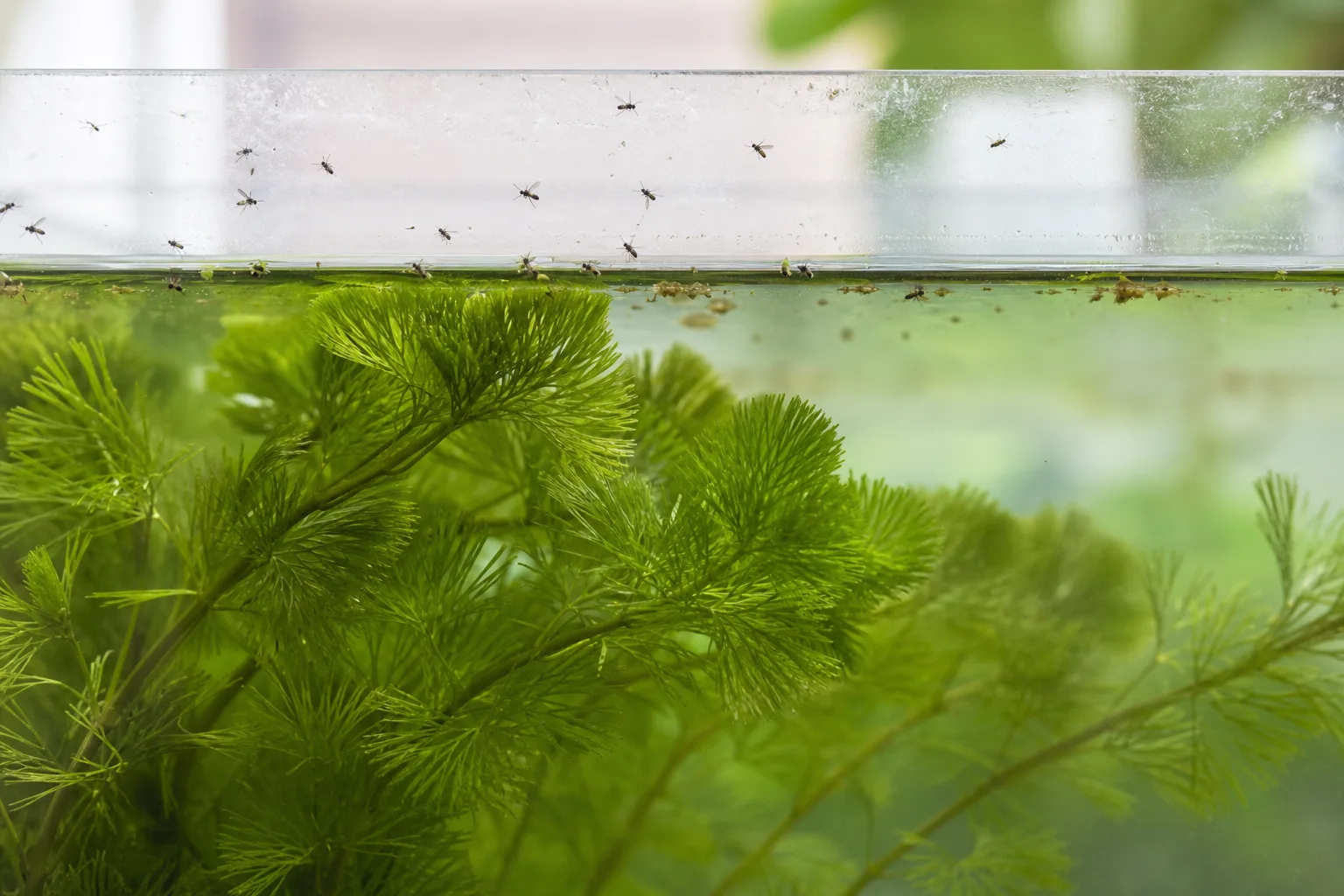
Fungus Gnats Near Cabomba Tanks: Rare Causes & Fixes
This guide covers fungus gnats on Cabomba. See also the general Fungus Gnats guide, watering, and light pages for this plant.
Fungus Gnats Near Cabomba Tanks: Rare Causes & Fixes
Quick answer
Fungus gnats and submerged Cabomba live in different worlds. Fungus gnat larvae depend on damp, organic, air-exposed media such as potting soil or propagation mix (UC IPM). Cabomba in a normal aquarium is a submerged freshwater stem plant (UF/IFAS plant directory).
First step: inspect the wet surfaces around the tank, not the underwater stems. Nearby houseplants, exposed aquasoil, emersed trays, and damp saucers are far more likely breeding sites than fanwort under water.
Why normal Cabomba tanks are the wrong habitat
Cabomba caroliniana is adapted to aquatic life and is widely used submerged in aquariums and ponds (USGS NAS fact sheet). The underwater display setup lacks the air-exposed organic surface fungus gnats need for egg-laying and larval feeding.
That means the classic fungus-gnat recipe is missing:
- no moist potting soil surface
- no air-soil interface
- no container media being watered from above
- no larvae feeding in the top inches of organic mix
Colorado State Extension describes fungus gnat larvae as living in the top layer of moist growing media, not in submerged aquarium stems or gravel (Colorado State Extension).
When Cabomba can be part of the problem
Cabomba can be involved only when you have shifted it into emersed or partially emersed culture, such as:
- a grow-out tray with wet media above the waterline
- a dry-start aquascape
- a shallow tub where stems sit in wet substrate but the upper growth is in air
- exposed organic substrate around a paludarium edge
In those cases, the breeding site is still the damp media, not the submerged leaf itself. The diagnosis is really “fungus gnats in emersed Cabomba setup,” which is much narrower than “fungus gnats on Cabomba.”
What to check first when flies hover near the tank
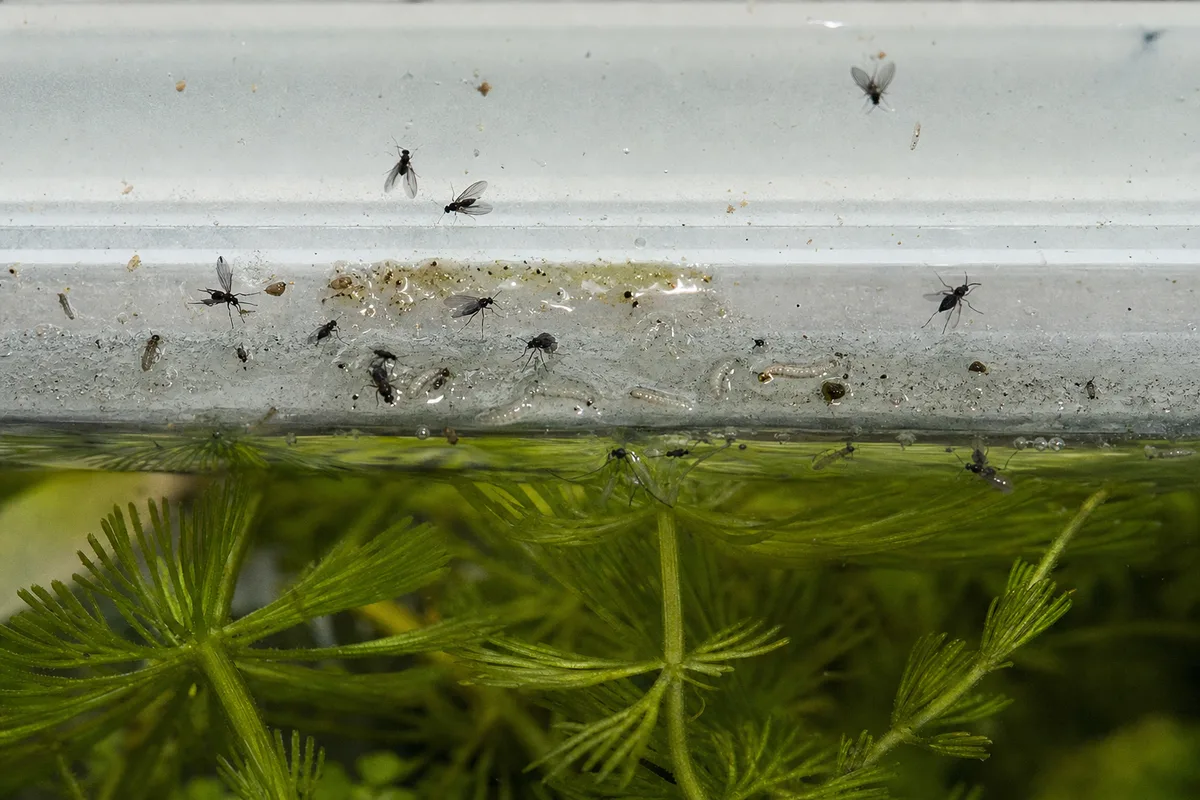
Fungus Gnats symptoms on Cabomba — compare with healthy tissue on the same plant.
Treat this as a source-finding problem:
- Nearby houseplants. Water each pot and watch whether adults rise immediately.
- Damp saucers or trays. Standing water plus organic debris can support gnat activity.
- Emersed propagation containers. Any tray with wet media is more suspicious than the aquarium.
- Exposed substrate above the waterline. Deep banks of damp aquasoil can act more like houseplant media than submerged gravel.
- Drain flies and fruit flies. Not every tiny fly near water is a fungus gnat.
If the source is really the underwater display tank, the issue is more likely decaying organic debris than a true fungus-gnat infestation on Cabomba itself.
Lookalikes and better diagnoses
| What you see | More likely cause | First check |
|---|---|---|
| Flies rise from nearby pothos or herb pot | Fungus gnats in that pot | Dry the surface there |
| Fuzzy growth on wet debris near tank rim | Mold or biofilm | Clean debris and read mold-on-soil |
| Bare stems, stretching, lower needle drop underwater | Weak light | Read not enough light |
| Mushy new purchase underwater | Transition melt | Hold stable conditions and wait for new tips |
| Flies only around an emersed tray | Gnats in exposed media | Treat the tray, not the tank water |
First fix
Dry or isolate the actual breeding medium.
That might mean:
- letting the top layer of a nearby plant pot dry
- moving an emersed tray away from the aquarium stand
- removing dead organic debris from exposed wet surfaces
- improving airflow around a land section or dry-start tank
For true fungus gnat infestations, extension guidance prioritizes drying the medium and targeting larvae in that medium itself (UC IPM).
If the source is emersed Cabomba media
If you confirm gnats in a Cabomba tray or dry-start setup:
- reduce surface wetness without letting the whole planting dry out
- remove decaying plant matter from the top layer
- use sticky traps around the setup to monitor adults
- reserve biological or drench controls for the media itself, not the aquarium water
Do not assume a houseplant product is automatically safe for fish, shrimp, or amphibians.
What not to do
- Do not pour soil drenches into the tank by default.
- Do not diagnose submerged melt as a fungus gnat problem.
- Do not ignore the nearby wet pot because the flies are hovering near the aquarium light.
- Do not call every small fly a fungus gnat without checking where it emerges.
- Do not keep exposed emersed media constantly soggy once gnats are confirmed.
What usually matters more for Cabomba
If Cabomba itself is declining, these are usually higher-value pages than this one:
- Cabomba overview - for baseline culture and identity
- Cabomba watering guide - for water quality and maintenance
- Not Enough Light on Cabomba - for stretched stems and lower die-back
- Yellow Leaves on Cabomba - for broad decline under water
- Low Humidity on Cabomba - only for exposed aerial growth drying out