Mealybugs on Cabomba: Causes, Checks & Fixes
Quick answer
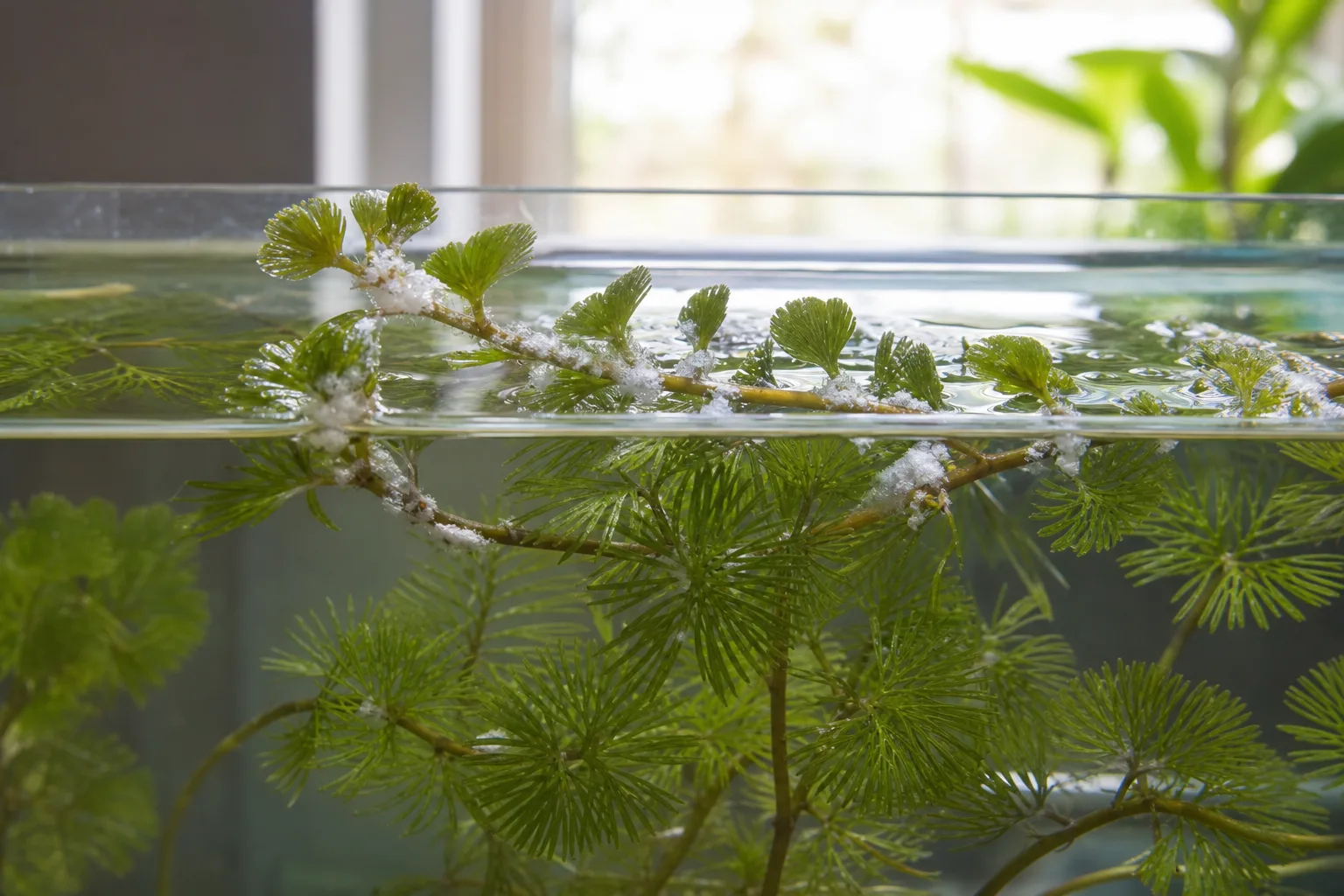
Mealybugs on Cabomba show up as white cottony wax on floating leaves, stems at the water surface, and emersed nursery growth-not on fully submerged fan leaves. First step: lift affected stems out of the tank and dab every visible insect with 70% isopropyl alcohol on a cotton swab before adding anything to turtle or fish water.
Mealybugs on Cabomba: Causes, Checks & Fixes
This guide covers mealybugs on Cabomba. See also the general Mealybugs guide, watering, and light pages for this plant.
Mealybugs on Cabomba: Causes, Checks & Fixes
Quick answer
Mealybugs on Cabomba (Cabomba caroliniana, fanwort) are soft-bodied sap-sucking insects covered in white, waxy secretions. On this fully submerged stem plant, they almost always appear on floating leaves, stems at the water surface, or emersed transition growth during quarantine-not as colonies deep on underwater fan needles.
First step: lift affected stems out of the aquarium or turtle tub and dab every visible mealybug with 70% isopropyl alcohol on a cotton swab. Cabomba’s fine submerged foliage cannot be showered with alcohol or terrestrial insecticides inside a live tank without harming fish, turtles, shrimp, or the plant itself. Direct contact kills on emergent tissue you can reach; anything that touches tank water must stay fish-safe.
What mealybugs look like on Cabomba
Cabomba grows opposite pairs of finely divided submerged leaves along slender stems, with occasional small floating leaves at branch ends. Mealybugs need dry or emergent tissue to feed and lay eggs-so damage concentrates where stems meet air.
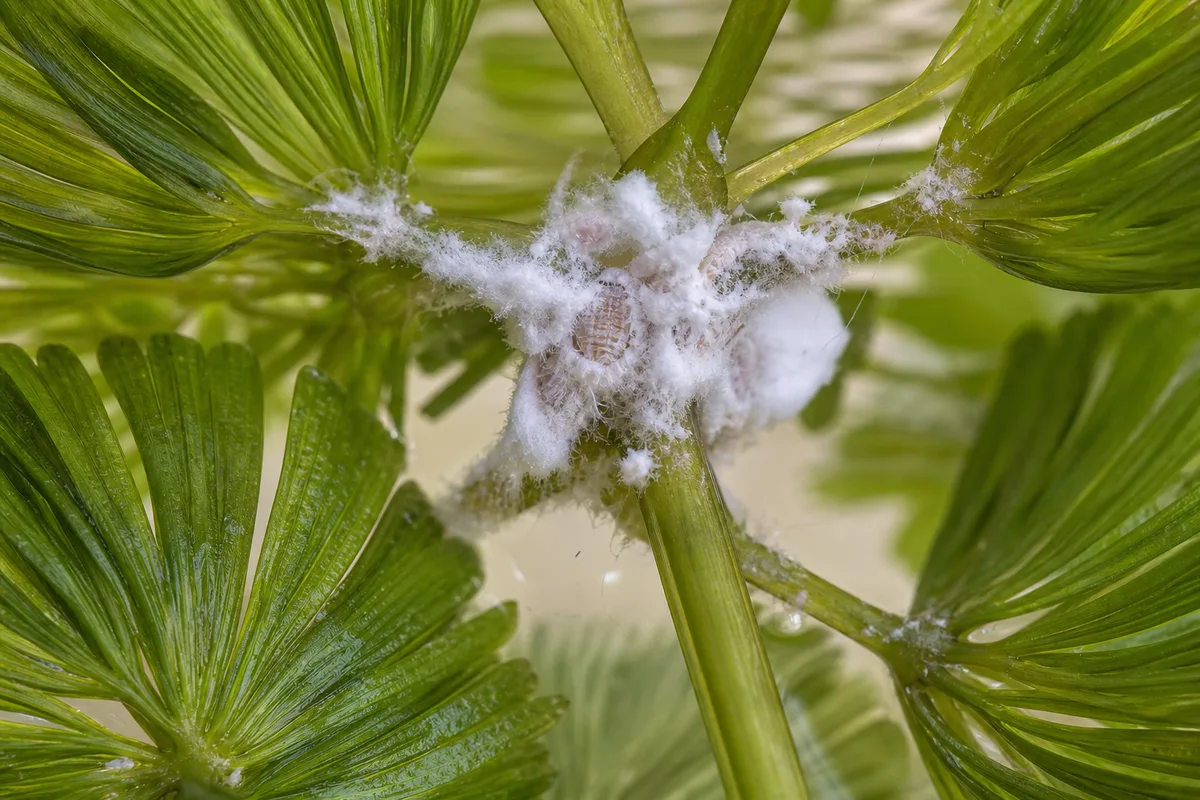
White cottony wax mass tucked in a floating leaf axil where Cabomba stem meets air - crush with a swab to confirm pink smear, not snail eggs or perlite dust.
Typical signs on fanwort:
- White, cottony wax masses in axils where floating leaves meet stems
- Clusters along stems that break the water surface or rest against a tank lid
- Flattened, waxy insects under the fluff; slow movement when you part the wax with a toothpick
- Sticky honeydew on glass, lids, or hardscape above the water line
- Black sooty mold on dried honeydew on emergent stems or tank rims-not underwater
- Yellowing or stunted tips on floating growth; submerged whorls may melt from stress but rarely show classic wax clusters underwater
- Ant trails on the tank rim when the setup sits near other infested houseplants
Early infestations hide easily because Cabomba grows fast and owners focus on submerged melt rather than the waterline. A cottony cluster tucked under one floating leaf can seed surface stems within weeks in warm water.
Why Cabomba gets mealybugs
Mealybugs do not spawn from dirty aquarium water. They arrive on infested nursery stock, emersed farm growth, or nearby terrestrial plants and settle where fanwort touches air.
Plant-specific risk factors:
- Emersed nursery culture. Much aquarium Cabomba is grown emersed at farms before sale. Mealybugs commonly hitchhike on emersed aquatic plants in leaf rosettes and stem joints-the same sheltered spots they use on houseplants.
- Floating stems and surface mats. Growers and turtle keepers often float Cabomba trimmings for quarantine or propagation. Stems at the surface stay in humid air with full light access, giving mealybugs ideal feeding sites on tissue that never stays fully submerged.
- Warm tank temperatures. Cabomba thrives from roughly 18°C to 28°C-the same range where mealybugs reproduce continuously indoors with overlapping egg, nymph, and adult stages.
- Skipped quarantine. Bunches added straight to a display tank or turtle tub can carry crawlers on stems above the water line before submersion washes some away.
- Cross-contamination from houseplants. Mealybugs on a windowsill pothos or herb pot can walk to a open-top aquarium where floating Cabomba rests against the rim.
Chronic melt, low light, or poor water clarity stress Cabomba but do not cause mealybugs directly. A weakened stand is easier for an existing surface colony to overrun once stems reach the top.
How to confirm the cause
Work through these checks before treating:
- Height on the plant - Wax on floating leaves or emergent stems points to mealybugs. Uniform white specks only on fully submerged needles may be debris, diatoms, or melting tissue-not cottony insect wax.
- Crush test - Touch a cotton swab to a white mass and press. Mealybugs leave pink or orange body fluid. Snail eggs sit in clear gel sacs. Melting Cabomba turns translucent and mushy without a waxy coat.
- Movement check - Part the cotton slowly. Live nymphs and adults move. Static fluff may be old egg sacs-still treat, but the active colony may have shifted stems.
- Honeydew location - Stickiness on the glass above water or on floating leaf tops confirms sap feeders. Fully submerged fan leaves do not accumulate honeydew the way emergent growth does.
- Quarantine history - New bunches in a bucket or holding tank are the highest-risk moment. Inspect emersed tops before planting in substrate.
- Neighbor scan - Check houseplants near the tank and any other floating stems sharing the same quarantine container.
If you find cottony wax with pink smear on surface stems or floating leaves, you have mealybugs-not a CO₂ deficiency, not melting from light shock alone, and not snail eggs.
First fix for Cabomba
Remove affected stems from the tank and dab every visible mealybug with a cotton swab soaked in 70% isopropyl alcohol.
This single step kills mealybugs on contact without dumping chemicals into turtle or fish water. Work on a clean tray or over a sink:
- Lift the whole stem or floating section out of the water
- Open each floating leaf axil and dab wax masses
- Run swabs along emergent stem sections from the waterline upward
- Wipe honeydew from floating leaves with a damp cloth
- Rinse the stem under lukewarm running water for 30 seconds
- Let alcohol evaporate completely before returning the plant to the tank
Do not pour alcohol, insecticidal soap, or neem oil directly into aquarium or turtle water on day one. Do not assume submerged white flecks are mealybugs-confirm on emergent tissue first.
Step-by-step recovery
After the first alcohol pass, continue based on severity:
Light infestation (few clusters on one floating stem)
- Repeat alcohol dabs weekly for at least three weeks to catch newly hatched crawlers
- Keep affected stems in a quarantine tub with clean dechlorinated water between treatments
- Trim only the wax-coated floating tips if they stay soft after dabbing-replant firm submerged sections
Moderate infestation (multiple surface stems, honeydew on glass)
- Complete two alcohol sessions three to four days apart on all emergent tissue
- During quarantine, spray insecticidal soap on out-of-water foliage only, covering sheltered axils; rinse thoroughly before returning stems to the tank
- Repeat soap every seven to ten days until no live insects appear for three to four weeks
- Bag and discard heavily coated floating mats-do not compost near other tanks
Heavy infestation (widespread wax, ants, nursery pesticide smell)
- Discard the worst stems rather than risk introducing residues or crawlers to a turtle setup
- Hold remaining cuttings in quarantine two full weeks after the last live insect
- If more than half the bunch is coated and firm submerged growth is gone, starting with a clean submerged-grown bunch is often safer than repeated chemical cycles in a pet tank
Throughout recovery, maintain normal Cabomba care-bright clean water, stable temperature, and prompt removal of melting debris so filtration is not overloaded. Hold aquarium fertilizer boosts until new whorls look clean; tender fast growth from heavy feeding attracts pests on surface stems.
Recovery timeline
Mealybugs hatch over several weeks, so one treatment rarely clears a colony.
- Days 1–3: Visible wax masses shrink after alcohol; honeydew on glass slows
- Week 1–2: Fewer live insects with weekly dabs; crawlers may appear on newly emerged floating tips
- Week 3–4: Colonies should be sparse if contact treatment stayed consistent
- Week 5+: Firm new submerged whorls and clean floating tips signal recovery; old melted sections will not revert
If cottony clusters increase after three weekly alcohol sessions on quarantined stems, extend quarantine and add repeated out-of-tank soap sprays rather than treating inside the display tank.
Lookalike symptoms
Snail or fish eggs - Clear gel sacs or adhesive dots on glass and stems. No pink smear, no cottony wax filaments.
Melting stem sections - Translucent, mushy submerged tissue from light shock, burial, or poor water quality. Lacks raised wax clusters and does not move when probed.
Perlite, sand, or detritus - Random white grains on stems after planting. Wipe off dry; no stickiness or insects underneath.
Diatoms or biofilm on glass - Brownish or filmy coating on tank walls, not discrete cotton balls in leaf axils.
Aphids on emergent tips - Soft-bodied green or black groups without heavy wax; also produce honeydew but lack mealybug segmentation under magnification.
Mistakes to avoid
- Spraying insecticide into turtle or fish water. Most terrestrial products harm aquatic life and can stress Cabomba, which is sensitive to copper in medications.
- Treating once and replanting immediately. Crawlers hatch for weeks; quarantine through at least three weekly checks.
- Assuming houseplant soil advice applies. Cabomba has no potting mix; root-feeding mealybug species are irrelevant unless you are holding emersed crowns in moist media during quarantine.
- Drowning stems as the only fix. Fully submerging infested emersed tops can kill exposed mealybugs, but wax and egg sacs on floating leaves above a crowded mat may survive in humid air pockets.
- Returning alcohol-treated stems wet with fumes. Let alcohol evaporate and rinse before tank re-entry.
- Ignoring ants on the tank rim. Ants protect honeydew producers and signal active colonies on nearby plants or emergent stems.
Cabomba care cross-check
While fighting mealybugs, keep the basics stable so recovery growth is firm:
- Light: Medium to high aquarium light; melting lower whorls often mean insufficient intensity, not pests
- Water: Clean, dechlorinated, well-filtered water; remove melting needles promptly so they do not foul turtle tubs
- Planting: Bury only firm stem sections; rotting lower nodes invite bacterial melt unrelated to mealybugs
- Pet safety: Cabomba is acceptable turtle forage when clean and pesticide-free-never treat in-tank with products not labeled safe for the animals in the setup
How to prevent mealybugs on Cabomba
- Quarantine new bunches one to two weeks in a separate container before adding to display or turtle tanks
- Rinse stems under running water and inspect floating tops before planting
- Prefer submerged-grown stock when available-it skips the emersed pest window many farm bunches carry
- Thin floating mats so stems do not pack against humid lids where mealybugs hide
- Scout the waterline weekly during warm active growth
- Isolate infested houseplants kept near open-top aquariums
- Never release trimmings into natural waterways; bag invasive fanwort waste per local regulations
When to worry
Treat as urgent when:
- Cottony masses spread across most floating growth within days despite weekly alcohol dabs
- Honeydew drips into the tank from heavy emergent colonies
- New nursery bunches smell of pesticide or arrive with widespread wax before quarantine
- Ants actively farm stems at the water surface and block natural control
- Submerged growth collapses entirely while surface stems stay coated-discard and restart from clean cuttings rather than dosing the live tank
A small cluster on one quarantined floating stem is manageable. Rapid spread through surface mats in a shared turtle tub needs fast stem removal and extended quarantine, not in-tank spraying.
Conclusion
Mealybugs on Cabomba are a surface and quarantine problem, not a typical submerged aquarium pest. Inspect floating leaves and waterline stems, dab insects with alcohol outside the tank, and hold cuttings in clean quarantine until crawlers stop hatching. That path protects fish and turtles, avoids copper-sensitive melt from wrong chemicals, and lets firm new fan whorls return once the wax is gone.
When to use this page vs other Cabomba guides
- Cabomba watering guide - Use for routine moisture checks before assuming mealybugs is the main issue.
- Cabomba problems hub - Browse all 16 common issues on this species.
- Yellow Leaves on Cabomba - Different entry point when symptoms overlap with mealybugs.
- Slow Growth on Cabomba - Different entry point when symptoms overlap with mealybugs.
- Spider Mites on Cabomba - Different entry point when symptoms overlap with mealybugs.