Water Lettuce Care: Light, Temp & Pond Tips
Pistia stratiotes
Water lettuce may be a cautious aquatic candidate in well-filtered turtle ponds, but LeafyPixels does not treat it as blanket safe feeding clearance. Oxalates and pollutant uptake are the main reasons to stay conservative.
Water Lettuce Care: Light, Temp & Pond Tips
Start with wateringThe most common care mistake for Water LettuceCheck pet-safe plants →Water Lettuce care essentials
Light
Moderate to bright aquarium or pond light; avoid sudden harsh outdoor sun without acclimation.
Water
Keep fully aquatic in clean, dechlorinated water; refresh water quality before the plant declines.
Soil
Aquatic setup with no ordinary potting mix in the turtle tank; anchor or float according to the species.
Humidity
Aquatic or constantly humid surface conditions
Temperature
18-28 C (64-82 F)
Fertilizer
Usually unnecessary in turtle tanks with normal nutrients. Aquarium-safe fertilizer only if needed, used outside the turtle tank when possible
About Water Lettuce
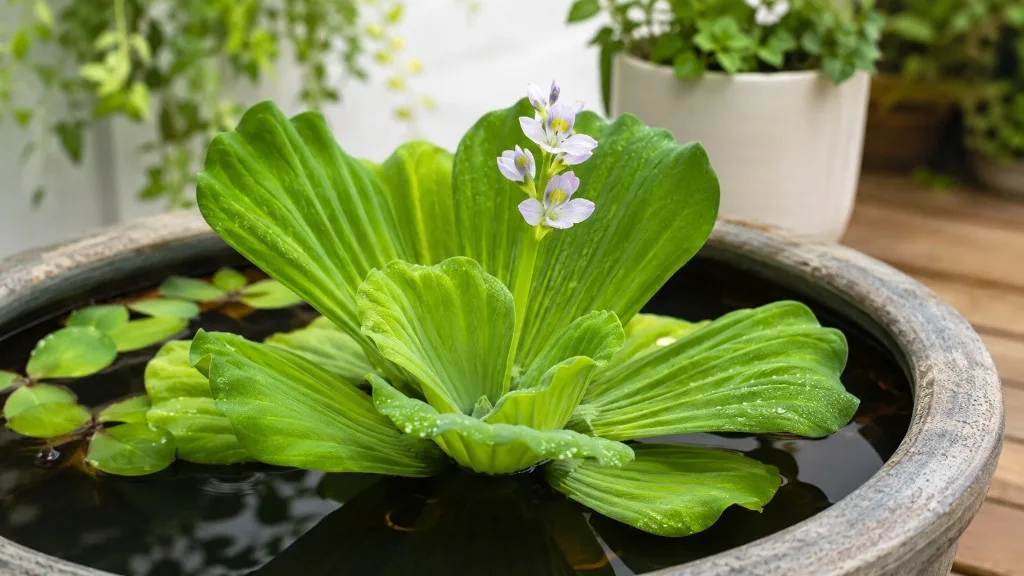
Water Lettuce is native to Tropical and subtropical freshwater regions, typically reaches Floating rosettes 5-25 cm wide with dangling roots indoors, with fast in stable water growth. Water Lettuce has a rosette growth habit and part of the Araceae family. It is also known as Water Cabbage, Nile Cabbage, and Pistia.
| Detail | Information |
|---|---|
| Also known as | Water Cabbage, Nile Cabbage, Pistia |
| Native region | Tropical and subtropical freshwater regions |
| Mature size | Floating rosettes 5-25 cm wide with dangling roots |
| Growth rate | Fast in stable water |
| Growth habit | Rosette |
| Scientific name | Pistia stratiotes |
| Family | Araceae |
Water Lettuce Care: Light, Temp & Pond Tips
Water lettuce is not a potted houseplant that happens to sit near water. It is a free-floating aquatic plant whose entire life cycle happens on the water surface, with roots dangling into the column below. That single fact reorganizes every care decision you make. Light reaches the rosette from above. Warmth comes from the water, not the air around a windowsill. Nutrients arrive dissolved in the water, absorbed directly by the feathery roots rather than through soil. Get those mechanics right and Pistia stratiotes becomes one of the most useful floating plants in warm aquariums and ponds - a living shade cloth, fry shelter, and nitrate sponge that grows fast enough to visibly change water quality within weeks. Get them wrong, especially the temperature requirement, and the plant melts within days while you wonder what you did to deserve the mess.
What Is Water Lettuce?
Water lettuce (Pistia stratiotes) belongs to Araceae, the arum family - the same broad botanical group that includes peace lilies and anthuriums, though water lettuce shares almost none of their terrestrial care rules. In the wild it inhabits slow-moving tropical and subtropical freshwater - ponds, lakes, irrigation canals, swamps, and quiet river margins where the water is warm, still or slow, and rich enough in dissolved nutrients to support rapid vegetative growth. The plant forms compact rosettes of soft, velvety, pale-to-medium green leaves that look like tiny floating heads of lettuce, which is how it earned its common name. Beneath each rosette, a mass of fine, hair-like roots trails into the water, sometimes reaching 30 cm (12 inches) or more in nutrient-rich conditions.
In a typical home aquarium, individual rosettes usually reach 5–25 cm (2–10 inches) across. In outdoor ponds with Water Lettuce light guide and unlimited space, the same species can expand dramatically - rosettes of 60 cm (24 inches) or more have been reported, and dense mats can cover an entire pond surface within a single warm season. Growth is fast in stable warm water, often doubling the visible surface coverage every two to three weeks at the peak of summer. The plant reproduces primarily through daughter plants connected by short horizontal stolons, not through anything you plant in gravel. Treating it like a rooted aquarium plant is the most common beginner mistake, and it fails immediately because water lettuce has no use for substrate at all.
Botanical Background and Surface-Floating Biology
The floating lifestyle of Pistia stratiotes is not a casual preference - it is the plant’s structural identity. Each rosette sits at the air-water interface, with leaves designed to repel water and trap a thin layer of air that helps the plant stay buoyant. The dangling roots are the plant’s primary interface with the aquatic environment: they absorb nitrogen, phosphorus, potassium, and trace minerals directly from the water column, which is why water lettuce is valued as a biological nutrient export in aquariums and ponds struggling with algae-fueling excess nutrients. The roots also provide physical habitat - fish fry, shrimp, and timid species use them as cover, and the shaded zone beneath a healthy mat mimics the dim conditions many tropical species prefer.
Because the plant never anchors, it responds to environmental stress faster than rooted species. Cool water, harsh direct sun, strong surface agitation, or a sudden drop in dissolved nutrients all show up as leaf discoloration or tissue melt within days rather than weeks. That sensitivity is frustrating when you are learning the plant, but it is also useful: water lettuce functions as a living thermometer and water-quality indicator. When rosettes are firm, green, and producing daughter plants steadily, your warmth and water chemistry are in range. When leaves yellow, shrivel, or dissolve, something in the basic environment - almost always temperature or light - needs correction before you reach for fertilizer or pesticides.
Any fragment or daughter plant that reaches open water can start a new population, so disposal matters as much as care.
Common Names and Lookalikes
Water lettuce is the most widely used common name in the aquarium and pond hobby. You will also see water cabbage, Nile cabbage, and occasionally shellflower in older literature. All refer to Pistia stratiotes unless a seller specifies otherwise. The name overlap is usually harmless, but the visual overlap with other floating plants is not. Amazon frogbit (Limnobium laevigatum) and American frogbit (Limnobium spongia) produce similar round floating rosettes but typically have glossier, more lily-pad-like leaves and shorter, less feathery roots. Duckweed (Lemna species) forms tiny individual disks rather than rosettes and spreads as a fine green film rather than a canopy of lettuce heads.
Knowing which plant you have matters because tolerances differ. Frogbit tolerates slightly cooler water; duckweed is harder to eradicate. Water lettuce sits at the warmest end of the floating-plant spectrum and grows the largest rosettes - and carries the highest ecological risk if it escapes into natural waterways in a warm climate.
Best Growing Conditions for Water Lettuce
Water lettuce does best when you mirror the warm, bright, nutrient-available conditions of its native range. The four variables that decide almost every outcome are light, water temperature, water chemistry, and surface management. Nail those and propagation, nutrient uptake, and fish compatibility largely take care of themselves. Miss any one of them - especially temperature - and no amount of fertilizer or water changes will produce healthy mats for long.
Light Requirements
Water lettuce needs bright light to maintain compact rosettes and steady vegetative growth. In outdoor ponds, partial to full sun works well in most climates, though intense afternoon sun in very hot regions can scorch leaf edges and bleach the velvety green to yellow-white. Some afternoon shade in desert or subtropical summer conditions prevents that cosmetic damage without slowing growth meaningfully. In indoor aquariums, aim for medium to high aquarium lighting positioned close enough to the water surface that the floating rosettes receive usable intensity - a full-spectrum LED fixture on an open-top tank or a rimless setup works better than a deeply hooded tank where light attenuates before it reaches the surface.
A practical photoperiod is 8–12 hours daily, consistent with the plant’s tropical day-length cues. Too little light produces small, pale rosettes that may yellow over time even when temperature and nutrients are correct. Too much direct, unfiltered light in a shallow container can overheat the water at the surface layer where the rosettes sit, compounding temperature stress. If you are using grow lights, watch for the same bleaching and curling you would see from harsh window sun. Healthy new growth should look firm and evenly green; stretched, thin leaves or a sudden shift to lime-yellow often mean the plant wants more usable light, while bleached patches and crispy margins mean it is getting too much direct intensity.
Because water lettuce floats, it also self-shades as it expands. Older rosettes on the outer edge of a mat receive more light than crowded interior plants, which is one reason regular thinning improves individual rosette health. If you are keeping water lettuce specifically to shade a high-light aquarium for fish or submerged plants, treat light as a shared resource: cover 30–50% of the surface initially and adjust based on how much PAR reaches the depths below.
Temperature and Water Chemistry
Temperature is the non-negotiable variable for Pistia stratiotes. The species tolerates a reported range of roughly 59–95°F (15–35°C) in scientific literature, but hobby success clusters tightly around 68–86°F (20–30°C), with the sweet spot most growers target at 70–85°F (21–29°C). Inside that band, growth is fast, daughter plants form readily, and roots stay white and actively absorbing. Below 65°F (18°C), growth stalls, leaves yellow, and melt becomes likely. At frost and near-freezing water temperatures, the plant dies back entirely. If your aquarium runs at typical room temperature in a cold climate - say 72°F in summer but 68°F or lower in winter - water lettuce may survive but look mediocre for months. A dedicated heater keeping the tank in the mid-70s°F transforms performance more than any other single upgrade.
Water chemistry is more forgiving than temperature but still worth understanding. Aim for pH 6.0–7.5, with many community tanks landing near 6.5–7.0 without special adjustment. General hardness in the 4–12°dGH (71–214 ppm) range suits the plant well; soft to moderately hard freshwater is fine. Water lettuce is not a brackish species - keep salinity near zero in standard freshwater setups. It can tolerate moderate nutrient loads and is often introduced specifically to pull nitrates and phosphates out of eutrophic water, though extremely lean, freshly remineralized RO water with no supplemental nutrients may produce yellowing until the column accumulates enough dissolved minerals for root uptake.
CO₂ injection is optional - water lettuce grows vigorously without it in warm, lit tanks. Stable parameters matter less than stable warmth.
Pond, Aquarium, and Container Placement
Placement is simple in principle and nuanced in practice: put the rosette on the water surface and leave it there. Do not bury roots in substrate, do not wedge the plant under filter outflows, and do not cram it into a sump return stream where constant splashing tears leaves. In open aquariums, gently lower each rosette onto the surface and let the roots unfurl naturally. In ponds, distribute a modest starter quantity - a handful of rosettes for a small garden pond, more for a large farm pond - and expect exponential spread through daughter plants within weeks in summer.
Surface flow deserves attention. Gentle circulation in the aquarium body is healthy; constant barrage at the water surface is not. Hang-on-back filter outflows and powerhead jets that churn the top few centimeters can shred leaves, break stolons prematurely, and push rosettes into corners where they pile up and rot. A floating ring or barrier - a simple plastic hoop or commercial floating plant corral - keeps water lettuce away from filter intakes and outflow streams in smaller tanks. In turtle tanks, the same barrier protects plants from being shoved underwater by active swimmers while still allowing roots to dangle into the water column.
For outdoor ponds, consider fish pressure. Koi and large goldfish sometimes nibble roots and uproot small rosettes. Water lettuce is not a koi-proof plant the way some submerged species are. Floating barriers or segregated plant zones help. In turtle setups, water lettuce is commonly used for shade and nutrient uptake, but verify current guidance on dietary suitability for your species before treating it as food; oxalate content and waterborne contamination are reasons many keepers use it for cover rather than as a primary feed. Container water gardens on patios work beautifully in USDA zones 9–11 where overnight lows stay warm; everywhere else, treat outdoor containers as seasonal displays and move plants indoors or compost them before frost.
How Water Lettuce Cleans and Shades the Water
People do not add water lettuce only because it looks tropical. They add it because it works - pulling dissolved nutrients out of the water and converting them into harvestable biomass while creating a living canopy that changes how light and behavior work in the tank or pond below. Understanding that dual role helps you manage the plant as infrastructure, not decoration.
Nutrient Uptake and Algae Control
The feathery roots of Pistia stratiotes are efficient biological filters. They absorb ammonium, nitrates, phosphates, and trace metals from the water column, incorporating those nutrients into new leaf and root tissue. In tanks with elevated nitrate from stock overload or heavy feeding, a healthy water lettuce population can visibly slow green water and filamentous algae by starving those algae of the nutrients they need. The effect is not magic - it is mass balance. Fast-growing floating plants export nutrients when you remove excess biomass. If you never thin the mat, nutrients stay locked in the system until leaves senesce and recycle back into the water.
This is why water lettuce thrives in nutrient-rich water and may yellow in ultra-lean setups. A gentle liquid aquarium fertilizer at low levels - or natural accumulation from fish waste - usually corrects yellowing when temperature and light are already correct. Diagnose environment first, then nutrients.
In backyard ponds, the practical benefit is clearer water and less string algae along the margins during summer, provided you harvest excess growth regularly.
Managing Surface Cover Without Smothering the Tank
The same growth that cleans water can suffocate an aquarium ecosystem if you let it. A complete surface seal blocks gas exchange at the air-water interface, reduces oxygen diffusion, traps CO₂, and prevents light from reaching submerged plants below. Fish that need open surface access - bettas gulping air, labyrinth fish, some surface feeders - can be stressed when every square centimeter is covered. The management rule most experienced keepers follow is intentional partial coverage: roughly one-third to one-half of the surface for shade and nutrient export, with open water visible for gas exchange and fish behavior.
Thinning is not optional in warm water; it is core maintenance. Plan to remove a portion of the mat every one to two weeks during peak growth season. Harvest the largest, oldest outer rosettes and any crowded interior plants that look pale or stunted. You are not hurting the colony - you are resetting the nutrient export cycle and preventing the mat from becoming a solid lid. In ponds, use a net or rake to pull excess plants to the bank. In aquariums, lift rosettes by hand. Watch submerged plant health below: if stem plants etiolate or crypts melt after water lettuce explodes, surface cover has crossed from helpful to dominant.
Shade is a feature when you want it. Fry, shrimp, and timid fish use dangling roots as cover. Allow denser cover in one tank section while keeping another open.
Water Quality and Maintenance Rhythm
Water lettuce does not eliminate the need for water changes; it changes what those changes accomplish. Because the plant lives in the water you are maintaining, dechlorination, temperature matching, and gentle handling during maintenance matter more than they do for a potted houseplant sitting across the room.
Water Changes, Dechlorination, and Flow
Perform regular partial water changes on the same schedule you use for fish health - typically 20–30% weekly in stocked aquariums, or 25% biweekly in lightly stocked planted tanks, adjusted for nitrate trends. Match replacement water temperature to tank temperature within a couple of degrees Fahrenheit so floating rosettes do not hit a cold shock wave across the surface. Dechlorinate tap water before it enters the tank; chloramine and chlorine damage delicate root hairs the same way they stress fish gills.
During changes, floating plants get pushed around - that is normal. Avoid leaving rosettes piled in a corner wet but out of the water overnight. After refilling, redistribute plants evenly with open areas preserved. If you use a gravel vacuum, work carefully beneath the root curtain; tearing roots is harmless to the plant long-term but releases trapped detritus in a cloud that can irritate fish gills if you stir too aggressively in one pass.
Trim roots when they grow so long they clog filter intakes or trap debris in a matted curtain. Snipping roots back to 10–15 cm (4–6 inches) does not harm the rosette and often makes the aquarium look tidier. The plant regrows roots quickly in warm water. Remove yellowed or melted leaves as you see them so decaying tissue does not become a secondary nutrient source fueling algae. In ponds, skim wind-blown debris from the mat after storms; trapped leaves and pollen block light to rosettes and can create anaerobic pockets if left for weeks.
Seasonal Care Indoors and Outdoors
Seasonal rhythm is really a temperature rhythm. In warm months, growth accelerates and thinning frequency increases. In cool months, growth slows or stops, and the plant may melt if water drops below the low-sixties Fahrenheit. Indoor aquariums with stable heaters run water lettuce year-round successfully; outdoor ponds in USDA zones 9–11 often carry plants through winter if water stays above roughly 65°F. In zones 8 and below, assume outdoor water lettuce is seasonal - enjoy it from late spring through fall, then remove plants before first frost or bring a few rosettes indoors to a heated aquarium.
If you overwinter indoors, quarantine outdoor pond plants before adding them to established tanks. Pond snails, dragonfly nymphs, and algae spores hitchhike on roots. A separate tub with a small heater for two weeks catches most surprises. Reduce feeding and fertilizer in winter if growth slows - the plant is not exporting nutrients when it is not producing biomass. Resume normal thinning and optional light fertilization when spring warmth returns and daughter plants multiply again.
Outdoor growers in hot climates should watch evaporation concentration - as water levels drop, nutrients and hardness rise. Top off with dechlorinated water regularly and add afternoon shade over small patio bowls to prevent surface overheating.
Propagation, Thinning, and Population Control
Propagation of Pistia stratiotes is almost embarrassingly easy in warm water, which is precisely why population control belongs in the same section. You do not root cuttings or sow seed in the hobby context. You manage daughter plants and decide what to do with the excess.
Daughter Plants and Responsible Disposal
Mature rosettes produce daughter plants on short stolons - miniature rosettes that begin as buds at the mother plant’s base and develop their own roots while still connected. In optimal warmth, a single healthy rosette can spawn multiple daughters within weeks. You can separate daughters gently once their roots are a few centimeters long and distribute them across the surface or share them with other hobbyists. No hormone powder, no substrate, no rooting chamber - just warm water and light.
Thinning is propagation. Every rosette you remove to keep surface coverage in check is a viable plant. The skill is not starting new plants; it is stopping too many from surviving in the wrong place. Never dispose of water lettuce by dumping it into rivers, lakes, canals, storm drains, or natural ponds. In warm climates, released plants establish, spread vegetatively, and seed, forming dense mats that block boating, reduce oxygen, shade out native aquatic vegetation, and degrade habitat complexity. The U.S. Geological Survey documents established populations across southern states and recurring introductions in northern states where winter kill is less reliable than managers once assumed.
Responsible disposal means complete drying or bagging and trash disposal - place removed plants in the household refuse bin, let them dry on pavement until fully dead, or compost in a contained pile far from open water. Some states with prohibited-status listings require stricter handling; know your local rules. If you sell or trade plants, disclose invasive risk to buyers in warm regions. Aquarium hobbyists sometimes treat “returning plants to nature” as kindness. With water lettuce, it is an ecological hazard.
Common Water Lettuce Problems
Most water lettuce problems trace to temperature, light, or surface management, not mysterious disease. The plant does not suffer root rot in the traditional houseplant sense because it has no soil-bound root zone - but it absolutely suffers melt, a rapid dissolution of leaf tissue that looks like the plant is dissolving into the water. Diagnose in that order and you save money on cures you do not need.
Yellowing, Melting, and Pest Signs
Yellow leaves in warm water usually mean too much direct light, nutrient deficiency in an ultra-lean tank, or natural senescence of older outer leaves. Yellowing in cool water almost always means temperature stress first - check the thermometer before fertilizer. Melting - soft, translucent, dissolving tissue - is the classic signature of cold exposure or a sudden temperature drop during a water change. Move the tank onto a stable heater in the mid-70s°F, remove melted debris, and keep bright light steady. Healthy daughter production resumes within one to two weeks if warmth is restored before the entire colony succumbs.
Small rosettes that never size up usually indicate insufficient light or overcrowding within a dense mat. Thin interior plants and increase usable surface light. Brown crispy edges suggest scorch from intense direct sun or splash damage from filter outflow. Relocate plants or add afternoon shade. Root blackening and foul smell point to decay from trapped debris, stagnant corners, or pile-up outside the water. Remove affected rosettes, improve distribution, and trim remaining roots.
Pests are uncommon but not impossible. Aphids occasionally colonize outdoor pond plants in summer; a firm rinse and manual removal work for aquarium-bound specimens. Snails on roots are usually harmless grazers - bladder snails and ramshorns eat periphyton, not living water lettuce tissue. If koi or turtles shred roots faster than the plant regrows, barriers are the fix, not pesticides. Avoid spraying garden insecticides on aquatic plants; fish toxicity is guaranteed.
When troubleshooting, ask: Is the water 70–85°F? Is there bright, indirect to moderate direct light for 8–12 hours? Is surface cover partial rather than total? Is the plant exporting biomass through regular thinning? Affirmative answers to all four resolve most cases without further intervention.
Invasive Risk, Legal Restrictions, and Outdoor Warnings
Water lettuce is a capable plant in a warm pond - and that capability is exactly what makes it an invasive aquatic weed in many jurisdictions. The U.S. Fish and Wildlife Service Ecological Risk Screening Summary and the USGS Nonindigenous Aquatic Species database both document widespread presence across the United States, with established, overwintering populations in southern states including Alabama, Arizona, California, Florida, Louisiana, Mississippi, and Texas. Dense mats obstruct waterways, reduce dissolved oxygen at the air-water interface, shade out submerged native plants, and alter habitat for fish and invertebrates. The University of Florida IFAS Center for Aquatic and Invasive Plants classifies it as a high-impact aquatic invader in Florida despite historical debate about whether the species is native to specific waterways.
Legal status varies by state and changes over time, so verify current regulations before purchase, transport, or outdoor use. As of widely cited USDA and state listings, prohibited or noxious designations have applied in states including Alabama (Class C noxious weed), California (B-list noxious weed), Connecticut (banned invasive), Florida (prohibited aquatic plant, Class 2), South Carolina (invasive aquatic plant), Texas (noxious plant), and Wisconsin (prohibited invasive species). Other states regulate transport into the Great Lakes region. Even where sale is legal for aquarium use, release into natural water bodies may violate state environmental law regardless of purchase legality.
For hobbyists, the decision framework is straightforward. Indoor heated aquariums in any climate: manageable with thinning and responsible disposal. Outdoor ornamental ponds in warm perennial climates: high spread risk; contain diligently and never allow overflow into natural systems. Outdoor ponds in temperate climates: plants usually die in winter, but seed and fragment survival is plausible enough that authorities remain concerned - do not assume frost eliminates risk. Natural lakes, rivers, or drainage ditches: never introduce water lettuce under any circumstance.
If you already have an overgrown pond mat, mechanical removal plus responsible disposal is the standard management approach. Prevention - keeping the plant in controlled tanks and ponds and discarding excess in trash, not streams - is the lowest-risk path.
Conclusion
The most useful thing to know about water lettuce is that it is a warm-water floating specialist whose health is governed by light, temperature, water chemistry, and how much surface you allow it to cover - not by soil, humidity trays, or pot size. Keep water in the 70–85°F band, give rosettes bright light for eight to twelve hours daily, float plants freely on a calm surface, and maintain partial coverage with regular thinning so gas exchange and submerged life stay healthy. Treat every harvest as both nutrient export and population control, and dispose of excess plants in the trash rather than any natural waterway.
Handled that way, Pistia stratiotes is one of the most practical floating plants in the hobby: fast shade for fry and shrimp, a living nitrate sponge, and a clear visual signal when your warm-water setup drifts out of range. Handled carelessly outdoors in a warm climate, it becomes the invasive weed agencies spend public funds removing. The care is not difficult. The responsibility boundary - enjoy it in your tank or pond, never in wild water - is the part experienced growers take as seriously as temperature.
When to use this page vs other Water Lettuce guides
- Water Lettuce overview - Canonical hub for this species - care topics and problems branch from here.
- Water Lettuce problems - Symptom-first path when you already know something is wrong.
Related Water Lettuce guides
How to care for Water Lettuce?
How much light does Water Lettuce need?
Moderate to bright aquarium or pond light; avoid sudden harsh outdoor sun without acclimation.. Low-tech aquarium light. Filtered outdoor pond light
- Moderate to bright aquarium or pond light - Moderate to bright aquarium or pond light; avoid sudden harsh outdoor sun without acclimation..
- avoid sudden harsh outdoor sun without acclimation - Moderate to bright aquarium or pond light; avoid sudden harsh outdoor sun without acclimation..
- Low-tech aquarium light - Low-tech aquarium light.
- Filtered outdoor pond light - Filtered outdoor pond light.
When should you water Water Lettuce?
Keep fully aquatic in clean, dechlorinated water; refresh water quality before the plant declines.
- Check water clarity - Keep fully aquatic in clean, dechlorinated water; refresh water quality before the plant declines.
- temperature
- flow
- and leaf color rather than watering by a calendar - Keep fully aquatic in clean, dechlorinated water; refresh water quality before the plant declines.
- Drain excess water - Keep fully aquatic in clean, dechlorinated water; refresh water quality before the plant declines.
What soil works best for Water Lettuce?
Aquatic setup with no ordinary potting mix in the turtle tank; anchor or float according to the species.
- Aquarium-safe sand or gravel if rooted - Aquatic setup with no ordinary potting mix in the turtle tank; anchor or float according to the species.
- No fertilizer-rich potting soil in turtle tanks - Aquatic setup with no ordinary potting mix in the turtle tank; anchor or float according to the species.
- Attach rhizome plants to rock or driftwood - Aquatic setup with no ordinary potting mix in the turtle tank; anchor or float according to the species.
How to propagate Water Lettuce?
Propagate from healthy divisions or cuttings taken from clean, untreated stock.
- Division - Propagate from healthy divisions or cuttings taken from clean, untreated stock.
- Stem cuttings - Propagate from healthy divisions or cuttings taken from clean, untreated stock.
- Runner separation
Water Lettuce pet safety
Water lettuce may work as cautious turtle-pond cover from a clean source, but LeafyPixels keeps reptile status conservative because the evidence is limited and water quality matters.
The Tortoise Table says Water Lettuce is not toxic in small quantities, is fine in filtered turtle ponds, but should be fed sparingly to tortoises due to oxalates and pollution risk.
Watering Water Lettuce
For Water Lettuce, check water clarity, temperature, flow, and leaf color rather than watering by a calendar. and water always submerged or floating in clean water; maintain tank or pond water changes. Growth slows in cool water or short winter light; thin excess growth and keep filtration steady.
| Detail | Information |
|---|---|
| How often | Always submerged or floating in clean water; maintain tank or pond water changes |
| How to check | Check water clarity, temperature, flow, and leaf color rather than watering by a calendar. |
| Seasonal changes | Growth slows in cool water or short winter light; thin excess growth and keep filtration steady. |
Signs of overwatering
- melting stems
- yellowing leaves
- rotting crowns
- foul water smell
Signs of underwatering
- dry floating mats
- crispy leaves
- shrinking growth
- plant breaking apart
Soil & potting for Water Lettuce
Use a mix of Aquarium-safe sand or gravel if rooted, No fertilizer-rich potting soil in turtle tanks, Attach rhizome plants to rock or driftwood for Water Lettuce. Not applicable for submerged aquatic culture; prioritize clean, oxygenated water. Target soil pH around About 6.5-7.8 for most community turtle aquariums. Repot thin or reposition growth as needed rather than repotting on a schedule, ideally in warm active growth.
| Detail | Information |
|---|---|
| Recommended mix | Aquarium-safe sand or gravel if rooted, No fertilizer-rich potting soil in turtle tanks, Attach rhizome plants to rock or driftwood |
| Drainage | Not applicable for submerged aquatic culture; prioritize clean, oxygenated water. |
| Soil pH | About 6.5-7.8 for most community turtle aquariums |
| Repotting frequency | Thin or reposition growth as needed rather than repotting on a schedule |
| Best season to repot | Warm active growth |
Signs it needs repotting
- overcrowded tank surface
- plants clogging filter intake
- root mats trapping debris
Humidity & temperature for Water Lettuce
Water Lettuce prefers aquatic or constantly humid surface conditions. Keep temperatures around 18-28 C (64-82 F). Avoid letting Water Lettuce sit below Protect from freezing unless grown as an outdoor seasonal pond plant. Match the plant to the turtle species temperature range and quarantine new plants before use.
| Detail | Information |
|---|---|
| Humidity | Aquatic or constantly humid surface conditions |
| Ideal temperature | 18-28 C (64-82 F) |
| Minimum temperature | Protect from freezing unless grown as an outdoor seasonal pond plant |
| Temperature notes | Match the plant to the turtle species temperature range and quarantine new plants before use. |
Humidity tips
- Keep exposed roots and floating leaves from drying out
- Use a covered aquarium only if ventilation remains adequate
Fertilizer & pruning for Water Lettuce
Feed Water Lettuce usually unnecessary in turtle tanks with normal nutrients using aquarium-safe fertilizer only if needed, used outside the turtle tank when possible. The best feeding window is active growth only. Copper, pesticide residues, strong pond chemicals, and terrestrial fertilizers in turtle water.
| Detail | Information |
|---|---|
| Fertilizer schedule | Usually unnecessary in turtle tanks with normal nutrients |
| Best season | Active growth only |
| Fertilizer type | Aquarium-safe fertilizer only if needed, used outside the turtle tank when possible |
| What to avoid | Copper, pesticide residues, strong pond chemicals, and terrestrial fertilizers in turtle water |
Pruning
Thin old, melting, or excess growth before it fouls turtle water. Remove uneaten plant debris promptly.
Common problems on Water Lettuce
Crispy Leaves
MediumLikely cause: What are the symptoms of an underwatered Water lettuce? When Pistia stratiotes suffers from under-watering, it displays wilting leaves, browning or crispy edges, …
Quick fix: Confirm diagnosis on your Water Lettuce, then address the most likely care or pest factor described in current extension guidance.
Full fix guide →Slow Growth
LowLikely cause: Weak light, cold water, or nutrient imbalance in a low-tech setup
Quick fix: Stabilize temperature and use moderate aquarium lighting before adding fertilizer.
Full fix guide →Yellow Leaves
MediumLikely cause: Low nutrients, poor light, dirty water, or acclimation melt after moving tanks
Quick fix: Remove melting growth, improve water changes, and adjust light gradually.
Full fix guide →Aphids
MediumLikely cause: Aphids on water lettuce cluster on rosette crowns and leaves at the water surface, not underwater. First step: skim off every rosette with visible aphids and wipe the tank rim where they crawl-do not
Quick fix: See plant-specific guide for step-by-step fixes.
Full fix guide →Brown Tips
MediumLikely cause: Brown tips on Water Lettuce are dry or reddish-brown margins on the velvety rosette-most often from filter outflow wetting leaf tops, lid condensation dripping on leaves, low water stranding roots, nu
Quick fix: See plant-specific guide for step-by-step fixes.
Full fix guide →Drooping Leaves
MediumLikely cause: Drooping water lettuce rosettes usually mean heat stress, overcrowding, insufficient light, or poor water quality-not leaf disease. First step: check water temperature, spacing, and whether roots stil
Quick fix: See plant-specific guide for step-by-step fixes.
Full fix guide →Fungus Gnats
MediumLikely cause: Water lettuce has no soil, so fungus gnats around your tank usually mean decaying floating rosettes, uneaten food, filter organic film, or overwatered houseplants nearby-not wet mix on the plant itsel
Quick fix: See plant-specific guide for step-by-step fixes.
Full fix guide →Leggy Growth
MediumLikely cause: Leggy water lettuce shows as small, flat, pale rosettes that spread horizontally across the surface instead of forming tight domed heads. First step: move rosettes to the brightest calm zone at the wa
Quick fix: See plant-specific guide for step-by-step fixes.
Full fix guide →Low Humidity
MediumLikely cause: Low humidity on floating Water Lettuce is usually a misread-ambient room air rarely limits healthy Pistia stratiotes on open water. Dry, tan leaf edges more often trace to cold water, filter splash, s
Quick fix: See plant-specific guide for step-by-step fixes.
Full fix guide →Mealybugs
MediumLikely cause: Mealybugs on water lettuce usually hitchhike on new floating mats or colonize rosette crowns and leaf bases that sit partly dry at the waterline. First step: scoop affected rosettes into a separate qu
Quick fix: See plant-specific guide for step-by-step fixes.
Full fix guide →Mold on Soil
MediumLikely cause: On water lettuce, 'mold on soil' is almost always fuzzy growth on aquarium gravel, sand, or pond sediment-not potting mix-fed by decaying rosette melt and organic debris. First step: siphon sunken mel
Quick fix: See plant-specific guide for step-by-step fixes.
Full fix guide →Not Enough Light
MediumLikely cause: Water lettuce often survives on too little light while rosettes stay small, flat, and slow to spread. First step: audit surface photons-confirm 10–12 hours on a timer, float rosettes directly under yo
Quick fix: See plant-specific guide for step-by-step fixes.
Full fix guide →Overwatering
MediumLikely cause: Overwatering on water lettuce does not mean too much H2O-it means foul, stagnant, or oxygen-poor water starving the root zone under dense mats or weak filtration. First step: lift one rosette, smell t
Quick fix: See plant-specific guide for step-by-step fixes.
Full fix guide →Root Rot
MediumLikely cause: Root rot on water lettuce shows as brown or black, slimy dangling roots with a sour smell-usually from stagnant water under a dense mat, trapped detritus, or a filter crash. First step: lift one roset
Quick fix: See plant-specific guide for step-by-step fixes.
Full fix guide →Spider Mites
MediumLikely cause: Spider mites on water lettuce show as fine yellow stippling and silky webbing on velvety rosette leaves, usually in warm protected setups-not because floating aquarium plants suffer dry room air. Firs
Quick fix: See plant-specific guide for step-by-step fixes.
Full fix guide →Underwatering
MediumLikely cause: Underwatering on water lettuce means floating rosettes lost continuous water contact-usually from evaporation, a low tank level, or mats stranded on filter outflow-not forgotten pot watering. First st
Quick fix: See plant-specific guide for step-by-step fixes.
Full fix guide →Wilting
MediumLikely cause: Wilting on water lettuce means the rosette lost turgor because something failed in the water column-not because soil dried out. First step: check whether dangling roots are exposed above the surface f
Quick fix: See plant-specific guide for step-by-step fixes.
Full fix guide →