Yellow Leaves on Water Lettuce: Causes, Checks & Fixes
Quick answer
Yellow or melting water lettuce rosettes usually trace to cold water below 65°F (18°C), nutrient-poor water, weak surface light, overcrowded mats, or acclimation melt after a tank move. First step: check your thermometer and aim for 70–85°F before adding fertilizer.
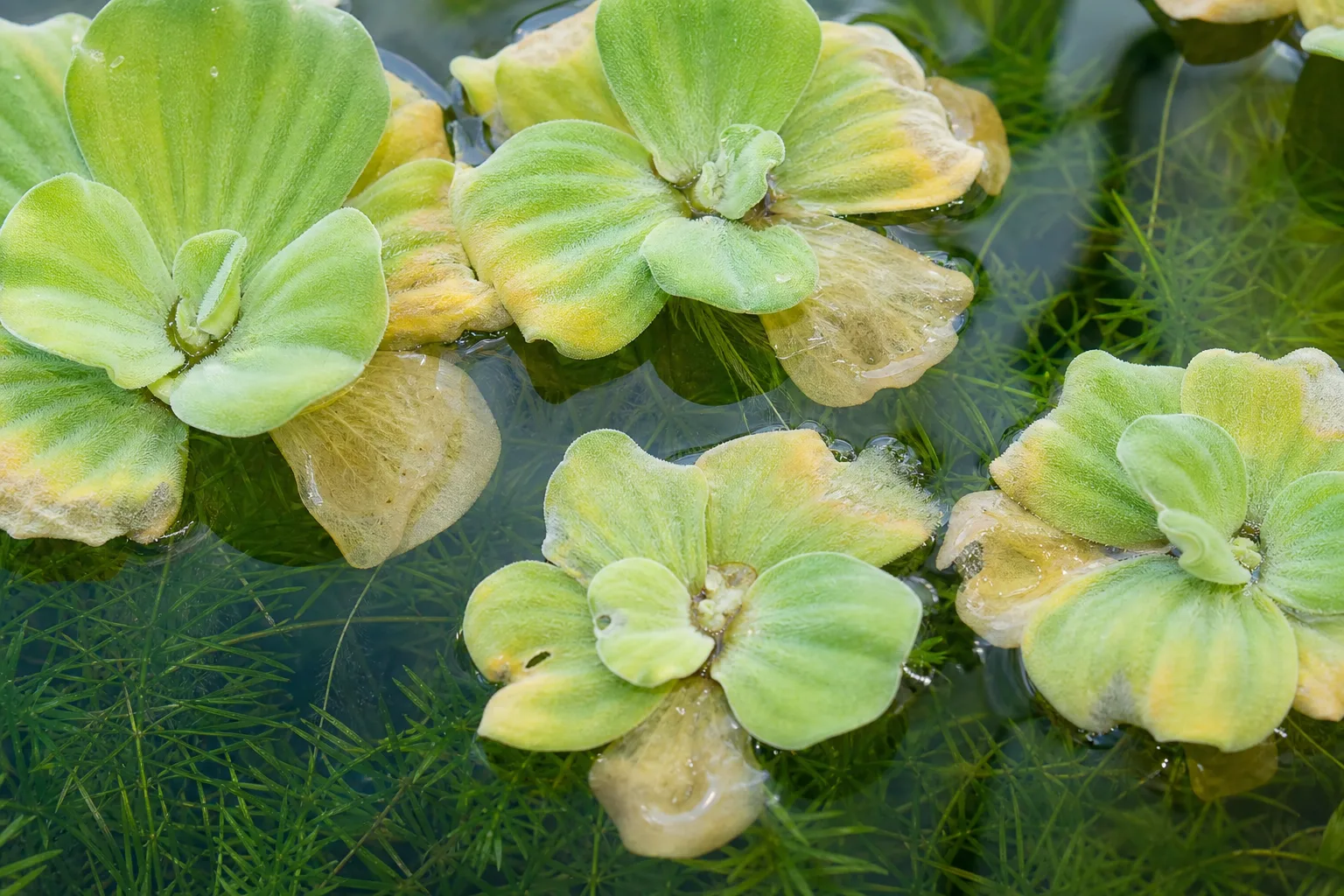
Yellow Leaves on Water Lettuce: Causes, Checks & Fixes
This guide covers yellow leaves on Water Lettuce. See also the general Yellow Leaves guide, watering, and light pages for this plant.
Yellow Leaves on Water Lettuce: Causes, Checks & Fixes
Quick answer
Yellow or melting rosettes on water lettuce (Pistia stratiotes) usually trace to cold water below 65°F (18°C), nutrient-poor water, weak surface light, overcrowded mats, or acclimation melt after a tank move. First step: check your thermometer and aim for 70–85°F before adding fertilizer.
This guide is for aquarium and pond floating culture - not potted houseplants. Water lettuce is a free-floating tropical aquatic plant whose rosettes sit on the water surface with roots dangling into the column. Stress shows up as rosette color, tissue firmness, daughter-plant production, and root condition - not soil moisture or pot drainage.
Floating culture scope
Water lettuce never roots in substrate. Every diagnosis here assumes rosettes float freely on dechlorinated freshwater with feathery roots submerged. If you are troubleshooting a terrestrial plant in soil, this page does not apply. For baseline culture - temperature bands, surface thinning, invasive disposal - see the water lettuce overview and watering guide.
What yellow or melting rosettes look like on water lettuce
Yellowing on Pistia is not one uniform symptom. Read the pattern across the mat, not a single leaf:
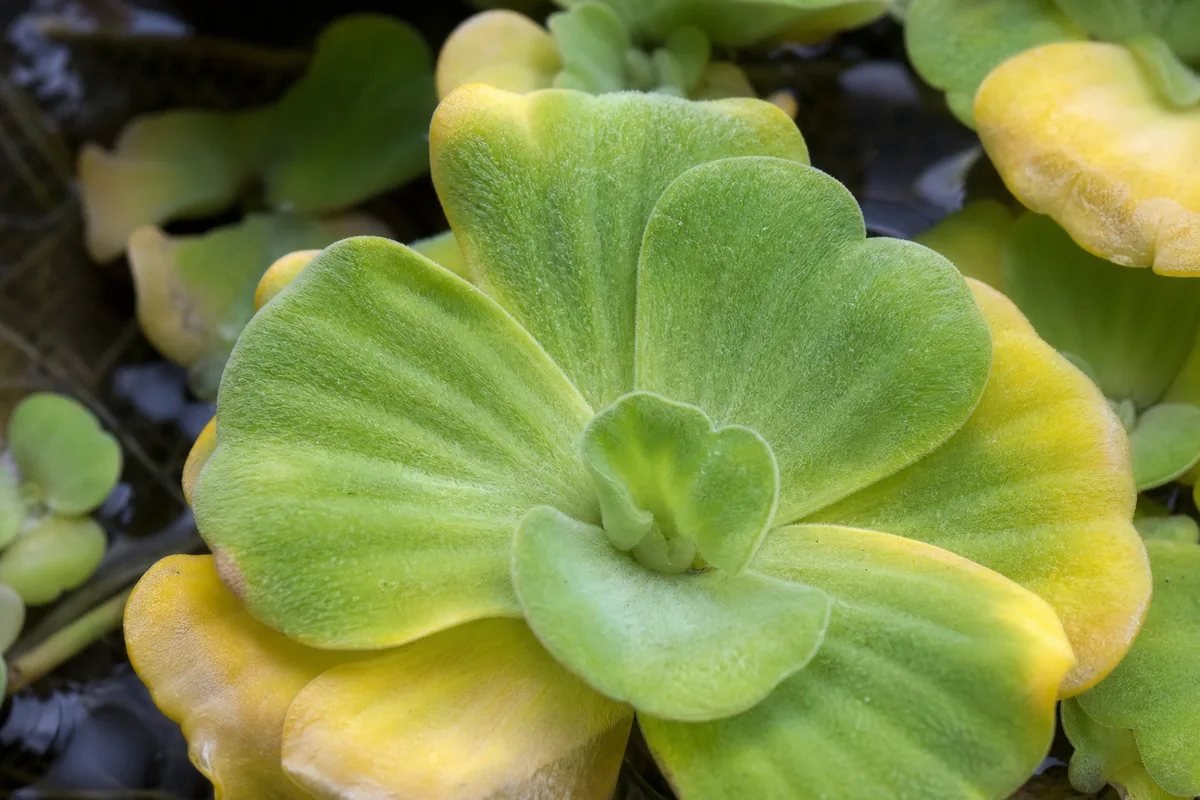
Yellow Leaves symptoms on Water Lettuce - compare with healthy tissue on the same plant.
| Pattern | What you see | Likely trigger |
|---|---|---|
| Cold melt | Whole rosettes turn translucent, soft, and dissolve within days; often after heater failure, cold tap water change, or outdoor night below 50°F | Water below 65°F (18°C) |
| Nutrient pale | Small, lime-yellow rosettes that stay firm; roots white but growth stalls in ultra-lean display tanks | Low dissolved nutrients in water column |
| Light stress | Pale flat rosettes, slow sizing, or bleached crispy margins under harsh direct sun | Too little usable surface light, or too much direct intensity |
| Interior mat shading | Outer rosettes green; crowded center plants yellow and stunted under a dense lid | Surface coverage above roughly half the water |
| Acclimation melt | Outer leaves yellow and dissolve after LFS purchase or pond harvest; daughters may stay greener | Shipping or environment change |
| Physical damage | Torn, waterlogged, or yellow patches where filter outflow splashes the leaf tops | Surface agitation and spray |
Healthy recovery markers: firm new center leaves cupping upward, daughter plants on stolons, and actively absorbing white roots - even when older outer leaves look bad.
Visual confirmation cues
Use these field checks when you cannot compare to a photo library:
- Cold translucent melt: Rosette looks like wet tissue paper - you can see through yellowing leaves; pressing the center yields no spring. Often the entire mat yellows within 48–72 hours after a cold event.
- Firm nutrient-pale rosettes: Leaves stay velvety and cupped but are lime-yellow, not glassy; roots remain white and feathery below the surface. Rosettes are smaller than neighbors in the same tub.
- Healthy green daughters: Small satellite rosettes on stolons stay green while an older parent yellows - a sign the colony can recover once environment stabilizes.
- Interior self-shading: Only rosettes under a solid mat lid yellow; edge plants touching open water stay green. Lift one corner of the mat and compare center vs. rim color.
- Normal outer-leaf senescence: One or two bottom outer leaves yellow slowly on an otherwise firm rosette with green daughters - not an emergency; trim and monitor.
Why water lettuce rosettes turn yellow or melt
Because water lettuce is a tropical floating macrophyte, the trigger is almost always water temperature, light at the surface, water chemistry, or mat management - not forgotten pot watering.
Cold water and temperature drops
This is the most common indoor failure mode. Growth slows sharply below about 60°F (15°C) and melt becomes likely when water stays cool. Hobby success clusters around 70–85°F (21–29°C). A large cold water change, an unheated bowl beside a winter window, or a failed aquarium heater can yellow the entire mat within days. USGS documents a reported tolerance band of roughly 59–95°F (15–35°C), but the low end is survival, not healthy green growth.
Nutrient-poor water column
In lightly stocked display tanks or freshly remineralized RO water, dissolved nutrients may be too lean for fast root uptake. Water lettuce pulls nitrogen, phosphorus, and trace minerals directly from the water - pale small rosettes with firm tissue often mean the column is clean, not that the plant has a soil deficiency.
Insufficient or excessive light
Too little light produces small, pale rosettes over weeks. Too much harsh direct sun - especially in shallow outdoor bowls - can bleach leaves to yellow-white or scorch margins. Indoor tanks need bright surface light for roughly 8–12 hours daily; deeply hooded setups often fail before nutrients do.
Dirty water and ammonia spikes
New tanks, turtle tubs, and overcrowded stock can spike ammonia or nitrite. Yellow melt paired with cloudy water, fish gasping, or foul odor under the root curtain points to water quality - not a fertilizer shortage. See overwatering when stagnant, nutrient-heavy water is the stressor instead.
Turtle-tank note: Red-eared sliders and other heavy bioload turtles can push ammonia above zero even when the water looks clear. Test ammonia and nitrite before dosing fertilizer - in healthy tanks, ammonia levels should always be zero; any detectable reading on either parameter in a stocked tub warrants a partial change and bioload review first, not plant supplements.
Overcrowded surface mat (self-shading)
Fast summer spread can cover the entire surface. Interior rosettes yellow while outer edge plants stay green because light and gas exchange fail under a solid lid. Target one-third to one-half surface coverage with open water visible for exchange - the same rule on the overview.
Filter outflow and physical damage
Hang-on-back returns and powerheads that churn the top few centimeters shred leaves, soak rosette tops, and break stolons. Constant spray keeps leaf surfaces wet and accelerates yellow rot. A floating corral away from outflow streams prevents much of this damage.
Acclimation melt after tank move or shipping
New purchases often shed outer leaves while adjusting to your light and temperature. This is common and lower urgency if water is warm and tests are clean - trim melt and wait seven to fourteen days for submerged daughters.
Copper medication exposure
Copper-based algaecides and some ich treatments damage floating aquatic tissue. If yellowing followed a labeled copper dose, assume chemical stress and prioritize water changes over fertilizer.
Keeper recovery scenario: heater failure cold melt
Setup: 20-gallon community aquarium, roughly 40% surface covered with Pistia, heater unplugged during a weekend trip.
Day 1 (return home): Floating thermometer reads 61°F (16°C). Outer rosettes translucent-yellow; two daughter plants on stolons still green but smaller than usual.
Actions taken: Removed melted tissue; repaired heater and set to 78°F; thinned mat to ~35% coverage; no fertilizer added.
Day 10: Water held 76–78°F. Three new green daughters visible; parent rosettes still had yellow outer leaves but firm centers.
Takeaway: Recovery was judged by new stolon daughters, not by old leaves re-greening - matching the pattern extension sources describe for tropical floaters held below their active growth band.
Symptom lookalike comparison
| If this matches best | Check first | First action |
|---|---|---|
| Translucent melt after cold night or heater outage | Thermometer at surface | Warm to 72–78°F; remove melted tissue |
| Small firm pale rosettes; nitrates near zero | Light at surface + test strips | Brighten calm surface zone; half-strength aquatic fertilizer if warm |
| Interior yellow, outer rim green | Surface coverage % | Thin mat to ~40% coverage |
| Yellow after large tap water change | Dechlorination + temperature match | Dechlorinate; match replacement water within 2–3°F |
| Rapid melt + cloudy water + odor | Ammonia/nitrite in new or turtle tank | Large partial change; reduce bioload; see wilting if collapse is acute |
| Bleached crispy margins in afternoon sun | Direct sun intensity | Add afternoon shade or diffuse light |
Confirm the cause - inspection checklist
Work in this order so you do not fertilize cold or foul water:
- Water temperature - Floating thermometer at the surface. Below 65°F explains melt before anything else.
- Recent temperature events - Heater failure, cold water change, outdoor night in the 40s°F, or unheated garage tub.
- Surface coverage - Estimate what percentage of the water is covered. Dense interior yellow under a lid confirms self-shading.
- Light at the water surface - Hours per day, fixture distance, and whether rosettes sit in calm bright zone or under a hood that attenuates PAR.
- Water tests - Ammonia and nitrite if the tank is new, recently medicated, or heavily stocked with turtles or goldfish.
- Chlorination history - Undechlorinated or very cold tap water added recently?
- Filter outflow path - Are rosettes pinned under spray or piled in a stagnant corner?
- Newest growth and daughters - Green daughter rosettes on stolons mean the colony can recover even when parent leaves yellow.
You have likely confirmed the cause when one variable clearly failed - cold thermometer reading, 90% surface lid, zero nitrates in a warm dim tank, or ammonia detectable after a new setup - and other checks look normal.
First fix for water lettuce
Check your thermometer and stabilize water at 70–85°F (21–29°C). Remove melted yellow tissue, thin overcrowded mats to roughly one-third to one-half surface coverage, and redistribute rosettes away from filter outflow.
Make one targeted correction and wait seven days before stacking fertilizer, medication, and large water changes. Cold tropical metabolism cannot use nutrients efficiently; excess dosing on stressed rosettes can accelerate melt.
If cold water is confirmed
Install or repair the aquarium heater, move outdoor bowls indoors before frost, and temperature-match every replacement water within a couple of degrees. Do not fertilize until warmth holds for several days.
If nutrients are confirmed (warm water, adequate light, lean tests)
Add a half-strength liquid aquarium fertilizer once weekly in lightly stocked tanks - after warmth and light are verified. See the fertilizer guide for copper-free options in shrimp tanks.
If self-shading is confirmed
Harvest the largest outer rosettes and crowded interior plants by hand or net. Open water should be visible across the tank. Daughter spread will refill coverage within weeks in warm water - that is normal; thin again on schedule.
If water quality is confirmed
Perform a 25–30% partial change with dechlorinated, temperature-matched water. Remove decaying tissue under the mat. Address bioload in turtle tubs before chasing plant supplements.
Recovery timeline by cause
| Cause | Typical stabilization | What improvement looks like |
|---|---|---|
| Cold melt after warmth restored | 7–14 days | New daughters green; melt stops spreading |
| Acclimation melt (warm clean water) | 7–14 days | Outer loss slows; center leaves firm |
| Nutrient pale (after dosing) | 10–21 days | Rosettes size up; new leaves deeper green |
| Mat thinning | 3–10 days | Interior rosettes lighten toward green |
| Ammonia spike (after water change) | 3–7 days if bioload corrected | Water clears; new growth stays firm |
| Light correction | 10–14 days | Center cupping returns; pale stretch stops |
Old yellowed outer leaves do not green up - remove them and judge by new rosette color and stolon daughters, not repaired cosmetic tissue.
What not to do
Do not dose heavy fertilizer into cold or foul water. Do not leave melting tissue decaying in the tank. Do not spray terrestrial pesticides on floating aquatics - fish toxicity is guaranteed. Do not assume yellow leaves mean “underwatering” in the houseplant sense; check underwatering only when rosettes lost surface contact or roots hung in air.
Do not stack fertilizer + copper medication + large cold water change on the same day - you will not know which variable helped or hurt. Never release removed plants into lakes, rivers, or storm drains; water lettuce is invasive across much of the United States and disposal belongs in household trash.
How to prevent yellow rosettes next time
Maintain 70–85°F water with a reliable heater, bright surface light on an 8–12 hour photoperiod, and partial surface coverage through weekly thinning. Dechlorinate and temperature-match replacement water. Keep rosettes in calm water away from filter returns. In turtle and community tanks, monitor ammonia trends and thin before the mat becomes a solid lid.
For ongoing parameters - level marks, partial-change rhythm, dechlorination - use the watering guide. For light placement and bleaching, see not enough light and light guide.
When to worry
Treat as urgent when yellow melt spreads across the mat within days alongside ammonia, copper exposure, foul stagnant odor, or water below 60°F (16°C) with no heater plan.
Moderate urgency: post-shipping melt in otherwise warm clean water - trim and observe.
Lower urgency: a few outer leaves yellowing on an otherwise firm rosette with green daughters - often normal senescence or minor light adjustment.
Act quickly if bases soften, rot smell spreads under the root curtain, or several rosettes fail at once while water quality readings worsen. When ammonia or nitrite stays above zero in a stocked turtle or community tank after a partial change, contact your local UF IFAS Extension office or an aquatics specialist with test results in hand.
FAQs
How can I confirm yellow leaves on water lettuce?
Match the rosette pattern across the mat: whole-mat translucent melt after a cold night points to temperature; small pale rosettes with firm tissue suggest light or nutrient gaps; interior yellow under a dense lid suggests self-shading. Measure water temperature at the surface, estimate surface coverage, and test ammonia if the tank is new before treating.
My water lettuce melted after the heater failed - will it come back?
Often yes if warmth returns before the entire colony dissolves. Move surviving rosettes to 70–85°F water, remove melted debris, and keep bright surface light steady. Daughter plants on stolons may look healthy even when the parent rosette yellows - judge recovery by new green daughters within one to two weeks, not by old leaves greening up.
Will damaged water lettuce tissue recover?
Yellowed or melted outer leaves rarely return to perfect green. Recovery means firm new center growth, white actively absorbing roots, and daughter rosettes forming on stolons without spreading mush. Trim cosmetic damage and watch new tissue for seven to fourteen days.
When is yellow leaves urgent on water lettuce?
Act quickly when ammonia or nitrite spikes accompany yellow melt in turtle or new tanks, when copper medication was dosed recently, when foul stagnant odor spreads under the mat, or when a sudden cold water change drops temperature below 65°F across the whole surface.
How do I prevent yellow rosettes on water lettuce next time?
Keep water at 70–85°F with a reliable heater, maintain one-third to one-half surface coverage through weekly thinning, provide bright aquarium or pond light for eight to twelve hours daily, dechlorinate and temperature-match replacement water, and dispose of excess plants in household trash - not outdoor waterways.
Related Water Lettuce guides
- Overview - species ID, temperature bands, invasive disposal
- Watering - dechlorination, partial changes, temperature matching
- Light - surface PAR, photoperiod, sun scorch
- Not enough light - pale flat rosettes from weak surface light
- Slow growth - stalled spread before obvious yellowing
- Wilting - acute limp collapse and cold shock
- Overwatering - stagnant nutrient-heavy water (not soil)
- Fertilizer - column dosing after environment is stable
Related tool
Use the Yellow Leaves Diagnosis Tool to narrow causes for yellow leaves on this plant before changing multiple variables at once.