Water Lettuce Propagation: Stolon Division Guide
Water Lettuce Propagation: Stolon Division Guide
Water Lettuce Propagation: Stolon Division Guide
Water lettuce propagation is one of the simplest multiplication projects in aquatic gardening because the plant does the heavy lifting. Pistia stratiotes - the accepted botanical name for water lettuce, sometimes called tropical duckweed - is a free-floating member of the Araceae family that spreads primarily through stolons, horizontal runners that extend across the water surface and sprout new daughter rosettes at their tips. You are not rooting cuttings in soil, waiting weeks for callus formation, or applying hormone powder. You are managing a self-replicating floating colony that accelerates dramatically once water temperatures climb into the tropical range.
The core workflow is straightforward: keep the water warm, let daughter plants develop their own leaves and roots on the stolon, separate them when mature, and thin regularly before the mat blocks light to everything below. What separates a tidy aquarium cover from an invasive pond takeover is almost always temperature and discipline - not propagation skill. This guide walks through stolon biology, warm-water triggers, separation timing, spread management in tanks and ponds, legal restrictions in several U.S. states, and the disposal rules that responsible growers follow without exception.
If symptoms persist, see the Crispy Leaves on Water Lettuce guide.
What Makes Water Lettuce Propagation So Easy
Water lettuce is built for vegetative spread. Each mature rosette floats independently on the surface, dangling pale feathery roots up to 50 cm (20 inches) into the water column where they absorb nitrates, phosphates, and other dissolved nutrients. When conditions favor growth, the mother plant sends out thin stolons - sometimes called runners - that creep horizontally across the surface. At the end of each stolon, a miniature rosette forms, stays connected briefly, develops its own root mass, and eventually becomes a fully independent plant capable of sending out stolons of its own. The Missouri Botanical Garden describes this chain reaction plainly: new plants form at stolon ends and can spread rapidly into dense mats.
Compared with stem cuttings, seed starting, or division of rooted aquatics, water lettuce propagation demands almost no toolkit. Sharp scissors or aquarium shears, a container of warm clean water, and a trash bag for excess plants cover most scenarios. The plant does not need substrate, CO₂ injection, or specialized fertilizers to multiply - though nutrient-rich water speeds the process. If you have ever watched duckweed colonize a still tank overnight, the rhythm feels familiar, except water lettuce produces visible rosettes you can track individually rather than a uniform green film.
Floating Rosettes and Natural Stolon Runners
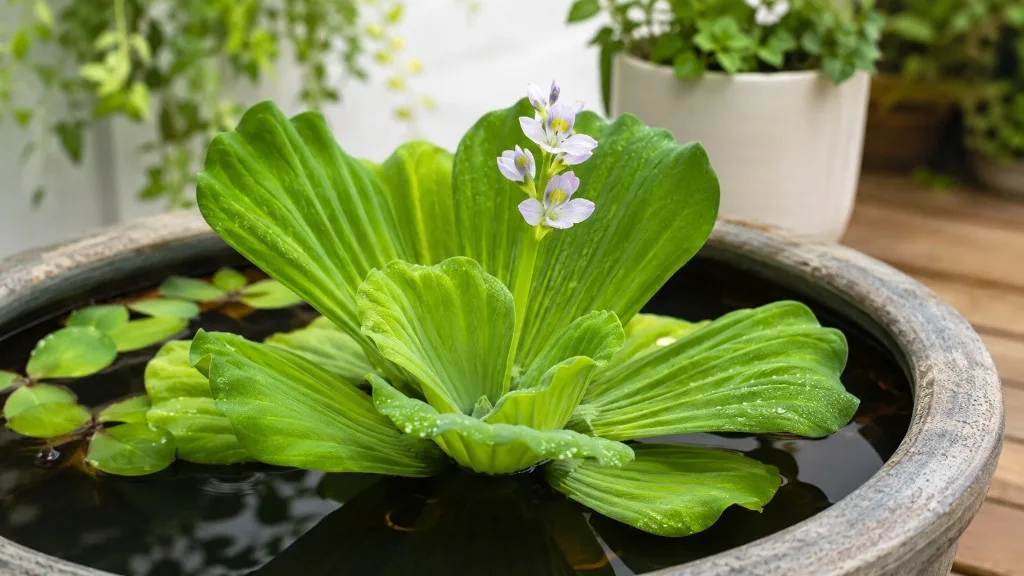
Floating rosettes are the fundamental unit of water lettuce propagation. Each plant resembles a small open head of lettuce - wedge-shaped, velvety green leaves arranged in overlapping layers, covered with fine water-repellent hairs that keep the rosette buoyant. Healthy rosettes reach 10–15 cm (4–6 inches) across under good conditions, though aquarium specimens often stay smaller. The rosette is self-contained: leaves photosynthesize above the surface, roots feed below, and the stolon connection to neighboring plants is the only tether to the colony.
Stolon runners are the propagation highway. A single stolon may extend several inches before terminating in a daughter rosette, and prolific mothers can push multiple stolons simultaneously in different directions. Daughter plants remain attached to the mother during early development, drawing shared resources through the connecting stem. Once the daughter has enough leaf area and its own root system, it functions independently even before you sever the stolon. In warm ponds, this cycle can repeat weekly - one rosette becomes five, then twenty, then enough to shade an entire water surface by midsummer.
No Soil, No Cuttings, No Rooting Hormone Required
Traditional houseplant propagation often involves soil mixes, callus periods, humidity domes, and weeks of waiting. Water lettuce skips all of that because it is a free-floating aquatic whose entire life cycle occurs at the air-water interface. Daughter plants do not need to root into anything - they float the moment they detach. There is no transplant shock from water to soil because there is no soil stage at all.
This simplicity makes water lettuce popular in aquariums, container water gardens, and turtle tanks where growers want fast surface cover for fry shelter, algae nutrient competition, or shade. It also makes the plant dangerously prolific in open waterways, which is why legal restrictions exist in multiple states. The same biology that makes propagation effortless for a hobbyist makes management essential for anyone with an outdoor pond in a frost-free climate.
How Stolons Produce Daughter Plants
Understanding stolon propagation helps you time separations, predict spread rates, and diagnose stalls when daughter plants stop appearing. Water lettuce reproduces vegetatively as its primary mode - stolons and daughter rosettes - with sexual reproduction through tiny axillary flowers and berry-like fruits playing a minor role in ornamental settings.
The process begins when a mature rosette reaches sufficient size and access to warmth, light, and nutrients. Hormonal signals in the crown trigger stolon initiation: a thin stem emerges from the base of the mother rosette and grows horizontally along the water surface. The stolon tip gradually swells, leaves unfurl, and a miniature rosette takes shape. Roots descend from the daughter crown while the stolon still connects parent and offspring. When the daughter’s roots are actively feeding and its leaves are photosynthesizing independently, the stolon has served its purpose - though the physical connection may persist until you cut it or wave action breaks it free.
Anatomy of a Water Lettuce Rosette and Stolon
A water lettuce rosette consists of layered leaves radiating from a central crown, with roots emerging from the underside of that crown into the water. The leaves are thick, hairy, and spongy near the base - an adaptation that traps air and maintains buoyancy. Deep parallel venation runs through each leaf, and margins are typically wavy. The visual resemblance to a head of lettuce is not accidental; the rosette structure maximizes surface area for light capture while minimizing the submerged mass that would add drag.
The stolon is a slender floating stem connecting two rosettes. It is pale, flexible, and usually shorter than the distance between mature plants because daughters form close to the mother before drifting apart on current or manual relocation. If you lift a connected pair from the water, you will see the stolon as a thin bridge between crowns. Cutting that bridge is the entire propagation act - no other manipulation required. University of Wisconsin Extension notes that under ideal conditions numerous stolons and new rosettes form quickly, allowing colonies to cover water surfaces in a single growing season.
Vegetative Reproduction vs Seed Production
Vegetative reproduction through stolons is the propagation method every aquarium and pond keeper will encounter. It is fast, reliable, and genetically identical to the parent - daughter plants are clones. This is what you manage when thinning mats, sharing plants with friends, or stocking a new tank.
Seed production is a secondary pathway. Water lettuce produces inconspicuous flowers hidden at the leaf base - a small stalk with female flowers below and male flowers above, enclosed in a hairy spathe. Successful pollination can yield small green berries with seeds. Seeds can survive brief cold periods in sediment and germinate when water warms above about 20°C (68°F), according to USGS species data. For home propagation, seeds are irrelevant in practice: you will never need to collect them, and most spread you observe will be stolon-driven daughter plants, not seedlings. Sexual reproduction matters mainly for invasive ecology and overwintering seed banks in wild populations - not for multiplying plants in your tank.
Warm Water and the Speed of Spread
Temperature is the throttle on water lettuce propagation. The plant is tropical and frost-tender; stolon production, daughter formation, and mat expansion all accelerate in warm water and decelerate sharply as temperatures fall. This is the single most important variable separating a tank that fills with cover in weeks from one where a lone rosette sits unchanged for a month.
Growers sometimes blame “bad plants” or “low nutrients” when propagation stalls, but cool water is the usual culprit. A healthy rosette in 78°F water can send multiple stolons within days; the same plant at 62°F may produce none. Understanding this relationship lets you predict spread, time pond stocking for spring warmup, and troubleshoot aquarium colonies that stop multiplying after a heater failure or seasonal room-temperature drop.
Optimal Temperature Range for Stolon Growth
Water lettuce propagates fastest between 72 and 86°F (22–30°C). University of Wisconsin Extension identifies 72–86°F as the thriving range for this tropical species. USGS data cites optimal growth at 22–30°C with tolerance from 15°C to 35°C - a wide band, but the upper-middle warm range is where stolon production visibly accelerates.
In this window, expect daughter rosettes to appear on stolons within days to a week on established plants, with multiple generations stacking through a single warm month. Pond growers in the southeastern and southwestern United States see explosive midsummer mats because day and night water temperatures stay consistently above 72°F. Aquarium growers with reliable heaters hit similar speeds year-round. Nutrients matter too - nitrogen and phosphate availability fuels leaf and stolon growth - but warmth unlocks the metabolic rate that makes those nutrients useful.
If you are propagating deliberately, aim for stable warmth rather than fluctuation. A tank that swings from 68°F at night to 82°F under lights stresses floating plants less than one that cycles between 58°F and 70°F across a week. Consistency keeps stolon production continuous rather than stop-start.
Growth Stalls in Cool or Cold Water
Below 60°F (15°C), water lettuce stops producing new growth. Existing rosettes may persist for a while - they store some reserves in thick leaf bases - but stolon initiation halts and daughters already forming grow slowly or stall. Aquatic plant management references note that temperatures above 50°F are needed for new growth, with the practical hobbyist threshold closer to 60°F for visible propagation activity.
Frost kills the plant. Water lettuce cannot survive freezing temperatures; outdoor colonies die back in temperate climates unless moved indoors. This frost sensitivity limits permanent wild establishment in northern regions but does not eliminate risk - seeds can overwinter in sediment, and unusually warm winters or heated discharge waterways can allow survival in places where the plant was once considered a seasonal visitor only.
In aquariums, the most common cool-water scenario is an unheated tank in a cool room during winter, or a pond tub brought into a garage that drops below 60°F at night. If your water lettuce stops producing daughters, check temperature before reaching for fertilizer. A heater adjusted to 75–78°F often restarts stolon production within a week.
When Daughter Plants Are Ready to Separate
You can separate daughter plants at almost any stage, but timing affects survival confidence and how aggressively the colony expands. Separating too early gives you tiny rosettes with minimal root mass that drift into filters or sink in turbulence. Waiting too long is rarely harmful - connected daughters simply become larger plants still attached to the mother - but it does not slow colony spread because the daughter is already photosynthesizing and rooting independently while connected.
The practical goal is a daughter plant that will float confidently, feed itself immediately after severing, and contribute to surface cover without needing coddling. That threshold is easy to spot once you know what to look for.
Leaf Count and Root Development Signs
A daughter plant is ready to separate when it has three to four fully opened leaves and a visible root system dangling beneath its crown. At this stage, the rosette is typically 2–4 cm (about 1–1.5 inches) across - small but functionally independent. The roots may be only a few centimeters long, pale and feathery, but they should be numerous enough to see without lifting the plant high from the water.
Leaf count matters because each leaf is a photosynthetic panel funding root growth and future stolon production. A daughter with only one or two tiny curled leaves is still drawing heavily from the mother through the stolon. Severing at that stage often succeeds in warm still water - the plant is hardy - but losses increase if the daughter gets pushed under by fish, caught in a filter intake, or moved to a cooler tank.
Root development is the stronger readiness signal. If you can see a cloud of fine roots below the daughter crown, the plant is feeding itself regardless of leaf count. Some growers wait until roots reach 3–5 cm (1–2 inches) before separating, which is conservative and safe. Others separate at the 3–4 leaf stage in warm aquariums with excellent results.
You can also leave daughters attached and let the colony self-expand. The stolon will eventually weaken or you will thin the mat anyway. Deliberate separation is useful when you want to stock a second tank, gift plants to another hobbyist, or redistribute cover evenly across a pond rather than letting one corner accumulate all the growth.
How to Divide Water Lettuce Step by Step
Dividing water lettuce is a three-step process: identify a ready daughter, cut the connecting stolon, and float the daughter in its new location. No drying period, no planting depth, no acclimation beyond matching water temperature between source and destination containers.
Work with clean hands and tools, especially if plants go into tanks with fish, turtles, or sensitive invertebrates. Rinse plants gently if they came from outdoor ponds to remove debris and hitchhikers. Quarantine new acquisitions separately before introducing them to established systems - the same advice applies to daughters you separate from a healthy parent in your own collection if pests have ever been an issue.
Cutting the Stolon Cleanly
Follow this sequence for reliable divisions:
- Identify a daughter plant with at least three to four open leaves and visible roots beneath the crown.
- Lift the connected pair gently from the water, supporting both rosettes so the stolon is accessible without tearing.
- Cut the stolon midway between mother and daughter using sharp, clean scissors or aquarium shears. A single clean snip is sufficient; crushing or tearing the stolon is fine functionally but can leave ragged tissue that decays briefly in the water.
- Float the daughter in its new location - another section of the pond, a separate aquarium, or a holding tub. Place it in still water away from filter outflows that can submerge small rosettes.
- Return the mother to its position. It will continue producing stolons from the crown.
- Dispose of excess plants you do not plan to keep (see Legal Status section below). Never release water lettuce into natural waterways, storm drains, or irrigation canals.
The cut daughter needs nothing further. Within hours in warm water, it will orient its roots downward and begin expanding. Within one to two weeks, that daughter may produce stolons of its own if conditions are favorable. This compounding effect is why a single purchased rosette can stock an entire pond by August.
If you want maximum spread with minimum effort, skip cutting entirely and simply thin the mat by removing whole connected chains - mother, stolons, and daughters together - then redistribute portions across the water surface. Each relocated rosette, whether mother or daughter, acts as a new propagation node.
Controlling Rapid Spread in Tanks and Ponds
Water lettuce propagation is easy; managing propagation is where growers earn their keep. In warm water, the plant’s natural strategy is exponential surface coverage - valuable for nutrient export and shade in controlled settings, catastrophic for open ponds connected to natural systems or for aquariums where submerged plants need light.
Unchecked mats block light penetration, which can starve submerged aquatics and reduce dissolved oxygen as debris accumulates beneath the canopy. In outdoor ponds, dense cover impedes boating, fishing, and wildlife movement. Mississippi State University Extension notes that vegetative reproduction produces obstructive mats rapidly, limiting both human and wildlife use of affected waterbodies.
The solution is not to stop propagation - that fights the plant’s biology - but to thin on a schedule and remove biomass deliberately.
Weekly Thinning and Surface Management
In active warm-season growth, plan weekly thinning for ponds and densely stocked aquariums. Remove enough rosettes to maintain 40–60% open water surface, or whatever ratio your submerged plants and fish require. A common approach is to harvest connected chains - mothers with trailing daughters - and keep the largest, healthiest specimens while composting or bagging the rest.
Removing large mother plants slows spread disproportionately because mature rosettes produce the most stolons. If you have abundance, cull old mothers and retain vigorous mid-size rosettes with strong root systems. In aquariums, rotate cover: keep water lettuce on one half the surface for two weeks, thin, and let submerged plants recover light on the other half.
For ponds with mild current, use a floating dam - plastic tubing with suction cups, a hula hoop, rocks, or fishing line barriers - to keep water lettuce in a designated zone away from skimmers and waterfalls. The plant tolerates gentle movement but does not thrive in strong flow, and currents push rosettes into equipment where they clog or submerge.
Track surface percentage visually. If you cannot see open water reflections by mid-summer in a warm pond, you are behind on thinning. Catch up before the mat shades itself - lower leaves yellow in overcrowded colonies, reducing the very nutrient uptake and aesthetic value you planted for.
Propagation in Aquariums Compared to Outdoor Ponds
The stolon mechanism is identical in tanks and ponds, but environmental pressures differ enough to change your propagation experience. Aquarium propagation offers year-round warmth, controlled nutrients, and protection from wind - but adds challenges with humidity, light intensity, and filter flow. Pond propagation provides natural sunlight, ample nutrient loading, and large water volume that buffers temperature - but introduces frost risk, wildlife consumption, and invasive escape potential.
In aquariums, water lettuce often fails from low humidity and intense light rather than from propagation difficulty. Dry air curls leaf tips and browns margins; direct tank lighting overheats surface leaves. Lower the water level slightly to create air space beneath a tank cover, or use a partial glass lid to trap humidity above the surface. Position the tank away from HVAC vents. Moderate lighting - not blast-zone PAR directly on floating leaves - keeps rosettes healthy enough to send stolons.
Filter outflows are the other aquarium hazard. Small daughter rosettes submerge and rot against the glass or get pulled into intakes. Baffle flow, use a pre-filter sponge on intakes, or keep daughters in a floating ring until they exceed 5 cm across.
In ponds, propagation speed often exceeds indoor rates because of sunlight and nutrient availability. A single spring introduction can carpet a small garden pond by July in USDA zones 8–11. Frost ends the season unless you net plants and move them to an indoor tub or aquarium for winter - where they continue propagating under lights and restart the outdoor pond next spring. Never transfer pond plants to open waterways at season’s end; bag and trash excess biomass.
Turtle tanks deserve a mention: water lettuce propagates readily in turtle enclosures and provides edible cover, but turtles may consume plants faster than stolons replace them. A separate grow-out tub - a simple container of warm water and moderate light - lets you propagate stock away from grazing pressure, then transfer daughters into the main tank as needed.
Legal Status and Responsible Disposal
Propagation ease and invasive potential are two sides of the same coin. Water lettuce is listed on the Federal Noxious Weed List and appears on prohibited or restricted plant lists in multiple states. USGS data documents regulations including Wisconsin (prohibited - no transport, possession, or introduction without permit as of 2017), Illinois (not on approved aquatic species list; live possession requires permit), and state noxious weed listings in Alabama, California, Connecticut, Florida, South Carolina, and Texas where sale and transport are prohibited.
Laws change and vary by municipality. Before purchasing, propagating, or sharing water lettuce, verify current regulations for your state and county. This article is general information, not legal advice - but the consistent theme across jurisdictions is that releasing water lettuce into natural water bodies is unacceptable even where personal possession in closed containers is allowed.
Responsible disposal of thinned plants means never composting outdoors where fragments can reach storm drains, never flushing, and never dumping at lake edges. Extension guidance recommends double-bagging removed plants and placing them in household trash so they desiccate and cannot re-enter waterways. Boiling or drying plants on pavement before bagging adds security for large pond cleanouts. Treat every thinned rosette - mother or daughter - as a potential invasive propagule.
If you live in a prohibited state, possession itself may be illegal regardless of how carefully you contain the plant. Respect those restrictions; choose legal floating alternatives like frogbit (Limnobium spongia) or dwarf water lettuce cultivars only where explicitly permitted.
Common Mistakes During Water Lettuce Propagation
Even an easy propagator fails when conditions or handling stack wrong. Most water lettuce propagation problems trace to temperature, flow, or legal carelessness - not mysterious plant weakness.
Cool water stall is the leading cause of “my water lettuce won’t propagate.” If daughters stop appearing, measure water temperature at the surface. Below 60°F, add heat or wait for spring. Fertilizer will not substitute for warmth.
Separating daughters too early produces tiny rosettes that submerge in filter flow or get pushed under by fish. Wait for three to four leaves and visible roots, or use a floating breeder ring to protect immature daughters until they size up.
Strong current and waterfall zones shred stolons and submerge rosettes. Relocate plants to still water or install barriers. Stolons are thin and break easily in turbulent areas.
Dry air in open-top aquariums causes leaf curl and brown tips, slowing photosynthesis and stolon production. Increase humidity above the water surface with a partial lid.
Letting mats overcrowd shades lower leaves on the same colony, turning them yellow and reducing overall vigor. Thin weekly in warm months rather than waiting for a crisis harvest.
Releasing plants or dumping thinnings in waterways is illegal in many jurisdictions and ecologically harmful everywhere. Bag and trash all excess - daughters included.
Ignoring state prohibitions risks fines and contributes to invasive spread. Verify legality before acquiring plants, especially from interstate online sellers.
Pest transfer from outdoor pond stock to indoor aquariums happens when growers skip rinsing and quarantine. Inspect roots and leaf axils for snails, insects, and algae crusts before introducing daughters to clean tanks.
Conclusion
Water lettuce propagation rewards growers who understand one biological fact: warm water turns stolons into daughter plants faster than almost any other floating aquatic. Pistia stratiotes multiplies through horizontal runners that sprout clone rosettes at their tips - no soil, no rooting phase, no hormone tricks. Separate daughters when they show three to four leaves and visible roots, cut the stolon cleanly, and float them in still warm water. In the 72–86°F window, a single rosette can cascade into a full-surface mat within weeks, which is excellent in a managed aquarium and dangerous in an open pond without weekly thinning.
If you remember only three rules, make them these: keep water above 60°F for active propagation, thin before the mat blocks all light, and bag excess plants for trash - never waterways. Get those right and water lettuce becomes one of the easiest aquatic plants to multiply, whether you are shading fry in a heated tank, stocking a container water garden, or managing turtle-tank cover from a separate grow-out tub. The plant does the propagation; your job is warmth, timing, and responsible control.
When to use this page vs other Water Lettuce guides
- Water Lettuce overview - Start here for whole-plant context before deep-diving this topic.
- Water Lettuce problems hub - Jump to symptom-specific fix guides when this care topic does not resolve the issue.