Crispy Leaves on Water Lettuce: Causes, Checks & Fixes
Quick answer
Crispy leaves on Water Lettuce are dry, brittle tissue on the velvety rosette-most often from rosettes stranded above the water, low tank level, filter spray drying edges, or unacclimated full sun. First step: float every rosette fully on clean water, top up the tank to cover dangling roots, and move mats away from filter outflow or harsh sun.
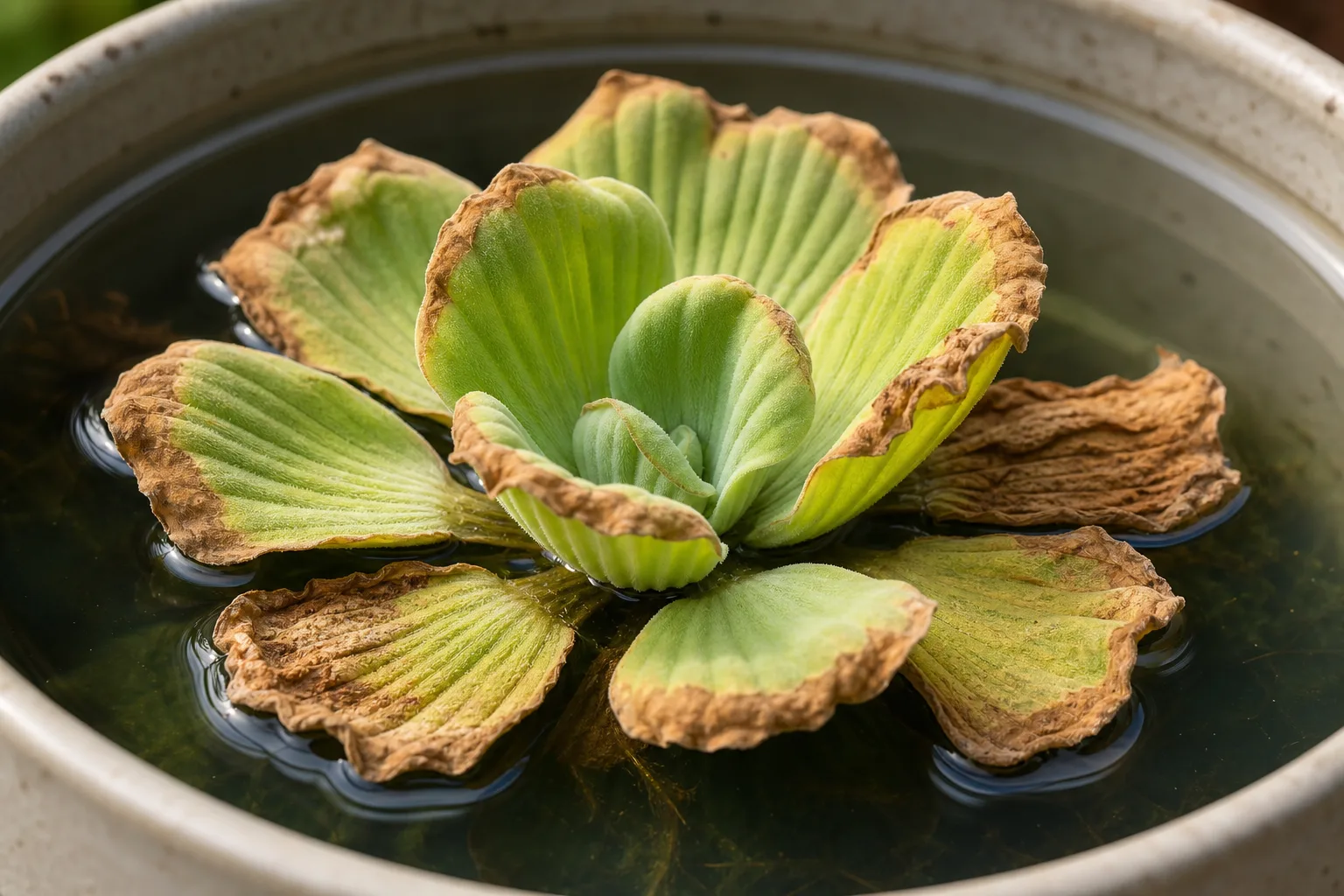
Crispy Leaves on Water Lettuce: Causes, Checks & Fixes
This guide covers crispy leaves on Water Lettuce. See also the general Crispy Leaves guide, watering, and light pages for this plant.
Crispy Leaves on Water Lettuce: Causes, Checks & Fixes
Quick answer
Crispy leaves on Water Lettuce (Pistia stratiotes) mean dry, dead rosette tissue-not rot. This free-floating aquatic herb absorbs moisture and nutrients through feathery roots hanging in the water column. When rosettes lose contact with water, tank level drops, filter spray dries one side of a mat, or unacclimated sun hits velvety leaves, margins turn tan and brittle before the whole plant collapses.
First step: float every rosette fully on clean dechlorinated water and top up the tank until roots stay submerged. Move mats away from filter outflow or dry tub edges. Do not treat crispy floating plants like potted houseplants-there is no soil to check, only water level and surface placement.
What crispy leaves look like on Water Lettuce
Healthy Water Lettuce forms a compact rosette of thick, light green leaves with wavy margins and short hairs that repel surface water. Crispy damage breaks that pattern in predictable ways:
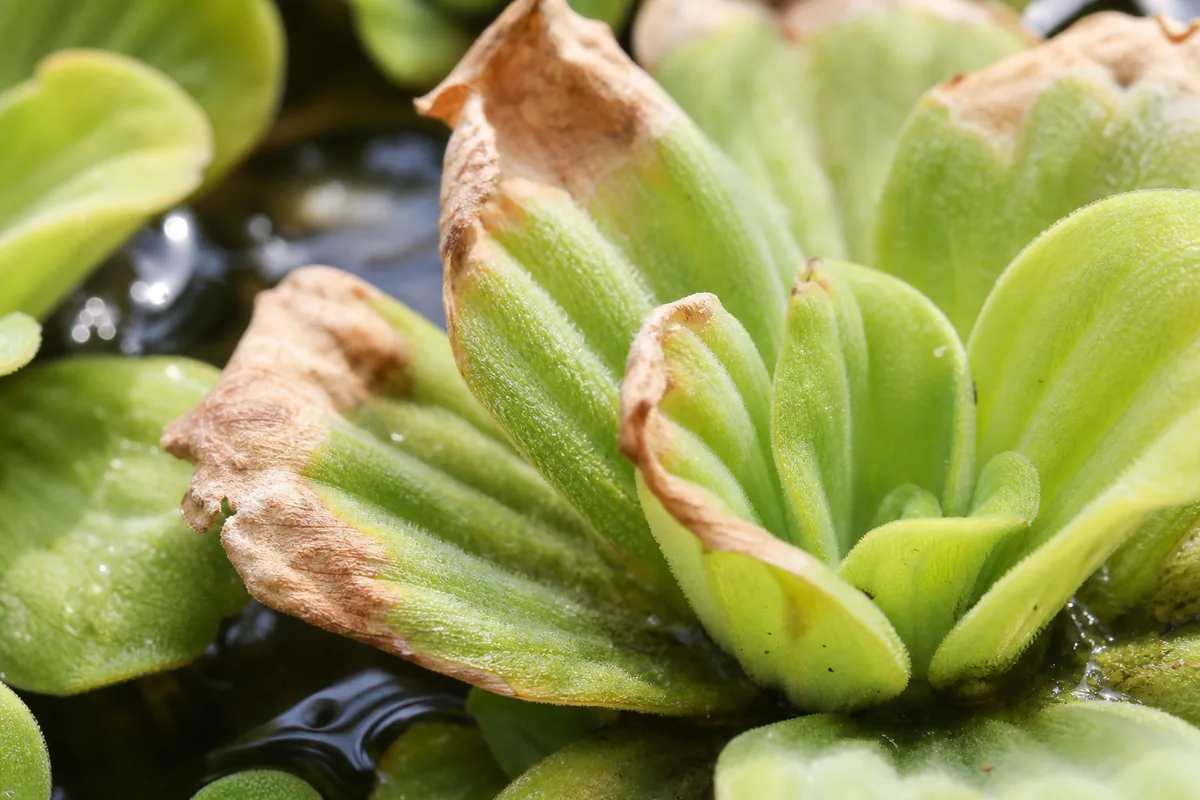
Crispy Leaves symptoms on Water Lettuce - compare with healthy tissue on the same plant.
- Dry, papery brown or tan edges on rosette margins that crumble when touched-not soft, slimy, or black
- Whole rosettes wilting flat when left on a dry aquarium rim, bucket edge, or filter shelf overnight
- Crisping on the windward or outflow side of a mat while the sheltered side still looks green
- Shrinking rosettes with brittle outer leaves as tank water evaporates and roots hang in air
- Sun-bleached tan patches on rosettes moved to full outdoor sun without acclimation
What crispy leaves do not look like: yellowing melt through wet crowns on stagnant water, mushy stems with foul odor, holes with insect frass, or fine webbing under leaves. Those patterns point to poor water quality, rot, or pests-not simple surface dehydration.
Water Lettuce’s velvety, water-repellent leaf surface can look fine while roots below have dried for days. Always inspect root length and water contact-not just the floating crown.
Why Water Lettuce gets crispy leaves
Low water level and stranded rosettes
The closest equivalent to underwatering on Water Lettuce is losing water contact. Extension guidance states the plant obtains all moisture from surrounding water and that roots should stay covered with several inches of water below the rosette. When evaporation drops tub or aquarium level, roots air-dry and leaf edges desiccate even if the crown still floats.
Rosettes pushed onto a dry rim during cleaning, shipping, or filter maintenance behave the same way: without continuous water film on roots and leaf bases, tissue dies from the margin inward.
Filter outflow and surface spray
In aquariums and turtle tanks, return flow can pile mats against the glass or spray one side of a rosette for hours. Constant micro-spray and air exposure dry velvety hairs faster than submerged tissue can replace moisture. Crispy damage often appears on the outflow-facing half only-a clue houseplant humidity advice misses entirely.
Unacclimated Water Lettuce light guide and heat
Water Lettuce prefers moderate to bright light but suffers when moved suddenly to harsh outdoor sun. UF/IFAS notes thick, hair-covered leaves form a floating rosette; intense unfiltered sun on a patio tub can bleach and crisp exposed tissue in a single hot afternoon, especially after indoor acclimation.
Open containers in summer also accelerate evaporation, compounding sun stress by lowering water faster than you top up.
Cold exposure and frost
In temperate climates, freezing temperatures kill Water Lettuce leaves in the northern portion of its range. Frost-damaged tissue dries to a brittle tan-not the soft melt of rot. Indoor tanks kept near cold windows or outdoor tubs left out too late into autumn show the same crisp, dead margins once water temperature crashes.
Dense overcrowded mats (less common)
Very thick mats can trap heat at the surface and block gas exchange at the air-water interface. UF/IFAS documents that dense mats reduce oxygen at the interface; outer rosettes at the pile edge may crisp from combined heat and poor water movement while inner plants stay green. Thinning the mat often resolves this without changing “watering.”
How to confirm the cause
Work through these checks in order before stacking fixes:
- Water level - Mark your normal full line. Is the surface more than an inch below that? Can you see dry root tips?
- Rosette placement - Are all plants floating freely, or are some on a dry edge, net, or filter bracket?
- Recent moves - Did you relocate the tank, clean the tub, or adjust filter output in the last 48 hours?
- Light and heat - Did mats move to full sun, a hot patio, or sit against a warm window?
- Pattern on the mat - Outflow-side crisping implicates spray; uniform edge burn on many rosettes implicates low water or evaporation.
- Water temperature - Readings below about 65°F (18°C) slow growth; near-freezing water produces brittle dead tissue.
- Smell and crown firmness - Foul odor or mushy crowns mean rot, not dry crispiness alone.
If water level is full, roots are submerged, and damage is localized to one sun-facing side, light stress is the lead diagnosis-not nutrient deficiency.
First fix for Water Lettuce
Float every rosette fully on clean water and top up the tank to your normal full mark so roots hang submerged several inches below the surface.
Move mats off dry rims and away from filter spray that dries one side of the rosette. Use dechlorinated water matched to existing tank temperature for top-ups-cold or untreated tap shocks roots and stalls recovery.
Do not add terrestrial fertilizer to crispy rosettes before water level and placement are corrected. Do not assume more light will help when sun scorch caused the damage.
Step-by-step recovery
Once water contact is restored, follow this sequence:
- Remove fully dried rosettes - Plants that crumble or no longer float cleanly will not recover; compost them so daughter plants get light and flow.
- Partial water change if quality is poor - Replace 25–30% with treated, temperature-matched water if the tank smelled stagnant or looked cloudy before crisping started.
- Thin overcrowded mats - Split dense piles so each rosette contacts open water and roots can spread.
- Shade acutely sun-hit mats - Move outdoor tubs to partial shade for one to two weeks before gradual re-exposure.
- Adjust filter output - Deflect return flow so mats drift in calmer surface water rather than pinning against glass under spray.
- Monitor daughter plants - Healthy Pistia spreads via horizontal stolons and daughter rosettes; new compact growth is your recovery signal.
Recovery timeline
Existing crispy tissue will not turn green again. Improvement shows up as new daughter rosettes with firm velvety leaves and roots that stay fully submerged.
Under corrected water level and placement, expect cleaner new growth within one to three weeks in warm water (70–86°F / 21–30°C). Cool water or winter light slows recovery to a month or more. One older rosette with trimmed crispy edges can stay if the crown is firm and new offsets appear.
Watch for buoyant rosettes, white feathery roots without dry tips, and damage that stays tan rather than spreading soft yellow melt as signs you are on track.
Lookalike symptoms
| What you see | Likely cause | What to do |
|---|---|---|
| Crispy margins after tub level dropped | Low water / stranded rosettes | Top up; refloat all plants |
| Crisping on one side of mat only | Filter spray or outflow | Redirect flow; move mat |
| Tan brittle patches after moving outdoors | Sun scorch | Partial shade; acclimate slowly |
| Dry brittle leaves after frost or cold snap | Cold injury | Move indoors; replace dead rosettes |
| Yellow wet melt through crown | Rot / poor water quality | Partial change; remove mushy plants |
| Holes and sticky residue | Pests | Isolate; treat pests-not a dry-air fix |
Mistakes to avoid
- Checking soil moisture - Water Lettuce has no potting mix; water level and root submersion are the only moisture checks that matter.
- Misting rosettes instead of fixing water level - Surface mist does not rehydrate dried roots hanging in air.
- Adding fertilizer to crispy plants - Salts and algae blooms stress a tank already failing on basic water contact.
- Increasing light when sun scorch caused crisping - Less harsh exposure heals; more sun worsens burn.
- Leaving plants on a dry rim “just while cleaning” - Overnight drying is enough to crisp margins on velvety leaves.
- Stacking copper, algaecide, and water changes the same day - One correction at a time shows what actually helped.
How to prevent crispy leaves next time
Match care to how Water Lettuce actually grows on water:
- Water level: Top up for evaporation every two to four days in hot weather; keep roots submerged several inches below each rosette.
- Placement: Float freely; never store rosettes on dry surfaces during maintenance.
- Light: Moderate to bright indirect or filtered outdoor light; acclimate before full summer sun on patio tubs.
- Temperature: Keep water above about 65°F for active growth; move indoors before frost.
- Flow: Position filter returns so mats do not pin under constant spray.
- Mat density: Thin fast-spreading colonies so outer rosettes do not bake at the pile edge.
When to worry
Crispy margins alone on firm, floating Water Lettuce are usually reversible once water contact returns. The plant spreads quickly from daughter rosettes when conditions stabilize.
Escalate when:
- Crowns turn mushy with foul-smelling water-humidity and shade fixes will not fix rot
- Entire mats sink and dissolve within days on stagnant water
- Yellow wet melt spreads through wet rosettes while level stays full
- Pests coat roots and leaves despite corrected placement
- No new daughter plants appear after three weeks of stable warm water and good light
If only outer leaves on a few rosettes are crispy and new offsets form cleanly, the colony is stable. Trim or remove dried rosettes for appearance.
Conclusion
Crispy leaves on Water Lettuce signal dry dead tissue-most often rosettes stranded above the water line, evaporating tank levels, filter spray, or unacclimated sun on velvety floating foliage. Refloat every plant, top up to cover roots, and move mats off dry edges before worrying about fertilizer or pests. Old burn will not reverse; watch daughter rosettes for proof your fix worked.
When to use this page vs other Water Lettuce guides
- Water Lettuce watering guide - Use for routine moisture checks before assuming crispy leaves is the main issue.
- Water Lettuce problems hub - Browse all 3 common issues on this species.