Slow Growth on Water Lettuce: Causes, Checks & Fixes
Quick answer
Slow growth on Water Lettuce usually means water below 65°F (18°C), weak surface light, or nutrient-poor water in a lightly stocked tank-not always a fertilizer shortage. First step: confirm water temperature is 72–86°F (22–30°C) and check whether rosettes receive bright light at the water surface.
Slow Growth on Water Lettuce: Causes, Checks & Fixes
This guide covers slow growth on Water Lettuce. See also the general Slow Growth guide, watering, and light pages for this plant.
Slow Growth on Water Lettuce: Causes, Checks & Fixes
Quick answer
Slow growth on Water Lettuce (Pistia stratiotes) usually means water below 65°F (18°C), weak surface light, or nutrient-poor water in a lightly stocked tank-not always a fertilizer shortage. First step: confirm water temperature is 72–86°F (22–30°C) and check whether rosettes receive bright light at the water surface.
This free-floating aquatic herb spreads by daughter plants on short stolons and absorbs nutrients through feathery dangling roots. In optimum warm, bright conditions it can double coverage every two to three weeks; indoors it often holds at smaller compact rosettes that still add visible growth weekly. A true stall-same flat rosette size for weeks, sparse offsets, shortened roots-traces to one or more bottlenecks you can test in order.
Slow growth differs from not enough light (primary light deficit with pale flat rosettes) and from leggy growth (stretching toward brighter surface photons). This guide covers multi-cause stalls: temperature, nutrients, mat self-shading, and normal indoor pace. Species context: water lettuce overview.
How fast should Water Lettuce grow?
Understanding normal pace prevents chasing a problem that does not exist.
Outdoor ponds and tubs in warm seasons: Under full sun to bright partial shade on still water, water lettuce commonly forms 4–6 inch rosettes and spreads aggressively. The Missouri Botanical Garden notes that plants spread quickly in optimum conditions, with best expansion in the cooler shoulders of spring and autumn. Many growers report doubling mat coverage every two to three weeks at peak summer warmth when nutrients are available.
Indoor aquariums: Rosettes often stay at 2–4 inches-smaller than pond specimens but still visibly active. Expect new center leaves cupping upward, occasional daughter plants on stolons, and roots lengthening into the water column every week or two when light and temperature are adequate. “Dwarf” aquarium clusters are usually the same species kept compact by indoor light and nutrient budgets, not a separate low-demand cultivar.
Problem slow growth means weeks pass without measurable change: rosettes stay flat and thin, daughter plants appear rarely or not at all, roots shorten or stop extending, and mat spread stalls despite warm water. That pattern warrants diagnosis. Normal winter pause in unheated rooms or outdoor tubs-firm green rosettes, minimal spread until spring warmth-needs no emergency fix.
What slow growth looks like on Water Lettuce
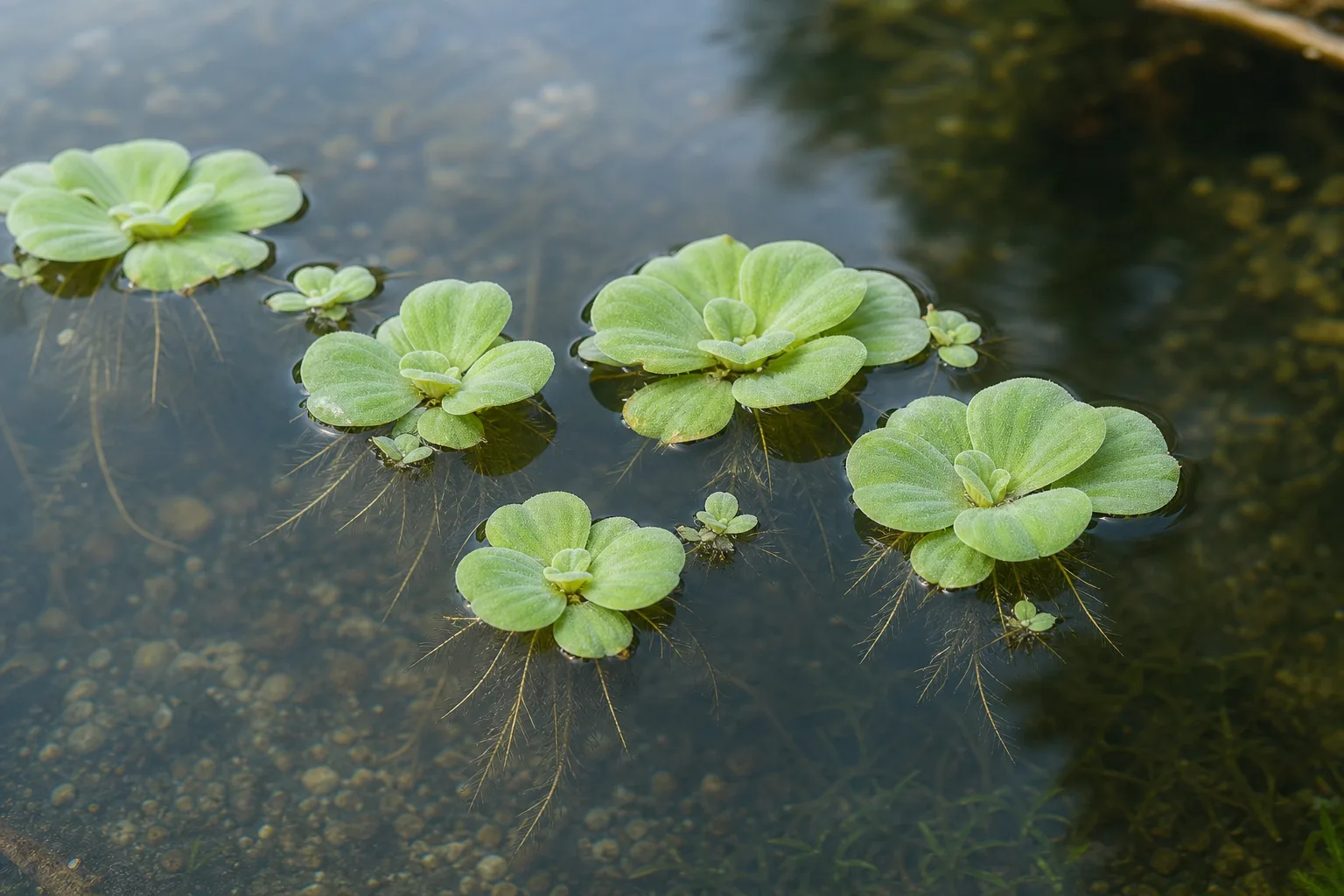
Healthy Pistia stratiotes forms velvety, overlapping leaves in a rosette that sits at the air-water interface. Slow growth shows as:
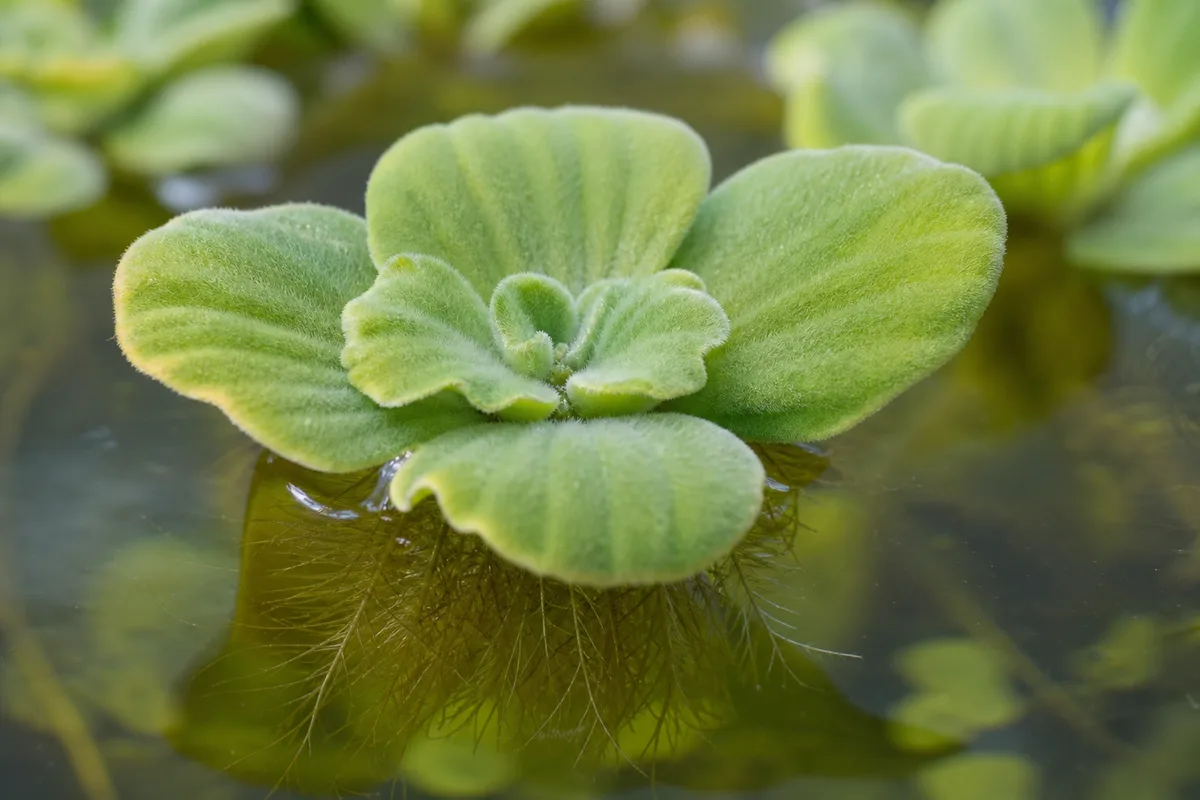
Slow Growth symptoms on Water Lettuce - compare with healthy tissue on the same plant.
- Rosettes that stay small and flat for three or more weeks without enlarging or cupping upward at the center
- Sparse daughter plants on stolons-one offset every several weeks instead of regular vegetative spread
- Shortened, thin feathery roots that fail to extend into the water column even when nutrients should be available
- Stalled mat spread-the same handful of rosettes covers the same surface area month after month
- Pale, paper-thin new center leaves that emerge slowly rather than filling the crown weekly
- Lower rosettes in a dense mat staying smaller than outer edge plants that receive more surface light
Normal indoor compact form: Small 2–4 inch rosettes with slow but steady daughter production in a 10-gallon tank under moderate LEDs. Growth is modest, not absent.
Not slow growth: Rapid yellow melt through wet crowns, mushy tissue with foul odor, or whole rosettes wilting papery-flat-those need rot or dehydration diagnosis. See yellow leaves when chlorosis spreads faster than size stall.
UF/IFAS describes thick, light green, hair-covered floating rosettes with long feathery roots beneath-when those roots shrink and rosettes fail to thicken, the plant is conserving energy rather than expanding.
Why Water Lettuce stalls
Cold water suppresses tropical metabolism
Water lettuce is a tropical floating macrophyte. Growth slows significantly below about 65°F (18°C) and stops near freezing-aquarist references note growth checks in the sixties and best performance near 72–78°F. Optimal activity sits in the 72–86°F (22–30°C) range. Tanks beside cold windows, unheated garage tubs in spring, or pond water that drops overnight can stall rosettes even under decent light. Cold stress often pairs with slow growth before obvious yellowing-warm the water before dosing fertilizer.
Weak surface light limits photosynthesis
Floating plants cannot move to brighter depth. Every rosette competes for photons at the water surface. Weak hood lights, deep shade from overhanging trees, or dense overhead cover leave rosettes small, flat, and slow. Survival light keeps tissue green; growth light produces weekly size increase and regular daughter plants. See the light guide for PAR targets, photoperiod, and the survival-versus-growth distinction.
Nutrient depletion in low-bioload tanks
Water lettuce roots absorb nitrogen, phosphorus, iron, and trace elements directly from the water column through rhizofiltration. In well-stocked community tanks, fish waste often supplies enough nitrate for vigorous spread. In shrimp-only, betta, or new setups with near-zero nitrates, the plant acts as a nitrate sponge and can exhaust available nutrients-growth stalls while older rosettes may still look green. Iron chlorosis on new pale center leaves with green older foliage is a nutrient lookalike that overlaps with slow growth. See the fertilizer guide for low-dose dosing and deficiency patterns.
Dense mat self-shading
Fast spread in good conditions creates its own bottleneck. Lower rosettes buried under a thick mat receive far less surface light and compete for dissolved nutrients in stagnant pockets between roots. Outer edge plants grow; inner plants stall. Thinning 30–50% of surface cover often unlocks growth on remaining rosettes without any other change.
Strong surface flow and agitation stress
Filter returns that pile mats against glass or splash rosette tops waste energy on repair rather than spread. Chronic surface turbulence submerges leaves, damages velvety hairs, and shortens roots. Calm surface flow with deflected returns supports faster vegetative reproduction.
Seasonal winter pause
In temperate climates, short days and cool room temperatures naturally slow metabolism from late fall through early spring. Firm green rosettes with minimal spread during this window are normal if water is not freezing and tissue is not melting. Judge recovery by spring daughter-plant frequency, not January expectations.
How to confirm the cause
Work through these checks in order-change one variable at a time so you know what helped:
- Water temperature - Measure at the surface with a tank thermometer. Below 65°F (18°C) explains stall before light or nutrients. Target 72–86°F (22–30°C) for active spread.
- Surface light intensity - Are rosettes under a generic fish-display hood or far from a window? Flat, horizontally spread rosettes with pale texture suggest insufficient photons. Compare against light guide PAR and photoperiod targets.
- Growth baseline - Mark one rosette diameter and count daughter plants weekly. Zero change for three or more weeks in warm months points to a real bottleneck.
- Nitrate test - In lightly stocked tanks, readings near 0–5 ppm with stalled spread suggest nutrient drawdown. Stocked tanks with nitrates above 20 ppm rarely stall from nitrogen shortage alone.
- New growth color - Pale yellow or white center leaves with green outers suggest iron deficiency; test nutrients before blaming light alone.
- Mat density - Lift the canopy edge. Are inner rosettes half the size of outer ones? Self-shading is likely.
- Flow pattern - Note whether one side of the mat faces filter return. Chronic spray or submersion stalls spread on that edge first.
- Recent changes - New tank, medication, or a move from outdoor sun to indoor dim light can pause growth for one to two weeks during acclimation.
If warming water to 75°F+ for two weeks produces new daughter plants, temperature was the limiter. If thinning a dense mat and raising surface light yields cupped center leaves within ten days, light and shading were the bottlenecks.
First fix for Water Lettuce
Confirm water temperature is in the 72–86°F (22–30°C) range and move floating rosettes to the brightest calm zone at the water surface.
Do not dose heavy fertilizer or thin aggressively until temperature and light are verified. Cold tropical metabolism cannot use nutrients efficiently; excess dosing on stressed rosettes can accelerate melt. Mount or adjust your fixture so the water surface-not just the substrate-receives medium-to-high full-spectrum light for 10–12 hours daily. Deflect filter returns so rosettes float in still water without topside spray.
If the tank is lightly stocked and nitrates read near zero after temperature and light are adequate, add a half-strength liquid aquarium fertilizer once weekly per the fertilizer guide-copper-free if shrimp share the water.
Step-by-step recovery
After the first fix, address remaining limits in this order:
- Wait ten to fourteen days - Give warm, well-lit rosettes time to produce visible daughter plants before stacking more changes.
- Thin overcrowded mats - Remove 30–50% of surface cover so remaining rosettes receive light and circulating nutrients. Compost harvested plants responsibly; never release into natural waterways.
- Test and dose nutrients if needed - When nitrates stay low and new growth emerges pale, start low-dose liquid fertilizer. Watch for iron chlorosis on center leaves versus nitrogen shortage on older foliage.
- Calm surface flow - Redirect filter outflow, add a baffle, or reposition mats away from return spray.
- Acclimate light increases gradually - Jumping from dim to intense PAR without adjustment can scorch leaves and pause spread. Raise intensity over one to two weeks.
- Partial water change if quality is poor - Replace 25–30% with dechlorinated, temperature-matched water when stagnant odor or debris accumulates under the mat.
Skip fertilizer if nitrates already exceed 40 ppm and you are fighting algae-address export and thinning first.
Recovery timeline
Temperature correction: First daughter plants often appear within seven to fourteen days once water holds above 70°F (21°C) consistently.
Light upgrade: Center leaves should cup upward and rosettes thicken within two to three weeks when surface PAR was the main limiter.
Nutrient supplementation in lean tanks: New pale center leaves green within seven to fourteen days of appropriate low-dose fertilizer when iron or nitrogen was deficient.
Mat thinning: Remaining edge rosettes often accelerate spread within one week once self-shading is removed.
Winter stall: Growth may not resume until water and room temperatures rise in spring-judge by daughter-plant frequency in March or April, not mid-January.
Old tissue: Outer leaves that stayed small and flat during the stall will not enlarge retroactively. Success means new center growth, regular daughter plants, and lengthening roots-not repaired old rosette diameter.
Signs of success: weekly measurable rosette enlargement, new stolon offsets, firmer velvety texture on center leaves, and roots extending deeper into the water column.
Lookalike symptoms to rule out
Not enough light - Primary light deficit with pale, flat, horizontally spread rosettes and long-term small size. Fix is almost entirely PAR and photoperiod; see not enough light.
Leggy growth - Rosettes stretch toward one bright corner of the tank rather than staying uniformly small. Differs from multi-cause stall where even the brightest side fails to produce daughters.
Yellow leaves from nutrient melt or rot - Rapid chlorosis through wet crowns on stagnant water, not gradual size stall. See yellow leaves.
Acclimation pause after purchase - One to two weeks of minimal spread after shipping or a tank move is normal. Persistent stall beyond three warm weeks warrants full diagnosis.
Normal indoor dwarf pace - Compact aquarium form is expected. Compare against your own weekly baseline, not outdoor pond expansion rates.
Mistakes to avoid
Do not dump full-strength fertilizer on cold or dim rosettes hoping to force spread-that can burn roots and melt crowns.
Do not assume every small indoor rosette is a problem. Modest 2–4 inch growth in a nano tank may be healthy compact form.
Do not ignore mat density while upgrading lights. A bright fixture over a four-layer mat still starves inner rosettes.
Do not stack heavy thinning, large water changes, and double fertilizer doses on the same day. Change one variable, observe, then adjust.
Do not chase growth in water below 65°F (18°C) with nutrients alone-warm first.
Do not release excess plants into ponds or natural waterways. Water lettuce is invasive in frost-free climates and listed on the Federal Noxious Weed List where uncontrolled spread is a serious risk.
How to prevent slow growth next time
Maintain 72–86°F (22–30°C) water in active growth seasons and move tanks away from cold drafts or uninsulated exterior walls in winter.
Provide bright full-spectrum surface light for 10–12 hours daily-see the light guide for fixture height and PAR targets.
Thin mats weekly during peak summer spread so outer and inner rosettes both receive photons and circulating nutrients.
In lightly stocked aquariums, test nitrates monthly and dose low-strength liquid fertilizer before growth stalls-see the fertilizer guide.
Keep calm surface flow with deflected returns and consistent water level so feathery roots stay submerged.
Perform partial water changes on a regular schedule to prevent stagnant pockets under dense floating cover.
When to worry
Slow growth alone is low urgency. Escalate when:
- Crowns turn mushy with foul odor on stagnant water-suspect rot, not nutrient stall
- Rapid yellow melt spreads across the mat within days
- Ammonia or nitrite spikes appear on test kits
- No daughter plants through an entire warm growing season after temperature, light, and nutrient fixes
- Sudden collapse after a cold night below 50°F (10°C)-warm immediately and remove melted tissue
Firm, green, slowly spreading rosettes in a cool winter tank are usually fine. Wilting, melting, or smelly mats need water-quality diagnosis immediately.
Related Water Lettuce care guides
- Light - Surface PAR, photoperiod, survival versus growth light, and fixing pale flat rosettes
- Fertilizer - Nitrate drawdown, iron chlorosis, low-dose dosing in shrimp tanks
- Yellow leaves - Nutrient deficiency and cold-stress yellowing versus size stall
- Not enough light - When light is the primary bottleneck
- Leggy growth - Stretching toward brighter surface photons
- Water lettuce overview - Species context, legality, and general care
Conclusion
Water lettuce should show visible spread when warm water, bright surface light, and adequate dissolved nutrients align. Start by confirming temperature in the 72–86°F range and assessing surface light before reaching for fertilizer or aggressive thinning. Most stalled mats respond within two to three weeks once the real bottleneck-often cold water, weak PAR, lean nitrates, or self-shading-is removed. Track daughter-plant frequency and center-leaf cupping rather than expecting outdoor pond pace indoors, and accept winter quiet as part of this tropical floater’s temperate rhythm.