Tradescantia Zebrina Care: Light, Water & Tips
Tradescantia zebrina
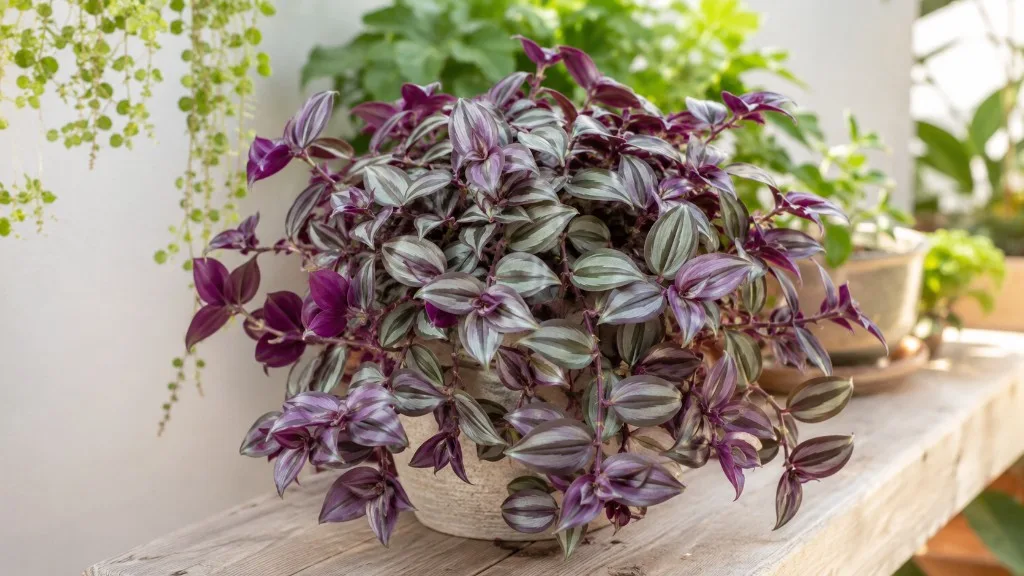
Tradescantia zebrina needs bright indirect light to keep its vivid purple-and-silver stripes. Water when the top inch dries and propagate easily from cuttings.
Tradescantia Zebrina Care: Light, Water & Tips
Start with wateringThe most common care mistake for Tradescantia ZebrinaWatering guide →Tradescantia Zebrina care essentials
Light
bright indirect light, medium indirect light
Water
Water when the top inch of soil is dry; avoid waterlogging.
Soil
Standard well-draining potting mix.
Humidity
Average to moderate humidity (40–60%)
Temperature
15°C to 27°C (60–80°F)
Fertilizer
Feed lightly during active growth. Use monthly during spring and summer..
About Tradescantia Zebrina
Tradescantia Zebrina has a upright growth habit.
| Detail | Information |
|---|---|
| Growth habit | Upright |
| Scientific name | Tradescantia zebrina |
Tradescantia Zebrina Care: Light, Water & Tips
What Is Tradescantia Zebrina?
Tradescantia zebrina - sold as inch plant, wandering dude, silver inch plant, and zebra plant - is a fast-growing trailing houseplant grown for leaves that look painted: metallic silver stripes over blue-green on the upper surface and solid purple underneath. The stems are fleshy, semi-succulent, and built to creep along the ground or cascade from a basket, rooting at nodes wherever they touch moist soil. In a typical indoor pot, foliage reaches 6 to 9 inches (15 to 23 cm) tall before stems trail 2 feet (60 cm) or more, and growth can accelerate noticeably in warm, bright months.
Zebrina is one of the most forgiving colorful trailers you can buy, which is why it shows up in beginner collections, office baskets, and plant-swap tables in equal measure. It tolerates a missed watering better than a calathea, roots from cuttings almost casually, and recovers from a hard prune faster than most houseplants recover from a repot. The trade-offs are equally real: color fades in low light, stems go bare at the base unless you refresh them, the sap irritates skin and pets, and the ASPCA lists related Tradescantia species as toxic to cats and dogs. If you want a purple-striped vine and you have curious animals, placement matters as much as watering.
If you are deciding whether zebrina fits your home, the honest summary is this: zebrina rewards Tradescantia Zebrina light guide, a well-draining mix, and occasional pinching - and it punishes dim corners, soggy soil, and months without renewal. It is easier than a fiddle-leaf fig and more demanding about light than a pothos if you care about keeping the purple vivid. The payoff is one of the highest color-to-effort ratios in trailing houseplants, plus propagation so straightforward that most beginners succeed on the first try.
Botanical Background and Naming History
Tradescantia zebrina belongs to the family Commelinaceae - the dayflower or spiderwort family - which matters for care more than most tags suggest. Commelinaceae trailers share a few baseline patterns: somewhat succulent stems, nodes that root easily, preference for bright filtered light, and a tendency for problems to start with too much water in too little light. The genus Tradescantia honors John Tradescant and his son, botanists and gardeners to King Charles I of England. The species epithet zebrina means zebra-striped, which describes the silver banding on the leaf face accurately.
The plant is native from Mexico through Central America to Colombia, according to the NC State Extension Gardener Plant Toolbox. In its native range it grows as a creeping herbaceous perennial in warm, humid conditions, often in partial shade at forest edges. Outdoors it is winter hardy in USDA Zones 9 through 11 and can spread aggressively as groundcover where frost never checks it - a useful warning if you garden in subtropical climates and plant zebrina in beds without containment. In cooler regions it is grown as a houseplant, hanging basket, or seasonal container plant brought indoors before frost.
Commerce still carries older names. Tradescantia pendula and Zebrina pendula are synonyms you may see on vintage labels or regional listings. The Missouri Botanical Garden Plant Finder notes that leaf nodes along the stem are spaced about one inch apart, which is one origin of the common name inch plant - though that name is also applied to Tradescantia fluminensis, a different green species with its own care quirks. When pet safety or precise identification matters, confirm Tradescantia zebrina on the tag rather than relying on “inch plant” alone.
Tiny lavender-purple flowers with three petals can appear sporadically on mature plants, especially outdoors, but indoor specimens are grown almost entirely for foliage. Flowers are not the point, and most growers ignore them. Focus on light and pinching instead.
Why the Purple-and-Silver Foliage Responds to Light
Zebrina’s show is light-dependent pigment, not a fixed paint job. The purple undersides and silver striping read strongest when the plant receives bright, indirect light for most of the day. In dimmer positions, new leaves push out greener and farther apart on the stem - a survival strategy called etiolation - and the metallic sheen that makes the plant worth keeping dulls toward ordinary green. That color shift is cosmetic before it is fatal, but it is also the clearest signal that your window placement needs adjustment.
Unlike heavily variegated cultivars such as Tradescantia Nanouk, zebrina retains meaningful color in moderate light longer than pink-and-white sports do. Still, “moderate” is not “dark.” A hallway shelf that looks bright to your eyes may deliver too little photosynthetically useful light for dense, vivid foliage. Judge by new growth: compact internodes, firm stems, and stripes that match nursery photos mean the plant is probably happy. Long, thin stems with small pale leaves mean it wants more light, even if older leaves still look acceptable.
Zebrina also ages visually in a way beginners do not expect. Stems that looked perfect at purchase can become woody and bare at the crown after a year or two of fast growth, especially if you never pinch or replant cuttings. That is not disease - it is the growth habit of a plant built to colonize ground quickly. The practical response is to treat zebrina as a refreshable trailer: grow it brightly, prune hard, and root tips back into the same pot or a new basket. Understanding that cycle prevents the common mistake of throwing away a healthy plant because the base went bare while the tips still look fine.
Best Growing Conditions for Tradescantia Zebrina
Zebrina does best when your space approximates the warm, bright, humid rhythm of its native range without copying outdoor tropics literally. The four variables that decide almost every outcome are light, water, soil, and temperature. Align those and feeding, Tradescantia Zebrina repotting guide, pinching, and propagation become routine. Misalign one - especially water or light - and the plant declines faster than its tough stems suggest.
Light Requirements
Tradescantia zebrina needs bright, indirect light to maintain purple-and-silver coloration and compact growth. A practical indoor target is roughly 2,000 to 5,000 lux - strong ambient daylight without sustained harsh rays on the leaves - which usually means 2 to 6 feet from an east-facing window or a filtered west- or south-facing exposure. An east window is often ideal: gentle direct morning sun, then bright indirect light the rest of the day. North windows can work if the room is genuinely bright; zebrina will survive lower light for a while, but striping fades and stems stretch.
Zebrina tolerates some direct sun when acclimated, especially morning sun or late-afternoon rays in cooler seasons. Unfiltered midday sun on leaves formed in shade causes bleaching, brown scorch patches, or curling within days. If you move a plant from a dim shop shelf to a bright sill, acclimate over one to two weeks - shift it closer gradually and watch the newest leaves, because old sun damage does not heal.
The fastest diagnostic for incorrect light is new growth, not old leaves. Compact nodes, firm stems, and vivid purple undersides mean the plant is probably positioned well. Leggy, floppy stems with small greenish leaves mean more light. Bleached or crispy sun-facing patches mean less direct exposure or slower acclimation. Rotate hanging baskets weekly so both sides color evenly; zebrina leans hard toward the window otherwise.
If natural light is weak - common in winter at northern latitudes - a full-spectrum grow light on a 10–12 hour timer, positioned 12–18 inches above the canopy, prevents the stretched, pale look that appears on windowsill zebrina between November and February. Zebrina responds quickly to supplemental light; you will see tighter internodes within two to three weeks.
Temperature and Humidity
Zebrina prefers stable indoor temperatures between 65 and 75°F (18 and 24°C) during active growth. It tolerates brief heat above that range when soil moisture keeps pace, but it stalls below about 55°F (13°C) and loses vigor in cold drafts. Watch problem spots: directly under AC vents, uninsulated winter window panes, and radiators that cycle hot and cold. Each can stress zebrina within hours even when the thermostat reads “fine.”
Humidity is helpful but secondary. Zebrina performs well at ordinary indoor humidity around 40 to 60 percent. Very dry winter air - consistently below 30 percent - can encourage spider mites and crisp leaf edges on plants near heating vents. A pebble tray, grouping plants, or a small humidifier helps in dry homes. Misting leaves is not a reliable humidity fix; the effect is brief, and wet foliage can invite fungal spotting on crowded stems.
Outdoors, zebrina enjoys warm seasons on a shaded patio in zones where nights stay above 50°F (10°C). Bring containers indoors before frost; zebrina has no frost hardiness in temperate climates. Indoors year-round is the norm north of zone 9.
Soil and Drainage
Use a well-draining houseplant mix that holds moisture without staying waterlogged for days. Zebrina’s fleshy roots and stems store some water, but they still rot in anaerobic, soggy mix. A standard peat- or coco-based potting soil amended with 20 to 30 percent perlite or pumice is a solid starting point. The Missouri Botanical Garden recommends a peaty, soil-based mix with good drainage and consistently moist but not saturated conditions during the growing season.
The pot must have a drainage hole. Decorative cachepots are fine only if you empty runoff after every watering. Terracotta dries faster than plastic - useful if you tend to overwater; plastic retains moisture longer - useful if you underwater in bright light. Match pot material to your habits, not just aesthetics.
Zebrina tolerates a wide soil pH range from slightly acid to slightly alkaline. NC State Extension lists pH 6.0 to 8.0 as acceptable. Hobbyists rarely need to adjust pH; compacted, broken-down old mix causes more problems than pH drift. Refresh soil when repotting rather than chasing numbers.
How to Water Tradescantia Zebrina
The general rule is: water when the top inch of soil feels dry, then soak thoroughly until a little runs from the drainage hole. More precisely, treat every 5 to 10 days in warm, bright months and every 10 to 14 days in cooler, dimmer months as calendar reminders to check the pot - not as automatic watering days. Pot size, soil texture, light intensity, and whether the plant hangs in drying air all change the interval. A fixed schedule without checking moisture is how healthy zebrina develops root rot.
Use your finger, a wooden skewer, or pot weight. If the top 1 inch (2.5 cm) is dry and the pot feels moderately light, water. If the deeper mix is still damp or the pot feels heavy, wait. Zebrina wilts when too dry and turns yellow with soft stems when too wet - but wilting can mean both extremes, so always verify soil moisture before you pour.
Tradescantia Zebrina watering guide During Active Growth
During spring and summer, when light is strong and zebrina pushes new nodes weekly, the pot dries faster and the plant uses water predictably. Water thoroughly so moisture reaches the full root zone, then let the top layer dry before the next drink. Small daily sips keep the surface wet while deeper roots stay too dry or too soggy depending on your mix - neither pattern produces a healthy trailer.
Hanging baskets dry faster than table pots because air circulates around the entire container. Check them one day earlier than you would a floor pot in the same room. Fast growth in bright light is a feature, not a bug - it means your watering rhythm should track current conditions, not last month’s habit.
Seasonal Adjustments
In fall and winter, growth slows even indoors. The same watering frequency that worked in August will overwater zebrina in December if light drops and heating dries the air unevenly. Stretch intervals, rely on moisture checks, and pause fertilizer until new growth clearly resumes. Resume the summer rhythm only when you see active tip growth and faster drying again.
Cool rooms below 65°F (18°C) slow metabolism further. Water less, expect slower trailing, and avoid repotting until warmth returns unless the plant is root-bound and actively suffering. Zebrina is forgiving, but cold wet soil is one combination it does not tolerate well.
Common Watering Mistakes
The single most common mistake is watering on a calendar instead of on plant state. The second is letting the pot sit in a full saucer, which reabsorbs runoff and suffocates roots. The third is responding to wilt by watering reflexively when the soil is already wet - a classic overwatering loop that turns firm green stems soft and yellow within a week.
Underwatering shows as limp stems, curled leaves, and a very light pot. Recovery is usually quick if you soak once and drain well. Overwatering shows as yellow leaves, mushy stems at the base, and sour-smelling mix - slower to fix and sometimes requiring cuttings from healthy tips after root inspection. When in doubt, check before you pour.
How to Feed Tradescantia Zebrina
Zebrina is a moderate feeder, not a heavy one. Fast growth in bright light benefits from modest nutrition during the active season; dormant or stressed plants need none. A balanced water-soluble houseplant fertilizer - for example 10-10-10 or 20-20-20 - at one-quarter to one-half the label strength every three to four weeks from spring through early fall is enough for most containers. Apply to already-moist soil so the solution distributes without burning roots.
Hold fertilizer entirely during winter slowdown, after a major repot until new growth appears, and while the plant recovers from root rot or pest damage. Overfeeding produces salt buildup and brown leaf tips that look like drought stress but persist even when watering is correct. If margins crisp despite good moisture, flush the pot with plain water at two to three times the pot volume and pause feeding for six to eight weeks.
Organic slow-release granules mixed into the top layer at repotting can replace monthly liquids for growers who prefer low-maintenance feeding. Use half the rate suggested for heavy feeders; zebrina’s succulent stems do not need tomato-level nutrition.
Pinching is part of growth management too. Snip stem tips every few weeks during active growth to force side branches and keep the crown full. Each pinch redirects energy into leaves along the stem instead of a single long runner. Combine pinching with rooting the cuttings in the same pot for the bushiest display.
Repotting and Root Health
Repot zebrina roughly every one to two years, or whenever roots circle drainage holes, the plant dries out within a day of watering, or water runs straight through without soaking in. The best timing is early spring as active growth resumes, giving the plant a full warm season to fill the new root zone. Zebrina grows fast enough that a vigorously fed basket may need repotting annually.
Choose a pot only one size larger - typically 1 to 2 inches (2.5 to 5 cm) wider than the current root ball. Oversized pots hold excess wet mix around roots that cannot use it, which is the most common trigger for rot after repotting. Use fresh, well-draining mix, plant at the same depth, and water lightly for the first week while cut roots heal. Keep the plant in bright indirect light and skip fertilizer until new tip growth appears.
Zebrina tolerates repotting well compared with fussy plants, but handle stems gently because bruised leaves show marks for weeks. Wear gloves if your skin reacts to sap.
Signs It Is Time to Repot
Physical signs include roots emerging from drainage holes, a top-heavy basket that wilts despite moisture, or mix that has broken down into fine, water-retentive mud. Performance signs include stalled growth for weeks during warm weather despite adequate light, or chronic edge burn that persists after you corrected watering - sometimes indicating mineral-loaded old mix rather than current care errors.
Do not repot a plant actively collapsing from overwatering until you inspect roots and trim rot. Moving a failing root ball into fresh mix without fixing the underlying moisture problem rarely saves zebrina. In that scenario, take healthy tip cuttings and restart while you dry out or discard the parent.
Propagation Methods for Tradescantia Zebrina
The standard home propagation method for zebrina is stem cuttings - water or soil - and it is among the easiest propagation projects in houseplant care. Division is possible on large, multi-stemmed baskets but cuttings are simpler and produce more plants per parent in less space.
Start with a healthy, well-watered parent and clean, sharp scissors or pruners. Cut a 4- to 6-inch (10 to 15 cm) segment just below a leaf node. Remove the lower leaves so one or two nodes sit bare for rooting, leaving a few leaves at the tip. If sap gets on your skin, rinse promptly; Tradescantia sap irritates some people.
Water propagation: Place the cutting in a small clear jar of room-temperature water so at least one node is submerged but no leaves touch the liquid. Set the jar in bright, indirect light, refresh water when it clouds, and top off as it evaporates. Roots typically appear within 7 to 14 days. Pot into moist mix when roots are 1 to 3 inches (2.5 to 7.5 cm) long.
Soil propagation: Stick the cutting directly into a moist, well-draining mix, burying the bare nodes. Cover with a clear bag or dome to raise humidity, venting briefly every few days to prevent mold. Keep the medium lightly moist, not wet, in bright indirect light. Gentle tug resistance after two to three weeks means roots have formed.
The best display trick for baskets is planting several cuttings together and pinching tips as they root. You get a full pot faster than a single long vine ever will. When the base of an older plant goes bare, layer fresh cuttings onto the soil surface and pin lightly until they root - zebrina nodes contact soil willingly.
Do not propagate stressed, diseased, or heavily pest-infested plants; cuttings inherit the parent’s problems. Address the parent first, then propagate from recovered growth.
Common Tradescantia Zebrina Problems
Most zebrina problems are environmental, not mysterious diseases. The plant communicates through leaf color, stem length, and wilt timing long before the entire basket collapses. The useful habit is to check light, moisture, and pests in that order before reaching for extra fertilizer or moving the plant repeatedly.
Faded Stripes, Yellow Leaves, and Pests
Faded or greenish striping with firm leaves usually means insufficient light - not nutrient deficiency. Move the plant closer to a bright window, add a grow light, or prune and wait for new vividly colored leaves. Bleached patches on sun-facing leaves mean too much direct sun or too-fast acclimation; filter the window or pull the basket back a foot.
Yellow leaves can mean overwatering, underwatering, natural aging of older leaves, sudden temperature drop, or pests. If yellow leaves are soft and the mix is wet, suspect overwatering and inspect roots for brown mushy tissue. If yellow leaves are crisp and the pot is light, drought stress is more likely. A single yellow leaf on an otherwise vigorous trailer is often normal senescence - remove it and watch new growth.
Brown leaf tips and margins usually point to salt buildup, drought stress, or very dry air. Flush the pot if salts are suspected, and review whether the watering rhythm matches how fast the plant dries in its current light. Tips that are already brown will not turn green again; judge success by undamaged new leaves.
Leggy growth is almost always insufficient light, especially on overwintered plants. Move the basket brighter, add supplemental light, then pinch back long stems to reset shape. Leggy zebrina is healthy but ugly - fix light before you assume disease.
Watch for spider mites in dry indoor air - fine webbing and stippled leaves are the tell. Mealybugs hide in leaf axils as white cottony clusters. Scale appears as immobile bumps along stems. Fungus gnats indicate overly wet surface mix; let the top layer dry slightly between waterings. Catch pests early with weekly inspection. A strong shower, manual removal, and insecticidal soap applied per label directions handle most infestations if you act before the population spreads.
Bare crowns with healthy tips are an aging habit, not a pest. Refresh with cuttings rather than fertilizing harder.
Is Tradescantia Zebrina Safe for Pets?
Tradescantia zebrina is not safe for pets that chew plants or lie against foliage. The ASPCA lists inch plant (Tradescantia fluminensis) as toxic to dogs, cats, and horses, with dermatitis noted as a clinical sign. Tradescantia species, including zebrina, produce irritant sap that can affect skin and mucous membranes. NC State Extension notes that ingestion can cause mouth and stomach irritation, while handling sap can trigger skin irritation and redness - symptoms that can include drooling, pawing at the mouth, vomiting, and decreased appetite if a cat or dog chews leaves or stems.
Zebrina is usually described as mildly toxic rather than life-threatening in small quantities, but mild still means real discomfort for your pet and a stressful evening for you. Contact dermatitis can develop on belly, chin, groin, or paws that repeatedly touch trailing stems on a low shelf or windowsill. There is no safe threshold for animals that treat houseplants as salad. Hang baskets high, use wall-mounted shelves out of jump range, or keep zebrina in rooms pets do not access.
If you want a similar trailing look without toxicity risk, choose a confirmed pet-safe alternative such as a spider plant (Chlorophytum comosum) or Boston fern (Nephrolepis exaltata) - verifying any substitute on the ASPCA list before you buy.
For humans, zebrina sap can cause mild skin irritation in sensitive people, especially after pruning or water propagation. Wear gloves if you react to plant latex or sap, wash hands and tools after cutting, and avoid touching your face while propagating. This is routine caution, not alarm - but it is why you should not let toddlers treat zebrina as a chew toy either.
If you suspect your pet ingested zebrina or developed skin irritation after contact, contact your veterinarian or the ASPCA Animal Poison Control Center at (888) 426-4435 (a consultation fee may apply) with the plant name, approximate amount, and symptoms. Do not wait for severe signs to appear before you ask for guidance. This is general information, not veterinary advice.
Conclusion
Tradescantia zebrina is a fast-growing Mexican and Central American trailer grown for purple-and-silver striped foliage on fleshy, node-rich stems. Give it bright indirect light, well-draining soil that dries slightly between waterings, warm stable temperatures around 65 to 75°F, and occasional pinching with cuttings rooted back into the pot, and it will stay vivid from spring through fall - or year-round indoors. Take stem cuttings before stems go woody and bare, repot when roots outpace the basket, and treat color fade as a light problem first.
When something looks wrong, read the plant in context: leggy green stems mean more light; bleached sun-facing leaves mean less direct sun or slower acclimation; dramatic wilt on a dry pot means water; wilt on a wet pot means roots. Yellow leaves usually trace to moisture imbalance, not a missing magic nutrient. Keep pets and sap-sensitive skin in mind when you choose a display spot. Zebrina earns its place when you want maximum color from a small basket and you are willing to prune, propagate, and adjust light seasonally. Fix light first when purple fades, fix drainage first when stems go soft, and use cuttings when the base goes bare - those three habits cover most of what zebrina needs indoors.
When to use this page vs other Tradescantia Zebrina guides
- Tradescantia Zebrina overview - Canonical hub for this species - care topics and problems branch from here.
- Tradescantia Zebrina problems - Symptom-first path when you already know something is wrong.
Related Tradescantia Zebrina guides
- Tradescantia Zebrina watering
- Tradescantia Zebrina light
- Tradescantia Zebrina soil
- Tradescantia Zebrina propagation
- Tradescantia Zebrina fertilizer
- Tradescantia Zebrina repotting
- Tradescantia Zebrina pruning
- Brown Tips on Tradescantia Zebrina
- Leggy Growth on Tradescantia Zebrina
- Tradescantia Zebrina problems
How to care for Tradescantia Zebrina?
How much light does Tradescantia Zebrina need?
bright indirect light, medium indirect light
- bright indirect light, medium indirect light - bright indirect light, medium indirect light.
When should you water Tradescantia Zebrina?
Water when the top inch of soil is dry; avoid waterlogging.
- Check top 2 inches - Water when the top inch of soil is dry; avoid waterlogging.
- Drain excess water - Water when the top inch of soil is dry; avoid waterlogging.
What soil works best for Tradescantia Zebrina?
Standard well-draining potting mix.
- Well-draining mix - Standard well-draining potting mix.
Grower notes for Tradescantia Zebrina
What makes Zebrina different
Tradescantia Zebrina is faster, thinner-stemmed, and more obviously trailing than Nanouk. Its striped silver-purple leaves color best in strong indirect light with some gentle sun, but the stems age quickly. This is a plant to refresh often, not a plant to keep untouched for years. The easiest care strategy is to grow it brightly, prune hard, and root tips back into the pot.
Zebrina renewal note
When Zebrina gets bare at the crown, take cuttings before the pot looks empty. Rooting tips in water or directly in mix is quick, and a refreshed pot looks better than a long tired vine. Keep watering consistent but do not let the crown stay swampy. If the striping dulls, the plant is usually asking for more light rather than more food.
Zebrina buying note
Pick the pot with vibrant striping and active tip growth. Avoid thin pale stems that have stretched in a dark shop, because they will need immediate pruning. Check under leaves for pests, especially if the plant was displayed in a dense hanging section. A slightly smaller but bushier Zebrina is usually more useful than the longest basket.
What matters most with Tradescantia Zebrina
Tradescantia Zebrina is easiest to grow when you judge the whole plant: new growth, root-zone moisture, light exposure, and how quickly the pot dries after watering. In practice, the care checkpoint is simple: bright indirect light, medium indirect light. Pair that with standard well-draining potting mix, and avoid changing water, pot size, and placement all at once.
Best placement in a real home
Tradescantia Zebrina belongs where bright indirect light, medium indirect light is realistic for most of the day, not only where the pot looks good. Water when the top inch of soil is dry; avoid waterlogging. If the pot stays wet longer than expected, move the plant into better light or reassess the mix before watering again. Humidity target: Average to moderate humidity (40–60%).. Temperature comfort zone: 15°C to 27°C (60–80°F).
Before you buy this plant
Choose Tradescantia Zebrina with firm new growth, clean leaf undersides, and soil that does not smell sour or feel compacted. Be cautious if you see leggy-growth, sticky residue, collapsed crowns, or a pot that is wet in poor light. Cosmetic old-leaf damage is less worrying than weak roots or active pests.
First month after bringing it home
Do not repot Tradescantia Zebrina on day one unless the mix is failing or pests are obvious. Quarantine it, learn how fast the pot dries, and keep care boring while it adjusts. Watch especially for leggy-growth and brown-tips. If problems appear, correct the condition first rather than stacking fertilizer, repotting, and pruning together.
Is it pet safe?
Tradescantia Zebrina is toxic to cats and dogs.
Mildly toxic; can cause skin irritation and gastrointestinal upset in pets.
Watering Tradescantia Zebrina
Water when the top inch of soil is dry; avoid waterlogging.
Soil & potting for Tradescantia Zebrina
Standard well-draining potting mix.
Humidity & temperature for Tradescantia Zebrina
Tradescantia Zebrina prefers average to moderate humidity (40–60%), though normal home humidity is usually fine. Keep temperatures around 15°C to 27°C (60–80°F).
| Detail | Information |
|---|---|
| Humidity | Average to moderate humidity (40–60%) - normal home humidity is fine. |
| Ideal temperature | 15°C to 27°C (60–80°F) |
Fertilizer & pruning for Tradescantia Zebrina
Use feed lightly during active growth. Use monthly during spring and summer.. for Tradescantia Zebrina.
| Detail | Information |
|---|---|
| Fertilizer type | Feed lightly during active growth. Use monthly during spring and summer.. |
Common problems on Tradescantia Zebrina
Brown Tips
LowLikely cause: Low humidity or inconsistent watering.
Quick fix: Increase humidity slightly and water on a consistent schedule.
Full fix guide →Leggy Growth
MediumLikely cause: Low light reduces variegation and causes legginess.
Quick fix: Move to brighter indirect light and prune back.
Full fix guide →Aphids
MediumLikely cause: Aphids on Tradescantia Zebrina cluster on soft new tips and node joints along trailing stems, leaving sticky honeydew that shows first on purple leaf undersides. First step: isolate the plant and rins
Quick fix: See plant-specific guide for step-by-step fixes.
Full fix guide →Drooping Leaves
MediumLikely cause: Drooping leaves on Tradescantia zebrina mean the trailing stems lost turgor-usually because roots are too dry or too wet to move water. Lift the pot and probe the top inch of soil before you water, re
Quick fix: See plant-specific guide for step-by-step fixes.
Full fix guide →Fungus Gnats
MediumLikely cause: Fungus gnats on Tradescantia zebrina mean the soil surface stays wet too long-common when fast-growing trailing vines look thirsty but the top inch of mix never dries. First step: stop watering until
Quick fix: See plant-specific guide for step-by-step fixes.
Full fix guide →Low Humidity
MediumLikely cause: Tradescantia zebrina tolerates ordinary indoor humidity (40–60% RH) but crispens near heating vents when air drops below ~30%. First step: move the basket away from vents and run a humidifier until RH
Quick fix: See plant-specific guide for step-by-step fixes.
Full fix guide →Mealybugs
MediumLikely cause: Mealybugs on Tradescantia zebrina look like white cottony clusters tucked into leaf axils and along semi-succulent stem nodes, often with sticky honeydew on purple leaf undersides. First step: isolate
Quick fix: See plant-specific guide for step-by-step fixes.
Full fix guide →Mold on Soil
MediumLikely cause: White or gray fuzzy mold on Tradescantia zebrina soil is usually harmless saprophytic fungus feeding on organic potting mix-not a leaf infection. First step: scrape off the surface mold, then let the
Quick fix: See plant-specific guide for step-by-step fixes.
Full fix guide →Not Enough Light
MediumLikely cause: Not enough light on Tradescantia zebrina shows as faded silver-purple striping, long gaps between leaves, and stems leaning toward the brightest window. First step: move the canopy to bright filtered
Quick fix: See plant-specific guide for step-by-step fixes.
Full fix guide →Overwatering
MediumLikely cause: Overwatering on Tradescantia zebrina means the root zone stays wet too long-roots lose oxygen, uptake fails, and trailing stems wilt even though the mix feels damp. First step: stop watering, lift the
Quick fix: See plant-specific guide for step-by-step fixes.
Full fix guide →Root Rot
MediumLikely cause: Root rot on Tradescantia zebrina means roots have decayed in chronically wet mix-stems wilt on heavy wet soil, bases soften, and rinsed roots are brown or mushy. First step: stop watering, unpot withi
Quick fix: See plant-specific guide for step-by-step fixes.
Full fix guide →Slow Growth
MediumLikely cause: Slow Tradescantia zebrina growth usually means light, root space, or season-not a fertilizer shortage. First step: move the plant to brighter indirect light and mark a stem tip to track whether new no
Quick fix: See plant-specific guide for step-by-step fixes.
Full fix guide →Spider Mites
MediumLikely cause: Spider mites on Tradescantia zebrina show as pale stippling on silver-purple striped leaves and fine silk at stem nodes, especially in dry heated rooms. First step: isolate the plant and rinse every l
Quick fix: See plant-specific guide for step-by-step fixes.
Full fix guide →Underwatering
MediumLikely cause: Underwatering on Tradescantia Zebrina shows as limp trailing stems, faded purple-silver striping, and a light pot with bone-dry top inch. First step: water thoroughly at the sink until drainage runs f
Quick fix: See plant-specific guide for step-by-step fixes.
Full fix guide →Wilting
MediumLikely cause: Wilting on Tradescantia zebrina means trailing stems lost turgor-usually because roots are too dry or too wet to move water. First step: stick your finger one inch into the mix; water thoroughly if dr
Quick fix: See plant-specific guide for step-by-step fixes.
Full fix guide →Yellow Leaves
MediumLikely cause: Yellow leaves on Tradescantia Zebrina usually mean overwatering, underwatering, or low light fading the silver-purple stripes-not a single mystery disease. First step: lift the pot and probe the top i
Quick fix: See plant-specific guide for step-by-step fixes.
Full fix guide →