Best Soil for Tradescantia Zebrina: Mix, Drainage &
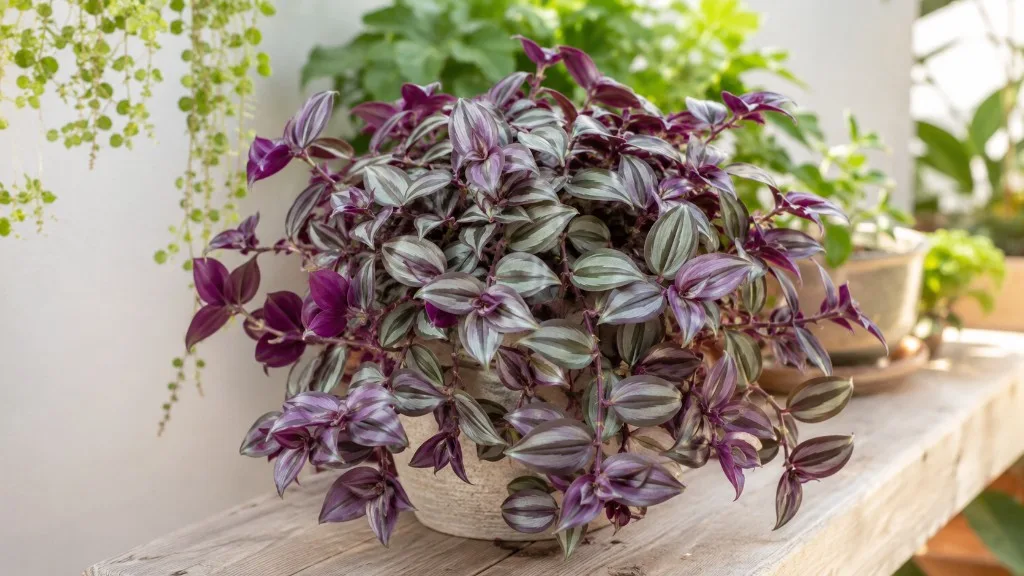
Best Soil for Tradescantia Zebrina: Mix, Drainage & Repotting
Best Soil for Tradescantia Zebrina: Mix, Drainage & Repotting
Tradescantia zebrina soil is the quiet control center for everything visible above the pot - the silver-purple striping, the trailing stems, the speed at which cuttings root, and whether the crown stays full or goes bare while the tips keep growing. Inch plant (Tradescantia zebrina) is widely sold as an easy houseplant, and it is forgiving compared with many tropicals. That forgiveness has a limit: the roots sit in a small volume of mix that must hold enough moisture between waterings yet drain fast enough that oxygen keeps flowing through the root zone. Get that balance wrong and you get the classic failure pattern - limp stems, yellowing lower leaves, sour-smelling mix, and stem rot at the soil line while the plant still looks partly alive at the tips.
The practical target for most indoor growers is a light, peat-based potting mix amended with perlite so total perlite content lands around 20 to 30 percent by volume. Missouri Botanical Garden recommends a peaty, soil-based potting mix for Tradescantia zebrina, with consistently moist but well-drained soil during the growing season and reduced watering from fall through late winter (Missouri Botanical Garden - Tradescantia zebrina). North Carolina Extension lists loam texture, good drainage, and moist available water as cultural conditions for Tradescantia Zebrina overview (NC Extension Plant Toolbox - Tradescantia zebrina). Those three words - moist, well-drained, peaty - define the job your mix must do.
This guide walks through the best DIY and store-bought mixes, how container drainage actually works (and what does not work), how to keep roots moist without sogginess, when to refresh tired mix, and the soil mistakes that cause more damage than choosing the “wrong” brand ever could.
If symptoms persist, see the Brown Tips on Tradescantia Zebrina guide.
Why Soil Choice Matters for Inch Plant Roots
Tradescantia zebrina is a fast-growing herbaceous perennial in the Commelinaceae family, native from Mexico through Central America, where it spreads as a groundcover in bright shade with organic, loose soil. Indoors it becomes a trailing accent in pots and hanging baskets, with stems that can extend several feet while the root ball stays relatively compact. That growth rate means the plant drinks regularly and builds new stem tissue continuously during warm, bright months - but the roots are still thin and vulnerable to anaerobic conditions when mix stays saturated for days.
Soil is not a passive holder for water. It is a three-phase system: solid particles (peat, bark, perlite, mineral grit), water films coating those particles, and air filling the pore spaces between them. Healthy inch plant roots need all three phases in shifting balance. After you water, pores fill with water; as the mix dries, air refills those pores. If the mix is too fine and dense - straight bagged potting soil with no amendment, old decomposed peat, or garden dirt - water moves slowly, air returns slowly, and roots spend too long in a low-oxygen zone. Root rot and stem rot, which Missouri Botanical Garden notes occur when soils are kept too moist, follow that pattern (Missouri Botanical Garden - Tradescantia zebrina).
The opposite failure is also common: a mix so coarse that it dries unevenly, leaving the center chronically dry while the surface looks damp. Zebrina wilts, you water again, and fine root hairs die back. The goal is predictable dry-down - moisture that reaches all roots, exits the pot within minutes of watering, then gradually leaves until the top inch feels dry.
What Zebrina Needs From Its Root Zone
Striped inch plant is sometimes grouped mentally with succulents because the stems are somewhat fleshy and the plant tolerates brief dryness. That comparison misleads people into using straight cactus mix or watering as if the plant were a desert species. In habitat and in credible cultivation guidance, zebrina prefers moist, fertile, organic soil with excellent drainage - not desert dryness and not bog conditions.
Translate that to container culture and four requirements emerge: aeration (perlite or bark for pore space), moisture retention (peat or coir as a buffer between waterings), nutrient holding capacity (quality potting mix with organic matter), and structural stability (uniform texture that does not separate or collapse in hanging baskets).
pH preference is slightly acidic to neutral, roughly 6.0 to 7.0, which standard peat-based indoor mixes already provide without adjustment. NC Extension notes tolerance from acid through neutral pH ranges (NC Extension Plant Toolbox - Tradescantia zebrina). Unless you are mixing from raw components or seeing chronic micronutrient issues, pH is rarely the first variable to fix.
Best Soil Mix for Tradescantia Zebrina
The best tradescantia zebrina soil for most homes is a well-draining peat-perlite potting blend: quality indoor potting soil as the base, amended so perlite (or pumice) makes up about one-fifth to one-third of the finished volume. A widely used starting point is equal parts peat moss or coco coir, perlite, and standard potting mix - three components at 1:1:1 by volume. That ratio produces a mix that feels light, crumbles easily when squeezed, and holds together slightly without forming mud.
When you water this mix thoroughly, water should exit the drainage hole within a minute or two, not pool on the surface for ten minutes. When you stick a finger into the top inch after several days, it should feel dry before the next watering - the rhythm zebrina prefers when paired with Tradescantia Zebrina light guide.
DIY Peat-Perlite-Potting Mix Recipe
For one 6- to 8-inch pot or a small hanging basket refresh, measure by volume - scoops, not weight:
- 3 parts quality indoor potting mix (peat or coir based, with bark or perlite already in the label blend)
- 1 part perlite (horticultural grade, medium particle)
- 1 part peat moss or coco coir (rehydrate coir before mixing)
Optional: ½ part worm castings or finished compost for propagation trays or repots into lean commercial mix. Do not exceed this on established indoor pots unless you also reduce fertilizer - organic matter adds nutrients and salts.
Mix dry components in a bucket until the texture is uniform. The finished blend should look speckled with white perlite throughout, not layered. When squeezed in your fist, it should hold shape briefly and break apart with a light poke - the standard “moisture without mud” test.
Perlite math: If your base potting mix already contains perlite (many do), adding a full extra part may push total perlite above 30 percent. That is still safe for zebrina. If the base is heavy and peat-heavy with no perlite listed, the 1:1:1 recipe is appropriate. If the base is already labeled “fast draining” or “cactus and succulent,” blend it 50/50 with standard indoor mix rather than adding another full perlite portion - straight cactus mix alone dries too fast for consistent inch plant culture indoors.
What to avoid in the base: Garden soil, topsoil, or “raised bed” mixes. They are too dense, may carry pathogens and weed seeds, and they compact in containers within weeks. Zebrina might survive briefly, but drainage predictability disappears.
Ready-Made Mixes That Work Indoors
You do not need to mix from scratch. Start with any reputable indoor or all-purpose peat-based potting mix and amend with 20 to 30 percent perlite by volume before planting. Products labeled for indoor houseplants - including widely available mixes built from sphagnum peat, perlite, and wetting agents - work as bases if you improve drainage.
Espoma Organic Potting Mix, Miracle-Gro Indoor Potting Mix, and FoxFarm Ocean Forest work as peat-based bases if you amend with extra perlite before planting - especially in plastic hanging baskets where mix stays wet longer. Cactus and succulent mix alone dries too fast; blend it 50/50 with standard indoor potting mix instead of using it straight.
Container Drainage Every Grower Needs
Mix quality is half the system. Container drainage is the other half. A perfect peat-perlite blend in a pot with no hole, or a pot sitting in a cachepot full of runoff, behaves like bad soil within days. Missouri Botanical Garden’s guidance on moist but well-drained conditions assumes water can leave the root zone after each watering - not merely evaporate from the top.
Every zebrina pot used for long-term indoor care should have at least one drainage hole in the bottom. Multiple holes are better for hanging baskets and wide shallow pots. After watering until excess runs out, empty the saucer or outer decorative pot within 30 minutes. Roots sitting in stagnant runoff re-enter saturated conditions even if the upper mix feels fine.
The gravel layer myth deserves a direct dismissal: a layer of stones at the bottom of a pot does not improve drainage in the physics sense. It creates a perched water table where fine mix above meets coarse gravel below, sometimes keeping the root zone wetter, not drier. Drainage comes from mix texture and exit holes, not from decorative rocks.
For hanging baskets, use coco coir or plastic liners with pre-punched holes, or plant directly in a pot with holes that sits inside the basket. Moss-lined baskets look beautiful but dry unevenly and decompose - refresh them annually or move the plant to a standard pot when growth slows.
Pot Size, Material, and Drainage Holes
Pot size: Choose a container only slightly larger than the root ball - typically 1 to 2 inches (2.5 to 5 cm) wider in diameter when Tradescantia Zebrina repotting guide. Oversized pots surround roots with a large volume of mix that stays wet long after the plant has drunk what it needs. Zebrina grows fast, but it does not require huge pots; a crowded trailing plant often needs fresh mix in the same size pot rather than a dramatic upsize.
Pot material: Terracotta breathes through porous walls and dries faster - useful in low-light, humid rooms where plastic stays wet. Plastic and glazed ceramic retain moisture longer - useful in dry, heated air but risky if you tend to overwater. Match material to your watering habits, not aesthetics alone.
Depth vs width: Trailing inch plant has relatively shallow roots compared with upright floor plants. Wide, shallow hanging baskets work well if holes are adequate. Deep narrow pots can hold a wet column of mix at the bottom that the upper roots never reach - check moisture at multiple depths, not just the surface.
Cachepots: If you display zebrina in a decorative outer pot, lift the inner nursery pot out to water, let it drain completely on the sink, then return it. Never water into the bottom of a cachepot so the inner pot sits in a reservoir.
Moisture Without Sogginess
The phrase moisture without sogginess is the whole inch plant soil problem in four words. Sogginess means mix that stays saturated - waterlogged pore space, no air, anaerobic root conditions. Moisture means roots can access water films on particles without drowning. Zebrina wants the second state between waterings, with a clear path back to air-filled pores before the next drink.
Achieving that starts with the peat-perlite blend described above and continues with how you water. Water thoroughly until a fraction runs from the hole, then stop until the top inch (2.5 cm) of mix feels dry to your finger. That surface dry-down point is the standard check cited across inch plant care sources because it approximates when the root zone has used available moisture without letting the entire ball go bone dry.
If you water lightly every day to “keep it moist,” the bottom of the pot often stays wet while the top cycles - a direct route to stem rot. If you wait until the whole plant wilts, fine roots die and the mix can become hydrophobic, repelling water and making sogginess worse on the next attempt to rehydrate.
Matching Soil Texture to Your Tradescantia Zebrina watering guide
Your home environment determines how fast mix dries. Bright light, warm rooms, small pots, and terracotta speed dry-down. Low light, cool rooms, oversized plastic pots, and hanging baskets in humid bathrooms slow it. The same 1:1:1 recipe behaves differently in each setup.
If the pot stays wet more than 5 to 7 days after a thorough watering in active growth season, the system is too wet - add perlite, reduce pot size, improve light airflow, or check that the cachepot is not holding water. If the pot goes from wet to painfully dry in 24 to 48 hours and the plant wilts repeatedly, the mix may be too coarse or the pot too small - add a little more peat or coir, move to a slightly larger container, or adjust placement away from drying heat vents.
A simple weight check complements the finger test: lift the pot after watering and again when the top inch is dry. Learn the lighter weight that means “time to water” for that specific container. Trailing zebrina in hanging baskets is easier to judge by weight than by reaching the soil surface among cascading stems.
| Symptom | Likely soil-system cause | First adjustment |
|---|---|---|
| Yellow lower leaves, soft stems, sour smell | Mix too wet, poor drainage | Add perlite, verify holes, empty saucer |
| Wilting with dry top inch but wet center | Channeling or partial dry-out | Rewater thoroughly, consider repot into uniform mix |
| White crust on surface | Salt buildup from fertilizer/hard water | Flush with plain water, refresh mix at repot |
| Water runs down pot sides instantly | Hydrophobic or root-bound mix | Bottom-water briefly, repot with fresh blend |
| Slow growth, dull striping (soil OK) | Usually light, not soil | See light guide; do not add heavier mix |
The table is a diagnostic starting point, not a replacement for inspecting roots when several symptoms stack.
pH, Minerals, and Salt Buildup
Tradescantia zebrina tolerates a pH range of roughly 6.0 to 7.0, aligned with standard peat-based indoor mixes. NC Extension lists acid through neutral tolerance (NC Extension Plant Toolbox - Tradescantia zebrina). Most growers never need to test pH if the plant grows steadily in a fresh peat-perlite blend and fertilizer is applied at modest strength during active growth.
Minerals and salts are the practical pH-related concern indoors. Tap water with high mineral content, combined with regular fertilizer, leaves soluble salts in mix over months. Signs include white crust on the soil surface, brown leaf tips despite good watering, and slowed growth even when light is adequate. Flush the pot periodically by running plain water through until it flows freely from the hole, several times in succession, and discard all runoff. If crust returns within weeks, refresh the mix at repotting rather than escalating fertilizer.
Hard water areas benefit from filtered or distilled water for occasional deep watering/flushing, though zebrina is not as salt-sensitive as some calatheas. The bigger lever is usually half-strength fertilizer on a sensible schedule during spring and summer, not heavy feeding into unchanged old mix.
When to Refresh or Repot the Mix
Peat-based mix decomposes and compacts over time - organic matter breaks down, pore space shrinks, and drainage slows even if your watering habits stay the same. Refresh tradescantia zebrina soil when you see functional decline, not on a rigid calendar alone. Practical triggers include:
- 12 to 18 months in the same pot with the same mix (faster if growth is vigorous and you fertilize regularly)
- Water sits on the surface or runs through channels along the pot wall
- Roots visible at drainage hole or circling densely when you slip the plant out
- Sour or musty smell from the root zone
- Persistent gnats breeding in constantly moist, broken-down peat
- Salt crust that returns after flushing
Repot in spring or early summer when growth is active. Use fresh peat-perlite blend, choose a pot only slightly larger (or same size with root trim for maintenance repots), and water once lightly after repotting. Hold fertilizer for three to four weeks unless the new mix contains slow-release charge and you know its rate.
Zebrina recovers quickly from repotting compared with finicky tropicals, but avoid repotting a plant in active rot or severe wilt until you have trimmed affected roots and let the plant stabilize. Fix the soil problem that caused rot, not just the container size.
Soil for Propagation and Young Plants
Stem cuttings root so easily that propagation soil seems low-stakes - until cuttings rot in wet mix. For tradescantia zebrina propagation, use the same peat-perlite logic but slightly finer and moister:
- Equal parts indoor potting mix and perlite, or the full 1:1:1 recipe above
- Shallow trays or small pots with drainage - deep wet columns are unnecessary for cuttings with no roots yet
- Pre-moisten mix before inserting cuttings; do not dry-sow into dust
Cuttings rooted in water transition well into this blend once roots reach 1 to 2 inches (2.5 to 5 cm). Plant deeply enough that at least one node sits below the surface; zebrina roots from nodes readily. Keep mix evenly moist, not saturated, for the first two weeks - a clear dome or loose plastic bag raises humidity so you water less aggressively into fresh mix.
Young rooted plants can stay in propagation mix for several weeks, then move to standard potting blend when roots fill the small container. There is no benefit to starting long-term culture in pure perlite or water-retaining gel alone.
Hanging Baskets and Trailing Displays
Hanging baskets change soil dynamics because heat and air hit the pot from all sides, often drying the exposed top and sides while the inner core stays wet - or the entire basket dries fast in a sunny window. Use the standard amended mix, verify multiple drainage holes, and accept that baskets may need watering checks twice weekly in bright summer conditions even with good mix.
Because zebrina stems age and bare at the crown, many growers root fresh tip cuttings directly into the top of the same basket rather than repotting entirely. When refreshing this way, loosen the top inch of old mix, add fresh peat-perlite blend, and insert cuttings so new roots enter viable soil rather than a crusty, salt-heavy surface layer.
Weight remains the most reliable basket check: a suddenly light basket with wilting foliage means dry mix; a heavy basket days after watering with yellowing leaves means soggy mix or poor hole drainage.
Signs Your Soil System Is Failing
Soil problems show up through the plant before you think to dig into the pot. Watch for these soil-linked signals on zebrina:
- Soft, mushy stems at the soil line - classic stem rot from prolonged saturation; often paired with sour mix smell
- Yellowing leaves starting at the base while tips still look OK - overwatering or compacted mix reducing root function
- Persistent wilting immediately after watering - damaged roots from prior rot or hydrophobic mix repelling water
- Fungus gnats in large numbers - decomposed, constantly moist surface peat
- Algae or green mold on mix surface - too much moisture and low airflow at soil line
- Crusty white mineral layer - salt accumulation; flush or repot
- Extremely fast dry-out with leaf curl - mix too coarse, pot too small, or roots pot-bound with little soil left
When stem rot is present, remove the plant, trim back to healthy tissue, discard all old mix, sterilize or replace the pot, and replant in fresh amended blend. Water lightly and increase only when new growth appears. Soil change alone does not save tissue already invaded by rot.
Common Soil Mistakes to Avoid
The failures repeat across forums because the fixes sound counterintuitive:
Using garden soil or dense outdoor mix in pots. Compaction and poor aeration follow within weeks.
Skipping perlite because “indoor mix should be fine.” Many bagged mixes are designed for greenhouse production with controlled watering - home conditions are not greenhouses.
Oversized pots “so it can grow.” Extra mix holds extra water around underdeveloped root systems.
Gravel at the bottom for drainage. Does not replace perlite in the mix; can worsen saturation at the root zone boundary.
No drainage hole “because I am careful with water.” Careful watering cannot substitute for an exit path; root zones still stratify.
Leaving runoff in saucers and cachepots. Re-saturates bottom roots silently.
Repotting into dry, dusty mix without pre-moistening. Air gaps around roots stay dry; water channels around the root ball.
Using straight cactus mix long term. Dries unevenly; zebrina wilts between frequent sips that never fully rehydrate the center.
Ignoring mix age. Old peat compacts; drainage slows even when watering habits are unchanged.
Burying stems too deep at repot. Zebrina roots from nodes, but buried leaves and stems in wet mix rot; plant at the same depth as before or slightly shallow with top nodes exposed for bushiness.
Seasonal Adjustments for Indoor Mix
Soil behavior shifts with season even when the recipe stays the same. Spring and summer active growth pulls water through the plant faster; dry-down accelerates; you may water more often but the mix should still reach that top-inch dry point between drinks. Fall and winter slow growth; Missouri Botanical Garden notes reduced watering from fall to late winter (Missouri Botanical Garden - Tradescantia zebrina). Slower uptake means the same peat-perlite blend stays wet longer - extend the interval between waterings before you change the mix.
Cooler rooms and shorter days also mean less fertilizer salt input is needed; salts accumulate in unchanged mix over a dormant season. If zebrina sits in a heated, brightly lit window and keeps growing through winter, treat it as active and water when dry - but still avoid heavy feeding into old compacted mix.
Summer outdoor placement in dappled patio shade increases evaporation - check hanging baskets daily in heat waves.
Building a Soil Maintenance Routine
Think of soil care as three recurring checks, not a one-time repot event. Weekly during active growth, check top-inch moisture or pot weight before watering, confirm the saucer is empty, and glance at stem bases for soft rot. Monthly, sniff the surface for sourness and scan for white salt crust - flush once with plain water if crust appears. Annually or when triggers appear, test whether mix drains as fast as when fresh; repot or refresh the top layer if you see compaction, gnats, or channeling.
Keep a small batch of dry amended mix sealed in a bucket if you grow multiple tradescantia cultivars, and plan a mix refresh within the first month for new shop plants if nursery soil is heavy or the pot lacks holes.
How Soil Connects to Light, Water, and Feeding
Soil never operates alone. Bright indirect light drives transpiration and speeds dry-down; a mix that works in an east window may stay too wet in a north-facing room with the same watering schedule. Water thoroughly and drain for peat-perlite blends - daily sips leave the root ball stratified. Fertilizer enters through the water phase of soil; fix drainage before increasing feed strength, and use half-strength balanced liquid on moist (not soggy) mix during active growth.
If striping dulls and stems stretch, light is the usual cause, not soil fertility. If lower leaves yellow with wet mix and soft stems, drainage is the usual cause, not light. Diagnose both in parallel before repotting or moving pots.
Conclusion
Tradescantia zebrina soil succeeds when it does two jobs at once: hold moisture the roots can use between waterings, and drain and aerate fast enough that the mix never turns into a stagnant sponge. Build from a quality peat- or coir-based indoor potting mix, amend to 20 to 30 percent perlite, and use the equal-parts peat, perlite, and potting soil recipe if you mix from scratch. Pair that blend with a pot that has drainage holes, a size matched to the root ball, and a watering habit that waits until the top inch dries before the next thorough drink.
Refresh mix when drainage slows, salts crust the surface, or roots outgrow the container - typically every 12 to 18 months for vigorous plants. Skip gravel layers, avoid garden soil in pots, and treat “well-draining” as a property of the whole system - mix, hole, and saucer management - not a label on the bag alone. When stems soften at the base or mix smells sour, repot into fresh blend after trimming rot; no amount of careful watering revives anaerobic root zones in old, compacted peat.
Get soil and drainage right and zebrina rewards you with fast trails, vivid striping in adequate light, and cuttings that root quickly. Build the mix once, maintain it on a simple schedule, and soil becomes the stable foundation everything else builds on.
When to use this page vs other Tradescantia Zebrina guides
- Tradescantia Zebrina overview - Start here for whole-plant context before deep-diving this topic.
- Tradescantia Zebrina problems hub - Jump to symptom-specific fix guides when this care topic does not resolve the issue.