Brown Tips on Tradescantia Zebrina: Causes, Checks & Fixes
Quick answer
Brown tips on Tradescantia zebrina usually trace to dry indoor air, inconsistent watering on fleshy stems, sun scorch on window-facing silver stripes, drought crisp, or wet-soil root stress-not one generic stress. First step: check soil moisture at the top inch, note which leaf faces are damaged, and read a hygrometer near the trailing stems before changing humidity, light, or watering.
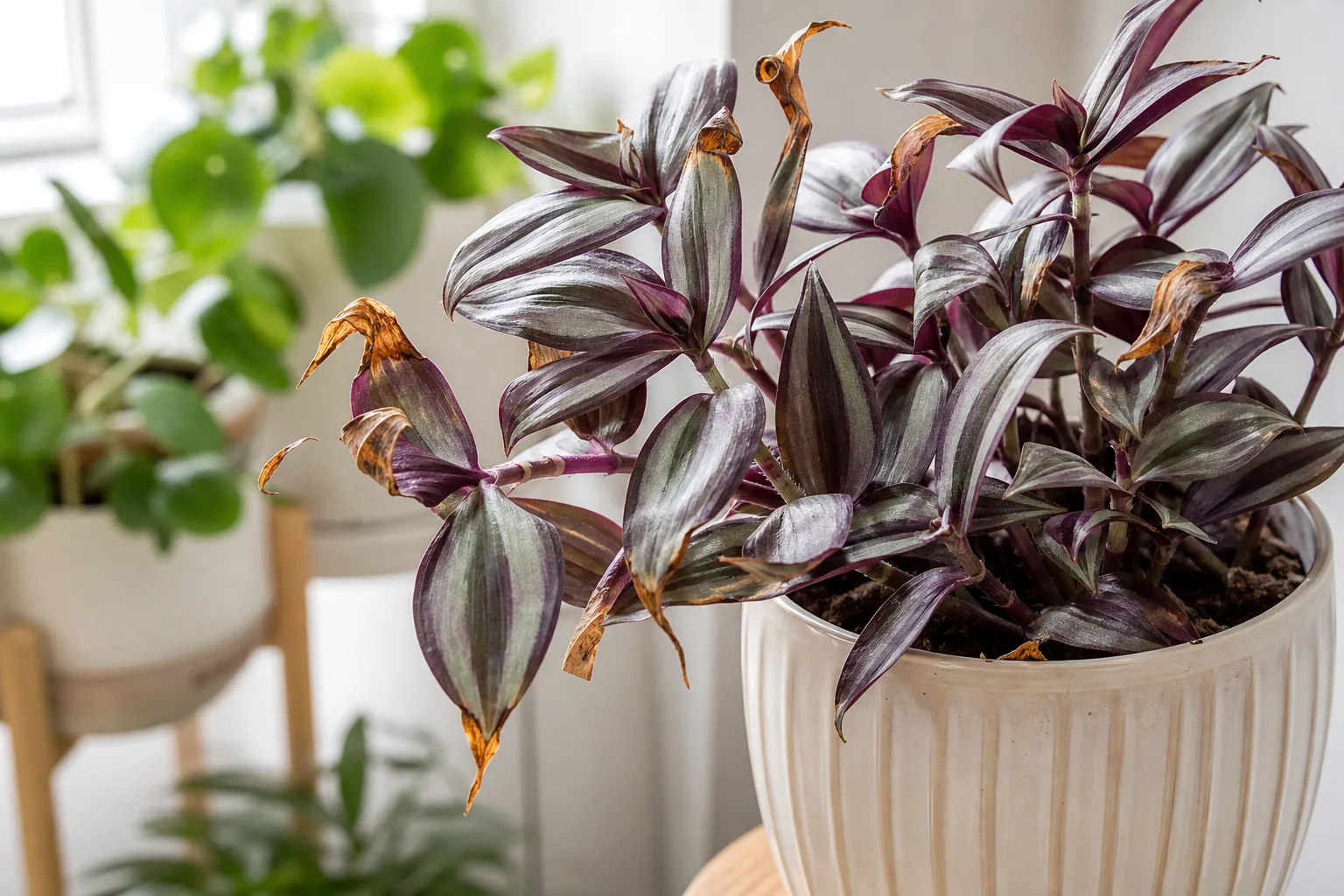
Brown Tips on Tradescantia Zebrina: Causes, Checks & Fixes
This guide covers brown tips on Tradescantia Zebrina. See also the general Brown Tips guide, watering, and light pages for this plant.
Brown Tips on Tradescantia Zebrina: Causes, Checks & Fixes
Quick answer
Brown tips on Tradescantia zebrina (Tradescantia zebrina-inch plant, wandering dude, silver inch plant) rarely share one cause across every home. This trailing vine shows edge damage from dry indoor air, inconsistent watering on fleshy stems, sun scorch on silver-purple striping, drought crisp, or wet-soil root stress-and each needs a different first fix.
Your first move is diagnostic, not corrective: probe soil moisture at the top inch, note which leaf surfaces are damaged, and place a hygrometer near the trailing stems for 24 hours. Dry mix throughout with a light pot points to drought crisping. Wet heavy mix with yellowing and soft stems points to overwatering-not low humidity. Bleached or tan patches on the window-facing silver stripe fit sun scorch. Even papery margins on multiple leaves with normal soil moisture and winter heat running fits dry air or inconsistent soak-and-forget watering.
Do not increase humidity, move the plant to a brighter window, and change watering rhythm on the same day. Match one first fix to what you confirmed.
Brown tips vs. low humidity vs. underwatering - which guide to use
Zebrina owners often land on the wrong page because crispy leaf edges can mean several things:
| Your situation | Start here |
|---|---|
| Winter heating on, damage worst on leaves facing a vent, hygrometer below 30% | Low humidity on Tradescantia zebrina |
| Brown margins year-round, watering rhythm inconsistent, or tips persist at 45%+ RH | This brown-tips guide |
| Fine webbing, pale stippling on leaf undersides, tiny moving specks | Spider mites on Tradescantia zebrina |
| Limp stems, very light pot, soil pulled from pot sides | Wilting or underwatering |
| Yellow leaves with wet heavy mix and sour smell | Overwatering or root rot |
This page covers multiple margin causes and routes you to sibling guides when one stress dominates. For full species context, see the Tradescantia zebrina overview.
What brown tips look like on Tradescantia Zebrina
Symptoms differ by cause. Zebrina leaves are thin at the margins but backed by semi-succulent stems that store some water-so edge damage often appears before whole-stem collapse, yet the pattern tells you which stress is primary.
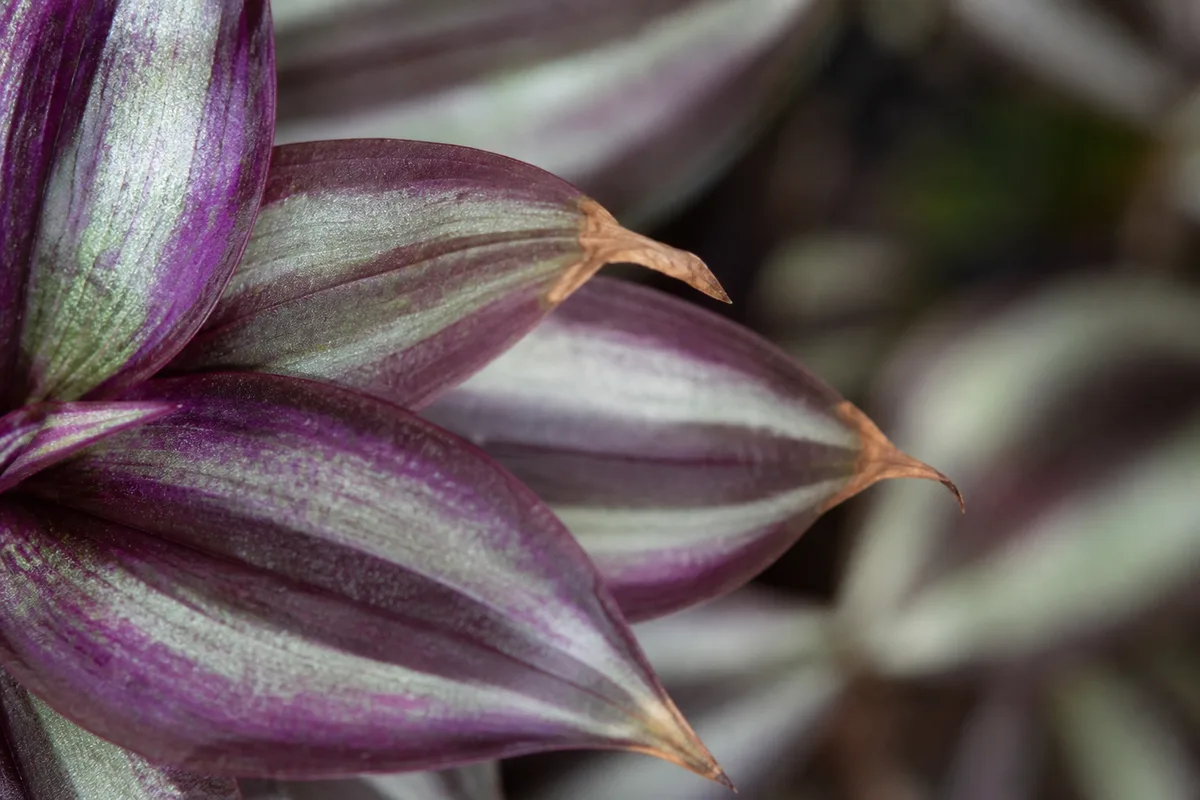
Brown Tips symptoms on Tradescantia Zebrina - compare with healthy tissue on the same plant.
Dry-air and low-humidity crisping
- Tan to brown, papery margins on green-purple leaves while the silver-striped center stays mostly intact-brown leaf tips and edges are a common low-humidity sign on houseplants
- Damage clustered on the side of a hanging basket facing a radiator, floor vent, or fireplace
- Soil at the top inch appropriately dry while edges crisp-moisture rhythm has not obviously failed
- Newest leaves at trailing tips opening with small tan margins already present
- Often worse in winter when forced-air heating drops room humidity
Inconsistent watering rhythm
- Brown tips on leaves at different stem positions-some crisp, some fine-after weeks of soak-then-forget cycles
- Pot weight swings dramatically between waterings; top inch sometimes bone dry, sometimes wet days later
- No single-sided vent pattern; damage scattered along trailing stems
- Fleshy stems may look slightly wrinkled between drinks even when some leaves still hold color
Sun scorch on silver striping
- Bleached yellow to white zones on the window-facing leaf face, especially on silver stripes, turning brown and brittle in severe cases
- One-sided damage on leaves facing west or south glass-not random even margins on every leaf
- Common after moving a basket to a blazing sill or behind freshly cleaned glass without acclimation
- Purple undersides may fade on the scorched face while inner growth still holds color
Drought crisp on semi-succulent stems
- Crispy brown tips with limp, thin stems and a very light pot
- Top inch and deeper mix bone dry; soil may pull away from pot sides
- Often follows a missed watering during bright summer light when transpiration outpaces stem reserves
- Recovery within hours of a thorough soak if roots are still firm-unlike overwatering wilt
Wet-soil margin burn and root stress
- Brown or yellow-brown margins while mix feels wet or heavy days after watering
- Soft stems at the base, sour smell from soil, or crown leaves yellowing first
- Not the same as papery dry-air tips-tissue looks dull and water-stressed
- Common in hanging baskets where runoff pools in the crown or saucer holds water
Why zebrina gets brown tips
Tradescantia zebrina belongs to the Commelinaceae family-a fast-trailing herb with succulent stems that store some moisture. That physiology lets zebrina tolerate brief dry spells and average home humidity levels better than thin-leaved prayer plants, but leaf margins are still thin and lose water fast when hot, dry air blows across them or roots cannot keep up.
Five causes cover most home cases:
Dry indoor air and heat vents. Winter heating can pull relative humidity below 30 percent while the thermostat reads comfortable. Zebrina hanging in the warmest, driest air layer near ceiling vents experiences direct desiccation on leaf edges. Trailing outer stems crisp first while growth near the crown still looks fine-a strong clue for localized dry air.
Inconsistent watering on fleshy stems. Zebrina prefers moist but well-drained soil during active growth, with the top inch drying between drinks. Dramatic swings between bone-dry pots and soggy recovery soaks stress the root zone. Margins brown because transpiration continues while water delivery is unreliable-not because one missed watering always kills the plant.
Sun scorch on metallic striping. Zebrina is sold for silver-purple contrast that depends on bright filtered light. Unfiltered midday or hot afternoon sun through glass bleaches silver zones and necroses exposed tissue. Wisconsin Horticulture Extension notes that too much sun in warmer, more southern locations can wash out zebrina color-indoors, that often reads as scorch on the window-facing leaf face.
Drought crisp. Despite stem water storage, zebrina is not a true succulent. Extended dry-down in bright light pulls water from leaf tips first. A light pot and limp stems with crispy margins confirm thirst-not humidity failure.
Overwatering and wet crowns. Soggy soil damages roots so they cannot supply leaf edges even when the surface looks wet. Trailing zebrina in baskets is vulnerable when water sits on node clusters at the crown. Yellowing with wet soil and soft stems points here-not toward a humidifier.
Lookalike symptoms to rule out
| Pattern | Likely cause | First step | Related guide |
|---|---|---|---|
| Papery margins near vent, RH below 30%, firm stems | Dry air / low humidity | Move off vent; humidifier | Low humidity |
| Bleached patches on window-facing silver stripes | Sun scorch | Filter light; acclimate | Light guide |
| Limp stems, light pot, bone-dry mix | Drought / underwatering | Deep soak with drainage | Underwatering |
| Wet heavy pot, yellow leaves, soft base | Overwatering / root stress | Stop watering; check roots | Overwatering |
| Fine stippling + webbing on undersides | Spider mites | Isolate; rinse; treat if confirmed | Spider mites |
| Scattered crisp tips, pot weight swings | Inconsistent watering | Steady top-inch-dry rhythm | Watering guide |
| Long gaps between nodes, faded stripes | Too little light | Brighten indirect exposure | Not enough light |
Spider mites exploit warm, dry winter air on zebrina. Stippling and webbing are not margin necrosis alone-confirm pests before treating humidity or drought.
How to confirm the cause
Work through this order before changing anything:
- Damage pattern on leaves. Even papery margins on vent-facing leaves → dry air. One-sided bleached-then-brown patches on window-facing silver zones → sun scorch. Scattered tips with weight swings → inconsistent watering. Limp stems + light pot + dry mix → drought. Brown margins + wet heavy mix → overwatering.
- Soil moisture at the top inch. Push a finger or dry skewer about 2.5 cm (one inch) into the mix near the pot edge. Bone dry throughout with a light pot suggests drought. Wet clinging mix days after watering suggests root stress-not humidity failure.
- Pot weight and drainage. Lift the basket. Confirm drain holes are clear and no saucer holds standing water. A heavy pot that never lightens is overwatering risk.
- Hygrometer at leaf height. Place a meter near trailing stems for 24 hours. Below 30% RH supports dry-air stress; 40–60% with tip burn suggests sun, watering rhythm, or wet soil instead.
- Light direction and recent moves. Note west or south window exposure, distance from glass, and whether the plant moved in the last two weeks. Scorched silver stripes on the glass-facing face strongly favor sun over humidity.
- Watering history. List the last four sessions-dates, amount, and whether you soaked the crown. Soak-then-forget cycles fit inconsistent rhythm; daily small pours on wet mix fit overwatering.
- Pest check on leaf undersides. Look for fine webbing, pale stippling, or moving specks along stems-especially in dry winter air. Mites can accompany margin damage.
- Stem and crown firmness. Soft, mushy bases or sour smell escalate to root or crown rot-not cosmetic tip burn.
Write down which pattern matched. Three different confirmed causes need three different first fixes.
First fix for Tradescantia Zebrina
Match one action to what you confirmed:
- Dry air, firm stems, normal soil, low RH or vent proximity: Move the basket at least 60 cm (2 feet) from heating vents. Run a humidifier until RH at leaf height holds 40–60% for several days-do not water more because leaves look dry.
- Inconsistent watering, scattered tips, pot weight swings: Resume a steady rhythm-water thoroughly when the top inch is dry, then empty the saucer. See our Tradescantia zebrina watering guide for seasonal intervals.
- Sun scorch on window-facing stripes: Shift to bright indirect light or filtered morning sun. Hold there 7–14 days before increasing exposure. Details in our zebrina light guide.
- Drought crisp, limp stems, bone-dry mix: Water thoroughly until drainage runs, then empty the saucer. Wait for the top inch to dry before the next drink-do not leave the pot soggy as compensation.
- Wet soil, yellowing, soft stems: Stop watering until the top inch dries. Keep the crown dry on trailing stems. If bases soften or smell sour, inspect roots-see overwatering and root rot.
Make one correction first. Do not repot, prune heavily, and fertilize on the same day.
Steady watering rhythm (top inch dry)
The most reliable trigger is allowing the top inch of soil to dry before watering again, then soaking until water exits drain holes. During active growth that often means every five to ten days indoors; in winter, every ten to twenty-one days is common as growth slows. The interval is an outcome of the dry check, not a calendar substitute.
Raise humidity when air is the confirmed problem
Target 40–60% RH near the canopy with a cool-mist or ultrasonic humidifier. Brief misting raises humidity for minutes only-it does not replace a humidifier in heated rooms. Grouping plants shares modest ambient moisture but rarely fixes vent-side crisping alone.
Adjust light and protect trailing crowns
Filtered sun and bright indirect light keep zebrina striping vivid without baking leaves on hot glass. When watering, direct flow to the soil surface-not into the node cluster at the crown where rot starts on hanging baskets.
Recovery timeline and what improvement looks like
Dry-air and inconsistent-watering tip burn often stabilizes within one to two weeks after the correct stressor stops-new leaves with clean margins in two to four weeks during active growth.
Sun scorch recovery depends on how much tissue bleached. New leaves in 10–14 days after corrected light tell you whether exposure is still too strong.
Drought recovery can be fast: limp stems often firm within hours after one thorough soak if roots remain healthy.
Wet-soil margin burn does not follow a cosmetic timeline. Seven to ten days of proper dry-down with firm stems and no spread is the minimum sign you avoided escalation toward root rot.
Existing brown tips stay brown. Judge success by new foliage along trailing stems and firm crowns-not by old leaves re-greening.
What not to do
Do not increase humidity when the problem is wet soil and soft stems-extra moisture worsens root stress.
Do not move a scorched plant to full afternoon sun to “fix” faded striping without acclimation.
Do not feed to green up browned tips. Fertilizer on stressed roots builds salts and can scorch margins further.
Do not soak the crown on trailing zebrina when correcting drought-water the soil surface and let the basket drain fully.
Do not stack repotting, heavy pruning, and pesticide on the same day as a humidity or light correction. One stress at a time.
Avoid misting leaves nightly as a humidity strategy in dim corners-wet foliage overnight can invite fungal issues on dense trailing stems.
How to prevent brown tips next time
Align everyday care with how zebrina actually grows in your space:
- Water: Keep consistently moist but well-drained mix during active growth-water when the top inch is dry, never leave saucers full. Full rhythm in our watering guide.
- Light: Bright indirect for vivid striping; filter west and south sun. Placement details in our light guide.
- Humidity: Target 40–60% RH in winter; keep hanging baskets off vents. Deep dive in low humidity when air is the primary suspect.
- Soil and pots: Use well-draining mix with perlite and confirm drainage holes-see soil and repotting guides.
- Inspection: Scout leaf undersides weekly in dry winter air for spider mites before margins spread.
Inspect while problems are still small-zebrina shows stress on leaf edges before the whole trailing stem fails.
Practical checks
Urgency check
Treat as urgent if stem bases soften, rot smell spreads from the crown, fine webbing covers multiple shoots, or several leaves brown while soil stays wet for days. Those patterns need root, crown, or pest intervention-not cosmetic trimming alone.
Best inspection order
Newest growth → stem bases and crown firmness → top-inch soil moisture → pot weight → hygrometer at leaf height → light direction on damaged leaves → leaf undersides for mites.
Severity note
Use spreading damage and root or crown firmness-not a single blemish on one old leaf-to decide how fast to act. Isolated crispy tips on firm stems with clean new growth at the trailing tips can wait for the next scheduled care check.
When to worry
Escalate immediately if margins brown while soil stays wet for days, stems soften at the base, or fine webbing and stippling appear on leaf undersides-that is root stress or spider mites, not cosmetic tip burn alone.
Cosmetic tips on firm stems with stable new growth can wait for one targeted correction-no emergency repot or feed required.
If chronic tip burn persists after corrected humidity, watering, and light, review fertilizer timing-heavy feeding on fast-growing zebrina can concentrate salts at leaf margins. Salvage healthy stem tips via propagation if the base is failing despite corrections.
Related zebrina guides: overview, watering, light, low humidity, spider mites, underwatering, overwatering.
When to use this page vs other Tradescantia Zebrina guides
- Tradescantia Zebrina watering guide - Use for routine moisture checks before assuming brown tips is the main issue.
- Tradescantia Zebrina problems hub - Browse all 2 common issues on this species.