Tradescantia Zebrina Pruning: When, How, and Mistakes
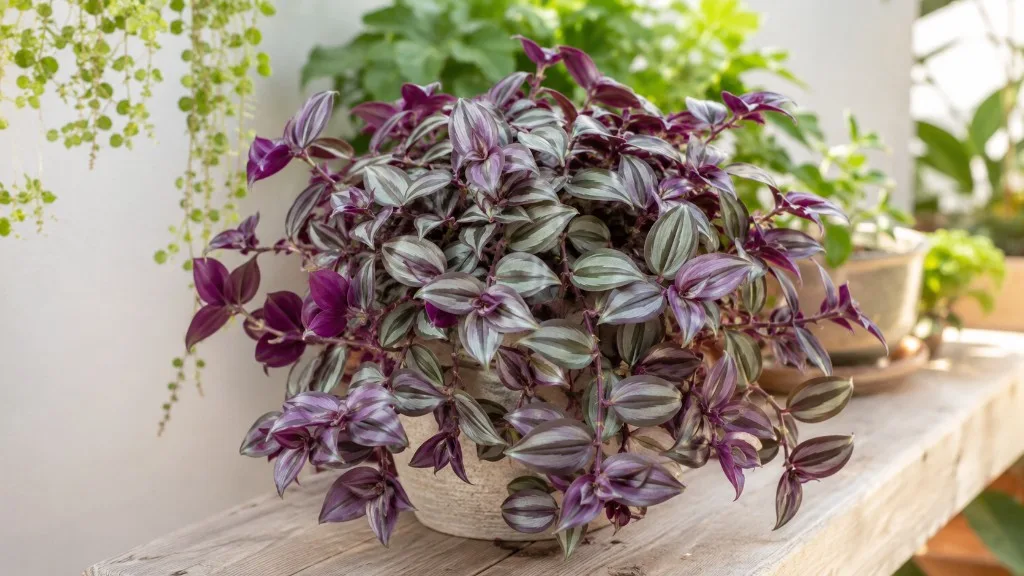
Tradescantia Zebrina Pruning: When, How, and Mistakes to Avoid
Tradescantia Zebrina Pruning: When, How, and Mistakes to Avoid
Quick Answer - Remove Dead Tips First, Then Pinch Above Nodes
First action: with clean scissors, remove one clearly dead, mushy, or pest-infested stem section-cut back to healthy tissue or pull the failed segment free-before you pinch for shape. Tradescantia Zebrina pruning on Tradescantia zebrina is frequent tip pinching and stem renewal, not a once-a-year haircut. This fast trailing inch plant grows from nodes-the small joints where leaves clasp the stem-and old vines go bare near the crown long before the tips look tired. Pinch or cut just above a node to branch; discard leafless middle sections; and root fresh tips back into the same pot when the base looks empty.
What Zebrina Pruning Can and Cannot Fix
Indoors, Zebrina is grown for cascading purple-and-silver striped foliage in hanging baskets and elevated shelves. Without intervention, the same plant becomes leggy: long bare internodes, leaves clustered at the ends, and a crown that thins while vines keep lengthening.
Pruning can keep a basket dense, redirect growth to buds below a cut, remove rot-prone bare stems at the soil line, improve airflow through tangled vines, and turn every trim into propagation material. NC State Extension notes that pinching back stems encourages new growth and prevents leggy stems on tradescantia, and that these plants root easily at stem nodes from cuttings.
Pruning cannot restore vivid striping in a dark corner. Internodes stretch toward weak light regardless of how often you shorten tips. It also cannot fix a swampy crown-if stems are black and soft at the base, remove them, improve drainage and light, and restart from healthy cuttings rather than pinching the top of a failing plant.
What to Check Before You Cut
Walk through this inspection before structural cuts:
- Stem joints: look at nodes and leaf axils for mealybug cotton, fine spider-mite webbing, and black mush where leaves meet the stem.
- Bare middles: trace each vine from the pot outward-note sections with no leaves for several inches; those rarely refoliate and should be removed entirely.
- Crown moisture: lift trailing stems and check whether the soil surface under the plant stays wet; a soggy crown plus bare lower stems often means rot, not a simple trim.
- Color and stretch: pale silver-green leaves with wide gaps between nodes usually signal insufficient light-plan a brighter spot alongside pruning, not instead of it.
- Recent stress: if the plant wilted after watering, was repotted within a week, or dropped many leaves suddenly, postpone heavy renewal until growth stabilizes.
Have sharp scissors or snips, optional gloves (sap may irritate skin), and a small cup of water or moist potting mix ready for viable cuttings. Wipe blades with 70% isopropyl alcohol if you removed rot or visible pests.
When to Prune Tradescantia Zebrina
Timing on Zebrina is less about a single season and more about how fast the plant is growing-but there are still better and worse windows.
Active-Growth Pinching (Spring Through Fall)
Pinch stem tips every few weeks whenever you see new growth and internodes starting to lengthen-roughly March through September for indoor plants in the Northern Hemisphere, adjusted for your warmth and light. Zebrina is a rapid grower that can add noticeable length in a single week under bright conditions; the practical signal to pinch is when tips extend beyond the rest of the canopy.
Light pinches are maintenance, not rescue. Remove one to two nodes from the growing tip, or cut a longer leggy whip back to a node that sits where you want branching to start.
Hard Refresh in Early Spring
When a pot is mostly bare stems with colorful tips only at the ends, a hard refresh is valid. Missouri Botanical Garden notes that Zebrina may be pruned hard in very early spring if needed-cut remaining stems back to a few inches above soil, leaving at least one or two nodes with leaves on each stub so the plant can photosynthesize while it branches.
Take the best tip cuttings from what you remove and replant them grouped in the same container. This full restart works better on Zebrina than nursing years of tired vine skeleton.
Emergency Removal Any Time
Dead, diseased, damaged, or pest-ridden stems come out the day you find them. Blackened crown segments, stems snapped by weight, and vines with persistent mealybug clusters should not wait for spring. Cut to healthy tissue or remove the entire failed vine at the soil line.
The First Cut to Make
After inspection, your first cut should always target the worst failed stem-a blackened base, a mushy tip, or a section with active mealybug-not a cosmetic shorten on healthy colorful growth. Removing failed tissue reduces rot spread, exposes what is still alive at the crown, and tells you whether remaining stems are worth pinching or should be replaced entirely.
Once dead and diseased material is cleared, pause and look at the live silhouette from below the basket. If more than half the vine length is leafless, your next move is usually removing bare middles and rooting fresh tips-not another light pinch on the same old stem.
Where to Cut: Just Above the Node
The technical heart of Zebrina pruning is node placement. Each leaf attaches at a slightly swollen joint on the thin succulent stem-that is where roots form on cuttings and where new shoots emerge after a pinch.
Position the blade about ¼ inch (5 mm) above a healthy node on live tissue. Cutting mid-internode on a section you want to keep leaves a stub that dies back without branching. Cutting too close can damage the bud in the leaf axil.
For tip pinches, you can often pinch with fingernails just above a node pair, removing the soft growing tip and one short internode. For bare vines, cut the leafless section out entirely at the nearest node above the bare zone-or remove the whole vine at the crown if no leaves remain lower down.
Step-by-Step Tradescantia Zebrina Pruning
- Sanitize tools if rot or pests were present; work with dry foliage when possible so crushed wet stems do not sit in the crown.
- Remove dead, diseased, and fully bare stem sections first, cutting to healthy nodes or pulling failed vines free at the soil line.
- Pinch or cut leggy tips on remaining vines, each cut just above a node where you want side shoots to form. Rotate the basket as you work.
- Shorten overly long vines that still have leaves lower down-cut back to a node one-third to halfway along the stem rather than only nibbling the tip if internodes are already stretched.
- Collect healthy cuttings with at least one node and one or two leaves; discard rot- or pest-infested pieces away from the pot.
- Root cuttings in water or moist mix and replant grouped around the crown, or stick them directly into the surface of the parent pot.
- Hold conditions steady for two weeks-same light level, no same-day repot, no fertilizer push on a freshly chopped plant.
How Much You Can Safely Remove
Zebrina tolerates aggressive renewal better than most houseplants because it roots quickly and regrows from nodes on remaining stubs. For routine maintenance, pinching the top one to two nodes on each active vine every few weeks is enough.
For a leggy basket, removing most of the leafless middle length on each vine-and even cutting all stems back to a few inches in early spring-is safe if you replant healthy tip cuttings or leave enough leaf-bearing nodes on stubs to fuel recovery. Avoid stripping every leaf from every stem in one session without a plan to replace growth; a pot with no photosynthesizing tissue and no rooted cuttings will stall.
There is no strict one-third rule like on woody succulents. The limiting factor is how much healthy leaf area and how many viable nodes remain to support regrowth-not a percentage of total vine length.
Pruning Leggy, Bare, or Faded Stems
Leggy Zebrina is almost always low light plus no pinching. Stems stretch toward the nearest window; lower nodes shed leaves; and the basket looks like thin wires with a colorful fringe.
Fix both causes: move to brighter filtered light-Zebrina color holds best with strong indirect light and some gentle morning sun, per Missouri Botanical Garden-then prune. Cut stretched vines back to nodes where leaves still attach, or remove the entire bare middle and keep only the tip cutting for replanting.
Faded striping on new growth after a bright move often improves within one to two pinching cycles. Old leaves on unpruned stems may stay dull; prioritize tips and fresh cuttings for the best color.
Yellow or brown leaves at the base are normal aging on fast trailers-snip them off at the node rather than pulling and tearing stem tissue. Brown crispy tips from dry air or inconsistent watering are cosmetic; remove the damaged leaf and address watering before heavy shaping.
Root Cuttings Back Into the Same Pot
Pruning and propagation overlap on Zebrina by design. Every healthy tip you remove can become a new plant.
Take 10 cm (4 inch) sections with at least one node, remove the lowest leaf if it would sit below water or soil, and root in a glass of water with nodes submerged and leaves above the line, or stick directly into moist potting mix. NC State Extension describes stem cuttings and notes that tradescantia roots easily at stem nodes-roots often appear within one to two weeks in warm bright conditions.
Plant three to six cuttings grouped near the crown of a sparse pot rather than one lonely stem. Press nodes gently into the mix, keep humidity moderate, and water when the top inch dries-same rhythm as the parent plant. This refresh strategy matches how Zebrina is actually grown: grow brightly, prune hard, root tips back in.
Aftercare After Pruning
For two weeks after a moderate pinch or a hard refresh:
- Keep light steady and bright-filtered sun or strong indirect light. Do not jump from a dim corner to hot afternoon sun the same day you cut.
- Water when the top inch of mix is dry; avoid overhead soaking that pools in the crown on freshly cut stems.
- Skip fertilizer until you see new tip growth; a stressed freshly chopped plant does not need a feed push.
- Rotate the basket a quarter turn every week so new shoots do not all lean one direction.
- Watch for pests on tender new growth-aphids and spider mites often appear on soft regrowth.
If you rooted cuttings in the same pot, treat the whole container as one plant with one Tradescantia Zebrina watering guide-do not keep the parent dry while cuttings stay wet.
Recovery Timeline and Signs Pruning Worked
Under bright light and normal room temperatures, expect tiny new shoots at nodes below a pinch within 7 to 14 days. Visible basket fill from a single pinching round often takes three to four weeks during active growth. A hard spring refresh with replanted cuttings can look substantially fuller in four to six weeks.
Signs pruning worked: tighter internodes on new growth, two stems emerging from one pinch point, fresh purple undersides on new leaves, and fewer bare sections at the crown.
Signs pruning failed or was mistimed: continued stretching with wide internodes (light still too low), blackening at the crown (overwatering or rot), cut stubs turning mushy without new buds (cut below viable nodes or into rotted tissue), or no regrowth for weeks in a cold dim room-wait for warmer brighter conditions before cutting again.
Mistakes to Avoid
- Letting vines run without pinching until only the last 15 cm has leaves-bare middles do not refoliate reliably.
- Pinching only the tips while keeping years of bare stem-remove the leafless middle or restart from cuttings.
- Overhead watering into a freshly pruned crown-wet crushed stems invite rot on thin Zebrina tissue.
- Pruning hard without fixing light-new growth will stretch again within weeks.
- Discarding every cutting when the pot needs density-Zebrina refresh is built on replanting tips.
- Handling sap around pets-ASPCA lists Tradescantia zebrina as toxic to cats and dogs; dispose of trimmings where pets cannot chew them and wash hands after pruning.
When Not to Prune
Delay major renewal when:
- The plant is actively wilting from root rot or severe underwatering-stabilize watering and roots first.
- You repotted within the last week unless stems are clearly rotting.
- The room is cold and dim in midwinter and you have no plan to add light-light pinches are fine, but a full chop produces weak sparse regrowth until spring.
- Every stem base is black and soft-pruning tops does not save a crown-failed plant; take clean cuttings from any healthy tips remaining, discard the rotted base, and start fresh in new mix.
Bottom Line
Tradescantia Zebrina pruning is regular tip pinching above nodes, removal of bare middle stems, and replanting fresh cuttings into the same pot when the crown thins. Treat Zebrina as a fast-renewing color plant-not a permanent vine skeleton-and prune when growth is active, light is adequate, and you are ready to root what you cut.
When to use this page vs other Tradescantia Zebrina guides
- Tradescantia Zebrina overview - Start here for whole-plant context before deep-diving this topic.
- Tradescantia Zebrina problems hub - Jump to symptom-specific fix guides when this care topic does not resolve the issue.
- Leggy Growth on Tradescantia Zebrina - Escalate here when pruning adjustments are not enough.
- Brown Tips on Tradescantia Zebrina - Escalate here when pruning adjustments are not enough.