Dragon Tree Care: Light, Water, Soil & Tips
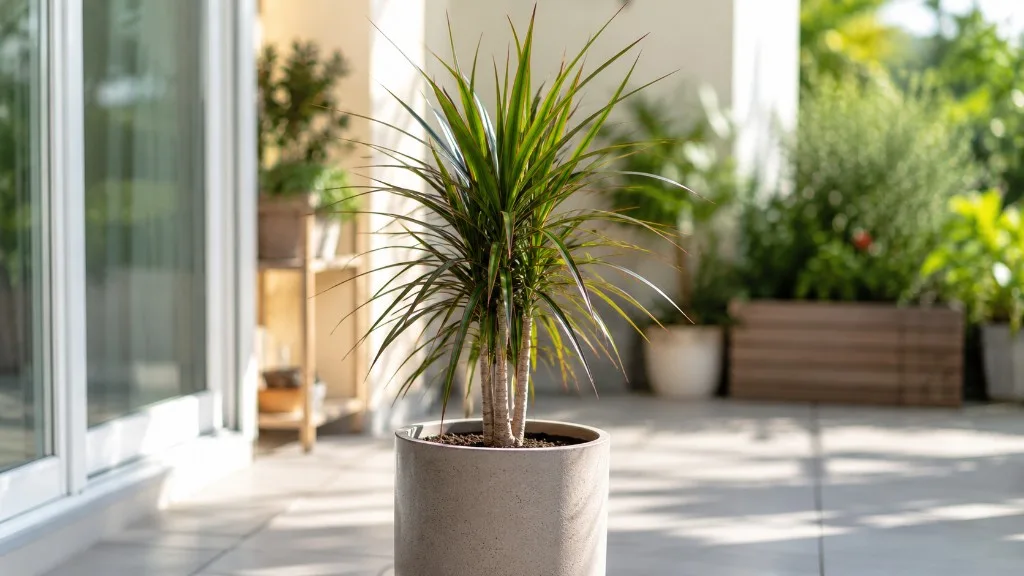
Dracaena marginata
Dragon tree tolerates low light and irregular watering. Avoid fluoride-rich tap water to prevent brown tips. Allow top half of soil to dry before watering. Slow-growing but very long-lived.
Dragon Tree Care: Light, Water, Soil & Tips
Start with wateringThe most common care mistake for Dragon TreeWatering guide →Dragon Tree care essentials
Light
bright indirect light, medium indirect light, some direct sun
Water
Allow top half of soil to dry. Every 10–14 days in summer; every 21 days in winter. Use filtered or collected water to avoid fluoride brown tips.
Soil
Standard potting mix with 20% perlite. Well-draining. Slightly acidic pH 6–7.
Humidity
Average humidity (40–50%); tolerates dry air
Temperature
18°C to 27°C (65–80°F)
Fertilizer
Feed lightly during active growth. Use monthly during spring and summer..
About Dragon Tree
Dragon Tree has a upright growth habit.
| Detail | Information |
|---|---|
| Growth habit | Upright |
| Scientific name | Dracaena marginata |
Dragon Tree Care: Light, Water, Soil & Tips
What Is Dragon Tree?
Dragon tree is the common name for Dracaena marginata, a slow-growing evergreen with narrow, arching, sword-shaped leaves edged in red or burgundy. It is one of the most recognizable indoor tree forms sold in the houseplant trade: a slender upright cane - or several canes braided or grouped together - topped by a rosette of cascading foliage that reads like a miniature palm without the humidity demands of a true tropical canopy tree. The plant is native to Madagascar, where it grows in warm, bright, seasonally dry conditions that explain much of its reputation for toughness indoors.
Indoors, Dracaena marginata typically reaches 6 to 8 feet (1.8 to 2.4 m) over many years - the Missouri Botanical Garden notes specimens often grow to 6 feet tall or more unless pruned shorter - though individual specimens in bright atriums or conservatories can push taller. In its native habitat, it can grow as a shrub or small tree to 20 feet (6 m). Growth is slow to moderate in average home conditions, which is an advantage if you want a vertical accent that will not outgrow a corner every season. Popular cultivars include ‘Tricolor’ (cream-striped leaves with pink-red margins), ‘Colorama’ (yellow-streaked leaves with pink edges), and ‘Sunray’ (yellow-striped foliage), all of which follow the same basic care rules with slightly different light tolerance for variegation.
If you are deciding whether dragon tree fits your home, the honest summary is this: Dracaena marginata rewards Dragon Tree light guide, a true dry-down between waterings, and fluoride-free water - and it punishes chronic overwatering on Dragon Tree, cold drafts, and untreated tap water in fluoride-heavy municipalities. It is easier than a fiddle-leaf fig and more forgiving of missed waterings than a calathea, but it is not a zero-care sculpture. The payoff is a clean vertical silhouette, air-filtering foliage, and a plant that still looks composed when you travel for two weeks in winter. One critical caveat for pet owners: dragon tree is toxic to cats and dogs according to the ASPCA, which surprises many people who buy it specifically because nurseries market dracaenas as easy office plants.
Botanical Background and the Indoor Tree Form
Dragon tree belongs to the family Asparagaceae - the same broad family that includes asparagus, sansevieria (now often reclassified under Dracaena), and many other structurally diverse houseplants. Knowing the family helps you predict baseline tolerances: dracaenas store some moisture in their stems, prefer well-drained root zones, and decline quickly when roots sit in stale wet mix. The cane you see above the soil is not a woody trunk in the tree sense; it is a thickened stem that supports the leaf rosette and can produce side shoots or aerial roots when conditions favor branching.
Commercial dragon trees are often sold in a deliberate tree form: one to three bare canes with a leafy crown at the top, sometimes braided when young. That presentation is horticultural styling, not a different species. Over time, lower leaves naturally senesce and drop, exposing more cane and reinforcing the tree silhouette. If you want a bushier plant, cut the cane back and new shoots will often emerge from nodes below the cut.
Why the Narrow Arching Leaves Matter for Care
The leaf shape is not decorative trivia - it is a care diagnostic. Dracaena marginata leaves are long, narrow, and arching, with margins that concentrate transpiration and, unfortunately, fluoride and salt buildup at the tips. When something is wrong with water quality or soil moisture, the tips brown first because those tissues are the last stop for minerals moving through the xylem. The red or pink edge on standard green forms is pigment, not damage, but variegated cultivars show stress as faded striping, thin new leaves, or tip necrosis before the whole leaf collapses.
Because leaves are relatively small in surface area compared with broad-leaf tropicals, the plant loses water more slowly - one reason it is genuinely drought tolerant and forgives a missed watering better than daily dribbles into soggy mix. When you evaluate new growth, look at length, color intensity, and firmness: healthy foliage should be narrow but not string-like, hold its red margin crisply on green forms, and feel leathery rather than papery.
Best Growing Conditions for Dragon Tree
Dragon tree does best when your space approximates the warm, bright, seasonally dry rhythm of Madagascar’s coastal and forest-margin habitats. The four variables that decide almost every outcome are light, water, soil, and temperature. Align those and feeding, Dragon Tree repotting guide, pruning, and propagation become routine maintenance. Misalign one - especially water or light - and the plant can hang on for months while slowly losing lower leaves, developing tip burn, or rotting at the base where symptoms are harder to reverse.
Light Requirements
Dracaena marginata needs bright, indirect light for healthy indoor growth. A practical target is strong ambient daylight for most of the day - roughly four to six hours of bright indirect exposure - without prolonged harsh sun on the leaves. East-facing windows are often ideal: gentle morning direct sun, then bright indirect light the rest of the day. West-facing exposures work if afternoon rays are filtered by a sheer curtain or the plant sits far enough from the glass that leaves do not heat up at midday. South windows can work with filtering; north windows can work in genuinely bright rooms but may produce slower growth and smaller new leaves over time.
The plant tolerates lower light better than many indoor trees, which is why it survives in offices and dim corners - but tolerance is not preference. In low light, canes stretch subtly, internodes lengthen, new leaves shrink, and the plant becomes more susceptible to overwatering because the root zone dries slowly while you keep the same calendar schedule. The fastest diagnostic is new growth: compact, richly colored leaves mean adequate light; pale, small, widely spaced leaves mean the plant wants a brighter position or supplemental lighting.
Direct sun is the other failure mode. Unfiltered midday sun can bleach leaves, scorch margins, and cause curling. Acclimate gradually over one to two weeks when moving from a dim shop shelf to a bright sill. If natural light is weak in winter, a full-spectrum grow light on a 10–12 hour timer, positioned 12–24 inches above the crown, prevents thin, droopy growth. Rotate the pot quarterly so the rosette does not lean permanently toward the glass.
Temperature and Humidity
Dragon tree prefers stable indoor temperatures between 65 and 80°F (18 and 27°C) during active growth. The RHS recommends a warm range of 18–30°C (65–86°F) for best performance. Brief excursions slightly outside that band are usually fine; cold drafts and sustained chill are not. Keep the plant away from winter window sills where leaves press against cold glass, air-conditioning vents that blast directly on the cane, and radiators that desiccate foliage while leaving roots oddly cold in a heavy ceramic pot. Temperatures below about 55°F (13°C) slow growth sharply and can trigger leaf drop on specimens that were already stressed by overwatering or low light.
Humidity is secondary compared with light and water. Average home humidity in the 40–50% range is generally adequate, and the species tolerates drier air better than ferns or calatheas. Very dry winter air below about 30% can encourage spider mites. Do not treat humidity as the first explanation for brown tips; water chemistry and soil moisture are more common culprits in fluoridated tap-water regions.
Soil and Drainage
Use a loose, well-draining potting mix with enough structure that the root zone holds air between waterings. A workable home blend is standard peat-free or peat-based houseplant mix amended with roughly 20% perlite or coarse pumice - the principle matters more than a branded recipe. The mix should release water freely from the drainage hole when you soak the pot, then dry down through the profile over days, not hours. Heavy, compaction-prone indoor mixes that stay wet for a week after a single watering are a common hidden cause of yellow leaves and basal rot on an otherwise “easy” plant.
Target a slightly acidic to neutral pH around 6.0–7.0. The RHS notes that hard alkaline tap water can shift pH over time and recommends rainwater or filtered water when possible - partly for pH, partly because of fluoride sensitivity discussed below. Hobbyists rarely need to meter pH precisely for dragon tree; the bigger practical issues are drainage holes, pot size discipline, and periodic flushing to remove salt buildup from fertilizer and water minerals. Always plant in a container with a functional drainage hole. Decorative cachepots are fine only if you empty runoff after every watering and never let the inner pot sit submerged.
How to Water Dragon Tree
The general rule for dragon tree is water when the pot has genuinely dried down, not when the calendar says so. Dracaena marginata is drought tolerant by design: its cane stores some moisture, its narrow leaves lose water slowly, and its native rhythm includes dry intervals. A practical starting point for many indoor containers in bright, warm conditions is to water when the top half of the soil volume feels dry - often roughly every 10 to 14 days in summer and every three weeks in cooler, dimmer winter months, though pot size, material, light, and humidity can shift that interval by a week or more in either direction. Your finger, a wooden skewer, or pot weight is the decision tool; the date on the calendar is only a reminder to check.
Water thoroughly until a modest amount runs from the drainage hole - roughly 10% of the pot volume is a useful mental target - then empty the saucer so the cane base is not sitting in stale water. Dragon tree is particularly vulnerable to basal rot when the bottom of the pot stays anaerobic for days. If the surface looks dry but the pot still feels heavy and cool at depth, wait. If the top two inches are dry and the pot is light for its size, soak fully. Partial sips that wet only the upper layer encourage shallow roots and make drought stress more likely even though you watered “often.”
Drought-Tolerant Dragon Tree watering guide
During active growth - warm, bright months when new leaves unfurl from the crown - the plant uses water steadily but still prefers a full dry-down between drinks. The goal is alternation: wet root zone after a thorough watering, then an air-rich root zone as the mix dries, not permanently damp soil. New leaves should emerge firm and upright from the rosette; persistent wilting on dry mix means you waited too long or roots have been damaged by past overwatering and cannot take up water efficiently. Wilting on wet mix means stop watering and inspect roots.
If you just bought the plant, expect a short adjustment period. Do not compensate for transplant shock by watering more frequently unless the pot is genuinely dry; stabilize light first, then refine the interval based on how fast your specific container dries.
Fluoride Sensitivity and Water Quality
Brown leaf tips on Dracaena marginata are very often caused by fluoride in tap water, not by underwatering on Dragon Tree alone. Many municipal supplies add fluoride at roughly 0.7 to 1.0 parts per million for dental health, and dragon trees are especially sensitive to fluoride relative to many houseplants. Those ions travel with the transpiration stream to leaf margins and tips, where they concentrate as water evaporates. Once tissue necrosis develops, that brown tip is permanent on that leaf - prevention is the entire strategy. The RHS explicitly warns that fluoride in tap water can damage dracaena foliage and recommends rainwater or filtered water when possible.
Use the best water you can reasonably maintain:
- Rainwater collected from a clean surface is excellent where local pollution is not a concern.
- Distilled or reverse-osmosis (RO) water eliminates fluoride and most salts - ideal for tip-sensitive specimens.
- Filtered pitcher or faucet filters help only if the cartridge removes fluoride; many standard carbon filters do not. Check manufacturer specs rather than assuming “filtered” means fluoride-free.
- Tap water left out overnight allows chlorine to off-gas but does not remove fluoride. It is a partial fix for chlorine sensitivity, not a complete fix for tip burn in high-fluoride areas.
If brown tips already exist, switch water sources first, then trim damaged tips with clean scissors, leaving a tiny margin of brown tissue beyond the green to avoid opening fresh wounds on living cells. Judge success by new leaves staying green to the tip, not by old damaged foliage magically reverting. Periodic flushing - running two to three pot volumes of plain, low-mineral water through the mix - reduces accumulated salts from fertilizer and hard water and complements better water quality.
Common Watering Mistakes
The single most damaging mistake is watering on a fixed weekly schedule without checking the pot, especially in winter when the same plant needs half the summer frequency. The second is letting the pot sit in a full saucer or cachepot, which suffocates roots and invites basal rot even when the top of the mix looks fine. The third is giving small daily splashes instead of a full soak when the plant is dry - that pattern keeps the center of the root ball chronically dry while the surface stays misleadingly damp.
People also misread dragon tree stress signals. Yellow lower leaves often mean overwatering, cold, or natural senescence - check moisture at depth before adding more water. Brown tips with otherwise firm green leaves usually trace to fluoride, salt buildup, or occasional extreme dryness, not humidity alone. If the cane feels soft at the base and the mix smells sour, you are past cosmetic tip burn and into root rot on Dragon Tree territory - trim affected roots, repot into fresh mix, and reduce watering frequency even if the remaining leaves look merely “a little brown.”
How to Feed Dragon Tree
Dragon tree is a light feeder during active growth, not a heavy one. A balanced water-soluble houseplant fertilizer - such as 20-20-20 or 10-10-10 - diluted to one-quarter to one-half of the label rate is sufficient for most indoor specimens. Apply to already-moist soil every six to eight weeks from spring through early fall, or monthly at quarter strength if growth is visibly slow and light is adequate. Clemson HGIC recommends liquid foliage plant fertilizer once a month during spring and summer - a good mental anchor for temperate-climate growers whose indoor seasons lag outdoor calendars.
Hold fertilizer entirely during the cool, low-light months, after a major repot until new growth appears, and while the plant is recovering from root rot or pest damage. Overfeeding produces salt accumulation that shows up as brown leaf margins and crust on the soil surface, mimicking fluoride burn. If margins crisp despite good watering and fluoride-safe water, flush the pot with plain low-mineral water at two to three times the pot volume and pause feeding for two months. Resume only when new leaves emerge cleanly.
Because dragon tree grows slowly, lack of fertilizer rarely causes dramatic failure compared with wrong light or water. If you repot into fresh mix with a starter charge, skip supplemental fertilizer for the first four to six weeks.
Repotting and Root Health
Repot dragon tree roughly every two to three years, or whenever roots circle drainage holes, the plant dries out within a day or two of watering, or water runs straight through without soaking in. Because growth is slow, many specimens stay comfortable in the same pot longer than faster-growing houseplants - avoid repotting on autopilot every spring if the root ball still fits with room to spare. The best timing is early spring as active growth resumes, which gives the plant a full warm season to colonize fresh mix.
Choose a pot only one size larger - typically 1 to 2 inches (2.5 to 5 cm) wider than the current root ball. Oversized pots hold excess wet mix around a small root system and are the most common trigger for root rot after repotting on drought-tolerant dracaenas. Use fresh, well-draining mix, plant at the same depth as before, and water lightly once after repotting, then return to your normal dry-down rhythm only when the new mix actually dries. Keep the plant in bright indirect light without direct scorch while roots heal.
Signs It Is Time to Repot
Physical signs include roots emerging from drainage holes, a top-heavy plant that tips easily, or mix that has broken down into fine, water-retentive mud. Performance signs include stalled new growth for a full growing season despite adequate light and correct watering, or chronic tip burn that persists after switching to fluoride-safe water - sometimes indicating mineral-loaded old mix rather than current care errors. A sour smell from the pot or persistent fungus gnats despite dry surface practices also suggests the mix structure has failed.
Do not repot a plant actively collapsing from overwatering until you have inspected roots, trimmed brown mushy tissue with clean tools, and let the root ball dry slightly. Moving a failing root system into fresh mix without fixing moisture habits rarely saves dragon tree. When in doubt, a smaller corrective pot with extremely well-draining mix beats a large decorative upgrade.
Propagation Methods for Dragon Tree
The standard home propagation method for Dracaena marginata is stem cuttings taken from the cane. This is also how growers reset leggy indoor trees: beheading the rosette forces new shoots from dormant buds below the cut, letting you shorten an over-tall specimen or multiply plants for free. Work with a healthy, well-hydrated parent and use clean, sharp pruners or a knife sterilized with alcohol.
Cut a 6- to 12-inch (15 to 30 cm) section of cane that includes at least one node - the subtle ring or line on the stem where leaves once attached. You can propagate the top rosette as one cutting and segment the remaining bare cane into multiple horizontal sections, each with a node. Remove leaves from the bottom half of top cuttings so buried tissue does not rot. Allow cut surfaces to callus for a few hours to a day before placing them in moist, well-draining mix or water. If rooting in water, change the water every few days and transplant to mix once roots reach 1 to 2 inches (2.5 to 5 cm).
Keep cuttings in bright indirect light at warm room temperatures near 70°F (21°C). Maintain evenly moist - not soggy - mix and avoid fertilizer until new growth appears. Root formation often takes several weeks to a few months because dragon tree is slow by nature; tug gently for resistance before assuming failure. Do not propagate stressed, diseased, or pest-infested plants - cuttings inherit the parent’s problems and rot faster than healthy cane.
Common Dragon Tree Problems
Most dragon tree problems are environmental, not mysterious diseases. The plant communicates through tip color, lower-leaf yellowing, cane firmness, and leaf drop timing long before the entire specimen collapses. The useful habit is to check water quality and moisture, then light, then temperature before reaching for fertilizer or pesticide.
Brown Tips, Yellow Leaves, and Pests
Brown leaf tips on Dracaena marginata most often mean fluoride or salt accumulation, less often consistent underwatering or extreme dry air. Switch to rainwater, distilled, or confirmed fluoride-removing filtration first; flush the pot if salts are suspected. Trim existing brown tips for aesthetics knowing they will not green up again. Tips that spread inward on multiple new leaves despite good water suggest ongoing fluoride exposure or fertilizer burn.
Yellow leaves can mean overwatering, underwatering, cold stress, natural aging of lower leaves, or root damage. If yellow leaves are soft and the mix is wet, suspect overwatering and inspect roots for brown mushy tissue. If yellow leaves are crisp and the pot is very light, drought stress is more likely. A single yellow lower leaf on an otherwise healthy crown is often normal senescence as the cane exposes more stem - remove it and watch new growth rather than overcorrecting every variable at once.
Leaf drop in clusters after a move usually traces to sudden light change, cold draft, or repotting shock. Stabilize placement for three to four weeks before making additional changes. Soft cane at the base with foul-smelling mix is advanced rot - salvage healthy cane segments via cuttings above the damage.
Watch for spider mites in dry, warm conditions, mealybugs in leaf axils, scale along the cane, and fungus gnats when surface mix stays wet. Catch pests early with weekly inspection. A strong shower, manual removal, and insecticidal soap handle most infestations if you act before populations spread.
Is Dragon Tree Safe for Pets?
Dragon tree (Dracaena marginata) is toxic to cats, dogs, and horses according to the ASPCA’s listing for Madagascar dragon tree. The listed toxic principle is saponins, with clinical signs that include vomiting (occasionally with blood), depression, anorexia, hypersalivation, and dilated pupils in cats. The broader ASPCA Dracaena genus entry reports similar signs across related species sold as corn plants and dragon trees. Toxicity is generally considered mild to moderate relative to some houseplants, but ingestion still warrants professional guidance - especially if vomiting is repeated or the pet becomes lethargic.
Toxic does not mean every nibble is catastrophic, but saponins irritate the gastrointestinal tract and cats may show dilated pupils. Place floor specimens where dogs cannot browse them; keep arching foliage off window ledges cats use as highways.
If you suspect ingestion, contact your veterinarian or the ASPCA Animal Poison Control Center at (888) 426-4435 (a consultation fee may apply). Bring a photo of the plant tag or a leaf sample for identification. This is general information, not veterinary advice - when symptoms are severe or persistent, professional care is the right move. For households with curious pets, Dracaena marginata belongs in the same caution category as pothos or peace lily: excellent for people, poor choice at nose level.
Conclusion
Dragon tree (Dracaena marginata) is a Madagascar-native indoor tree with narrow arching leaves, genuine drought tolerance, and a slow, vertical growth habit that suits corners, offices, and entryways where you want height without constant repotting. Give it bright indirect light, a true dry-down between thorough waterings, fluoride-safe water if you want clean leaf tips, well-draining slightly acidic mix, and stable warmth above about 65°F, and it will hold its silhouette for years with modest feeding and occasional cane pruning. Take stem cuttings to reset leggy specimens, repot only when roots outpace the container, and trim brown tips cosmetically while you fix the water source that caused them.
When something looks wrong, read the plant in context: brown tips on firm leaves mean water chemistry or salts first; yellow lower leaves with wet mix mean overwatering; pale small new leaves mean light; soft base means rot. Dragon tree forgives missed water more readily than chronic sogginess - a pattern that matches its native dry season more honestly than a weekly calendar ever will. Respect that rhythm, keep the plant away from pets that chew leaves, and Dracaena marginata earns its reputation as one of the most manageable indoor tree forms you can grow.
When to use this page vs other Dragon Tree guides
- Dragon Tree overview - Canonical hub for this species - care topics and problems branch from here.
- Dragon Tree problems - Symptom-first path when you already know something is wrong.
Related Dragon Tree guides
How to care for Dragon Tree?
How much light does Dragon Tree need?
bright indirect light, medium indirect light, some direct sun
- bright indirect light, medium indirect light, some direct sun - bright indirect light, medium indirect light, some direct sun.
When should you water Dragon Tree?
Allow top half of soil to dry. Every 10–14 days in summer; every 21 days in winter. Use filtered or collected water to avoid fluoride brown tips.
- Check top 2 inches - Allow top half of soil to dry.
- Drain excess water - Use filtered or collected water to avoid fluoride brown tips.
What soil works best for Dragon Tree?
Standard potting mix with 20% perlite. Well-draining. Slightly acidic pH 6–7.
- Well-draining mix - Well-draining.
Grower notes for Dragon Tree
What matters most with Dragon Tree
Dragon Tree is easiest to grow when you judge the whole plant: new growth, root-zone moisture, light exposure, and how quickly the pot dries after watering. In practice, the care checkpoint is simple: bright indirect light, medium indirect light, some direct sun. Pair that with standard potting mix with 20% perlite. Well-draining. Slightly acidic pH 6–7, and avoid changing water, pot size, and placement all at once.
Best placement in a real home
Dragon Tree belongs where bright indirect light, medium indirect light, some direct sun is realistic for most of the day, not only where the pot looks good. Allow top half of soil to dry. Every 10–14 days in summer; every 21 days in winter. Use filtered or collected water to avoid fluoride brown tips. If the pot stays wet longer than expected, move the plant into better light or reassess the mix before watering again. Humidity target: Average humidity (40–50%); tolerates dry air.. Temperature comfort zone: 18°C to 27°C (65–80°F).
Before you buy this plant
Choose Dragon Tree with firm new growth, clean leaf undersides, and soil that does not smell sour or feel compacted. Be cautious if you see brown-tips, sticky residue, collapsed crowns, or a pot that is wet in poor light. Cosmetic old-leaf damage is less worrying than weak roots or active pests.
First month after bringing it home
Do not repot Dragon Tree on day one unless the mix is failing or pests are obvious. Quarantine it, learn how fast the pot dries, and keep care boring while it adjusts. Watch especially for brown-tips, yellow-leaves, and overwatering. If problems appear, correct the condition first rather than stacking fertilizer, repotting, and pruning together.
Safety note for Dragon Tree
Dragon Tree is not a plant to keep within reach of pets or children. Treat it as an inaccessible display plant. Use gloves if sap or plant tissue is irritating, and pick a pet-safe alternative for floor pots or low shelves.
How to tell Dragon Tree is settling in
If you plan to multiply it later, common methods include Stem cuttings and Cane sections. If yellow-leaves shows up early, inspect light, watering, and roots before assuming the plant is permanently weak.
Is it pet safe?
Dragon Tree is toxic to cats and dogs.
Toxic to cats and dogs; causes vomiting and dilated pupils in cats.
Watering Dragon Tree
Allow top half of soil to dry. Every 10–14 days in summer; every 21 days in winter. Use filtered or collected water to avoid fluoride brown tips.
Soil & potting for Dragon Tree
Standard potting mix with 20% perlite. Well-draining. Slightly acidic pH 6–7.
Humidity & temperature for Dragon Tree
Dragon Tree prefers average humidity (40–50%); tolerates dry air, though normal home humidity is usually fine. Keep temperatures around 18°C to 27°C (65–80°F).
| Detail | Information |
|---|---|
| Humidity | Average humidity (40–50%); tolerates dry air - normal home humidity is fine. |
| Ideal temperature | 18°C to 27°C (65–80°F) |
Fertilizer & pruning for Dragon Tree
Use feed lightly during active growth. Use monthly during spring and summer.. for Dragon Tree.
| Detail | Information |
|---|---|
| Fertilizer type | Feed lightly during active growth. Use monthly during spring and summer.. |
Common problems on Dragon Tree
Brown Tips
LowLikely cause: Fluoride accumulation from tap water causes progressive tip browning - the most common dragon tree issue
Quick fix: Switch to filtered or collected water; flush soil; trim existing tips
Full fix guide →Likely cause: Lower leaf yellowing is normal aging as the plant sheds oldest leaves
Quick fix: Remove yellow leaves at base; check for overwatering if mid-crown leaves yellow
Full fix guide →Overwatering
HighLikely cause: Mushy or soft canes indicate overwatering root rot in this drought-tolerant species
Quick fix: Allow soil to dry completely; repot if roots are rotted; reduce watering frequency
Full fix guide →Root Rot
MediumLikely cause: Common on this plant type; confirm with recent watering, light, and root checks.
Quick fix: Inspect the plant and correct the most likely care stressor before stacking treatments.
Full fix guide →Underwatering
MediumLikely cause: Common on this plant type; confirm with recent watering, light, and root checks.
Quick fix: Inspect the plant and correct the most likely care stressor before stacking treatments.
Full fix guide →Spider Mites
MediumLikely cause: Common on this plant type; confirm with recent watering, light, and root checks.
Quick fix: Inspect the plant and correct the most likely care stressor before stacking treatments.
Full fix guide →Mealybugs
MediumLikely cause: Common on this plant type; confirm with recent watering, light, and root checks.
Quick fix: Inspect the plant and correct the most likely care stressor before stacking treatments.
Full fix guide →Aphids
MediumLikely cause: Common on this plant type; confirm with recent watering, light, and root checks.
Quick fix: Inspect the plant and correct the most likely care stressor before stacking treatments.
Full fix guide →Leggy Growth
MediumLikely cause: Common on this plant type; confirm with recent watering, light, and root checks.
Quick fix: Inspect the plant and correct the most likely care stressor before stacking treatments.
Full fix guide →Slow Growth
MediumLikely cause: Common on this plant type; confirm with recent watering, light, and root checks.
Quick fix: Inspect the plant and correct the most likely care stressor before stacking treatments.
Full fix guide →Wilting
MediumLikely cause: Common on this plant type; confirm with recent watering, light, and root checks.
Quick fix: Inspect the plant and correct the most likely care stressor before stacking treatments.
Full fix guide →Drooping Leaves
MediumLikely cause: Common on this plant type; confirm with recent watering, light, and root checks.
Quick fix: Inspect the plant and correct the most likely care stressor before stacking treatments.
Full fix guide →Low Humidity
MediumLikely cause: Common on this plant type; confirm with recent watering, light, and root checks.
Quick fix: Inspect the plant and correct the most likely care stressor before stacking treatments.
Full fix guide →Not Enough Light
MediumLikely cause: Common on this plant type; confirm with recent watering, light, and root checks.
Quick fix: Inspect the plant and correct the most likely care stressor before stacking treatments.
Full fix guide →Fungus Gnats
MediumLikely cause: Common on this plant type; confirm with recent watering, light, and root checks.
Quick fix: Inspect the plant and correct the most likely care stressor before stacking treatments.
Full fix guide →Mold on Soil
MediumLikely cause: Common on this plant type; confirm with recent watering, light, and root checks.
Quick fix: Inspect the plant and correct the most likely care stressor before stacking treatments.
Full fix guide →