Underwatering on Dragon Tree: Causes, Checks & Fixes
Quick answer
Dragon Tree underwatering shows up as a very light pot, drooping crown leaves, and bone-dry soil well below the surface-while the woody cane stays firm. First step: water thoroughly with filtered or room-temperature water until it drains from the bottom, then empty the saucer.
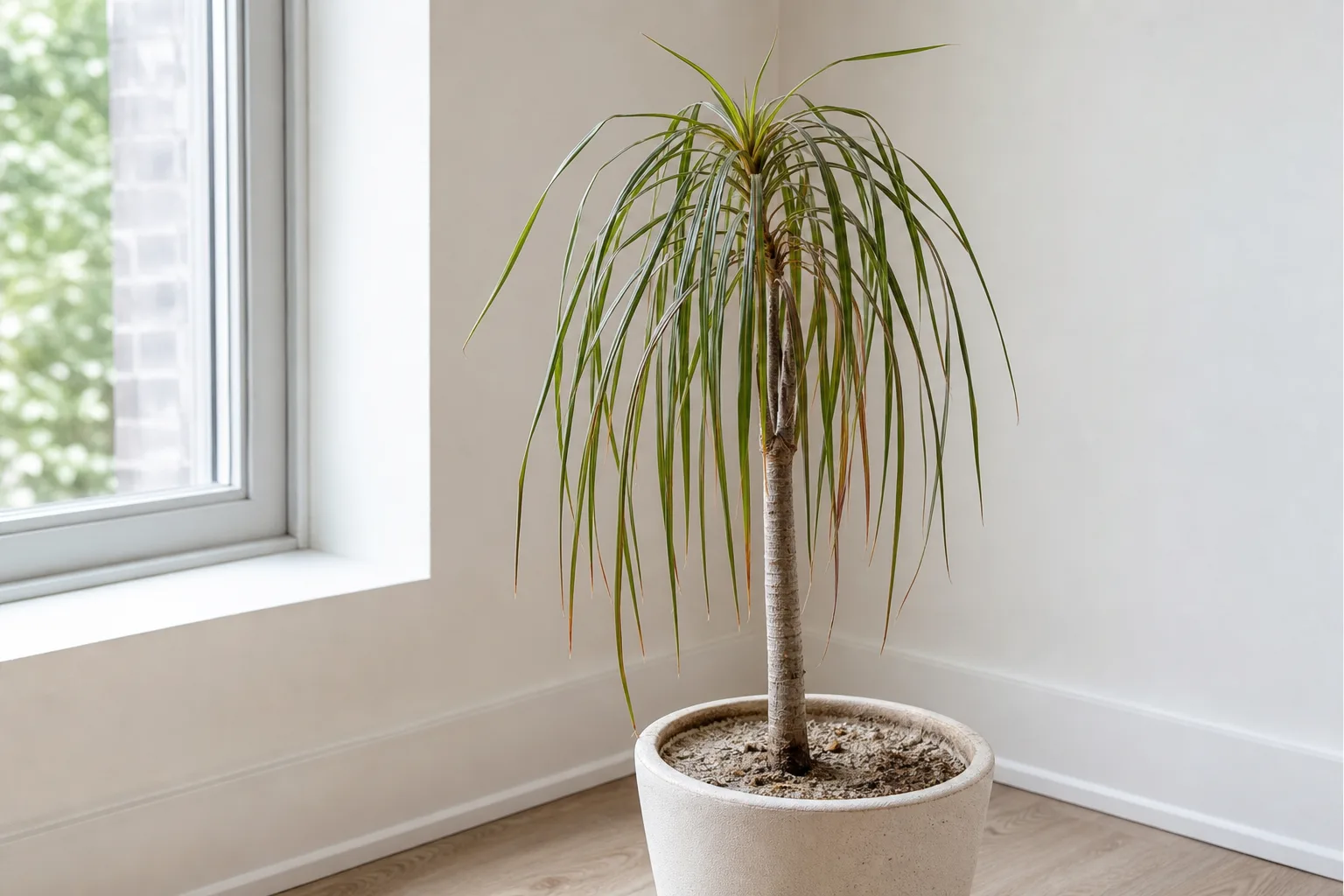
Underwatering on Dragon Tree: Causes, Checks & Fixes
This guide covers underwatering on Dragon Tree. See also the general Underwatering guide, watering, and light pages for this plant.
Underwatering on Dragon Tree: Causes, Checks & Fixes
Quick answer
Dragon Tree (Dracaena marginata) is famously drought-tolerant, which makes underwatering easy to miss until the crown droops. Chronic dry spells show up as a very light pot, dusty soil several inches down, and limp sword-shaped leaves at the top of the cane-not mushy stems.
First step: water thoroughly once. Run filtered or room-temperature water through the pot until it drains freely from the bottom, then empty the saucer within 30 minutes. Do not mist the leaves, fertilize, or repot on day one.
If the woody cane feels firm and soil is bone dry, one deep drink is the right move. If the cane is soft and soil stays wet, you are looking at overwatering on Dragon Tree instead.
Why Dragon Tree gets underwatered
Owners often underwater Dragon Tree because the species tolerates drought so well. Missouri Botanical Garden notes that Dracaena marginata tolerates drought and is marketed as nearly indestructible-so it is easy to stretch the gap between waterings too far, especially after reading warnings about root rot on Dragon Tree.
The plant’s architecture also hides early thirst. A tall woody cane stores moisture while narrow leaves at the crown are the first to lose turgor. By the time lower leaves crisp or the whole top droops, the root zone may have been dry for longer than you think.
Several home conditions speed drying past what a calendar schedule expects:
- Bright light and heat - Plants near south windows, radiators, or HVAC vents transpire faster. A pot that dried in ten days last month may need water in a week once days lengthen.
- Root-bound containers - Crowded roots fill the pot with mass that holds little water. Soil that dries out unusually fast can signal a pot-bound plant.
- Winter misreads - Growth slows and water use drops in cool, dim months, but indoor heating still pulls moisture from mix. Skipping every watering because “it’s winter” can leave an actively heated plant chronically dry.
- Hydrophobic old mix - Peat-heavy soil that stays dry too long can repel water. The surface may look briefly damp while the center of the root ball stays dry inside.
- Fear of overwatering - After one soggy episode, many owners undercorrect and wait until leaves visibly wilt. On Dragon Tree, that swing is especially risky in summer when the crown cannot pull water from a desiccated root ball.
Dragon Tree’s normal rhythm is to allow the top half of the soil to dry between drinks-roughly every 10–14 days during active growth and about every three weeks in winter, always adjusted to how fast your pot actually dries.
What underwatering looks like on Dragon Tree
Underwatering on Dragon Tree overview has a distinct pattern at the crown, not just at old leaf scars down the cane.
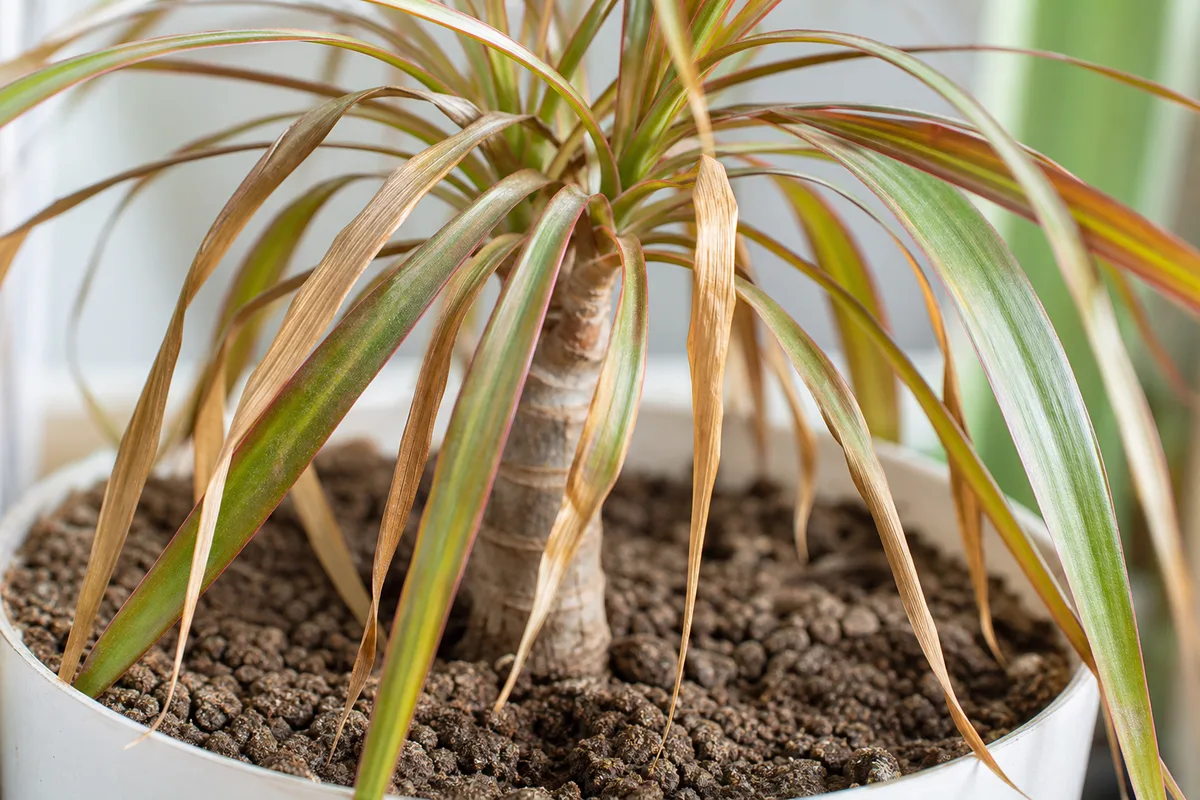
Underwatering symptoms on Dragon Tree - compare limp crown foliage and dry soil with turgid leaves on a recently watered plant.
Typical underwatering signs:
- Crown leaves lose rigidity and hang downward while the woody stem stays firm
- Soil is dry well below the surface and may shrink away from the pot wall
- Pot feels noticeably light compared with its weight right after watering
- Leaf margins turn papery and brown on actively wilting foliage-not isolated tip burn on otherwise turgid leaves
- Growth at the top stalls; new leaves emerge smaller or slowly after a dry spell
- Older leaves may yellow and drop after repeated drought cycles, separate from the normal single lower-leaf senescence this plant shows as it grows taller
What underwatering usually does not look like:
- Soft, spongy cane tissue at the base - that pattern fits overwatering and rot, not drought
- Sour-smelling wet soil with fungus gnats - wet root conditions, not dry ones
- Uniform brown tips on otherwise stiff leaves with moist soil - often fluoride or salt stress from tap water, the most common cosmetic issue on Dragon Tree
- A single yellow leaf at the very bottom with everything else healthy - normal aging on a maturing cane
RHS guidance lists brown leaf tips on dracaenas as a sign that may indicate underwatering among other stresses, which is why soil moisture at depth matters more than leaf color alone on this plant.
How to confirm the cause
Work through these checks in order before you change the whole care routine:
- Pot weight test - Lift the container. A light pot usually means dry soil; a heavy pot means moisture remains. Compare against how it felt right after your last thorough watering.
- Depth moisture check - Push your finger or a wooden skewer several inches into the mix. On Dragon Tree, do not water based on surface color alone; confirm dryness through much of the upper half of the pot.
- Cane firmness - Gently squeeze the lower woody stem between thumb and finger. Firm cane plus dry soil supports underwatering. Soft, yielding tissue plus wet soil points to overwatering-even if leaves look wilted.
- Drainage saucer - Look for standing water or chronic dampness. Wilt with wet soil often means damaged roots, not thirst.
- Leaf location - Drooping affects the active crown first in drought. Widespread yellowing on mid-cane leaves with wet soil fits excess moisture better.
- Recent schedule - Trace the last three weeks. Travel, a new bright window, or Dragon Tree repotting guide into a smaller cache pot can dry a drought-tolerant plant faster than its old rhythm.
- Water penetration - If you have been “watering” but the root ball still feels dusty inside, the mix may be hydrophobic. That is still an underwatering problem at the roots even when the surface looks briefly damp.
If dry soil, light pot weight, and firm cane align with crown droop, treat as underwatering. If moist soil and soft tissue align with wilt, switch to the overwatering diagnostic path instead.
First fix for Dragon Tree
Water thoroughly once with filtered or room-temperature water until excess drains from the bottom, then empty the saucer.
Place the pot in a sink or tub. Pour slowly, letting water soak the mix rather than racing down the sides of a shrunken root ball. Stop when water runs freely from drainage holes. Wait a few minutes and add a little more if the first pass ran through too fast on very dry peat. Discard saucer water within about 30 minutes so roots are not left sitting in pooled moisture.
Use filtered, distilled, or collected rainwater if possible. Dragon Tree is sensitive to fluoride in municipal tap water; drought stress plus fluoride exposure can brown leaf margins and blur your recovery read. Rehydrating with better water avoids stacking two separate problems.
Do not bottom-water as the only first step on a severely shrunken, pulled-away root ball unless top watering fails to wet the center-surface tension can leave the middle dry. If top watering runs straight through, follow with a 20–30 minute bottom soak, then drain completely.
Hold fertilizer, repotting, and pruning until the crown regains turgor. Stressed roots do not need nutrient salts while they are reabsorbing water.
Step-by-step recovery
After the initial thorough watering:
- Wait for the top half to dry again - Do not water daily in panic. Dragon Tree needs oxygen between drinks. Resume the species-appropriate dry-down before the next soak.
- Rehydrate hydrophobic mix if needed - If the next watering still channels out the sides, bottom-water for 20–30 minutes in a tray, then drain. Repeat on watering day until the root ball consistently holds moisture.
- Move off heat sources temporarily - If the plant sat beside a radiator or heat vent, shift it a few feet away while it recovers so transpiration does not outpace a damaged root system.
- Trim only fully dead tissue - Snip crisp, brown leaves that do not recover after the crown firms up. Leave partially green foliage in place to photosynthesize.
- Inspect roots only if crown stays limp after two good soaks - Slide the plant out. Healthy drought-stressed roots are firm and pale tan. Mushy, dark, odorous roots mean rot from past overwatering, not current underwatering alone.
- Adjust the calendar to the pot - Mark how many days until the top half dries after recovery. That interval becomes your home-specific guide, not a generic “once a week” rule.
Recovery timeline
Mild crown droop on a healthy root system often improves within 24–48 hours after one proper soak. Leaves should feel noticeably firmer by the second morning if drought was the sole issue.
Brown crispy margins on leaves that fully desiccated before watering will not green up again-they are dead tissue. Watch the newest spear at the crown for fresh rigidity instead.
If the plant was severely dry for weeks, expect one to three weeks before new growth looks normal. Fine root hairs killed by prolonged drought regrow slowly on this slow-growing species.
Recovery is failing if the crown stays limp through two thorough waterings separated by a proper dry-down, cane tissue softens at the base, or mid-cane leaves yellow in clusters while soil remains wet. Those signs warrant a root inspection for rot or pest stress.
Lookalike symptoms to rule out
Overwatering and root rot - Wilted leaves with wet, heavy soil and a sour smell. A wilted plant with moist soil may have root damage from oversaturation rather than lack of water. Soft cane tissue confirms rot risk. Dragon Tree is more often killed by soggy soil than by missing one watering.
Fluoride brown tips - Papery brown tips on otherwise stiff, upright leaves while soil moisture is adequate. Fluoride in tap water can damage dracaena foliage and cause brown tips. Switch water source; do not keep drowning a plant that is already moist.
Normal lower-leaf drop - Dragon Tree sheds its oldest leaves as the cane lengthens, leaving diamond-shaped scars. One yellowing bottom leaf on an otherwise turgid plant is aging, not drought.
Low humidity - Dry indoor air can accentuate tip browning without full crown wilt. Humidity stress usually spares overall leaf turgor if soil moisture is adequate.
Spider mites - Fine stippling, webbing, and dusty-looking leaf surfaces on an otherwise well-watered plant. Mites thrive in hot dry air; confirm with a white paper tap test under the crown leaves.
Cold or heat shock - Drafts and radiator blasts can make leaves droop within hours regardless of soil moisture. Check placement if wilt appeared suddenly after moving the pot.
Mistakes to avoid
Do not interpret every brown tip as underwatering. On Dragon Tree, tip burn is often fluoride or salt before it is drought.
Do not water on a fixed weekly calendar without checking the top half of the mix. Drought tolerance does not mean the plant never needs water.
Do not rescue a dry plant with daily shallow sips. Light top sprinkles never rewet a desiccated root ball and can create alternating dry-wet cycles that stress roots.
Do not fertilize a wilted Dragon Tree to “push growth.” Feed only after the crown is firm and new growth is active.
Do not repot immediately into a much larger container. Extra wet-holding soil around a drought-stressed root ball increases rot risk after you finally water thoroughly.
Do not assume drooping always means more water when soil is already wet-that mistake turns rot into a bigger problem on a species sensitive to soggy roots.
How to prevent underwatering next time
Build a check habit tied to this plant’s actual dry-down, not a generic houseplant schedule.
- Water when the top half of the soil has dried - In many homes that means every 10–14 days during spring and summer active growth and closer to every three weeks in cooler, dimmer winter-always confirmed by touch or pot weight.
- Learn your dry weight - Lift the pot after a full watering and again when the top half is dry. The difference is more reliable than eyeballing pale peat.
- Use filtered or collected water - Prevents fluoride tip burn that complicates drought diagnosis.
- Adjust for brighter placement - More light means faster drying. A Dragon Tree moved closer to a window may need water sooner even though the species is labeled drought-tolerant.
- Repot when roots crowd - A root-bound plant can go from fine to wilted in days. Refresh mix when roots circle densely or water runs through instantly without retention.
- Reduce winter skips thoughtfully - Growth slows, but heated dry air still pulls moisture. Check monthly at minimum even when the plant looks idle.
Leaves may brown on Dragon Tree when soils are too moist or too dry-prevention means reading moisture at depth, not reacting only to leaf color.
When to worry
Treat recovery as urgent when the entire crown is collapsed, soil has been dust-dry through hot bright conditions, or the plant has gone multiple weeks without a real soak while actively growing. Fine roots can die back enough that two careful waterings will not re-firm the top within a few days.
Escalate to root inspection if cane tissue softens, soil smells sour despite your dry diagnosis, or mid-cane leaves yellow in groups while the mix stays damp. Those patterns suggest rot or a mixed water-stress history, not simple thirst.
A single drooping day on firm cane with dry soil is recoverable and common. Complete crown collapse on a neglected, root-bound plant in peak summer heat is the scenario most likely to leave long-term stunting even after you correct watering.
Conclusion
Dragon Tree underwatering is a mismatch between how slowly owners expect it to drink and how fast their particular pot dries in real light and heat. Confirm with pot weight, deep soil dryness, and firm cane tissue before you act. One thorough watering with good-quality water fixes most cases; crispy old leaves and tip burn may stay cosmetic, but a firm crown and new growth tell you the plant is back on track.
When to use this page vs other Dragon Tree guides
- Dragon Tree watering guide - Use for routine moisture checks before assuming underwatering is the main issue.
- Dragon Tree problems hub - Browse all 16 common issues on this species.
- Wilting on Dragon Tree - Different entry point when symptoms overlap with underwatering.
- Brown Tips on Dragon Tree - Different entry point when symptoms overlap with underwatering.
- Yellow Leaves on Dragon Tree - Different entry point when symptoms overlap with underwatering.