How to Propagate Dragon Tree: Top and Cane Cuttings
How to Propagate Dragon Tree: Top and Cane Cuttings
How to Propagate Dragon Tree: Top and Cane Cuttings
Dragon tree propagation is one of the most practical ways to reset a leggy Dracaena marginata, fill out a sparse pot, or share a plant that has outgrown its space. Unlike African violets or many succulents, dragon tree does not regenerate from a detached leaf. The workable home methods are top cuttings - the leafy crown removed from a tall cane - and cane section cuttings, short segments of bare stem that each carry at least one node. Both routes work because they include living stem tissue where dormant root primordia and bud tissue can activate under warmth, humidity, and oxygen.
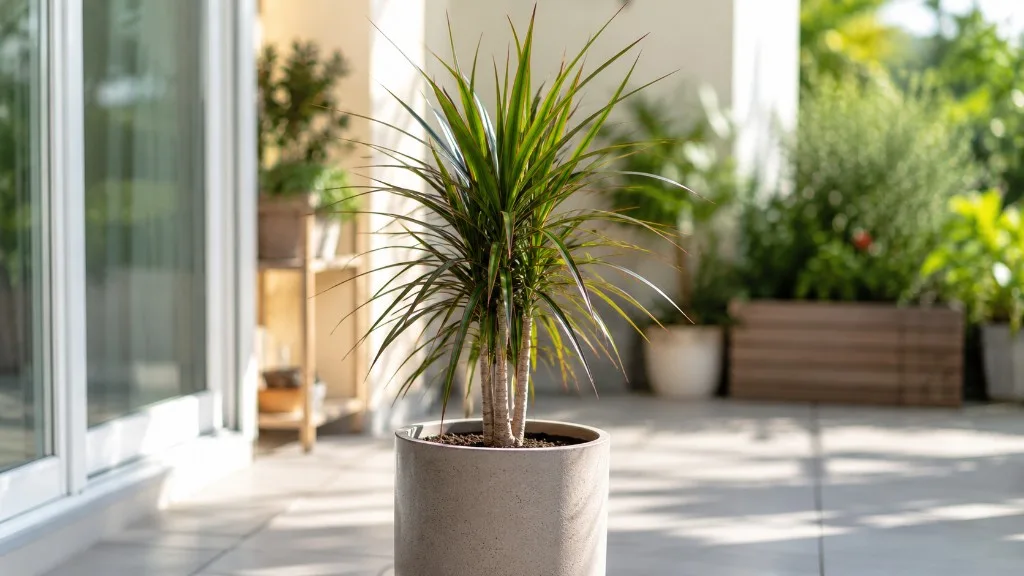
Dragon tree grows as an upright cane: lower leaves yellow and drop over time, leaving a bare trunk with foliage clustered at the top. Beheading the top gives you a ready-made cutting with leaves for photosynthesis and nodes for roots. Slicing the exposed bare cane into sections turns one long stem into several potential plants. What never works is rooting a single leaf in a jar - you may get callus or rot, but you will not get a new stem because the leaf blade lacks the axillary bud required to build one. Success depends on node placement, correct orientation on bare canes, clean water or airy mix, and timing during active growth.
Why Dragon Tree Propagation Needs Stem Tissue (Not Leaves)
Dragon tree can be multiplied only from stem sections that include nodes - the raised rings or leaf scars where leaves once attached and where buds remain dormant beneath the bark. A node hosts the meristematic tissue that can form adventitious roots when moisture and warmth signal the stem to anchor. It also carries the buds that eventually push new leaves and side shoots after rooting. Remove the node from the equation and you remove the plant’s ability to regenerate.
Top cuttings satisfy the node requirement automatically. When you cut 15–20 cm (6–8 inches) from the crown of a marginata, the basal end of that cutting carries multiple nodes where you stripped lower leaves. The leafy top continues limited photosynthesis while roots form below. Cane section cuttings satisfy the same requirement on bare trunk material: each 8–10 cm (3–4 inch) segment must include one or two nodes, planted with correct vertical orientation so buds face upward and root initials form at the buried end.
Leaf cuttings do not work for producing a new dragon tree. A detached leaf may callus or occasionally root at the petiole base, yet it cannot generate a stem because the leaf lamina lacks an axillary bud. Horticultural writers call this a blind cutting - tissue that roots without ever becoming a plant. If a leaf tears off with a sliver of stem that still includes a node, treat it as an extremely short stem cutting, not a leaf propagation.
How Dragon Tree Stem Propagation Actually Works
Stem propagation asks wounded cane tissue to perform two jobs at once: limit water loss through remaining leaves while building a root system from nodes or the basal cut surface. A top cutting without roots still transpires moisture from its narrow, strap-like leaves. If it loses water faster than the stem can replace it from the rooting medium, leaf tips brown, the cane shrivels, and the cut end rots before roots appear. Your setup must close that gap: enough leaf area for modest photosynthesis, enough humidity or medium moisture to keep the stem hydrated, and enough oxygen that anaerobic bacteria do not consume the cutting first.
Adventitious roots emerge from cells just beneath the epidermis at nodes and sometimes from the fresh basal wound when environmental cues align - elevated humidity, stable warmth roughly 18–27°C (65–80°F), and oxygenated water or airy potting mix. On Dracaena marginata, nodes appear as subtle rings or leaf scars spaced along the cane. Submerging or burying at least one node gives roots a defined zone to form. The upper foliage continues gas exchange and energy production, supporting the metabolic cost of root construction even before those roots are functional.
Bare cane sections follow the same biology with less photosynthetic help. A leafless segment depends entirely on stored stem reserves and ambient humidity to survive until roots and the first bud break appear. That is why cane sections root more slowly than leafy top cuttings and why orientation errors - planting a segment upside down - produce zero growth even when the medium stays perfect. Iowa State Extension emphasizes that new stems and roots on cane cuttings emerge from buds on the thick stem, which only activate when the segment’s polarity matches how it grew on the parent plant.
Nodes, Cane Architecture, and Adventitious Roots
A node is the minimum viable unit for dragon tree propagation. On marginata, look for the slightly swollen ring where a leaf petiole attached, or the pale horizontal scar left after an old leaf dropped. Internodes - the smooth cane between nodes - do not root reliably on their own. A cutting that spans two nodes gives redundancy: if the lower node fails, the upper may still produce roots and a shoot.
Dragon tree’s natural habit explains why propagation pairs so well with pruning. As the plant ages, it sheds lower foliage and extends upward, producing the familiar bare cane with a leafy head. Topping that head yields an immediate propagation candidate; cutting the bare trunk into sections yields additional starts from otherwise empty stem.
Choosing Healthy Material from Your Dragon Tree
Start with a healthy parent plant that is actively growing, not drought-stressed, pest-ridden, or shedding leaves from cold drafts or chronic overwatering on Dragon Tree. Weak parent tissue produces weak cuttings. If the plant looks tired but you still want to propagate, take material from the firmest cane sections and the most turgid leaf cluster rather than the thinnest, wrinkled lower stem.
Prefer canes that are firm and green to light gray-brown, not mushy, blackened, or mite-infested. For top cuttings, choose a crown with several healthy leaf whorls; widespread yellowing is a warning sign. For cane sections, select bare trunk regions with visible node rings spaced at regular intervals.
Top Cuttings Versus Bare Cane Sections
Top cuttings are the default when your dragon tree is leggy and you want one strong new plant quickly. You remove the leafy crown, root it, and let the parent stump resprout. The cutting carries leaves for photosynthesis, roots faster than bare cane in most home setups, and gives an immediate visual reward when placed in a clear jar.
Cane section cuttings are the multiplier when you have long bare trunk between the soil and the foliage head. One beheading plus two or three cane segments can yield three or four new plants from a single pruning session. Each section needs at least one node, and two nodes per piece improves odds. Sections without nodes - smooth internode-only pieces - will not produce shoots regardless of rooting medium.
Choose top cuttings when you want speed and simplicity and only need one or two new plants. Choose cane sections when you want maximum yield from a tall bare stem or when the top crown is small but the trunk is long. You can combine both in one session: behead the top, root it, then section the remaining bare cane before the parent stump branches.
The Best Time to Propagate Dragon Tree
Dragon tree roots fastest during active growth, when light is strong, days are lengthening, and room temperatures stay consistently warm. Spring through early fall is the practical window for most indoor growers - Iowa State Extension notes that early spring is the ideal time for houseplant cuttings, though propagation can succeed at other times with adequate warmth and light.
Judge readiness by the plant, not the calendar alone. The parent should show firm new leaves at the crown and no active pest outbreak. Stabilize the environment before cutting if the plant is dropping leaves from cold drafts or overwatering. Avoid late fall or winter propagation unless you can supply warmth and Dragon Tree light guide - unrooted cuttings on a cold windowsill routinely stall for months while the same material roots in two to three weeks in June.
Tools and Setup Before You Cut
You need modest equipment: sharp bypass pruners or a knife, small pots with drainage holes, fresh filtered or distilled water or moist propagation mix, optional clear plastic bag or dome for soil-rooted cuttings, labels if you run multiple segments, optional IBA rooting hormone powder or gel, and 70% isopropyl alcohol for disinfecting blades. Bypass cuts heal cleaner than crushing anvil pruners on semi-woody canes. Disinfect before cutting, especially if the parent has had rot or pest issues.
For soil propagation, use two parts perlite to one part potting mix, or straight moist perlite. For water propagation, use a clear glass or jar and fill it only one-quarter to one-third with water - enough to cover nodes while keeping most of the stem above the waterline.
Assemble containers and pre-moisten mix before you cut. Fresh wounds should not sit on the counter while you hunt for a jar. Decide whether each piece goes to water or soil before the blade meets cane.
Method 1 - Top Cuttings (Beheading a Leggy Dragon Tree)
Top cutting - sometimes called beheading - is the most common dragon tree propagation method because it matches how the plant naturally looks when it needs renovation. You remove the leafy crown from a tall bare cane, root the severed top, and allow the remaining stump to branch.
Step 1: Plan the cut height. Decide how much bare trunk you want to leave on the parent. Many growers cut 15–30 cm (6–12 inches) above the soil, but you can go higher if the cane is very long and you intend to harvest cane sections from the middle afterward.
Step 2: Cut cleanly. Using sterilized bypass pruners, sever the cane just below a node on the trunk section you are keeping, or through the smooth internode on the top piece just below the lowest leaves you want on the cutting. One clean stroke beats sawing, which crushes vascular tissue.
Step 3: Prepare the top cutting. On the removed crown, strip leaves from the lower 5–8 cm (2–3 inches) of stem so nodes are exposed for rooting. Leave at least two to four whorls of leaves at the top for photosynthesis. Remove any yellow or brown leaves at the base - they rot in water or soil.
Step 4: Root immediately. Place the stripped basal nodes in filtered water or insert into pre-moistened perlite-heavy mix. Position in bright, indirect light - not direct hot sun that overheats water or scorches leaves.
Step 5: Label and date. Top cuttings look identical in jars. A piece of tape with the date helps you track rooting progress without disturbing the stem.
Iowa State Extension lists Dracaena marginata among species well suited to cane and stem cuttings. Top cuttings in water often show root nubs in 10–14 days under warm, bright conditions, with transplant-ready roots in three to six weeks; soil or perlite rooting typically takes four to ten weeks.
Preparing and Rooting the Leafy Top Section
Leaf management on top cuttings balances photosynthesis against transpiration load. A heavy foliage head on an unrooted cane loses water quickly in dry indoor air. If the crown is large, removing one lower whorl of leaves beyond what you strip for node exposure reduces wilting without stripping the cutting bare. Do not remove so many leaves that the stem cannot produce energy for root construction.
Rooting hormone is optional for marginata top cuttings in water but can improve consistency on cane sections and soil-rooted tops. For soil rooting, bury at least one node, cover with a humidity dome, and vent daily. A gentle tug test after four weeks can indicate anchoring roots.
Method 2 - Cane Section Cuttings with Nodes
When a dragon tree has long bare trunk between soil and foliage, cane section cuttings turn that empty stem into additional plants. After beheading the top - or when pruning a leafless middle section - cut the bare cane into segments 8–10 cm (3–4 inches) long, each containing one to two nodes.
Step 1: Mark orientation before cutting. This is the step beginners skip and regret. Buds and roots follow polarity - the stem knows which end was up on the parent plant. Before you cut a long cane into pieces, mark the top with a slanted cut and the bottom with a flat cut, or use a marker to indicate “up” on each segment. Upside-down cane sections callus indefinitely without ever sprouting.
Step 2: Cut between nodes. Use sterilized pruners to divide the cane so each piece includes complete node rings, not partial scars split across two segments.
Step 3: Allow cut surfaces to dry briefly. Ten to thirty minutes of air exposure lets the wound suberize - form a protective layer - before contact with wet medium. Dragon trees heal cane cuts naturally without sealing wax.
Step 4: Root vertically or horizontally. Insert the bottom end into moist perlite so one node sits at or just below the surface and at least one node remains above or near the surface for shoot emergence. Alternatively, lay the section horizontally on moist mix with nodes in contact with the medium - orientation is less critical horizontally because both nodes touch soil, though vertical planting is more common indoors.
Step 5: Maintain humidity. Bare cane sections lack leaves to drive transpiration feedback, so they depend on ambient humidity. A dome, plastic tent, or warm bright room prevents desiccation while roots form. Expect slower progress than top cuttings - often four to eight weeks before shoots appear, longer in cool conditions.
Orientation, Planting, and Vertical Versus Horizontal
Vertical planting is the default for dragon tree cane sections in pots. Insert the marked bottom end into mix so the lowest node is buried 1–2 cm (½–¾ inch) deep. The upper node should sit at or just above the surface - that is where the first leaf whorl typically emerges. Planting too deep buries both nodes in airless, constantly wet tissue and invites rot. Planting too shallow leaves the basal node exposed to dry air without consistent moisture for root initials.
Horizontal planting works when a section carries two well-spaced nodes - lay the cane on moist perlite with both nodes in contact with the mix. If you lose track of polarity, do not guess; propagate horizontally or discard the segment.
Rooting in Water Versus Soil
Both water and soil work for dragon tree top cuttings and cane sections with nodes. Your choice should match how much you want to watch roots form, how confident you are managing transplant timing, and whether your home runs cool or warm.
Water propagation offers visibility - root nubs often appear in 10–14 days on marginata in warm, bright conditions, with two to eight weeks typical for transplant-ready roots. Soil or perlite propagation hides roots but can reduce transplant shock when done correctly; expect four to ten weeks for established anchoring. Marginata tolerates water rooting well compared with thicker Dracaena species, but stagnant jars still kill cuttings regularly.
Water Changes, Depth, and the Transition to Potting Mix
Change water every five to seven days, or sooner if it clouds, smells stale, or develops slime on the glass. Stagnant water loses oxygen and breeds bacteria that colonize the basal wound before roots can. Use room-temperature filtered or distilled water if your tap water is high in fluoride - marginata is sensitive, and cuttings show brown tips quickly on problematic water.
Keep the water level low: one-quarter to one-third of the jar height is enough to submerge nodes while leaving most of the cane above the line. Fully filled jars push root emergence too high on the stem and increase rot risk on submerged internodes. Leaves must stay completely above the water surface; any submerged foliage rots within days and fouls the water.
Transition water-rooted cuttings to soil when roots reach 2.5–5 cm (1–2 inches). Pot into well-draining soil with perlite, water lightly, and hold fertilizer until new growth confirms the root system is working - usually a few weeks post-transplant.
What Happens to the Parent Plant After You Cut
Beheading a dragon tree is not destruction - it is renovation. The stump left after removing the top will resprout from dormant buds below the cut, often producing multiple new stems that make the parent bushier than the single cane it replaced. Clemson HGIC notes that if stems become too long and bare, cut them off at the desired height and new leaves will soon appear - regrowth may take several weeks to months depending on light and season.
Care for the parent stump as you would a mature marginata, with one adjustment: do not overwater a plant that suddenly has far less foliage transpiring moisture. The root system is unchanged but leaf surface area dropped sharply. Check soil moisture before watering and allow the top half of the mix to dry between drinks. Place the stump in bright, indirect light to encourage compact new growth; dim corners produce weak, stretched shoots.
Aftercare Once Roots Form
New dragon tree plants need steadier, more boring conditions than mature specimens. Keep potting mix lightly moist, not wet. Hold fertilizer until you see new leaf growth or until at least four to six weeks have passed in the new pot - roots need to acclimate before salts are welcome. Avoid Dragon Tree repotting guide again immediately; marginata dislikes root disturbance while establishing.
Keep bright, indirect light and stable temperatures - drafts cause leaf drop that mimics failure even when roots are healthy. Success on top cuttings shows as firm new leaves; on cane sections, as a green nub at a node that unfolds into the first strap-like leaves. Quarantine new propagations two to three weeks if pests were an issue on the parent.
Common Dragon Tree Propagation Failures and Fixes
Basal rot with mushy stems in water usually means stagnant water, a fully submerged cane, or leaves touching the waterline. Discard the cutting, sterilize the jar, and restart with fresh water changed every five to seven days and a lower fill level.
Cane section that calluses but never sprouts often indicates upside-down planting or a segment without viable nodes. Retry with marked orientation and confirmed node rings visible on the bark.
Top cutting wilting with a firm stem suggests insufficient humidity or excessive leaf area on an unrooted cane. Add a humidity dome for soil propagations, remove one lower leaf whorl, or move away from dry heating vents.
Brown leaf tips on otherwise healthy cuttings frequently signals fluoride or chlorine in tap water, not rooting failure. Switch to filtered or distilled water for the jar and for subsequent watering after potting.
Rooted cutting that collapses after potting points to transplant shock or oversaturated mix. Stabilize humidity, shade slightly from direct sun, and verify the pot drains freely. Do not fertilize or repot again until new growth appears.
Rooted leaf with no shoot is a blind cutting, not delayed success. Restart with a proper stem section including nodes.
When Not to Propagate Dragon Tree
Do not propagate dragon tree as a first response to every problem. If the plant suffers from active root rot on Dragon Tree, severe dehydration, or a spreading pest infestation, stabilize the parent first or take only material from clearly unaffected cane regions. Propagation is a backup plan and a renovation tool, not a cure for chronic overwatering or cold damage.
Skip propagation when the only available tissue is soft, blackened, or hollow at the cane. Weak cuttings teach little and waste containers. Wait until the plant produces firm new growth at the crown, then behead from healthy tissue above the damaged zone.
The ASPCA lists Dracaena species as toxic to cats and dogs. Keep cuttings and trimmings away from pets during propagation.
Fluoride-Sensitive Roots: Water Quality Matters
Dragon tree is fluoride-sensitive. Clemson HGIC notes that dracaenas are very sensitive to fluoride, with scorched leaf tips and margins as common symptoms. Tap water in many municipalities produces brown leaf tips on cuttings and established plants alike. Propagation jars magnify exposure because cuttings sit in the same water for days between changes. Use filtered, distilled, or rainwater for water propagation; letting tap water sit overnight removes chlorine but not fluoride. Distinguish cosmetic tip burn from basal rot - firm green cane with brown tips needs better water; mushy gray cane at the cut end needs a restart.
Conclusion
Propagating dragon tree comes down to three non-negotiables: use stem tissue with nodes, choose between top cuttings and cane sections based on the plant in front of you, and never treat a detached leaf as propagation material. Top cuttings from a leggy crown root fastest in clean water with regular changes and bright indirect light. Cane sections multiply bare trunk into several new starts when each piece carries nodes and is planted right-side up. The parent stump you leave behind is not waste - it resprouts into a bushier plant while your cuttings root elsewhere.
Start in spring or summer when marginata pushes firm new growth, mark cane orientation before you cut, and use filtered water if fluoride browns your leaves. Wait for new leaf whorls or firm roots an inch long as your success signals rather than impatience with the calendar. Get nodes, orientation, and oxygen in the rooting zone right, and you will reset leggy plants, fill empty pots, and share dragon trees without buying another cane or gambling on a rooted leaf that never becomes a plant.
When to use this page vs other Dragon Tree guides
- Dragon Tree overview - Start here for whole-plant context before deep-diving this topic.
- Dragon Tree problems hub - Jump to symptom-specific fix guides when this care topic does not resolve the issue.
Related Dragon Tree guides
- Dragon Tree overview
- Dragon Tree watering
- Dragon Tree light
- Dragon Tree soil
- Dragon Tree fertilizer
- Dragon Tree repotting
- Dragon Tree problems
Related tool
Try the Propagation Success Calculator with dragon-tree pre-selected to estimate needs for your setup.