Dragon Tree (Dracaena marginata) Repotting Guide
Dragon Tree (Dracaena marginata) Repotting Guide
Dragon Tree (Dracaena marginata) Repotting Guide
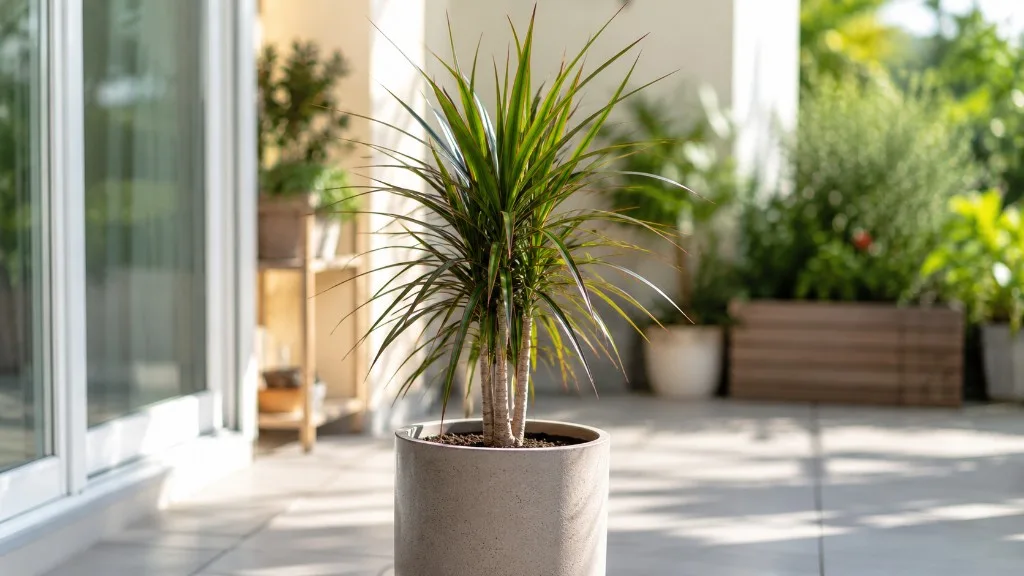
A 5-foot braided dragon tree in a narrow office cylinder looks like it needs a deeper pot - three thin woody canes, red-edged leaf tufts at the top, and a root ball you cannot see that is probably smaller than the canopy suggests. That mismatch is the whole repotting story for Dracaena marginata. Unlike corn plant (Dracaena fragrans) with its thick single cane and wide strap leaves, marginata grows as slender multi-stem architecture with most of the visual mass sitting high on canes that stay relatively narrow for years. Roots occupy a shallow zone at the base while the plant keeps adding height above. Repotting is less about giving a mansion of soil and more about refreshing mix, adding one modest diameter step, and choosing a wide, heavy base so the cluster stops tipping every time someone brushes past it.
This page is the species repotting hub for dragon tree - braided nursery stock, single-cane desk plants, and floor specimens alike. Shared genus advice for all dracaenas lives on the genus Dracaena repotting guide; corn plant growers should use the corn plant repotting page instead. For day-to-day moisture rhythm and mix basics before you disturb roots, read the dragon tree watering guide and soil guide.
Quick Answer
Repot dragon tree (Dracaena marginata) every two to three years when roots circle the pot, water runs through without soaking in, growth stalls at stem tips during active season, or the plant wobbles from top-heavy instability - not on a fixed calendar. The RHS advises repotting dracaenas in spring into a container only one size larger, avoiding overpotting that keeps compost wet too long. Choose a pot 2–5 cm (1–2 inches) wider in diameter than the current one, with drainage holes and a stable, weighted base for tall multi-stem specimens. Repot in mid-spring through early summer. Use fresh well-draining indoor mix near pH 6.0–6.5, disturb roots minimally, stake wobbly canes, withhold fertilizer for four weeks, and use filtered or rainwater for the first month if tap water causes tip burn. Inspect roots before you commit - yellow lower leaves alone are not a repot signal.
Why Marginata’s Thin Canes Change Repot Math
Dragon tree belongs to Asparagaceae and is native to Madagascar, where it develops as a woody shrub with thin stems topped by rosettes of narrow, arching leaves with red or pink margins. Indoors it commonly reaches 5–8 ft (1.5–2.4 m) on slow growth, though the Missouri Botanical Garden notes specimens can grow up to 10 feet tall in favorable conditions. Clemson HGIC describes dragon tree stems as thin, often with natural bends, widely used in home and office decor because the species tolerates lower light than many tropicals.
That silhouette drives three repotting rules corn plant pages understate. First, canopy height deceives pot need: a 6-foot marginata may still fit a 25–30 cm container if roots are healthy, while a lightweight plastic pot that looked fine at 3 feet becomes a tipping hazard at 5 feet. Second, roots stay relatively shallow compared with the visual trunk height - oversized deep pots leave a wet lower zone roots never colonize. Third, multi-stem clusters share one root ball - braided or grouped nursery forms are one plant at the base, not separate individuals needing division at every repot. Stability work - wider base, heavier ceramic, staking - is as important as diameter math on marginata in a way single-cane D. fragrans repots rarely emphasize.
Which Repot Guide Should You Use?
| Your plant | Use this guide | Why |
|---|---|---|
| Dragon tree, Madagascar dragon tree (D. marginata) | This page | Thin multi-cane architecture, braided forms, top-heavy stability |
| Corn plant, mass cane (D. fragrans) | Corn plant repotting | Thick cane, wide strap leaves, shared fragrans root biology |
| Mixed dracaena species or genus-wide rules | Genus Dracaena repotting | Cross-species defaults before species pages |
Marginata vs. corn plant at repot time: D. fragrans mass cane carries a single thick trunk or a few stout canes with broad leaves; pot weight still matters, but the trunk diameter itself adds some self-stability. D. marginata stacks several thin canes with narrow leaf tufts - the center of gravity sits higher relative to base width, so a one-size-up rule that only considers root volume without base spread leaves office specimens chronically tippy. Corn plant roots are described as brittle on repot; marginata tolerates slight root-binding better and may actually anchor better when snug - but spent mix and salt buildup still demand refresh on the same 2–3 year signal cluster. Fluoride sensitivity is shared across dracaenas per Clemson HGIC; post-repot, pair fresh mix with better water per the watering guide.
Signs Your Dragon Tree Needs Repotting
Act when two or more root-zone or stability signals cluster during active growth - not when a single lower leaf yellows. Marginata yellows from overwatering on Dragon Tree, cold drafts, low light, natural senescence, and fluoride in tap water as readily as from tight roots.
Root-Bound and Drainage Clues
Slide the plant partway out and inspect the bottom first. Roots emerging from multiple drainage holes, a root ball holding a perfect pot-shaped mold with little visible mix on the sides, and water running straight through within seconds while the top feels barely damp all point to congestion or spent media. Salt crust on the soil surface that returns after flushing suggests mineral buildup - common with fluoridated tap on dracaenas. A sour smell from the drainage hole means anaerobic conditions; treat as rot risk regardless of season.
Top-Heavy Instability Signals
On marginata, wobble is a health signal, not decoration. If the pot tips when brushed, rocks when you water, or has already fallen and snapped canes, you need wider diameter, heavier base material, or both - often together with fresh mix. Instability usually means the pot is too narrow relative to canopy spread, too light (tall plastic in a cache pot), or roots are so bound they no longer anchor mix firmly. Repotting fixes all three when you move to a one-size-up container with a flared, heavy base and pack fresh mix carefully.
Fluoride Tips vs. Root-Zone Problems
Brown leaf tips alone do not mean repot. Clemson HGIC identifies fluoride sensitivity as yellowing tips or scorched margins; RHS recommends rainwater or filtered water because fluoride in tap water damages foliage. Switching water and top-dressing may solve tip burn without transplanting. Repot when tip burn appears with root-bound signs, compacted mix, or chronic fast drainage - not in isolation.
Best Time of Year to Repot Dracaena marginata
Spring through early summer is the default window for temperate indoor growers. Rising temperatures and longer days align with active root growth, so marginata colonizes fresh mix before winter slowdown. Plan a root inspection for mid-spring (roughly March–May in the Northern Hemisphere) when you can still count on months of growth ahead.
Spring Through Early Summer
During active growth, new leaves at stem tips often resume within two to four weeks after a careful repot if temperatures stay above roughly 18°C (65°F). Spring pairs well with light pruning of lower discolored leaves - the plant has energy to seal wounds after the move. Early summer still works; avoid the hottest week if the plant sits in direct sun and your home lacks air conditioning. Shade slightly for seven to ten days after a summer repot, then return to normal bright indirect light.
Winter Emergency Repots
Skip routine winter repotting when the plant is only slightly tight but stable. Growth slows, transpiration drops, and disturbed roots sit in wet mix longer - increasing root rot risk on a species that already dislikes cold, wet feet. Repot in winter only for severe root-binding with repeated stress, active rot requiring trim and fresh media, a broken pot, or dangerous tipping that risks cane damage. Use a modest size increase, warm indoor temperatures, bright indirect light, and let the top 2–3 cm dry slightly further between waterings until spring growth returns.
Choosing Pot Size, Shape, and Weight for Thin Canes
Diameter beats decoration. The most common post-repot failure on marginata is not wrong mix - it is a pot that is too large in volume or too narrow at the base for a tall multi-stem canopy.
One-Size-Up Rule and Shallow Roots
Measure the current inner diameter and increase by only 2–5 cm (about 1–2 inches). RHS warns against overpotting because compost stays wet too long and causes root rot. Clemson HGIC pairs modest pot sizing with allowing dracaenas to dry slightly between waterings - the same principle that keeps excess soil from staying saturated. Marginata roots are relatively shallow; a pot much deeper than the root ball leaves a lower zone that stays wet while the upper mix dries, especially before roots colonize new volume.
Worked example: A dragon tree in a 20 cm inner-diameter pot moves to 22–25 cm - not 30 cm - even if the canes already reach 4 feet. A plant in 30 cm steps to 32–35 cm. Repeat one size up each repot across the plant’s life rather than skipping sizes to “save effort later.”
Pot-Size Lookup Table
| Current inner diameter | Next pot diameter | Notes for marginata |
|---|---|---|
| 12–15 cm (4–6 in) | 15–17 cm | Desk single-cane; plastic often fine |
| 17–20 cm (6–8 in) | 20–22 cm | Start considering heavier base |
| 20–25 cm (8–10 in) | 22–27 cm | Multi-stem; prefer wide ceramic |
| 25–30 cm (10–12 in) | 27–32 cm | Floor specimen; stake after repot |
| 30–35 cm (12–14 in) | 32–37 cm | Braided forms; verify stability before removing stake |
If you trimmed significant rot, step down to a pot that fits the reduced root mass, not the cane height.
Matching Weight to Multi-Stem Canopies
A foot-tall single cane in lightweight nursery plastic is fine on a desk. A 5–6 ft braided cluster needs glazed ceramic, thick terracotta, or concrete-weight planters with a base wider than the rim. Tall narrow cylinders - common in office-dragon-tree retail displays - are the worst shape for marginata; the cache pot may look polished while the inner grower tips weekly. Plastic inside a heavy cache pot works only if you lift the inner pot to drain and the outer base is genuinely wide. Add a heavy saucer, ballast stones, or a wide plant caddy on smooth floors. Every pot needs drainage holes; never rely on gravel in the bottom instead of holes.
Best Soil Mix and pH for Marginata
Dragon tree wants loamy, peaty, well-drained potting soil per Missouri Botanical Garden. Target pH 6.0–6.5; Clemson HGIC recommends keeping soil pH in that range to reduce fluoride injury. Avoid potting soils with a high percentage of perlite as the sole amendment if fluoride is a concern - Clemson HGIC notes fluoride sensitivity interacts with media chemistry; balance drainage with a quality organic base.
Reliable repot blend:
- 60% peat- or coir-based potting mix
- 20% perlite, pumice, or coarse grit
- 20% orchid bark or coarse coco chips
Mix dry in a tub before repotting. Avoid garden soil, pure cactus mix without organic amendment, and heavy all-peat blends that collapse within 18 months. Cross-check ongoing mix philosophy with the soil guide.
Full Repot vs. Top-Dressing
Full repot - slide out, tease outer circling roots, replace essentially all old mix - when roots are bound, mix is compacted or sour, or you are correcting rot. Top-dressing - scrape the top 3–5 cm and replace with fresh blend without disturbing roots - buys time between full repots when only the surface has crusted or salts built up but bottom drainage still works. Top-dressing in early spring can extend comfort one year if the plant is not root-bound at the bottom; it will not fix tipping or circling roots. Never reuse mix from a rot case.
Step-by-Step: Repot Without Shock
Gather the new pot, pre-mixed soil, clean scissors, a chopstick, optional stake and soft ties, and a watering can. Work at table height for heavy plants.
Step 1: Water 24 hours before so the root ball holds together.
Step 2: Add bottom mix so the old soil line sits 2–3 cm below the rim. No thick gravel layer.
Step 3: Tip the plant on its side with help for tall specimens; support cane bases, never pull by leaves.
Step 4: Inspect roots. Trim brown, mushy tissue. Tease outer circling roots outward. Avoid washing the entire ball unless rot forces it.
Step 5: Set the plant so the previous soil line is unchanged - do not bury canes deeper.
Step 6: Backfill, working mix between roots with a chopstick. Firm lightly.
Step 7: Water until excess drains; empty the saucer. Place in bright indirect light, no direct sun for 7–14 days.
Step 8: Stake if the plant wobbles. Hold fertilizer at least four weeks.
Braided and Multi-Stem Handling
Braided marginata is one shared root system - cosmetic stem training, not separate plants. Repot the whole cluster as one unit; do not force stems apart unless you are deliberately dividing a plant you propagated yourself. Treat the braid as a structural unit during the move: support all canes together when tipping the pot. For large specimens, use a tarp, a helper, or a wheeled caddy - yanking individual canes cracks thin bark. If the nursery braid is tight and stems have fused slightly at twists, leave the braid intact; stability improves more from base weight than from unraveling.
Staking, Placement, and First Watering
Center the plant so it stands without wobble before staking. Soft ties to a bamboo stake placed among the canes - never wire on thin bark. The first watering settles mix; top up if the level drops. For four weeks after repot, use filtered, rain, or distilled water if municipal tap causes tip burn - repot stress can make existing fluoride damage look worse even when roots are healthy (RHS filtered-water guidance). Water when the top 2–3 cm feels dry; expect slightly longer intervals as soil volume increases modestly.
Transplant Shock and Recovery Timeline
Mild shock - slight leaf droop, pause at stem tips, one to three lower leaves dropped - for one to two weeks is normal. Full root re-establishment typically takes four to six weeks in warm, bright conditions; winter repots and very large specimens take longer. Success means new firm leaves at stem tips, eliminated wobble, and a pot that dries on a predictable rhythm. Wilting beyond three weeks, sour soil smell, or spreading yellowing suggests rot, oversized pot, or buried stem - inspect rather than wait. Old blemished leaves will not heal; new growth is the signal that matters.
Common Repotting Mistakes on Dragon Tree
Oversized pots keep bottom mix wet and cause yellow lower leaves that mimic nutrient deficiency. Bare-rooting strips fine hairs marginata needs for uptake - tease, do not scrub. Immediate fertilizer burns tender new roots in fresh mix. Narrow lightweight pots for tall braided forms invite repeated tipping and root trauma every fall. Repotting for fluoride tip burn alone adds stress without fixing water chemistry - see watering. Decorative cylinder cache pots without drainage or emptying breed rot. Burying canes deeper for stability invites basal rot - stake instead. Repotting a new purchase day one stacks acclimation stress; wait unless clearly root-bound (see overview).
Pet Safety During Repotting
The ASPCA lists Dracaena species as toxic to cats and dogs due to saponins, with ingestion causing vomiting (occasionally with blood), depression, anorexia, hypersalivation, and dilated pupils in cats. Repotting increases exposure - fallen leaves, disturbed soil, and sap from trimmed roots. Keep pets out of the workspace, clean spills promptly, and contact your veterinarian or ASPCA Poison Control if ingestion is suspected.
Conclusion
Dragon tree repotting succeeds when you match base width and pot weight to thin multi-cane height - the marginata-specific takeaway most growers miss after reading generic dracaena advice. Repot on signal clusters every two to three years, move up one pot size with drainage, refresh fluoride-aware mix in spring, repot braided forms as one unit, and stake until wobble stops. Link the move to the rest of the cluster - overview, soil, watering - and Dracaena marginata will settle quietly instead of tipping through another year of spent mix.
When to use this page vs other Dragon Tree guides
- Dragon Tree overview - Start here for whole-plant context before deep-diving this topic.
- Dragon Tree problems hub - Jump to symptom-specific fix guides when this care topic does not resolve the issue.
- Root Rot on Dragon Tree - Escalate here when repotting adjustments are not enough.
Related Dragon Tree guides
- Dragon Tree overview
- Dragon Tree watering
- Dragon Tree light
- Dragon Tree soil
- Dragon Tree propagation
- Dragon Tree fertilizer
- Root Rot on Dragon Tree
- Dragon Tree problems
Related tool
Try the Pot Size Calculator with dragon-tree pre-selected to estimate needs for your setup.