Overwatering on Dragon Tree (Dracaena marginata): Checks &
Quick answer
Overwatering on Dragon Tree means the root zone stays wet too long-not a quick surface splash. First step: stop watering and let the top half of the mix dry completely while you check pot weight, cane firmness, and root smell before the next drink.
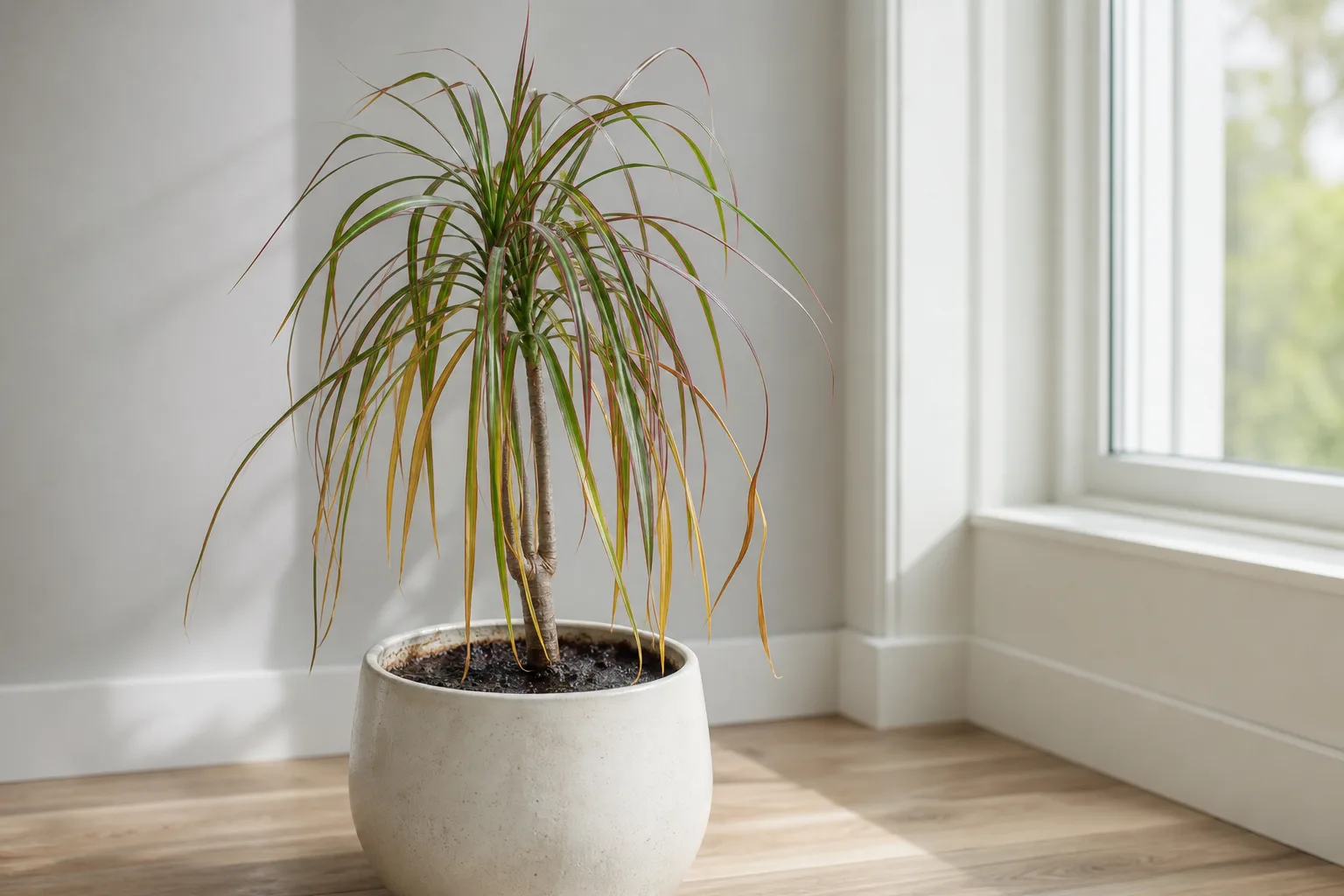
Overwatering on Dragon Tree: Causes, Checks & Fixes
This guide covers overwatering on Dragon Tree. See also the general Overwatering guide, watering, and light pages for this plant.
Overwatering on Dragon Tree: Causes, Checks & Fixes
Quick answer
Overwatering on Dragon Tree is what happens when Dracaena marginata roots sit in saturated mix long enough to lose oxygen and function. The thick cane stores water, so the plant can look stable while roots decline underground-then crown leaves go limp on soil that still feels damp. That wet-soil, limp-leaf paradox is the signature panic moment for marginata growers.
First step: stop watering and let the top half of the soil dry completely. Do not repot, fertilize, or move the plant into hot direct sun on day one. Confirm with pot weight, a depth probe, and cane firmness at the base. If the cane is still firm and smell is earthy-not sour-you likely caught chronic wet feet before root rot advances.
For the full dry-down method and seasonal intervals, see the Dragon Tree watering guide.
What overwatering looks like on Dragon Tree
Overwatering on marginata follows patterns tied to its cane architecture and bottom-up leaf aging:
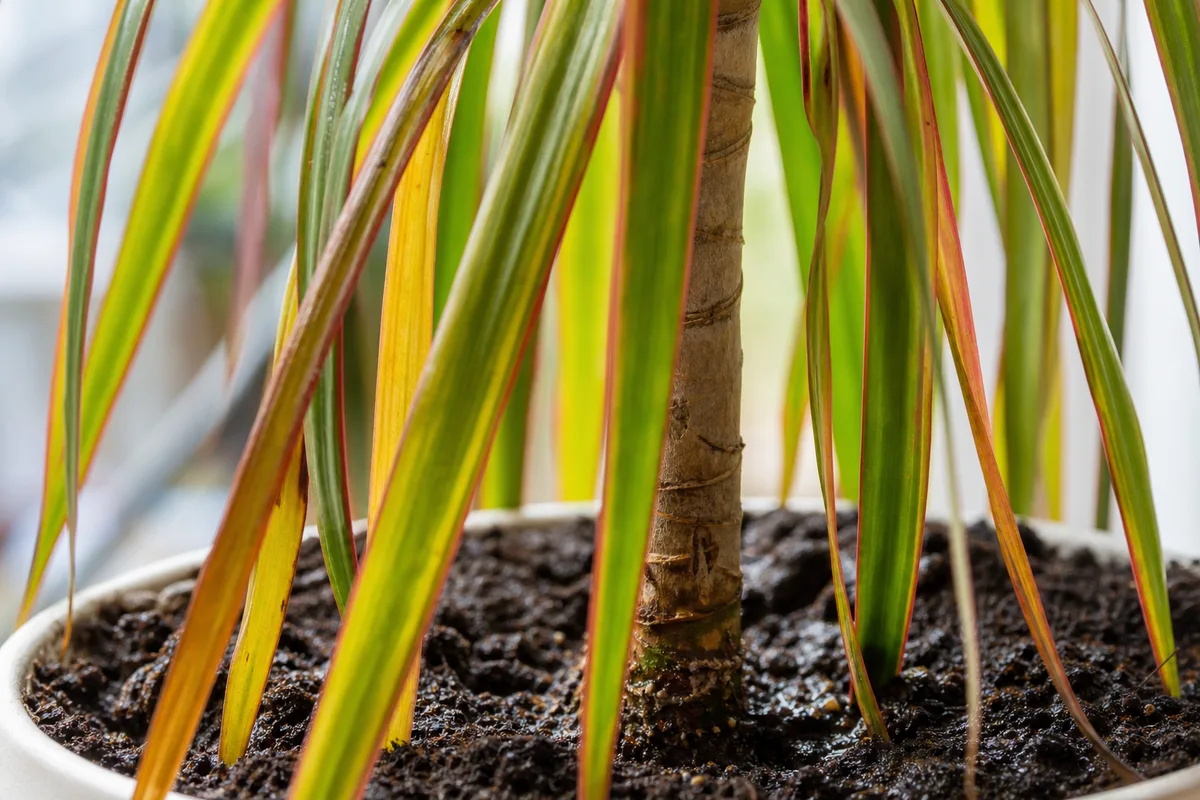
Overwatering symptoms on Dragon Tree - compare limp crown leaves and damp mix with firm foliage on a properly dried-down plant.
Early and moderate signs:
- Lower narrow leaves yellow and drop faster than normal aging-often several per cane within weeks
- Crown leaves look limp or droopy while mix at depth stays cool and damp
- Pot feels heavy days after you expected it to lighten
- Musty or sour smell from the drainage hole when you lift the pot
- Fungus gnats hover when you disturb the soil surface
- White or gray fuzz on the soil top-often the first visible clue; see mold on soil for surface-only cases on firm canes
Advanced signs:
- Cane base feels soft or spongy when pinched gently
- Yellowing spreads into upper crown tufts, not just the lowest scarred leaves
- New growth stays pale, small, or absent for months
- Wilting persists after the mix has dried-damaged roots cannot move water even when soil is wet
- Brown, slimy roots on inspection with a foul odor
Dragon Tree naturally sheds its oldest narrow leaves as the cane grows taller, leaving diamond-shaped scars. Overwatering accelerates that drop pattern and adds limp texture, heavy pots, and stem softening that normal aging does not produce.
Fluoride burn vs overwatering vs underwatering
Misdiagnosis leads growers to add water when they should stop-or to chase fluoride when roots are rotting. Use soil moisture, tissue texture, and smell together.
| Pattern | Leaf appearance | Soil / pot | Cane | Smell |
|---|---|---|---|---|
| Overwatering | Yellow lower leaves; limp crown on wet mix; soft dark brown areas possible | Heavy pot; damp at 2–3 inch depth | Base may soften | Musty or sour |
| Fluoride / salt tip burn | Dry, papery tan tips on firm green leaves; margins on multiple leaves | Normal top-half-dry cycle | Firm throughout | Earthy |
| Underwatering | Whole-crown droop; dry crispy edges possible | Very light pot; bone-dry throughout | Firm | Neutral |
| Surface mold only | Crown leaves still glossy; mold on soil top | Surface wet; may be damp at depth | Firm | Mild musty surface |
Fluoride tip burn is the most common misread on marginata. Municipal tap water causes brown, papery tips while the cane stays firm and soil follows a reasonable schedule-see brown tips and the watering guide fluoride section. Adding water to fix tip burn worsens overwatering.
Underwatering shows a very light pot and dusty dry mix several inches down with obvious whole-plant limpness-not firm leaves on cold, damp soil. See underwatering when the dry-down check reads bone dry throughout.
Why Dragon Tree gets overwatered
Dragon Tree evolved in Madagascar’s dry-season climate and is built for intermittent drought, not constantly moist soil. Several habits push marginata past its tolerance:
Calendar watering. Watering every week regardless of dry-down keeps hidden moisture in the lower half of the pot. In winter, when growth slows, a summer schedule can leave mix wet for three weeks straight.
Surface-dry trap. Peat-based mixes look pale on top while the root zone below stays damp. Marginata needs the top half dry-not just the top inch-before the next drink per the top-half-dry rule.
Low light and cool rooms. A Dragon Tree in a dim office corner uses less water and evaporates slowly. The same volume that worked in summer keeps soil saturated in winter.
Oversized pots. Extra soil volume holds moisture longer than the sparse root system can use. The center may dry while roots sit in wet outer mix.
Cachepots and standing saucer water. Decorative outer pots trap runoff. The cane base is especially vulnerable when the bottom stays submerged.
Dense, water-retentive mix. Heavy peat without enough perlite stays spongy. Marginata needs loamy, well-drained potting soil-not a blend that never dries at depth.
Chasing brown tips with more water. Fluoride from tap water causes tip burn on Dracaena. Increasing water to “flush” tips keeps roots wet without fixing chemistry-see the watering guide’s water-quality section.
How to confirm the cause
Work through these checks before Dragon Tree repotting guide or trimming roots:
- Depth probe - Insert your finger or a chopstick two to three inches into the mix near the pot edge. Cool, clingy moisture at depth on a heavy pot confirms you watered too soon.
- Pot weight - Lift the container. A substantially lighter pot than right after watering, combined with dry upper half, means you are approaching the watering window-not before.
- Leaf pattern - Yellowing climbing above the lowest one or two leaves per cane, plus limp crown foliage on damp mix, points to root stress. Isolated papery tips on firm leaves suggest fluoride.
- Cane firmness - Pinch the base gently. Firm gray cane with wet soil means investigate roots but you may have caught it early. Spongy tissue means escalate immediately.
- Smell check - Earthy odor is normal. Sour or rotten smell from the drainage hole suggests anaerobic conditions and possible rot.
- Fly test - Clouds of tiny flies when you touch the soil confirm fungus gnats sharing the wet habitat.
- Saucer and cachepot audit - Standing water under the nursery pot keeps the bottom saturated even when the surface looks acceptable.
- Cross-check surface mold - Fluffy white mold on the soil top with a firm cane is often an early moisture warning, not leaf disease. If mold is your only sign, read mold on soil on Dragon Tree first-but fix the same dry-down problem either way.
If soil is wet at depth, the pot is heavy, and crown leaves are limp, treat as overwatering until root inspection proves otherwise.
Root inspection steps
When yellowing persists after a full dry-down cycle, or the cane base feels questionable:
- Water the plant lightly the day before only if soil is bone dry and the cane is firm-otherwise skip watering entirely.
- Slide the root ball from the pot over a tray or newspaper.
- Brush away loose mix and look at root color and texture. Firm white or tan roots with an earthy smell are healthy. Brown, black, or slimy roots with foul odor confirm advanced damage-see root rot.
- Note whether the cane base is firm or soft above the root crown.
- Photograph the root ball if you plan to ask an extension office or nursery for a second opinion.
Wear gloves when handling trimmed tissue-Dracaena species contain compounds that can irritate skin and are toxic to cats and dogs if ingested.
First fix for Dragon Tree
Stop watering immediately and let the top half of the soil dry completely before you do anything else.
This single step restores oxygen to the root zone and matches how marginata should be watered year-round-Clemson HGIC notes that root rot usually results from soil that does not drain quickly or from overly frequent watering. Do not fertilize a waterlogged plant. Do not repot into a larger container “to help drying.” Do not move the plant into harsh direct sun to “speed evaporation” without acclimation-that scorches narrow leaves.
Once the finger or chopstick reads dry through the upper half of the mix and the pot feels noticeably lighter:
- Empty any standing saucer water
- Move toward brighter indirect light if the plant has been in deep shade-slow evaporation worsens wet soil
- Inspect roots only if limp leaves continue after the mix has dried properly, or if the cane base feels soft
If roots are firm and smell is earthy, resume watering only when the top half dries again per the watering guide. One corrected dry-down cycle often stabilizes mild cases within one to two weeks.
Step-by-step recovery when the cane base softens
Advanced overwatering needs root rescue, not just a skipped drink:
- Unpot carefully - Support the cane and slide the root ball out. Shake off loose wet mix without tearing healthy roots.
- Trim damaged tissue - Cut away brown, mushy roots with sterile shears until you reach firm, white or tan tissue. Trim soft cane base tissue back to firm gray stem if rot has entered the lower cane.
- Air-dry briefly - Let trimmed roots and cane cuts expose to air for several hours on clean paper-not days in direct sun.
- Repot smaller, not larger - Use a clean pot with drainage holes and fresh well-draining mix with perlite. Right-size the container to the remaining root mass.
- Wait before watering - Hold water one to two weeks so cut surfaces callus and new roots can start in dry mix.
- Resume lightly - First drink should be moderate, with full drainage. Return to the top-half-dry rule only after the pot lightens on schedule.
- Propagate if needed - If the lower cane is lost but upper sections remain firm, cane cuttings can salvage the plant-treat that as a last resort when the base collapses.
Do not apply fungicide as a default first response. Fixing drainage, dry-down, and removing dead tissue resolves most home cases without chemicals.
Recovery timeline and what to watch
Mild overwatering caught while the cane is firm: one to two weeks after correcting dry-down, the pot should feel lighter on schedule and limp leaves may firm slightly. Yellow leaves that already changed color will drop and will not revert to green.
Moderate root stress with trimmed roots: expect one to three months before new glossy tufts look normal at the crown. Judge success by firm new growth and stable pot weight cycles-not by old foliage.
Advanced soft-cane rot: Recovery is uncertain once most roots are gone and the base collapses. Clemson HGIC recommends allowing dracaenas to dry slightly between waterings-prevention through proper dry-down is far more reliable than late rescue.
Signs of improvement: Pot lightens predictably between waterings; new leaf tufts emerge firm with red edges intact; sour smell fades; fungus gnat numbers drop as the surface stays dry.
Signs of worsening: Cane softening spreads upward; multiple crown leaves yellow within days; wilting persists in wet soil; mold returns within days after scraping without changing watering rhythm.
What not to do
Do not water because leaves look limp when soil is still damp at depth-that deepens root damage.
Do not fertilize hoping to push new tufts. Salt stress on compromised roots worsens decline.
Do not repot into a bigger pot to “give roots room.” Extra wet soil volume accelerates rot.
Do not confuse brown papery tips with overwatering and increase water-switch water quality instead per brown tips.
Do not leave the plant in a cachepot that holds standing water after every drink.
Do not assume drooping leaves always mean thirst. Limp foliage on a heavy, wet pot is the overwatering paradox-not underwatering.
How to prevent overwatering next time
Match watering to the pot’s dry-down, not the calendar. Water when the top half of mix is dry-roughly every 10–14 days in active summer growth and every three weeks in winter when the plant slows. Empty saucers within 30 minutes so the cane base never sits submerged.
Use well-draining mix with perlite. Good drainage lets the upper half dry between thorough drinks while the root zone rehydrates properly once you do water.
Keep Dragon Tree light guide consistent. A plant that dries predictably in good light rarely stays chronically wet unless the schedule ignores pot weight.
Right-size containers. Repot when roots circle the base, not preemptively into a much larger pot that holds excess wet soil.
Adjust winter rhythm automatically. The same interval that worked in June can overwater by default in January if you never re-check depth.
Improve airflow between grouped houseplants. Stagnant air slows surface drying without reducing how much water the roots receive.
Review the full Dragon Tree watering guide for seasonal tables, fluoride-safe water, and the fluoride-vs-rot comparison chart.
When to worry
Treat as urgent when soil smells sour, the cane softens at the base, multiple crown leaves yellow and drop within days, or the plant wilts in wet soil. Those patterns suggest root decline beyond a simple dry-down fix.
Also escalate when limp leaves persist after the top half has been dry for two weeks on a firm cane-hidden rot may remain. Chronic yellow leaves climbing the cane on damp mix warrant unpotting.
Lower urgency: surface mold alone on a firm cane with glossy crown leaves in adequate light. Confirm moisture, dry the top half, and adjust rhythm-see mold on soil-before panicking or repotting on day one.
If the cane base is fully soft and most roots are mushy on inspection, the plant may not be saveable. Firm upper cane sections can sometimes be propagated as a last resort.
Conclusion
Overwatering on Dragon Tree is a root-zone problem masked by a drought-tolerant cane-limp leaves on wet soil are the clue most growers miss. Stop watering, confirm the top half is dry before the next drink, tell fluoride tip burn and surface mold apart, and inspect roots when the cane base softens or smell turns sour. Catch it while stems are still firm and marginata recovers far more reliably than after the base collapses.
Related guides: Dragon Tree overview · Watering · Root rot · Yellow leaves · Drooping leaves · Mold on soil · Fungus gnats · Brown tips · Underwatering
When to use this page vs other Dragon Tree guides
- Dragon Tree watering guide - Use for routine moisture checks before assuming overwatering is the main issue.
- Dragon Tree problems hub - Browse all 16 common issues on this species.
- Root Rot on Dragon Tree - Different entry point when symptoms overlap with overwatering.
- Yellow Leaves on Dragon Tree - Different entry point when symptoms overlap with overwatering.
- Wilting on Dragon Tree - Different entry point when symptoms overlap with overwatering.