How to Prune a Dragon Tree: When, Where & What to Cut
How to Prune a Dragon Tree: When, Where & What to Cut
How to Prune a Dragon Tree: When, Where & What to Cut
Quick Answer - Two Jobs, One First Cut
First action: inspect the plant in good light, then remove one fully dead leaf - dry, yellow-brown, with no remaining green tissue - by cutting or gently pulling it at the base where the narrow strap meets the cane. Dragon tree pruning covers two separate jobs: structural cane topping above leaf nodes to control height and force multiple heads, and cosmetic trimming of brown tips or senescent lower leaves that does not change architecture. Dracaena marginata does not branch from random points on bare wood between nodes. Every leaf scar on the cane marks dormant bud tissue. Remove the apical tip above a chosen node during active growth, and apical dominance lifts - often producing two to four new rosettes within weeks.
What Dragon Tree Pruning Actually Means
For indoor growers, dragon tree pruning means selective maintenance and optional reshaping on a slow-growing woody cane plant with narrow, red-edged strap leaves. Most healthy specimens need only occasional removal of dead lower leaves and conservative tip trimming. Structural work - topping one or more canes to shorten height or create a bushier crown - is optional and usually done once every few years when a plant outgrows its space.
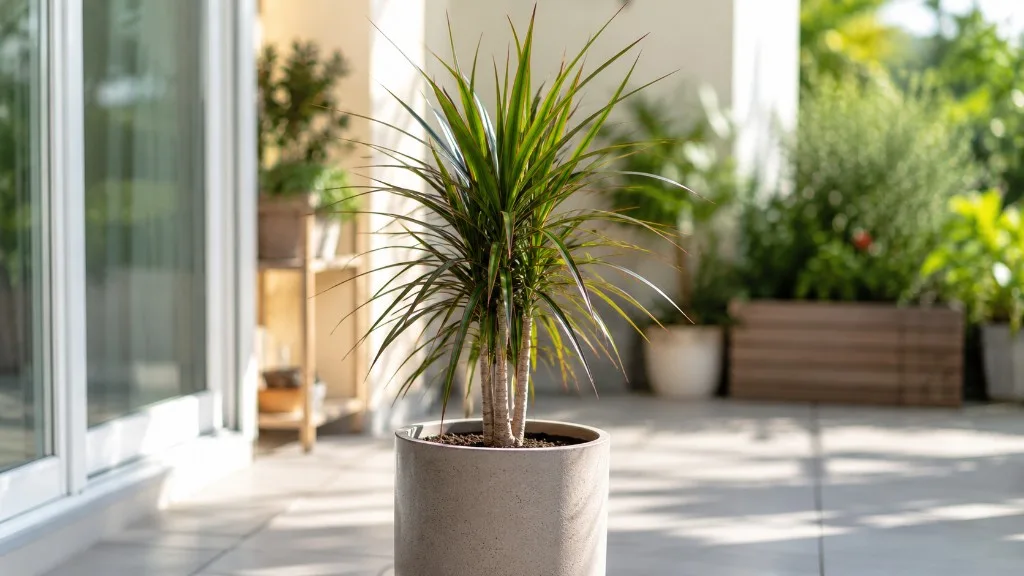
Dragon trees are often sold as multi-cane arrangements - two or three stems at staggered heights in one pot - which looks full at purchase but can become a cluster of bare poles with foliage only at the ceiling within a few seasons. Topping redirects growth downward on the cane. Tip trimming improves appearance when fluoride burn marks leaf edges but will not fix water quality on its own.
Pruning cannot reverse root rot on Dragon Tree, cure chronic overwatering on Dragon Tree, or fill a bare trunk with leaves unless you cut low enough to activate nodes near the desired height. It also cannot replace adequate light - leggy, stretched canes in dim corners need brighter placement alongside any cut.
How Dragon Trees Grow - and Why Nodes Matter
Dracaena marginata grows as upright woody canes topped by rosettes of arching, narrow leaves with red or pink margins. Without pruning, each cane typically carries a single head at the tip. Clemson HGIC notes that dragon tree stems often develop natural bends and that cutting back stems forces the plant to branch - the primary reason growers top leggy specimens.
New shoots emerge from leaf nodes - the ringed scars encircling the cane where leaves once attached. RHS confirms dragon plants readily produce new shoots on stems just below the cut when pruned. There are no dormant buds on smooth bare cane between nodes. Cut mid-section expecting branches and you get a dead stub, not a fuller plant.
Lower leaves yellow and drop naturally as cane matures, leaving a bare trunk with foliage clustered overhead - normal aging, not failure. Clemson HGIC describes dragon tree as widely used in home and office decor because it tolerates low light, though recovery from pruning is fastest in bright indirect conditions with stable watering.
What to Check Before You Cut
Before structural work, distinguish three conditions:
- Fully dead leaves - dry, yellow-brown, no green remaining. Safe to remove at the base any time.
- Green leaves with brown tips on Dragon Tree - blade still photosynthesizing; tip damage usually reflects fluoride in tap water, low humidity, or occasional sun scorch. Decide between cosmetic tip trim and whole-leaf removal based on how much tissue is affected.
- Widespread yellowing, soft cane, or wet soil smell - often overwatering or root stress rather than a pruning problem. Clemson HGIC links mushy conditions and leaf loss to watering and drainage issues. Pause cane topping and inspect roots before removing more tissue.
Also check leaf bases and cane joints for scale, mealybug, or spider mite residue. Grooming exposes pests early. Confirm the cane feels firm - soft or blackened sections need removal as emergency surgery, not routine shaping.
The First Cut to Make
Remove one fully dead leaf at its base before considering cane topping. Dead tissue holds dust, hides pests at the leaf collar, and clutters visual assessment of node placement on bare lower cane.
If every visible problem is cosmetic brown edging on otherwise green leaves, your first cut is a small tip trim on one leaf - not a cane chop. Structural topping comes only after you confirm the plant is stable: firm cane, no active root crisis, and a clear target height with healthy nodes below it.
When to Prune a Dragon Tree
Dead or fully yellow dry leaves: remove any time.
Brown tip trimming: any time for cosmetic dead tissue, but fix water source if tips keep returning on new growth.
Cane topping and major reshaping: late spring through early summer when indoor growth is strongest. Avoid heavy cane work in late fall and winter when bud break may stall for months.
Do not top a cane immediately after Dragon Tree repotting guide, relocation, or a watering crisis. Let the plant stabilize two to three weeks first.
When Not to Prune
Skip structural cuts when the cane is soft, mushy, or blackened - that signals rot, not legginess. Skip major topping on a plant with widespread mid-crown yellowing and wet soil until moisture management is corrected. Avoid topping every cane in one session on a stressed specimen; stagger across three to four weeks. Do not prune expecting instant fullness in dim winter light - response may wait until spring even if the cut is clean.
Where to Cut
Heading Cuts on Cane
Identify leaf nodes as rings or scars encircling the cane. Make the heading cut 5–10 mm above a node with sharp bypass pruners, angled slightly so water runs off the wound. New shoots typically emerge from one to three nodes below the cut during active growth.
Ensure several healthy nodes remain below your target height if you want maximum branching. Cutting too close and crushing the node slows response. For a multi-head look on a single cane, one clean topping cut is usually enough - the plant often produces multiple rosettes from nearby nodes without repeated cuts.
Brown Tips vs Whole Leaf Removal
Minor tip browning on an otherwise green leaf: trim with sterilized scissors following the long narrow leaf shape. Leave a tiny brown margin rather than cutting into green tissue, which can cause fresh dieback at the cut edge.
Extensive tip damage or round dry patches from sun scorch: remove the entire leaf at its base where the strap meets the cane, or pull downward if fully dry and released cleanly.
When many leaves show tip burn, pause repeated trimming and switch to filtered or rested tap water. Clemson HGIC identifies dragon tree as very sensitive to fluoride, with symptoms including yellowing tips and dead scorched margins. RHS recommends rainwater or filtered water because fluoride in tap water damages foliage. Tip trimming without correcting water treats symptoms only.
Yellow and Dead Leaves
Lower yellow leaves often senesce naturally on mature canes as the plant sheds oldest foliage. Remove when mostly yellow and dry. Widespread yellowing with wet soil suggests overwatering - inspect roots before repeated leaf stripping.
Do not remove green leaves hoping to force new growth along bare trunk - dragon trees do not backbud on smooth cane the way some woody plants do. New foliage comes from nodes below a heading cut or from the existing apical rosette.
Step-by-Step Cane Topping
- Plan target height. Step back and mark mentally where you want the new crown - usually well below ceiling clearance with at least two to three visible nodes below the cut line.
- Locate the node directly beneath that height. Confirm the cane is firm and green-gray, not soft.
- Sterilize bypass pruners with 70% isopropyl alcohol.
- Cut once smoothly 5–10 mm above the node at a slight angle. Do not saw or crush the tissue.
- Leave the wound open - no wound sealant on indoor cane cuts.
- Place the plant in Dragon Tree light guide and maintain normal Dragon Tree watering guide - allow the top half of soil to dry between drinks.
- Watch for bud swell on nodes below the cut within two to four weeks during active growth.
- Root the removed top if it includes healthy cane and leaves - do not discard viable material.
How Much You Can Safely Remove
Limit structural cane cuts to about one-third of the plant’s foliage-bearing height in one session. Removing fully dead leaves and tip-only trims does not count toward that structural limit.
For dramatic height reduction on a tall single cane, top once and wait for visible bud swell before shortening additional canes in multi-stem pots. Repeated aggressive topping on the same cane within one season stresses a slow-growing plant and delays recovery.
Emergency removal of soft, rotting cane sections is an exception - cut back to firm tissue regardless of percentage, then fix the moisture problem that caused rot.
Multi-Cane Pots and Staggered Topping
Nursery dragon trees often arrive with two or three canes at different heights. Topping all canes to the same level on the same day creates a blunt, uniform look and concentrates stress. Better approach: top the tallest cane first, wait for bud swell, then shorten the next cane to a slightly different height for a tiered, natural crown.
Step back after each cut. Varied rosette heights look more balanced than a single horizontal line across every stem. If one cane is weak or thin, skip topping it until the plant strengthens in brighter light.
Tools and Safety
Use bypass pruners for cane cuts and sharp scissors for leaf tips. Sterilize with 70% isopropyl alcohol before use and between plants to reduce disease entry on fleshy cane tissue.
Wear gloves when handling cut material. ASPCA lists Dracaena - including dragon tree - as toxic to cats and dogs, with vomiting and dilated pupils in cats. RHS notes all parts of the plant are toxic. Bag trimmings securely and keep them away from pets. Sap is not latex-heavy but still warrants cleanup of drips on floors and furniture.
Propagation From Prunings
The removed cane top - with several leaves and firm stem - roots readily as a cutting in moist perlite or water once the cut end calluses for a day or two. Cane sections 8–15 cm long with at least one node can sprout roots and new shoots when laid horizontally on moist medium, per Clemson HGIC propagation guidance for dracaenas.
Do not discard viable tops after topping. Rooting the removed section fills bare pot space at the base while the parent cane branches below the cut - a practical way to thicken multi-cane arrangements without buying new plants.
Discard soft, blackened, or odor-producing sections. Only firm, healthy tissue roots reliably.
Aftercare and Recovery
Keep bright to medium indirect light after a heading cut - dragon trees tolerate lower light but branch faster with brighter conditions during recovery. Water when the top half of soil dries; reduce frequency slightly if leaf area dropped significantly after a hard cut, since transpiration decreases.
Hold fertilizer two to three weeks after cane topping. Resume light feeding only when new growth is visible.
Recovery timeline: cosmetic tip trims look better immediately. Cane topping shows bud swell in two to four weeks during active growth; a fuller crown often develops over six to eight weeks. Off-season cuts may show little response until spring - the plant is resting, not failing.
Signs pruning worked: new rosettes emerging from nodes below the cut, firm remaining cane, and stable or improving leaf color on existing foliage. Signs of trouble: continuing soft cane above or below the cut, widespread new yellowing, or no bud swell by late spring after a spring cut - reassess light, watering, and root health before cutting again.
Mistakes to Avoid
Cutting between nodes - no buds activate; a dead stub remains indefinitely.
Topping in winter and expecting instant branches - months of bare cane before spring response.
Tip trimming without filtered water - endless re-trimming on every new leaf while fluoride damage continues.
Topping every cane in one day on a stressed plant - systemic shock and delayed recovery across all stems.
Overwatering after removing many leaves - slower transpiration keeps mix wet longer and invites rot.
Pruning during active root rot - yellow leaves return until moisture is fixed; cuts do not solve soggy soil.
Leaving toxic trimmings accessible to pets - ASPCA toxicity applies to all plant parts, including cut cane and dropped leaves.
Conclusion
Dragon tree pruning combines optional cane topping just above nodes for shorter, bushier specimens with routine cleanup of fluoride-damaged tips and naturally senescent lower leaves. Cut in spring for fastest branching, use filtered or rainwater to stop recurring tip burn, and root removed tops instead of discarding them. Match structural ambition to the one-third guideline, stagger cuts on multi-cane pots, and treat sap and trimmings as toxic around pets. Done correctly, Dracaena marginata transforms from a single tall pole into a multi-headed floor plant without replacement.
When to use this page vs other Dragon Tree guides
- Dragon Tree overview - Start here for whole-plant context before deep-diving this topic.
- Dragon Tree problems hub - Jump to symptom-specific fix guides when this care topic does not resolve the issue.
- Leggy Growth on Dragon Tree - Escalate here when pruning adjustments are not enough.
- Slow Growth on Dragon Tree - Escalate here when pruning adjustments are not enough.
- Brown Tips on Dragon Tree - Escalate here when pruning adjustments are not enough.