Slow Growth on Dragon Tree: Causes, Checks & Fixes
Quick answer
Dragon Tree is a slow grower by nature-one new leaf tuft every two to four months in bright light is normal, and winter pauses are expected. First step: note when the crown last produced new leaves, then check whether light reaches the top tuft and the top half of soil dries on your normal schedule before fertilizing or repotting.
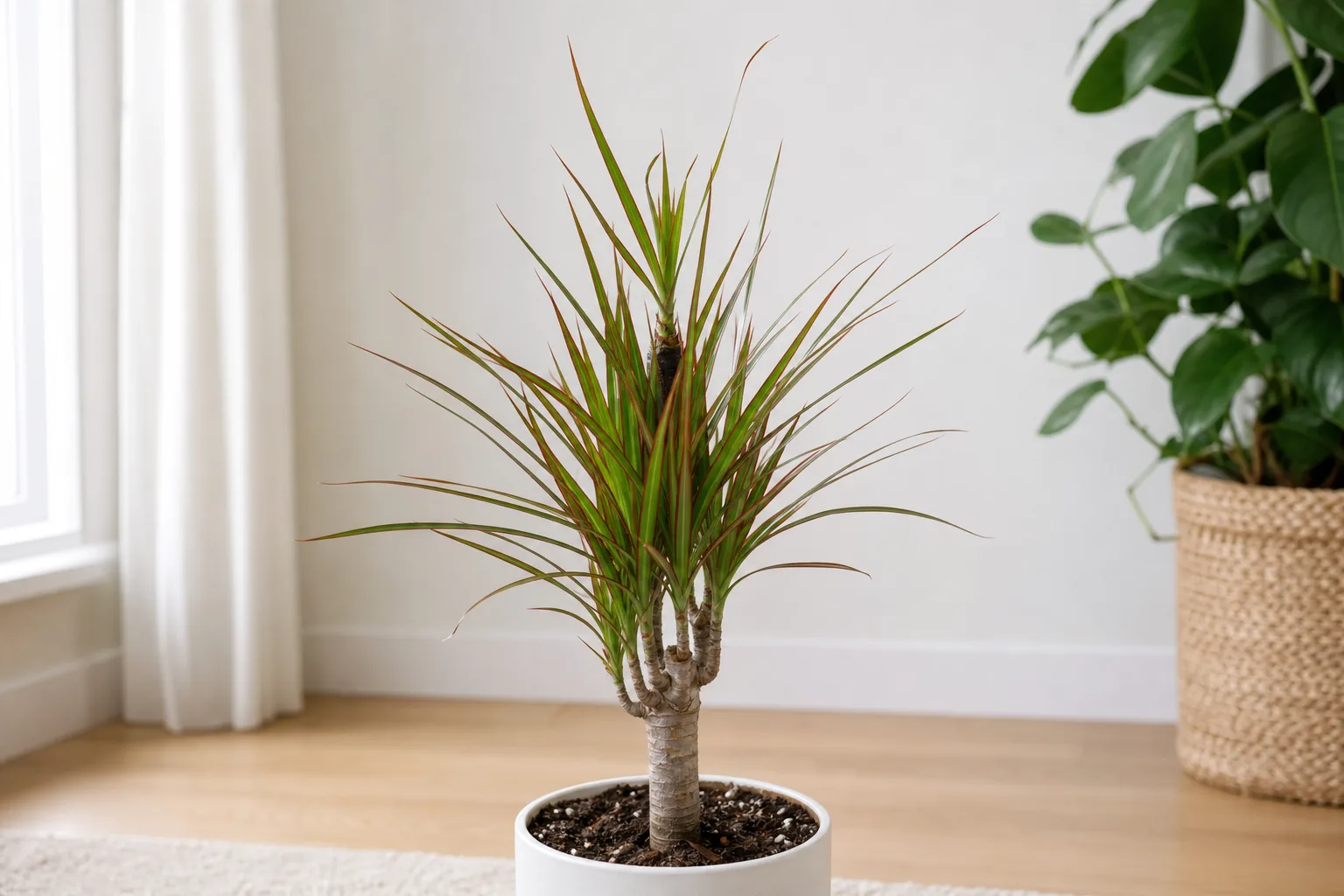
Slow Growth on Dragon Tree: Causes, Checks & Fixes
This guide covers slow growth on Dragon Tree. See also the general Slow Growth guide, watering, and light pages for this plant.
Slow Growth on Dragon Tree: Causes, Checks & Fixes
Quick answer
Dragon Tree (Dracaena marginata) is supposed to grow slowly indoors. The Missouri Botanical Garden notes specimens often reach six feet tall or more over many years-not six feet per season. In a bright home, many plants open one new leaf tuft at the cane crown every two to four months in warm months, then pause or nearly stop through short winter days. That rhythm is normal.
Slow growth becomes a problem when the crown produces no new leaves for four to six months during spring and summer, especially if soil stays wet for weeks, the cane feels soft, or new leaves abort before opening. Those stalls usually trace to light limits, watering rhythm, fluoride stress, root-bound pots, or hidden root rot-not a need for more fertilizer.
First step: record when the crown last opened a leaf tuft, then check light at the top rosette and whether the top half of soil dries on your usual schedule. Fix placement or watering before repotting, feeding, or pruning hard. Dragon Tree stores water in its cane, so a firm stem can mask declining roots until growth stops entirely.
Is slow growth normal on Dragon Tree?
Yes-often. Unlike fast-growing pothos or tradescantia, Dracaena marginata is a slow to moderate grower even in good conditions. The dragon tree overview describes typical indoor height of six to eight feet over many years. Measuring success by new crown tufts, not leaf count on lower sections, matches how this plant actually grows: a terminal rosette on an upright cane, with oldest leaves senescing from the bottom of each tuft.
Indoor growth benchmarks
Use these rough benchmarks for standard green forms in typical home conditions-not guarantees:
| Signal | Often normal | Worth investigating |
|---|---|---|
| New crown tuft frequency | Every 8–16 weeks in bright indirect light; slower in winter | No new tuft for 4–6+ months through warm, bright months |
| Cane appearance | Firm gray stem; gradual lower-leaf drop | Soft, hollow, or collapsing cane |
| Soil dry-down | Top half dries within 10–21 days in active growth | Stays wet 2+ weeks without watering |
| Leaf quality on new tufts | Narrow but firm; red margins crisp on green forms | New leaves pale, string-like, or fail to open |
| Overall silhouette | Compact or slowly elongating | Long bare cane with sparse top tuft (see leggy growth) |
Variegated cultivars like ‘Tricolor’ and ‘Colorama’ often grow slower than solid-green plants in the same spot because variegation needs brighter light to maintain steady photosynthesis. A ‘Tricolor’ that stalls while a green marginata nearby grows may simply need more light-see not enough light for placement fixes.
Seasonal rhythm and winter slowdown
Dragon Tree follows a seasonal metabolic rhythm even in heated homes. Short winter days reduce usable light, transpiration drops, and new crown leaves may appear only once-or not at all-from November through February. Clemson Extension notes that dracaenas grow best in bright indirect light, and growth rate increases when a dim-acclimated plant moves to a brighter spot with thicker new leaves.
Reduce watering frequency in winter to match slower dry-down. Chasing summer growth with extra water in February is a common reason pots stay wet while the plant appears “frozen”-a setup for root stress described on the overwatering page.
What problematic slow growth looks like
Problematic slow growth on Dragon Tree is a stall, not merely a leisurely pace.
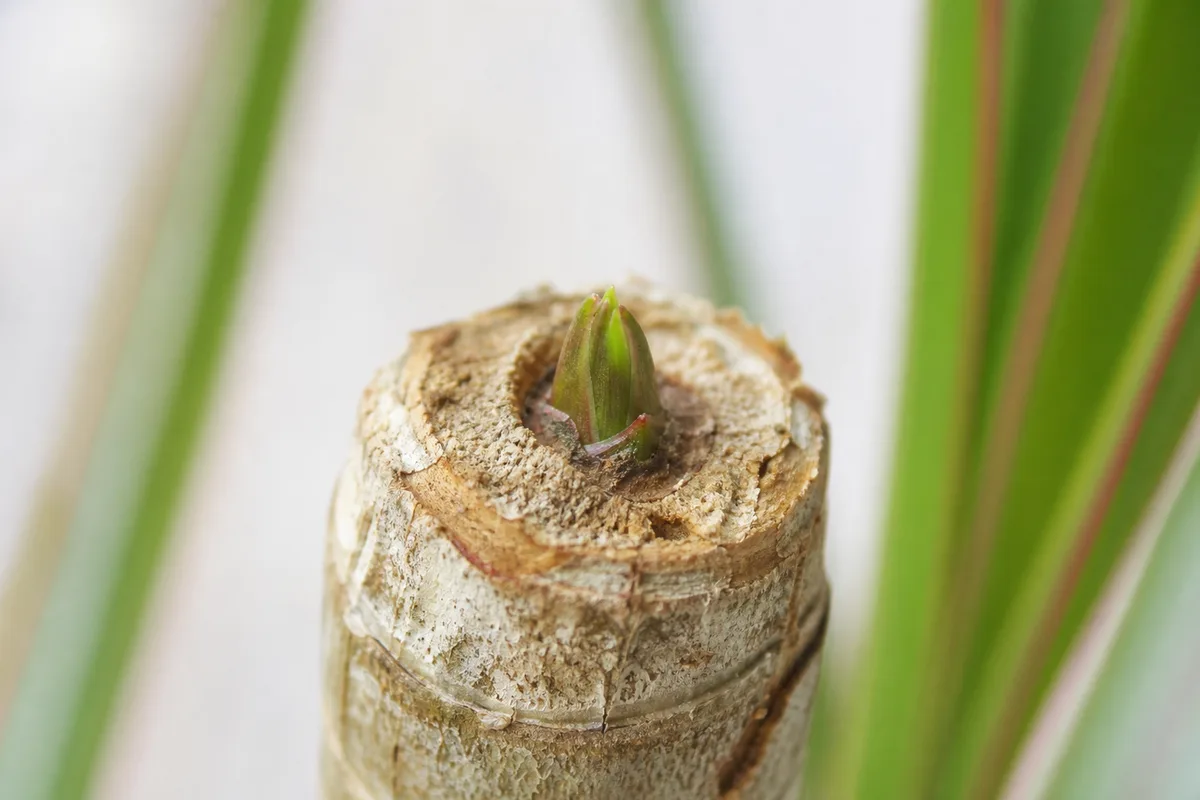
Slow Growth symptoms on Dragon Tree - compare with healthy tissue on the same plant.
Stalled crown - No new leaf tuft opens for many months through warm, bright months while the rest of the plant looks unchanged. Old leaves may hang on; the issue is absence of fresh crown growth.
Aborting new leaves - A tiny spear visible at the crown browns or dries before unfurling. Fluoride injury, chronic overwatering, or severe root decline can all interrupt new tissue.
Growth stop with wet soil - The pot stays damp for weeks in a dim corner because the plant uses little water. Slow dry-down plus routine watering invites root problems that silently halt growth before the cane softens. See root rot if the cane feels mushy or soil smells sour.
Salt-stunted tufts - Heavy fertilizer on a plant already in weak light produces brown margins and little new length. Growth stalls while salts accumulate.
Root-bound plateau - After years in the same pot, roots circle densely, water runs through instantly, and the plant dries within days yet produces tiny new leaves. The bottleneck is root room and depleted mix, not laziness.
This page focuses on pace and stalls. If your main concern is long bare cane and a sparse top tuft reaching toward windows, read leggy growth on Dragon Tree and not enough light-those guides cover stretched structure; this one covers whether growth rate itself is healthy.
Common causes of abnormally slow growth
Not enough light at the leaf crown
Low light is the most common limiter. Dragon Tree survives dim offices but new leaves become thinner and growth slows when the crown receives too little energy. Dim light also slows soil dry-down, which turns a normal watering rhythm into chronic wet roots. For placement trials, grow-light specs, and recovery steps, use the dedicated not enough light guide-do not duplicate that full protocol here.
Watering and root stress
Overwatering and underwatering on Dragon Tree both stall growth on drought-tolerant canes. Overwatering keeps roots oxygen-starved; growth stops while the cane still feels firm because stem tissue stores water. Underwatering desiccates fine roots; the crown may fail to push new leaves even when older foliage looks fine. Match rhythm to the watering guide-top half dry before a thorough soak-and adjust after light changes.
Fluoride and tap-water chemistry
Dracaenas are very sensitive to fluoride. Municipal tap water and some fertilizers deposit fluoride and salts that brown tips first, then interfere with new leaf emergence at the crown. Growth can stall while the plant looks otherwise stable. Switch water sources before assuming the plant needs food. Full tip-burn diagnosis lives on brown tips.
Root-bound pot
After three to five years indoors, many dragon trees fill their containers. Roots spiral at the drainage hole, mix breaks down, and the plant stays alive but static. Repot one size up in spring or early summer with fresh well-draining mix-details on the repotting guide and overview.
Salt buildup from overfertilization
Feeding a plant that is not growing-especially in low light-adds salts without fueling new tissue. Leaf tips and margins may burn or yellow when fertilized too heavily. Hold fertilizer until new crown growth resumes in brighter conditions.
Pests on new growth
Spider mites and scale can sap vigor so subtly that owners notice only stalled tufts. Inspect leaf undersides and crown spears with a hand lens when growth stops without an obvious watering or light story. Treat pests before fertilizing.
How to confirm the cause
Work through these checks in order. You want one primary limiter before changing multiple variables.
-
Date the last crown tuft. If a healthy new leaf set opened within the past four months in warm season, slow may be normal-especially winter. No tuft for six months in bright summer light is abnormal.
-
Light at the crown, not the room. Stand where the top rosette sits. If glass is more than six feet away or the plant lives in a windowless room without a grow lamp, light is likely limiting. Compare with the light guide targets.
-
Soil dry-down speed. Stick a finger into the top half of the mix. Wet for two weeks without watering suggests overwatering or mix that holds too much water for current light-see overwatering. Bone dry within three days after a full soak may mean underwatering or root-bound dryness.
-
Cane firmness. Press the lower cane. Firm and woody is reassuring; soft, hollow, or wrinkled cane with wet soil suggests rot-escalate to root rot.
-
Water quality screen. If tips are brown on older leaves and new spears stall, switch to filtered or rainwater for four weeks per brown tips before other fixes.
-
Root check if the pot is old. Slide the plant out gently. White firm roots and circling at the wall suggest repotting; brown mushy roots suggest rot protocol, not upsizing.
-
One-variable trial. Move to the brightest safe indirect spot or fix watering or change water source-one change at a time. Reassess after three to four weeks for crown movement.
First fixes by cause
If light is the limiter: Move the pot within a few feet of an east- or filtered west-facing window, or add a full-spectrum LED 6–12 inches above the crown for 12–14 hours daily. Follow the step-by-step protocol on not enough light rather than stacking repot and feed the same week.
If soil stays wet too long: Skip the next scheduled watering until the top half is dry. Confirm drainage holes are open and saucers empty. Do not fertilize. If soft cane appears, inspect roots per root rot.
If fluoride may be stalling spears: Switch to rainwater, distilled, or confirmed fluoride-removing filtration. Flush the pot once with the new water. Judge the next tuft, not old tip color.
If root-bound: Repot in spring or early summer one container size up with fresh airy mix. Water once, then return to top-half-dry rhythm.
If underwatered: Soak thoroughly until a little runs from drainage holes, empty the saucer, then resume checking the top half before each drink.
If growth is actually normal: Stop intervening. Many owners overwater or overfeed in response to natural slowness, creating real problems from imagined ones.
Recovery timeline
Dragon Tree rewards patience. Even after the correct fix, crown movement is measured in weeks, not days.
Within three to four weeks of better light or corrected watering, watch for a visible spear at the crown or slightly fuller new leaves if the limiter was environmental.
Over two to four months, a full new tuft may open in bright conditions. Winter recovery can take longer.
Old cane length and bare sections do not shrink. Success is a new tuft with normal spacing and firm leaves-not transformation of existing stem.
If nothing changes after six weeks in clearly brighter indirect light with appropriate watering and filtered water, inspect roots, check for mites, and confirm the pot is not oversize and staying cold near a draft.
What not to do
Do not fertilize a dragon tree that has not produced new growth in months without checking roots, light, and water chemistry first. Salts on a stalled plant worsen margins without forcing growth.
Do not repot and prune hard on the same day as a light move. Stressed dracaenas need one change at a time to show which fix worked.
Do not confuse normal winter pause with pathology. Wait until lengthening days before declaring a stall.
Do not upsize into a much larger pot to “encourage growth.” Excess wet mix around a small root ball stalls drought-adapted roots.
Do not treat slow growth and leggy stretch as the same problem. Fertilizing a leggy plant in a dim corner does not shorten internodes-light does.
How to prevent slow-growth problems
Place new dragon trees in medium-bright indirect light from day one per the light guide. Match watering to seasonal dry-down on the watering guide. Use low-fluoride water in municipalities where dracaena tip burn is common.
Repot before roots form a solid mat-every two to four years for many indoor specimens. Feed lightly at half strength only during active crown growth in spring and summer.
Track tuft dates in a notes app or calendar. Knowing your plant’s normal rhythm prevents panic every February.
Related dragon tree problems
| Symptom focus | Where to go next |
|---|---|
| Bare cane, lean, pale stretch | Leggy growth · Not enough light |
| Wet soil, soft cane, sour smell | Overwatering · Root rot |
| Brown leaf tips, stalled spears | Brown tips |
| Baseline care and normal pace | Dragon tree overview |
Conclusion
Slow growth on Dragon Tree is often healthy slowness, not a care failure-one new crown tuft every few months in bright light, with winter pauses, fits how Dracaena marginata grows indoors. Investigate when warm-season months pass with no new crown leaves, soil stays wet, spears abort, or the cane softens. Check light at the rosette and dry-down rhythm first, branch to not enough light or root rot when symptoms match, and judge recovery by the next tuft, not old tissue.
When to use this page vs other Dragon Tree guides
- Dragon Tree watering guide - Use for routine moisture checks before assuming slow growth is the main issue.
- Dragon Tree problems hub - Browse all 16 common issues on this species.
- Not Enough Light on Dragon Tree - Different entry point when symptoms overlap with slow growth.
- Leggy Growth on Dragon Tree - Different entry point when symptoms overlap with slow growth.
- Yellow Leaves on Dragon Tree - Different entry point when symptoms overlap with slow growth.