Not Enough Light on Dragon Tree: Causes, Checks & Fixes
Quick answer
Dragon Tree survives dim rooms but grows thin, pale, and leggy without bright indirect light. First step: move it to the brightest safe spot in your home-within a few feet of an east or west window with filtered sun-before repotting, fertilizing, or pruning hard.
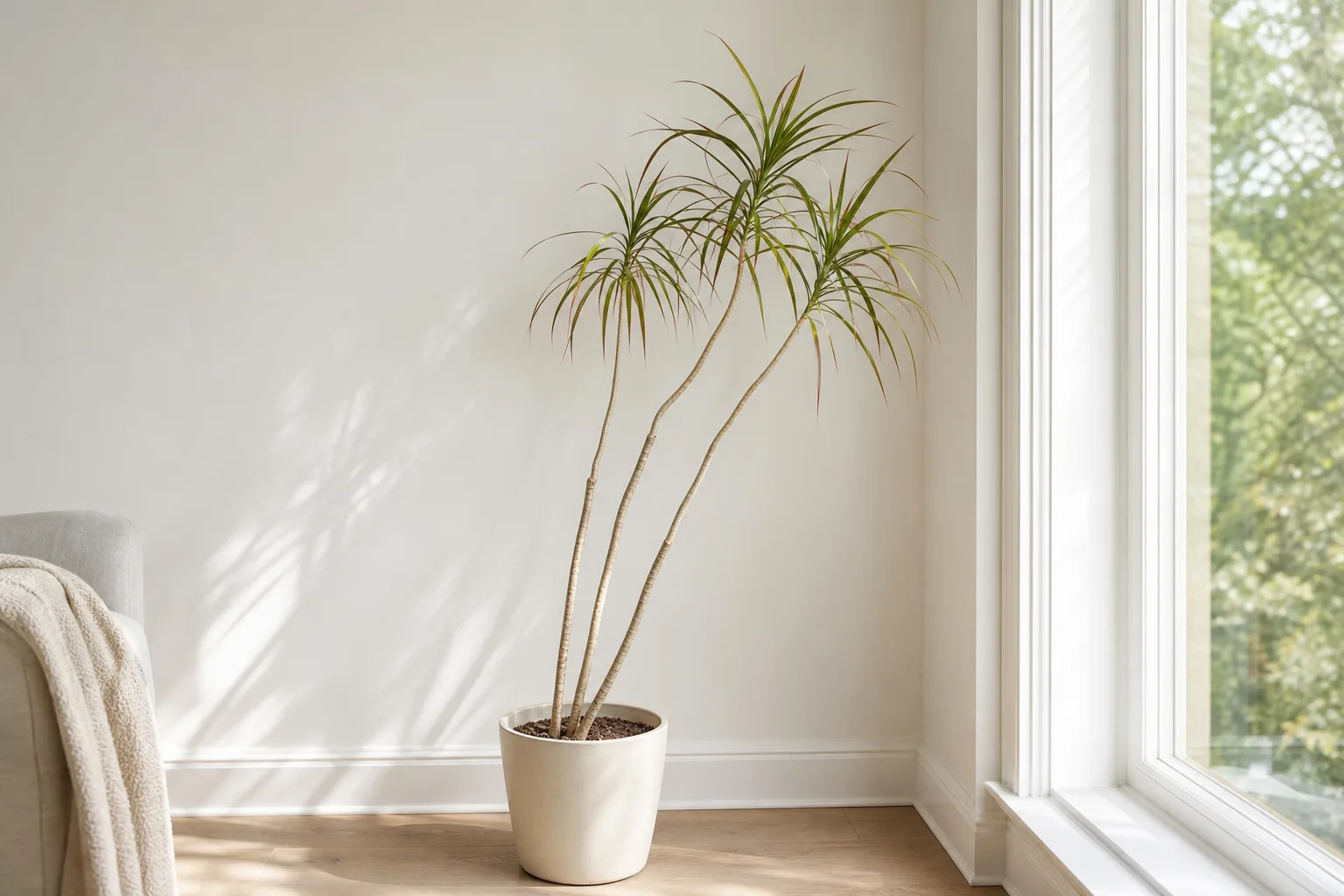
Not Enough Light on Dragon Tree: Causes, Checks & Fixes
This guide covers not enough light on Dragon Tree. See also the general Not Enough Light guide, watering, and light pages for this plant.
Not Enough Light on Dragon Tree: Causes, Checks & Fixes
Quick answer
Dragon Tree (Dracaena marginata) is sold as a low-light survivor, and it will hang on in dim offices and interior corners. What it will not do there is stay compact. Without enough light, the narrow red-edged leaves lose intensity, new growth arrives in thin tufts at the top of bare gray canes, and the whole plant leans toward the brightest direction.
First step: move the pot to the brightest safe indirect spot in your home-typically within a few feet of an east- or west-facing window, or a filtered south window-before you change watering, fertilizer, or pot size. Dragon Tree tolerates low light but loses its best foliage color in too much shade. Fixing placement is the one change that addresses the root cause.
Why Dragon Tree runs out of light indoors
Dragon Tree evolved as an understory shrub in Madagascar. Indoors it is often placed where décor matters more than footcandles: hallways, north-facing rooms far from glass, or desks under overhead fluorescents that feel bright to humans but read as medium light at best for foliage plants.
Several home patterns push Dragon Tree overview past “tolerable” into chronic under-lighting:
Distance from windows. Light intensity drops sharply as you move away from the glass. A dragon tree six feet inside a living room may receive a fraction of what the same plant gets on the windowsill-enough to survive, not enough to keep tight growth.
Seasonal daylight loss. Short winter days reduce usable light even when the pot never moves. Plants that looked acceptable in summer often stretch or stall by February.
Dirty or obstructed glass. Sheers left closed, tinted film, outdoor awnings, and grimy panes all cut the light that reaches narrow leaves already adapted to catch what they can.
The “office plant” myth. Dracaena species are common in commercial interiors because they endure neglect-but endurance is not the same as good growth. A dragon tree in a lobby corner may live for years while slowly becoming a thin pole with a small leaf crown.
Compounding stress in dim spots. Dragon Tree is drought-tolerant, yet pots in low light dry slowly because the plant transpires less. Many owners keep the same watering calendar-and wet soil in weak light invites root problems that look like thirst. Light and moisture interact; fix light before you assume the cane is failing from water alone.
What not enough light looks like on Dragon Tree
Low light on this species has a recognizable silhouette. Learn to separate it from fluoride brown tips, normal lower-leaf drop, or overwatering on Dragon Tree rot.
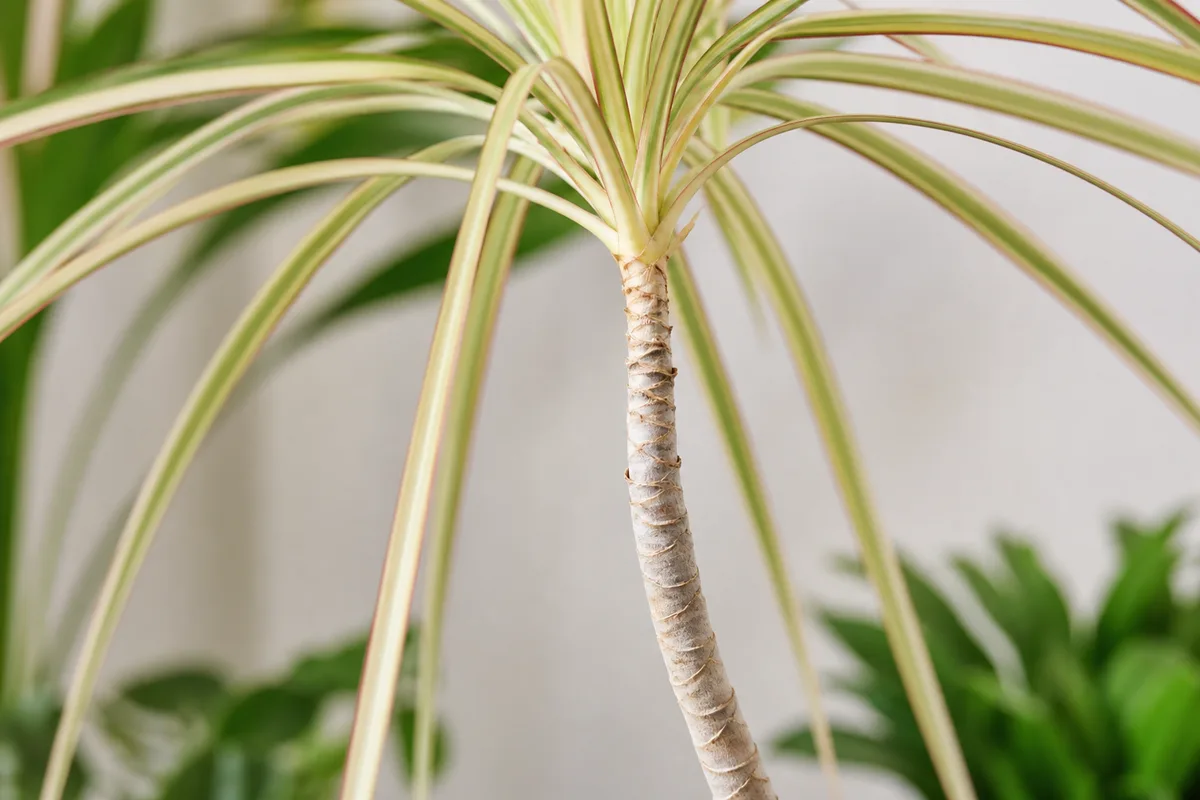
Not enough light symptoms on Dragon Tree - compare sparse pale crown foliage and stretched bare cane with healthy compact growth on a well-lit plant.
Typical low-light pattern:
- Leggy canes - Gray upright stems with long bare sections and a small tuft of arching leaves only at the top. Internodes stretch as the plant reaches for light.
- Lean or one-sided growth - The pot tips toward the window; new leaves face the brightest direction. Plants stretch and lean when light reaches them from one side.
- Pale or dull leaves - Deep green with narrow red margins fades toward plain green. Foliage loses best color in too much shade, especially on cultivars like ‘Tricolor’ where variegation washes out first.
- Smaller new leaves - The latest crown leaves look shorter and narrower than mature ones below them.
- Very slow or stalled growth - Dragon Tree is naturally slow; in dim light new leaves may appear only a few times per year, or not at all for months.
- Accelerated lower-leaf loss on bare cane - Lower leaves drop with age on healthy plants too, but chronic low light thins the canopy faster, leaving a “lollipop” on a stick.
What low light is not:
- Brown crispy leaf tips - Usually fluoride from tap water on dracaenas, not shade. Filtered water fixes tips; moving to sun does not.
- Soft, mushy cane with sour soil - Overwatering or root rot on Dragon Tree. The pot may sit in a dim corner and stay wet-check roots before blaming light alone.
- Speckled leaves with fine webbing - Spider mites, often in hot dry air. Mites need pest treatment, not just brighter placement.
- Sudden yellowing of many leaves after a move - Acclimation shock from a big relocation, not necessarily chronic low light.
How to confirm the cause
Work through these checks in order. You want evidence that light-not water, fluoride, or pests-is the primary limiter.
-
Measure placement, not guesswork. Stand where the pot sits and look toward the nearest window. If glass is more than six feet away, or the plant sits in a room with no direct outdoor view, light is likely low for a dragon tree that performs best in bright indirect locations.
-
Compare both sides of the plant. Strong lean and longer leaves on the window-facing side confirm directional light hunger. Rotate the pot 180° and watch whether new growth turns back within two weeks.
-
Inspect the crown, not just old leaves. Focus on the newest leaf cluster at the top. Smaller, paler, or widely spaced new leaves mean the plant is stretching now-not that damage happened years ago.
-
Rule out wet soil in the dark. Stick a finger into the top half of the mix. If it stays damp for two weeks without watering, reduce water frequency before adding fertilizer. Dim + wet is a common rot setup on drought-tolerant dracaenas.
-
Two-week brighter trial. Move the pot to the brightest indirect spot you can offer-without jumping straight into hot afternoon sun. If the next leaf set emerges tighter and greener, light was the problem. No improvement suggests another stressor (roots, fluoride, pests).
-
Optional light meter reading. Medium-bright foliage plants often need roughly 100–500 foot-candles. Readings consistently under 100 FC at the leaf crown confirm insufficient light for good structure, even if the plant survives.
First fix for Dragon Tree
Move the pot to Dragon Tree light guide within a few feet of an east- or west-facing window, or a south window filtered by a sheer curtain.
That single placement change gives the plant more photosynthetic energy without the shock of direct midday sun on narrow leaves. Dragon Tree wants bright light protected from direct sun and drafts-think “bright room,” not “baking sill.”
Do not repot, fertilize, or hard-prune on day one. Stressed dracaenas recover faster when you change one variable at a time. Do not move instantly from a dark corner to unfiltered south glass; acclimate over one to two weeks by stepping closer to the window or adding a sheer layer first.
If no window spot reaches medium-bright levels, add a full-spectrum LED grow light 6–12 inches above the leaf crown for 12–14 hours daily. Most plants need a dark period too-cap total daily light at about 16 hours when combining lamps with daylight.
Step-by-step recovery
After the brighter placement holds for one week:
- Adjust watering to match new light. Brighter spots dry the pot faster. Check the top half of soil before each drink-the rhythm may shorten from every three weeks to every ten days in active growth.
- Rotate the pot weekly. Even light prevents one-sided lean and keeps the cane upright as new leaves fill in.
- Wipe dust off leaves. Narrow dracaena blades collect dust that blocks light. A damp cloth on both sides helps the plant use what you provide.
- Wait for new crown growth before pruning. Let one or two new leaf sets open in the improved spot so you can see tighter spacing.
- Prune only if the cane is too tall or bare for your space. Cut the stem at the desired height during spring or early summer active growth. New shoots often sprout from nodes below the cut on dracaena canes. Use the trimmed top as a cutting if you want a shorter second plant.
- Hold fertilizer until growth looks stable. Feed lightly at half strength during spring and summer only after new leaves appear normal-not while the plant is still adjusting to a big light jump.
Recovery timeline
Dragon Tree is a slow grower even in good light. Expect subtle change, not overnight transformation.
Within two to three weeks of better placement, new leaves should look slightly fuller and greener if light was the main issue. Lean may stop worsening once you rotate weekly.
Over one to three months, a visible crown flush can fill out the top tuft. Bare cane below the cut line does not regrow leaves-only the crown and nodes after pruning produce new foliage.
Old stretched tissue never reverts. Long bare cane sections and small distant leaf tufts stay as they are. Success means the next leaves look better, not that previous internodes shrink.
If nothing improves after six weeks in clearly brighter indirect light, inspect roots for rot, switch to filtered water to rule out fluoride tip browning, and check leaf undersides for spider mites.
Lookalike symptoms to rule out
Overwatering / root rot - Soft or collapsing cane, brown mushy roots, sour-smelling soil, and yellowing across multiple leaf tiers at once. Common when a dragon tree sits in a dim corner on the same heavy Dragon Tree watering guide. Dry the root zone and inspect before assuming light alone.
Fluoride brown tips - Progressive tan-to-brown tips on otherwise firm leaves with stable cane. Tap water sensitivity is the signature dracaena issue. Light correction does not fix tip burn.
Normal lower-leaf drop - Oldest leaves yellow and fall from the bottom of each tuft as the plant ages. This is expected on long-lived canes. Worry when new crown leaves pale, shrink, or fail to open-not when only the lowest leaf on a tuft senesces.
Spider mites - Fine stippling, webbing, and dusty leaf undersides in hot dry air. Mites often flare when plants are stressed; treat pests and raise humidity slightly rather than only moving to a sunnier, hotter sill.
Cold or draft damage - Dark wet patches or sudden leaf drop after sitting near AC vents or cold windows in winter. Move away from cold airflow; light alone will not fix chilling injury.
Mistakes to avoid
Do not blast a dark-acclimated dragon tree into direct afternoon sun to “fix” legginess instantly-narrow leaves scorch easily under excessive direct light. Step up brightness gradually.
Do not increase fertilizer to force growth in a dim spot. Weak light plus salts can brown leaf margins without making the plant fuller.
Do not keep watering on a calendar if the pot in low light stays wet for weeks. Less light means less water use.
Do not prune the entire crown off before improving light unless the cane is rotting. A bare stem in the same dark corner will not sprout vigorously.
Do not confuse survival with health. A dragon tree can look acceptable for years while slowly becoming a thin pole-intervene when spacing between leaf tufts widens, not only when the plant collapses.
How to prevent low-light stress next time
Place new dragon trees where they can receive medium-bright indirect light from the start-roughly within two to four feet of a suitable window, or under a dedicated grow lamp in windowless rooms.
Rotate the pot every time you water so all sides of the cane receive equal exposure. Uneven light drives lean and one-sided stretch.
Clean windows seasonally and open sheers during daylight hours when privacy allows.
Supplement in winter if the plant sits farther from glass than in summer-furniture rearrangements and shorter days both reduce effective light.
Match watering to seasonal light and pot dry-down speed. A dragon tree in a brighter summer window needs more frequent checks than the same plant in a dim winter office.
When choosing a spot, prioritize light over décor. This species is often bought for sculptural height; it keeps that shape only when the leaf crown receives enough energy to stay dense.
When to worry
Low light alone is rarely an emergency-it is a chronic decline problem. Escalate when:
- The cane feels soft or hollow while soil has stayed wet in a dark location. That suggests root rot; inspect roots, dry the mix, and repot only if roots are brown and mushy.
- New crown leaves fail to open for many months even after a clear light upgrade-possible root failure, severe mite infestation, or chronic overwatering damage.
- Most leaves yellow at once with wet soil-not typical slow stretch; check for rot or sudden environmental shock.
- The plant leans severely and the pot becomes unstable on a tall bare cane-stake or prune for safety while you improve light.
Pure stretch with firm cane, gradual pale color, and slow growth is correctable with better placement and patience-not a reason to discard an otherwise healthy dragon tree.
Conclusion
Not enough light on Dragon Tree shows up as bare gray cane, a sparse crown, faded red leaf edges, and a slow lean toward windows-not as sudden collapse. Move the plant to bright indirect light first, adjust watering to match the brighter spot, and judge recovery by the next leaf sets rather than old stretched stems. With consistent medium-bright exposure or supplemental lamps, even a leggy specimen can produce a fuller crown going forward, though you may need a single cane cut if the silhouette has already gone too tall for your space.
When to use this page vs other Dragon Tree guides
- Dragon Tree watering guide - Use for routine moisture checks before assuming not enough light is the main issue.
- Dragon Tree problems hub - Browse all 16 common issues on this species.
- Leggy Growth on Dragon Tree - Different entry point when symptoms overlap with not enough light.
- Slow Growth on Dragon Tree - Different entry point when symptoms overlap with not enough light.
- Yellow Leaves on Dragon Tree - Different entry point when symptoms overlap with not enough light.