Spider Mites on Dragon Tree: Causes, Checks & Fixes
Quick answer
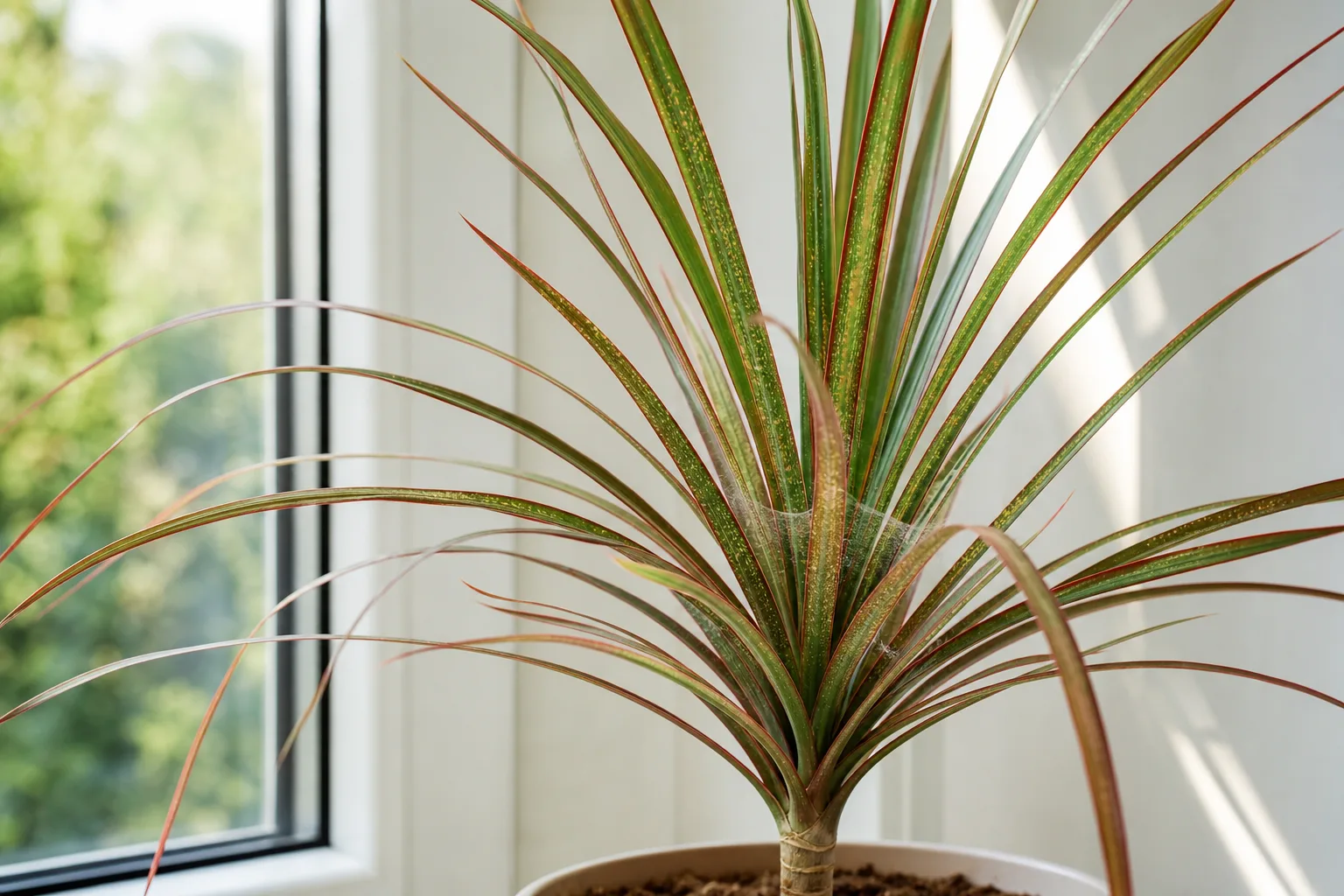
Spider mites on Dragon Tree cause fine yellow stippling on narrow strap leaves and delicate webbing where leaves clasp each cane rosette-often after winter heating dries air beside a south window. First step: isolate the plant and rinse leaf undersides with lukewarm water, then confirm moving specks with the white-paper tap test before spraying.
Spider Mites on Dragon Tree: Causes, Checks & Fixes
This guide covers spider mites on Dragon Tree. See also the general Spider Mites guide, watering, and light pages for this plant.
Spider Mites on Dragon Tree: Causes, Checks & Fixes
Quick answer
This guide is for Dracaena marginata cane trees-narrow red-edged strap leaves on bare stems. If you have a corn plant (D. fragrans), see spider mites on corn plant; for genus-wide Dracaena care, see the Dracaena hub.
Spider mites on Dragon Tree are tiny arachnids that feed on leaf undersides, piercing individual cells and leaving fine yellow or white stipples that bronze over time. On this tall cane-rosette indoor tree, outbreaks usually follow hot, dry air-a south-facing window in winter, a radiator shelf, or forced HVAC paths that drop relative humidity below about 30% beside the foliage.
First step: isolate the plant and rinse crown leaf undersides with lukewarm water at moderate pressure. Mites cluster where narrow strap leaves clasp each cane tip; rinsing knocks down adults before you confirm the pest with the white-paper tap test and decide whether oil or soap is needed.
Before you treat, rule out fluoride brown tips from municipal tap water-on marginata, tip-only papery burn without stippling or webbing is water chemistry, not mites.
What spider mites look like on Dracaena marginata
Spider mite damage on Dragon Tree reads differently than on broad-leaf houseplants because D. marginata carries narrow, arching strap leaves with red or burgundy margins on standard cultivars.
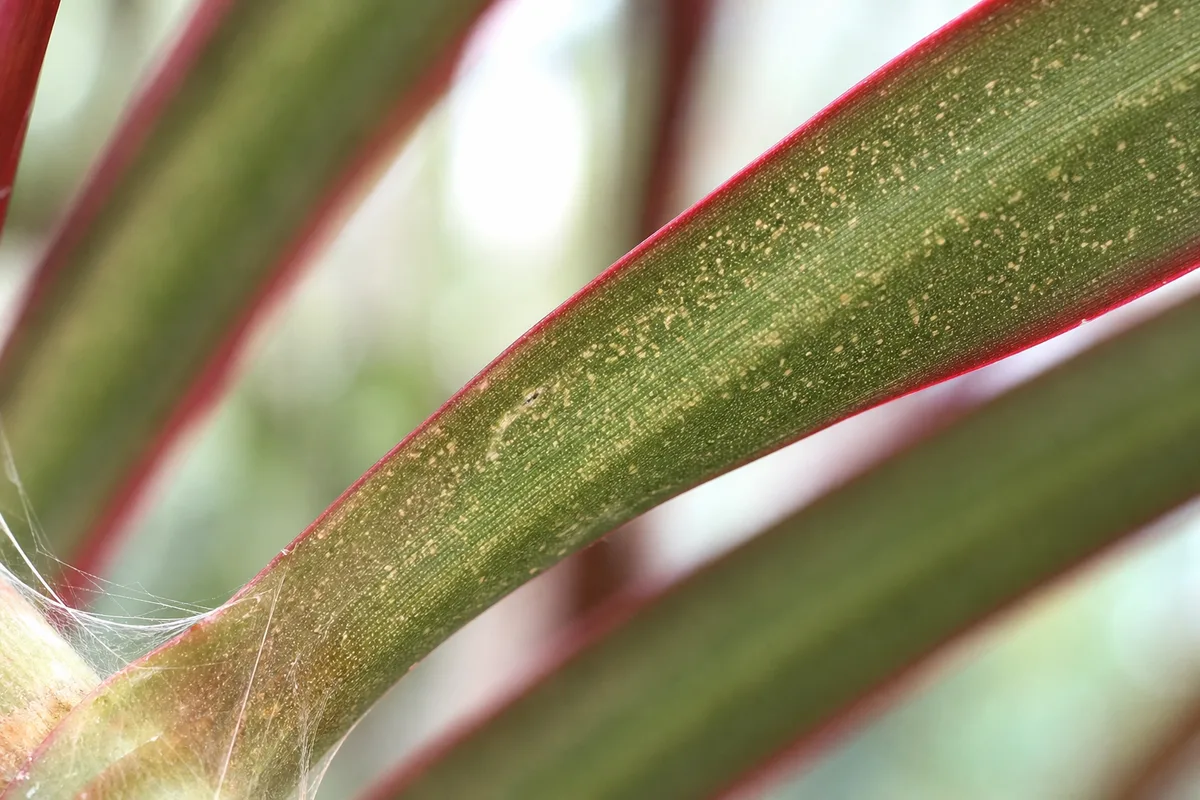
Spider mite symptoms on Dragon Tree - compare stippled leaf undersides and fine webbing with clean green blades on unaffected crown leaves.
Typical mite signs:
- Fine yellow or white pinprick stippling scattered across the leaf blade-not isolated to the tip alone
- Bronzing or dulling of green tissue as feeding continues; red margins may fade on stressed leaves
- Delicate silk webbing at the base of leaves in the crown rosette and along upper leaf axils where leaves meet the cane
- Crisp, desiccated patches on heavily fed leaves; severe infestations can cause partial leaf drop from the crown
- No cottony wax masses (that pattern points to mealybugs) and no glued brown bumps (scale)
On variegated Tricolor or Colorama forms, early stippling can be harder to spot against cream or pink streaking until bronzing spreads. Inspect the underside of the newest crown leaves first-mites avoid bright upper surfaces.
Severity guide:
- Early: Light stippling on one or two crown leaves; webbing visible only with a hand lens; paper-tap test shows a few slow-moving specks
- Moderate: Stippling across most crown leaves on one cane; fine webbing at multiple leaf bases; bronzing beginning on lower crown foliage
- Heavy: Webbing bridges between leaves in the rosette; widespread bronzing; new crown growth stunted or failing to open cleanly; mites confirmed on neighboring plants
Why Dragon Tree gets spider mites
Dragon Tree is drought-adapted from Madagascar and tolerates average home humidity better than ferns or calatheas-but warm, dry microclimates still favor spider mites on indoor foliage. Plants near heating vents and in especially warm locations are especially susceptible.
Common marginata-specific triggers:
South window plus winter heat. Tall specimens in bright south or west exposures lose leaf moisture fast when furnaces run. Glass intensifies heat; mites reproduce quickly in that combination. See low humidity on Dragon Tree when RH beside the plant drops below about 30% for weeks.
Radiator and register placement. Forced air desiccates the crown rosette while roots in a heavy floor pot stay cooler-classic mite habitat on strap leaves facing the blast.
Grouped multi-cane displays. Braided or clustered canes create sheltered crown crevices where webbing builds before you notice stippling on outer leaves.
Stress without drought. Underwatering alone causes limp crown leaves and edge crisping, not pinprick stippling. Overwatering yellows lower leaves on wet soil. Mites concentrate on upper crown foliage with firm cane and appropriate dry-down below-different from overwatering patterns.
Mites arrive on new stock, spread from infested neighbors, or blow in through open windows in dry weather. They are not caused by fluoride-but misdiagnosing fluoride tip burn as mites wastes treatment time.
How to confirm the cause
Work through these six checks before you spray:
- Paper-tap test - Hold white paper under a suspect crown leaf and tap the blade sharply. Slow-moving specks confirm spider mites; static dust does not crawl.
- Webbing inspection - Look at leaf bases in the rosette with a hand lens. Fine silk threads distinguish mites from thrips scarring or mineral spray residue.
- Stippling pattern - Mites produce scattered pinpricks across the blade. Fluoride burn stays at strap-leaf tips as papery brown bands without yellow speckles.
- Humidity and placement - Note radiators, vents, and window proximity. RH below about 30% beside the crown supports mite diagnosis when stippling is present.
- Soil moisture cross-check - Firm cane with top-half-dry soil points away from rot. Yellow lower leaves on wet mix suggest watering stress, not mites-see yellow leaves.
- Collection scan - Inspect plants within a few feet, especially any sharing the same windowsill. Mites crawl between pots slowly but reliably in dry air.
If stippling, webbing, and a positive paper-tap test align, spider mites are confirmed.
Lookalike symptoms on Dragon Tree
| What you see | Likely cause | How to tell apart |
|---|---|---|
| Fine yellow stippling, webbing at leaf bases | Spider mites | Paper-tap specks crawl; silk at crown axils |
| Papery brown tips only, firm green leaf centers | Fluoride / salts in tap water | No speckling or webbing; uniform tip band. See brown tips |
| Crisp margins on vent-facing leaf half | Low humidity / dry air | Even margin burn without stippling; RH often below 30%. See low humidity |
| Limp crown, very light pot, dusty dry mix | Underwatering | Whole-leaf droop, not pinprick speckles |
| Silver scratch lines, no webbing | Thrips | Elongated scars; thrips move faster when disturbed |
| White cotton in crown axils | Mealybugs | Waxy tufts; crush smears pink on a swab. See mealybugs |
Getting this matrix right matters on marginata because tip brown from fluoride is more common than mites in fluoridated municipal water-and treating the wrong problem leaves stippling unchecked.
First fix for Dragon Tree
Move the plant away from other houseplants and rinse crown leaf undersides thoroughly with lukewarm water.
Angle the spray to hit the underside of each strap leaf in the rosette. For a floor-height specimen, use a shower wand or handheld sprayer in the bathtub; support the cane so the crown does not snap. Washing leaves with forceful water removes mites and is practical on smaller plants when repeated at intervals.
After rinsing, run the paper-tap test. If specks still crawl, follow with horticultural oil or insecticidal soap labeled for mites and houseplants, coating undersides until spray runs off lightly. Before buying any product, confirm the label lists spider mites (or “mites”) and indoor ornamental plants-general insecticides without miticidal activity will not control arachnids. Repeat rinse plus spray every five to seven days for three full cycles-mite eggs hatch on a short interval, and one application rarely clears a cane rosette.
Treatment cadence (typical indoor infestation):
| Day | Action |
|---|---|
| Day 0 | Isolate; rinse undersides; apply oil or soap if mites confirmed |
| Day 5–7 | Rinse again; reapply oil or soap |
| Day 10–14 | Third rinse plus spray |
| Day 19–21 | Optional fourth pass if webbing persists |
Apply sprays in early morning or evening. Avoid horticultural oil when temperatures exceed about 90°F or under intense direct light-phytotoxicity risk rises on drought-stressed foliage.
Do not reach for general insecticides labeled only for insects; mites need miticidal contact products such as horticultural oil or insecticidal soap. Systemic imidacloprid does not control spider mites on houseplants.
Predatory mites for enclosed collections
If you keep several plants in one heated room and chemical sprays are impractical, Phytoseiulus persimilis is a specialist predator that feeds on two-spotted spider mites and can work indoors when humidity stays above about 60%. Scatter the carrier material onto infested crown foliage, avoid oil or soap for at least two weeks before and during release, and expect predators to die off once prey collapses-this is a rescue option for active outbreaks, not year-round prevention on a single marginata cane.
Recovery timeline
Stippling usually stops spreading within one to two weeks once rinse-and-spray cycles begin consistently. Old stippled strap leaves do not re-green-judge recovery by clean new crown leaves emerging from cane tips.
Because Dragon Tree grows slowly, plan on four to eight weeks before a fresh whorl opens without speckles. A multi-cane floor specimen may need longer than a small table plant. New growth staying green and firm is the reliable recovery sign-not cosmetic repair of damaged blades.
Signs improvement is working:
- Fewer specks on paper-tap tests
- Webbing not reappearing between treatment cycles
- New crown leaves opening with even color
- Bronzing not spreading to additional canes
Signs the problem is worsening:
- Webbing bridging multiple leaves within a week
- Stippling jumping to neighboring plants on the same sill
- New crown growth failing to open or staying tightly bunched
- Widespread bronzing despite three completed spray cycles
What not to do
Do not assume insecticides labeled for insects will kill mites-mites are arachnids and need oils, soaps, or labeled miticides.
Do not apply the fuzzy-leaf overnight-wet warning to marginata. D. marginata has smooth, narrow strap leaves that tolerate gentle underside rinsing. The real rinse risk is saturating the rosette crown on bare cane so water sits in tight crevices-rinse, then let the crown air-dry in bright indirect light.
Do not increase watering to fight mites. Wet soil weakens dracaena roots and does not dislodge foliar mites. Keep the top-half-dry watering schedule.
Do not spray horticultural oil on sun-stressed crown leaves in hot midday window sun the same day-test one leaf on variegated cultivars and wait 24 hours.
Do not return an isolated plant to the collection after a single rinse. Confirm two weeks of clean paper-tap tests before reuniting pots.
Dragon Tree is toxic to cats and dogs. Ventilate the room during oil or soap treatment and keep pets away from wet foliage until sprays dry.
How to prevent spider mites next time
Increase humidity around plants and inspect regularly in dry indoor air. For marginata, that means moving off vent paths before heating season, using a humidifier when RH beside the crown stays below about 30%, and weekly underside checks on the top whorl of each cane.
Monitor houseplants for early pest colonies-a hand lens catches stippling before webbing spans the rosette.
Quarantine new purchases for two weeks before placing them beside a tall window Dragon Tree.
Wipe shared watering-can spouts and stakes between plants. Mites spread slowly but persistently through care tools and crowded sill space.
If you summer plants outdoors, rinse and inspect the crown before bringing marginata back inside-outdoor predators disappear once the plant returns to dry heated air.
Stable baseline care helps: appropriate light per the Dragon Tree light guide, fluoride-safe water, and correct dry-down reduce stress that slows recovery after pests clear.
When to worry
Most Dragon Tree mite infestations resolve with isolation, repeated rinsing, and contact sprays. Escalate or consider discarding when:
- Webbing covers every crown on a multi-cane specimen despite three to four completed treatment cycles
- Mites spread to multiple valuable plants and isolation space is limited
- New crown growth stops entirely while bronzing advances-the plant may be too weakened to outgrow damage
- The specimen already shows soft cane or sour soil from root problems-insects may be secondary to a failing plant not worth intensive pesticide treatment
For a healthy cane tree with moderate stippling caught early, recovery is realistic. Slow growth means patience, not panic.
Conclusion
Spider mites on Dragon Tree are an isolate, rinse undersides, repeat oil or soap every five to seven days problem-not a mystery leaf disease. Stippling across strap blades plus silk at crown axils confirms mites; papery tip bands without speckles point to fluoride brown tips instead. Marginata’s slow crown growth means damaged leaves stay cosmetic-judge recovery by clean new whorls, not old blemishes. Before next heating season, move canes off vent paths and inspect crown undersides weekly; that habit prevents most winter south-window outbreaks.
Related Dragon Tree guides
- Dragon Tree overview - light, watering, and cane-form care
- Watering - top-half-dry schedule during recovery
- Brown tips - fluoride vs. mite stippling
- Low humidity - dry air without pest stippling
- Mealybugs - cottony clusters in crown axils
- Aphids - sap feeders on new crown growth
- Overwatering · Yellow leaves
FAQs
Is leaf stippling spider mites or fluoride on Dracaena marginata?
Fluoride from tap water produces dry, papery brown bands at strap-leaf tips on firm canes with no yellow speckling or webbing. Spider mites add fine yellow or white pinprick stippling across leaf blades, bronzing over time, and silk threads at leaf bases in the crown rosette. If tips alone are brown with even green centers and no webbing, fix water quality first per our brown tips guide.
How do I rinse spider mites off a tall dragon tree cane rosette?
Move the pot to a bathtub or shower and rinse crown leaves with lukewarm water at moderate pressure, angling the spray to hit undersides where mites feed. Support the cane with one hand so the rosette does not snap. Avoid soaking the crown center for hours-marginata has smooth strap leaves that tolerate gentle rinsing but can rot if water sits in tight rosette crevices on bare cane. Repeat every five to seven days with oil or soap between rinses.
How long until new crown leaves look clean after treating dragon tree mites?
Stippling usually stops spreading within one to two weeks of consistent rinse-plus-spray cycles. Because Dracaena marginata grows slowly on cane form, expect four to eight weeks before a fresh crown leaf opens without speckles-that is the real recovery sign, not old stippled blades re-greening. A south-window specimen may need the full three-cycle treatment before you judge success.
When is spider mites urgent on Dragon Tree?
Treat immediately when webbing spreads across multiple canes in a week, bronzing covers most crown leaves, or neighboring plants show stippling after sharing a windowsill. Lower urgency when stippling is limited to one rosette and the paper-tap test shows only a few specks-still isolate and start rinsing, but you have time to confirm before escalating sprays.
How do I prevent spider mites on Dragon Tree next winter?
Before heating season, move pots at least three feet from radiators and forced-air vents, run a humidifier when RH beside the foliage stays below about 30%, and inspect crown leaf undersides weekly with a hand lens. Dragon tree tolerates average humidity better than calatheas, but hot dry window air still favors mites. Keep using fluoride-safe water so you are not chasing humidity for tip burn that is actually tap-water chemistry.